



Unannounced Huawei Watch exposes itself in Barcelona

This weekend will see the the arrival of new phones, tablets, wearables, and more as hardware manufacturers head out to Barcelona for MWC 2015. Spotted inside Barcelona Airport by incoming press members is the advertisement seen above. It shows an unannounced smartwatch belonging to Huawei promoted for everyone to see. That’s right, Huawei has exposed its own product prior to any sort of official announcement.
The advertisement displays what is called the Huawei Watch and the following tagline: “Timeless design. Smart within.” Below that, Huawei offers an explanation of both adjectives. The Huawei Watch is timeless because of its classic design while being smart due to Android Wear.
The device does look very classic and stylish, so it will be interesting to see where the Chinese company sets its price. Also, the watch faces seen in the advertisement match the class of the Huawei Watch’s design.
Source: Android Central
Come comment on this article: Unannounced Huawei Watch exposes itself in Barcelona
Huawei Watch looks awfully premium in leaked ad
Till now, Huawei‘s contribution to the smartwatch market has only included some fitness-oriented devices like the TalkBand B1, but if these leaked ads are to be believed, the Huawei smartwatch that is able to be announced at MWC 2015, apparently called the Huawei Watch, could be a more conventional form factor and actually pretty gorgeous. […]
The post Huawei Watch looks awfully premium in leaked ad appeared first on AndroidSPIN.
Two Nexus phones on tap for this year and one of them could be made by Huawei

Yesterday it was leaked that the next Nexus phone would be made by a Chinese manufacturer, and today we might know who that is. Not only that, it appears that there might actually be two Nexus phones launched this year.
The same leaker is now saying there will be two Nexus phones, one produced by the said Chinese manufacturer, and the other by LG. This isn’t something that Google has done in the past, but it doesn’t sound so far fetched since we already have both the Nexus 5 and Nexus 6 available at the same time. If you take into account that Google cannot call the next Nexus phone the Nexus 7 for obvious reasons, it’s likely they will make new versions of both the Nexus 5 and the Nexus 6. This would keep most customers happy since not everyone wants a 6-inch phone. It would also solve the issue of having just one expensive Nexus phone. The Nexus 5 could be more budget-friendly and the Nexus 6 would be the premium-priced version.
The next question is who is that Chinese manufacturer? Well the leaker didn’t say, but he did divulge that the said manufacturer might use their own processor. As of right now, there is only one manufacturer that it could be. Huawei has their own Hisilcon Kirin chip.
So there you have it. LG and Huawei will make the next Nexus phones. I say that with a little chuckle because we are very early in the game so I wouldn’t bet a lot of money on it just yet, but it doesn’t sound all that crazy does it?
source: Weibo
via: GizmoChina
Come comment on this article: Two Nexus phones on tap for this year and one of them could be made by Huawei
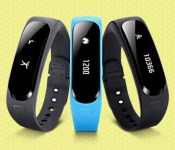
Huawei announces LTE-enabled Smartband, uses next-gen 4.5G radios
 Huawei has taken the wraps off of a new Smartband device that features two industry-leading features. It’s the first ever LTE-enabled device of its kind, and it will utilize the company’s 4.5G network, which is labeled as being somewhere between 4G and 5G in terms of speed. The 4.5G network isn’t set to go live until next year, but this band is jumping on board earlier.
Aside from the connectivity, the band shares many features with Huawei’s current Smartband, including tons of health tracking sensors, NFC, Bluetooth, and a 1.4-inch OLED screen.
Expect to hear more about this band at MWC this year.
source: The Inquirer
via: Phone Arena
Come comment on this article: Huawei announces LTE-enabled Smartband, uses next-gen 4.5G radios
New images of cover reveal more of the Huawei Ascend P8

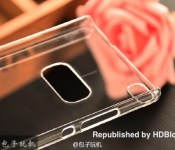
Over the weekend we saw some images that were supposedly of the Huawei Ascend P8 surface on the Internet. The device that was shown in those images was obscured by a case making it difficult to determine much detail or even verify that the device is the Ascend P8. A new set of leaked images has surfaced, this time for a case that is meant for the Ascend P8, and these images may provide us with a few more clues about what Huawei has planned for their forthcoming smartphone.
The images of the cover suggest the Ascend P8 will be very thin, consistent with previous information suggesting the device will only be 6 mm thick. On the right edge of the cover there are small holes consistent with volume and power buttons. More interesting is the back cover that includes a small hole in one corner and then a much larger opening centrally located in the back of the device. Sources suggest the dual openings could indicate Huawei is implementing a dual camera setup. Another alternative is that Huawei plans to include a fingerprint sensor located on the back of the device requiring an opening in any cases. The problem with that second option is that none of the previously leaked images of the device include anything like a biometric sensor on the back of the unit. Another alternative could be that Huawei just wants to leave an opening available for their branding to be shown to the world even when a case is on the smartphone.
Huawei appears to be planning to officially reveal the Ascend P8 on April 15th at an event in London.


source: HDBlog.it
via: GSM Arena
Come comment on this article: New images of cover reveal more of the Huawei Ascend P8
Leaked images purported to be Huawei Ascend P8

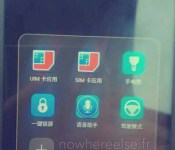
Although the rumor mill lately seems to be dominated by leaks of Samsung and HTC devices, other manufacturers have devices in the works. Huawei is likely working on the next model in their Ascend line, the Huawei Ascend P8. Some new images making the rounds purport to be of the Ascend P8, although whatever the device is it has been concealed some by a case.
What can be made out includes a center position USB slot in the bottom edge surrounded by speaker grills to both sides, a top-mounted headphone jack, and a front-facing camera that appears to come with an optical image stabilizer sensor.
Along with the images of the actual device there are some screenshots of Antutu scores that would confirm some of the hardware. We can see the device is equipped with an octa-core cpu which some sources believe will be Huawei’s own, internally produced Kirin 930 64-bit chip. The test device also has 3 GB of RAM, a 13 MP main camera, and is running a 1920 x 1080 resolution. All of this will be running Android Lollipop.
The scores indicate the device should be able to hold its own against most current flagship devices. Reports indicate Huawei may hold off on announcing the Ascend P8 until the middle of April instead of at MWC 2015.


source: No Where Else
Come comment on this article: Leaked images purported to be Huawei Ascend P8

Here’s when your Android smartphone will receive the Lollipop update

If you’re wondering when your HTC, Samsung, Sony, LG or Huawei smartphone is set to receive the long-awaited Android 5.0 Lollipop update, then wonder no more. Here at Talk Android, we have compiled a list extracted from a variety of sources, predominantly leaks, to provide you with an estimated timeframe of when your beloved handset should start receiving the upgrade.
Just remember, that unlocked versions are likely to get the update first. Carrier branded devices go through rigorous testing, which can take up to a month or two depending on how many bugs are found. So, without further ado, here is the list:
HTC:
- One (M8) — Asian, International and American distribution in progress.
- Desire Eye — March
- One E8 — March
- One Mini 2 — March/April
- Desire 816 — March/April
- One Max — April/May
- One Mini — April/May
- Butterfly S — May
Samsung:
- Galaxy S5 — Asian, European and American distribution in progress.
- Galaxy S4 — European and American distribution in progress. Update expected in Asia in March.
- Galaxy S4 LTE-A — European distribution in progress. Update expected in Asia and America in April/May.
- Galaxy Note 4 — Asian, European and American distribution in progress.
- Galaxy Note 3 — Asian, European and American distribution in progress.
- Galaxy Alpha — April
- Galaxy Note Edge — February
- Galaxy S4 Mini — June/July
- Galaxy S5 Mini — June/July
Sony:
- Xperia Z3 — March
- Xperia Z3 Compact — March
- Xperia Z3v — March
- Xperia Z2 — April/May
- Xperia Z2 Compact — April/May
- Xperia Z — June/July
- Xperia ZL — June/July
- Xperia ZR — June/July
- Xperia Z1 — June/July
- Xperia Z1 Compact — June/July
- Xperia Z Ultra — June/July
LG:
- G3 — Asian, European and American distribution in progress.
- G Pro 2 — European distribution in progress. Update expected to arrive in Asia and America in March.
- G2 — March/April
- G2 Mini — March/April
- G3 Beat — April
Huawei:
- Ascend Mate 2 — March/April
- Honor 6 — May/June
- Ascend P7 — April/May
Come comment on this article: Here’s when your Android smartphone will receive the Lollipop update

Android Zodiac: notable Android events
Android has come a long way since its release. From the HTC Dream to the Nexus 6, everything has changed. To come so far, significant things have happened that have changed the Android world. To highlight some of these events that have occurred, I have created an Android Zodiac! Yes, I’m aware this is not the same as the Chinese Zodiac, and this doesn’t really say anything about those born in those years. If you’re looking for something like that, check out our article called “What does your phone say about you“. Anyways, let’s dive in.

2007: Year of the Open Handset Alliance
2007 was a big year in not only the Android world, but the technology world as a whole. This was the year that the first iPhone was announced, and when Google and 47 other firms announced the Open Handset Alliance that would lead to Android. The reason for this was to unite companies to “enable everyone in our industry to innovate more rapidly and respond better to consumers’ demands” by having an open operating system, Android. The SDK is available to everyone, and the goal is to have one standard among mobile phones. If you’re interested, you can even look at the website that was released for this here. Definitely a blast from the past! Anyways, it would be the Open Handset Alliance that would help make Android the most popular OS on the market.

2008: Year of the HTC Dream
In 2008, the very first Android phone was released: the HTC Dream. Also known as the T-Mobile G1, this was the first phone to showcase Android. This smartphone not only had a sliding keyboard, but it had a home screen you could customize, complete with a wallpaper and widgets. There was also a new notification system that displays the icon for an app in the status bar whenever there’s a new notification, and you can slide down from the top to view more details about the notification. There was also integration with Google services allowing access to Gmail, YouTube, and more. On top of all of that, it was backed by the OHA, Google, and a promise to have updates brought to it that would bring new features and bug fixes. This device would change how software is designed and implemented for devices everywhere. Another interesting thing about this is HTC would later be the first for other landmarks in Android. But more on that later…
2009: Year of the Android Wars
2009 was the year that most of the manufacturers we know in Android phones today started to make Android phones. Samsung, Motorola, HTC, Sony, LG, and more all threw their hat into the Android phone ring. HTC released four other smartphones after the HTC Dream; Samsung released the first Galaxy phone, along with three other phones; Motorola released three phones along with their first DROID, Sony released the first Android Ericsson phone, and LG released a phone. Below is a collection of some of the phones along with a link to their specifications.
Note: I may have missed a few devices. Please let me know what I’ve missed!
 Samsung
 Motorola
 HTC
HTC
 Sony
Sony
 LG
LG
2010: Year of the Nexus
In 2010, Google released their first in-house designed smartphone: the Nexus One. Once again, HTC was the first with something in the Android space, as they manufactured the Nexus One. The Nexus One was a phone released with an unlocked bootloader for developers to create and test software on a version of Android that was untouched by manufacturers. It was also designed by Google to provide an example of what it believes other phones should look like in terms of hardware. The phone was sold online by Google, eventually being available through carriers. Little did we know, this would open a world of expectations from Android geeks everywhere as each year we now await eagerly to see what Google will release in the next Nexus. The Nexus One also was the first phone with Android 2.1 Eclair, which is another precedent set by this phone.

2011: Year of the Modern Phone
2011 saw the introduction of a lot of aspects in smartphones that consumers have come to expect of their smartphone. Displays started getting bigger, the bodies started getting thinner, and keyboards started disappearing. Screen resolutions started becoming important, and design started to focus more on looking futuristic. 2011 saw phones such as the Samsung Galaxy S II, the first Samsung Galaxy Note, the first Motorola DROID RAZR, and the Motorola DROID BIONIC. HTC and LG started to up their game too. Companies who were a part of the Android world started releasing more and more devices, and companies that weren’t involved before started to get involved. Users started to expect more out of their devices. A lot of the things you see in your current smartphone likely resembles most of the phones that came out in 2011.
 2012: Year of the Samsung

Let’s be honest, 2012 was all about Samsung. Not only did they have almost 50 different models and refine their Galaxy Note in the much more successful Galaxy Note II, but they released their most successful phone ever: the Samsung Galaxy S III. The S3 turned out to overtake the Apple iPhone 4S and iPhone 5 in sales in Q3 2012, selling over 18 million units in Q3 alone. The design was different, its speed and fluidity was unprecedented, and Samsung had added features to Android through its TouchWiz UI (user-interface) that helped make the OS (operating system) more friendly. Again, the Galaxy Note II also did well, selling over 3 million units in under two months of its release. The Note II had improved on the first generation in almost every way, and can certainly be accredited for the rise in popularity of the “phablet”. Samsung was on fire, and at that time it seemed no other manufacturer could touch them.

2013: Year of the User
2013 was a big year for Android. After Samsung’s huge success in 2012, all the other manufacturers took a step back and realized they needed to change things, and focus on the user. LG released their very different LG G2, where the power and volume buttons were on the back. Sony released the Xperia Z series, where durability became a focus. HTC released the gorgeous HTC One (M7). Google/LG released the Nexus 5, which improved on the widely accepted Nexus 4. Motorola released the Moto X, which focused on genuinely useful features and consumer design, and the Moto G, which brought great functionality and speed to budget phones. In 2013, we saw a huge focus on the end-user, finally bringing Android as an ecosystem to the big leagues.

2014: Year of the Chinese
After all-around positive reception to Android devices in 2013, most manufacturers pretty much just improved on their previous flagships in small ways (which is not a bad thing). However, with little to no innovation, this made way for a new player in the Android space: Chinese manufacturers. Xiaomi especially, but companies like Huawei, Vivo, Oppo, THL, and OnePlus entered the smartphone race with some serious gusto. While most of these companies had already existed, their entries in 2014 gained a lot of attention, and money. OnePlus in particular with their very controversial invitation-only system garnered many headlines. However, Xiaomi was the company that often made a couple of entries onto lists of top-selling smartphones, such as this one. Essentially, manufacturers based in China proved that they were starting to get serious about making Android smartphones.

2015: Year of the Software Design
I know I know: 2015 has just started. So you can take this as my prediction for the big thing in 2015. Some say that it will be all about wearables; others say it will be all about phone displays. In my opinion, wearables still have a ways to go before it becomes mainstream, and curved displays can only do so much at their current state, especially considering how expensive they are to manufacture. With innovation in the hardware space becoming infrequent (except for Project Ara, but that’s not ready yet), there is really only one place left to go: software. And while new features in software are introduced all the time, I think that Android Lollipop has shown us that Android can look good. Pretty soon, iOS will not be the only pretty operating system, as more and more manufacturers adopt Lollipop; with manufacturers having their own UI skin they slap on their phones, they’ll recreate Lollipop a bit, but users are going to want the design to still be there, so there is going to be a lot of creativity in the software. Hopefully.
That wraps up the Android Zodiac! Let me know what you think 2015 will bring. Perhaps in a year, we can dig this post back up and compare and add-on what really happened.
(function() var script = document.createElement(‘script’);script.src = ‘https://stacksocial.com/widget.js?publisher=androidguys&type=editorial_post_widget_preferences’;script.async = true;var entry = document.getElementsByTagName(‘script’)[0];entry.parentNode.insertBefore(script, entry);)();
http://www.androidguys.com/pubgalaxy/728×90.html
The post Android Zodiac: notable Android events appeared first on AndroidGuys.
Xiaomi Passes Samsung as Top Chinese Vendor in 2014

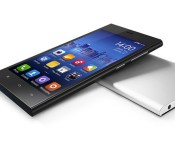
Xiaomi continued its inexorable rise in China, rising to 13.7% of market share in Q4 of 2014, while Samsung’s ongoing decline in China continued through the last quarter, slipping to 7.9% of the market, down to fifth place behind Xiaomi, Apple, Huawei, and Lenovo.
However, Samsung’s overall 2014 performance, while worse than 2013, was still good enough for second place on the year. The Korean giant captured 12.1% of the market over the course of the entire year, a mere 0.4% behind Xiaomi. All in all, it’s a pretty tight race between the top five vendors, with a mere 3.1% of market share between all of them.
Samsung had previously been the giant in China, owning 18.7% of the market in 2013 with Lenovo in a distant second and Xiaomi way off the radar. So what happened?

Xiaomi was extremely aggressive in 2014, releasing moderately-priced high quality phones. Add to the mix a bevy of sales and promotions and Xiaomi now sits atop the rankings, having experienced nearly 187% growth year-on-year.
Apple also had a hot Q4 thanks to its new line of iPhones, which was good enough for second place in the fourth quarter, but still left Cupertino out of the top five rankings on the year.
As for Lenovo, the Motorola acquisition is starting to bear fruit and we can expect to see it rise in the overall rankings, though #3 on the year is nothing at which to scoff.
Samsung had a so-so year in 2014. The Galaxy S5 was met with a lukewarm reception and tepid sales, and there seemed to be a general mood of deflation around brand, as if consumer excitement plateaued in 2013 and had nowhere to go after an underwhelming S5 update.
2015 will be a crucial year for Samsung, and it can’t afford to another year of drastic contraction, not just in China, but globally. We can expect a new Galaxy S6 within the next few weeks, likely at MWC, and there’s no doubt the bean counters in Korea are waiting with bated breath.
Xiaomi will also need to be on its toes if it intends to fight off an embattled Samsung and rising Lenovo. 2015 should be a fun year to watch.
Source: IDC
Come comment on this article: Xiaomi Passes Samsung as Top Chinese Vendor in 2014

Huawei releases MWC 2015 teaser that includes ‘Next is here’ tagline

On Monday, Huawei posted an image teasing what it has planned for MWC 2015. The company did not include anything but the silhouette of an unidentified device with the tagline ‘Next is here’ attached. The styling of the teaser closely resembles what Samsung has done with its MWC 2015 teaser. And, yes, the taglines are similar as well. Samsung is using ‘What’s Next’ and Huawei’s answer is that the ‘Next is here’.
There is some belief that the device teased by Huawei is a smartwatch that features its own 4G LTE connection. Nothing is confirmed at this time and there have been almost nothing to support the smartwatch theory, so we will have to wait and see in a few weeks what Huawei has going on.
Source: @HuaweiDevice (Twitter)
Come comment on this article: Huawei releases MWC 2015 teaser that includes ‘Next is here’ tagline
 AIVAnet