


Base model of the Huawei Watch will not cost $1,000

Earlier this week, a rumor began to spread that stated Huawei would charge $1,000 for its upcoming smartwatch. Having such a high price disappointed and shocked many people as other Android Wear devices stay around $300 and below. The Huawei Watch does feature a premium look and feel; however, $1,000 seemed far too high.
Fortunately, it will not cost that much for consumers to bring home the Huawei Watch as the company commented on pricing concerns.
There will be a base model of the Huawei Watch that will be more accessible to consumers. Through a Huawei representative speaking to 9to5Google, we learned that “$1,000 is definitely out of range of what the base model will cost.” The three variants of the Huawei Watch — black, stainless steel, and gold — will likely have noticeable differences in price. The gold variant has three ounces of 24-karat gold; therefore, black and stainless steel variants will be the more affordable options.
Via: 9to5Google
Come comment on this article: Base model of the Huawei Watch will not cost $1,000
Huawei Nexus: would Google build one? Would you buy it?

An interesting rumor has been floating around the internet for the past few days, though it’d be easy to miss with all the commotion MWC 2015 has created. Hidden away, seemingly in a corner at the moment, is a fascinating assertion, one that has the potential to -if true- change the very landscape and mindset of the Western consumer. What could be so scandalous? What if I were to tell you that the next Nexus may be made by a Chinese OEM. And not like Motorola-Chinese mind you. No, the next Nexus is allegedly going to be manufactured by none other than Huawei.
Making sense of the Situation
Last week, GizmoChina published a story that suggested a Chinese OEM would be tasked with the next Nexus based on a post it had seen on Sina Weibo, the world’s largest country’s sprawling SNS. In the Weibo post, it was alleged that Google plans to partner with a Chinese phone maker for the release of a new Nexus, which could arrive sometime in the second half of this year. Earlier this week, the rumor was followed up by an unofficial confirmation that Huawei was the chosen company.
The confirmation came from neither Huawei or Google, instead Kevin Wang, the Director of China Research at market research firm iSuppli, asserted that Huawei had been picked as Google’s next partner. It is impossible to say where Wang is getting his information from, or if it is simply a bold prediction and nothing more. For that matter, we can’t say for sure that Google is even considering partnering with a Chinese company for a Nexus device. That said, we can understand some of the reasons why Google might consider working with a Chinese giant like Huawei for production of a new Nexus phone, or even tablet.
Why, China. Why? This is why.

Peak-a-boo, I might be coming for you!
China is the biggest market in the world. The potential money that companies like Google can earn from even a fraction of a segment of the population is so incredibly high that it just can not be ignored from a business/capital standpoint. This market has also been difficult for Google to crack in earnest and so it’s no secret that Mountain View is eager to make in-roads this year. While the Play Store exists in China technically, due to laws within the country, only free applications can be distributed. On the other hand, take a look at just how much competition there is within the (non Play) paid app marketplaces:

As you can see, Google Play isn’t even listed in the top 20, although Xiaomi is within the top 5, Huawei and Oppo in the top 10, and Lenovo in the top 15. If Google could even rank on this list period it would be a major boon not only for its own revenue purposes, but also for countless developers who could benefit from the sudden influx of a new market, especially one as plentiful as that in China. By producing a handset in partnership with a popular Chinese brand, Google might finally find the in it needs to lure Chinese consumers over to the Play Store and other Google services.
What might we expect from a Huawei Nexus

Obviously this early in the game we can’t say for sure what a Huawei Nexus might look like, but turning to recent Huawei devices, we can make a few assumptions. First, we can assume that a Chinese Nexus would probably be cheaper, something that is decidedly not true of last year’s unicorn, the Nexus 6. It’s widely accepted that the Nexus 4 and 5 were, while very affordable, not state-of-the-art devices, even during their honeymoon period. The Nexus 6 on the other hand, is a different beast (almost a whale, one might say) with its killer hardware and components, and sure enough the roughly $700 it costs serves as a reminder. Just imagine the new Nexus with bleeding edge hardware and a price tag more in line with the Nexus 4 or 5.
Look no further than devices like the Huawei Mate 7 and you’ll see that Huawei is clearly capable of producing a premium looking device that doesn’t break the bank, at least when compared to the competition. The Mate 7 features an excellent touch-based fingerprint scanner, a metallic body and is truly an eye-catching product, even if its size might be a little too big for some. One area where it is at its weakest? Software, which is where stock Android comes into play.
Look no further than devices like the Huawei Mate 7 and you’ll see that Huawei is clearly capable of producing a premium looking device that doesn’t break the bank.
Aside from the assumption of a cheaper price tag, there’s also the possibility that a Huawei Nexus would use its own in-house processor, as opposed to something more mainstream like a Qualcomm Snapdragon. This would certainly help further cut costs, though it’s unclear whether or not Google would risk using a relatively unknown chipset in its flagship Nexus devices.
For those that aren’t aware, Huawei’s chipset found in the Mate 7 is called the HiSilicon Kirin 925, which brings a 1.8GHz quad-core Cortex A15 together with another quad-core Cortex A7 clocked in at 1.3GHz, both working in conjunction, allowing for a very optimized performance that is very close in performance to a higher-end Snapdragon. One area of weakness, however, is in terms of graphics. The Mali-T628 has consistently done worse in graphics tests than other comparable GPUs. Granted, it still performs well, it’s just not the best available. Of course, Huawei could be ready to wow us in gaming/graphics performance with their next Kirin processor. You never know.
The Global Benefit for China

The long line of Nexus smartphones. All made in China but how many were designed there? (Hint: it’s none…so far).
Call it what you will, but the world-at-large is still content in seeking to relegate China to back-burner status when it comes to products. The sentiment is bitterly ironic considering just how many things are made there (or rather, how few aren’t) and yet, when it comes to Chinese OEMs, they are never cut the same break that companies like Sony or LG are.
In truth, Japan and South Korea are both unconditionally accepted as countries that make good technology and good products, whereas China is associated with spying, intellectual property infringement, and inferiority. (Whether or not those are true or not is a different matter entirely). Even Google itself is no longer immune to the callous charge of misdoings, perhaps offering it an honorary seat alongside Wallace and Dave, for the “do no” clause has sadly been broken.
The idea of a Chinese Nexus would do a lot to dispel this air of mistrust and inferiority that exists in the western world, at least if the launch was handled right.
Like it or not, companies like Huawei, Xiaomi, and even Lenovo, are growing bigger and bigger with seemingly each month that passes. How can they not really, when they sell to the two largest markets in the world (India and, of course, China) and offer devices with excellent specs at cutthroat pricing. It’s no wonder that Samsung can’t get a break in either territory anymore.
The idea of a Chinese Nexus would do a lot to dispel this air of mistrust and inferiority that exists in the western world, at least if the launch was handled right.
The Global Problem for China
Despite that which was just said above, China is seen as an entity that spies, lies, and steals. Huawei in particular has been the subject of much scrutiny even on a governmental level, as politicians and bureaucrats in the USA are concerned about the possible security ramifications that might occur were Huawei to be contracted with providing hardware for things such as official government use. Unfortunately with the recent scandal involving Lenovo and malware, this belief -justified or not- is unlikely to fade; in fact it has arguably just gotten worse.
The other large problem is that mainstream consumers in the Western world don’t know anything about these Chinese OEMs. Huawei might be a slight exception given the relatively large number of devices it sells under its own branding, or else has been commissioned to make for carriers. Still, ask someone to even pronounce the company’s name and chances are they can’t. Now consider the likes of Meizu, Oppo, One Plus, or Xiaomi, who are totally alien and the salience they might otherwise have in their Asian territory is gone entirely.

Even if Huawei could make the Next Nexus and “get away with it” in the West, it is difficult to believe that many customers would buy it. The Nexus line is, in and of itself, not designed for mainstream consumer sales, partially because Google simply doesn’t know how to promote it well enough, partially because Google doesn’t know how to meet demand requirements until the popularity has died off, and partially because it’s sorely lacking in any and all kinds of marketing gimmicks and software add-ons that companies like Samsung push so aggressively. (These are but a few of the potential reasons Nexus smartphones never appear on top sales charts, though it is by no means a comprehensive list.)
Considering how so many people were so quick to write off the Nexus 6 (“too big, pass”) without giving it a try, the same sentiment will arguably apply with a Huawei Nexus, only perhaps replaced with a “way to sell out Google” or “Google is in bed with China. Hello Microsoft!” Even if you might give it a try, it’s easy to imagine a friend, family member, or random YouTube ranter uttering those exact words.
Wrap-Up
Regardless of what one feels about this story, the potential here is big. Google, eager to gain a foothold into the expanding Chinese mobile app market, would be in a very good position were the Huawei Nexus to materialize. Likewise, Huawei would have an extra layer of “Western credibility” associated with its brand name, should Google trust it with making a device. Even if this all does pan out and the device never makes it outside of Asia, it will still stand as a very bold move indeed.
Any thoughts? Would you be willing to buy a Nexus made by Huawei?
// <![CDATA[
(function () ());
// ]]>
Cost of the Huawei Watch rumoured to be $1000, could give Apple Watch a run for its money
The Huawei Watch is a beautiful piece of design and engineering – that much is for sure. But how much would you be willing to pay for one? $250? $500? How about $1000? If you’re balking at the thought of a $1000 Android Wear device, you might not be happy to hear that the cost of […]
The post Cost of the Huawei Watch rumoured to be $1000, could give Apple Watch a run for its money appeared first on AndroidSPIN.
Huawei rumored as the next Nexus maker
According to TechnoBuffalo, Kevin Yang, a director at the Chinese research firm iSuppli, Huawei will be the manufacturer of the next Nexus. Google made the decision after considering other local manufacturers and the growing market of Android devices in the country.
Understandably, while Huawei leads smartphone sales in China, it has little to no presence in the United States. The Economist tells that Huawei is the largest telecommunications equipment maker in the world, having surpassed Ericsson of Sweden in 2012. In that year, the company was worth $32 billion with 140,000 employees and customers in 140 countries.
Nonetheless, Huawei has been suspected by western countries who worry that the networks it builds are used by Chinese government officials to spy on them. That fear led to Australia blocking its participation in the construction of a national broadband network. Additionally, a Congressional committee has delayed Huawei’s entry into the US because of suspicions caused by Chinese cyber-attacks.
Despite these suspicions, Huawei’s Ascend series has seen some critically acclaim, including its latest flagship, the Ascend Mate 7 phablet. While it is not available on contract with a carrier here in the US, it can be expected that it and other devices will be brought to the States unlocked, just like the $300, mid-range Ascend Mate 2. On March 1 at Mobile World Congress, it revealed the 7-inch MediaPad X2 tablet, the first 64-bit octa-core, LTE, dual-sim phablet. It also took the covers off its first smartwatch: the Huawei Watch, with 4GB of storage, 512MB of RAM, and a 1.2GHz Qualcomm processor.
The post Huawei rumored as the next Nexus maker appeared first on AndroidGuys.
Huawei rumored as the next Nexus maker
According to TechnoBuffalo, Kevin Yang, a director at the Chinese research firm iSuppli, Huawei will be the manufacturer of the next Nexus. Google made the decision after considering other local manufacturers and the growing market of Android devices in the country.
Understandably, while Huawei leads smartphone sales in China, it has little to no presence in the United States. The Economist tells that Huawei is the largest telecommunications equipment maker in the world, having surpassed Ericsson of Sweden in 2012. In that year, the company was worth $32 billion with 140,000 employees and customers in 140 countries.
Nonetheless, Huawei has been suspected by western countries who worry that the networks it builds are used by Chinese government officials to spy on them. That fear led to Australia blocking its participation in the construction of a national broadband network. Additionally, a Congressional committee has delayed Huawei’s entry into the US because of suspicions caused by Chinese cyber-attacks.
Despite these suspicions, Huawei’s Ascend series has seen some critically acclaim, including its latest flagship, the Ascend Mate 7 phablet. While it is not available on contract with a carrier here in the US, it can be expected that it and other devices will be brought to the States unlocked, just like the $300, mid-range Ascend Mate 2. On March 1 at Mobile World Congress, it revealed the 7-inch MediaPad X2 tablet, the first 64-bit octa-core, LTE, dual-sim phablet. It also took the covers off its first smartwatch: the Huawei Watch, with 4GB of storage, 512MB of RAM, and a 1.2GHz Qualcomm processor.
The post Huawei rumored as the next Nexus maker appeared first on AndroidGuys.
Rumor pins the price of Huawei’s Android Wear Watch at $1,000
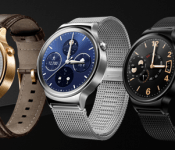
 A new rumor has surfaced regarding the price of Huawei’s upcoming smartwatch, and it’s pretty ridiculous. If these rumors end up being true, Huawei could price the watch at $1,000, which is significantly higher than any other conventional Android Wear watch we’ve seen. Apple likely wouldn’t even attempt to pull off that price tag with their products.
There’s a pretty good chance this price tag could be for a special edition of the watch, or just a completely false rumor. Take it with a grain of salt and wait for an actual announcement from the company.
source: BGR
Come comment on this article: Rumor pins the price of Huawei’s Android Wear Watch at $1,000
Rumor pins the price of Huawei’s Android Wear Watch at $1,000
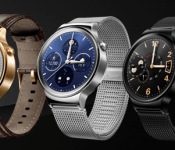
A new rumor has surfaced regarding the price of Huawei’s upcoming smartwatch, and it’s pretty ridiculous. If these rumors end up being true, Huawei could price the watch at $1,000, which is significantly higher than any other conventional Android Wear watch we’ve seen. Apple likely wouldn’t even attempt to pull off that price tag with their products.
There’s a pretty good chance this price tag could be for a special edition of the watch, or just a completely false rumor. Take it with a grain of salt and wait for an actual announcement from the company.
source: BGR
Come comment on this article: Rumor pins the price of Huawei’s Android Wear Watch at $1,000

Huawei confirmed to make the next Nexus phone

Last week we told you that not one, but two Nexus phones could get launched this year,and it was rumored that LG and Huawei would be the makers. Today we are getting further confirmation on Huawei as the Director of China Research at iSuppli, Kevin Yang, has confirmed it.
If you look at this in hindsight, it can’t be a surprise since Huawei is so up and coming right now, it’s ridiculous. They are sitting as the 3rd phone manufacturer in the world in terms of market share and they made a huge splash with a very nice looking Android Wear smartwatch. It will be interesting to see if Huawei utilizes their own Kirin processor in the phone.
It still hasn’t been officially confirmed if there will indeed be two Nexus handsets, but as I said before, it makes the most sense to offer new versions of the Nexus 5 and Nexus 6 since Google cannot offer a Nexus 7 phone for obvious reasons.
source: Weibo-iSuppli
via: GizmoChina
Come comment on this article: Huawei confirmed to make the next Nexus phone

Huawei Honor 6 Plus heading to India this month

Already released in China and Europe, Huawei’s Honor 6 Plus smartphone is now also scheduled for a release in India later this month.
Huawei already launched its Honor 3C and Honor 6 smartphones in India last year and the country is becoming an increasingly important market for the brand, and one that the company will be focusing heavily on this year.
With the launch of 4G in India, we are sure that we will be able to increase our market share by introducing affordable 4G smart phones in India.
The Honor 6 Plus features some compelling specifications at a reasonable price, including an octa-core HiSilicon Kirin 925 CPU, 3GB RAM, 16/32GB internal memory, a microSD card slot, 3,060mAh battery, and dual 8MP cameras at the back. Although, we weren’t blow away by the dual-camera implementation, the smartphone is a great entry point into the high end market.
An exactly date for the handset’s Indian launch has not been given yet, nor has the price, but Huawei will be teaming up exclusively with popular e-commerce retailer Flipkart to bring the phone to consumers.
For a closer look at the Huawei Honor 6 Plus, its specs and our thoughts, be sure to check out our full review.
Huawei related videos
.rvs_wrapper
width: 335px;
.rvs_wrapper.align_left
float: left;
.rvs_wrapper.align_right
float: right;
.rvs_wrapper.align_center,
.rvs_wrapper.align_none
width: 100%;
.rvs_wrapper.align_center
text-align: center;
.rvs_wrapper.align_center.cbc-latest-videos ul li
float: none;
display: inline-block;
vertical-align: top;
.rvs_wrapper.cbc-latest-videos:not(.align_none) ul li:nth-child(2n+1)
clear: both;
.rvs_title
font-weight: 600 !important;
margin: 0 !important;
.rvs_wrapper.align_right .rvs_title
padding-left: 20px;
.rvs_title a
font-family: ‘Roboto Condensed’;
color: #3a3a3a;
.rvs_wrapper.cbc-latest-videos ul
padding-top: 10px;
.rvs_wrapper.align_left.cbc-latest-videos ul li,
.rvs_wrapper.align_none.cbc-latest-videos ul li
padding: 0 15px 0 0;
.rvs_wrapper.align_right.cbc-latest-videos ul li
padding: 0 0 0 15px;
float: right;
.rvs_wrapper.align_center.cbc-latest-videos ul li
padding: 0 7px;
.rvs_wrapper.cbc-latest-videos ul li > a
font-weight: 400;
.rvs_wrapper.cbc-latest-videos ul li > a .yt-thumbnail
margin-bottom: 0;
@media only screen and (max-width : 480px)
.rvs_wrapper
width: 100%;
text-align: center;
#page .rvs_wrapper.cbc-latest-videos ul li
padding: 0 7px;
display: inline-block;
float: none;
vertical-align: top;

Huawei planning to take on the U.S. market

Huawei has managed to stake a claim as China’s second largest smartphone manufacturer, yet it is a name most U.S. consumers have probably never heard. If they are aware of Huawei, there are decent odds it stemmed from action by Congress a couple years ago to label Huawei a national security threat amidst concerns they would use network hardware for spying purposes. Despite that incident and the potential stigma of being seen as a producer of cheap Chinese goods, Huawei is indicating they have plans to step up marketing and try to make a push into the U.S. market during 2015.
One clue to the company’s plans to expand may be seen in their announcement of the Huawei Watch at MWC 2015 this week. As part of the reveal of their entrant into the wearables market, Huawei included the U.S. in the list of the initial 20 markets where the device will be sold. Huawei also recently took out a billboard in Times Square touting the Honor 6 Plus smartphone, a move Huawei’s U.S. spokesman Bill Plummer described as “a sing of things to come.” Among the marketing avenues available for Huawei in the U.S., one might be a tie-in with a sports team similar to their sponsorship of the Arsenal soccer team in London, cricket teams in India and rugby clubs in Australia.
For the short term at least, it appears Huawei may have to focus on advertising efforts that are aimed directly at potential buyers. The majority of smartphones sold in the U.S. are sold through the major carriers, none of which carry Huawei devices and may be reluctant to add them to their portfolio. The carriers seem to favor major brands like Samsung, Apple, and HTC. Even a company like Sony has been challenged to get their devices carried by the big four.
One path Huawei could take would be one employed by ZTE, which started striking deals with lower-tier carriers like Boost to make their devices available in the prepaid space. That might be a way to get a foot in the door. Eventually Huawei will want to get their higher end devices into the market though, which would probably be welcomed by some buyers who know Huawei has a reputation for producing some attractive higher-end handsets.
Are you interested in seeing Huawei enter the U.S. market?
source: Reuters
Come comment on this article: Huawei planning to take on the U.S. market
 AIVAnet