



Which Android phones win at gaming?

A simple kind of happiness reigns in the world of mobile gaming. The app stores are brimming over with four-star ratings; popular titles are making billions of dollars for their creators; and folks on the morning commute seem generally content with what they’re playing — sometimes destroying rows of fruit, sometimes rows of candy. Few of us expect or demand anything deeper on a tablet or smartphone, and surely none of us would be crazy enough to choose our next handset based solely on a criterion as narrow as 3D gaming performance. Right?
Well, yes and no. Things certainly get more complicated when you look at the cutting edge — especially on Android. The industry is pushing the boundaries of what a mobile game can be, what a mobile processor can do and what an Android-based gaming device can look like. And as ambitions escalate, so do the risks. The old nemesis of fragmentation means that certain titles may stutter, or cause excessive battery drain, or fail to run at all, so that those glowing reviews turn into one-star complaints and customers go back to playing it safe.
The industry is pushing the boundaries of what a mobile game can be
That’s why we reckon it’s a good time to take stock — to measure how well some current and older Android devices handle a sample of graphically demanding games. We’ve got cold, hard numbers to show you, which should help to pinpoint the most future-proofed products. We also have a secondary aim, which is to set a benchmark against which we can judge the next wave of hardware, soon to be announced at Mobile World Congress. Indeed, it’s already becoming clear that, from a gaming perspective, smartphones don’t always progress in the manner or at the rate that we might expect.
The Test

This bit could have been arduous, but it turned out to be surprisingly simple. An independent, UK-based company called GameBench has taken up the masochistic challenge of collecting real-world gaming performance data and it has kindly given us early access to its raw info. The numbers are based on a sample of four games (Despicable Me: Minion Rush, Real Racing 3, Dead Trigger and Deer Hunter 2014) played by three different players (one beginner, one intermediate and one advanced), with airplane mode switched on and everything else tuned out. Smoothness is measured in terms of the median frame rate, which is the best proxy for the performance as experienced by the gamer. The other key metric is battery drain, measured as percentage lost per hour, because most people will simply avoid games that kill their phones before they get home.
GameBench’s results are a lot more revealing than so-called synthetic benchmarks
The big downside to our test is that it takes a lot of time. GameBench has its own app for monitoring performance and making testing easier, and it’s working on testing more devices with a bigger sample of 20 games, but it couldn’t provide all that data in time for MWC, so we had to make some tough decisions about what to include. The upside, however, is that even though GameBench’s results aren’t totally comprehensive or perfect, they’re still a lot more revealing than the so-called synthetic benchmarks that we’d normally be forced to rely on — i.e., scores collected by dedicated benchmarking apps that are easy to run and difficult to trust.
The devices

Since the biggest determinant of a device’s performance is its processor, GameBench has tested products that represent the major chips currently on the market: two Samsung Exynos processors housed in Asian versions of the Galaxy Note 3 (N900) and Galaxy S4 (I9500); two Qualcomm Snapdragons inside the Western variants of the Galaxy Note 3 (N900x) and Galaxy S4 (I9505); two Tegras from NVIDIA inside a Shield handheld and an old (2012) Nexus 7; and finally an Intel Clover Trail+ chip inside a Lenovo K900.
Yes, there are a couple of non-smartphones in that list. The Nexus 7 is included for curiosity’s sake — we wanted to see how an older device would fare, and whether the benefit of a tablet-sized 4,325mAh battery might be canceled out by the power draw of the larger display. The NVIDIA Shield, meanwhile, is included as our reference device. It’s by far the most powerful device GameBench has tested so far, achieving the maximum possible frame rate of 60 fps (i.e., the refresh rate of the display) in all the sample games except Minion Rush, which the Play store wouldn’t let us install. The Shield also has great stamina, lasting for four to five hours of solid gameplay on a charge.
We can summarize these two metrics for the Shield through a very crude bit of math: by dividing the average median frame rate (60) by the average battery drain percentage per hour (23), which gives us a result of 2.6 — this certainly isn’t an official GameBench score, or an alternative to looking at the raw data, but it’s a handy little way of combining two averages into a single, vaguely representative figure.
The results

So, we arrive at the rankings. If you’ve just joined us, having skipped all the previous sections, that’s OK — we don’t hold grudges, but we’ll take this opportunity to reiterate an important disclaimer: These results relate solely to a device’s game-playing ability, with everything else deliberately factored out, so they don’t reflect our overall ratings of these devices (you need to check out our product pages to get those).
Tier One – the best in the business
|
Galaxy Note 3 (Snapdragon 800) |
Galaxy Note 3 (Exynos 5420) |
Galaxy S 4 (Exynos 5410) |
|
|---|---|---|---|
| Minion Rush | |||
| – Frame rate (median) | 25 | 27 | 29 |
| – Drain rate (per hour) | 22 | 24 | 32 |
| Real Racing 3 | |||
| – Frame rate | 26 | 30 | 27 |
| – Drain rate | 24 | 21 | 22 |
| Dead Trigger | |||
| – Frame rate | 51 | 54 | 57 |
| – Drain rate | 23 | 23 | 28 |
| Deer Hunter 2014 | |||
| – Frame rate | 51 | 54 | 57 |
| – Drain rate | 26 | 28 | 21 |
| Average | |||
| – Frame rate / Drain rate | 1.61 | 1.71 | 1.65 |
Let’s start with the device that most of us will be familiar with: the American and European LTE version of the Samsung Galaxy Note 3, which runs on a Qualcomm Snapdragon 800. Although the phone came in under the other two devices in this tier, based on our approximate average score, it nevertheless had a solid mix of high performance and good stamina. This tallies with something we’ve been noticing about Snapdragon 800 devices in general: Whether it’s a Note 3, Nexus 5, Sony Xperia Z1 or LG G2, the ratio of performance to battery life is healthy. If you can add a big, phablet-sized battery into the mix, preferably 3,000mAh or higher, you should end up with a pretty game-friendly device.
But the big surprise here is the performance of the two Exynos-powered phones, the Asian Galaxy Note 3 and Galaxy S4. These phones top our chart with frame rates consistently close to or above 30 fps and at least three hours of gaming on a charge. This revelation may not be immediately practical to a phone buyer, since these devices are hard to get hold of and they’re not compatible with Western LTE bands, but it leaves us keen to check out future Exynos-powered devices that are coming to the US and UK — including the new Galaxy Note Pro 12.2, which we’re hoping to review shortly.
Tier Two – adequate gamers
|
Galaxy S4 (Snapdragon 600) |
HTC One (Snapdragon 600) |
Nexus 7 2012 (Tegra 3) |
|
|---|---|---|---|
| Minion Rush | |||
| – Frame rate (median) | 28 | 19 | 29 |
| – Drain rate (per hour) | 32 | 20 | 19 |
| Real Racing 3 | |||
| – Frame rate | 27 | 21 | 37 |
| – Drain rate | 26 | 22 | 20 |
| Dead Trigger | |||
| – Frame rate | 51 | 49 | 33 |
| – Drain rate | 29 | 27 | 39 |
| Deer Hunter 2014 | |||
| – Frame rate | 56 | 46 | 41 |
| – Drain rate | N/A | 21 | 33 |
| Average | |||
| – Frame rate / Drain rate | 1.40 | 1.50 | 1.26 |
Next we come to the “ordinary” flagships: the Snapdragon 600-powered Galaxy S4 and HTC One, which are starting to show their age and are soon to be superseded. The first thing you notice is that they’re forced to make a trade-off between frame rates and battery, instead of delivering on both like our top-tier devices did.
As we’ve reported before, the GS4 goes for performance (partly due to having a higher clock speed), while the HTC One goes for stamina. Ultimately, however, GameBench would describe the GS4 as the better device for gaming, despite what our crude average score shows, and also despite what certain synthetic benchmarks might have shown in the past. This is simply because it plays our sample of games at frame rates much closer to 30 fps — the traditional threshold for smooth-looking 3D graphics — whereas the HTC is left rendering games like Minion Rush or Real Racing 3 at just 20 fps.
The same trade-off is visible with the OG Nexus 7, which has very bad drain rates in a couple of games. Its big battery is of little help against a larger display, aging chip architecture and chunky transistors. That said, bearing its age in mind, the Tegra 3 tablet performs surprisingly well within this table, with strong frame rates throughout. In fact, if you prioritize frame rates over battery drain, then you could easily rank this tablet as top of the tier — even above the GS4. We can speculate that other Tegra 3 devices, like the HTC One X+, should still have some life left in them for most Android games, so long as you don’t stray too far from a power source.
Tier Three – the Intel corner
|
Lenovo K900 (Intel Z2580) |
|
|---|---|
| Minion Rush | |
| – Frame rate (median) | 27 |
| – Drain rate (per hour) | 44 |
| Real Racing 3 | |
| – Frame rate | N/A |
| – Drain rate | N/A |
| Dead Trigger | |
| – Frame rate | 38 |
| – Drain rate | 34 |
| Deer Hunter 2014 | |
| – Frame rate | 51 |
| – Drain rate | 40 |
| Average | |
| – Frame rate / Drain rate | 0.98 |
As you can see, the Intel-powered device in this roundup didn’t fare so well. This is the Lenovo K900 with a dual-core Clover Trail+ Z2580 processor — a chip which, thankfully, is soon to be replaced by a new generation, although we won’t see next-gen Intel Android handsets until later in the year.
Intel’s bad score shouldn’t come as a surprise if you’ve seen synthetic benchmarks for this chip, but it highlights just how much of a disadvantage Intel faces when it comes to gaming: Clover Trail+ couldn’t handle Real Racing 3 at all, and with some titles, the K900 burned its battery at twice the rate of an HTC One. In other words: Even if Intel doubles its Android gaming performance in the next generation of devices, it still won’t be able to match that of ARM-based rivals.
The problem, we suspect, is that most Android games are heavily optimized for ARM chips, and Intel’s chip is forced to work harder to make a game run smoothly — an amazing feat when you consider everything the processor must be doing behind the scenes, but one that leads us to the depressing conclusion that Intel is unlikely to be a force in Android gaming anytime soon.
Wrap-up

More Info
Seven devices, three tiers and one unexpected conclusion. When you compare smartphones across a product range (e.g., Galaxy S4 vs. Galaxy Note 3) or across a processor generation (e.g., Snapdragon 600 vs. Tegra 3), raw performance doesn’t appear to change a great deal. That’s not to say that newer or more expensive chips aren’t more capable, but their extra capability evidently isn’t being turned into wildly better frame rates. Minion Rush and Real Racing 3 ran at 20-30 fps on most of the devices we tested, while Dead Trigger and Deer Hunter 2014 mostly generally ran at 40-60 fps.
Instead, the biggest variation in smartphone hardware lies in the less sexy of our two metrics: battery life. Upgrade your phone and games don’t suddenly look better; they just last longer. The most efficient handsets were those running on the latest Samsung Exynos Octa and Qualcomm Snapdragon 800 chips. In the middle, we find devices based on the Snapdragon 600 and premium chips from the previous generation, such as the Tegra 3. At the bottom end we have Intel, whose architecture apparently has to burn extra milliwatts just to keep up with ARM-based chips.
“Upgrade your phone and games don’t suddenly look better; they just last longer”
The big exception to all of this is the NVIDIA Shield, which would have easily won this ranking if it had been born as a smartphone instead of a hand-held console. It somehow managed very high frame rates with equally good stamina, which makes it all the more ironic (but also perhaps revealing) that the Tegra 4 and the Shield itself are widely considered to be niche products and, frankly, commercial flops.
How to explain all of this? It’s tricky, but the answer almost certainly lies in that simple-but-happy image of Android gaming that we painted at the start of this article. If games continue in the same vein that they have, designed to run reasonably well across a majority of devices rather than pushing high-end processors to their limits, then chips and devices that prioritize 3D gaming performance will continue to be dismissed as overkill.
If, on the other hand, 2014 highlights a different sort of Android developer — one who deliberately caters only to a handful of top-end devices and the latest graphics standards, and whose games are amazing enough to justify that sort of attitude — then a full-blown arms race could well ensue. Software creators and hardware makers would be forced to start working together a little more and, for better or worse, Android’s fragmentation problem would be brought to a head. There’s no guarantee that this will happen, of course. Perhaps mobile games are destined to remain as they are. But still, we have a gut feeling that we can’t keep repetitively flapping around or attacking pigs forever.
Filed under: Cellphones, Cameras, Tablets, Mobile, Samsung, HTC, Google, Intel, Lenovo, NVIDIA
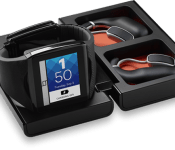
[RUMOUR] HTC to announce three wearable devices at MWC 2014, one possibly based on the Qualcomm Toq
 We’ve been waiting for word on when HTC would be entering the wearable technology market after HTC chairman Cher Wang spoker earlier this month about the company doing just that. Well, if a report from Bloomberg is anything to go by, HTC might be taking the dive as soon as next week at MWC 2014 with HTC to announce three wearable devices at their press conference.
The most interesting wearable mentioned in the report is a smartwatch that is expected to make use of Qualcomm’s Mirasol screen technology. That’s the same Mirasol technology that we saw utilized on the Qualcomm Toq smartwatch late last year and it was lauded for its colour screen and ability to last almost a week on a single battery charge. For those who aren’t aware, a Mirasol screen is not unlike the e-ink screens you see on classic Kindle devices, only Qualcomm updated the idea with colour. If HTC’s new smartwatch uses the Toq as its inspiration, it would definitely be a formidable entry into the smartwatch market, though I hope they don’t also adopt Qualcomm’s inspiration for pricing.
The other two wearables allegedly to be announced at MWC 2014 include a wearable that heavily incorporates the use of Google Now, quite like the Nexus smartwatch that we’ve been expecting, and an “electronic bracelet that plays music”. If HTC really does announce all of these next week in Barcelona, it would put them in a prime position to reclaim some of their former glory.
What do you think about HTC announcing three new wearables at MWC 2014: would you be interested in one if it turns out like the Qualcomm Toq? Let us know what you think in the comments below.
T-Mobile HTC One’s KitKat update coming this week, AT&T “likely” next week
T-Mobile and AT&T HTC One owners waiting for the update to Android 4.4.2 KitKat don’t have to wait too much longer.
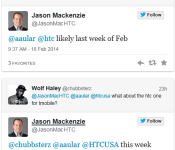
On Tuesday, Jason Mackenzie, president of HTC America, took to Twitter and answered a few customer questions about the updates.
Mackenzie said that the update for the T-Mobile version will be coming later this week, while the update for the AT&T version will be “likely last week of Feb(ruary),” which is already next week.
The update for all US versions of the One were originally expected before the end of January, but carrier testing took more time than HTC anticipated.
Once the update arrives, it should hold all you HTC One owners over until “The All New One,” the rumored HTC M8, is announced March 25.
The post T-Mobile HTC One’s KitKat update coming this week, AT&T “likely” next week appeared first on AndroidGuys.
KitKat Update to land for T-Mobile HTC One this week, AT&T Next Week
HTC and Jason Mackenzie have been doing a pretty good job of not only getting updates to the latest Android offering out, but also being open and honest about them. While they did miss their 90 targets, it has only been a few weeks off. That certainly beats a couple months off like we have seen in the past. A recommitment to keeping updates for various HTC devices transparent was made just the other day when they announced the new HTC Advantage program. In a recent set of Twitter conversations picked up by HTC Source, HTC’s Jason Mackenzie let the questioning users know when the should expect to see the much anticipated Android 4.4.2 update for the HTC One on T-Mobile and AT&T.
 As you see, Jason offers up no specific date. That is just fine as he states this week for T-Mobile and the last week of February for AT&T. We haven’t seen anyone with a T-Mobile HTC One saying they have the update yet, but it is only Wednesday. When the update does start to roll out though you can expect it to be rolled out in stages and take a few weeks for every owner to see it hit their device.
For T-Mobile users, we suggest you keep an eye on your notifications and keep your device charged up for when it does start going out. WHen we start caching wind of it, we will be sure to let you guys know.
Source: Jason Mackenzie Twitter via HTCSource
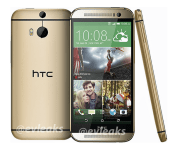
‘All New’ HTC One leaks again with a bright gold paint job

Is there anything that hasn’t already leaked about HTC’s photography-focused successor to the One? Not much, except that we haven’t seen any publicity renders quite as detailed as the one just shared by @evleaks. It suggests that the dual-camera handset will be offered in a gold flavor, alongside the rumored silver and black options. Furthermore, @evleaks — who has a generally reliable track record — claims to know how the new phone will be branded. It’ll apparently skirt around tricky numerical conventions by adopting a slightly Apple-esque alternative: the “All New HTC One.” A name like that should roll right off the tongue, shouldn’t it?
Filed under: Cellphones, Mobile, HTC
Source: @evleaks [Twitter]
5 Reasons Why I Think HTC Has Turned Itself Around For The Better
 HTC was once one of the greats of the Android smartphone movement. Some might argue that they still are, but the Taiwanese company has fallen on financial hardship in recent times. While the end to 2013 proved to be relatively disappointing in terms of getting their financials back in the black, thanks to some unusual product releases, it appears that HTC has begun 2014 with a vengeance, and I think there are several reasons why this is the case.
 1. First off, HTC has gone back to its age-old adage of “quietly brilliant”; while it hasn’t seemed like a conscious decision, HTC has apparently abandoned its “Here’s to Change” campaign, spearheaded by star acquisition Robert Downey Jr., and started working in the shadows again. While that’s not to say the campaign and its marquee signing won’t come out again in the near future, but the key for HTC is that they’ve got their heads down and aren’t making a huge amount of noise about what they’re working on or what’s coming next.
 2. This point is probably one for contention: some still believe that HTC CEO Peter Chou was and is HTC’s savior while others believe that its founder nearly drove the company into the ground late last year. The fact that he is still at the helm though is great news for HTC; he’s taken the company to great heights before, and while the company’s late 2013 exploits didn’t quite pan out, the consistency of having a united company behind its CEO has an unspoken effect on company stability and morale and Chou’s focus on smartphones now can only bode well for HTC.
 3. One of Motorola’s greatest successes while still under the tutelage of Google was launching the Moto Maker service. The ability to customize anything to do with the appearance of your device before shipping it to you was a stroke of genius, and while Motorola never really saw the monetary reaction that the initiative deserved, it’s definitely the right direction that manufacturers should be moving in. Next on the bandwagon is HTC, who has recently launched their own Moto Maker-esque service to design cases for the HTC One. Obviously the next step would be to included devices themselves for purchase there, but it’s definitely a step in the right direction to making HTC more attractive to the market that craves customization options.
 4. The news broke today that HTC would be launching its HTC Advantage Initiative, effectively an AppleCare type solution service which gives HTC device owners access to repair services and device support, something than Android manufacturers have traditionally not done particularly well. This is a big differentiating factor for HTC and really puts them in a separate league to the other OEMs who aren’t willing to provide this kind of post-purchase service. It’s important to note that this could be considered quite a big risk to HTC financially to provide this service, but for customers, the peace of mind in knowing you have a screen replacement up your sleeve is pretty much priceless.
 5. This last point is mostly related to rumours surrounding the successor to the HTC One, the HTC M8 (or as it may be officially called, The All New One), but if they are true, then it puts HTC in a market leading position. The rumour in particular that I am concerned with is the one which suggests the The All New One will possess a dual-sensor rear camera, something which will provide the device with Lytro Camera-like abilities, i.e. to chance focus in photos after the photo has been taken (to read more about the tech behind this, check this article out). This would give the HTC M8 and HTC a sizable advantage in the camera arena over other Android manufacturers, an area which is typically neglected in favour of increasing the megapixel count for not much gain.
And there you have it: 5 reasons why I think HTC has turned itself around for the better, and I think that this could result in a real push that sees HTC back around the elite of the Android market. While HTC was reported to only have 2% market share at the end of 2013, watch this space as I believe their market share is definitely going to change for the better by the end of 2014.
What do you think: do you think HTC has turned a corner in 2014? Let us know your opinion in the comments.
The HTC M8 Gets its Official Name According to Evleaks

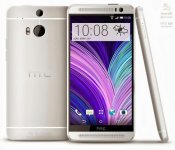
Tired of all the HTC news today? I am sure some of you are, but there are those that can’t get enough. Well it seems our buddy, Mr. evleaks, has given us the official name of the HTC M8. You ready for this? The All New HTC One! Creative, huh? Yeah a little strange, but it is true: it is in fact the all new HTC One.
Gray, silver, and gold, will be our choices for the new flagship, and I guess the gray one was the one we saw that was super polished. Let us know what you guys think about the name. Creative? Or last minute choice?
Source: evleaks

Daily Roundup: Toy Fair wrap-up, laptop buyer’s guide and more!

You might say the day is never really done in consumer technology news. Your workday, however, hopefully draws to a close at some point. This is the Daily Roundup on Engadget, a quick peek back at the top headlines for the past 24 hours — all handpicked by the editors here at the site. Click on through the break, and enjoy.

Do we need 4K smartphones?
Handsets with a 2,560 x 1,440 (QHD) displays have already been announced, but do we really need that kind of resolution in the palm of our hand? The answer is complicated. Read on as Engadget’s Steve Dent weighs the pros and cons of 4K smartphones.

Engadget’s laptop buyer’s guide: winter 2014 edition
If your notebook is overdue for an upgrade, look no further. Whether you wanna explore your options, or just windowshop this year’s new models, the hive mind of Engadget has you covered. Click through and check out the winter 2014 edition of our laptop buyer’s guide.

HTC launching a One successor
HTC is hosting a press event on March 25th, where it’s expected to unveil a successor to last year’s One flagship. And if recent leaks are accurate, we have a good idea of what the handset will look like. Click on through for details.

Toy Fair wrap-up
Our own Terrence O’Brien and Edgar Alvarez spent some time fooling arou… er, investigating the 2014 Toy Fair. Needless to say, they found some pretty amazing things, including a should-strapped Pikachu and Battroborg Warriors. Follow the link for our wrap-up of the event.
Filed under: Misc
HTC FootballFeed app updated ahead of UEFA Champions League
Ahead of tonights UEFA Championships League Knockout clash between Manchester City and Barcelona, UEFA partner HTC have updated their FootballFeed app for Android on Google Play.
The app launched last November allowing football fans with the HTC One to keep up-to-date with the European football scores in a Blinkfeed inspired layout.
The new version of HTC’s FootballFeed adds support for Estonian, Danish, Norwegian, and Swedish to the support languages. There’s also a new live dashboard which will allow users to track ongoing games and check out the current scores, standings, and fixtures.
The upgraded application now features a Live Dashboard, which provides a snapshot view of data from all the games currently taking place on one, easy-to-view page – making it simple to see what’s going on at a glance. A new standings page has also been introduced especially for the UEFA Champions League and UEFA Europa League knockout stages, showing the remaining teams and fixtures, as well as up-to-date scores.
The post HTC FootballFeed app updated ahead of UEFA Champions League appeared first on AndroidGuys.
New HTC Advantage Initiative Unveiled for the HTC One Family of Devices
HTC has unveiled a new program this morning that is aimed at reaffirming HTC’s commitment to quick Android OS updates and additional storage, along with keeping the owners of the HTC One family of devices even more ecstatic to own and purchase one.
“We recognize that people spend good money to buy smartphones. Creating premium products that offer customers the best and latest has always been the HTC way, and now we’re carrying that commitment beyond the handset purchase to ensure customers remain satisfied beyond day one,” said Jason Mackenzie, president of HTC Americas. “In line with our history of firsts, we want to be the first to protect the investment customers make in our premium devices, and have created a new position of vice president of customer experience to oversee this commitment as well as the launch and evolution of HTC Advantage.”
The new HTC Advantage Initiative offers a few pretty cool things.
- Free Cracked-Screen Replacements – If your shiny new HTC One happens to have a cracked screen in the first six months of ownership, HTC will take care of you and replace it. This only applies to U.S. owners and you can only have ONE cracked screen replaced. If you have a habit of breaking your screen every month, you will be out of luck.
- Additional Google Drive Storage – The HTC One Max is eligible for 50GB of Google Drive storage for 2-years. When the HTC Sense 5+ becomes available on certain 2013 HTC devices, you will gain 25GBs of Google Drive storage also for 2-years. There is an exception though, HTC One developer editions are not eligible for any extra Drive storage due to the unlocked bootloader. (That’s some garbage right there.) Full details at Google Drive Support.
Along with the obviously amazing perks, HTC also recommits to timely Android OS updates on their U.S. models of devices.
HTC Americas is rectifying the issue and aspires to lead the industry in Android update delivery for the HTC One smartphone, evident by the speedy delivery of the latest version of Android (KitKat 4.4.2) and HTC’s latest innovation in HTC Sense 5.5 across numerous carriers in North America. HTC was the first in the United States and Canada, outside of Google-owned companies and Google Play editions of devices, to begin delivering KitKat to its customers.
HTC is also making great strides in keeping the public and consumers in the know about the status of updates. This is pretty apparent from the various tweets we have seen over the last month or so from HTC specifying where the update was in terms of its approval and expected deployment. You can also always go to the HTC Software Updates page to see where various devices are at in the update process.

HTC is doing some pretty big things lately. They were the first, besides the Google Play edition devices and Nexus line, manufacturer to start KitKat updates on devices in the states. Adding in the addition cloud storage for 2-year, the free screen replacement in the first six months and keeping updates and their timelines as transparent as possible is a great move in my opinion. None of us like to wait for an update to be launched, but what I know I hate more, is not knowing if one is ever even going to come.
More details can be be found at the HTC Advantage webpage. Be sure to check into it if you have purchased an HTC One, HTC One Max or HTC One mini in the last six months.

