


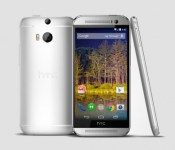
HTC Google Play Edition phones getting Android Lollipop ‘next week’
 Now that the Nexus devices have started receiving their update to Android Lollipop, the focus has no shifted to their stock Android brethren, the Google Play Edition (GPE) devices. Although these devices have to be updated by their respective manufacturers, the GPE devices still get their updates quite soon after the Nexus devices. And sure enough, we already have a pretty good idea of when the HTC GPE devices are getting Android Lollipop, after the HTC VP of Product Management, Mo Versi, pretty explicitly confirmed in a series of tweets that HTC is aiming to update its two GPE, the HTC One M8 and M7, by next week.
@funky_1975 Hi, early next week. Thanks.
— Mo (@moversi) November 14, 2014
@amir_thedude Target is early next week. Thanks.
— Mo (@moversi) November 14, 2014
That’s a pretty quick turnaround for HTC, who is no doubt also rushing to get Android Lollipop onto the One M8 running Sense 6.0. And despite the fact we haven’t heard word about the other GPE devices, we think it’s a pretty safe bet to expect the other devices to update in about the same timeframe. All the same, we’ll just have to see what happens next week, though we have a feeling some HTC GPE device owners will be pretty happy by the end of it.
What do you think about the HTC Google Play Edition phones getting Android Lollipop? Let us know your thoughts in the comments below.
Source: Twitter (1), (2) via Phone Arena
//<![CDATA[
ord = window.ord || Math.floor(Math.random()*1E16);
document.write('‘);
//]]>
The post HTC Google Play Edition phones getting Android Lollipop ‘next week’ appeared first on AndroidSPIN.
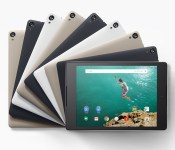
Amazon offering ‘lightning’ deal selling the Nexus 9 for $50 off!

The Nexus 9, Google’s high-end tablet of 2014 is now available on Amazon to purchase for just $349.99 ($50 off the normal price of $399.99). The offer is only available to customers in the United States and on the 16 GB indigo black.
The link to the sale page can be viewed here.
Via: GSM Arena

The post Amazon offering ‘lightning’ deal selling the Nexus 9 for $50 off! appeared first on AndroidGuys.
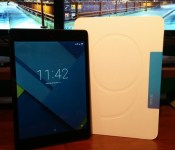
Google Nexus 9 Review

Google has taken both their tablets, the Nexus 7 and Nexus 10, and combined them into a single powerhouse. The Nexus 9, which Google debuted on October 15th alongside the Nexus 6 and Android 5.0 Lollipop, is a top of the line device due to its killer hardware and build quality. The Nexus 9 doesn’t have all the extra features, but it does come with Android 5.0 Lollipop out of the box, the 64-bit NVIDIA Tegra K1 processor, and 2 GB of RAM to power it all. Let’s jump right into the Google Nexus 9 review.
Design
The Nexus 9 has three color options available: indigo black, lunar white,and sand. It also has two storage options: 16 or 32 GB. There is an LTE version available, but it is only available in indigo black with 32 GB of storage. The device I have is the 16 GB indigo black version.
This Google tablet is constructed by HTC, who is well-known for their premium design quality on their One series. With a first glance at this device, you can tell that it is made by HTC, but it still has the familiarity of a Nexus device. The Nexus 9 comes with an 8.9 inch display in a 4:3 ratio, that I think makes the tablet easier and more enjoyable to hold.

The Nexus 9 is a very solidly built device, and that is due to the surrounding chassis that is constructed of metal. It is squared off, yet slightly angled towards the display away from the back of the device. Coming in at 7.8 mm thick, it gives enough real-estate to rest your fingers on comfortably without touching the bezels and accidentally touching the display.

On the right side of the frame are both the power button and volume rockers. HTC did a great job of hiding the buttons, and it makes the edge look seamless. This is both good and bad. While it makes the device look as sleek as ever, it also is a chore to find which button to press. Since the buttons are near flush with the chassis of the device, it tough to know if you are on the volume rockers or power button until you press them.
The back of the device has the classic Nexus soft-touch feel that can be seen on previous Google devices. While it is a fingerprint magnet, it is definitely worth it. The soft-touch back makes the device very easy to hold without the fear of dropping it.

Display
Google has stepped up their display quality in 2014. The Nexus 9 packs an 8.9 inch IPS display with a resolution of 2048 x 1536. The ppi for this device comes in at 281, which is higher than Apple’s iPad Air 2 at 264 ppi

The display which is a 4:3 ratio, looks its best when it is showing dark content, especially while watching movies. Since the device doesn’t have a 16:9 ratio, videos will naturally have black bars on the top and bottom of the video to compensate for the extra space. Darker games and movies look amazing on the Nexus 9, but once content has brighter and flashier graphics, the display doesn’t pop as well.
Aside from content, Android 5.0 Lollipop takes full advantage of the display and everything Google branded looks great and very crisp. You can tell that the Google-based apps are optimized for the 4:3 ratio.
While the Nexus 9 excels at displaying darker content and its own operating system, it also is very good at displaying text. The IPS display isn’t very bright or saturated, so it makes it easier on the eyes while reading.
Sound
This category is just for this device, since the Nexus 9 is HTC made. The Nexus 9 features HTC’s own BoomSound speakers on the front panel of the device, one on the bottom and one on the top to create a stereo effect. Front-facing speakers have been one of the more popular features to come on devices since HTC made it popular, and for good reason.

Front-facing speakers is a feature I think all devices, especially tablets need to have. I am glad Google included this, and they are loud. The sound is very crisp, even at loud volumes. Mids and highs come through very well, and low-end/bass is better than average. When bass gets too low, it drones out, but that is expected from such small speakers.
My only complaint about the speakers on the Nexus 9 is that they are sunk down into the front of the device. As you can see in the picture, it leads to dust being caught in the speaker grill.
Performance
This tablet sports top-notch specifications that render the device ‘future proof’. Google went with the 64-bit NVIDIA Tegra K1 dual-core processor that is clocked at 2.3 GHz. It’s supported by 2 GB of RAM and the all-new Android 5.0 Lollipop.
This is a stock-Android device, so there is no bloatware, just pre-installed Google apps. There is nothing this device can’t handle. On all my previous Android devices, I always tend to modify the animations speed in the developer options and set it at .5x, but this is the only device I decided against it.With the updated Android OS, navigation is as smooth as ever and transitions are always at a high frame rate.
I found myself using the multitasking button more than ever due to how smooth Android 5.0 Lollipop is on the Nexus 9. It is quick and painless switching between apps, and like I stated earlier, the animations and transitions make it everything more enjoyable.
The device does take a little longer to open and close heavier apps/games such as games like Leo’s Fortune. When more screen-intensive apps are open, expect the processor to get warm. It isn’t anything too outrageous.
Battery
The Nexus 9 sports a modest 6700 mAh battery that can travel the distance, but it also can be underwhelming. The battery life will definitely be determined on how you use this device, which can be said for all devices.
One thing the device has going for it in the battery department is the excellent standby time. While I consistently use my tablet, it is left to idle the majority of the time during my busy schedule (working, sleeping, and going to school). I will lose around 1-2% over a 8-10 hour period, which is very good.
While the standby time is great, I expected more optimization due to the new ART run-time and the latest 5.0 update. I will give Google a beak on the Nexus 9, due to the fact that Lollipop just got released, and more updates will ensue. Not only did battery life not live up to my expectations, the charging time is the worst part. It regularly takes hours to charge the device, especially if you are down on the 10-15% range.
I can expect around 4-6 hours of screen on time with normal to heavier usage on one charge. Once I start pushing the Tegra K1, there is a steep drop in battery life. Below are some battery statistics screenshots from my device.


Conclusion
Overall, this tablet is one of the best Android tablets I’ve seen, and is the only one to offer a pure Android experience. If you are an Android-enthusiast there is no question; this is the device you want. Between the awesome Tegra K1 processor and prompt updates, you can’t go wrong.
There is not an area that the device falls behind the competition, and the majority of things that are wrong with it are very fixable via software updates. Android 5.0 Lollipop brings the ultimate Android experience with some bugs, but it is still fairly new. I expect the performance of the Nexus 9 only to improve. Google has brought me back into the tablet world with how well this device performs and I would definitely recommend the Nexus 9 to anyone.
If you are in the market for a tablet, this one won’t come at the cheapest price. The 16 GB version is $399.99, the 32 GB version is $479.99, and the LTE version is $599.99.
The post Google Nexus 9 Review appeared first on AndroidGuys.

HTC One M8 For $299 Unlocked Via HTC Hot Deals
Well HTC is back with their new deal for the week. After the excitement (and disappointment) from the last deal in which they sold the HTC Nexus 9 for 50% in a matter of minutes we hope this week the deals will flow smoothly. So what does HTC have in store this week. The HTC One M8 of course. For this HTC Hot Deal of the week HTC will offer the One M8 on any carrier or unlocked for $299. That means you can get a brand new HTC One M8 off contract for $299 which is one hell of a deal. You will save $350 off the regular price.

Sadly you will have to be quick with the F5 button for this one as HTC has only set 200 units aside at this price. After the 200 units sell out the next 300 individuals will get the HTC One M8 for $399. That still gives you a savings of $250 but who are we kidding we all want that $299 price. So hit up the link down below and try to snag one of the 200 $299 HTC One M8’s. Good luck!
The post HTC One M8 For $299 Unlocked Via HTC Hot Deals appeared first on AndroidSPIN.
Android 5.0 Lollipop Targeted for HTC One M7 and M8 GPE Devices Next Week
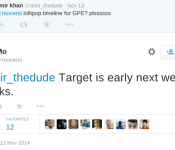
HTC has been working pretty furiously to provide timely updates to their devices to the latest Android OS builds available. With Android 5.0 Lollipop HTC stated that they would have updates starting within 90 days of the publicly available OS from Google. It has only been a week and a number of manufacturers have already started to push updates out. Motorola being one and NVIDIA with the Shield Tablet on the 18th being another. Lastnight a target timeline was tweeted out by HTC’s vice president of product management, Mo Versi.

He makes note that the GPE HTC devices are targeted to get their hands on Android 5.0 Lollipop updates early next week. It is just a target timeline, so things could go south and not be ready though. It shouldn’t be all that surprising since Google Play Edition devices are more or less stock Google OS versions of flagship devices. It is still good to see them getting into the mix so quickly regardless.
Anyone out there sporting a GPE One M8 or HTC One M7 ready to see the official update?
//<![CDATA[
ord = window.ord || Math.floor(Math.random()*1E16);
document.write('‘);
//]]>
The post Android 5.0 Lollipop Targeted for HTC One M7 and M8 GPE Devices Next Week appeared first on AndroidSPIN.
Sprint Buyer’s Guide for Android (November 2014)

In the hunt for a new smartphone from Sprint? Regardless of whether you’re buying your first Android or upgrading for the fourth time there’s something for everyone. And, as you might suspect, Ma Bell has plenty to choose from. In fact, counting variations, there are roughly two dozen models to choose from today.
As the last of the big four carriers to adopt Android, Sprint is doing a bang-up job in supporting the platform. It seems we’re constantly hearing about an exclusive model or head start on the competition.
Defining high-end
Today’s top Androids feature big, gorgeous displays, fantastic high-resolution cameras, and lots of memory. Toss in some quad-core and octa-core processors and some killer high capacity batteries and you’ve got mobile devices that would rival your computer from just a few years back. As 2014 draws to a close and we look at the hardware from late model Androids it’s not uncommon to find screens hovering at 5-inches or larger. Thanks to ever-shrinking bezels we have phones with massive displays that also happen to fit comfortably in our hand. And, they’re not only big, but they’re sharp, too. Resolutions across the the top models are 1080p and higher. For what it’s worth, we’re starting to get our first glimpses of 2K and Ultra HD screens. It can be argued that average users cannot discern much beyond 720p/1080p on such a small device.
If you’re not coming to the table with at least a quad-core processor and 2GB RAM then you’re not going to sit at the big boy’s table. Most of the bleeding edge stuff you’ll find today comes with 3GB memory and chipsets of around 2.3GHz – 2.7GHz.
Storage capacities, for the most part, haven’t moved forward quite as quickly as other areas. You’ll still routinely find 16GB and 32GB models in most models though some are creeping into the 64GB space. Given that many handsets offer external storage via microSD cards it should matter little where you start out – especially if cost is a factor.
Another important factor in determining a smartphone purchase is the version of Android. Typically, it’s a simple case of “the newer the phone, the newer the operating system”. Today’s most recent phones are powered by Android 4.4.4 KitKat but anything running at least 4.4 should suffice for the average person. You will still find an occasional straggler, though, running something older.
Flagships & Exclusives
- Samsung Galaxy Note 4: Launched in October, this is Samsung’s annual plus-sized experience. Thanks to the release time-frame, these are typically a step-up from the Galaxy S series of smartphones. Standout specs include 32GB storage, a 5.7-inch Quad HD display, 3GB RAM, an S Pen stylus, and a 3220mAh battery. Sprint | Best Buy
- Samsung Galaxy Note Edge: The first device of its kind, Samsung’s plus-sized smartphone is the best of the Note series with some extra ticker-width screen on the side. Sprint | Best Buy
- Samsung Galaxy S5: Released in spring 2014, it’s the most popular series of Android models to date. Hardware includes a 5.1-inch display, 16-megapixel camera, 16GB storage, and a 2800mAh battery. Sprint | Best Buy
- LG G3: LG’s increasingly popular family of phones, this one is unique in that it features rear button configuration under the camera. Sprint | Best Buy
- Google Nexus 6: Motorola’s take on the annual Google flagship experience, the 6-inch handset runs the latest version of Android (5.0) and offers users plenty of battery and top-notch power. Sprint | Amazon
- HTC One M8: Perhaps the oldest model in this list, HTC’s flagship handset received very high marks for its build quality and toned-down custom UI. Often cheaper than others in the group, it’s still plenty of bang for the buck. Sprint | Best Buy
- HTC One M8 Harman/Kardon edition: A beefed up audio experience with Clari-Fi technology and LiveStage enhancing your listening enjoyment. Sprint | Best Buy
- Samsung Galaxy S5 Sport: A variation of the flagship with pre-installed apps based around the more active user. Dirt and water resistant, it comes in a pair of alternate colors. Sprint | Best Buy
Mid-range
While not always the case, the mid-range Android is typically made up of last year’s top models. This is not to suggest, however, that there’s not a one-off model or variation that sneaks in every once in a while. Specs, as you can imagine, are often a step below. Processors, cameras, and batteries are sometimes the key difference though many of them also feature a screen resolution of 720p or 1080p. What follows what could be considered some of Sprint middle-of-the-pack handsets.

- LG G2: One of LG’s breakout devices over the last few years, the smartphone was the first to employ the rear button setup. Killer hardware and a refined UI make this one hard to resist even a year later. Sprint | Best Buy
- LG G Flex: The first smartphone from LG to offer the curved display; six inch screen and a 3500mAh battery make it big and long-lasting. Sprint | Best Buy
- HTC One (M7): The flagship model that kicked off HTCs current signature look, the phone offers plenty of bang for not much buck. And, thanks to a promised Android 5.0 update, it’s a great bargain with longer term appeal. Sprint | Best Buy
- HTC One Max: The plus-sized approach to the 2013 flagship HTC handset line, it comes with a 5.9-inch screen and 32GB internal storage. Sprint | Best Buy
- Sharp AQUOS Crystal: With an edgeless 5-inch HD display and a quad-core CPU, the Sharp is quite a bit more power for the money than what you’ll find from other brands. The 1.5GB RAM and 2040mAh battery are par for the course in today’s mid-range. Sprint | Best Buy
- Samsung Galaxy S4: One of the most popular smartphones of all time, this one is offered in a variety of colors. Features include a 5-inch display, 16GB storage, and a quad-core CPU. Sprint | Best Buy
- HTC One E8: What happens when you take the flagship One M8 and tap it with a polycarbonate body? You end up with a lower-cost version with very respectable internal hardware. Sprint | Best Buy
- Samsung Galaxy Note 3: As the plus-sized Samsung flagship from 2013, its quad-core CPU and camera make it a moderately strong device one year later. Sprint | Best Buy

Entry-level
- HTC Desire 510:A low-cost approach with a pocketable 4.7-inch display, it delivers some of HTC’s best features. Bonus points for microSD expansion. Sprint | Best Buy
- Samsung Galaxy S3: Still kicking around, it’s the perfect barrier for new smartphone adopters looking for an inexpensive taste of Android. Enough power for your aunt with a price she’ll love. Sprint | Best Buy
- Kyocera Hydro Vibe: The only Kyocera on the list, it’s a waterproof handset designed for the every man. Not top of the line hardware, no, but it’s the one you’ll happy to take poolside. Sprint | Best Buy
- LG G3 Vigor: The looks and feel of the flagship model, only in a slightly smaller form with less powerful hardware. The 5-inch screen is still a stunner and the 2540mAh battery is plenty of juice for just about anyone. Sprint | Best Buy
- Motorola Admiral: Perhaps one of the oldest devices still offered through Sprint, The Admiral is also the only one here with a physical keyboard. Fans of Push-to-talk will appreciate its simplicity, however high speed data fans will not appreciate being stuck with 3G. Sprint
The post Sprint Buyer’s Guide for Android (November 2014) appeared first on AndroidGuys.

HTC to roll out Eye Experience update to Canadian One (M8) tomorrow

Mo Versi, HTC’s Vice President of Product Management, has today announced via Twitter that the Taiwanese company will start rolling out the much-anticipated Android 4.4.4 Eye Experience update to all Rogers, TELUS and Bell-branded variants of its flagship smartphone, the One M8, located in Canada, starting tomorrow, November 11.
Hit the break for the full changelog.
System Improvements:
- Radio stability improvement
- Transition improvements
Eye Experience Implementation:
- Split Capture
- Crop-Me-In
- Photo Booth
- Auto Selfie
- Voice Selfie
- Swipe-To-Switch
- Video Face Tracking
- Live Makeup
- Video Screen Sharing
Application Improvements:
- Camera stability
- Video highlight stability
- Zoe 1.0
At 9:00am (PST) tomorrow, you should be able to initiate the upgrade manually. To do this, make sure you’re connected to a Wi-Fi network. Then, from the home screen, press the Menu key, followed by Settings. Scroll to the bottom and tap ‘About Device’, followed by ‘Software Update and ‘Update Now’.
Source: Twitter
Come comment on this article: HTC to roll out Eye Experience update to Canadian One (M8) tomorrow
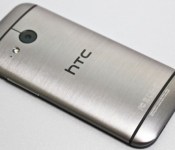
HTC One (M9) to be unveiled at MWC next year with some stellar specs

According to a report published by the International Business Times earlier today, HTC is expected to unveil the successor to its current flagship smartphone, the One (M8), at next year’s Mobile World Congress conference in Barcelona, Spain.
The handset, dubbed the One (M9), is rumored to feature some pretty impressive specifications, including a 5.2-inch 2K AMOLED display with a resolution of 1440 x 2560 pixels, a Snapdragon 805 CPU, 3GB of RAM, 64GB of internal storage (expendable up to 128GB via microSD) and IP67 certification.
Similar to all of HTC’s recent flagships, the device will consist of an aluminium unibody design and the revolutionary BoomSound speakers we’ve grown to love. Out of the box it will run the latest build of Android 5.0 Lollipop skinned with the Taiwanese company’s Sense 7 user interface, and support for 64-bit computing.
Are you excited to see what HTC has up its sleeve for its next flagship smartphone? Be sure to let us know your thoughts in the comments section down below.
Source: IBT
Come comment on this article: HTC One (M9) to be unveiled at MWC next year with some stellar specs
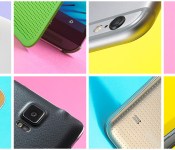
The top 15 smartphones you can buy right now
 It’s possible you already purchased one of the smartphones we listed in our buyer’s guide last July, but things tend to move quickly, and with fresh handsets from names like Apple, Samsung and Motorola, some of you may already be itching for an upgrade. To that end, we’ve made some fresh additions to our list of the latest and greatest smartphones out there today. Sure, our official Holiday Gift Guide is just around the corner, but this update will help you make some quick decisions, or at least get a head start on that holiday wish list.
 Filed under: Cellphones, Apple, Samsung, Sony, Microsoft, HTC, Nokia, Google, LG

AT&T Buyer’s Guide for Android (November 2014)

In the hunt for a new smartphone from AT&T? Regardless of whether you’re buying your first Android or upgrading for the fourth time there’s something for everyone. And, as you might suspect, Ma Bell has plenty to choose from. In fact, counting variations, there are roughly two dozen models to choose from today.
As the last of the big four carriers to adopt Android, AT&T is doing a bang-up job in supporting the platform. It seems we’re constantly hearing about an exclusive model or head start on the competition.
Defining high-end
Today’s top Androids feature big, gorgeous displays, fantastic high-resolution cameras, and lots of memory. Toss in some quad-core and octa-core processors and some killer high capacity batteries and you’ve got mobile devices that would rival your computer from just a few years back.
 As 2014 draws to a close and we look at the hardware from late model Androids it’s not uncommon to find screens hovering at 5-inches or larger. Thanks to ever-shrinking bezels we have phones with massive displays that also happen to fit comfortably in our hand. And, they’re not only big, but they’re sharp, too. Resolutions across the the top models are 1080p and higher. For what it’s worth, we’re starting to get our first glimpses of 2K and Ultra HD screens. It can be argued that average users cannot discern much beyond 720p/1080p on such a small device.
If you’re not coming to the table with at least a quad-core processor and 2GB RAM then you’re not going to sit at the big boy’s table. Most of the bleeding edge stuff you’ll find today comes with 3GB memory and chipsets of around 2.3GHz – 2.7GHz.
Storage capacities, for the most part, haven’t moved forward quite as quickly as other areas. You’ll still routinely find 16GB and 32GB models in most models though some are creeping into the 64GB space. Given that many handsets offer external storage via microSD cards it should matter little where you start out – especially if cost is a factor.
Another important factor in determining a smartphone purchase is the version of Android. Typically, it’s a simple case of “the newer the phone, the newer the operating system”. Today’s most recent phones are powered by Android 4.4.4 KitKat but anything running at least 4.4 should suffice for the average person. You will still find an occasional straggler, though, running something older.
Flagships & Exclusives
- Samsung Galaxy Note 4: Launched in October, this is Samsung’s annual plus-sized experience. Thanks to the release time-frame, these are typically a step-up from the Galaxy S series of smartphones. Standout specs include 32GB storage, a 5.7-inch Quad HD display, 3GB RAM, an S Pen stylus, and a 3220mAh battery. Best Buy | AT&T
- Samsung Galaxy S5: Released in spring 2014, it’s the most popular series of Android models to date. Hardware includes a 5.1-inch display, 16-megapixel camera, 16GB storage, and a 2800mAh battery. Best Buy | AT&T
- LG G3: LG’s increasingly popular family of phones, this one is unique in that it features rear button configuration under the camera. Best Buy | AT&T
- Motorola Moto X (2014): Motorola’s now annual flagship model, the Moto X is significant for its stripped down Android experience. Slightly bigger than last year’s model, this one has been very well received in the space. Best Buy | AT&T
- HTC One M8: Perhaps the oldest model in this list, HTC’s flagship handset received very high marks for its build quality and toned-down custom UI. Often cheaper than others in the group, it’s still plenty of bang for the buck. Best Buy | AT&T
- Samsung Galaxy Alpha: The first device from Samsung to employ the new “design language”; features a svelte body wrapped in metal trim. Best Buy | AT&T
- Samsung Galaxy S5 Active: A variation of the flagship with pre-installed apps based around the more active user. Rugged and durable, with a trio of new colors. Best Buy | AT&T
Mid-range
 While not always the case, the mid-range Android is typically made up of last year’s top models. This is not to suggest, however, that there’s not a one-off model or variation that sneaks in every once in a while. Specs, as you can imagine, are often a step below. Processors, cameras, and batteries are sometimes the key difference though many of them also feature a screen resolution of 720p or 1080p. What follows what could be considered some of AT&T middle-of-the-pack handsets.
- LG G2: One of LG’s breakout devices over the last few years, the smartphone was the first to employ the rear button setup. Killer hardware and a refined UI make this one hard to resist even a year later. Best Buy | AT&T
- LG G Flex: The first smartphone from LG to offer the curved display; six inch screen and a 3500mAh battery make it big and long-lasting. Best Buy | AT&T
- Samsung Galaxy Note 3: As the plus-sized Samsung flagship from 2013, its quad-core CPU and camera make it a moderately strong device one year later. Best Buy | AT&T
- Amazon Fire Phone: The first smartphone from Amazon, it’s exclusive to AT&T. It might be a little more gimmick than seasoned Android users might enjoy but plenty for new users. Works great for those who can’t get enough Amazon (Prime). Best Buy | AT&T

Entry-level
- Samsung Galaxy S4 Mini: A smaller take on the 2013 flagship model, the S4 Mini has a very pocketable 4.3-inch display, an 8-megapixel rear shooter, and plenty of Samsung software features. Best Buy | AT&T | Amazon
- Motorola Moto G: A perfect starter smartphone, it has a 4.5-inch screen, a quad-core CPU, and LTE support. Best Buy | AT&T | Amazon
- HTC Desire 610: Low-cost take on the form factor from the One M8, you’ll find front-facing speakers and a host of HTC custom tweaks. Best Buy | AT&T | Amazon
- Samsung Galaxy Rugby Pro: Features a 4-inch display, enhanced push-to-talk (PTT), and is built tough to resist shocks, water and dust. Best Buy | AT&T | Amazon
- NEC Terrain: The only one on this list that features a physical keyboard; rugged design and PTT make this a great option for people who spend their days in the field. AT&T | Amazon


The post AT&T Buyer’s Guide for Android (November 2014) appeared first on AndroidGuys.


