


HP Smartwatch Looks Quite Sexy! Leave Your Phones and Get Out! – The ManDroid Show

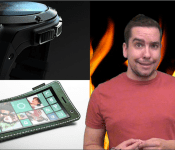
It is time to talk some Android with you folks. HP greeted us today with a smartwatch design that looks pretty sexy in my eyes. A sad story came about this week that resulted in a woman’s death because she couldn’t let her phone burn in her burning house. Your life is more important than your phone my friends. Enjoy the show!
Android News
HP smartwatch
Flexible leather phone concept
Woman dies saving her phone
Instagram with Material Design
//<![CDATA[
ord = window.ord || Math.floor(Math.random()*1E16);
document.write('’);
//]]>
The post HP Smartwatch Looks Quite Sexy! Leave Your Phones and Get Out! – The ManDroid Show appeared first on AndroidSPIN.
.CPlase_panel display:none;
Engadget Daily: Beats joins Apple, HP makes a smartwatch and more!

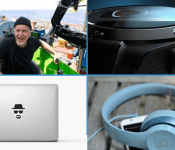
Today, we mull over James Cameron’s upcoming film, Deepsea Challenge 3D, get a peek of HP’s new smartwatch, watch Apple welcome Beats into the family and maybe order some MacBook decals. Read on for Engadget’s news highlights from the last 24 hours.

James Cameron found himself at the bottom of the ocean
On August 8th, you can watch James Cameron pilot his custom-made submersible to Mariana Trench in 3D. Spoiler alert: The movie’s brief clips of deep sea life are incredible, but it sort of feels like an infomercial for the decorated filmmaker.

Apple officially brings Beats into the fold
Just over two months after Dr. Dre claimed to be hip hop’s first billionaire, the $3 billion deal for Beats is finally done. Today Apple welcomed the audio giant into the family, complete with a tweet from Tim Cook.

Apple decal sellers saw a tremendous spike in sales following ‘Stickers’ ad
Apparently Apple’s latest “Stickers” ad was pretty persuasive. Decal vendors are reporting a huge increase in sales since last week. Admit it, You bought some didn’t you?

Take a look at HP’s luxury smartwatch
What you’re looking at is a render of HP’s upcoming iOS- and Android-compatible smartwatch. There are few details about the device other than the involvement of American fashion designer Michael Bastian.
You also might like:
.CPlase_panel display:none;

Hello there: HP teams with Gilt to design “a Michael Bastian smartwatch”
 With the release of Android Wear, the benchmark for style in the smartwatch world would seem, by popular consensus, to be Motorola Moto 360. Well, there may be a new challenger to the arena, and its from a manufacturer you might not be expecting a smartwatch to come from. That manufacturer is HP, who is teaming with Gilt, an online retailer, to create what is so far looking like a very intriguing device. Designed by U.S. designer Michael Bastian, the smartwatch apparently takes some of its cues from the interior of luxury cars.
 It seems unlikely that the device will be running Android Wear as it is said the smartwatch will be able to be paired with both Android and iOS devices. There will also be a companion app that will allow you to customize the interface of the watch to your liking, though there’s nothing more specific about that yet. There’s also no word on pricing yet, though you can sign up for updates, however we’re assuming that level of style isn’t going to be cheap. Still, it looks like it’s going to be a thing of beauty, and it’s interesting to see HP enter the smartwatch market in such a unique way.
What do you think about the Michael Bastian smartwatch? Let us know your opinion.
Source: Gilt via engadget, Hypebeast
//<![CDATA[
ord = window.ord || Math.floor(Math.random()*1E16);
document.write('’);
//]]>
The post Hello there: HP teams with Gilt to design “a Michael Bastian smartwatch” appeared first on AndroidSPIN.
.CPlase_panel display:none;

Take a look at HP’s luxury smartwatch

Despite their utility, smartwatches remain a geeky niche item thanks to a certain lack of je ne sais quoi. However, HP is partnering with a retailer called Gilt to build an Android and iOS compatible smartwatch that may finally tick the style box, thanks to US designer Michael Bastian. He’ll take care of the design, which will feature a circular, 44mm stainless steel design and three swappable bands: black rubber, brown leather, olive green nylon and a limited edition black.
Bastian says the design cues came from luxury automobiles, namely interior features like the dashboard and trim. Meanwhile, HP will will add the watch’s smart features, which will reportedly include notifications like email, text and calls, along with user controls for music and other apps. It’ll reportedly arrive this fall, with no word yet on pricing — but we imagine it will be in the “if you have to ask” category.

Via: Hypebeast, Fashionista
Source: Gilt
.CPlase_panel display:none;

Microsoft says super-cheap Windows devices are on the way

It used to be that if you only wanted to pay $199 for a brand-new laptop, you’d have to try your luck on Black Friday or pick up a Chromebook. Not so anymore. Microsoft COO Kevin Turner outed a $199 HP Windows laptop called the Stream at the company’s Worldwide Partner Conference this morning, and it should see the light of day in time for the holiday season. Fine, it doesn’t sound like the biggest deal ever. There are already a few solid Windows laptops floating around there for less than $100 more, after all, and at this point no one’s sure what $199 will actually get you. That’s a fair point, but c’mon: on some level this move is all about symbolism. Microsoft is telling the industry — and the consumers that fuel that immaculate machine — that it’s not giving up low-end computing to Google without a fight.
Nadella and his crew are banking on the fact that Windows provides greater functionality and extensibility than ChromeOS right out of the box. When computer shoppers can own the full Windows experience (for better or worse) for the same price as committing to a Chrome-y connected lifestyle, they’ll have to mull that choice over. That’s exactly what Microsoft wants. Turner also confirmed that the next few months would bring at least a few full-blown Windows tablets priced to move at $99. That announcement wasn’t as much of a surprise since the folks in Redmond revealed that the OS would be free to manufacturers when its installed on device’s with screens under 9 inches. It was only a matter of time, but hey — that doesn’t make the gesture any less meaningful.
Source: The Verge

PC shipments appear to flatten out after two years of steep decline

Both Gartner and IDC appear to have some good news for the PC industry — the seemingly never-ending death spiral may have come to an end. While the two research groups don’t agree completely on the numbers, it does appear that after two years of stead and sizable declines, the PC industry is seeing shipments flatten out. In total, according to Gartner, 75.8 million computers were shipped in the second quarter of 2014, a negligible 0.1 percent drop from the same quarter a year ago. While IDC saw a much more sizable 1.7 percent fall in PC shipments, that’s still a far cry from the 7.1 percent decline it anticipated and the smallest it’s measured in two years.
Two years ago the netbook market imploded and tablets started eating into laptop sales. Since then shipments of traditional computers have been falling at an alarming rate. IDC doesn’t necessarily expect this to indicate a longer term trend towards flat PC sales. Basically, the worst may not be over yet. Despite impressive growth from major players like Dell, HP and Lenovo smaller companies are still seeing tremendous drop off. And the declines are particularly steep in markets like India where the most potential for growth is. Instead the improvements during the quarter were carried primarily by the US and Western Europe, which might not be able to keep the industry from declining further in the long run.
Filed under: Desktops, Laptops, Apple, ASUS, HP, Dell, Acer, Lenovo
The evolution of the PC: A decade of design

Computers have gone through nothing short of a renaissance in the decade since Engadget was born. When we started in 2004, desktops still ruled the roost; laptops were frequently clunky; and tablets were niche devices for doctors.
That state of affairs didn’t last for long, though. Netbooks briefly took over the world, bringing tiny laptops to the masses. Ultrabooks proved that slim machines could still be powerful. And just about the entire PC market has had to confront the rise and domination of touchscreen-enabled mobile devices like smartphones and tablets. In short, it’s pretty remarkable how much of a difference 10 years can make in tech.
2004: Sony VAIO X505

Notable specs: 1.1GHz Pentium M processor, 20GB hard drive, 1.73-pound weight, 10.4-inch (1,024 x 768) display.
Sony didn’t realize it at the time, but it was laying the groundwork for the next decade of laptops with the VAIO X505. The 10-inch system was so featherlight and slender that it was easy to take anywhere, much like a netbook or Ultrabook. If it weren’t for the astronomical $2,999 price tag, it’s possible it could have started a mobile-computing revolution.
2005: IBM ThinkPad T43

Notable specs: 1.6GHz to 2.13GHz Pentium M processors, 30GB or larger hard drive, 6-pound weight, DVD drive, 14.1-inch (1,024 x 768 or 1,400 x 1,050) display.
The ThinkPad T43 was the swan song for an era of computing when laptops were mostly for globe-trotting professionals. One of the last PCs to bear the IBM name before Lenovo closed its acquisition of IBM’s PC business, it represented everything good about the ThinkPad badge: It was fast, well-built and relatively easy to carry in a briefcase.
2006: Dell XPS 700

Notable specs: Core 2 Duo or Core 2 Extreme processors, dual 320GB hard drives, dual DVD drives, dual GeForce 7900 GTX graphics.
Dell had built up a reputation for high-performance PCs well before 2006, but the XPS 700 was the system to own that year if you wanted a gaming desktop from a major brand. Its aggressive design still holds up today, and it was often as powerful as custom-built rigs. It was a dream machine at a time when you still needed a giant tower for serious online gaming.
2007: ASUS Eee PC 701

Notable specs: 800MHz or 900MHz Celeron M processors, 2GB to 8GB solid-state drives, 2-pound weight, 7-inch (800 x 480) display.
The Eee PC 701 marked the official start of the netbook craze, which lasted until the iPad’s arrival in 2010. Its screen, speed and storage were very modest even when new, but it showed that you didn’t need a big, expensive portable just to check your email at the coffee shop.
2008: Apple MacBook Air

Notable specs: 1.6GHz or 1.8GHz Core 2 Duo processors, 80GB hard drive or 64GB solid-state drive, 3-pound weight, 13.3-inch (1,280 x 800) display.
The archetypal Ultrabook. While it wasn’t without its quirks, the MacBook Air successfully bridged the gap between ultraportables and full laptops. It was fast enough for most tasks, yet light enough that you’d hardly notice it in your bag.
2009: HP Firebird

Notable specs: 2.66GHz or 2.83GHz Core 2 Quad processors, dual 250GB or 320GB hard drives, DVD or Blu-ray drives, dual GeForce 9800S graphics.
While HP’s Firebird line wasn’t perfect by any stretch, it showed how efficient desktops had become. You could get a reasonably quick, ready-made gaming PC that both looked good and didn’t swallow up too much surface area. It’s arguably the prototype for the small-yet-strong Steam Machines that would follow five years later.
2010: Lenovo IdeaCentre A300

Notable specs: 2.2GHz Core 2 Duo processor, 500GB hard drive, 21.5-inch (1,920 x 1,080) display.
Although the iMac is virtually synonymous with all-in-one computers, Lenovo’s sleekly designed IdeaCentre A300 was proof that Apple didn’t have a complete lock on the category. Rather than glom the computer on to the A300′s back, Lenovo tucked it away in the base. The result was a relatively subtle, stylish desktop that looked right at home in just about any environment.
2011: Samsung Chromebook Series 5

Notable specs: 1.66GHz Atom processor, 16GB solid-state drive, 3.3-pound weight, 12.1-inch (1,280 x 800) display.
Unlike the other PCs here, the Chromebook Series 5′s real revolution was its software — with Chrome OS, both Google and Samsung were betting that you only needed a web browser for most of your day-to-day computing. That was optimistic on a slow, Atom-based machine circa 2011, but the Series 5 helped launch a wave of stripped-down, affordable laptops that could do a lot without relying on conventional apps.
2012: Apple MacBook Pro with Retina display

Notable specs: 2.3GHz or 2.6GHz Core i7 processors, 256GB to 768GB solid-state drives, 4.5-pound weight, 15.4-inch (2,880 x 1,800) display.
Apple’s 2012 MacBook Pro redesign was just an iterative upgrade in some ways, but it was also a bellwether for where laptop design would go. It wasn’t just that extra-sharp Retina display that turned heads; this was also one of the first high-end, full-size laptops to ditch optical discs and hard drives in the name of both an easier-to-carry body and faster, flash-based storage.
2013: Acer Aspire R7

Notable specs: 1.8GHz Core i5 processor, 500GB hybrid hard drive, 15.6-inch (1,920 x 1,080) adjustable display.
Windows 8′s touch-friendly interface prompted a flood of PCs that tried to be everything to everyone, and that’s epitomized in Acer’s one-of-a-kind Aspire R7. Depending on how you adjusted its multi-hinged display, the R7 could serve as a desktop, laptop or tablet. It wasn’t especially good at any of these, but it revealed how eager PC makers were to keep you from buying mobile tablets.
2014: Microsoft Surface Pro 3

Notable specs: Core i3, i5 or i7 processor, 64GB to 512GB solid-state drive, 12-inch (2,160 x 1,440) display.
If you want a system emblematic of the changes to PCs in the past 10 years, you only need to look at Microsoft’s latest flagship device, the Surface Pro 3. So long as you get its (practically mandatory) keyboard cover, it blurs the lines between tablet and laptop — it’s as useful for watching movies on the couch as it is for serious media editing at your desk.
Jon Turi contributed to this post.
Filed under: Desktops, Laptops, Tablets, Apple, Samsung, Microsoft, HP, Dell, Acer, Lenovo
HP’s Machine technology rethinks the basics of computing

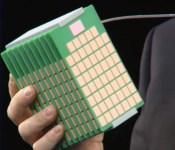
We’ve seen bits and pieces of technology that hint at the future of computing, but HP has just taken a big, big step toward bringing them all together. The company has unveiled The Machine (yes, that’s the name), a processing architecture designed to cope with the flood of data from an internet of things. It uses clusters of special-purpose cores, rather than a few generalized cores; photonics link everything instead of slow, energy-hungry copper wires; memristors give it unified memory that’s as fast as RAM yet stores data permanently, like a flash drive.
The result is a computer that can handle dramatically larger amounts of data, all the while using much less power. A Machine server could address 160 petabytes of data in 250 nanoseconds; HP says its hardware should be about six times more powerful than an existing server, even as it consume 80 times less energy. Ditching older technology like copper also encourages non-traditional, three-dimensional computing shapes (you’re looking at a concept here), since you’re not bound by the usual distance limits. The Machine shouldn’t just be for data centers and supercomputers, either — it can shrink down to laptops and phones.
To HP, the platform opens the door to large-scale computing concepts that aren’t even possible today, since devices can talk to entire networks to get things done. A doctor could compare your symptoms with that of every other patient on Earth, even while keeping everything private; smart cell towers would be aware of what’s going on across other towers and react accordingly. The shift in thinking is significant enough that HP is writing its own operating system from scratch to handle what’s possible with The Machine. It’s also creating an optimized version of Android, so there is a chance you’ll see Machine-based gadgets in your pocket.
The big obstacle at this point is simply timing. HP won’t even have samples of the necessary memory until 2015, while the first devices using The Machine are expected to ship in 2018. However, the tech firm is also attempting the kind of fundamental shift that the industry hasn’t seen in decades — this is going to take a while as a matter of course.
Filed under: Desktops, Misc, Laptops, HP
Source: HP Next
Computex 2014 wrap-up: Intel and co. usher in the future of computing

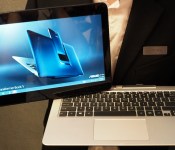
For the last few years, we’ve travelled to Computex in Taiwan to see the latest flock of Ultrabooks, with the latest and greatest models providing the biggest news of the show. This year, though, the highlight of the show wasn’t one particularly great notebook or even one company — though ASUS did steal the show with its mile-long list of new products. Rather, it was a prototype from Intel that teased the next generation of ridiculously thin and light PCs.
You think your Ultrabook or iPad Air is thin, but you have to see Intel’s reference design to grasp the skinniness of 2-in-1 devices powered by the Core M-series of processors. We’ll start to see products integrating Intel’s new line of chips later this year, but just imagine how much slimmer high-powered laptops will be a few Computexes down the line. At a certain point, devices will reach peak thinness, and then the focus will shift to improving battery life and performance in such a compact package — and that’s when everybody wins.

Intel’s look at the future of mobile computing is probably the most significant announcement at a show that’s traditionally all about PCs, but this year’s Computex also shined the light on wearables. True, we didn’t see any hardware that rivals Google Glass or Pebble in features or sophistication, but several prototypes from smaller companies boast clever designs for gadgets that live on your head or wrist. A flexible-battery manufacturer demonstrated a strap design that doubles the life of your smartwatch, offering a solution to one of the biggest complaints about the most popular models. E Ink’s wraparoud-display prototype is also an interesting approach to the next generation of wearables, giving you a ton of space to display info on your wrist.
Computex may not be the “CES of Asia” in terms of high-profile product announcements, and much of the new tech we saw here in Taipei was evolutionary rather than revolutionary. Still, that doesn’t mean there isn’t plenty of cool stuff to see. We’ve made it easy for you by breaking down our coverage just below — enjoy!

ACER
- Hands-on with the Liquid Leap: Acer’s first wearable tries to be everything to everyone
- Acer claims the Liquid Jade is the world’s ‘most compact’ 5-inch smartphone
- Acer shows off ‘Extend’ app allowing you to control your phone from your PC
- Acer claims its €79 Liquid Z200 is the cheapest branded Android phone
- With three SIM slots, Acer’s Liquid E700 is a phone for frequent travelers
ASUS
- ASUS’ PadFone X goes global: still a 5-inch to 8.9-inch transformer
- ASUS’ Zenbook NX500 is a thin and light laptop with a 4K screen
- The ASUS MeMO Pad 8 is ‘the world’s lightest 8-inch LTE tablet’
- New Fonepads from ASUS offer 3G, extra processing power
- ASUS intros the Transformer Book T300 Chi, a super-thin hybrid laptop
- ASUS Transformer Book V is a Windows hybrid with a detachable Android phone
- Here’s a semi-professional 32-inch 4K monitor from ASUS
- ASUS Transformer Pad refreshed with front speakers, lighter keyboard
- Hands-on with ASUS’ Zenbook NX500: The MacBook Pro meets its match
- ASUS’ 20-inch ‘portable’ all-in-one PC has gesture controls and a carrying handle
- There’s no such thing as too many antennas for ASUS’ high-end router
- ASUS’ new Fonepads are solid tablets, but still awkward for making calls
- Up close with ASUS’ quirky Windows laptop/Android phone hybrid
- ASUS has two Steam Machines and one is incredibly compact
- ASUS’ Chromebook C300 is yet another well-made budget laptop
- ASUS crams 4K gaming into sleek and distinctive laptop
- ASUS introduces us to the ‘world’s largest’ curved LED monitor
- ASUS’ new external Blu-ray drive does 7.1 audio at a fair price
- ASUS shows off a 14-inch USB touchscreen monitor
- Asia’s biggest tech show is ASUS’ show
- Angry owl is angry: ASUS does a badass gaming headset
DELL
- Dell adds two budget Android tablets to Venue lineup, prices start at $160
- Dell’s new Inspiron 20 is a giant tablet for work and play
- Dell aims for the mainstream with its two new Windows convertibles
HP
- HP’s back-to-school lineup includes lots of convertibles (and Beats products, too)
- HP hedges its bets, unveils a 14-inch laptop running Android (updated)
- HP’s Pro x2 612 laptop-tablet hybrid brings pen support, a sturdy keyboard
INTEL
- Intel doubles down on tablets, says it will power 130 models this year
- Intel launches Core M processors for even thinner 2-in-1 PCs
- Intel’s Windows 8.1 Pro Broadwell tablet is thinner than the iPad Air
- Intel’s super-thin ‘Core M’ tablets will be cheaper than you think
- Intel: Where we’re going, we don’t need cables
TOSHIBA
- With seven different use modes, Toshiba’s Kirabook is a Lenovo Yoga on steroids
- Toshiba stuffs Windows into a 7-inch tablet, whether you want it or not
OTHER HANDS-ONS
- Watch strap batteries could double the life of your wearable
- An up close look at the giant gaming PC that’s also a desk
- This $295 battery-powered unicycle could replace your Segway
- E Ink’s working on a smartwatch with a full wraparound display
- The PhoneStation uses your smartphone as a head-mounted display
Filed under: Laptops, Tablets, ASUS, AMD, Intel, HP, Dell, Acer
 AIVAnet