


AT&T to expand 4G coverage and launch first LTE smartphones November 6th: HTC Vivid, Samsung Galaxy S II Skyrocket

AT&T’s starting to catch the LTE fever, as the carrier’s announced that its first two devices with the true 4G will be ready to grab as of this upcoming Sunday. First we have the Samsung Galaxy S II Skyrocket: the long-rumored device can be yours for $250 with a two-year commitment and will offer a 4.5-inch Super AMOLED Plus display, Android 2.3.5, 1.5GHz dual-core CPU, 8MP rear camera with a 2MP front-facing cam and 16GB of internal storage space. Next up is the HTC Vivid (Holiday), which will be offered in both black and white for $200 and appears to match the specs leaked to us a couple months ago: it uses a 4.5-inch qHD (960 x 540) display, 1.2GHz CPU, 8MP rear camera with f/2.2 28mm wide angle lens and 1080p HD video recording. What about the “4G” branding? Contrary to the carrier’s HSPA+ devices, neither device will have LTE or 4G as part of their official name. Both phones will be reverse compatible with AT&T’s HSPA+ network, in case you’re not using the phone in an LTE-capable area; speaking of which, AT&T also announced that the November 6th launch will also bring four additional markets live, including Boston, Washington DC, Baltimore and Athens GA. Data plans for AT&T’s LTE smartphones will remain the same, with $15 getting you 200MB per month, 2GB going for $25 and 4GB with mobile hotspot connectivity for $45. Check below for a press gallery and the full press release.
Android 4.0 Ice Cream Sandwich now official, includes revamped design, enhancements galore
Google has taken the stage in Hong Kong to make the next version of Android OS, nicknamed Ice Cream Sandwich, a thing of reality. Better known as Android 4.0, the update offers a massive redesign to the user interface and adds a plethora of new features. Some of the highlights include an NFC-enabled feature called Android Beam, offline search in Gmail, new lock screen features and a fancy unlocking method called “Face Unlock,” which uses facial recognition to ensure strangers cant use your phone without permission. Ice Cream Sandwich also includes enhancements in almost every native app within Android itself. The SDK is already available for Android 4.0, and the update itself will make its first public appearance on the Samsung Galaxy Nexus, also unveiled tonight. After the break, well cover all of the nitty gritty details, along with some excellent screenshots below. So come along, why wont you?
Here’s some of the enhancements found in Ice Cream Sandwich:
- Option to use virtual buttons in the UI, instead of taking up capacitive touch buttons
- Widgets are in a new tab, listed in a similar list to apps
- Folders are much easier to create, with a drag-and-drop style similar to iOS
- A customizable launcher
- New phone app with visual voicemail functionality that lets you speed up or slow down voicemail messages
- Pinch-to-zoom functionality in the calendar
- Gmail has offline search, a two-line preview, and new action bar at the bottom
- Swipe left or right to switch between Gmail conversations
- Integrated screenshot capture by holding power and volume down buttons
- Improved error correction on the keyboard
- Ability to access apps directly from lock screen (similar to HTC Sense 3.x)
- Improved copy and paste
- Better voice integration
- Face Unlock, a facial recognition service
- New tabbed web browser, allowing up to 16 tabs
- Browser now automatically syncs your Chrome bookmarks
- Modern “Roboto” font
- Data Usage section in settings lets you set warnings when you reach a certain amount of use and disabling data when you go over your limit
- Ability to kill off apps that are using data in the background
- Camera app: zero shutter lag, time lapse settings, zoom while recording
- Built-in photo editor
- New gallery layout, organized by location and person
- Refreshed people app with social network integration, status updates and hi-res images
- Android Beam, a NFC feature that lets you exchange websites, contact info, directions, YouTube, etc.
- Don’t like some of those preloaded carrier apps? Disable ’em. Android Engineer Dan Morrill mentions that, among other new features, any app can be disabled, and while it will still take up space in ROM, it won’t be snatching any of your precious resources or clock cycles again if you

iPhone 4S vs Samsung Galaxy S II
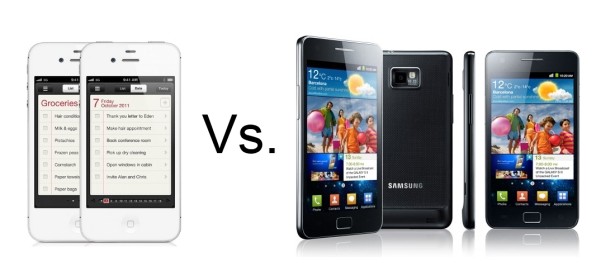 The iPhone 4S might be Apple’s top dog but Android has some pretty impressive breeds of its own. Right now, the No.1 in the Google mobile space has got to be the Samsung Galaxy S II with the LTE and even LTE HD editions to enjoy if you happen to live in the right parts of the world.
We’ve already seen how the iPhone 4S matches up to the iPhone 4 but there’s going to be an awful lot of people out there tempted to make the step over to Android given that the 2011 Apple phone announcement has been an S upgrade rather than an iPhone 5 in its own right. So, if that’s you, or if you just want to know how your Samsung superphone compares to the latest that Cupertino has to offer, then here’s Pocket-lint with the iPhone 4S vs Samsung Galaxy S II so you can see for yourself.
Form Factor
- 1ST: GALAXY S2 : 125.3 x 66.1 x 8.49mm, 117g
2ND: IPHONE 4S : 115.2 x 58.6 x 9.3mm, 140g
As far as pure design aesthetics and ergonomics go, this one’s a matter of horses for courses. Both the iPhone 4S and SGS2 are good looking devices with neither a knobble out of place. So, what the form factor contest comes down to is pocket space. What we always go on first are the mass and profile of the phones and it’s the Samsung Galaxy S II that’s both thinner and lighter. Yes, it’s longer and wider but these tend to be the dimensions of least importance when it comes down to taking up the room where your wallet and crumpled up tissues go. Ultimately, what you want is less weight to carry around and something that keeps the lining of your clothes as close to the way which your tailor intended. Read more 
Hotmail application for Android phones
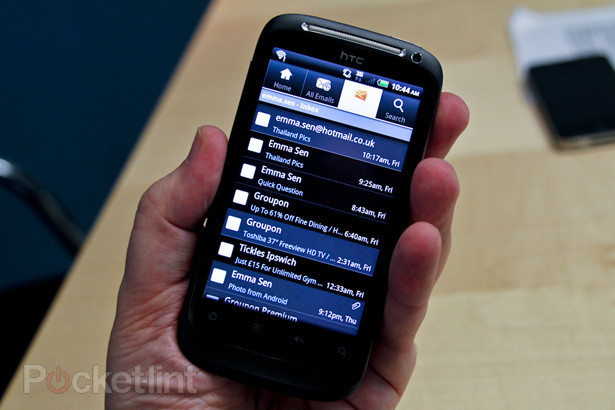
Microsoft has released an official Hotmail application for Android, and Pocket-lint was invited to the company’s London headquarters to check it out in advance of its public unveiling.
Demonstrated by Bryan Saftler, Hotmail product manager, Microsoft Consumer and Online UK, the new app offers cunning integration with the operating system, with a “you’ve got mail” icon appearing in the top left of the screen even when the screen is locked. The handset also vibrates to signify that an email has arrived. However, it’s not a native application, and is a free download on Android Market.
The layout of the screen is simple, offering tabulated access to the several different functions. There’s tabs for home, all emails, inbox and search, and one of the benefits is that you can add as many Hotmail accounts as you like. They’ll be split into separate inboxes or you can view all of the emails from all of the accounts together.
HTC Explorer confirmed as entry-level Android handset
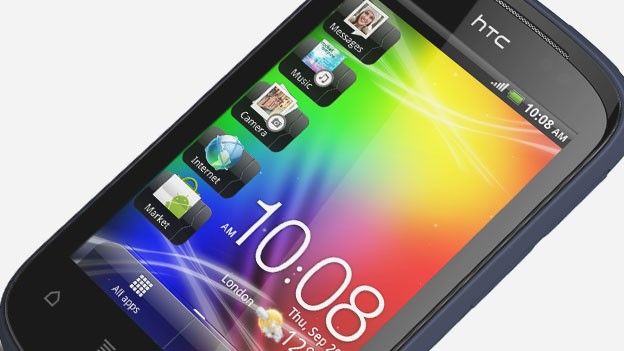
HTC has expanded its offering of entry level Android smartphones with the HTC Explorer being officially unveiled as a 3.2-inch device utilising the company’s hugely popular Sense UI.
Targeting the first-time smartphone adopter, the HTC Explorer is to be made available in a selection of colour schemes with the low-end specced handset bringing social networking and internet access to the fore in order to appeal to its target market.
“HTC Explorer is an easy-to-use smartphone that puts the customer in control, providing quick access to their most important content and information,” said Jason Mackenzie, president of global sales and marketing, HTC Corporation.
HTC Explorer Specs
Playing host to a 3.2-inch HVGA touchscreen display the HTC Explorer boasts a 3-megapixel rear-mounted camera and will hit retailers in Metallic Black, Active Black and Metallic Navy colourschemes.
Arcing back to the days of the Nokia faceplates and fascias Explorer users will also be able to customise their handsets with Metallic Blue, Metallic Orange, Metallic White and Metallic Purple transferable back covers.
HTC Explorer Release Date and Price
Whilst HTC has yet to officially announce the HTC Explorer release date and pricing information the Taiwanese handset manufacturer has confirmed the handset will touch down in the UK during Q4 of 2011. Networks and retailers are expected to announce prices and tariffs shortly. Stay tuned to T3.com for all the latest.
via HTC Explorer confirmed as entry-level Android handset | T3.
HTC Sensation XL: Launch name for the HTC Runnymede?
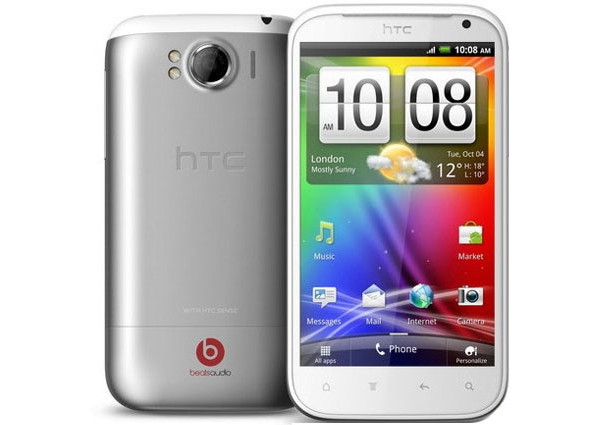
The HTC Runnymede will hit the shops as the HTC Sensation XL and not the HTC Bass, as had been rumoured, according to reports.
The name would make sense as, like the recently announced HTC Sensation XE, the Runnymede will be packing integrated Beats Audio. There will be two options on offer apparently: one an in-ear buds bundle and one an over the ear job.
The Android 2.3.4 phone is said to have a 1.5GHz processor, 768MB of RAM, an 8-megapixel camera on the back and a 1.3-megapixel one on the front. Its big talking point, literally, is the display at a mammoth 4.7 inches and a 960×540 qHD resolution. Storage is said to be 16GB or 32GB.
The HTC Sensation XL/Bass/Runnymede has also been caught in action. A YouTube video is doing the rounds, although the footage is continually being pulled. It shows an almost-ghost like phone running on the Vodafone network in the UK.
There’s no official word from HTC or any carriers yet though – chances are this could just be an unlocked tester model.
via HTC Sensation XL: Launch name for the HTC Runnymede? – Pocket-lint.
Motorola Xoom 2 coming with 8.2-inch Media Edition
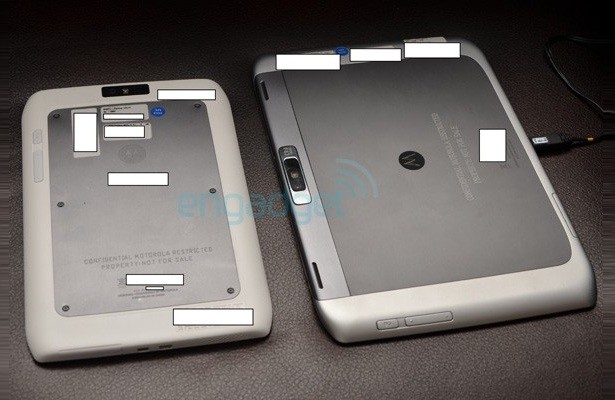
The Motorola Xoom 2 has been spotted out and about and, whats more, is that it seems to have a little friend in tow – the 8.9-inch Motorola Xoom 2 Media Edition.Both tablets have been leaking like an Android filled tap all over the web this past weekend, ramping up excitement levels of fandroids everywhere.Starting with the biggie, and guestimates suggest that were again looking at a 10.1-inch model but with a meatier engine room running the Android 3.2 and Flash 11 action. The RAM is said to be the same as the original at 1GB, but it will be powered by a dual core 1.2GHz chip, possibly of the TI OMAP 4 variety.1080p video recording is said to be on board the 5-megapixel camera, which is why theres a HD logo on the camera which now finds itself in the centre of the Xoom sequels back. Also on the back are the physical buttons or, at least, theyre pointing backwards due to the 2s sharp angled design which measures 9mm thick.The Motorola Xoom 2 Media Editions 8.9-inch display is apparently a HD IPS one that is made of Gorilla glass and is splashproof. Its packing an integrated IR remote and a subwoofer on the chassis.Codenamed Fleming, it is also said to be running Android 3.2 and has reported thickness of 9.3mm and a weight of 430g. Theres LTE on board and, like its big bro, theres also backwards facing buttons and a 5-megapixel camera – this time positioned front and centre in a portrait setup.No official word as of yet, but hit up the original sources for plenty of leaky image action.
via Motorola Xoom 2 coming with 8.2-inch Media Edition – Pocket-lint.
Google+ circles 20 million users in just three weeks

Facebook took over 3 years to achieve what Google+ has done in just 3 weeks – hit the 20 million users milestone.
The figure has been estimated by web analyst ComScore, a number that is double the 10 million figure stated by Google CEO Larry Page just a week ago.
Sure, Google+ is still 730 million users shy of Facebook’s 750 million figure and sure, we’re living in a much more social network powered world now than when Zuck and co launched The Facebook from their Harvard dorm room in February 2004 – but the growth for a platform still officially in a limited field trial stage is phenomenal nonetheless.
via Google+ circles 20 million users in just three weeks – Pocket-lint.
Android 3.2 detailed, developers get SDK – Pocket-lint
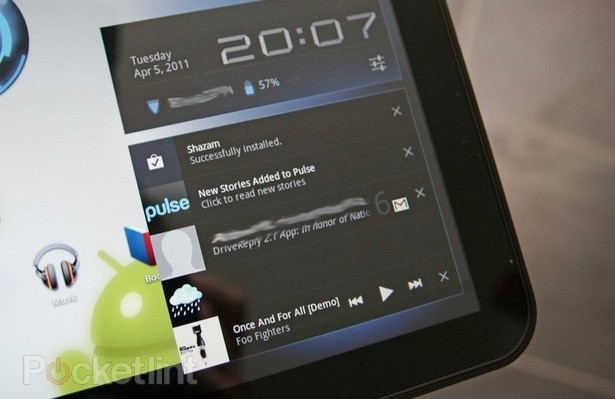
Google has detailed some of the new tricks and titbits in Android 3.2 to developers on Friday night as it prepares to roll out the new iteration of Honeycomb.
The new update, which is expected to be rolling out to Motorola Xoom customers in the next couple of weeks and then presumably to other tablets thereafter, will come with a handful of new headline features.
High on the list of new “stuff” are optimisations for a wider range of tablets, compatibility zoom for fixed-sized apps, media sync from SD card, and extended screen support API.
Optimisation for a wider range of tablets has been added to “ensure a great user experience on a wider range of tablet devices,” and presumably is to accommodate the new wrath of 7-inch tablets from the likes of Acer and Viewsonic coming out in the next couple of months.
Compatibility zoom for fixed-sized apps is a new compatibility display mode that gives users a new way to view these apps on larger devices. The mode provides a pixel-scaled alternative to the standard UI stretching, for apps that are not designed to run on larger screen sizes.
Media sync from SD card will be for devices that support a removable SD card, users can now load media files directly from the SD card to apps that use them.
More details for developers can be found over at the Android developer hub.
Google announces Search by Image and Voice Search for desktop, revamped mobile search

Google’s done a ton of talking about search at its Inside Search event today, and two of the biggest new developments are on the desktop. It’s just announced that Android-style Voice Search is headed to Chrome (with support for English only, initially), and that it will be joined by a new Search by Image feature (also available in Chrome, or Firefox with an extension). To use that latter feature, you simply drag and drop an image or cut and paste an image URL in the search box, and then Google tries its best to recognize it and deliver relevant results — including identifying the location in an old vacation photo, for instance (though Google notes it isn’t doing face recognition). Both features will be rolling out over the next few days, but you can get a glimpse of them now in the demo videos after the break.
In other news, Google’s announced Instant Pages (also demoed after the break), which promises to speed up browsing by prerendering results when its “confident you’re going to click them.” It’s available in the latest developer version of Chrome today, and will also be included in the next public beta. Lastly, Google took the wraps off a number of revisions to its mobile search offerings, including a new set of shortcut icons, enhanced search options, and faster local results when browsing on a phone, as well as some revamped search and image results that have been specifically tailored to tablets — all of which are also rolling out today.
via Google announces Search by Image and Voice Search for desktop, revamped mobile search — Engadget.

