


Google clamps down on Android apps with deceptive ads

Google has issued revised rules for Google Play apps in its continuing effort to stay one step ahead of nefarious developers. This time, the primary target is apps with pop-up ads that spoof a system, service or app notification and trick you into clicking where you shouldn’t. It’s also cracking down on “promotion or install tactics” that cause downloads or Play store redirects without your say-so, along with apps that send unsolicited SMS ads. Finally, it’s forbidding any the use of “erotic content” to promote pornography and forcing advertisers to clarify when and how they use in-app purchases. Google will allow developers a 15-day grace period before it drops the ban hammer — by which point the bad guys will have likely found workarounds.
Via: Techcrunch
Source: Google Play

Yahoo might be building an online video platform, but you won’t be able to use it

Yahoo’s reportedly planning to launch a web video platform in the next few months, and it intends to fill it with familiar faces and professionally made clips. How? By poaching some of YouTube’s biggest stars, at least according to Recode. The website’s sources say Mayer and her crew are trying to win over popular YouTubers with the scent of money. Yahoo’s apparently offering them (presumably) large guaranteed rates or bigger ad revenues for their videos, in an attempt to benefit from YouTube users’ increasing discontent about how little they’re earning on the platform. The company even promised them extensive marketing and the chance to promote their clips on Yahoo’s well-trafficked home page.
Before you prepare to switch platforms, know that Yahoo’s video service supposedly won’t be open to everyone. If what Recode’s saying is true, it won’t be like YouTube where anyone can upload anything, even grainy, vertical clips — it’ll be exclusive to famous video creators the company’s currently handpicking. The website’s sources claim, however, that Yahoo will either develop its own content management system or acquire an existing video service like Vimeo in order to make the service available to more people after a year. They also say that this is second phase in Yahoo’s plans to make it big in the web video space, with the launch of the company’s Screen app for iOS being the first. With video being huge these days, we wouldn’t be surprised if Yahoo’s truly taking a crack at it in an effort to regain its losses.
Filed under: Internet
Source: Recode

State-sponsored hackers are attacking news outlets on a massive scale

[Image credit: European Union 2012 – European Parliament, Flickr]
Via: Reuters
Source: Black Hat
Study shows which Android and iOS versions are most likely to crash apps

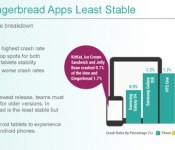
If you’ve ever argued that your new smartphone is more reliable than what you’re replacing, you now have some evidence to back up your claims. Crittercism has posted a study showing that apps running in newer versions of Android and iOS (such as KitKat and iOS 7.1) are considerably less likely to crash; you’re practically inviting headaches if you stick with a phone running Gingerbread or iOS 6. The research also suggests that the Galaxy S 4 and iPhone 5 are the most trustworthy devices, while tablets of all kinds are relatively crash-happy. The findings aren’t shocking when both Apple and Google have both spent years fixing bugs, and it’s notable that the study only covers crashes with third-party apps — they don’t address first-party software glitches. Still, this data is as good an excuse as any to upgrade an aging handset stuck on an old platform.

Filed under: Cellphones, Tablets, Mobile, Apple, Google
Via: GigaOM
Source: Crittercism (DocumentCloud)
Google mandates Android logo on device bootup screens

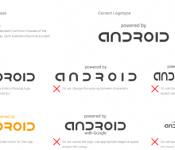
When we first booted up the new HTC One, we were greeted by a “Powered by Android” logo near the bottom of the screen; Samsung has done the same thing with the Galaxy S5. At first this may not seem like a very big deal, but thanks to some internal documents and verification from sources familiar with the matter, there may actually be a lot more to this simple logo than meets the eye. We’ve confirmed with sources that Google now requires that manufacturers add the “Powered by Android” logo to their splash screens in order to get certified for its Mobile Services.
Most people likely won’t even notice the logo, nor will they care. However, making it a requirement on all devices running Google Mobile Services is just another indication that the software giant isn’t pleased with its mobile OS getting the bad end of the branding stick. Given how upset Google was at Samsung’s recent moves to add an excessive number of TouchWiz features to the Note Pro, it’s understandable that the company wants to ensure its name and branding still gets seen and recognized by end users. Google seems concerned that manufacturer branding efforts are making it hard for consumers to know what mobile OS truly powers their devices. This brand new requirement will likely affect not only new devices going forward, but any older devices that still receive updates.
Filed under: Cellphones, Wireless, Mobile, Google
Source: Android Police, Geek
‘Powered by Android’ on Bootup Now Required by Google
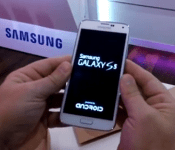
We all know the Android OS pretty well by now. We are all also very familiar with the various skins that OEM’s place over it like Sense and TouchWiz. Google is apparently making a slight change to what OEM’s must do in order to use the Android OS in their devices. A new ground rule will require any device that is certified for Google, which means they have Play Store access and Google apps pre-installed at start-up, to display ‘Powered by Android’ on the boot-up screen. As depicted in the first boot up of the new Samsung Galaxy S5.
 The new implementation won’t just be required for new devices going forward though. Previous devices that receive updates will also be getting a ‘Powered by Android’ logo added too. The logo has a detailed size, spacing and placement rule set making it easy to implement and hard to deviate from. The logo must be a minimum of 20dp and with a 10db clear space boarder where nothing else can be placed. It can be larger, but not smaller. At least that is what I am understanding from the documentation provided by Android Police. While Google has yet to confirm this, a source for AP has confirmed it and with it appear on the boot up screens for the Galaxy S5 and for the HTC One M8, we are likely to agree that it is something that we will see on all new devices.
Does this mean much to you guys? Probably not. In my eyes I see it as a good way for Google to keep Android in front of the consumers. While many people don’t turn their devices off and on often, nor do many people not know they bought and Android device, it certainly won’t hurt with keeping the branding easily in view. With so many new devices and new customers making the switches to an Android device, there is still quite a lot of confusion out there. To this day I still hear people refer to their device as “the new droid” when asked what device they have. Certainly that was due to the heavy influence and marketing of Motorola and Verizon for the Droid line of devices.
Source: Android Police & Geek.com
//<![CDATA[
ord = window.ord || Math.floor(Math.random()*1E16);
document.write('’);
//]]>
LG G Flex receives KitKat update, but only in South Korea for now

When it rains, it pours. Shortly after the news that AT&T’s Galaxy Note 3 is finally getting a taste of Android 4.4, LG is doing the same with its G Flex back at home, in South Korea. Most notably, this update will bring the company’s Knock Code feature, which debuted on the G Pro 2, to the flexible smartphone — yes, it really does flex. But that’s not it: LG’s KitKat update also brings improved Bluetooth Car-Kit controls and a boost in overall performance, thanks to things like Google’s ART experiment. And don’t worry if you down own a South Korean model of the G Flex, you should take this as being a step closer to arriving on your device.
Filed under: Cellphones, Software, Mobile, Google, LG
Via: UberGizmo
Source: LG (translated)
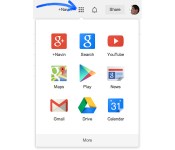
Google now lets you arrange its web apps just the way you like them

Google’s web-based app launcher can be very handy… unless the app you want is at the bottom, that is. Thankfully, the search firm has just taken some of the frustration out of its interface by letting you drag and drop app icons to reorder them however you like. If you always check Google Finance at the start of the day, you just have to bring it to the top. It’s a simple change, but it could save you from creating bookmarks just to reach Google’s services a little faster.
Via: Google (Google+)
Source: Google Support

Android 4.4.3 spotted running on Nexus 5 and Nexus 7
 Over the last few weeks, the evidence that the next iteration of Android KitKat, Android 4.4.3, is on its way to being released is mounting. Last we heard, LlabTooFeR suggested that the software update would be addressing a well-known Nexus 5 camera bug, and today, myce.com is reporting that Android 4.4.3 has been spotted running on the Nexus 5 and Nexus 7.
 According to the report, Android build KTU83 has been spotted running on the Nexus 5 and another build, KTU79, has been seen on the Nexus 7; this fits the naming convention that Google generally uses for its Android builds, and it also supports the existence of the KTU72B build that LlabTooFeR spotted last week. According to the report, the ‘U’ in the build name suggests that Android 4.4.3 is targeted for release in Q1 2014, so we should ideally be getting news about a release very soon.
How soon do you think Android 4.4.3 is going to be released? And what would you like to see in this software update? Let us know what you think in the comments.
Source: myce.com
//<![CDATA[
ord = window.ord || Math.floor(Math.random()*1E16);
document.write('’);
//]]>

AT&T’s Galaxy Note 3 gets a bite of Android 4.4 KitKat

Samsung’s Galaxy Note 3 may already be running the latest version of Android in some places. Here in the US, however, most carriers still haven’t updated the faux leather-covered device to KitKat. But, starting today, at least a good number of Note 3 owners will be getting a taste of it, with AT&T announcing that its version of Android 4.4 is now rolling out to the 5.7-inch handset. You can expect to experience quite a few new things as part of this, such as a revamped user interface, improved GPS and the option to choose a default messaging app. The update is said to be available now — all you need to do is tap your way to that Software Update menu, download the goods and voilà.
Filed under: Cellphones, Software, Mobile, Samsung, Google, AT&T
Source: AT&T

