


Chrome OS now lets you dock small apps on the side

Chrome OS just became much more useful for multitaskers. Google has updated the web-centric platform with support for docking smaller apps along the screen edge, à la Windows 8; you can now keep a Hangouts chat or shopping list in view without having to carefully resize windows or switch tabs. If you’re the sort who wants to always have information close at hand, you just have to restart your Chrome hardware to try the app snapping feature for yourself.
Filed under: Internet, Software, Google
Source: Google Chrome (Google+)
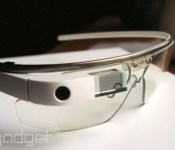
Anyone can sign up to buy Google Glass tomorrow; will you?

Tomorrow, as most everyone in the US knows, is tax day. It’s also the one day where Google will open up the sale of its Glass wearable to the general public, meaning you won’t need that Explorer invite to nab a pair. What you will need is $1,500, a US shipping address and a healthy dose of realism about the limitations of Google Glass as it currently exists. That’s right; even though the curtain of exclusivity around the product is slowly but surely lifting, Glass is still very much in the beta stage, with short battery life and a limited number of apps.
Plenty of you have voiced suspicions that Google made this one-day-only event for the sole purpose of selling out of units and making headlines. Maybe so, but it’s still a good opportunity for the curious who may have hefty tax rebates heading their way. If you want to take the plunge, make sure to point your browser here tomorrow at 6AM Pacific on the dot, as supplies are indeed limited. In the meantime, tell us if you’re planning to splurge tomorrow in our poll below the break.
Vote on our poll for Do you plan to buy Google Glass tomorrow?!
Filed under: Wearables, Google
Source: Google Glass

Google to introduce new icons for Android apps –report

Google will soon introduce some new icons for its Android applications, reports Android Police. Rumored to be part of what’s called Project Moonshine, the new icons will more closely align with Google’s web-based counterparts. Details appear to include flatter images with more pronounced shadows with some getting more tweaks than others.
Alleged to be picking up some adjustment include
- Calendar
- Camera
- Chrome
- Google+
- Gmail
- Hangouts
- Maps
- People
- YouTube
- Play Books
- Play Games
- Play Movies
- Play Music
- Play Store
It’s not clear where Google is in terms of updating the icons or whether any further adjustments are in order.
In the meanwhile, those of you who like to flash your own ROMS, install themes, and play with icons might appreciate Phlash Tha’s latest icon bundle. Available for free, this kit includes .AI files (Adobe Illustrator) for playing around.
The post Google to introduce new icons for Android apps –report appeared first on AndroidGuys.

Google beats Facebook to acquisition of drone maker

Google has just agreed to buy Titan Aerospace, a maker of high-altitude solar-powered drones that was in acquisition talks with Facebook just a few months ago. The Mountain View company hopes to use these long-lasting autonomous vehicles to assist its Project Loon project, which aims to broadcast internet signals to parts of the world that can’t get online. Facebook, on the other hand, went ahead with another drone company called Ascenta for Internet.org, its own worldwide internet project. Titan drones could also work with Makani, a Google airborne wind turbine project. As the unmanned planes are also able to collect high-res images of earth and support voice and data services, they could also be of use in other Google divisions, such as Maps.
Filed under: Google
Source: WSJ

Google purchases drone company Titan Aerospace

Google announced today that they have agreed to buy Titan Aerospace, a drone making company. So far, there has been no information for how much Titan was purchased, but there will surely be a number given in due time.
The company is very small, only employing about 20 employees out of New Mexico. Titan will be working closely with Project Loon, Google’s ballon project.
A Google spokesman elaborates on the subject:
It’s still early days, but atmospheric satellites could help bring internet access to millions of people, and help solve other problems, including disaster relief and environmental damage like deforestation.
What’s more, is that Facebook has also been looking into buying Titan, but decided to opt against it, purchasing another company for 20 million.
This technology could host a drastic amount of changes to what we see coming from Google. A jumpstart on Project Loon, Google’s Makani (a wind turbine company), and anything else you can think of.
As more develops, check back to see more on the purchase.
Source: The Wall Street Journal
The post Google purchases drone company Titan Aerospace appeared first on AndroidGuys.

Before the iPhone was announced, Android didn’t support touchscreen input

Ahead of Apple revealing its first smartphone, Google’s plans for Android back in 2006 involved physical keys for control and no touchscreen input support. Revealed in court documents from the ensuing Apple-Samsung legal fray, the early specification says that “the product [Android] was designed with the presence of discrete physical buttons as an assumption. However, there is nothing fundamental in the product’s architecture that prevents the support of touchscreen in the future.” (The above render is from Google’s initial SDK, but by then, touchscreen integration was now part of the official spec.)
In this 2006 documentation, many of the Android staples (both in software and hardware) get a mention, including removable storage, third-party application support, widgets, notifications and all those Google services. Between the announcement of the iPhone and finalizing Android’s software requirements, touchscreen input was not only supported — multi-input touch was required, and our phones were never the same again.
Filed under: Cellphones, Mobile, Apple, Google
Via: Recode

What is Heartbleed, anyway?

If you’re an IT professional, gadget blogger or token geek in your circle of friends, chances are, you’ve been hounded relentlessly over the past couple of days about “this Heartbleed thing.”
“Do I need to update my antivirus?”
“Can I login to my bank account now?”
“Google already fixed it, right?”
We’ve heard them all, but the answers aren’t all that clear or simple. In an attempt to take the pressure off — it is the weekend after all — we’ve put together a primer that should answer all of those questions and a few more. Next time someone asks you about that “Heartbleed thing,” just shoot them our direction.
How it works
The problem affects a piece of software called OpenSSL, used for security on popular web servers. With OpenSSL, websites can provide encrypted information to visitors, so the data transferred (including usernames, passwords, and cookies) cannot be seen by others while it goes from your computer to the website.
OpenSSL is an open source project, meaning it was developed by really talented volunteers, free of charge, to help the internet community. It happens that version 1.0.1 of OpenSSL, released on April 19, 2012, has a little bug (a mistake introduced by a programmer) that allows for a person (including a malicious hacker) to retrieve information on the memory of the web server without leaving a trace. This honest mistake was introduced with a new feature implemented by Dr. Robin Seggelmann, a German programmer who often contributes security code.
Heartbleed exploits a built-in feature of OpenSSL called heartbeat.
Heartbleed exploits a built-in feature of OpenSSL called heartbeat. When your computer accesses a website, the website will respond back to let your computer know that it is active and listening for your requests, this is the heartbeat. This call and response, is done by exchanging data. Normally when your computer makes a request, the heartbeat will only send back the amount of data your computer sent. However, this is not the case for servers currently affected by the bug. The hacker is able to make a request to the server and request data from the servers memorybeyond the total data of the initial request, up to 65,536 bytes.
The data that lives beyond this request “may contain data left behind from other parts of OpenSSL” according to CloudFlare. What’s stored in that extra memory space is completely dependent on the platform. As more computers access the server, the memory at the top is recycled. This means that previous requests may still reside in the memory block the hacker requests back from the server. Just what might be in those bits of data? Login credentials, cookies and other data that may be exploitable by hackers.
What should I do?
Because this feature is so specific, the number of servers actually affected is significantly fewer than many thought originally. In fact, while some estimates mentioned that 60% of all Internet servers had the Heartbleed bug, Netcraft says the number should be much lower, and under 17.5% (well, that’s still a lot of servers, but still less than 60).
After the discovery of the bug, the OpenSSL software was rapidly patched, and as of version 1.0.1.g the problem no longer exists. Even before that, if the OpenSSL software was installed without the heartbeat extension, the server never would have been vulnerable.
If you need the TL;DR, here it is: do not panic.
Now, the important question is if you should worry about this problem? The short answer is: “yes, but don’t panic”. You should definitely change your passwords at least for the services confirmed as vulnerable and have now been fixed, such as Google and Yahoo. But you should be changing your passwords regularly no matter what. If you have trouble remembering your passwords, you can always use a password manager such as LastPass or 1Password (remember: don’t ever write down your passwords on a Sticky note next to your monitor, a notepad, or a document inside the computer).
This password changing recommendation is nothing but a precaution, because even if hackers knew about the problem (something that hasn’t been confirmed — aside from by our friends at the NSA, apparently), the chances of them getting your password, and being able to match up that data to your username are pretty slim. Some people claim that the encryption certificates for servers (a technology that allows us to confirm that a website is in fact what it says it is) could have been stolen, but the company CloudFlare has said it’s very difficult to do. It published a challenge to whoever could steal this key, and it appears that someone did, during a server reboot. Regardless of the probability, companies are changing encryption keys so new data is not vulnerable if somebody was able to obtain the old keys.
TL;DR
If you need the TL;DR, here it is: do not panic. Simply, change the passwords of the services you consider more important (email, banking, shopping) and continue with your life. While doing so, follow good security practices: don’t use the same password across services, select passwords with 10 or more characters and use at least upper and lower case letters, in addition to numbers.
The Internet sure is fun!
Frank Spinillo and Ben Gilbert contributed to this article.
Filed under: Internet

‘Let Me Google That For You’ may be the best Senate bill ever

Soon “Let me Google That For You” might not be just a phrase you hear from annoyed friends when you ask a silly question, it might be a law. No, really. Senators Tom Coburn (R-OK) and Claire McCaskill (D-MO) introduced the Let Me Google That For You Act of 2014 in Senate last week, a bill that would prioritize using the web to find information.
Currently, many government searches are made through the National Technical Information Service (NTIS) and cost taxpayers tons of cash. The NTIS gets the job done, but it turns out that many of those queries (which could be $100 a pop) could actually be completed in just a few seconds using Google. If approved, the bipartisan bill would eliminate the NTIS, and encourage people to rely on their trusty (and very free) browser for information instead, ultimately saving everyone a lot of time and money.
Filed under: Internet
Source: The Library of Congress

Coachella is streaming live on YouTube, and you might even chat with the bands

It’s that time of year once again: Google and T-Mobile are streaming the Coachella festival live on YouTube. Tune in between April 11th and April 13th and you’ll see big-name musicians play without making a pilgrimage to Indio. Much of the experience will be familiar if you’ve watched before. However, there is a social twist to this year’s proceedings — if you’re in a Hangouts video chat at the right moment, you’ll have a chance to speak with artists like Chvrches and Zedd while they’re backstage. Yes, you may have a better time than fans who paid a premium to be there in person. We wouldn’t count on getting that VIP treatment, but it’s undoubtedly an added incentive to start streaming.
[Image credit: Viktor Rosenfeld, Flickr]
Filed under: Home Entertainment, Internet, HD, Google, T-Mobile
Via: Google+
Source: Coachella (YouTube)

Amazon phone reportedly coming in September with glasses-free 3D

Stop us if you’ve heard this one before: Amazon’s getting ready to launch a phone. This is actually one of the longest-running rumors we’ve heard, with the first reports stretching back to 2012. So what’s different this time? According to the Wall Street Journal, the company is already showing off prototypes of the handset to developers and is gunning to announce the device by the end of June with a September release. The report tells us that Amazon wants to differentiate itself from other top-of-the-line flagships by adding four cameras with retina-tracking tech, making it possible to project 3D images without needing glasses.
Rumors of a “Kindle phone” (or multiple phones) have been floating around the internet for ages, and this isn’t even the first time we’ve heard that Amazon was working on a 3D-type display — the Journal began reporting last May that the project would enable visuals that “seem to float above the screen like a hologram.” Given how much smoke we’ve seen, there’s quite likely fire. We wouldn’t be surprised to see some news come out around the same time as Google’s I/O developer conference, but we’re more curious to find out exactly what Amazon plans to do with this retina-tracking tech and how developers will be able to take advantage of it. Needless to say, it certainly would add an interesting element to our already endless Instagram feed.
Filed under: Cellphones, Wireless, Mobile, Google, Amazon
Source: WSJ

