


Google adds former Ford CEO to board of directors

Google today announced that Alan Mulally has recently joined its board of directors. As the former President and Chief Executive Officer of Ford Motor Company it stands to reason he’ll bring his auto expertise to Google’s Android Auto initiative. It appears, however, that he’ll take on a different role in at least the short term.
A veteran corporate executive of the automotive and aviation industries, Mulally will serve on Google’s Audit Committee.
Looking at his background we also learn that Mulally has spent time on other various boards, including NASA, U.S. Air Force Scientic Advisory Board, and multiple universities and institutions.
The post Google adds former Ford CEO to board of directors appeared first on AndroidGuys.

Google Street View cars have mapped methane gas leaks in big US cities

Google’s Street View cars aren’t just useful for scouting out a locale in advance — they might be saving the planet, too. The vehicles have just helped the Environmental Defense Fund publish methane gas leak maps for Boston, Indianapolis and New York City’s Staten Island. The Google cars roamed around cities using sensors that could detect both the location and scale of one of the dangerous leaks, driving by at least twice to make sure the results weren’t a fluke. Depending on where you live, the data is either reassuring or scary; the older pipes in Boston and Staten Island have an abundance of leaks, while Indianapolis’ more recent infrastructure is keeping the problems to a minimum.
The maps should help paint a more accurate picture of methane pollution in the US. Researchers are worried that existing estimates are too low, and the Street View cars may have spotted leaks that would otherwise have gone unnoticed. Having such a complete, publicly accessible data set could also pressure gas companies into fixing pipes that would otherwise go neglected. The Environmental Defense Fund is most concerned about curbing pollution, but there are also some short-term benefits — if utilities take action, they could both prevent explosions and minimize waste.
[Image credit: Adam Gerard, Flickr]
Filed under: Transportation, Science, Google
Via: New Scientist
Source: Environmental Defense Fund

[DEALS & STEALS] A bunch of Google Play Edition (GPE) devices are on sale at Expansys USA, up to 46% off

Google removed Samsung Galaxy S4, HTC One (M7), Sony Xperia Z Ultra and LG G Pad 8.3 Google Play Edition device from Google Play Store recently. People have been complaining ever since, but this actually turned out to be a good thing. All of these devices are now available at Expansys USA at a heavily discounted prices:
- Samsung Galaxy S4 LTE GPE $399.99 (
$649.00), 38% off - HTC One (M7) LTE GPE $399.99 (
$649.99), 38% off - Sony Xperia Z Ultra LTE GPE $349.99 (
$649.99), 46% off - LG G Pad 8.3 Wi-Fi GPE $224.99 (
$329.99), 32% off
These are all still very powerful devices and the fact they have pure vanilla Android inside is a huge plus, at least in my opinion. All three of these smartphone offerings are of course unlocked. These are some very affordable prices for these devices so if you’re in a market for one follow the link(s) above and get yours today because the supplies are limited.

Source: Expansys USA
The post [DEALS & STEALS] A bunch of Google Play Edition (GPE) devices are on sale at Expansys USA, up to 46% off appeared first on AndroidGuys.
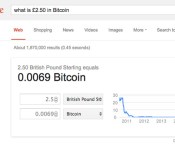
Google now tells you how much your Bitcoin is worth

Let’s assume that you’ve just spent more than $200,000 on some of Russ Ulbricht’s Bitcoin fortune — but what do you do with it now? If it were us, we’d sit on our couch, constantly referencing Coindesk to find out how much our stash had gained (or lost) across the day. If, however, you’d prefer to source your information via search engine, then Google’s now offering live currency conversions for the cryptocurrency. Like the states and nations that took their time to take a stance on Bitcoin, Google’s taken its time to add the feature, which has been available on Bing for the better part of five months. Or, if the idea of sitting at home watching your cash doesn’t feel like fun, you could always sponsor an NCAA game.
Filed under: Misc, Internet, Google
Via: Coindesk

Google search now tells you when websites won’t work on your phone

Many websites are built for mobile devices these days, but you’ll still run into the occasional page that refuses to run. Wouldn’t it be nice if you got a heads-up before you wasted a click? As of today, you will: Google search now warns you when a site isn’t likely to work on your hardware of choice due to incompatible content, such as Flash. You can still visit if you’re convinced everything will be A-OK, or if you just have a masochistic streak. However, the new search policy may leave some site designers scrambling — now that Google is discouraging mobile users from visiting pages that insist on proprietary plugins, companies may have to switch to web standards like HTML5 if they want to get your business.
Filed under: Cellphones, Internet, Mobile, Google
Via: TechCrunch
Source: Google Webmaster Central Blog

Google adds former Ford CEO Alan Mulally to its Board of Directors

Just a few months ago Alan Mulally was being mentioned as the possible next CEO of Microsoft, but after leaving his position as CEO of Ford he’s now aligned with a different tech company: Google. Google announced today that he’s joined its Board of Directors, effective July 9th. While his connections to the auto industry could obviously be valuable for projects like Android Auto and the development of self-driving cars, Google’s announcement also mentions his aviation experience as a former executive at Boeing. Mulally was president of Boeing’s space and defense business, and between Project Loon, drones and satellite launches we figure there’s plenty of input to provide there as well.
[Image credit: Bloomberg via Getty Images]
Filed under: Transportation, Internet, Google
Source: Google Blog
Google Plus finally lets you use any name you like

When Google+ first debuted, it insisted that you use your real name on your profile in an effort to “create a community made of up real people” and reduce the trollish behavior often associated with the anonymous internet. As you might expect, it’s suffered some backlash due to this policy, especially for folks who wish to keep their online identities separate from their real ones. Over the years, it’s loosened that restriction by allowing folks to use their desired name on their profile pages plus eventually letting YouTube users use their existing usernames. Today, at long last, Google’s social network has lifted any and all name restrictions entirely, finally letting you pick whatever name you like. So if you’ve always shied away from Google’s social network because of its insistence on real names, you can now go ahead and sign up with any name of your choosing. Unfortunately, you’ll still have to use actual letters or numbers — those who yearn for emoji usernames might want to take a look at this instead.
[Image credit: Shutterstock]
Source: Google Plus

Some new Windows Phones won’t let you change your web search provider

If you’re picking up a shiny new Lumia 630 or 930 in the near future, you may be in for an unwelcome surprise. The Verge has discovered that at least some unlocked versions of either Windows Phone won’t let you switch Internet Explorer’s default search provider to Google; it’s either Bing or nothing. Some European models of the same phones do let you change the provider, though, so this clearly isn’t a platform-wide policy. We’ve asked Microsoft if it can share more about what’s going on, and we’ll let you know if it has more to add. The move likely won’t cause that much consternation given that many Windows Phone users are inclined to use Bing, but it’s bad news if you like to use Google services on Microsoft platforms.
Filed under: Cellphones, Internet, Mobile, Microsoft, Nokia, Google
Source: The Verge
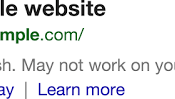
Google Search Results Now Notifying iPhone Users When Websites Use Flash [iOS Blog]
Google recently implemented a feature that warns iPhone users when search results include websites that use Adobe Flash, as Flash is not supported by the iPhone.
When searching for a site, pages that primarily use Flash are clearly marked by Google with a warning that the site may not work on a particular device.
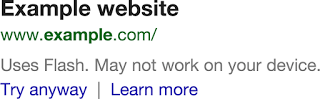
A common annoyance for web users is when websites require browser technologies that are not supported by their device. When users access such pages, they may see nothing but a blank space or miss out a large portion of the page’s contents.
Starting today, we will indicate to searchers when our algorithms detect pages that may not work on their devices.
Google goes on to recommend that websites use the universally supported HTML5 and provides both Web Fundamentals and a Web Starter Kit for website developers.
Apple received a good bit of criticism when the iPhone was first released for not supporting Flash as it was used often back then, but interest in Flash has since been dying out in favor of mobile-friendly solutions.
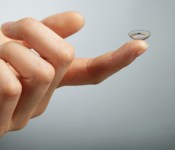
Google strikes smart contact lens deal to track diabetes and cure farsightedness

With Glass and Android Wear, Google has already invested a lot of time and resources into developing the next-generation of wearables, but it’s another of its eye-focused projects that has today received its first major boost. The search giant’s secret Google[x] team has confirmed that it’s licensed its smart eyewear to healthcare specialist Novartis, which will develop the technology into a product that can improve eye care and help manage diseases and conditions.
As part of the agreement, Google[x] and Novartis’ eye care division Alcon will create smart lenses that feature “non-invasive sensors, microchips and other miniaturized electronics” and focus on two main areas. The first will provide a way for diabetic patients to keep on top of their glucose levels by measuring the sugar levels in their tear fluid, feeding the data back to a smartphone or tablet. The second solution aims to help restore the eye’s natural focus on near objects, restoring clear vision to those who are only farsighted (presbyopia).
Google’s role will be to develop the tiny electronics needed to collect data and will also take care of the low-power chip designs and fabrication. Alcon, on the other hand, will apply its medical knowledge to develop commercial versions of the smart contact lens. “Our dream is to use the latest technology in the miniaturization of electronics to help improve the quality of life for millions of people,” says Google co-founder Sergey Brin. “We are very excited to work with Novartis to make this dream come true.”
Filed under: Wearables, Google
Source: Novartis

