


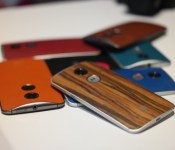
Moto X 2014 gets Limited Lollipop Soak Test
 Google seems to be dropping the ball this time around with its Nexus line, suffering from rollout delays with its Nexus 5 and 7, but Motorola is picking up the slack and surging ahead in the race to offer quick updates. Motorola has started soak tests with Lollipop on the Moto X 2014 already, beating all other competitors, including the source of the software itself: Google.
For those of you that own the Moto X, but have yet to receive your update, follow the link below to find an OTA mirror and get the software onto your phone from there. However, as a forewarning, the device must have never been rooted in order for it to work.
Source: xda
Come comment on this article: Moto X 2014 gets Limited Lollipop Soak Test

Google says the best phishing scams have a 45-percent success rate

Conceptually, phishing scams sound easy to see through: a fake webpage with the wrong URL that doesn’t look quite right — who’s going to fall for that? Quite a few people, apparently. According to a new Google study, the most successful phishing websites will capture data from 45-percent of its visitors. The least successful scams only scored information from three percent of its visitors, but when crooks are sending out phishing emails by the millions, that still adds up. The study found that the majority of the hijackers operate out of China, the Ivory Coast, Malaysia, Nigeria and South Africa, and that they work quick: 20-percent of accounts were compromised within 30 minutes of having information phished.
Most hijacked accounts are used to continue the cycle: sending emails to account’s contacts asking for bank transfers (under false pretenses, of course) or simply distributing links that might capture yet more accounts. The best way to protect yourself, Google says on its blog, are the old ways: enable 2-step verification on your accounts when possible and “stay vigilant” — report messages asking for personal information to and never, ever reply to them. Want to read the full study? Click right here.
[Image credit: Shutterstock]
Via: Huffington
Source: Google (1), (2)
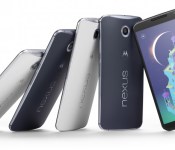
Nexus 6 gets ready to drop in 12 more countries, should be coming before Christmas
 While the saga of limited availability continues in the US, the rest of the world is wondering when they’ll even be able to pre-order the Nexus 6. As it turns out, it could be quite soon. Google has added an additional 12 countries to join the US on the “Country availability” page on their support website which includes the likes of Australia, the UK, and Sweden. If you happen to reside in one of these countries, you should be able to see the Nexus 6 page on Google Play now which should simply have “Coming Soon” emblazoned below the localized pricing of the Nexus 6 – when this will change to allow you to actually buy the phone is anyone’s guess.
When we reached out to Google about the availability of the devices (here I used Australia as an example), they were careful not to give a specific timeline for when the devices would become available, however did specify that the devices would be available before Christmas. Whether this means devices could be received by Christmas remains to be seen, but I wouldn’t hold my breath in case more supply issues hit these other markets as well.
The full list of countries includes:
- Australia
- Belgium
- Canada
- France
- Germany
- India
- Italy
- Japan
- Netherlands
- Spain
- Sweden
- United Kingdom
What do you think about the availability of the Nexus 6? Let us know your thoughts in the comments below.
Source: Google Support, Google Play Store (Nexus 6)
//<![CDATA[
ord = window.ord || Math.floor(Math.random()*1E16);
document.write('‘);
//]]>
The post Nexus 6 gets ready to drop in 12 more countries, should be coming before Christmas appeared first on AndroidSPIN.

Vsenn enters the modular smartphone market

Thus far the modular smartphone market has yet to manifest itself with actual products that consumers can buy. Google is getting very close with Project Ara and appears to be on track for a 2015 release. Google may get some competition from a new entrant to the yet to be established market. A new company called Vsenn has launched a web site indicating they are working on a modular smartphone.
The web site that surfaced for Vsenn claims the company was co-founded by a former program manager from the Nokia Android X project. Equally lacking in detail are specs for the device that is being worked on. Vsenn does indicate three modules will be swappable – the camera, battery, and processor/RAM combo. Along with the internal hardware, the company says they will offer a variety of back covers to customize the looks of the device.
Two other key concepts have been released by Vsenn. For security purposes, they will use triple layer protection to protect data on the device. A free VPN service will also be available for device owners as well as a secure cloud service. Vsenn also says they will install a vanilla version of Android on the device and they are committing to keeping it up to date for at least four years.
source: Vsenn
via: AndroidCentral
Come comment on this article: Vsenn enters the modular smartphone market

Taking apart Google’s modular smartphone
 What do you want to know about Project Ara? Does a modular smartphone actually work? Yes. Is it very different from Android phones? In a basic how-a-phone-all-works, yes indeed. Paul Eremenko, Technical Project Lead on Google’s modular phone project just called in at Expand NY, and he brought along the latest working prototype. Modular phones do indeed work: you can take out a component without bricking the device, it can already run Angry Birds and we just got to play with one.
The Project Lead also introduced one of the more interesting directions that modular smartphones could take: customizable health sensors. He pulled out a pulse oximeter able to measure blood oxygen with light. A phone packed full of these kinds of sensors could offer a very powerful diagnosis for doctors — especially when hardware costs are already covered when you buy an initial modular smartphone base.
As we saw earlier this week, the latest Ara prototypes do indeed work. Live on stage, Eremenko was able to undock a module inside the phone’s UI and then physically pull it out, without the phone hiccuping (or simply cutting out of power.)
It may have only been a demonstrative LED module, but the theory works. He elaborated on how any component can be made to give power, take power or simply store it, thanks the networked nature of the phone’s power system. Behind stage, we got to pull components in and out of both the new working prototype and the (non-working) industrial design model, in those bombastic colors. It’s pretty satisfying to do and there’s a Lego-ish charm to it all.

The virtue of each smartphone feature being a separate part is what could make the eventual commercial product of this project a very interesting proposition for developing countries, where people would be able to upgrade phones in a step-by-step fashion, avoiding the need for a costly outlay, but offering the possibility of a more capable device later down the line: move up from a 8-megapixel camera sensor to a 16-megapixel one capable of 4K video, for example. If it did catch on, it could even spell the end of the two-year upgrade cycle for your smartphone. Well, maybe. See the full discussion (and an epic stumble from our own Brad) in the full interview below.
#fivemin-widget-blogsmith-image-342185display:none; .cke_show_borders #fivemin-widget-blogsmith-image-342185, #postcontentcontainer #fivemin-widget-blogsmith-image-342185width:570px;display:block;

trydocument.getElementById(“fivemin-widget-blogsmith-image-342185″).style.display=”none”;catch(e)
Filed under: Cellphones, Mobile, Google

The top 15 smartphones you can buy right now
 It’s possible you already purchased one of the smartphones we listed in our buyer’s guide last July, but things tend to move quickly, and with fresh handsets from names like Apple, Samsung and Motorola, some of you may already be itching for an upgrade. To that end, we’ve made some fresh additions to our list of the latest and greatest smartphones out there today. Sure, our official Holiday Gift Guide is just around the corner, but this update will help you make some quick decisions, or at least get a head start on that holiday wish list.
 Filed under: Cellphones, Apple, Samsung, Sony, Microsoft, HTC, Nokia, Google, LG

Google Genomics can store your entire genome online for a mere $25 a year

Google’s been working on its latest project for about a year and a half ago: it’s service that will store entire copies of genome. This isn’t something Google Drive can cope with – decoding DNA involves a lot of data. According to Technology Review, in raw data, one person’s genome weighs in at around 100 gigabytes. The plan is house all that DNA data online, in big ‘ole clouds where scientists will be able to run virtual experiments and collaborate with each other on bigger (hopefully disease-curing) projects. Google is battling against the likes of Amazon and Microsoft to store expansive medical data like this: the Mountain View company charges scientists and researchers $25 a year for storing a single human genome — although you’ll have to pay a little more to fiddle around with data.
“Our bird’s eye view is that if I were to get lung cancer in the future, doctors are going to sequence my genome and my tumor’s genome, and then query them against a database of 50 million other genomes,” explained Deniz Kural, whose company, Seven Bridges, stores genome data with Amazon’s cloud system. “The result will be ‘Hey, here’s the drug that will work best for you.’ “
Filed under: Storage, Science, Internet, Google
Source: Technology Review

Court demands Google hand over the identity of ‘Avengers 2’ trailer leaker

Today’s dispatch from the department of irony comes courtesy of Marvel Studios. When the trailer for The Avengers: Age of Ultron prematurely appeared online, the studio went into lockdown to find the leaker’s identity. According to documents found by Mashable, the outfit has traced the incident to a Google Drive account in the name of “John Gazelle,” and a federal court has ordered Google to hand over their details by November 18th – presumably in order to make an example of the individual. Still, it seems that while Captain America can battle oppressive computer systems that track the activities of everyone in the world, it’s happy to stick to the status quo in the real world.
Filed under: Internet, HD, Google
Via: Slashgear
Source: Mashable
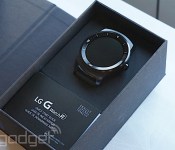
LG’s £225 circular G Watch R goes on sale in the UK

Google’s now selling LG’s G Watch R via the Play Store in the US, but in the UK, fans of the circular Android Wear smartwatch are being made to wait. Luckily, Amazon is one step ahead (not for the first time), and has opened orders for the wearable before its rival has had the chance to do the same. At £225, the G Watch R is £70 more than its predecessor, but with a heart rate monitor, better battery life and a fully circular display, it might be worth those few extra notes.
Filed under: Wearables, Internet, Google, Amazon, LG
Via: Wareable
Source: Amazon UK

Google Barges’ lack of fire-safety features caused their early demise

Google’s four-story barges didn’t even get the chance to shed their safety nets before the project was scrapped. We mean that literally, as one of the four barges was dismantled and sold for scrap in August. Now, we finally know not only the reason for that, but also that the project was put on hold way before we even found out about the vessels last year, all because of fire safety issues. According to documents relevant to the project, the barges’ contractor (Foss Maritime Co.) was forced to shut down construction due to several fire-safety concerns raised by the Coast Guard. Since Google wanted to turn the vessels into floating showrooms, they would have hosted a steady stream of visitors per day, so authorities were mainly worried about overcrowding.
The company promised to limit the number of passengers on board to 150 at any one time despite expecting 1,200 people to visit every day, but authorities weren’t convinced. In an email that Coast Guard official Robert Gauvin sent Foss Maritime in March 2013, he said Google didn’t inform them of any anti-overcrowding measures. Having more people than the vessels can carry can be fatal, because the barges, Gauvin wrote, “will have over 5,000 gallons of fuel on the main deck and a substantial amount of combustible material on board.”
More importantly, the contractor failed to “incorporate certain fire safety features typically required,” the Coast Guard said in an separate email from August last year. So much so, that they couldn’t even tell if “evacuation of disabled persons has been considered” when the barges were designed. Along with private fire safety companies, the authorities put together a 20-page document detailing the fire-safety features Google will need to incorporate into the barges’ design. But, since the project was still suspended indefinitely in September 2013, we’re assuming Mountain View found it easier to scrap at least one of the vessels instead of trying to fix the issue.
[Image credit: Tom Hilton/Flickr]
Source: The Wall Street Journal

