


Android 5.1 factory images are live for Nexus 5, Nexus 7 (2012), and Nexus 10
 Google has posted brand new Android 5.1 factory images for several Nexus devices, including the Nexus 5, Nexus 10, and the slightly older 2012 version of the Nexus 7. If you’re ready to start flashing them on your device, hit the right link below and follow our guide to flashing factory images on your Nexus device.
Come comment on this article: Android 5.1 factory images are live for Nexus 5, Nexus 7 (2012), and Nexus 10

Self-destructing site shows how long it takes Google to find you

Wondering how long it would take for Google’s search engine to find your website if you didn’t promote it? About 22 days, according to Matthew Rothenberg. He recently launched Unindexed, a purposefully short-lived web community that was set to self-destruct as soon as Google’s indexing technology made it searchable. While Rothenberg didn’t go out of his way to maintain the secret, participants knew that every view, post and shared link would bring the site closer to disaster — it only took 346 views and 31 contributions before everything came crashing down. Thankfully, you can recreate this experiment yourself. Rothenberg has posted the source code, so his commentary on the sad state of web anonymity should last for much longer than a few weeks.
[Image credit: Shutterstock]
Via: Motherboard
Google Drive to Store a Lot More than Just Documents
It wasn’t too long ago Google+ was a place where one can store their photos. However, many news sources are reporting that Google Drive is gearing up to not only store files and documents, but now your photos as well. The latest cloud version of Google Drive has a string of code that leads to an up and coming photo backup feature. This may be beneficial to people who do not wish to sign up for a Google+ account. Reports also suggest that Google Drive will also receive Chromecast support. What that means, someone can stream their video / music files straight from Google Drive without having to upload them onto Google Music. It won’t be too long before Google+ becomes just a social network.
Android Police who found the new Drive file are quick to say that nothing is set in stone just yet and Google may still make many more changes. We will just have to wait and see.
The post Google Drive to Store a Lot More than Just Documents appeared first on AndroidGuys.

Android Lollipop 5.1 factory images are now ready for download

Just a few hours ago, Android 5.1 became official, though it had been spotted running on Android One devices earlier this year. The new build includes three main features, multiple-SIM card support (a staple for many Asian devices), device protection, and HD voice calling along with bug fixes and the likes.
While there are no concrete details as to when the update will arrive OTA, Google has thankfully begun to post the factory images. Those who know what to do need only click on the link below, find their device, get their download on, and patch away. For those who aren’t quite sure what to do with a factory image, we have a guide that should help you along the way. Keep in mind that the guide was written for Android 5.0 Lollipop, but the same steps apply. Be aware that making a mistake with the process may brick your device, so please do so at your own risk.
The factory images are available directly from Google and can be accessed by clicking this link.
For reference, the images for the following devices are currently provided (the list will be updated as more devices are added):
- Nexus 5
- Nexus 7 2012 (Wifi)
- Nexus 10
The following are currently unavailable:
- Nexus 4 – Pending Release
- Nexus 6 – Pending Release
- Nexus 7 2012 (Mobile) – Pending Release
- Nexus 7 2013 (Wifi) – Pending Release
- Nexus 7 2013 (Mobile) – Pending Release
- Nexus 9 (Wifi) – Pending Release
- Nexus 9 (LTE) – Pending Release
- Nexus Player – Pending Release
Anyone flash Android 5.1 to your Nexus yet? If so, how is the experience treating you, notice any improvements so far?
Google releases new Android Wear video just in time for all the masses interested in a smartwatch

Google has released another video in their be together.not the same. campaign today titled Android: Wear what you want, this time highlighting the many options buyers have in smartwatches running Android Wear. It is almost like they think there is going to be a lot of interest in smartwatches today. The video takes a quick run through a variety of Android Wear powered smartwatches showing the different shapes and how different watch faces are available. You can check out the video after the break.
Click here to view the embedded video.
Come comment on this article: Google releases new Android Wear video just in time for all the masses interested in a smartwatch
Release date and pricing leak for Verizon Nexus 6, will be available March 12th
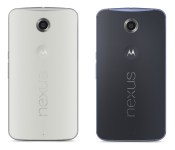
 We know Verizon’s Nexus 6 is coming, and probably fairly soon, but some new promotional material has leaked that confirms some of the rumors we’ve already heard. The official launch date of the device will be March 12th if you’re willing to order it online, and the Nexus 6 will be offered in stores on March 19th.
As far as pricing goes, you’ll be able to snag a 32 GB variant for $249 on contract, $29.16 per month if you opt for Verizon’s Edge installment plans, or $699 if you plan on purchasing it outright. According to this info, though, it doesn’t seem like the white color will be available, and you won’t have any options besides 32 GB. It’s not perfect, but it’s better than nothing.
The Verizon Nexus 6 is definitely going to be launching on Android 5.1, so there’s a chance we’ll see the update make its way to other Nexus devices within the next two weeks, but worst case scenario, the official release to AOSP won’t trail far behind that March 12th launch. There’s also a 6 month Google Play Music promo bundled with the device, although that’s hardly a first for Google.
Still interested in buying a Nexus 6 on Verizon, or have you changed your mind to some of the other devices that have been announced?
source: Phandroid


Come comment on this article: Release date and pricing leak for Verizon Nexus 6, will be available March 12th
How would you change Motorola’s Droid Ultra?

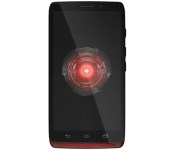
Sometimes, a musician tied down to a long contract will fire out a sub-par record to fulfill a contractual obligation to their label. In some ways, Motorola’s Droid Ultra felt like an exercise in contractual obligation rather than a handset in its own right. After all, the Ultra was, more or less, the Moto X in another body, and since the X was also available on Verizon, our Brad Molen felt that the Ultra had no reason to exist. We wager, however, that plenty of you bought this handset, so why not hop over to the forum and tell us why you did?
Filed under: Cellphones, Mobile, Google
Source: Engadget Product Forums

Hangouts Android app and Chromebox for Meetings devices get easy guest invite support
 Google recently introduced a feature for Google Apps customers that allows them to easily invite guests to join a video call by simply sharing a link instead of actually inviting a specific person through their email account. It’s a useful feature that simplifies group video chats, especially in a work situation.
The feature originally just launched for Hangouts on the web, but it eventually made its way to iOS devices, and now it’s finally available on the Android application and on Chromebox for Meetings devices. This should effectively make the feature functional on just about every device that Google Hangouts supports.
The update is already live, but in typical Google fashion, it’ll be a staggered rollout. It should be completely deployed over the next week or so.
source: Google
Come comment on this article: Hangouts Android app and Chromebox for Meetings devices get easy guest invite support

Google working on new version of Android for virtual reality

Google’s efforts in virtual reality are moving much further than it would seem after taking a look at Cardboard. The company, according to The Wall Street Journal, has put together a team of engineers and other staff members to develop a new version of Android geared towards virtual reality.
The business model for this upcoming platform will be identical to Android because hardware manufacturers can use it at no cost. Google provides the software and relies upon sales in its online store while hardware manufacturers put the pieces together.
The leader in virtual reality right now is Oculus, which was purchased by Facebook in 2014 for $2 billion. Facebook has allowed Oculus to continue operating at its own pace but with the inclusion of additional funds. The competition between Google and Facebook can be seen in the poaching of one of the former’s executives. Mary Lou Jepsen, who now works for Oculus, specializes in display technology.
Oculus has an all-in-one approach to virtual reality while Google wants to mirror what he has going on with Android on other devices.
This month has made it quite clear that virtual reality is a field in which everyone wants involvement. Both Samsung and HTC (with Valve) introduced new virtual reality headsets to carry them into the next year. The Gear VR headset was adjusted for the Galaxy S6 and S6 Edge while a partnership between HTC and Valve bloomed the Vive. These products, as well as Oculus’ hardware, were put on display at MWC and GDC all week.
Source: The Wall Street Journal
Come comment on this article: Google working on new version of Android for virtual reality

How serious are you about virtual reality?
 The absolute best/worst virtual reality stock photo we could find
Are you prepared to dedicate a room in your house to virtual reality? Perhaps you’re a little less crazy than me, but you’re okay with a wire running across your living room to a headset? Or maybe both of those sound crazy to you, but a headset that can plug into your phone is okay?
These are the emerging options for virtual reality: a medium finally coming into its own, that’s poised to disrupt industries and hairdos the world over.
Polygon‘s Ben Kuchera sent me this fascinating piece last week, written by Robert McGregor, which compares virtual reality to swimming pools. Stay with me. The long and short of the analogy is this: Both concepts are incredibly compelling, and both require a very serious investment for maximum impact. You can have fun with a kiddie pool (Google Cardboard), but you can have a lot more fun with a multi-level, ornate swimming pool (HTC Vive).
With VR, as it stands right now, there are distinct tiers. I’ve broken out four here, but I’d love to hear arguments for more distinct tiers. And no, I’m not including augmented reality solutions; VR and AR are, currently, distinct mediums.
TIER 1: Google Cardboard

The kiddie pool analogy with Cardboard is apt: It offers a great taste of VR, with none of the comfort, fidelity or depth that other headsets offer. It also costs next to nothing and works with nearly any phone (Android, and some apps also support iOS). The benefits of Cardboard are ease-of-use (accessibility) and price (accessibility).
It is the ultimate trade-off of low barrier to entry versus depth of experience — no one is spending more than 15 minutes in a Cardboard. Zero people. Even if you could, you wouldn’t; go figure, it’s not that comfortable pushing a piece of cardboard to your face.
Those aren’t knocks against Cardboard, but a comparative measurement. Putting someone in Cardboard remains the easiest way to give an interested person a quick VR demo. That cannot be oversold: Cardboard is very easy, and that’s a crucial component for the adoption of a new medium. It works with basically any smartphone! There aren’t any headstraps or controllers! It doesn’t cost very much money!
And hey, if you’d never experienced a pool of water, a kiddie pool is a pretty exciting first experience.
TIER 2: Gear VR
One gigantic step up from Cardboard, in both experience and cost, is Samsung’s Gear VR. The South Korean phone giant teamed with Facebook-owned Oculus VR on a phone-powered experience that offloads some functionality to the headset: a touchpad, a gyrometer and lenses (among other bits). There’s a strap, and you’ll need to do some fiddling to get it set up, but it’s mostly plug-and-play with your Galaxy Note 4 phone (and soon the Galaxy S6 and S6 edge as well).

Sure, you need to own a very expensive, brand-new phone to use Gear VR. And sure, you need to shell out another $200 to buy the headset. And yeah, after that, real games cost money in Gear VR. But the games are such a tremendous step up in depth and engagement from the experiences you get with something like Cardboard that it’s all worth it.
If we’re sticking to McGregor’s simile, Gear VR is the gym/sports club membership that grants you regular access to a swimming pool. A full, real pool! But it’s not yours and there’s limited access and other people are in it and whatever else. There’s no depth-tracking in Gear VR, and your experiences are limited by the Note 4’s processing power, but it’s a great second step in the VR continuum. And a pretty accessible one at that!
TIER 3: Morpheus
Yet another massive step up from Gear VR and similar experiences is Sony’s Project Morpheus: a highly capable VR headset with a high-res built-in screen, powered by the fairly capable PlayStation 4 game console. We’re getting into “I’m buying an out-of-ground pool” territory here.

With Morpheus, when it launches in 2016, you’ll need:
- A PlayStation 4 game console
- A PlayStation 4 camera
- A Morpheus headset
- Space to run a wire from your PlayStation 4 to the Morpheus processing box — a separate, small unit that has onboard processing and acts as a go-between from the console to the headset
- Space to run a wire from the processing box to the headset
- (Optional) PlayStation Move controllers
Ideally, you’ll also have some space to move around, and nothing getting in the way of any wires. This is a much more serious commitment to VR, and one that’s going to pay off tremendously in terms of experience.
Project Morpheus just got an update this week at the Game Developers Conference, where Sony revealed beefed-up specs and new software demos. The experiences you’re able to have in Morpheus are far deeper than in Gear VR: I ducked and dodged bullets in The London Heist, and my colleague Joseph banged his head into the wall dodging a murderous shark.
#fivemin-widget-blogsmith-image-220610display:none; .cke_show_borders #fivemin-widget-blogsmith-image-220610, #postcontentcontainer #fivemin-widget-blogsmith-image-220610width:570px;display:block;
 trydocument.getElementById(“fivemin-widget-blogsmith-image-220610″).style.display=”none”;catch(e)
Not only is it a gorgeous screen, but also the PlayStation 4 is simply capable of delivering more processor-intensive experiences. The camera tracks movement in three dimensions and Move controllers approximate hands far better than anything you can use with Gear VR. Morpheus is admittedly limited by the PlayStation 4 hardware, but that’s a pretty high limit.
TIER 4: Oculus Rift, HTC Vive and bleeding-edge VR
Call up the construction crew and go all in: It’s fantasy pool time. If you’re getting Oculus VR’s Rift or HTC and Valve’s Vive, get ready to dedicate a full room in your home to VR. Or maybe you’ve got a massive open area with a spare 15 x 15-foot chunk?
Wherever that space is, get ready to outfit it with a bleeding-edge PC. It’s not required, but why bother going this far and not all the way? The trade-off here is that every single time you use it, you’re going to be transported.

What Oculus and Valve are promising is the future of the medium: presence. I spent five minutes this week walking around and painting in three dimensions, with a virtual palette in one hand and a magical paintbrush in the other. It was an unbelievable experience, like nothing I’ve ever done before. I could have the same experience on the previously discussed VR solutions, but none would compare in depth.
Valve’s tracking solution — Lighthouse — enables an incredible ability to interact with the virtual world. While wearing HTC’s Vive, I was able to carefully articulate strokes in between a flower’s petals. It felt real. It was eerie.
For me, that is “presence.” The sense that I am actually somewhere else, not just allowing my brain to be tricked into believing I’m somewhere else. So I’m all in. I’m getting the in-ground pool. How serious are you about virtual reality?
Don’t miss out on all the latest from GDC 2015! Follow along at our events page right here.
[Image credit: Mediacolors/Alamy (stock lead image)
Filed under: Gaming, Peripherals, Wearables, Software, HD, Mobile, Samsung, Sony, HTC, Google, Facebook

