


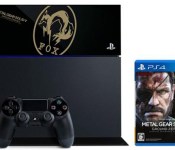
The first limited edition PS4 is a regular PS4 with a gold sticker

Despite Japan’s rich gaming culture, the new consoles that’ve taken pride of place in your living room are still considered next-gen in the Land of the Rising Sun. While Microsoft still hasn’t offered a firm date for the Xbox One‘s arrival, Sony’s PlayStation 4 makes its Japanese debut this coming weekend. Now, as reparations for the three-month delay, Sony and the snake-charmers (read: game devs) at Kojima Productions have partnered on the first limited edition PS4 console that’ll launch exclusively in Japan on March 20th. This “Fox Edition” PS4 has been crafted to celebrate the launch of Metal Gear Solid V: Ground Zeroes, a copy of which’ll be bundled with the console for 46,980 yen (around $462) — the regular console will retail for 41,979 yen (around $413) sans game, since you asked. Unfortunately, this first limited run PS4 is less impressive re-skinning effort, and more, well, boring sticker.
Via: Kotaku
Source: Kojima Productions (Twitter), Sony

Titanfall switches to an open beta on Xbox One today, PC will follow soon

Xbox One owners furiously refreshing their inboxes (or Respawn founder Vince Zampella’s Twitter feed) looking for Titanfall beta codes can step away from the F5 button — it’s switching to an open beta. According to Major Nelson, it will appear on your console under the new game demos section, although it may take some time before everyone sees it. PC owners aren’t entirely left out of the fun either, as Zampella indicates that version will follow “maybe tomorrow.”
The beta was originally scheduled to run until Tuesday night at 9PM ET, but that’s going to be extended at least one day after server issues kept players offline most of Friday night. The plan is to “max stress” the all-multiplayer game’s servers before it launches March 11th, but if you just want to find out if the former Call of Duty team can successfully blend a 6v6 shooter with mech action (a: seems like it) then it should work for that too.
Great news: The @Titanfallgame Beta will be opening up to all Xbox One users. Details on my blog http://t.co/Do12xhSsK6
– Larry Hryb (@majornelson) February 16, 2014
Ok, just heard from @jonshiring. His words are ‘Let’s break it’, so the plan is to make the beta fully open and have you max stress it!
– Vince Zampella (@VinceZampella) February 16, 2014
Filed under: Gaming, HD, Microsoft
Source: Major Nelson

Recommended Reading: Jawbone on the rise and the indie gaming bubble
Recommended Reading highlights the best long-form writing on technology in print and on the web. Some weeks, you’ll also find short reviews of books dealing with the subject of technology that we think are worth your time. We hope you enjoy the read.

Jawbone Is Now the Startup Apple Should Fear Most
(978 words)
by Marcus Wohlson, WiredPocket!function(d,i)if(!d.getElementById(i))var j=d.createElement(“script”);j.id=i;j.src=”https://widgets.getpocket.com/v1/j/btn.js?v=1″;var w=d.getElementById(i);d.body.appendChild(j);(document,”pocket-btn-js”);
In case you hadn’t heard, there are reports that Jawbone is securing a massive round of funding that would fuel the company’s IPO. The Bluetooth gadget outfit has given us a range of wireless speakers and it’s line of Up fitness trackers, but more capital could mean new product categories — things like smart clothes and improved wrist gadgets. As Wired’s Marcus Wohlson notes, those new categories are “a move Apple has struggled to make in recent years.” And of course, there’s always the chance Google could nab Jawbone up before Cupertino has a chance to.
|
Behind the Scenes at Nerf HQ and the Making of the Slingfire Zombie Blaster Ever wondered what the design process like behind the master blasters from Nerf? Sure you have! Here, Fast Company’s John Brownlee takes a behind the scenes look at the development of the Zombie Strike Slingfire: a sawed-off, pump-action foam dart weapon that’ll have you… er, kids… prepped to handle hoards of zombies this fall. Pocket!function(d,i)if(!d.getElementById(i))var j=d.createElement(“script”);j.id=i;j.src=”https://widgets.getpocket.com/v1/j/btn.js?v=1″;var w=d.getElementById(i);d.body.appendChild(j);(document,”pocket-btn-js”); |
The Floating, Fragile Indie Bubble Joystiq’s Jessica Conditt takes an in-depth look at the current indie gaming landscape and the impending identity crisis that devs face. There are new tools and programs to lend a hand, but this means more devs are diving in. “Overpopulation and quality assurance are concerns echoed by nearly every developer I ask,” writes Conditt. However, the population boom has led to much better indie titles and more diverse voices, too. Pocket!function(d,i)if(!d.getElementById(i))var j=d.createElement(“script”);j.id=i;j.src=”https://widgets.getpocket.com/v1/j/btn.js?v=1″;var w=d.getElementById(i);d.body.appendChild(j);(document,”pocket-btn-js”); |
|
Pandora Suit May Upend Century-Old Royalty Plan Nearly a century ago, ASCAP and BMI began serving as middlemen between publishers and songwriters with those looking to license their work. Now, with Pandora bogged down in legal proceedings over royalty payments, the aging system may be discarded. Of course, this is quite alarming for publishers who would then have to fend for themselves, and not even the largest outfits are equipped to do the work of the pair. “This is a horse-and-buggy consent decree in a digital environment,” said Rick Carnes, president of the Songwriters Guild of America. “There’s no way that works now.” Pocket!function(d,i)if(!d.getElementById(i))var j=d.createElement(“script”);j.id=i;j.src=”https://widgets.getpocket.com/v1/j/btn.js?v=1″;var w=d.getElementById(i);d.body.appendChild(j);(document,”pocket-btn-js”); |
Our Numbered Days: The Evolution of the Area Code Long distance calling isn’t the money maker that it once was in the US, but the area code has been ingrained into our culture for decades. The Atlantic’s Megan Garber takes a look at the history of those digits and what services like Skype and Google are doing to deplete the finite 10-digit numbering system — including adding one or two more digits. All of this begs the question: what will happen to those three-digit codes that have developed significant meaning for us? Pocket!function(d,i)if(!d.getElementById(i))var j=d.createElement(“script”);j.id=i;j.src=”https://widgets.getpocket.com/v1/j/btn.js?v=1″;var w=d.getElementById(i);d.body.appendChild(j);(document,”pocket-btn-js”); |
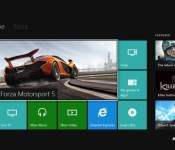
First Xbox One update goes live

Microsoft’s spring update for the Xbox One is here! (Cue triumphant trumpets.) It’s a few days later than anticipated but, as they say, better late than never. The first major update for the console packs a host of improvements, including better Kinect voice recognition, improved all-round stability, and some key fixes to the dashboard — such as onscreen meters for the controller’s battery and free HDD space. You’ll also be able to plug a USB keyboard in, which should make web browsing and searching a whole lot less painful. The update is rolling out to customers during “off-peak” hours in their local time zones. Or as the ever eloquent Larry Hryb put it, “never fear you’ll see it sometime over the weekend.” If you’re taking advantage of Xbox’s Instant On feature, the console will check for an update next time you turn it off.
Filed under: Gaming, Microsoft
Source: Major Nelson
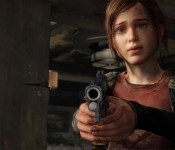
Necessary violence: The creators of The Last of Us defend its reliance on combat

PlayStation 3 exclusive The Last of Us was the most successful game of 2013. That’s not just sales (it sold extremely well, to the tune of 3.4 million in its first three weeks), but also critical reception (an average Metacritic score of 95/100 and it swept game of the year awards across the game industry in 2013). Last week, The Last of Us earned development studio Naughty Dog a whopping 10 wins at the annual DICE awards show in Las Vegas — considered the Oscars of gaming.
With Naughty Dog’s past creating hit franchises like Crash Bandicoot, Jak & Daxter and Uncharted, The Last of Us leads Neil Druckmann and Bruce Straley aren’t strangers to success (these guys led development of Uncharted 2, another extremely successful game). Their latest work is a tremendous departure.
Critics drudge up vocabulary to describe The Last of Us that’s rarely used in game criticism: “emotionally grueling,” “I wanted to fight for them.” Beyond just being a thoughtfully told story in a video game, The Last of Us takes a bold step in largely skipping combat. Most encounters can be outright ignored, traded for tension while the game’s two main characters (Joel and Ellie) slip past “infected” or, worse, the terrible other human beings in the post-apocalyptic future. The Last of Us is the rare triple-A game that dares to be emotionally engaging and eschew violence as the only form of gameplay.
“We were unsure if people would get into it or not,” Druckmann told us in an interview last week. We’d asked about the cinematic moments — the giraffe scene, that gut-wrenching ending — and why Naughty Dog had bothered with so many combat scenarios in such a story-focused, risky game. “We were pleasantly surprised to see that people are very much into it.”
In fact, the criticism heard most loudly by the TLOU team specifically focused on combat: too much, too often, and too arduous. “For ourselves, compared to previous games we’ve made, this has way fewer encounters, and those encounters you fight way fewer enemies,” Druckmann said. That reticence to move away from combat isn’t unique to Naughty Dog, though — the majority of so-called “triple-A” games feature combat as the primary interaction (last year’s holiday hits, for instance: Call of Duty, Assassin’s Creed, Battlefield, etc.).
The Last of Us — though bold in many ways — still featured combat as the primary interaction. Rather than focusing on combat as a means to achieve objectives, it was more a necessary evil to lead the game’s fragile protagonist duo to safety. “A lot of developers, not just triple-A, but a lot of developers do use combat as a crutch,” Straley told us. He defended its use in TLOU, however, as a vehicle for contrast against the game’s emotionally resonant moments. “The contrast for us is more about trying to balance the two so that you have both ends of the spectrum, because you have to have the dark to have the light.”
Would The Last of Us work without combat? Perhaps, Druckmann said, but it’d have to tell a different story. “Say you wanted to tell a story about an archaeologist that doesn’t involve Nazis. As soon as you have conflict, where someone’s taking out the guns trying to kill you, then as people you would rise to that conflict,” he said, in reference to Indiana Jones. He argued that we accept the fantasy of that world (and the murderous protagonist who comes with it), and the same happens in games: Nathan Drake is acceptable in Uncharted because he’s built into a world where Nathan Drake makes sense.

Given the response to TLOU from players and critics alike, Druckmann and Straley explored the possibility of throwing away combat altogether in the game’s final playable addition: a side story prequel featuring Ellie and a new character, titled “Left Behind” (available this week). In the end, they decided against that, though the Left Behind addition features even less combat than the main game. Druckmann explained:
“What if there were no infected in this game? What if there was no combat at all in this additional chapter? And we feel like we would lose something that’s really integral to The Last of Us, which is that contrast. The giraffe sequence works because of all the horrible things you’ve done and experienced in the Winter section. Otherwise I think the giraffe sequence would feel pretty flat without the surrounding bits to it. The ending works well because, as Joel, you’ve done really horrible things in that hospital. Maybe we could argue about the number of encounters, or how many enemies should’ve been in the hospital, but we definitely feel strong that there should’ve been a fight, a kind of murdering spree to get to Ellie, because that says something about Joel and what he would do to save someone he loves. Because ultimately that’s what those arcs of the character were: how far they were willing to go to save someone they really care for.”
Though TLOU is finished (read: no sequels, no more DLC — Naughty Dog’s calling it one and done), the lessons learned in the process are far reaching. “We have to check in with ourselves as developers and figure out what are we after here,” Straley told us. Will the next Naughty Dog game still feature combat as the main form of interaction? Perhaps; it all depends on the story that the team wants to tell. “As long as we’re still flexible to check in on what we think is acceptable and what kind of stories and experiences we want to deliver, then we’ll constantly push ourselves. And that’s exciting,” he said. Like Naughty Dog, we can’t predict if what they make next will be a success, but we sure do want to play it — whatever it is.
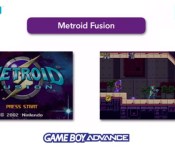
Nintendo to add more NES remixes, GameBoy Advance titles to Wii U this Spring

Unless you still own a GameCube GameBoy Player, it’s probably been awhile since you’ve seen a GameBoy Advance title up on the big screen. Come April, that could change: Nintendo announced today that the Wii U eShop will start carrying GBA classics this Spring, starting with Metroid Fusion, Yoshi’s Island: Super Mario Advance 3 (both of which were 3DS Ambassador bonuses, by the way) and Mario & Luigi: Superstar Saga. Naturally, Japan’s getting a similar pen of classic releases, but its library of pending GBA games includes Mario Advance 2, Wario Ware, Golden Sun, F-Zero and Advance Wars — Japanese gamers were also teased with a price-point: ¥650 a pop (about $6.35).
If that’s not enough nostalgic news to tide you over, Nintendo did have /one/ more thing to announce. Remember when Nintendo cherry-picked specific moments from a ton of classic NES games and released them in a mini-game bundle a few months back? It’s at it again: NES Remix 2 is everything the original downloadable title was, but to a collection of NES classic picked from later in the original Nintendo’s life cycle. This means there will be remixed and scripted challenges from games like Punch-Out!!!, Super Mario Bros. 3 and Metroid. The new Remix also includes a “new” full-game titled Super Luigi Bros. — essentially a mirrored version of the NES classic with Mario’s younger brother in the starring role. When was the “Year of Luigi” supposed to end again?
Source: Nintendo Direct (1), (2)
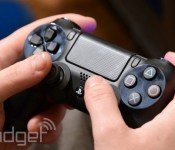
PlayStation 4 tops next-generation console sales in the US for January

As it turns out, Microsoft’s lead in US next-generation console sales was short-lived. The NPD has just released estimates which show that the PlayStation 4 outsold the Xbox One during January. Neither the NPD nor Sony is providing exact numbers, although Sony Senior VP Guy Longworth states that PS4 sales were almost twice as high as Microsoft’s. The system was certainly alluring enough to drive game sales during the quarter — the PS4 was the platform of choice for five of the top 10 games, while the Xbox One was never higher than second.
Microsoft also isn’t divulging Xbox One figures, although the NPD tells us that the system was the runner-up in hardware sales. The company can trumpet the strength of the overall Xbox brand, though. Together, the Xbox 360 and Xbox One represented 47 percent of game sales; the Xbox 360 was also the most popular system for five of the top 10 software releases. Nintendo has a silver lining on its dark cloud, too. Game sales for the 3DS and Wii U respectively increased by six and 26 percent year-over-year. That’s no mean feat when overall spending was down by a quarter. Whichever platform you prefer, we wouldn’t declare the console wars over — not when expected system sellers like Titanfall could easily shift the balance of power.
This just in: PS4 the #1 selling game console in the US in January, still #1 worldwide. Thanks, guys! pic.twitter.com/1vOFmtUukX
– PlayStation (@PlayStation) February 13, 2014
per @LuckyLongworth: PS4 was #1 in sales for next gen consoles in January, nearly doubling the nearest next gen competitor.
– Geoff Keighley (@geoffkeighley) February 13, 2014
Filed under: Gaming, Sony, Microsoft, Nintendo
Source: PlayStation (Twitter), Xbox Wire, Geoff Keighley (Twitter)
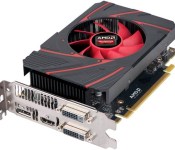
This new, low-end AMD graphics card’s meant for budget-conscious PC gamers, and maybe Steam Machines, too

Not every gamer has the desire means to get the latest and greatest graphics hardware. Fret not budget-minded PC aficionados, for AMD’s rolling out a new, more powerful low-end GPU that should suit your financial constraints. Called the Radeon R7 265, it brings twice the memory bandwidth of its predecessor, the R7 260x, which AMD claims translates into a 25 percent performance boost. It’ll cost $149 when it goes on sale in late February, and with its debut, AMD’s also dropping the cost of the aforementioned 260x to a scant $119.
Naturally, those meager price points will appeal to cost conscious consumers, but AMD’s announcement could have an effect on Steam Machine OEMs, too. We saw AMD’s higher-end R9 graphics in several of the Steam Machines at CES, and we’ve been playing with a working iBuyPower prototype packing an R7 260x for awhile now. So, it stands to reason that the 260x and 265 will prove awfully attractive options to manufacturers trying to hit the all-important sub-$500 price point needed to compete with other gaming consoles. And, who knows, maybe these new (relatively) inexpensive options will help drive down the prices of both more powerful cards and the GPUs being offered by AMD’s competition.
Source: AMD

Steam’s new user-tagging feature matches the best games to your tastes

The next time you get a specific urge to play a certain type of real-time strategy game, with a sci-fi theme, base-building and large quantities of blood for the blood god, Steam will have you covered. Instead of just browsing its catalog by genre, the Steam client now lets all users add their own tags to product pages — tags which then become searchable by everyone else. The community seems to be embracing the feature quite quickly, with plenty of eclectic labels already visible. As a result, the store should steadily become more fun to navigate, especially with added features like automatic, tag-based game recommendations. Spess Mahreens, for the Emprah!
Filed under: Gaming
Via: Joystiq
Source: Steam

Xbox One Media Remote briefly surfaces, hints at March 4th release

Between Kinect, Smartglass and the Xbox One controller, there are plenty of ways to control Microsoft’s new home entertainment system – but no traditional clicker for media moguls. That might change next month. A pre-order page for an Xbox One Media remote briefly appeared on Amazon’s Canadian website today, revealing an image, a price and little else. The page wasn’t up for long, but a Google Cache preserved the details: the above image, a $24.99 price tag ($22.69 in US currency) and a March 4th release date. The Xbox-branded clicker is light on buttons, and seems outfitted only with the bare minimum needed to navigate the console’s menus, switch apps and pause, play or rewind media. It seems like a nice (and affordable) companion to Microsoft’s other March-bound Xbox One accessories, but take this leak with a grain of salt: the Amazon page lists the remote as a game, and even gives it a pending ESRB rating. At least you’ll know if it’s safe for your kids.
Filed under: Gaming, Home Entertainment, HD, Microsoft
Source: Amazon.ca (Google Cache)

