



PlayStation 4 to get pre-loading of all pre-order games starting with Destiny

Tired of making sandwich after sandwich, idly waiting while the ol’ PlayStation 4 downloads Metal Gear Solid: Ground Zeroes? Though we’d never encourage you to stop making delicious sandwiches, we do sympathize with the situation. Thankfully for you, Sony’s adding pre-loading of all pre-ordered upcoming games to the PlayStation 4 starting this fall with Bungie’s next big game: Destiny. That means you can download the whole shebang ahead of the game’s “official” launch on September 9th, and when midnight strikes, you’re ready to go. Bizarrely, the news comes via PlayStation Network message from Ubisoft; as seen above, Watch Dogs (which launches this Tuesday) won’t have pre-loading. Sorry Charlie! Come September, however, you’re good to go.
Filed under: Gaming, Software, HD, Sony
Source: NeoGAF

Joystiq Weekly: ‘Transistor’ review, ‘Metro’ director’s cut and a book about ‘Earthbound’
Welcome to the Joystiq Weekly wrap-up where we present some of the best stories and biggest gaming news from our sister-publication.

- The grim, irradiated Russia of Metro 2033 and Metro: Last Light is getting a makeover in Metro Redux for the PC, PlayStation 4 and Xbox One.
- This TV actor gave up his visual craft and wrote a book about the cult Nintendo role-playing game, Earthbound.
In the end, it’s the unique digital world of Cloudbank and the refreshing combat that drive Transistor. The perfectly executed turn is consistently rewarding, while uncovering the dark side of Cloudbank and untangling the motives of the Camerata proves enticing enough to draw you along, even if the story doesn’t strike all of its intended chords.
That’s it folks! Be sure to head over to Joystiq and catch the news as it happens.
[Image credit: Adafruit Industries/Flickr]
Filed under: Gaming, Home Entertainment, HD
Source: Joystiq

Following Microsoft, Sony’s PlayStation business officially enters China

It’s only been about a month since Microsoft announced that it’ll be bringing the Xbox to China come September, courtesy of the local government lifting its somewhat lax ban on imported video games and consoles. Today, Sony finally confirmed that the PlayStation will indeed be joining Redmond’s console in the Far East. Just like Microsoft’s collaboration with China’s BesTV, Sony’s also be working with a local company called Shanghai Oriental Pearl Culture Development (OPCD in short). As pointed out by Sina Tech, the interesting thing is that both BesTV and OPCD are part of the massive Shanghai Media Group.
Sony and OPCD’s joint venture will form two companies: one to manage the manufacturing and sales of the hardware, and the other to manage the services plus the sales, licensing, distribution and R&D of the software. Sony China will own 70 percent of the newly formed Sony Computer Entertainment (Shanghai) (which presumably handles the non-hardware part), but just 49 percent of the other new company dubbed Shanghai Oriental Pearl Sony Computer Entertainment Culture Development.
As you’d expect, the announcement stresses that the joint venture “will introduce quality, healthy games that are suitable to China’s national conditions and the preferences of domestic players, as according to the relevant government policies.” This means we’ll likely see many censored PlayStation games over there (and also fewer games in general), plus our guess is that the consoles might not even be compatible with games released in other countries. That said, it’s worth remembering that Nintendo’s China joint venture, iQue, never applied this kind of regional restriction onto the DS and 3DS it sold there.
What’s unclear is when and which of the PlayStation products will officially hit the stores in China, but given Sony’s earlier attempts plus its long preparation for this launch, we wouldn’t be surprised if the Japanese company beats Microsoft to the race here.
Via: Engadget Chinese
Source: SSE (Chinese PDF)
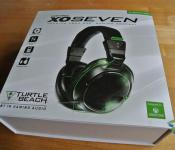
Turtle Beach Ear Force XO Seven Gaming Headset Review: Where Xbox One and mobile audio compatibility Meet
 It’s currently a very lonely place to be a gaming headset for the Xbox One; Microsoft neglected to release any decent audio products with its next gen console, so that responsibility has fallen to third party manufacturers like Turtle Beach to sort out. The Turtle Beach Ear Force XO Seven gaming headset (along with its smaller brother, the XO Four) was one of the first audio devices released for the Xbox One, and as an added bonus, has been made to be compatible with mobile devices. Let’s see if the XO Seven has decent enough mobile credentials to warrant your time and money.
What’s in the box
 As always, Turtle Beach again makes the case that opening your boxes should be a pantomine event and the XO Seven box does not disappoint. While the XO Seven has less gear in the box than the i60 (read the full review of the i60 here), there’s still a lot of substance to the contents which include the headset, a Xbox One controller adapter and an assortment of cables to suit your chosen mode of gaming, either Xbox One or mobile (or even just listening to music).
 You’ll find your XO Seven headset nestled in the bosom of the moulded packaging and beneath it, you will find the various included cables and adapters. The XO Seven is a solid over-the-ear headphone affair that follows the design methodology of Turtle Beach’s other Seven series headsets, giving it quite a lot of size. To wear, I found the XO Seven extremely comfortable, probably the most comfortable headset I’ve had the pleasure of reviewing this year so far; more on that later.
 With equal parts of black leather and black plastic, the XO Seven looks like a menacing piece of audio hardware, which is only accentuated by the lime green highlights used throughout the headset. This colour scheme extends to the braided cable, which is also extremely tough and well shielded. There’s a fair amount of memory foam both on the earcups and the headband that all add to the comfort of the XO Seven.
 If the all black decor isn’t exactly to your liking, the XO Seven also allows you to remove the faceplates of the earcups and replace them with other ones supplied by Turtle Beach, and typically feature games that Turtle Beach is the official audio provider for, like Titanfall, or just movie deals, like the Avengers.

As for the accessories that you will get with the XO Seven, you’ll get one cable that you can use to connect to mobile devices, one cable to connect to the Xbox One controller adapter, a headset boom microphone that attaches to the headset, and inexplicably, a micro-USB cable, which I can only assume is for use with mobile devices (though only with Android). I’m a bit torn on Turtle Beach’s decision to include a removable mic; while it’s great that the microphone is removable so that it isn’t in the way when you’re using it with mobile devices, it’s a bit of a bother to be removing it and replacing it if you’re using it regularly.
 While I wasn’t able to give the XO Seven a proper run as a Xbox One headset, in large part due to the fact that I do not yet own a Xbox One, the controller adapter appears to be of solid construction with quite a few buttons mounted on the adapter itself to help make quick changes to both audio and chat volumes during your gaming sessions.
How does it sound
 Apart from the game and chat options available to the Xbox One adapter, the XO Seven doesn’t have much else in the way of electronic audio smarts. What it does have, however, is passive noise cancellation courtesy of its “noise-isolating memory foam ear cushions” which do an amazing job of blocking out about 80% of the noise that is happening around you; the sound coming out of the 50mm audio drivers will easily take care of the remaining 20%. In fact, more than once, I’ve used the XO Seven to specifically block out extraneous sounds, making it a perfect headset for game immersion or just general audio immersion.
 Despite the fact that the XO Seven’s are ‘only’ stereo, I found the sound to be extremely impressive. While not on the same level as the i60, the XO Seven still does an impressive job with the full range of sounds. Mids and highs are sharp and crisp, though as a gaming headset, the bass is of course accentuated, though not overwhelmingly so. Overall, I had no issues using the XO Seven to listen to a range of music genres on my mobile device including rock, pop and the occasional classic symphony. I thoroughly enjoyed the audio experience I got from the XO Seven; while there are definitely better headphones for specifically listening to music, the passive noise cancellation of the XO Seven’s makes sure that any disadvantage that they might have had due to noise leakage is minimized.
What I like about the Ear Force XO Seven
 I mentioned earlier that the XO Seven is one of the most comfortable headphones I’ve tried this year, and that’s mostly thanks to the way the headband is designed. While most headphones are designed so that the headband comes straight out of the earcups, the XO Seven headband has a slight forward tilt relative to the earcup orientation. This means that the headband sits slightly further forward than usual, not on the top of your head but rather the front slope of your skull. I’m a huge fan of this layout and I was happy to use the XO Seven for hours at a time with no complaints whatsoever. The fit may have been on the tight side, but the leather cushioning on the earcups and headband stopped any stress points from eventuating.
 The XO Seven looks like its built to last; every part of the headset looks like it is beefed up so it can take some serious pounding, whether that’s through travelling or angry gamers getting, well, angry. I’m a big fan of chunkier headsets and the XO Seven ticks all the boxes, including a super-wide headband to distribute some of those head stresses.
What I don’t like about the Ear Force XO Seven
 Although it is advertised as mobile compatible, just about the only things additional that make the XO Seven “mobile” is the inclusion of the breakaway mobile cable. The connection that joins the cable to the headset contains two notable features, the answer call button and an in line microphone so you don’t have to lug around the boom mic. While that’s definitely better than some allegedly mobile compatible headsets out there, with such a large breakaway connection, I would have expected a few more gizmos and gadgets, like a volume wheel or something similar.
 As I mentioned earlier, the boom mic isn’t the most convenient thing to have to remove and replace every time you want to use it. Naturally, if you’re using it exclusively for Xbox One play, this won’t be an issue at all. However, for those who want to use it interchangeably between Xbox One and mobile devices, it’s a bit of a hindrance.
Final Thoughts
 I definitely have a soft spot for the Turtle Beach Ear Force XO Seven Gaming Headset; while it might not have the best quality sound of all the headsets available for the Xbox One and it’s not always the most practical headset, it’s incredibly comfortable and is built to survive some serious punishment. Marketed as Turtle Beach’s premium Xbox One option, the XO Seven is priced accordingly at $159.95 USD, compared to the $99.95 XO Four, where all the quality is in the details. If you’re in the market for something for your Xbox One that can be also used for your mobile device, the XO Seven is a hard choice to overlook.
If you’re interested in picking up the Turtle Beach Ear Force XO Seven Gaming Headset, be sure to visit its product page here, or to check out Turtle Beach’s range of other gaming products, you can visit their homepage here.
Gallery of photos


//<![CDATA[
ord = window.ord || Math.floor(Math.random()*1E16);
document.write('’);
//]]>

Gaming deals of the week: 5.23.14

Starting of the weekend with a gaming purchase could set the tone for a stellar few days off. For those looking to do just that, we’ve compiled a smattering of gadgets on the other side of the break to fill the void. Hand-held, laptop, console and headset options are all there, so a range of shopping sensibilities should be adequately catered to.
If there are other gaming purchases that you’re after that we haven’t included here — join us and add them to your “Want” list. Every time there’s a price cut in the future, you’ll get an email alert!
Razer Blade (2013)

Price: $1,499
Regular Price: $1,999
Engadget Score: 84
Buy: Amazon
Last year’s 14-inch Razer Blade is seeing an expected discount now that the 2014 model has broken from cover. Specs remain respectable, and the price tag is now $1,000 less than that shiny new option. This is also the lowest sticker we’ve seen on the 2013 unit in the past three months.
OUYA Console

Price: $75
Regular Price: $100
Engadget Score: 69
Buy: Amazon
The Android-driven OUYA console is now available for the lowest price we’ve seen over the last month. While the console hasn’t taken quite the gaming hold many thought it would, it still offers an affordable living room option for the frugal.
Nintendo 2DS

Price: $120
Regular Price: $130
Engadget Global Score: 80
Buy: Dell
The Nintendo faithful that haven’t yet splurged for last fall’s handheld may find this $10 discount tempting enough to take the leap. The 2DS was available for a mere $99 as recently as last month, so those who can hold their horses may be in for more savings.
Mad Catz F.R.E.Q.5 Headset

Price: $42.65
Regular Price: $150
Engadget Global Score: 81
Buy: Amazon
The F.R.E.Q.5 made its debut just over a year ago, and now the PC and Mac headset is offered up with a $100 price drop. Of course, when you’re not playing that RPG or FPS, the cans double as a rather flashy-looking pair of headphones for mobile music streaming.
Filed under: Gaming

The real-life hacking behind Watch Dogs’ virtual world

It starts out simply. One day, you’re scrolling through the Naval Criminal Investigative Service database, identifying a perp’s body when an alert flashes red on your monitor. “INTRUSION DETECTED,” it screams. You’re getting hacked and there’s only one solution: Call your bumbling partner over and have him join you at the keyboard. The two of you frantically bang out rapid-fire key sequences as random program windows flash onscreen. The hacker’s getting further and further into the system. Your partner’s never seen code like this before and his usual tricks to combat it aren’t working. That’s when the display goes dead and your silver fox of a boss saves the day by pulling the power plug of your workstation.
That is how the entertainment industry wants you to think hacking works. But, like most Hollywood fantasies, it couldn’t be further from the truth. Ubisoft (the studio responsible for Tom Clancy’s Splinter Cell and Prince of Persia: The Sands of Time) knows this and for its upcoming cross-platform release, Watch Dogs, the company went to great lengths to ensure its game world didn’t fall into those same tropes. Watch Dogs focuses on mega-hacker Aiden Pearce as he manipulates a Chicago run by the CenTral Operating System (CTOS) using only the smartphone in his hand. This CTOS controls everything from the simulated Windy City’s traffic lights and ubiquitous surveillance cameras, to the drawbridges that cross the Chicago River. It’s a fictitious, near-future vision of connected urban life, but still Ubisoft wanted it to hew as closely to hacking reality as possible.
The development team’s reasoning for this was simple: “We’re trying to be relevant,” Watch Dogs Content Manager Thomas Geffroyd told me. “We felt that by understanding how negatively this culture has been portrayed, we could try to present the public with a more positive and accurate view of hacking and hackers.”
A Hollywood depiction of hacking on the show NCIS
To do this, Ubisoft tapped the cybersecurity experts at Russia-based Kaspersky Labs. Together, the companies worked to vet every shell script and brute-force attack portrayed in the game to keep the intrusions plausible. Accuracy is the linchpin of Watch Dogs‘ world, so having one of the largest internet security firms read over the script, play early versions of the game and point out any inaccuracies was integral to the game’s development process.
AN UNUSUAL REQUEST
In January 2013, Kaspersky released a report on a long-running cyberespionage campaign, dubbed “Red October,” that infected computers in 43 countries and stole countless encrypted files from government agencies, military contractors and nuclear research facilities. In the days that followed, the lab received a number of requests from private-sector companies asking for extra investigation about the attacks — likely to see if they’d been targeted, as well.
In that batch of emails, though, was a different question from an altogether different firm. Ubisoft wanted to send the script for Watch Dogs over so Kaspersky could make sure all the hacking details were accurate. The studio had already spent three years researching cybersecurity and hacking; information the team readily found online. Still, they wanted a second set of eyes — Kaspersky’s eyes — to make sure small details weren’t overlooked along the way.
“We felt that by understanding how negatively this culture has been portrayed, we could try to present the public with a more positive and accurate view of hacking and hackers,” Geffroyd said.
Principal Security Researcher Vitaly Kamluk said it was a pretty unusual query, but he didn’t see the harm in his team helping. “We’re fans of video games,” he said, “and we said why not?” For Kamluk and his coworkers, the opportunity to work on Watch Dogs was a welcome change of pace and so they agreed to the task.
All of Ubisoft’s research had paid off: The suggestions from Kaspersky were relatively minor. “We didn’t do anything stupid in the first place,” Geffroyd said. Though he acknowledged that research may have attracted the attention of a few three-letter agencies. “It’d mean we did our job right!” he said. “I’m pretty much on any watch lists the NSA may have. I don’t have a doubt about that.” To Ubisoft’s credit, Kaspersky found little issue with Watch Dogs‘ script and instead focused on polishing the game from a technical perspective. “We know how hacking happens,” Kamluk said. “What skills are required … the order of the actions.” This, he told me, framed the team’s approach.
For example, at one point in the game, Pearce has to steal a sizable database and copy a hard drive from a server that’s tucked away in a protected datacenter. The script’s first draft had him log in by brute-force attacking the system (i.e., trying all possible character combinations of a short password) and then transferring the data to a network drive. That scenario wasn’t quite right according to Kamluk. “It may happen in the movies, but not in real life.”
Instead, Kamluk said a hacker would have to reboot the server via a hard reset, boot a custom operating system from an external device and then start copying an image of the hard drive. This type of action would realistically trigger an alarm, prompting security to come and check for physical intrusions. Which, as it turned out, was the immediate next part of Watch Dogs‘ story anyhow. In this case, Ubisoft’s decision to not follow the Hollywood model should actually help intensify gameplay.
Watch Dogs’ lead writer explains the project’s origins
Another suggestion that added to the realism, while also likely upping the tension, was a change to an in-car sequence. Ubisoft had originally written for Pearce to throw a GPS tag on his target and then follow him, but Kaspersky changed the sequence to make it a little more authentic. “[Pearce] has access to the surveillance cameras, can see through them and hack the bad guy just by jumping from one camera to the next without moving a finger,” Kamluk said. So, instead, he suggested Ubisoft have Pearce shadow his target while copying data over a Bluetooth connection. “That would make more sense to be in close proximity to the target; stealing data instead of just tracking where he goes,” Kamluk said.
In Watch Dogs‘ version of Chicago, smartphones, closed-circuit TV surveillance cameras and even natural gas lines are all connected to the CTOS. With that many devices on one network, Ubisoft’s initial idea to use IPv4, the current internet protocol system, for the game’s IP addresses (e.g., the 192.1.0.11 used to log in to many routers) wasn’t plausible. The problem? IP address exhaustion: The more users or devices on a network, the fewer unique, assignable addresses that are available. Kamluk advised the team to adopt IPv6 instead since it would offer more addresses and be more realistic for a near-future city. “We went through the whole game and fixed all the visuals to make sure we could get that right,” Geffroyd said. “These are the little details [Kaspersky] helped us with.”
Even though Ubisoft is striving for accuracy with Watch Dogs, Geffroyd maintained the developer’s focus has always been on gameplay first. That goes for potential sequels, too.

Aiden Pearce identifies a hacking target with the in-game smartphone
“We’re not a simulator. With Watch Dogs, we provide entertainment and we strive for authenticity,” he said. “If we’d [implemented Kaspersky’s input] sooner, it would have been harder to get all of their information and try to fit it in, because it probably would have had an effect on gameplay.” And because of that, Geffroyd would have had to reject some of Kaspersky’s suggestions. Having the lab run through the script afterward, he said, was probably the best way to go.
Where Watch Dogs strays from reality is in how long a hack actually takes. Depending on the complexity of a real-world security system, a hack can take days or, in extreme cases, months. That’s where realism is a speed bump to fun and could make the game boring — it’s something Kaspersky acknowledged must be altered to fit the constraints of a video game. That isn’t to say that Watch Dogs is inaccurate, though. “Everything happening in the game is feasible in one way or another,” said Geffroyd. “The issue inherent with gaming is we have to extrapolate shortcuts. We have to respect the medium and make a compelling experience.”
Geffroyd knows that hacking is often boring, but said its effects are “pretty straightforward” and he thinks that’s what Watch Dogs does well. There are real shell scripts present in the game (UNIX command lines), but they’re counterbalanced with interfaces and components that most people would understand. “They tried to be as accurate as possible,” Kamluk said. “I was impressed that the developers actually asked us to share some typical screens of what hacking tools look like.” To make the game’s hacking more appealing, Ubisoft also emphasized physical results of hacking, like blowing up steam pipes and lifting drawbridges — stuff that’s immediately fun.
“Everything happening in the game is feasible in one way or another,” said Geffroyd.
The day I spoke with Geffroyd, he said a hacker friend told him that work’s being done to create a phone like Pearce’s. And, more importantly, the project had just secured funding. How? By showing the investors some Watch Dogs trailers. “I would say that everything we’ve extrapolated is pretty ensured to happen,” Geffroyd said.
These in-game hacks aren’t video game fantasy, either. Kamluk said he’s seen hacking tools like network and vulnerability scanners running on modern smartphones, and added that it’s possible for a phone to act as a front-end device that’s connected to a more capable, off-site file server. “The list of vulnerabilities that you see on the phone in Watch Dogs? Similar things are possible,” he said.
According to Geffroyd, when Anonymous wants to attack a website with a distributed denial-of-service (DDoS), it uses a desktop app that you don’t even need technical knowledge to operate. “It’s a very simple app you can download after a Google search,” he said. All you need to do is enter an IP address and the app will start to DDoS the target. “The reality of hacking applications is already there,” he said. “We’re just extending it a little.” Essentially, anyone can be a hacker nowadays.
SMART CITIES FOR SMART MASSES
Instances of Watch Dogs‘ smart city tech are already in place around the globe, albeit on a much smaller scale. New York City’s plans for Hudson Yards, a sensor-laden neighborhood that monitors seemingly every aspect of life, show progress on the domestic front. IBM has had Rio de Janeiro wired with a vast emergency monitoring system since 2010. And in Songdo, South Korea, Cisco has invested $35 billion to create an embedded telepresence infrastructure and energy-management system. There isn’t a single operating system akin to Watch Dogs‘ CTOS running an entire city just yet, but, like mobile hacking tools, Geffroyd and Kamluk don’t see it as being too far off. The threat of an Aiden Pearce may not be, either.
“The more we develop, the more devices we have, the more realistic this scenario [of hackers controlling a city] is,” Kamluk said. “We’re getting surrounded by an enormous number of digital devices connected over a network, which creates a lot of opportunities for hackers.”

Sometimes the hacker becomes the hacked in Watch Dogs
When Kamluk says “devices,” that term isn’t limited to what’s in your pocket. Case in point: Last year, a hacker took down a portion of Moscow’s networked speed cameras by uploading malware to the police computer system, and destroyed some of the cameras in the process. The attack put the traffic system out of commission for several weeks. Kaspersky was hired to investigate, but is contractually prohibited from disclosing any further details.
“People tend to create systems extending capabilities and implementing new features that are so attractive to the customer, but they don’t consider security,” Kamluk said.
One of the easiest points of intrusion right now are the supervisory control and data acquisition (SCADA) systems that operate on unencrypted networks. In-game and in the real world, SCADAs control traffic lights, drawbridges and natural gas pipelines. “Thousands and thousands” of them have been installed in the past 15 years and are connected to the internet, according to Geffroyd. And because the laborers putting them in place aren’t security technicians, an absurd amount of the SCADA traffic is open to the public and access is a search result away. “You’d be surprised what you can do without doing anything technically advanced,” Geffroyd said. “You just have to put in the very easy-to-guess default password and login [credentials].” You don’t need to be in the same city or even the same country to exploit these sensors, either.
Geffroyd told me that he hopes an actual smart city wouldn’t have as many weaknesses as Watch Dogs‘ version of Chicago, but complex systems are more apt to have security gaps. Because the first smart cities will be the likes of New York or even London, they’ll probably have a lot of legacy tech in place. Those older, unprotectable elements are what Geffroyd sees as weak links in a viable security system.
“People tend to create systems extending capabilities and implementing new features that are so attractive to the customer, but they don’t consider security,” Kamluk said. “Security must be considered extremely seriously; human lives will depend on how secure these systems are.”
Filed under: Gaming, Home Entertainment, HD

Sign me up: Samsung is working on a VR headset for its smartphones and Tablets
 Probably the first name that comes to mind when “Virtual Reality” is brought up these days is Oculus Rift, the Kickstarter product which has basically made the VR movement mainstream in the gaming industry. Well, they might not be the biggest name there for long as it’s rumoured that Samsung is working on a VR headset that will be compatible with its devices which will include the Galaxy S5, Galaxy Note 3 and all Samsung devices that succeed them.
The rumour goes on to say that the headset will be gaming focused and is aimed at being a cheaper VR option than Oculus or Sony’s offerings. It’s unclear what exactly the VR headset will be running, but it is said not to be running Tizen, which Samsung has been pushing incessantly on its other peripherals this year. It’s also unclear how the device is going to be connected to mobile devices, especially considering that wired connections have been shown to be an absolute requirement of the VR experience; any lag in the visuals (which are to be delivered by OLED displays) can cause disorientation and discomfort. Still, it’s an extremely exciting idea to consider that mobile will have a dedicated VR system for games, no less.
What do you think about the possibility of Samsung making their own VR headset? Would you consider one if it were cheaper than the alternatives? Let us know your thoughts in the comments.
Source: engadget via SamMobile
//<![CDATA[
ord = window.ord || Math.floor(Math.random()*1E16);
document.write('’);
//]]>

NASA will use video games to rekindle our love of space travel

The Kerbal Space Program folks teaming with NASA was pretty cool, right? Well, it wasn’t an accident. The US aeronautics outfit is embracing the space-travel sim as a means to get the public interested in leaving our planet once again — much like the televised Apollo launches were for generations prior. Thanks to NASA, the development team has even started a collaboration with educators to create a classroom-focused version of Kerbal, where teachers can assign specific tasks to their students for homework. The development team’s efforts as a whole have been a success, and there’s proof that the player-base is much more than a handful of space-geeks and Lockheed Martin employees too. The team said that in a recent survey a staggering number of their players (some 92 percent) weren’t involved in the space industry at all, and an even higher amount (97 percent) became more interested in science and space as a direct result of playing. Even better, almost as many said they learned something about astrophysics or rocket science after starting the game. See Dad? Video games aren’t melting brains after all.

[Image credit: Getty Images]
Via: Reddit
Source: The Guardian

The man behind some of gaming’s most notorious rumors outs himself

Excited about Fallout 4? Well, cool it, because that’s not necessarily a real thing. You’re forgiven if you thought it was, and not just because we love you: rumors swirled about the supposed game for months. While at least one of them was true — and yes, Fallout 4 is assuredly a possibility — some of the most widely reported rumors were total bullshit. And not just any ol’ poop, but carefully crafted lies from a single man — that’s according to a profile piece by Kotaku‘s Jason Schreier. The alleged fake leaker also promulgated false rumors of Watch Dogs and Call of Duty, both of which were widely reported among gaming sites. It’s a fascinating tale, and we suggest heading over to Kotaku for the full piece.
[Image credit: Karin Dreyer, Getty Creative]
Filed under: Gaming, Software, HD
Source: Kotaku

Samsung is making a VR headset for its phones and tablets

Samsung is known for its ubiquitous Galaxy smartphones and tablets, popular smart televisions and, most recently, smartwatches. The Korean consumer electronics giant is about to enter another major new category: virtual reality headsets. We’re told by sources close to Samsung that a virtual reality headset is not only in the works at the company’s mobile division, but it’s set to be announced this year. The urgency is said to be a measure of beating Facebook’s Oculus Rift and Sony’s Project Morpheus to market. Some developers already have early versions of the headset, which — at least in the development stages — is powered by flagship Galaxy devices (think: Note 3, Galaxy S5). The consumer model, however, is said to require the power of next-gen, unannounced Galaxy phones and tablets.
First things first, what are we talking about here specifically? A peripheral. We’re talking about a virtual reality headset — along the lines of Oculus Rift, but more akin to the Android-powered GameFace Labs prototype (seen below) — created by Samsung, powered by Samsung products. This is not the rumored “Galaxy Glass” project.

We’re told it has an OLED screen, as good or better than in the second Rift dev kit; it’s not clear how the headset connects to your phone/tablet, but we’re guessing it’s a wired connection rather than wireless. Given VR’s reliance on immediacy, a wired setup is a requirement (any lag introduced breaks the immersion, and often makes people sick). It’s also not clear how, or if, Samsung’s VR headset tracks head movement depth-wise. In the case of both Project Morpheus and Oculus Rift, separate cameras face the player and track depth by reading sensors on the respective headsets.
Beyond beating the competition to market, Samsung’s said to be targeting a lower price tier with its headset. Don’t expect anything too low — we’re still talking about a VR headset — but the idea again is to undercut Oculus and Sony. Unlike Galaxy Gear smartwatches, we’re told that Samsung’s in-house OS, Tizen, doesn’t play a part in the VR headset.

This is a device meant for use with games. What type of games? Android games! Sure, but which ones? That’s certainly the question. Great games make the platform, and VR games are especially tough to crack given the newness of the medium. One thing’s for sure: most major games won’t work on VR as direct ports. Something like Minecraft VR makes sense on paper, but does it actually play well?
That question, and many more surrounding Samsung’s VR headset, remain a mystery. For now! Perhaps you know more? We’d love for you to get in touch! We’ll have more on Samsung’s virtual reality plans as we hear more; for now, the official line from Korea is, “Samsung doesn’t comment on rumor and speculation.”
Filed under: Displays, Gaming, Peripherals, Wearables, Samsung

