


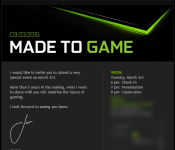
NVIDIA press invitations rolling out, new gaming product coming March 3rd

Are you ready to see a big change in the world of gaming? NVIDIA says they’ve got a product demonstration coming up that has been five years in the making, ready to “redefine the future of gaming,” and it all takes place on March 3rd, just before the start of all the other MWC announcements next month.
NVIDIA has been up to big things lately, their latest chipset on the market, the Tegra K1, has been running very well in devices like the Nexus 9. The successor Tegra X1 was announced at CES in January, expanding the availability of high-end 64-bit mobile processors on the market.
We only just heard that NVIDIA has an update to their SHIELD Tablet in the works as well, expected to rock that latest Tegra X SoC.

NVIDIA is not new to the gaming scene either, having previously released a SHIELD mobile gaming unit, and a gaming controller. Amazon and Google released their own console offerings, the Fire TV and Nexus Player, respectively. With competition heating up, we will all be winners with better devices headed to market.
MWC is coming, are you excited to see a new gaming device from NVIDIA?
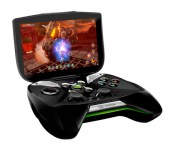
How would you change NVIDIA’s Shield?

The whole point of NVIDIA’s Shield was that it could stream PC games straight to it. Rather than stopping there, however, the experimental handheld console could also play any Android title, as well as all of the other internet-based stuff you expect from a smartphone or tablet. When we shoved the device into Ben Gilbert’s hands, he found that the Shield was fine for Netflix, browsing and everything else, but that the PS Vita’s smaller size and better game selection made it the better mobile games platform. We imagine, however, that plenty of you folks bought one of these, if only for curiosity’s sake. So, now that you’ve had a year and a bit to test it out, why not hop over to the forum and tell us what you think?
Source: Engadget Product Forums
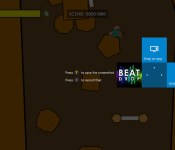
Your Xbox One will soon let you take in-game screenshots

Your Xbox One lets you livestream or record video to share your gaming exploits, but that’s overkill when all you want to do is brag about a shiny new Forza car. Wouldn’t it be nice if you could take a screenshot, like your PlayStation 4-toting friends can? You’ll have that option soon. After months of promises, Microsoft’s Phil Spencer has shown off an Xbox One screen capture feature that lets you share still images. He’s quick to warn that this isn’t the finished interface, and that the feature will get a “proper intro” when it’s ready for a preview — it could be a while before you’re giving this a spin. Even so, it’s good to know that you won’t have to take a photo just to prove that you beat an arch-rival’s score.
Nice to finally be doing this on my Xbox One dev kit. pic.twitter.com/AgDDWr3ExJ
– Phil Spencer (@XboxP3) February 6, 2015
Filed under: Gaming, Microsoft
Source: Phil Spencer (Twitter 1), (2)
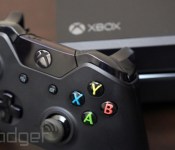
Xbox One’s first update of the year adds hubs for your favorite games

Green with envy about folks having access to Xbox One’s Game Hubs and transparent dashboard tiles? Well, now everyone has access to ‘em — not just people in the Dashboard Preview Program. That means relevant content related to every Xbox One game (like people currently broadcasting it, game clips, leaderboards) now ties into neat and friendly individual cards on the dashboard. The February update also brings in tweaks to controller connection time and party chat improvements for those operating on different NAT settings. Also in store is some absurdly specific stuff for folks across the pond. We’re talking live streaming TV via SmartGlass to Android and Windows devices in Europe, and expanded Trending TV in Brazil, France, Germany and Mexico. America is apparently too passé for Redmond these days. Regardless, if you’re feeling impatient you can force the update from the system settings menu starting now.
https://www.youtube-nocookie.com/embed/1QxV0xzY4YI?rel=0
Filed under: Gaming, HD, Microsoft
Source: Xbox Wire
Microsoft’s Xbox division leaked five years of plans in 2012, from Xbox One to HoloLens

Covering Microsoft can be comical. The enormous, multinational company is notoriously prone to leaks. Here’s a short highlight list from our vast library of leak posts about Microsoft:
- Microsoft’s fitness wearable, Band
- The Xbox One game console, in development kit form, on eBay of all places
- Cortana for Windows, the voice-based search engine
- Former CEO Steve Ballmer’s entire CES 2010 keynote speech
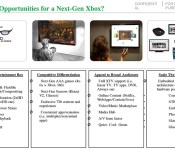
While that list of all stars is impressive unto itself, there’s a far more interesting leak that happened way back in June 2012. A 56-page business presentation was uploaded to document-sharing service Scribd — the document outlined four years of Xbox plans, the vast majority of which have now played out. From Kinect 2.0 shipping with Xbox One to HoloLens (then known as “Project Fortaleza”), essentially the entire recent history of Xbox was exposed nearly three years ago.
Up front, let’s start with the official (non-)statement from a Microsoft spokesperson — we were given the statement just after the HoloLens announcement, thus the “last Wednesday” reference:
“While I can’t comment on past rumors or speculation, I’m excited that last Wednesday, we unveiled holographic experiences on Windows 10 as well as the world’s first holographic computing device running Windows 10, Microsoft HoloLens.”
That’s essentially the same thing Microsoft said back in 2012 when the info leaked; the document, a PowerPoint presentation, appears to be from 2010. There is now beyond sufficient evidence to confirm the document’s legitimacy, from project names outed in LinkedIn profiles to real life simply playing out. Five years out, the years-long plans for Xbox were startlingly spot-on.
WHAT’S IN THE DOC?

Let’s start in 2011, where the document’s roadmap starts. In 2011, Microsoft planned on launching something called “XTV,” which sounds an awful lot like the flood of streaming apps that started arriving on Xbox 360 in 2008 with Netflix and in 2011 with Hulu Plus. The doc describes XTV as a “TV App Store” — a section of the Xbox 360’s online store, which exists to this day, filled with apps from TV channels and streaming services, as well as stuff like YouTube. Consider this the first “X” in Microsoft Leak Document Bingo.
On the docket for 2012 was the launch of “Xbox 361″: a “low-cost Xbox 360.” It looks like Microsoft moved that up to summer 2010, when the lower-priced Xbox 360 S model launched. It indeed came in a low-cost model ($200 with 4GB of flash storage), well below the price of the $300 S model that launched earlier that same year (with a 250GB HDD, thus the price difference).
Also scheduled for 2012 was an evolution of Microsoft’s “XTV” initiative into a “pay TV service,” including HDMI passthrough (the ability to plug your cable TV box into your game console). That never happened on the Xbox 360, but it sounds a lot like what eventually became the messaging for Xbox One, a console that includes HDMI passthrough.
Moving into 2013 and beyond is where things start to get far more interesting. The announcement of an “Xbox 720″ with “Kinect V2 sensor” is on the list, and some early goals for the new console are given in broad terms: six times the performance of the Xbox 360, backward compatibility with the previous console, always on/low-power ability and “full” XTV (the evolution of Microsoft’s TV/streaming solutions on 360).

The document is largely focused on this next console and sensor (what became the Xbox One), as well as one more big hardware announcement: HoloLens. The alternate reality headset Microsoft announced a few weeks back was originally planned for announcement in 2014, and it’s been known by a few different names (“Kinect Glasses”, “Project Fortaleza” and “Screen Zero” all show up in several places on and off the document). I’d wager it’s had a few other names since — every time I’ve asked Microsoft reps about Fortaleza since this document first leaked in 2012, they’ve clammed up and said nothing.
Back when this document was created, the plan was to introduce Fortaleza in 2014, to be used in conjunction with your Xbox 720 and Kinect V2. Here’s how the doc sells it:
“Full immersion entertainment experiences in the living room. The game has broken out of the screen and is all around you.”
That idea has clearly evolved, as HoloLens — a very, very similar concept to what’s described as Fortaleza in this document — is now Windows 10-focused. The device is used with the Windows 10 holographic interface, and none of the demonstrations I tried employed an Xbox One, games, or the latest Kinect. It’s also far from where the document envisions HoloLens to go by 2015.
The next year’s plan brings us current to 2015; it includes a mobile version of Fortaleza with 3G/4G connectivity, and the ability to play your Xbox games anywhere you want to play them. That latter bit is actually, kinda sorta, happening (it’s only “anywhere” if you consider “devices powered by Windows 10″ to be “anywhere”).
Given the fact that the announce of Microsoft’s augmented reality glasses didn’t happen until just recently, and the only launch window for them is “within the Windows 10 timeframe” (whatever that means), don’t expect a casual wireless experience anytime soon from HoloLens.
For anyone crying foul that HoloLens is untethered: yes, but don’t expect to see people casually walking around in public with it. The device is intended for home and office use; this roadmap advertises, “Hands free/Heads Up ambient experiences ‘on the go.’” The concept behind the mobile version of Fortaleza was to, “Drive mobile disruption via ‘always connected’ Glasses.” It wouldn’t be surprising to discover just such a thing is in the works somewhere at Microsoft.
“XBOX 720″ IN 2010

Beyond how completely bananas it is that all of this leaked years before most of it occurred in real life, it’s crazy how much of the big picture vision for the successor to the Xbox 360 actually came to fruition. Here are some bulletpoints from the document:
- Next-generation Kinect gaming: “A new more accurate Kinect sensor with dedicated application and system resources enables a whole new generation of Kinect experiences. Experience full fidelity next generation graphics with a full body high precision sensor.
- Four-person Kinect play: “Play together with the whole family. Kinect v2 means better playspace recognition, no controller required and everyone playing together.”
- One box for all entertainment: “Simplify your world with one box that delivers all your entertainment, including next generation gaming, linear TV, movies, music, applications and more.”
- “Second-screen” experiences (SmartGlass): “Your entertainment keeps getting better with Xbox 720 by instantly expanding the experience to all your companion devices. Your phone, laptop, slate are seamlessly integrated into 720 experiences.”
There’s of course a bunch of stuff in the document that didn’t happen, from backwards compatibility with Xbox 360 games to a $300 price point (the Xbox One launched at the whopping price of $500).
I’d love to point you to the Scribd page where the document was hosted, but you’d just find the same thing that’s been there for months: “This content was removed at the request of Covington & Burling LLP”. That’s a corporate law firm which represents Microsoft, just in case there was any doubt left that this is most certainly an official leak — one of the crazier ones I’ve ever seen.
Filed under: Cameras, Gaming, Peripherals, Wearables, Software, HD, Microsoft
Spyware tries to lure gamers through fake in-game voice apps

Malware targeting gamers usually tends to revolve around the games themselves, such as fake copies of a hot new shooter or deceptive in-game items. Well, it looks like these attackers are mixing up their strategy: Malwarebytes Labs has found spyware spoofing an in-game voice chat app. At first, it steers you to a fake website offering Razer’s Comms software. If you’re eager enough to click the Windows download link, you instead get a script that tries to harvest your logins and other sensitive info. A cursory glance suggests that it’s (poorly) written by Russian cybercriminals renting their services.
It’s not clear how widespread this spyware is, and whether or not you might see others like it — we’ve reached out to security researchers to get a sense of its scale. However much of a threat it might be, the voice app scam makes it clear that digital thieves see the gaming world as a big enough target that even typically insipid companion utilities are now fair game.
[Image credit: Richard Shotwell/Invision/AP]
Source: Malwarebytes

Gold and silver Mario Amiibo will test your figurine addiction

You might want to make some more room on your shelves, Amiibo fans. Nintendo is apparently working on some gold and silver variants of its popular Mario Amiibo figurines, which can be used together with the Wii U and the new 3DS. At this point though, it’s unclear when you’ll actually be able to get your hands on them. An eagle-eyed NeoGAF poster dug up the furtive figurines on Nintendo’s site, but it looks like the box art is all the info we’ve got so far. We’ve asked Nintendo what’s up, but for now you can start prepping your riot gear to ensure you make it out of the store alive when the bloodbath for these toys begins. Nintendo’s already sold more than 2.6 million Amiibo, and the demand doesn’t appear to be stopping anytime soon.

Via: Tiny Cartridge
Source: NeoGAF
Sony spends $15 million on dealing with its cyberattack woes

Instead of announcing its financial results today, Sony had to merely issue a forecast for how it’s fared in the last financial quarter. In case you’ve missed it, that’s because it’s dealing with the cyberattack that not only spilled the beans on much of Sony’s movie business but also knocked out its accounting equipment. To that end, it’s announced that it’ll spend approximately $15 million this quarter to both investigate and recover from the cyberattack. (That’s not to be confused with the $15 million in restitution it offered users last month for a separate security breach.) The company otherwise raised its earning forecast for the year, with net profits of $756 million made from October to December of last year. Sony isn’t yet done restructuring, however. In its mobile business, it now plans to shed 2,100 jobs: a further 1,100 positions to cuts it previously announced last year.
Despite this, the mobile division managed to make a slim profit, which the company put down to a healthier (smaller) range of smartphones — expect more streamlining in 2014. While Sony Pictures was understandably hit hardest by the hack, the arm still managed to pull in over $20 million in profit.
Filed under: Cellphones, Gaming, Home Entertainment, HD, Mobile, Sony
Source: Sony

Gay, transgender players restricted in ‘League of Legends’ tourney

As eSports continue to grow so too will the walks of life who participate. That’s something that a League of Legends tournament organizer in the Philippines has seemingly failed to realize with the announcement of its upcoming “all feminine” event dubbed The Iron Solari. In Garena Philippines’ outline it says that it’s having open discussions with members of the LGBTQ community about whether or not gay or transgendered women in particular should be allowed to participate. Why’s that? Fears of an unfair advantage. Yes, really.
Garena:
“For any events we do, we always want to make sure we are able to have an inclusive environment where no one feels left out, and of course for everybody to enjoy. On this angle, we believed that allowing more to be eligible to join is obviously the answer and as many of our female teams have expressed… On the other hand, for any competitions, we seriously look at ensuring there’s a fair level playing field for all participants. And there are arguments and concerns from other participants who disputes that Lesbian, Gay, Transgendered Women members may probably have some unfair advantage.”
The proposed rules would allow a maximum of one gay or transgendered woman to participate on a team for a single day. Meaning, there’d be no swapping a fresh teammate in or out for separate rounds as the day wore on. Fail to follow those rules? Team members will face sanctions and a one-year ban from all subsequent events. As Kotaku noticed, Riot Games (League of Legends’ developer) tweeted that regardless of sexual orientation all are welcome at its tournaments and it’s working with its partners to “ensure consistency with our values” wherever the game’s played. Sounds like Garena’s stance could need to change if it wants to continue its relationship with Riot.
LGBT players are welcome at official LoL tourneys. We’re working with partners to ensure consistency with our values across all regions.
– Riot Games (@riotgames) February 3, 2015
[Image credit: Associated Press]
Filed under: Gaming, Home Entertainment, HD
Source: Garena Esports

Bought Grand Theft Auto V? So did a ton of other people

Rockstar has sold 10 million copies of Grand Theft Auto V for PlayStation 4 and Xbox One to retailers over the past two-and-a-half months since the game came out for those consoles. Sure, that’s nowhere near the 11.21 million units the studio sold within 24 hours for the PlayStation 3 and Xbox 360 (Rockstar earned $1 billion within three days that time, folks) in 2013. But an additional 10 million units for the next-gen consoles despite an earlier release still sounds impressive, assuming they’re not just rotting away in storage. This means Rockstar has shipped 45 million GTA V units to retailers in all, even before the PC version (due out on March 24th) is released.
Thus far, the game has surpassed the performance of its predecessors Grand Theft Auto: San Andreas and Grand Theft Auto IV, becoming one of the best-selling games of all time. The game’s bundled release with the PS4 might have helped pad that number, or fans might have bought one copy for each generation. So, we’ve got to ask:
Did you buy GTA V for last-gen and current gen console?
Filed under: Gaming
Source: IGN

