



Facebook will start showing fewer hoaxes on your News Feed

If you’ve been on Facebook in the past few months, you’ve likely seen a number of hoaxes or stories that give out false information to readers muddying up your News Feed. The folks at Facebook realize that it’s a problem, and they’re now aiming to reduce the number of undesirable stories you see on your feed.

If you’ve ever seen a story that would be considered a hoax, there is a way to report it by choosing the option to hide the story from your News Feed. To record misleading posts, Facebook will track stories that have been reported as spam by users. They explain in greater detail:
To reduce the number of these types of posts, News Feed will take into account when many people flag a post as false. News Feed will also take into account when many people choose to delete posts. This means a post with a link to an article that many people have reported as a hoax or chosen to delete will get reduced distribution in News Feed. This update will apply to posts including links, photos, videos and status updates.
Furthermore, posts that receive an abundance of spam reports will be flagged with a message that explains the potential invalidity of the post.

Facebook also notes that this should not affect satirical stories. So for all fans of The Onion or ClickHole, you likely won’t see a reduced amount of these stories on your News Feed.
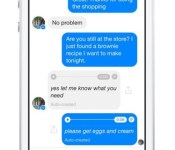
Facebook testing transcripts for Messenger voice clips

Rather than leaving a message with voicemail, people are sending voice clips. They are quicker to access and easier to manage. Messaging apps want to keep users within the service and adding support for voice clips does just that. To take things a bit further, transcripts of voice clips are gaining traction. Facebook Messenger is rolling out a feature to its users that converts voice clips into a message with text automatically created by the app. Facebook is testing the feature with a very small amount of users at this time so do not be surprised if your voice clips will not convert into transcripts just yet.
Source: David Marcus (Facebook)
Come comment on this article: Facebook testing transcripts for Messenger voice clips

Facebook, people, and arguing: my social network experiment

I refuse to “unfriend” people on Facebook.
Well, okay, that’s kind of false. I will unfriend you if we’re not actual, real life friends, and I eventually forget how we knew each other. But that’s not the point. The point is that my Facebook friends list is made up of people I know, or knew, in real life. They may not be people I speak to every day, or people I see in person with frequency, but they are or were a tangible part of my life: part of what makes me me. To put that more eloquently:
“I see it as my network: a digital representation of my network. An archive of the people I’ve encountered and come across. If I want to understand my story, my history, all of the ways that I’ve come about, this is one of those vehicles. It’s almost like this weird digital therapy space where you can get to the heart of where you are via the people you’ve interacted with.”
That’s WNYC contributor Ibrahim Abdul-Matin in a December episode of the radio show/podcast “New Tech City“. I fully agree with that sentiment: for me, Facebook is the one bastion of personal space left online. I’m only friends with people I actually know (unlike Twitter — shoutout to my man Mike Isaac for the hilarious tweets despite us never having met).
I’ve carefully curated my Facebook friends list (431 strong) from real life: It’s a virtual directory of my actual life since sophomore year of college (2006!). That is intentional. I’ve lived in a variety of places, worked a variety of different jobs, and gone to several different schools, so it’s a pretty broad mix of people. I lived in Barcelona for a year in college, so there are a handful of folks who live in and around Barcelona. I lived in Philadelphia and attended Temple University, so there are a few dozen folks from Philly and many of them attended school with me. I grew up in Connecticut and worked in a Tower Records for several years, etc. You get the idea.

Most of the time, at worst, Facebook is boring — a time-wasting dalliance of “I’m eating this fancy thing!” or “look at my baby!” or “Which Sex & the City character are you?” (I’m such a Samantha). The occasional friend I haven’t seen in 10 years might post a link to the National Report with accidental outrage, or maybe someone gets heated about guns; nothing that elicits anything beyond an eye roll.
Sometimes I add a comment, maybe even argue a bit. But always — always — it’s a discussion. These are real life friends after all.
2014 changed Facebook dramatically for me.

In early August, when an 18-year-old black man named Michael Brown was shot dead by a 28-year-old white policeman named Darren Wilson in Ferguson, Missouri, months of protest ensued. While the majority of the protests were non-violent, some involved looting.
This drove a wedge into my normal feed, as was assuredly the case with many other Facebook users. Instead of occasionally posting something I disagreed with, friends were suddenly posting things I found outright concerning. People I know to be not jerks — people who have shaped my life and the person I am — were saying all variety of ignorant nonsense. Not just any kind of ignorant nonsense, but the kind of base level, overtly racist junk that makes you ask what century you live in. Were these the same people I knew in real life?
I had a decision to make: whether to cut folks from my Facebook feed solely because I disagreed with them, or to engage folks I consider friends on contentious topics.
Given my stance on Facebook — of curating a list of people I know in real life — I felt obligated to respond. These are people I respect, who respect me. Perhaps more importantly, I don’t want to surround myself with an echo chamber. Studies have repeatedly shown that people who surround themselves with other people who share similar political views will become galvanized in those views (read: less likely to consider other points of view).
As the abstract of a 2006 study on political polarization puts it (the emphasis is mine):
“This essay reports the results of a kind of Deliberation Day, involving sixty-three citizens in Colorado. Groups from Boulder, a predominantly liberal city, met and discussed global warming, affirmative action, and civil unions for same-sex couples; groups from Colorado Springs, a predominately conservative city, met to discuss the same issues. The major effect of deliberation was to make group members more extreme than they were when they started to talk. Liberals became more liberal on all three issues; conservatives became more conservative. As a result, the division between the citizens of Boulder and the citizens of Colorado Springs were significantly increased as a result of intragroup deliberation. Deliberation also increased consensus, and dampened diversity, within the groups.”
I’m happy to report that the results have been largely positive. The vast majority of Facebook discussions I have which involve “contentious topics” (read: equality, racism, gun rights, abortion, etc.) turn out well — or at least amicably — with both people having learned something.
But few people take this approach. Facebook provides two different options for making your news feed experience more comfortable. These tools aren’t a bad idea, but they’re easily used (by accident, I’d guess) to virtually isolate yourself from different perspectives.

The first option is “I don’t want to see this,” which limits the number of posts you see from the user in question; the second is “Unfollow,” which is reserved for people you’re friends with (rather than, say, publications you follow). You remain Facebook friends, which removes any potential impact from a real life friend thinking you’ve unfriended them, but you stop seeing their posts in your news feed. It’s one step below the nuclear option (unfriending). Both options are just two clicks away.
I asked my Twitter followers (which pushes to my Facebook feed) how they handle “inflammatory stuff from real life friends” on social media. Of the twenty or so responses I received between Twitter and Facebook, less than a quarter said they engage friends when they find statements offensive or wrong in some way. Most answered like this (warning that the example status below the response text is racist / awful):

This was December 3rd, 2014, just over one week after the announcement that a Missouri grand jury chose not to indict Darren Wilson in the death of Michael Brown; The New York Times reported that “hundreds” were protesting outside the Ferguson Police Department that night. December 3rd was also the day that a grand jury in Staten Island, New York chose not to indict NYPD officer Daniel Pantaleo, a 29-year-old white man, in the death of Eric Garner, an unarmed 43-year-old black man.
In other words, it was peak timing for engaging with friends and discussing societal issues we often eschew in conversation — especially social media conversation — in favor of discussions about Kim Kardashian’s provocative magazine cover, or John Travolta’s hilarious mispronunciation of Idina Menzel’s name. Sadly, though understandable, many folks instead used Facebook’s built in tools to make their online lives a bit more digestible.
So, where am I going with all of this? Nowhere in particular — there’s no grand point — I’m just fascinated to hear how you handle these issues. Maybe I’m unique in how I use Facebook, but I doubt it! I’ve set up a poll to get a better idea of how you folks deal with similar issues, and I’d love to talk about it in the comments (or on Twitter, of course). Consider this one of those rare times that I’ll end a piece with, “Head into the comments below and tell us what you think!” At least it’s for a good reason!
How do you respond to inflammatory/offensive content from friends on social media?
Unfriend/unfollow/block/muteEngage in conversationTry to ignore itMessage that friend privatelyTalk about it in personOtherVote
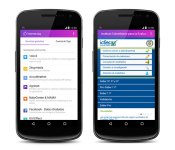
Facebook takes its Internet.org app to Colombia

Facebook took it’s Internet.org app to Zambia back in July, and now it’s heading to Latin America. The social network announced today that folks in Colombia would now be able to use a handful of connected tools free of charge. Tigo customers can access Instituto Colombiano para la Evaluación de la Educación (an education service) and Agronet (agriculture and rural development info) at no cost, as well as things like Facebook, Messenger, UNICEF, Wikipedia, AccuWeather and more. In addition to the initial 16 services, more will be added in the future as Internet.org continues to expand its reach to other parts of the world. While a load of useful tools have been a part of the free app for a while, the version that’s launching in Colombia is the first to offer access to government services.
During a Q&A in Bogotá, CEO Mark Zuckerberg said that due to the infrastructure required to do so, giving folks in developing areas access to the entire internet for free may never happen. However, through the Internet.org project, handy apps for searching job listings, speaking with a doctor and getting local news will help give users info they usually wouldn’t have access to. Zuckerberg also noted that by removing the data plan requirement, only the cost of a phone is the barrier to access, and the one-time cost of the device itself is much cheaper. What’s more, once Internet.org reaches more locales, further reducing the cost of those handsets is a goal for the future.
Filed under: Cellphones, Internet, Software, Mobile
Source: Facebook

Facebook News feed will post AMBER Alerts

AMBER alerts is a national alert system, broadcasting missing children information on television, radio, and now on Facebook News feeds. AMBER Alerts that will show up on Facebook are based on local results. So if an abduction of a child happens in your local area, your news feed will include a photograph of the missing child, along with any important information needed to locate the missing child. Once the AMBER alert is posted, you can choose to share it with others allowing the possibility of locating the missing child.
Facebook and the National Center for Missing and Exploited Children have announced their partnership so that the Facebook community can have an active role in helping to locate missing children. Based on past experiences, the chances of finding a missing child increases when more people are on the lookout, especially during those critical hours.
The number of alerts people see will depend on how many incidences happen. Some may see quite a few alerts on their news feeds, and some may not ever see one. While the AMBER alerts show up on your news feed, it will not trigger any special notification.
Since the program commenced in 1996, many children have been recovered as a direct result of AMBER Alerts. Now with the aid of Facebook, the idea is that many more children will be reunited with their families. The AMBER Alert will show up on desktop, Android and iOS platforms beginning today. Hopefully other social media will follow Facebook’s lead.
Source – Facebook Newsroom
FEATURED POSTS


The post Facebook News feed will post AMBER Alerts appeared first on AndroidGuys.

Facebook to introduce AMBER Alerts to your News Feed

Facebook is pretty much everywhere nowadays, and it looks like they’re putting their extended reach to good use. The social networking giant has reached out to partner with the National Center for Missing and Exploited Children to bring AMBER Alerts to everyone’s News Feeds. If you’re unfamiliar, the AMBER Alert program is a child abduction alert system that broadcasts missing children information on televisions, radio networks and straight to our smartphones. The AMBER Alerts that will show up on Facebook are based on local results, so you’ll only get alerts that happen around your area. The alerts will include photographs and basically as much information as the organization has on the child. Once you see an AMBER Alert post on your feed, you can share it with whomever you’d like, allowing the information to spread as quickly as possible. The alerts will begin going out today and will show up on desktop, Android and iOS Facebook applications.
If you’re already receiving these alerts on your smartphone and not through your Facebook app, you’re not alone. Most smartphones already have this functionality built-in but it doesn’t necessarily help as much as you might think. If you receive an AMBER Alert on your phone you’ll hear a loud ring, followed by a few lines of text, linking to the AMBER Alert website. This method is convenient and certainly makes users look at their devices, though it doesn’t really give out that much information for people to gather. Facebook aims to give you as much information as possible with each alert they send out, hopefully warranting more results.
Some may not think this is a big deal right now, but this is a big step forward in hopes to find more missing and abducted children.

Researchers can profile Facebook users with just their likes

Remember the time you liked a beer pong video on Facebook and thought nothing more of it? That may have said more about you than your friends and family ever knew, according to researchers at Cambridge and Stanford. They created a computer program that sifted through the Facebook likes of over 85,000 users to see if a person’s preferences could rat out their true persona. The team used certain associations that seem fairly obvious; for instance, liking tattoos means you’re more likely to drink alcohol. Others were more bizarre: apparently, people who like curly fries tend to be intelligent. Who knew?
The researchers made the subjects take a MyPersonality survey to create a baseline, then asked friends and relatives to judge them with a similar survey. The results were surprising — the computer model could judge someone better than a friend or roommate by analyzing just 70 likes, and do better than a parent or sibling with 150 likes. The average number of likes per user in the study was 227, enough for the computer to evaluate someone better than almost anyone, with one exception: their spouses.

So what does that mean? We had our senior editor and resident Facebook ace, Nicole Lee give it a whirl, since she was the only one of us who had liked enough things — it won’t work if you’re not very active. Bottom line, she was meh on the results (above): it guessed her age incorrectly at 25, thought her more likely single than not (wrong) and gave her a 58 percent openness score, which she called “so off the mark I can’t even.” It also judged her to be 2 percent lesbian for reasons she can’t fathom, though she now plans to include that stat in her profile. On the plus side, Lee did feel the 38 percent neurotic score was “spot on.” If you’re a reasonably prolific Facebook user, feel free to give it a spin yourself.
[Image credit: AFP/Getty Images]
Filed under: Science, Internet, Facebook
Via: Washington Post
Source: PNAS (pdf)

Facebook and Xiaomi explored investment opportunities without yielding any results

Facebook has tried on multiple occasions to branch out in the mobile world, moving past a simple mobile application. Over three years ago, we saw the social network try to make its way into the mobile scene by partnering with HTC for the HTC Status, which gave users a Blackberry-like experience that offered a simple status update button that was only one touch away. Then in 2013, Facebook came out with the HTC First, which ran the new Facebook Home application that not many users were fond of. After AT&T sold off their remaining stock of the HTC handset because of poor sales, one could assume that Facebook would give up trying to breach the mobile device world.
However, in a new report from Reuters, Facebook discussed investment opportunities in Xiaomi in October 2014. When Mark Zuckerberg visited China late last year, he met up with Xiaomi CEO Lei Jun for dinner. The two met to discuss Facebook investing in Xiaomi, the Chinese-based smartphone manufacturer, which is currently estimated to be worth 45 billion dollars. During the discussion, the two CEOs talked about the political and commercial ramifications that go along with partnering with the social networking giant. Facebook has been banned in China since 2009, so if the deal had warranted any results, the entire situation would have been extremely controversial. Xiaomi has been on the rise in the Chinese market for quite some time, and given the manufacturer’s good relations with Google and China, the company decided to pass on the investment opportunity.
Though the deal fell through, we now know that Facebook is actively trying to break into the Chinese market to expand their social networking site around the world. Xiaomi has been trying to expand their global marketshare for quite some time, and Facebook obviously wants to expand to China. It’s clear that both companies would benefit from working with one another, though in the end, the potential political issues outweighed expanding global marketshare for Xiaomi.

Facebook and Xiaomi explored investment opportunities without yielding any results
Facebook has tried on multiple occasions to branch out in the mobile world, moving past a simple mobile application. Over three years ago, we saw the social network try to make its way into the mobile scene by partnering with HTC for the HTC Status, which gave users a Blackberry-like experience that offered a simple status update button that was only one touch away. Then in 2013, Facebook came out with the HTC First, which ran the new Facebook Home application that not many users were fond of. After AT&T sold off their remaining stock of the HTC handset because of poor sales, one could assume that Facebook would give up trying to breach the mobile device world.
However, in a new report from Reuters, Facebook discussed investment opportunities in Xiaomi in October 2014. When Mark Zuckerberg visited China late last year, he met up with Xiaomi CEO Lei Jun for dinner. The two met to discuss Facebook investing in Xiaomi, the Chinese-based smartphone manufacturer, which is currently estimated to be worth 45 billion dollars. During the discussion, the two CEOs talked about the political and commercial ramifications that go along with partnering with the social networking giant. Facebook has been banned in China since 2009, so if the deal had warranted any results, the entire situation would have been extremely controversial. Xiaomi has been on the rise in the Chinese market for quite some time, and given the manufacturer’s good relations with Google and China, the company decided to pass on the investment opportunity.
Though the deal fell through, we now know that Facebook is actively trying to break into the Chinese market to expand their social networking site around the world. Xiaomi has been trying to expand their global marketshare for quite some time, and Facebook obviously wants to expand to China. It’s clear that both companies would benefit from working with one another, though in the end, the potential political issues outweighed expanding global marketshare for Xiaomi.

Young adults flock to Instagram, while more seniors sign up on Facebook

When we wrote about that survey, which found that working adults care more about email than social media, we said that might be why grandparents are some of the most active on Facebook. Well, according to this new study that’s also from Pew Research center, we got it right: more than half (56 percent, to be exact) of internet users aged 65 and above have signed up on the social network. What’s even more impressive is that percentage apparently comprises 31 percent of all seniors in the US. If you’re looking to get in touch with your selfie-loving teenage cousin, though, you may want to hit up Instagram instead. 53 percent of young adults between the ages 18 and 29 prefer the photo-sharing social network, which probably explains all those cringe-inducing reactions to Instagram’s recent spam account crackdown.
Other than that, the study also found that Instagram, Twitter, Pinterest and even LinkedIn saw a huge increase in users over the past year. Facebook still remains the most popular, though, it’s just that more adults now maintain several social media accounts. You can read the study’s full results, which were based on the activities of American adults (81 percent of the total) that use the internet, on the research center’s website.
[Image credit: Shutterstock / Lisa F. Young]
Filed under: Internet, Facebook
Source: Pew Research
 AIVAnet