



Facebook aims to connect the world with ‘drones, satellites and lasers’

Following the hubbub of its recent acquisition of virtual reality firm Oculus VR, Facebook has just announced something slightly more altruistic: a team dedicated to bringing basic internet access to everyone in the world. Simply dubbed the Connectivity Lab, the crew is a result of Internet.org, a global initiative Mark Zuckerberg introduced back in August of last year. In collaboration with Ericsson, MediaTek, Nokia, Opera, Samsung and Qualcomm, Internet.org has reportedly already helped three million new people in Philippines and Paraguay get online. But a lot remains to be done, which is where Facebook’s Connectivity Lab comes in. Its goal? To develop new connectivity platforms for internet delivery, which apparently includes “drones, satellites and lasers,” according to a statement from Zuckerberg.
To that end, the Lab is staffed with some of the best minds in aeronautics and communications technology from institutions such as NASA’s Jet Propulsion Lab and Ames Research Center. Today, Ascenta, which is perhaps most well-known for its deployment of the Zephyr solar-powered UAV, has also joined the team. The idea behind this ambitious approach is that different population densities would require different methods of internet delivery. More restricted areas, for example, might be best served by a long endurance aircraft similar to the Zephyr, while satellites might be best elsewhere. Additionally, the team wants to use free-space optical communications (FSO), which essentially lets these drones and satellites transmit data by sending invisible laser beams. It all seems incredibly complicated, which is why Facebook has released a video (see below) to explain the whole thing.
Filed under: Facebook
Source: Facebook, Internet.org

Facebook: A visual history

Sit down. Strap on your virtual reality headset. Now you’re navigating the crowd of your online friends, sparking face-to-face conversations in a virtual world peppered with branded “experiences.” Gone are the days of clicking through images of your friends’ far-flung vacations; now you walk the beaches of Fiji, sipping tropical drinks, watching and hearing the waves crash like you’re there — because you are.
At its start, it was a college-only collection of user profiles and groups based on shared interests.
In the not-too-distant future, our online interactions could feel a lot more real. That’s why Facebook has invested $2 billion in Oculus VR, anyway. It’s attempting to own the next big shift in computing and communication. Acquiring a startup with popularity on the upswing is a move that we’ve seen before from Mark Zuckerberg, but there’s more to his company’s sustained growth. Back in 2004, The Facebook looked more like a database than a key player in social networks. At its start, it was a college-only collection of user profiles and groups based on shared interests. Students on college campuses around the US were logging on and spilling all of their deets on a bare-bones interface. However, the rather sterile aesthetics wouldn’t last long.
Other social sites predated Zuckerberg’s project, but none of them kept pace with the mass sharing and design tweaks that have contributed to Facebook’s longevity. The company has even taken to retooling key pieces of the interface several times in a span of a few months to keep content consumption on the up and up. The old adage is “form follows function,” and the folks in Menlo Park are clearly familiar with the sentiment.
While Facebook is busy figuring out what the future of social networking will look like, let’s take a look back at where it’s been.
Social Networks Take Root
Friendster wasn’t always a social gaming site, and though it may not be the first, it was a pioneer of widespread adoption for virtual interaction. As you may remember, that particular social hub debuted back in 2002 and drew over 100 million users through 2011. Focused on user info and a circle of internet acquaintances (ahem, Google+), the hub never evolved much beyond the profile-based system that enabled contact management and sharing between users and their networks. After years of declining traffic in the states, Friendster relaunched in 2011 with a gaming focus and most of its traffic shifted to Asia.

Before The Facebook arrived, Myspace was the largest social network on the web. It launched in 2003 and morphed into its then-popular social format while amassing millions of users through 2008. In fact, it has been reported that in 2005, Myspace considered buying Zuckerberg’s site for $75 million before passing. Moving through a News Corp. acquisition and other key transitions, Myspace stuck to portal-like functionality that relied heavily on music and other entertainment content. In the meantime, emerging social media darlings like Facebook and Twitter sought to develop and roll out new features on the regular. The new kids on the block paid attention to how people used their sites and services, and made sure to keep ease of use at the forefront of any new functionality or design tweaks. It turned out to be the difference in continued growth.
Myspace implemented design updates along the way, but they were largely aesthetic and lacked the introduction of key features needed to foster a loyal long-term user base. The site relaunched last year after a “community-led” redesign process, but it still has a heavy focus on entertainment — music in particular. There’s an artist-curated My Radio feature and mobile apps that serve up easy access to content, however it appears to be too little too late. The choice to keep the profile-centric setup, and its inability to roll out new features quickly, doomed the site.
The Beginning

In the early days, user profiles on Facebook were all about information. As you can see from the above image of a profile page in 2005, a person’s favorites, relationship status, birthdate, interests and, most importantly, contact info were compiled into a single, easily accessible page. It was very much a digital Rolodex, and not too far removed from the likes of Friendster and Myspace. Each piece of data that you entered placed you in a group based on that criterion. Holmes High School Class of ’02? Your classmates are there. Graduating from that college you’re attending in ’06? Your fellow graduates are a click away. Heck, you could even harness the power of cult classics like Donnie Darko when searching for fellow enthusiasts. Of course, the Wall was there for leaving notes, too.
News Feed
Once you open up a service to anyone, you’ve got to keep new features coming on the regular in order to keep users coming back. The masses likely wouldn’t have sustained interest in an online directory, and Facebook wasted no time making the necessary tweaks. It added Photos in 2005 while it was still a campus exclusive. The UI for snapshots has been retooled regularly since then, but the ability to share galleries from Spring Break and other exploits has been available from the start. What began as a means to share images with friends online turned into a life-logging activity as time went on.
Nearly a year after galleries of summer vacations and ski trips found a home on Facebook, it introduced a new feature that would become a key piece of its functionality: News Feed. No more clicking through to a user’s profile page to get the latest on their activities. That info was now arranged in chronological order when you logged in. Status updates, photo posts and more were compiled in a scrolling list of the latest from your friends. Info from Pages arrived on the feed in 2007 and the all-important Like button for each bit of content landed in 2009.

Once the News Feed became the epicenter of activity on Facebook, design tweaks began to roll out as needed. Just weeks ago, it announced that the next version was on its way, citing the never-ending quest to make its offerings easier to use while keeping them tidy. This marks the third design overhaul of the site’s hub in about year, further confirming Facebook’s modus operandi: Keep what’s important easily accessible.
Going Mobile

Over the past couple of years, Facebook has aggressively focused on mobile engagement, but its first foray into mobile actually began back in the spring of 2006. The first offering, a mobile-friendly site, dubbed Facebook for Mobile, launched then and the first native app outfitting the OG iPhone hit iOS in the summer of 2008. Even in the early days of smartphones, the social network was already facilitating sharing on the go. Android, Windows Phone and other operating systems would get their own native apps upon their arrival, with the expected regular updates to add new features and refresh the UI.
After rounds of rumblings spanning several months, the long-rumored “Facebook Phone” broke from cover in April 2013. Sure, other devices had dedicated buttons for quick and easy sharing, but the HTC First offered a skinned Android OS, called Home, built entirely around the social network. The company labeled Home as something between a full-fledged OS and the average app. In terms of aesthetics, the offering took on Facebook’s clean look with photos at the forefront. Cover Feed gave a rundown of the current happenings and Chat Heads offered pop-up style text updates from Messenger convos.

While other Android apps were accessible with Home, it wasn’t until October of that year that deeper integration launched, bringing more of a user’s content to lock and home screens. Despite opening up Home to a smattering of other devices in addition to the First, both the handset and the non-OS have yet to see widespread adoption and are viewed by many to have been a bust.
Facebook Ads

We’ve all seen them since they became embedded in the News Feed, but ads on Facebook actually started rolling out in 2006. They appeared in the form of banners then, with the formal rollout of the company’s successful platform being officially announced in late 2007. Focusing on targeted ads based on user activity, Facebook has placed these sponsored promotions on the right-hand sidebar and within the main activity feed for the site on the web and mobile devices, draped in the appearance of any other shared item from an internet pal. The long arm of Facebook’s ad strategy has also extended to once-ad free Instagram, and while it’s promised to keep WhatsApp a commercial free zone, Zuckerberg’s hinted at an ad-filled future for Oculus.
The Constant Redesign
Although Myspace looped back with a massive redesign last year, the steep decline that led to its mere $35 million sale has been widely attributed to sticking to its profile-centric setup. Not until the site had all but left the minds of former users did it reach out to entertain feedback. Facebook, on the other hand, has been keen to watch how its now 1 billion users share and consume content, adjusting the UI and adding new features to keep what’s of individual importance on top and easily accessible. This strategy doesn’t just apply to the web; it’s carried out across the desktop, mobile and supplementary apps like Messenger, too.
Facebook has been keen to watch how its now 1 billion users share and consume content.
In recent months, Facebook has adopted a public beta for testing new features inside its apps. The outfit now publicly seeks out user feedback on changes to mobile software offerings — mostly within Messenger up to this point — before beaming the tweaks to all of its iOS and Android user base. The designers in Menlo Park have also been quick to adjust when a change doesn’t work out quite as intended. As we’ve already mentioned, News Feed has been retooled a few times in the last 12 months in response to criticism.

This rapid-fire approach can be seen in bigger changes as well. Projects like the @facebook.com email service, Poke, Places, Deals and Camera have all struggled to gain traction and many were eventually shuttered. For all the failures, however, introductions like Graph Search and Messenger have proven to have lasting significance and usefulness. With a growing interest in reader-style apps like Flipboard, Google Newsstand and Feedly, Facebook unveiled its Paper app in January. Citing the need for a “distraction-free” reading experience, the company inserted itself in an area it felt needed improving, and sought to do so with better design. It’s too early to tell if this pet project will pay off and it’s currently only available for the iOS faithful.
The Next Big Things
While declining traffic amongst teens may be a growing concern, Facebook’s track record shows it’s willing to rejigger its offerings to cater to what users want, even if that means spending some cash. The company nabbed up Instagram in April of 2012 for $1 billion, adding a loyal base of users concerned with sharing even the smallest details of everyday life. In response to Snapchat’s rising popularity and a reported failure to buy that particular service, Instagram Direct added photo swapping between users outside of the regular snapshot timeline in late 2013.
Investing heavily in design and letting form follow function, with a little shopping thrown in, is still paying huge dividends 10 years in.
Global efforts ramped up last month with the whopping $19 billion WhatsApp acquisition, locking down its several hundred million users and proven success in free messaging and upcoming voice features — an area that’s been of interest to the social network for quite some time. When expanding its reach and increasing shared content, Facebook’s moves show that sometimes design isn’t enough, and expanding by buying up the competition’s unique feature set is another avenue for growth. It’s even banking on virtual reality as the next big thing for not only gaming, but also for communication as a whole by snatching up Oculus.
With all of the successes, questionable moves and an increasingly mobile mindset, Facebook is still the largest social network on the web and tallies 1.23 billion monthly active users, far exceeding its closest rival, Twitter, which counts 241 million users per month. Investing heavily in design and letting form follow function, with a little shopping thrown in, is still paying huge dividends 10 years in.
To celebrate our 10th anniversary, we’ll bring you a new story every week in March that explores how the social media landscape has changed. Check out our hub every Wednesday for more from of our 10 Years in Social Media series, and keep your eyes out for more ’10 Years In’ content in the months to come.
Facebook buying Oculus Virtual Reality for $2 Billion
Facebook has been known for buying out products and companies have been successful were on the verge of success. Usually Facebook would acquire a new social network, an app or some online services, but now Facebook is buying the outcome of a Kickstarter project known as Oculus Virtual Reality. Oculus Virtual Reality was sold for $2 Billion ($400 million cash, $1.6 billion stock).
According to Zuckerberg, mostly nothing will change for Facebook and nothing will change for Ocululus, for now. Oculus is expected to stay at its headquarters, employees will keep their jobs, also Android support for Oculus is still in development. According to Zuckerberg the only thing that has changed is the ownership.
Facebook buying Oculus could be Facebook’s attempt to enter the gaming and home entertainment market. Facebook sees Oculus as the next step in home entertainment, and thus could be Facebook’s first step toward home entertainment.
The deal could also be an example of history repeating itself. Back in 2005, Google bought out Android, and by making it open-source it went onto dominating the market. Facebook could be doing something similar with the Virtual Reality technology by not only being some of the leaders in their field, but they could add incentive for other companies to make drastic strides in their technology, much like we see in the competition between Apple, Samsung, and HTC.
Even though the deal just went though, what do you think about this? Let us know in the comments!
Source: Facebook
The post Facebook buying Oculus Virtual Reality for $2 Billion appeared first on AndroidGuys.
Daily Roundup: the future of Oculus Rift, Turkey drops Twitter ban and more!

You might say the day is never really done in consumer technology news. Your workday, however, hopefully draws to a close at some point. This is the Daily Roundup on Engadget, a quick peek back at the top headlines for the past 24 hours — all handpicked by the editors here at the site. Click on through the break, and enjoy.

Can Oculus survive the Facebook effect?
Yesterday, the internet responded to Facebook’s $2 billion acquisition of Oculus VR with a swift fury. But it’s not all bad news. Our own Marc Perton points out, the deal doesn’t change the essence of the Oculus Rift, or its potential for non-gaming applications.

NASA reveals three spacesuit designs, wants you to choose a favorite
NASA wants to add some style to its futuristic Z-series space suits and they’re reaching out to the masses for help. You can vote online for your favorite of three radical spacesuit designs, but that contest ends on April 15th.

The next version of Android could be truly business-friendly
According to The Information‘s sources, the next version of Android will put much more focus on office-grade security. If the rumor is true, the new OS will allow for apps that require their own authentication and storage on secure chips.

Turkey’s Twitter ban has been overturned
Well, that didn’t last long. The Turkish government’s ban on Twitter was given a “stay of execution” earlier today, meaning the injunction will be lifted until judges have the chance to weigh complaints against the social giant. Twitter also announced it was one of the parties who originally filed a complaint against the decision.
You also might like:
Filed under: Misc
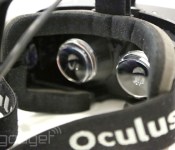
Can Oculus survive the Facebook effect?

The response was swift, and almost universally negative. Within minutes of Facebook’s announcement that it was acquiring Oculus VR for $2 billion, the internet had begun to mobilize against the deal. From Twitter to Reddit to our own forums, the message from early commenters was clear: This was bad for Oculus, bad for virtual reality, bad for gaming — just bad.
Part of this was the normal reaction to any popular, independent startup being bought out by a big company. There’s a natural — sometimes justified — suspicion that the acquirer will ruin everything that made the small company successful, and the onus is on the newly merged business to prove otherwise.
In Oculus’ case, however, there was more than the typical anti-acquisition backlash. Facebook has become known as a company that is built around one thing: monetizing your social interactions. On Facebook, you’re the product, with everything you do sold to advertisers, and that makes a lot of people uncomfortable. As Minecraft creator Markus “Notch” Persson said in a tweet announcing that he had scrapped plans for a version of the hugely popular game optimized for Oculus’ head-mounted display, “Facebook creeps me out.”
We were in talks about maybe bringing a version of Minecraft to Oculus. I just cancelled that deal. Facebook creeps me out.
– Markus Persson (@notch) March 25, 2014
Facebook knows this is the company’s reputation, and CEO Mark Zuckerberg tried to assuage concerns that his company would change Oculus in any way. Zuckerberg gushed about how Oculus’ VR technology “opens up the possibility of completely new kinds of experiences,” and talked about how it would expand beyond gaming to educational and medical applications. Zuckerberg cited Instagram’s success — the service now has 200 million users — as an example of how an acquired company can function independently and successfully within Facebook.
When it came to Oculus’ business model, he said Facebook wasn’t interested in making money on the Oculus Rift hardware; the revenue, he said, would come from other places. “We view this as a software and services thing,” he said. “If this becomes a network where people can be communicating and buying things and virtual goods, and there might be advertising in the world, but we need to figure that out down the line.” Zuckerberg didn’t go into specifics, but it’s easy to imagine shopping malls popping up in the virtual landscape.
Advertising, along with the targeting and tracking of personal data that goes with it, may be what Oculus supporters fear most. Virtual reality, according to Zuckerberg, may be the next major computing platform, after mobile. But it’s a platform that, by its very nature, is designed to be highly immersive and personal. Do you want Facebook, or its advertising partners, to know how you’ve interacted with your doctor? What you’ve been discussing in a virtual classroom? What kind of VR porn you like? While similar privacy concerns have dogged ad-supported services from Facebook to Twitter to Google, the extension of this to virtual reality has, for some people, crossed a line between the personal and public that just shouldn’t be breached.
In a blog post last night, Minecraft’s Notch emphasized that his main concern about Facebook is that the company is focused on social applications, rather than gaming. But he didn’t shy away from raising concerns about the company’s business model. “Facebook has a history of caring about building user numbers, and nothing but building user numbers,” he wrote.
The Instagram deal mentioned by Zuckerberg is a good example of the challenges the company faces. In the almost two years since Facebook bought the photo-sharing site, it’s stayed largely independent. You don’t need a Facebook login to access the service; ads are a rarity; and only recently did Facebook even broach the idea of swapping out location data from rival Foursquare with its own content. But not long after Facebook acquired Instagram in 2012, the service quietly changed its Terms of Service to give itself the right to sell users’ photos to advertisers without notification or compensation. After the resulting backlash, the service was forced to backpedal and undo the changes. Around the same time, Instagram updated its Privacy Policy so that it could share user data with its parent company. That change remains in effect.

Oculus’ founders cited Zuckerberg’s willingness to keep hardware margins down as a key factor influencing their decision to go ahead with the deal. CEO Brendan Iribe told me that Zuckerberg said he wanted to “deliver this platform and product at the lowest cost to the widest audience possible.” The goal, said Iribe, was to “connect a billion people with VR at the best possible price” and “not worry about a profit at the beginning.” Oculus Investor Antonio Rodriguez of Matrix Partners called Facebook a “money machine,” and cited its deep bench of engineering talent as an opportunity for Oculus to reach its goals sooner. “We could have gotten there” as an independent company, he told me. But Facebook will let Oculus build out “scalable infrastructure” for VR more quickly. “I don’t have to worry about Oculus anymore,” the outgoing board member said somewhat wistfully. “I’ll get the VR experience I want faster.”
Engadget chose the Crystal Cove Oculus Rift prototype as Best of CES this past January. That decision was based on the product’s cutting-edge technology, and the potential it offered to finally deliver on the promise of VR, something that’s seemed tantalizingly close for decades, only to forever fall short. That potential is at the crux of both Oculus’ decision to go with Facebook, and the suspicion of many formerly loyal supporters. Oculus mastermind Palmer Luckey is one of the smartest, most focused people I’ve ever had the fortune to meet, and I believe him when he says his main reason for partnering with Facebook was to get the “best experience to as many people as possible” as quickly and affordably as possible. Luckey believes in the potential of Oculus’ work with every fiber of his being, and Facebook, as he sees it, will get that work into the hands of millions of consumers in a way that never could have happened if Oculus had stayed independent.

But I also understand the wariness of people like Notch, who was one of the earliest and most devoted supporters of Oculus. A little over two weeks ago, he flew from Sweden to Oculus HQ in southern California to meet with the team and learn more about their development roadmap. “What I saw was every bit as impressive as you could imagine. They had fixed all the major issues, and all that remained was huge design and software implementation challenges,” he wrote of the experience. “As someone who always felt like they were born five or 10 years too late, I felt like we were on the cusp of a new paradigm that I might be able to play around with.” The Facebook deal, however, has ended that. “Their motives are too unclear and shifting, and they haven’t historically been a stable platform. There’s nothing about their history that makes me trust them, and that makes them seem creepy to me.”
Luckey told me that he has “zero interest in doing what someone else thinks is the right thing.”
Ultimately, Oculus can still succeed in the marketplace without Minecraft, and while serving Facebook’s business goals. The Oculus deal doesn’t change the fact that the Rift is an exciting, technically advanced platform that can deliver a unique gaming experience, and has potential for a huge number of non-gaming applications. Of course, if the Rift ends up being just a way for Facebook to serve immersive ads to its users, it will be a disappointment, no matter how groundbreaking it is. But there’s no guarantee that will happen. Luckey told me that he has “zero interest in doing what someone else thinks is the right thing.”
Don’t count the Oculus team out just yet.
(Iribe/Luckey Photo:Photo (C) Ana Venegas/The Orange County Register/ZUMAPRESS.com
Filed under: Facebook
Instagram crosses 200 million users, welcomes Oculus to the family

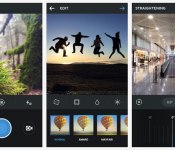
In news that Zuckerberg, Luckey & Co. hope bodes well for Facebook’s latest acquisition, Instagram just announced it’s crossed 200 million users, with over 50 million joining in the last six months and 50 billion photos shared so far. Facebook CEO Zuckerberg mentioned the number during his conference call discussing his company’s purchase of Oculus VR, highlighting Instagram’s better-than-expected growth as an example of how it continues to operate independently within Facebook. Recent developments have included ads, a revamped app for Android and testing out integration of Facebook Places instead of Foursquare, but so far Instagram hasn’t even used Facebook accounts for logins yet. We’ll see if that changes anytime soon, and if the team finds itself redirected to work on filters for the virtual reality experiences its owner is suddenly jumping into.
Filed under: Internet, Mobile, Facebook
Source: Instagram Blog

Notch cancels Minecraft for Oculus Rift, but other developers still have interest

It looks as if the Facebook and Oculus deal already has its first casualty. Minecraft mastermind Markus “Notch” Persson has said that he’ll no longer be developing his game for the VR headset following Zuckerberg’s latest purchase. “We were in talks about maybe bringing a version of Minecraft to Oculus,” he tweeted. “I just cancelled that deal. Facebook creeps me out.” Persson continues on his blog that, while social aspects could be one of VR’s biggest applications, he doesn’t want to work with social experiences — he wants to work with games. Beyond that, he doesn’t see the social network as a stable platform, and won’t work with it in any form as such.
If you were dead-set on traversing a pixelated Great Britain in VR, it’s looking like you might have to settle for the hacked PC version for now. All isn’t lost, though. Minecraft‘s already been announced as a PlayStation 4 title and the wraps recently came off Sony’s Project Morpheus headset — it could possibly show up there.
That arguably one of the biggest indie developers (and one of Oculus’ earliest supporters), however, has cancelled a project the scale of Minecraft is pretty major. What do others in the indie scene make of the news, though? Those we spoke to actually seemed pretty happy about it.
The developer behind the Rift’s highest profile game, and the one that Oculus trots out time and again when there’s new hardware to show off (EVE: Valkyrie), has nothing but praise.
“We’re very excited for our friends and colleagues at Oculus,” David Reid, CCP Games’ CMO told us. “We share their vision about the future of VR and gaming and are looking forward to participating in the consumer launch of the Oculus Rift with EVE: Valkyrie.”
“I think this is a smart move for Oculus,” Rami Ismail of Vlambeer told us. The developer behind Ridiculous Fishing, and, most recently, Luftrausers, said that while Oculus is well known on the tech scene, it needs a backer with huge public mind-share now that Sony has entered the VR space. “Facebook is a huge established tech presence, has amazing engineers, hardware, software, public mind-share and lots of money,” he said. “I mean, I am not a big fan of exits as a business model at all, but in light of not really having a profitable business model, it makes total sense for them to exit,” he said.
Indie publishers are bullish, too. “Ultimately if Facebook allows the Oculus platform to get into the hands of more people, gamers or otherwise, then this acquisition will prove to be a good thing,” Devolver Digital (of Hotline Miami fame) partner Nigel Lowrie told us. “We’ve seen what this next generation of VR technology from Oculus, Valve and Sony can do and how it can change the game. Anything that achieves a greater awareness and broader reach for video games as mainstream entertainment, and pushes new technology forward in new ways is ace.”
Filed under: Gaming, Wearables, HD, Facebook
Source: Markus “Notch” Persson (Twitter), Notch

Palmer Luckey says Oculus’ future ‘just became crystal clear,’ but Facebook’s impact is still murky

If you’re reading this, you’re likely already aware that social networking juggernaut Facebook has just announced plans for yet another multi-billion dollar acquisition. This time it’s spending $2 billion dollars (that’s $17 billion less than WhatsApp for those keeping track) to buy virtual reality headset maker Oculus. Just minutes after the announcement, the startup’s founder, Palmer Luckey took to Reddit to provide some perspective about the deal:
“When Facebook first approached us about partnering, I was skeptical. As I learned more about the company and its vision and spoke with Mark, the partnership not only made sense, but became the clear and obvious path to delivering virtual reality to everyone. Facebook was founded with the vision of making the world a more connected place. Virtual reality is a medium that allows us to share experiences with others in ways that were never before possible.”
Luckey praised Facebook’s dedication to open hardware and software initiatives, with its investment in the Open Compute Project and said the partnership “allows us to execute on some of our most creative ideas and take risks that were otherwise impossible.” He said very little would change at Oculus day to day, a familiar sentiment for those familiar with the WhatsApp acquisition. And while he claimed that the move means “a better Oculus Rift with fewer compromises even faster than we anticipated,” one can’t help but wonder what this means for the future of the scrappy Kickstarter success story. Luckey said, “This is a special moment for the gaming industry – Oculus’ somewhat unpredictable future just became crystal clear: virtual reality is coming, and it’s going to change the way we play games forever.”
So operations likely won’t change drastically at Oculus, and we could even see a consumer-ready Rift sooner than expected. But in an investors call this afternoon Facebook CEO Mark Zuckerberg unsurprisingly suggested that possible revenue opportunities from the deal could include advertising in whatever form that might take. Bottom line: if you thought your virtual escape would be a commercial-free zone, think again.
Photo by Sam Comen for Engadget Distro
Filed under: Gaming, Internet, Facebook
Source: Reddit

Daily Roundup: new HTC One review, Facebook acquires Oculus VR and more!

You might say the day is never really done in consumer technology news. Your workday, however, hopefully draws to a close at some point. This is the Daily Roundup on Engadget, a quick peek back at the top headlines for the past 24 hours — all handpicked by the editors here at the site. Click on through the break, and enjoy.

HTC One review (2014): a great phone, but no longer a game-changer
HTC’s new One is official, and it’s quite the looker. With a sleek unibody chassis reminiscent of last year’s model, the new One packs a larger 5-inch screen, and a brand new version of its Sense UI. What’s more, the handset is one sale in the US today, starting at $199 for the 16GB version.

Facebook is buying Oculus VR for $2 billion, plans to ‘unlock new worlds for all of us’
Facebook only recently purchased Whatsapp, and now it’s continuing the shopping spree by acquiring the virtual reality company Oculus VR for $2 billion in stock and cash. Why? Appartenly Zuckerberg wants to make Oculus a platform for “completely new kinds of experiences.”

Microsoft makes MS-DOS and Word for Windows source code public
In a blog post today, Microsoft announced it’s teaming up with the Computer History Museum to make the source code from MS-DOS and Word for Windows available to all. Roy Levin, managing director of Microsoft Research, hopes the decision will help future technologists better understand the roots of personal computing.

The new HTC One vs. the competition: the battle of Android flagships rages on
Above, you’ll see four of the latest and greatest smartphones — one of them being the new HTC One. Replete with a larger screen, dual backside shooters and a brand new version of its Sense UI, this year’s One is a formidable opponent. But can those improvements carry the sleek handset into battle against the likes of the Galaxy S5 and Sony Xperia Z2?
You also might like:
Filed under: Misc
Oculus founders: Facebook lets us bring the best VR experience to a billion people

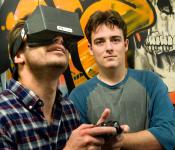
Oculus VR co-founders Palmer Luckey and Brendan Iribe had a vision for their company: to bring virtual reality to as many people as possible, in the best way possible, at the lowest possible price. And, according to the duo, selling the company to Facebook is the best way to reach those goals. “This is the best thing for us to do,” Luckey told us in a post-announcement interview. “It leaves us in the same position we’ve always been in, doing the same things we wanted to do.”
The surprise deal, according to Iribe, came together after Facebook CEO Mark Zuckerberg asked for an Oculus Rift demo. “The initial expectation wasn’t that he was coming down to acquire us,” Iribe said. “He just wanted to see what we were up to.” It quickly became clear, he said, that the two companies had a lot in common, and that being acquired by Facebook wouldn’t require Oculus to sacrifice any of its independence. “We looked at other companies and thought, if we’re partnering with them, they’re going to turn us into their own brand and product and they’ll change our emails and we’ll be wearing different hoodies. We’re proud of who we are.”
In Zuckerberg’s announcement earlier today, he said that the company wasn’t concerned with making an immediate profit selling the Oculus Rift hardware, and Iribe confirmed that. “We don’t know what we’ll price this at,” he said. The goal is to “get this out at the most affordable price possible.” Zuckerberg, according to Iribe, offered Oculus the chance to “reduce or eliminate the hardware margin and just get this out there.”
For Luckey, who began work on the first Rift prototype while he was still in college, the fact that Facebook isn’t a gaming company is actually a good thing. “Almost anyone in a gaming place would want us to do it based on their vision,” he says. “We already had a vision for the company,” Luckey told us in a brief post-announcement interview. “Facebook is going to let us do it, but with their resources behind it.”
“We have zero interest in doing what someone else thinks is the right thing,” he added.
(Photo: Ana Venegas/The Orange County Register/ZUMAPRESS.com)
 AIVAnet
.jpg)