



Facebook Updates Messaging App with 15-Second Videos, ‘Big Likes’ [iOS Blog]
 Facebook has updated its popular Facebook Messenger app with 15-second videos and “big likes”, adding more ways for users to interact with their friends.
What’s New
Instant Video Sending: Shoot and play 15-second video messages from the camera right in the appBig Likes: Press and hold to send an even bigger thumbs up when you really, really like something.
Easy video sharing has been a popular new feature for messaging apps, with Snapchat getting updated with live video in May and Facebook-owned WhatsApp planning to add video calling. At WWDC, Apple announced that its Messages app would be receiving in-line video messages in iOS 8. However, Facebook Messenger’s Instant Video feature is more similar to Apple’s implementation of video rather than Snapchat or WhatsApp.
Facebook Messenger is available in the App Store for free. [Direct Link]

How I got stabbed in the chest at E3 2014 (an Oculus Rift tale)

There I was, impaled by an alien. I was carefully walking around a space station, with nothing more than my (admittedly dim) wits and a motion tracker, watching a large, terrifying alien stamp about. My only direction was to survive. “You had one job!” I failed at it.
The tech demos are over: Oculus Rift’s second development kit at E3 2014 isn’t running any dalliances aimed at proving the tech. It’s running real-ass games. Alien: Isolation was the third game I played, and it was by far the most terrifying. You’re not a space marine, and you’re not named Ripley. You’re just some unwitting sheep running from assured death at the hands/tentacles/teeth of an H.R. Giger-designed alien. Delightful.
ALIEN: ISOLATION
Alien: Isolation is being made by Sega’s recently acquired game studio The Creative Assembly. Hell, it’s coming out this year on game consoles and PC. Again, the demos are over — there are entire game dev teams dedicating time to virtual reality at this point. Isolation is proof of that, and it’s a great first example. It’s not even clear how people will be able to play Isolation‘s VR mode at this point; the game’s headed to PC, but there’s no VR headset to buy just yet enabling said functionality. Sure, you could buy a dev kit and stuff, but that’s pretty far from ideal.
Anyway, Alien: Isolation is meant to terrify you. You’re stuck in a confined area of a space station while the aforementioned alien stomps about. If it sees you, you’re done. Not, “Oh, I’ll turn and run.” Not, “Shoot her! Shoooooooot herrrrr!”, Jurassic Park-style. It comes right at you and the motion sensor in your hand doesn’t offer any defense. So while I snuck from room to room looking for an out, I was able to avoid interacting with the hulking beast a few times. About three minutes in, though, he spotted me dead on. I turned to run. He caught up quickly and stuck me through with a vicious-looking appendage. I looked down and saw said appendage sticking out of my chest, blood dripping from it. The future of gaming is pretty messed up, y’all.
LUCKY’S TALE

Do you like Super Mario 64? How about Super Mario 3D World? Or Ratchet & Clank? Well you should be super pumped about Lucky’s Tale, the second game being published directly by Oculus VR. It’s being made by the folks behind Words with Friends and, before that, they were Ensemble Studios alums (Age of Empires, Halo Wars, etc.). It’s a colorful, cutesy third-person platformer. You feel a bit like god, looking down on a cartoony world filled with stars to grab and platforms to bounce on. “So what, it’s a platformer!” you say. Okay, okay — cool it.
What makes Lucky’s Tale especially cool is the gameplay implications of wearing a head-tracking VR headset. Lucky has to throw bombs occasionally; simply look at your target and push a button. Boom! How about hidden secrets? Just look around the level; having a VR headset on means the 3D platforming world of Lucky’s Tale is a physical platform just a few feet away from your gaze, able to be explored more deeply than ever before. What’s that next to the ledge? Just bend your head around the corner and take a look, why don’tcha? While the game at first feels like little more than a pretty 3D platformer, it quickly becomes a whole new experience in VR.
SUPERHOT

First and foremost, you can play Superhot right now. And you absolutely should, because it’s super boss. Check it out right here.
That aside, playing Superhot in VR is bananas. The conceit of the game is that time moves forward as your character moves. So it’s a first-person shooter, but the bullets only move toward you as you move your character. It’s kind of like living in The Matrix‘s bullet-time sequences; you can literally watch a bullet as it whizzes past your head, slowly moving forward as the bullet slowly creeps past you. It makes the whole shooting experience far more personal. One bullet takes you down, and there are many bullets. Playing Superhot feels like a game of virtual reality Twister. I found myself moving in short bursts, advancing time and carefully moving my head as to avoid the bullets flying my way.
Forget Team Fortress 2‘s VR support — Superhot is where it’s at for first-person shooting in virtual reality.
Recently single? Facebook won’t bombard you with dating ads (unless you want it to)

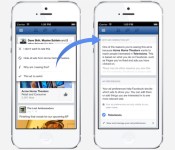
Ever liked a fitness product on Facebook, or changed your relationship status to “it’s complicated?” If you have, you might have enjoyed the cold pragmatism of advertisers trying to ease your woes with dating sites or fat-loss pills. Soon that will change, according to the big FB. Via a blog post, the social network outlines how users have said they want more control over adverts they’re shown, and why wouldn’t Facebook want to help out with that? As such, in the following weeks, you’ll be able to access ad preferences that will explain why you’re seeing an advert, along with the option to dismiss (or ask for more of) them. Handy for you, more social profile info for Facebook. They ain’t silly.
Filed under: Internet
Source: Facebook
Facebook will allow users to alter their ad profiles; track your smartphone usage

Have you ever wondered why Facebook just showed you an advertisement for Star Trek toys or some other random item? Well apparently you will soon be able to find out.
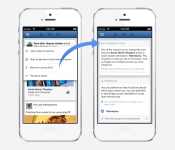
Facebook is planning to announce Thursday that it will allow users to see the likes and interests it keeps on them. Not only will Facebook allow users to see it, but users will also have the ability to keep, change, or add information into those files. A nice feature that Facebook is including is if you do not like specific ads you are seeing, you will have the opportunity to tell Facebook what type of marketing messages you would rather see.
In a way, as the New York Times points out, this is actually pretty smart business for Facebook. Online advertisements are all about being directed towards your target audience. What is a better way to directly collect information to advertise to potential customers than to have them tell you what they do or do not want to see.
Facebook’s motives may be a preventive measure seeing how the Federal Trade Commission and the White House have recently called on Congress to pass legislation to protect consumers’ private data. Add that to increasing privacy concerns that companies like Google are seeing in Europe and you could see why Facebook is attempting to stay one step ahead of growing regulation.
At the current time, Facebook only uses information that it gets from interactions on Facebook, like by clicking “Like” on the AndroidGuys Facebook page (yes, that was a hint). That is changing though as the new abilities will bring about new tracking as Facebook hopes to improve it’s targeting by tapping into the data it collects from people’s smartphones and websites they visit.
Users can opt out of the extensive tracking by visiting a special ad industry website and by adjusting their mobile device settings to do so.
While other big Internet companies like Google and Yahoo let users see, change, or block some of the dossiers that they use to deliver ads, Facebook will be the first major Internet company to show how they connect the dots from your likes and interests to the ad displayed on the screen. You can do this by clicking the tiny arrow on the top right corner of any ad you see in the Facebook network.
The question remains, now that Facebook is opening the doors so you can see what is stored and how they relate that information to you personally, how does this make the you feel about the data that is being stored about you? It is probably fair to say that Facebook knows more about you than your closest friend or loved one.
Source: New York Times
The post Facebook will allow users to alter their ad profiles; track your smartphone usage appeared first on AndroidGuys.

Oculus VR explains why mobile virtual reality won’t poison the well

With all the talk of high-fidelity virtual reality coming from Oculus VR — the virtual reality headset company that’s now part of Facebook — it’s easy to believe that the only type of VR is PC-based. But that isn’t the case! Beyond what we learned recently about Samsung and Oculus working on a VR peripheral that uses your phone, Oculus has been open about working on a mobile software development kit for some time now. Heck, we even spoke with Oculus CTO John Carmack about it last year. “I think you’ll see the mobile SDK launch publicly before the consumer Rift comes out,” Oculus VP of Product Nate Mitchell told us this week at E3 2014. Beyond Samsung, a handful of developers are “experimenting with some high-end Android devices … building experiences and seeing what’s possible.”
But here’s the issue: Great VR requires serious horsepower. While the current range of flagship Android mobile devices are pretty powerful, they don’t hold a candle to even low-end gaming PCs. In so many words, isn’t Oculus worried that a subpar, Android-based VR experience could poison the well for the full Oculus Rift coming down the line? If your first experience with VR is a bad one, you may never try it again. “That’s a completely fair statement,” Mitchell said.
At the same time, he also said, “The fidelity that you can experience on mobile is pretty killer.” So, which is it? It’s sort of both.
“That’s a big reason why we’ve been holding it back,” Mitchell told us. “We’re really focusing on polishing it [the SDK] to get to the quality level it needs to be before we release it more broadly. And a lot of the key developers — it is in the hands of some key game developers who are working with it now — are making great progress.” He wouldn’t say exactly which mobile devices that devs are working with, but he did say it’s running on current “flagship” hardware (think: the Galaxy S4 — which is exactly what we heard is the phone powering Samsung’s headset).

As far as when we’ll hear more about Oculus VR products you can actually use at some point in 2014, Mitchell and co. say they’re holding back for “the latter half of the year.” When we speculated aloud that maybe such announcements were being held for an Oculus-run conference, Mitchell laughed and said, “Who can say?” The best he’d give us was this:
“As we move into the second half of this year and into 2015, there’s a lot of good stuff planned. It’s hard to say what consumers should expect because we’re still defining that ourselves, but with [Jason] Rubin on the content front, [Jason] Holtman on the platform front and then more excitement on the hardware side with some things we haven’t quite announced yet, plus the first-party content stuff. It’s gonna be an exciting… whatever! Future!”

A quick guide to following World Cup 2014 on Google, Facebook and Twitter

Like a trio of vuvuzelas, the three big internet platforms became a significant part of the World Cup’s background noise in 2010. They have even more to offer this time around: Not just a multitude of ways to follow scores and other stats, but also places to go if you want to trumpet your opinions and listen to those of others. So, we’ve rounded up some of the best advice from Twitter, Facebook and Google on how to get the most out of the new features they’re dishing out for Brazil 2014.
If you’re already au fait with the Twittersphere’s workings, you’ll want to begin your journey at the #WorldCup2014 hashtag page. This main timeline will show you relevant tweets from celebs, teams, pundits and people in your network. On the right-hand side you’ll see quick access to a Teams page, so you can easily find and follow your home nation. There’s also a handy bar down the left that shows the latest scores and upcoming games.
Oh, and remember the three-letter hashtag for your team! Just like in 2010, using this hashtag inside a tweet will magically cause the appearance of your national flag (“hashflag”) to bring some color to your tweet. For example, it’s #URU for all of you Uruguayans.

If you’re not already on Twitter, then you’ll want to start by signing up and saying “yes” at the bit where you’re offered some extra World Cup excitement. This will take you through a couple of easy steps to choose your favorite team and set your wallpaper accordingly. If you’re a true patriot, you’ll keep that wallpaper forever. Forever, dammit.

This all starts at the Trending World Cup page, which works in a similar manner to Twitter’s hub — albeit with a bit less detail. You can view upcoming matches, but there’s no obvious shortcut to find your official team page — you just have to search for it (e.g., “U.S. Soccer“) and look for the blue tick to highlight the official site. There is, however, a “Fan Map” that shows the locations of millions of footy fans around the world and what, exactly, they’re fans of. It’s a gimmick, perhaps, but it has already proven itself useful in showing that England’s Wayne Rooney is widely detested across mainland Europe.

Compared to the other two, there’s a distinct lack of structure and effort from Google at the #WorldCup2014 page. In fact, there isn’t even one official hashtag — people are just using whatever tag comes to mind, resulting in something of a mess.
Then again, Google has other assets at its disposal that World Cup fans might find useful. Firstly, there’s a straightforward search, which will show up-to-the-minute scores and stats when you search for relevant terms like “world cup” or “world cup uruguay.” There’s also Google Trends, which shows all manner of strange observations about upcoming matches, based on what people are searching for.
If you load up Google Now on your phone or browser, you should automatically be asked if you’re interested in match update cards, and then be asked to select your favorite team(s). And finally, if you haven’t already, check out Google’s amazing Street View tours of the Brazilian stadiums that are about to play host to the angst, happiness and sporting talent of an entire planet.
[Lead image credit: AP Photo/Silvia Izquierdo]

Facebook’s Snapchat competitor appears then disappears quickly, just like its messages

The rumors are true: Facebook has indeed been working on a Snapchat competitor called Slingshot, and true to its ephemeral nature, it showed up ever so briefly on the App Store today before it was taken down. Prior to that though, we managed to glean enough information from the app description to get a few hints as to how it works. Similar to Snapchat, you can send photos and videos to friends, and once they view them, those messages will disappear. You’re even able to add captions and scribblings on them just like Snapchat. But the key differentiator between Slingshot and other ephemeral messaging apps is that before your friends can see your missives, they must reciprocate and “sling” something back. After receiving your message, they can either tap to react to it or swipe it to remove it for good.
We’ve since received a confirmation message from a Facebook spokesperson that simply states: “Earlier today, we accidentally released a version of Slingshot, a new app we’re working on. With Slingshot, you’ll be able to share everyday moments with lots of people at once. It’ll be ready soon and we’re excited for you to try it out.” Though it isn’t clear, it seems that Slingshot could be the latest project from Creative Labs, the same team that brought us Paper, Facebook’s dedicated news-reading app. This arrives a month or so after Facebook sunsetted its Poke app, which was supposed to be an earlier attempt at a Snapchat challenger.
Filed under: Internet, Facebook
Source: TechCrunch

Razer’s CEO is sorry for ‘screwing up on anticipating demand,’ wants to do better

If you pre-ordered Razer’s new 14-inch Blade laptop the day it was announced, there’s a good chance you still don’t have it. Frustrated? Don’t worry — your voice has already been heard; Razer CEO Min-Liang Tan says he’s sorry. “We suck at this,” he said in a heartfelt Facebook post today. “I suck at this.” Unfortunately, Razer has made a habit of underestimating customer demand, and Min’s team is struggling to find a solution that won’t keep customers waiting. “We’ve tried different things,” he said. “We’ve tried doubling / tripling / quadrupling manufacturing capacity, we’ve ramped back to phasing in launches by geography… we’ve pushed back launch dates, and still we end up disappointing our customers.”
Frustrated, Tan admitted that this isn’t the first time he’s apologized for this. “Every time we launch a new product, demand just far outstrips the supply.” Naturally, the young CEO wants Razer’s launches to be smooth, and pledges to continue to tweak and change the company’s distribution plans for future product launches. How, exactly, he plans to do this isn’t clear, but it sounds like he’ll be trying something new soon: “We’ll have more news on this shortly,” he concluded. “Which of course also means we will be shipping something new very soon.”
(function(d, s, id) var js, fjs = d.getElementsByTagName(s)[0]; if (d.getElementById(id)) return; js = d.createElement(s); js.id = id; js.src = “//connect.facebook.net/en_US/all.js#xfbml=1”; fjs.parentNode.insertBefore(js, fjs); (document, ‘script’, ‘facebook-jssdk’));
Filed under: Gaming
Via: Slashgear
Source: Facebook

Yahoo to strip Facebook and Google logins from Flickr starting June 30th

Yahoo’s slowly been closing off third-party logins for its web services, but it’s now turning its attention to one of its most-established communities: Flickr. The Next Web reports that the company has emailed users telling them that Facebook and Google account logins will be removed from the photo-sharing site starting June 30th. Yahoo previously said the change would allow it to offer “the best personalized experience to everyone,” but given its desire to reinvent itself, ridding its services of rival logins keeps users inside its walled garden and helps boost its own userbase. If your desired login option will cease to exist come June 30th, Yahoo asks that you log into the site one last time using your Facebook or Google details. You’ll be required to create a new Yahoo account, which will then be linked with the account you’ve used previously.
[Image credit: Murilo Cardoso, Flickr]
Filed under: Internet
Via: The Next Web
Source: Yahoo

Facebook is the latest coup victim in Thailand, where the selfie reigns supreme

Foreign governments have been blocking Twitter and Facebook off and on for years, and now Thailand’s responsible for some social service downtime. The country’s Information Communications Technology (ICT) Ministry disabled access at the military’s request, taking the site offline for about 30 minutes yesterday afternoon. According to a Reuters report, Surachai Srisaracam, an ICT official, said the action was intended to “thwart the spread of online criticism of the military” following the recent coup. The official added that the government planned to meet with other social sites, such as Instagram and Twitter, “to ask for cooperation from them.” Meanwhile, many Thai citizens are using sharing sites for more innocuous purposes, such as posting selfies with soldiers, which they are once again free to do.
[Image credit: Bloomberg via Getty Images]
Filed under: Internet, Facebook
Source: Reuters
 AIVAnet