



This wearable camera films life from your point of view

We’ve seen all sorts of wearable cameras for capturing life’s precious moments, and now there’s a head-worn option to capture the action as you see it. After showing off its headset at CES, LifeLogger has now turned to Kickstarter to bring the gadget to the masses. Capable of capturing up to eight hours of video, the camera has built-in GPS and WiFi connectivity for working in tandem with iOS and Android companion apps. It’s equipped with live streaming features too, so instantly beaming footage to a computer, tablet or smartphone is a breeze — as long as there’s a solid wireless internet connection, of course.
There’s no need to plug in the unit to grab the files either. LifeLogger uploads videos to a cloud-based repository through the aforementioned WiFi, organized by date or GPS coordinates and having undergone face detection, voice recognition and more for optimal future searching. The camera comes with a 32GB SD card for on-board storage of 720p video at 30fps and 5-megapixel stills. If snapshots are more what you’re after, you can expect 10-second photo burst and time lapse that’s capable of up to one photo per minute. If all of that sounds too good to pass up, a pledge of $169 or more will nab you a unit, with storage and video processing in tow that’s due to arrive just in time for the holidays.
Filed under: Cameras, Wearables
Source: Lifelogger, Kickstarter

Facebook dumps the Poke and Camera apps you never used

Remember that Poke app that Facebook released a couple years ago? Yeah, we’re guessing no, which might explain why the company has decided to put the kibosh on it and pulled it from the App Store. If you did manage to snag the app back in the day, you might recall that it allowed you to not only “poke,” but also send a message, picture or video to Facebook friends, with those missives set to expire after 1, 3, 5 or 10 seconds. Also on the guillotine is Facebook’s standalone Camera app, which we’re not sure if anyone knew existed. Getting rid of these two apps isn’t entirely surprising, as features from both have been incorporated into the big blue one over the years. Though killing them seems counter to the company’s recent trend of unbundling its core app, we suspect it’s more to do with getting rid of the old to make room for the new. To those who want to keep poking their friends on Facebook though, don’t worry — you’re still able to do so via the web.
Filed under: Facebook
Source: The Verge

Apple just hired one of Nokia’s PureView camera experts

Today will be my last day working for the amazing #Lumia family. In June I will start a new chapter in Cupertino, California. Much love!
– Ari Partinen (@Partinen) May 9, 2014
@bharadc23 Thank you for great discussions and feedback! (And it is the company you are thinking assuming you are thinking Apple) =)
– Ari Partinen (@Partinen) May 9, 2014
Filed under: Cellphones, Mobile, Apple, Nokia
Source: Ari Partinen (Twitter)

Google’s camera app once again lets you snap photos while recording video

Google’s redesigned Android camera app wasn’t a full step forward. While you got a much improved interface, you also lost the ability to snap photos while recording video — not so hot if you want more than just movies from a friend’s wedding dance. Well, it’s back. A low-key update to Google Camera once again lets you capture stills in mid-video, making sure that you’ll have album-worthy images alongside your YouTube clips. If you’ve been holding off on upgrading the camera app because of that earlier omission, it’s now safe to jump in.
Filed under: Cellphones, Mobile, Google
Via: Phone Arena
Source: Google Play
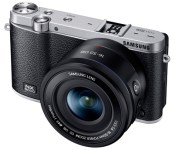
Samsung’s new mirrorless camera tries to fuse style with modest specs

As with Samsung’s other 2014 mirrorless cams, you can expect NFC pairing with mobile devices, WiFi image transfers and party tricks like the selfie-oriented Wink Shot. You’re still giving up some features over the NX300, though. The NX3000 carries the mini’s basic 480 x 320 flip-up display and microSD storage, and you’re stuck with the slowest max shutter speed of the current lineup — at 1/4,000th of a second, this may not be the best choice for action photography. It may, however, be a good choice if you’re cost-conscious. The NX3000 will start at $479 (with a regular 20-50mm lens) when it ships to the US on June 1st, and the power zoom kit will cost only a bit more at $529.
Source: Samsung

Google Maps Updates to Verison 8! Google Camera Adds Much Needed Feature! – App Updates

Happy Hump Day gang, and when it’s Hump Day; Google starts humping away with updates. Quite a few this week. Google Maps probably gets the most significant update, by updating to version 8. The Google Camera gets that taking photos while taking video feature which will please a lot of you All updates are down below, so get them on your devices.
App Updates
Google Maps 8.0.0
Google Play Services 4.4
Google Camera
Google Wallet
All other updates here
//<![CDATA[
ord = window.ord || Math.floor(Math.random()*1E16);
document.write('’);
//]]>

China’s Vivo Xshot slaps Android on a bright and stabilized camera

Despite its relatively small presence outside China, Vivo is still a mobile brand that’s worth keeping an eye on. The company’s known for its fondness for high-end audio chips, and it’s also often one of the very first to pack the absolute latest components into a phone, as demonstrated by its Xplay plus Xplay 3S. At one point, Vivo even boasted the world’s thinnest phone until local rival Gionee broke the record. This time, the ambitious brand has launched a camera-centric smartphone dubbed the Xshot, which is the first to pack a camera with both a fast f/1.8 lens speed and optical image stabilization. Naturally, we had to get our hands dirty with it.
Let’s start off with the basic specs. The Xshot comes with Qualcomm’s awesome Snapdragon 801 SoC (quad-core, 2.5GHz), 3GB of RAM and 32GB of built-in storage, along with microSD expansion (up to 128GB) and Micro SIM support — both of which are on a single pin-eject tray. You also get a more palm-friendly 5.2-inch 1080p LCD, as well as a non-removable battery within the shiny aluminum frame and smooth plastic cover — very much the same solid construction as the Xplay 3S. Unsurprisingly, there’s LTE radio here, but the supported bands will depend on the variant.
The Xshot’s main camera features the rather common 13-megapixel resolution, but its combination of optical image stabilization plus a bright f/1.8 aperture makes it a rather unique selling point. The downside here, as you can see in the earlier photo, is that the bulky camera literally sticks out like a sore thumb on the back. On a more positive note, you get a two-stage shutter button on the side, which should provide a better grip and easier camera control. Vivo’s also thrown in a dual-tone LED flash that’s also used by the iPhone 5s and the latest HTC One for prettier flash photography. As for video, this camera’s capable of 4K capture, though we remain skeptical of the video quality coming from such a tiny sensor.

The front camera isn’t too shabby, either: it’s capable of shooting 8-megapixel stills plus 720p video, and it even has its own LED flash (Vivo did the same with last year’s female-oriented Y19t). While we weren’t allowed to share sample shots due to the device’s pre-production nature, Vivo’s confident that its collaboration with ArcSoft should guarantee decent images from the Xshot’s cameras.
Don’t worry, Vivo hasn’t sacrificed any audio goodness here for the sake of the camera features. The Xshot comes with a “powerful” Maxim MAX97220 headphone amplifier, along with a refined Cirrus CS4398 DAC that’s apparently less than half the original package size, as well as a Texas Instrument ADC chip for a wider audio input bandwidth. We’ve already praised Vivo’s audio efforts in our Xplay review, so the Xshot shouldn’t be disappointing on this end, either.
Software-wise, the unit we played with ran on Vivo’s Funtouch OS 1.2 based on Android 4.3, but the retail version should ship with Android 4.4. Much like the Xplay 3S’ system, you’ll find handy features including screen-off gestures, “air wake” gestures, voice-activated camera, beautification camera and a timeline desktop that lists out your app plus camera interactions chronologically. By the way, if Chinese isn’t your forte, you’ll have to put up with some “Chinglish” dotted around Vivo’s software.

The sad news is Vivo has yet to officially launch the Xshot outside China, but you should be able to grab one from the usual e-tailers (or just ask your Chinese pen pal). Just for reference, the phone will be available for CN¥2,998 or about $480 unsubsidized in China later this month.
Filed under: Cellphones, Mobile

Dropcam can now tell the difference between your cat and boyfriend

Wi-Fi-connected surveillance camera Dropcam can be useful for checking on your special furball when you’re away from home. However, movement from an enthusiastic scratching post session registers the same as a burglar running off with your flatscreen, making it a less than ideal for security. That means you either have to deal with constant push notifications, or run the risk you’re getting robbed. Today Dropcam announced that an update coming August will allow the cams to differentiate between people and pets. The company created an algorithm for picking out Fluffy without using depth sensors like other systems by analyzing hours of publicly-shared videos. That means she can keep on frolicking in that sun spot, and you don’t have to hear about it all day.

Dropcam also unveiled new $29 motion sensors called Tabs. Unlike its cameras that have to be placed indoors, Tabs can be placed anywhere. The small weather-resistant sensors can last up to two years on a single battery, and be left places like your front gate or bedroom window (where the camera can’t see) to let you know someone is on their way in. They connect to your existing Dropcam Pro using Bluetooth Low Energy, and work alongside it to provide you push notifications when it senses movement. Tabs aren’t just for security. You can attach one to your washing machine to find out when the rinse cycle is over, or connect one to Mr. Tickle’s collar to let you know he’s escaped. Tabs can be pre-ordered now in black and while and will be available this spring.
Filed under: Household, Peripherals
Via: The Verge
Source: Dropcam

The Samsung Galaxy K Zoom is official, perfect for the obsessive mobile Photographer
 The Samsung Galaxy S4 Zoom was one of the more interesting devices to come from Samsung last year. Combining the general shape of the Galaxy S4 with more of a photography focus was an intriguing combination, and at the very least, an impressive niche product. Whatever you thought of it, Samsung is obviously confident enough to follow that device up with this year’s offering, the Samsung Galaxy K Zoom.
The Galaxy K Zoom combines the design and look of a fully functional Galaxy S5 smartphone with a 20.7MP camera lens with 10x optical zoom. In addition to the beefy camera specs, the Galaxy K Zoom also benefits from OIS which should help immensely with stabilizing images and videos. The 4.8-inch device is more than just a pretty face, however, as it possesses a hexacore Exynos 5 Hexa processor, 2GM RAM, Android 4.4 and a 2,430mAh battery. What’s probably most interesting is that Samsung didn’t name the devices the Galaxy S5 Zoom, possibly implying that they don’t necessarily want the Zoom line to be inherently tied to their flagship releases. Whatever the truth, it looks like Galaxy Zoom devices are here to stay, for now.
What do you think about the Samsung Galaxy K Zoom? Are you considering getting one over, say, the Sony Xperia Z2? Let us know your opinion in the comments below.
Source: SamMobile
//<![CDATA[
ord = window.ord || Math.floor(Math.random()*1E16);
document.write('’);
//]]>

Samsung blurs the line between phone and camera (again) with the Galaxy K zoom

Last year, Samsung tried something a little kooky: it made a mash-up of a middling smartphone and a solid point-and-shoot camera (you know, the kind smartphones have nearly driven to extinction). The resulting chimaera was called the Galaxy S4 Zoom, and it was… not great. To absolutely no one’s surprise, though, Samsung’s fixation on fusion is still going strong and the company’s trying to crack the code again with a new camera/phone combo called the Galaxy K zoom.
Mildly silly name aside (the “K” stands for “kamera,” seriously), the international K zoom packs 2GB of RAM and one of Samsung’s hexa-core Exynos chipsets into its chubby, dimpled frame. In this case, the chip combines quad-core 1.3GHz and a dual-core 1.7GHz processors — the pairing isn’t as snappy as a Galaxy S5, but it’s still beefy enough to handle most people’s daily routines. Toss in 2GB of RAM, 3G and LTE radios, 8GB of internal storage and a spacious 4.8-inch 720p screen and you’ve got yourself a package that’s a bit more robust than most. If the name wasn’t a dead giveaway though, the K zoom’s 20.7-megapixel BSI CMOS camera sensor is the star of the show here. Samsung’s rear shooter is kitted out with optical image stabilization, the ability to shoot 1080p video at 60 frames per second and a slew of software features that aim to make your on-the-go photos less terrible. That all sounds fine enough on paper, but here’s the bigger question: what’s it like to actually use?
Long story short, better than you might expect.
The first thing you notice upon laying eyes on the K zoom is how much it looks like an actual phone, a design philosophy that stands in stark contrast to the mixed signals the S4 Zoom gave off. This time around, Samsung chose to make the K zoom sleeker and more comfortable to hold — we’d argue that’s a net positive, though we almost miss the curvaceous rump that acted as a grip on the K zoom’s ancestor.
It’s not just the design that’s been improved. To no one’s surprise, it’s image quality is much better than its predecessor’s too — images the K zoom captured looked pretty sharp and reasonably vivid on its bright display, but we’ll refrain from passing judgment until Samsung gets around to shipping final hardware. That has a lot to do with the optics though, and at first glance that 10x zoom lens is a treat. You can pinch to zoom in and out just like you can on nearly any other smartphone, but there’s no cropping here — your gestures make the 10x optical zoom lens swoop in and out of the phone’s body. This, frankly, is beautiful. You don’t need to reset your expectations for how to interact with a smartphone camera, but the end result is significantly better shot than what you’d get out of a competitor without a moving lens.

As always, Samsung went on a bit of a software spree to make it a hair easier to capture some quality shots. The Pro Select feature, for instance, automatically recommends five of the myriad available filters depending on what sort of environment and lighting conditions it sees. In the mood for a little tweaking? There’s also a full manual mode (naturally), but here’s the kicker: if you happen upon a combination of settings you really dig, you can make it a preset and upload it into an online store front where others can download it. And we of the selfie generation would be remiss if we didn’t mention the Selfie Alarm, which will automatically snap three shots of your own face using the main camera once your head wanders into the proper pre-defined position in space
All things considered, we didn’t get to spend much time with the Galaxy K zoom at all. What does seem clear is that Samsung took a formula that was in dire need of polish and finally managed to do it some justice. At this point, the company hasn’t said exactly what the K zoom will cost or where specifically it’ll be available, but we’d expect it won’t be long before the full global onslaught begins in earnest.
Filed under: Mobile
 AIVAnet