


Google’s camera app now lets you shoot in different aspect ratios

Google isn’t done getting its Android camera app up to the standards set by third-party software — not by a long shot. The company is now rolling out an update to Google Camera that lets you choose the aspect ratio for your photos, not just the resolution. If you prefer a movie-like widescreen look to all your pictures, you can crop the image to match. Fans of family portraits, meanwhile, will be glad to hear that the timer has returned; also, creative types can shoot panoramas with fisheye and wide-angle lens effects. The refresh isn’t available on every supporting Android device just yet, but we’d give it a few days — it should hopefully arrive in time for your next big photo safari.
Filed under: Cellphones, Mobile, Google
Via: Android (Google+), 9to5 Google
Source: Google Play
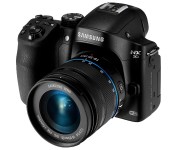
Samsung will let you swap your DSLR for a free NX30 on June 4th in NYC

If you like free stuff, you’re gonna want to make your way to Times Square on Wednesday, June 4th. Samsung’s hosting a “Ditch Day” event from noon to 6PM, letting you trade in a digital SLR (any DSLR) for a brand-new NX30 mirrorless camera, “while supplies last.” Samsung reps were unable to confirm the number of cams on hand, so if you want the best chance of getting $1,000 worth of free loot, you might want to queue up early. Alternatively, if you can’t get your hands on a DSLR worth “ditching,” you’ll still be able to walk away with a coupon for 50 bucks off a Samsung cam, such as the NX Mini or Galaxy Camera 2, both of which will be on hand for you to try out at the event in NYC.

‘Lomo Instant’ takes your standard Polaroid to the next level

Back in the good old days, you could take a photo of Fido with your Polaroid, and after a few shakes be ready to tape it to your dorm room wall. Now Lomo is looking to bring that same old-school experience into the next decade with the Instant – a self-developing film camera with a vintage feel. It has support for several different lenses, color filters and can even create images with multiple exposures of your furry friend. The company already has a pretty sizable line of toy and DIY cameras that push the envelope (like this one made out of a paint can). The Instant follows in that tradition, building off an old favorite, the Fuji Instax. The camera uses its easy-to-find credit card-sized film, but has five aperture settings, including f/8, the largest available on any instant camera. It also has three different shooting modes for tons of flexibility.

You get a wide-angle lens in the box for the ultimate selfies, and the camera supports optional Fisheye and Portrait lenses as well. Unfortunately, buying it is a little less “instant” for now. Lomo has a working prototype of the camera, but the finished product isn’t a reality yet. The company posted a Kickstarter today looking for $100,000 for a production run, a goal it’s already blown past with 30 days still left to go. Photo enthusiasts will still have to wait until November to score one of the first Instants off the assembly line. The camera is just $70 for those who invest now, or will be priced at $120 when it hits Lomo’s virtual store shelves next year.
Filed under: Cameras
Source: Kickstarter, Lomography
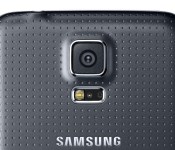
Tip: Speed up the slow Samsung Galaxy S5 camera

Are you finding that the Samsung Galaxy S5 takes a longer than usual time to focus on a subject and actually take a picture? If so, then you’re not alone.
Whilst the Samsung Galaxy S5 has a decent camera and theoretically should take pretty good pictures, the bundled camera app Samsung ships with the Galaxy S5 is hindering the performance of the camera by doing some behind the scenes stuff.
Samsung have included a feature called Picture Stabilisation which is designed to improve the quality of low light pictures by increasing the shutter speed. Unfortunately it seems the Galaxy S5 doesn’t reserve this feature for only low light pictures, and is instead increasing the overall shutter speed, making the camera seem like it is lagging even in sufficiently lit pictures.
Therefore, to speed up the camera, fire up the camera app and hit the gear icon in the bottom left and turn Picture Stabilisation off.
If you’ve got sufficient lighting when taking pictures then you’ll not notice a difference, only that the shutter will be quicker. With low light pictures it may be worth turning the feature back on when required, or trying to frame the subject to optimise the light available.
Let us know in the comments section below if you’ve noticed an speedier camera in everyday capturing by turning off this feature.
The post Tip: Speed up the slow Samsung Galaxy S5 camera appeared first on AndroidGuys.
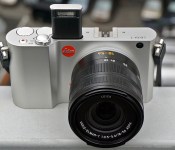
A week with Leica’s T, the most beautiful mirrorless camera money can buy

Leica’s cameras have always been good-looking, and they’ve always been expensive. You might expect the German camera maker’s most visually stunning model yet to cost more than a pretty penny, and it does, but at $1,850 (body only), it’s also one of the company’s most affordable interchangeable-lens cameras to date. The Leica T, machined from a single block of aluminum and hand-polished for 45 minutes, is not going to be produced by the millions and marketed around the world. And considering the nearly $2,000 you’ll pay for each of the camera’s brand-new lenses, you can definitely invest in a more capable camera system for less. But the T is a work of art, and people will pay ridiculous sums for a desirable piece. This one just also happens to take pictures.
Shooting with the Leica T was quite an experience. It’s not inconspicuous — everyone from partygoers to construction workers noticed the camera every few minutes. Tourists stopped walking so I could finish taking a picture. One gentleman nearly tripped trying to duck below my subject. It’s clear that to passersby, I was no longer just another schlub taking pictures. I was a photographer. The T will definitely attract attention, making it either the best or worst camera for street photography on the market, depending on what you’re going for.
It’s clear that to passersby, I was no longer just another schlub taking pictures. I was a photographer.
One Leica rep I spoke to envisions the T being a hit with design-oriented professionals. Architects may use it to photograph their buildings, or an advertising executive could use it for casual shots while filming a campaign. Professional photographers could carry the T, too — it’ll certainly fit in at a high-end destination wedding — and for consumers that have the cash to spare, it’s without a doubt one of the most desirable mirrorless cameras you can buy.

Clearly, Leica’s primary focus is on the T’s physical design, but its capture capabilities have not been overlooked. There’s a 16.3-megapixel APS-C CMOS sensor — the same size you’ll find in many other mirrorless cameras, like Fujifilm’s X-T1 (another pricey model) or Sony’s Alpha 6000. It can shoot 1080p video at 30 frames per second and still photos at 5 fps (for up to 12 consecutive frames). Physical controls are limited to a power toggle, shutter release and two dials on the top, so you’ll use the 3.7-inch 1.3-million-dot touchscreen to frame shots and control nearly all of the camera’s settings.
The screen is relatively bright (it adjusts automatically based on ambient light), but limited viewing angles make it difficult to use in sunlight. Fortunately, you can add on an electronic viewfinder, but that accessory will run you a whopping $600. Part of Leica’s justification for the shocking price tag is that the EVF includes an integrated GPS module (the T’s all-aluminum housing wouldn’t make it easy to find a signal otherwise), but WiFi connectivity is integrated within the body. Compared to other mirrorless cameras, image quality is excellent. Details were sharp; exposures were typically spot-on; and the T focused quickly. Again, glare can definitely be an issue in bright daylight, so you’ll want to add on the EVF in order to confirm settings and verify proper exposure when shooting outdoors.
I tested the camera with the versatile 18-56mm f/3.5-5.6 Vario-Elmar-T lens. Normally, you’d receive such a lens as part of a kit, included in a camera’s price tag. Leica’s equivalent, however, costs $1,750 — almost as much as the T body itself. Granted, that lens is of much higher quality than its “free” counterparts from Samsung or Sony, but Leica’s glass pushes the camera out of reach for many consumers. You’ll probably also want to add on the 23mm f/2 optic, which retails for $1,950, or the $395 adapter you’ll need to use Leica M-mount lenses with the T. Of course, more lenses are coming later this year — eventually, you could expect to spend $10,000 or more to build out a complete collection.

Should you buy the Leica T? That’s tough to say. It’s an absolutely gorgeous camera that shoots great photos, but it costs a ton, and skimps on features that many pros need, like 1080/60p video, audio inputs and super-fast consecutive-shooting speeds. And while I love the clean design, the lack of physical controls is absolutely a dealbreaker for serious photographers. If you’re shooting outside on a sunny day, the touchscreen and its minimalist interface can really throw a wrench in your workflow. For casual users with (very) deep pockets, though, the T is a great option. It looks fantastic; it’s a ton of fun to use; and it’ll garner more attention than a fancy handbag or a piece of flashy jewelry. For what Leica set out to create, the T is definitely a winner.
Filed under: Cameras
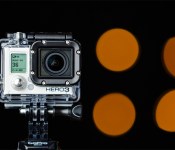
GoPro files for an IPO to grow its media empire

Look, it was no surprise that GoPro has been planning to go public for a while now — it said as much back in February. Things are finally getting officially official, though: the company just filed its S-1 with the Securities and Exchange Commission, so you can expect to see the ticker symbol GPRO on NASDAQ in due course. There’s no shortage of financial types digging through the document as we type (bits to note: the company managed to turn a pretty profit last year, and it shipped a net total of nearly 4 million cameras in 2013), but the story is clear — GoPro is a big deal, and it’s going to get even bigger.
It’s (obviously) a big step for the company, and a big milestone for its CEO Nicholas Woodman too. You see, he cooked up the original GoPro concept when he needed something waterproof and capable to take with him while surfing. From there, he embarked on the arduous path of a hardware startup founder (his advice to those who would follow in his footsteps: bootstrapping is a powerful thing) and used cash from his family to fuel growth before locking up a big deal with Foxconn in 2012. GoPro, then, is a sort of startup Cinderella story, and Woodman’s the one with the glass slipper… err, action camera.
And how does a company like GoPro plan to stay ahead of the competition? By pushing new cameras and, more importantly, a brand to go with them. The company expects the amount of money it spends on research and development to balloon going forward, but it’s the cultivation of a sense of identity that’ll really make or break GoPro’s fortunes. After all, it’s not like any of the upstart competitors looking to eat GoPro’s lunch have access to the same Ambarella systems-on-chips that power the popular action cameras… oh wait. A certain chunk of people have already embraced the lifestyle GoPro espouses, but can the company grow that group? Will hardy action cameras ultimately be displaced by beefy smartphones? Will the oft-rumored Hero4 camera ever get here? These are all questions that Woodman and his crew need to answer, and we’re looking forward to seeing how they do.
Filed under: Cameras
Source: SEC
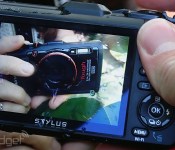
Olympus Stylus TG-3: a ruggedized camera that doesn’t suck

In the past, opting for a ruggedized camera has required some serious sacrifices. Whether that’s meant comically large housings or mediocre performance, you couldn’t get a fantastic point-and-shoot camera that you could also safely take on the slopes, the back of a motorcycle or on SCUBA dives. This year’s Olympus Stylus Tough is the first such model I’ve seen that’s worthy of your 350 bucks. A fast lens, speedy focusing and solid image quality make the TG-3 a great option even if you only plan to document your backyard rose garden or a child’s first steps, but it’ll also handle much more sophisticated shooting situations with ease.
The TG-3 packs the standard suite of high-end point-and-shoot features, including a 16-megapixel BSI CMOS sensor, a fast 25-100mm, f/2-4.9 aperture 4x internal zoom lens, integrated WiFi and the same processor Olympus uses in its flagship OM-D E-M1 mirrorless camera. On the sensor front, it can calculate altitude or water depth and air or water pressure, all of which can be displayed on the camera. There’s also integrated GPS, which can find your position in 10 seconds or less, attaching location info to individual images. My favorite feature, however, is the optional LED Light Guide, which redirects light from the camera to a ring around the lens, letting you capture macro shots like a pro.
I spent several days shooting with the TG-3 at an Olympus event in New Orleans, taking the camera along on a fan boat tour of the Bayou, throughout the historic Oak Alley Plantation and even on a few trips down Bourbon Street. Granted, this isn’t the most capable point-and-shoot on the market — Sony’s RX100 III probably holds that honor — but the camera still handled these vastly different shooting environments like a champ. I found the focus speed to be fantastic, letting me capturing alligators, insects and fast-moving boats without missing the shot. The screen was bright enough to use for framing shots and verifying exposure and sharpness in direct sunlight, and the controls were responsive and easy to figure out.
The camera can pair with Olympus’ Image Share app on an Android or iOS smartphone or tablet, and performance there is great as well. You scan a QR code on the camera’s screen to get connected the first time, then going forward you simply launch WiFi mode on the TG-3 and open the Olympus app. From there you can fire off shots remotely and transfer images individually or in a group. The in-camera PhotoStory mode even lets you shoot Instagram-size (they’re 1:1) split-photos, with three images in a single frame. I was able to upload to Instagram just seconds after capturing.

Of course, battery life isn’t going to match what you’ll get with a mirrorless camera or DSLR, but I did manage to shoot more than 500 stills and three and a half minutes of 1080p video on a single charge. The camera charges over USB, but unfortunately it uses a proprietary cable, so you’ll need to carry that accessory around with you on overnight trips. Overall, I was very pleased with the TG-3. I didn’t have a chance to take it underwater or drop it from a height of seven feet (which it’s said to survive unscathed), but I wouldn’t hesitate to use this ruggedized point-and-shoot for everyday photography — at $350, it’s a very solid pick.
Filed under: Cameras
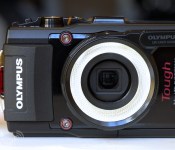
This $40 plastic ring is the first point-and-shoot accessory you actually need to own

There’s a lot of junk you can buy to stick on your camera. Point-and-shoot enthusiasts are likely acquainted with those pricey screw-on lenses that let you capture at a slightly wider angle or zoomed a bit further in, while action cam owners probably have bags of expendable mounts. You can also add on a case or customize your wrist strap, or purchase a mélange of other rubbish that won’t make even the slightest difference when it comes to your photography. But Olympus has managed to create an aftermarket gadget that’s actually a must-have: a plastic ring diffuser that provides killer light for your macro shots.
The LED Light Guide, a $40 accessory for Olympus’ Tough series of ruggedized cameras, redirects light from the point-and-shoot’s integrated LED, surrounding the lens with beautiful diffused illumination. The result is gorgeous macro shots that look like they were captured with a thousand-dollar rig, not a $350 waterproof compact with a screw-on plastic ring. Now, Pentax may have been first to market with a ruggedized camera that sports lights around the lens, but the Olympus version is far superior for macros. It’s a brilliant, yet incredibly simple accessory. Because the LG-1 simply moves light from the camera’s front-mounted LED, it’s compatible with three generations of Tough cams, including the TG-1, TG-2, and this year’s flavor, the TG-3.
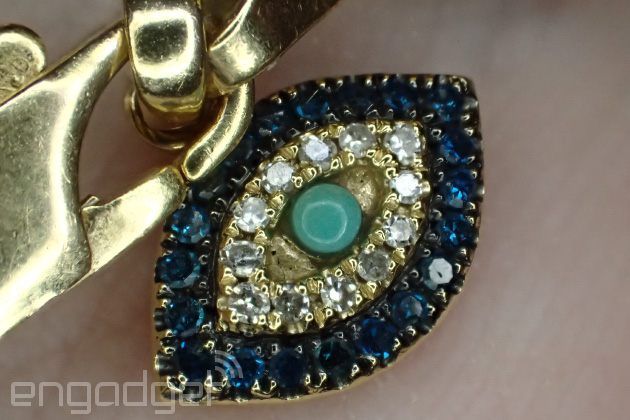
I spent a few days shooting with that latter model this week in New Orleans, capturing perfect macros everywhere from French Quarter restaurants to a gift shop that sells alligator heads (don’t worry, they’ve scooped out the ‘stuff’). The guide is meant to be used with the camera’s Microscope mode, which provides more than 40x magnification. That’ll let you get very up close and personal with a world invisible to the naked eye, capturing a tremendous variety of everyday objects, from flowers to paper fibers, and — with the LED turned off — individual pixels on high-density smartphone screens, with incredible detail.

With the LG-1 attached, you can get as close as one centimeter (less than half an inch) away from your subject, with the camera’s full 4x optical zoom range at your disposal. For the first few days, you might find yourself shooting macros of every object in sight, but once the novelty wears off, it’ll still be quite useful for, say, evaluating a piece at a jewelry store or reading small printed text. It can even be used for scientific purposes (Olympus also has an enormous business selling professional microscopes), letting you examine specimens on the go.
The Tough TG-3 and LED Light Guide accessory are set to ship in late June, but you can get more acquainted with the duo (and Louisiana’s flourishing microscopic scene) in our gallery of samples up above. It can be a bit challenging to identify objects without the context we’re used to seeing, but it’s definitely worth a shot. If you give up, you’ll find a description written upside down just below each pic.
Filed under: Cameras
Source: Olympus
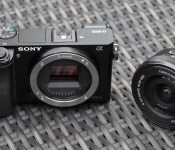
Sony Alpha 6000 review: a do-it-all mirrorless camera that’s worth every penny

By now, you’ve probably had a chance to shoot with a compact interchangeable-lens camera, or you’ve at least caught a whiff of that never-ending mirrorless cam hype. Sure, we’ve run into a few duds, but the last few years have brought a slew of models that exceeded our already lofty expectations, with Sony often leading the pack. Still, $800 (or £669 in the UK) is a lot to spend on any gadget, and while you’d probably be safe making a purchase based on Sony’s reputation in this space, we don’t blame you for wanting a review.
We invite you to stick around even if you’re not thinking about buying a camera today — we’re going to have some fun with this one. Sony’s Alpha 6000 met its match with monkeys in Bali, delicious Hong Kong dim sum and the brilliant skyline of Singapore. Strap in and join us on a wild Southeast Asian adventure, powerful ILC in tow.
Hardware and user interface

The A6000 is one of Sony’s beefiest-looking mirrorless cameras yet. The body is still quite compact, but a high-quality metal build means it should survive minor bumps and tumbles without suffering any dents and scratches. This model replaces Sony’s NEX-6, retaining the OLED electronic viewfinder, full-size hot shoe, dedicated mode dial and pop-up flash. There’s a 3-inch, 921k-dot, tilting LCD, as well as a 24.7-megapixel CMOS sensor, WiFi, 1080/60p video and a top sensitivity of ISO 51,200. It’s clearly not lacking in the spec department.
The A6000 is hardly the most intimidating mirrorless camera, but it does have its fair share of buttons and dials. You can select your shooting mode using a dedicated wheel mounted up top, then make tweaks to aperture and shutter speed with the secondary dial to its right. The bundled 16-50mm f/3.5-5.6 power zoom lens has a toggle on the side for adjusting focal length, or you can zoom in and out by turning the front lens wheel. There are plenty of dedicated and customizable buttons on the back, ranging from exposure compensation to ISO, along with a video record button positioned beside the thumb rest.
The camera’s software interface is identical to what you’ll find with recent NEX and Alpha cameras. While there’s no touchscreen, individual tabs make it easy to click through to the setting you need. You can also make tweaks on the fly using the quick-function menu, and you can fire pics and videos off to a smartphone or computer over WiFi by pressing the clearly marked transfer button.
Performance and battery life

Sony claims that the A6000 sports the “world’s fastest autofocus.” That’s difficult to verify without testing several recent models side by side, but the Alpha is certainly speedy. There are 179 autofocus points, making it easy to get a sharp shot quickly even with complex scenes and the 11 frames-per-second consecutive-shooting mode should serve sports shooters just fine. The only process that remains a bit time-consuming is transferring shots to a connected smartphone. After you pair the two devices, you’ll still need to wait for your phone to connect to the camera’s WiFi network before you can start moving photos over, either one by one or several at a time.
As for battery life, Sony’s managed to make improvements over the years without replacing the 1,080mAh cell. The A6000 comes bundled with Sony’s NP-FW50 battery back, which has been shipping with the company’s mirrorless cameras since the NEX-3, a model that first hit stores just about four years ago. Officially, you can expect to get 360 shots with a full charge, though we got through a full day of shooting, including more than 500 stills and three minutes of HD video, with a nearly 50 percent charge remaining.
Image quality
The A6000 offers fantastic image quality, on par with recent Sony NEX and Alpha cameras. You won’t necessarily notice a tremendous difference if stepping up from the NEX-6 or comparable models, but if you’re moving over to this ILC system, you should be quite pleased with the results. Click through the gallery below for some examples, then scroll down as we evaluate a selection of images.

The A6000′s automatic mode captured this Balinese rice terrace beautifully, with accurate exposure and colors. You can see the sharpness of details in the 100 percent insets above, shot at f/9 with a 1/100-second shutter speed and a sensitivity of ISO 100.

The camera’s speedy focus made it possible to snap this shot on a whim. The Balinese countryside looks vibrant and properly exposed. With more time to prepare, I would have adjusted the aperture from f/11 in order to bump up the shutter speed from 1/125 of a second to something that would have counteracted the movement of our car. Regardless, with a sensitivity of ISO 100, there’s no noise in sight.

A sensitivity of ISO 1250 allowed for a 1/160-second shutter speed with an aperture of f/4.5 in this shady shot, enabling the camera to capture sharp details at Ubud’s Sacred Monkey Forest.

This midday scene at Bali’s Ulun Danu temple is slightly overexposed, though colors are accurate and details are sharp in this 1/125-second, f/10 exposure at ISO 100.

Set at Ubud’s Royal Kirana Spa, this tranquil scene was captured at 1/160 of a second and f/4, with a sensitivity of ISO 200. Details are incredibly sharp, with accurate color and exposure.

Singapore’s skyline shines brightly from the top of the Marina Bay Sands Hotel. Details are sharp, with relatively low noise at ISO 3200, with an exposure of 1/15 of a second at f/3.5.

I bumped the ISO up to 6400 to snap this sharp shot at Singapore’s Flight Experience. Details are crisp and clear in this Boeing 737 simulator, with an exposure of f/3.5 and a 1/40-second shutter speed.
Video quality was also excellent, as you can see in the sample reel above. The camera exposed properly and adjusted quickly, with speedy focus as well. Zoom is also improved over previous models, thanks to the motorized lens and integrated toggle.
The competition

Competition is stiff in the mirrorless camera market, but you can’t do much better than the Alpha 6000 kit for 800 bucks. If you’re willing to spend a bit more, Sony’s A7 full-frame model is a phenomenal option, but that’ll run you $1,700 without a lens. In the 6000′s price range, Samsung’s NX30 is a solid choice — it’s available for $940 with an 18-55mm lens. Photographers also seem to love Panasonic’s GH3, which ships for $1,000 without a lens, and the Olympus E-M1, available for $1,300 body only.
Wrap-up

Sony is continuing its winning streak with the Alpha 6000. This well-rounded camera should last you for several years of top-notch shooting, and at $800 (or £669) with the 16-50mm power zoom lens, your wallet will be in good shape, too. Advanced shooters will find dedicated controls, speedy performance and excellent image quality, while ILC newbies will benefit from accurate full-auto options and a straightforward interface, also making it a solid fit for beginners with the cash to spare. In other words, while the macaques at Bali’s Sacred Monkey Forest will steal any camera, if they’re serious about their photography, they’ll want to opt for Sony’s Alpha 6000.
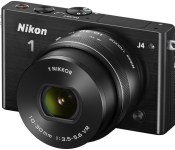
Nikon’s latest high-speed mirrorless cameras come to the US

After a (thankfully brief) wait, Nikon’s super-speedy J4 mirrorless camera is coming to the US — and it’s bringing along a low-cost counterpart, the S2. You should see the J4 arrive later this month for $650 with a standard 10-30mm zoom lens, or about $50 more than the outgoing J3. It’ll also be available in an $850 kit with a more flexible 10-100mm lens, and a $1,050 bundle is on tap if you want both the 10-30mm glass and a long-range 30-110mm telephoto lens. As you’d expect, the hardware hasn’t changed in the few weeks since Nikon first unveiled the J4. You’re still getting the new 18.4-megapixel sensor and Expeed 4A image processor that, combined, let you pump out photos at a steady 20 frames per second with advanced autofocusing (171 contrast detection points and 105 phase detection points). You’ll also enjoy relative luxuries such as a touchscreen and WiFi photo sharing.
Not surprisingly, the S2 makes quite a few sacrifices to cater to the budget-minded crowd. While it still includes the J4′s all-important 20 fps shooting rate, you’ll have to settle for a 14.2MP sensor with fewer autofocusing points (135 contrast, 73 phase); the touchscreen and built-in WiFi are gone, too. If you can live without those creature comforts, though, your wallet may thank you. The S2 ships in June for $450 with an 11-27.5mm lens, or $700 in a bundle that adds the 30-110mm telephoto.
Source: Nikon
 AIVAnet