


BlackBerry’s identity crisis continues

To say that BlackBerry’s had it tough these past few years would be putting it mildly, if not too delicately for a company emerging from a period of willful ignorance. The Waterloo-based outfit, formerly known as Research in Motion, played an embarrassing game of catch-up in the mobile space it once dominated. An uphill rehabilitation that saw it acquire QNX to build a new operating system, release a half-baked tablet, rebrand as BlackBerry in search of a new identity and, tellingly, hire Alicia Keys as a creative figurehead.
And none of it mattered — not even the forced infusion of Ms. Keys’ questionable zeitgeist-y influence. The BlackBerry of today has so far failed to resurrect sufficient interest in its fledgling mobile platform and devices, leading to the ouster of former CEO Thorsten Heins, the very recent installation of John Chen and a redoubled focus on the enterprise set that once was core to the company’s business. So why does the company still seem to be engaged in an internal tug-of-war over its identity? I had a chance to speak with Gary Klassen, longtime BlackBerry employee and principal architect, here at SXSW in the hopes he could shed some light on what the Blackberry of today stands for and where it’s going.
In the aftermath of the company’s most recent earnings report, Chen made it clear that prosumers are the company’s key to recouping profitability. And yet, in practice, the strategy comes across as schizophrenic: BBM for the young consumer demo, BB10 for enterprise and the Foxconn-produced Z3 all-touch device for emerging markets. This fuzzy focus flies directly in the face of Chen’s stated aim on the enterprise market.
Klassen, who moved to Sweden soon after the launch of BB10, currently works alongside the team responsible for foresight, design and UI framework — the concept work that’ll fuel BlackBerry’s future business. Yet, the driver of this innovation isn’t the business customer — quite the opposite — it’s the youth demo that Klassen looks to for clues on how to evolve the BlackBerry 10 platform. “I watch the next generation … how they are using these technologies,” he said. “They know them. They understand them. They leverage them in ways that we never could have imagined.”
In the aftermath of the company’s most recent earnings report, Chen made it clear that prosumers are the company’s key to recouping profitability.
BBM is perhaps the best example of this. The messaging service, once BlackBerry’s linchpin, has now been freed from the walled ecosystem it was withering under to court potential users on Android, iOS and, soon, Windows Phone. It’s an effort Klassen personally framed as “the realization of a dream,” though many see the move as coming too late to reverse BlackBerry’s fortunes and stave off rivals like Google’s Hangouts or Facebook’s WhatsApp. And its rollout wasn’t without significant stumbles. I asked Klassen to elaborate on just what went wrong there… to explain why the company seemed to be so caught off guard by the initial user load that it delayed the service even further. Klassen, predictably, placed much of the blame on “an early beta that got out and went viral,” but wouldn’t comment further on the server-side difficulties that plagued the experience.
And let’s not forget about the Facebook Messenger-like “stickers” — those paid content packs of messaging icons users can share over BBM. That copycat move not only rings hollow among the fickle youth demo it’s attempting to endear, but it also betrays a lack of focus for the company. As Klassen explained to me, “We realized the impact of mobile messaging has been quite stunning. So, we’re looking for ways to expand that to better serve the customer.” By that line of reasoning, then, the introduction of paid in-app purchases runs counter to the mass BBM adoption BlackBerry’s hoping to spur across platforms. There’s just no good reason for users to abandon free, rival services that offer the same perks at no additional cost. If anything, it’s actually all the more reason to avoid BBM.
The concept work coming out of Sweden isn’t all that more encouraging either. Klassen offered up BlackBerry Express as an example of the work his team’s been doing to make users “more effective … and better at communicating.” Express, a feature that only works with BB10.2, is similar to Google’s Quickoffice app for Android and iOS in that it lets users create presentations directly from a mobile device. It’s a feature that has a strong whiff of prosumer all over it, not the young consumer demo supposedly informing the team’s process. It’s also a pride point for Klassen. “I love the story that this tells … BlackBerry Express came from a pain point we’ve all experienced,” he said. “The feedback from Express has been stunning.”
There’s just no good reason for users to abandon free, rival services that offer the same perks at no additional cost.
The other proof Klassen offered up for how BlackBerry’s keeping it moving (that’s the slogan it embraced for BB10′s reveal) is Tilt. Originally unveiled as a concept by Klassen’s team at a developer event in Asia last fall, the feature, which uses the phone’s gyroscope to display notification previews, was then handed off to third-party developers. Why? Klassen explained, “It used to be that we delivered these concepts primarily on our own. But we’re now able to leverage the third-party development community to be able to deliver those as well … [Tilt] is something we realized that our third-party development community would be better able to act on than we could.” Klassen also added that Indian developers were the first to run with the idea, owing to that nation’s reputation as a “mobile-first community.”
Fair enough, but it does seem like a missed internal opportunity on BlackBerry’s part, especially if prosumers are so core to the company’s current business plan. Tilt is a reimagined version of the Moto X’s Active Display, a feature that’s integral to that device’s identity. Certainly, BlackBerry would benefit from baking this directly into a future update of the BB10 OS, giving power users a less involved means of natively keeping up with the constant barrage of emails and messages at a glance. But, according to Klassen, it doesn’t seem to be in the cards. “It’s not limited to either/or, but there’s a real power to being able to deliver things to users via the applications-development platform,” he said. One could also argue there’s a real power to making your floundering mobile platform stand out from the pack with unique, native features.
Klassen is aware BlackBerry’s made some grave missteps, but won’t make any apologies for it. “Moving forward; it’s a tricky thing,” he conceded. “We’re trying things that are new.” If that’s indeed the case, then BlackBerry’s going to need more than apps for presentations, stickers for chat and notification previews.
[Image credit: Getty; AP]
Filed under: Cellphones, Wireless, Mobile, Blackberry

BlackBerry 10 finally gets its own Microsoft OneDrive app

If you worship at the BlackBerry altar and are in dire need of a cloud storage service that isn’t Dropbox, Box, or Mega, today’s your lucky day. Now you can dump your files in Microsoft’s OneDrive by way of a newly released BlackBerry 10 app. Like the Android and iOS versions before it, this OneDrive app lets you automatically upload your photos and videos as well as share your files with farflung cohorts. Just be mindful of your limits: OneDrive (which went by ‘SkyDrive’ before Microsoft got hit with a lawsuit) offers up 7GB of free storage to new users. That’s still better than the 2GB that Dropbox gives away gratis, but Box and Mega offers 10GB and 50GB of free space, respectively. Choose wisely… or sign up for all of them and surrender yourself to the cloud.
Filed under: Mobile
Via: CrackBerry
Source: BlackBerry World
Blackberry updating BBM to allow for larger file sharing
If you are one of the users who are still using BBM then there’s a big update coming your way which will offer larger file sharing and new features for group chats.
Bringing BBM in line with most other cross-platform messaging services, users will now be able to share photos in group chats and to assist with this the file limit for sharing files has been increased from 6MB to 16MB.
Blackberry have said that they are planning on making the emotions in the chat bigger too, so great news if that’s something you’ve been longing for.
Unfortunately, Blackberry have been scarce on an actual ETA for the update, but expect it to rollout shortly. Keep your eyes peeled to AndroidGuys for any further developments.
The post Blackberry updating BBM to allow for larger file sharing appeared first on AndroidGuys.
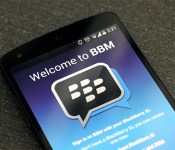
BBM to let you share photos in multi-person chats and transfer larger files

BlackBerry has been on a BBM roll lately, unleashing the messaging service on not just iOS and Android but Windows Phone as well. However, that’s not all that’s up the Waterloo company’s sleeve. A new version of BBM is in the pipeline, and it’ll have a few new features that will delight the BBM power users amongst you. For one thing, you’ll finally be able to share photos in multi person chats, plus you’ll get the ability to send files that are up to 16MB in size — the current limit is 6MB. In a response to customer feedback, BlackBerry also promises that the size of the emoticons will be bigger. There’s no clear timeline on just when this update will roll out, but we’re just happy that BlackBerry has plans to improve its messaging app beyond mere stickers.
Filed under: Cellphones, Mobile, Blackberry
Source: BlackBerry

BlackBerry could turn BBM into a payments platform

BlackBerry’s showing off its plans to woo back all of the customers who ditched it during the BB10 transition. In addition to two new handsets, the Canadian outfit is also considering turning BBM into a mobile payments platform in the emerging markets where it still has traction. In a chat with Re/code, enterprise chief John Sims said that BlackBerry is meeting with partners and “exploring the market.” It wouldn’t be the first time the company has waded into the mobile money lake either, considering that it teamed up with an Indonesian bank to test BBM-based peer-to-peer fund transfers back in 2012. As long as it’ll enable us to split the dinner bill without looking up from our phones, we’re up for it.
Filed under: Cellphones, Mobile, Blackberry
Source: Re/code

BlackBerry currently has no plans for a wearable device

Wearable devices seem to be a hot trend in the wireless industry right now, but BlackBerry isn’t taking the bait… at least, not yet. When asked about his company’s plans at Mobile World Congress, CEO John Chen was very straight-forward in confessing that he has no current plans for bringing a wearable device to market. That doesn’t mean it won’t happen down the road at some point, of course, but it’s clear that this particular market segment isn’t really an area of interest or focus right now — considering the company is working hard to bring out fresh devices and is in the midst of getting back to becoming profitable, and it appears that BlackBerry doesn’t believe that such a device would really make a dent in its bottom line yet.
Filed under: Cellphones, Wearables, Wireless, Mobile

BlackBerry Z3 ‘Jakarta’ coming to Indonesia in April for under $200

BlackBerry CEO John Chen is here at MWC and has some device news. The executive announced progress on the Z3, the phone codenamed Jakarta (shown off above), which will be coming out to Indonesia in April. The company plans to sell the device, which is a collaboration between BlackBerry and Foxconn, for under $200. Chen also tells us that there will be an LTE version coming out to other parts of the world at some time in the future; joking, Chen mentioned that it would come out “sometime before I die.” We’re also told that BlackBerry plans to do some interesting new stuff with BBM.
Additionally, Chen also officially confirmed that a device known as the Q20, aka the Classic, is in the works, and will be coming out alongside BES 12 sometime before the end of the year. The Q20 will be a QWERTY device that will feature the “tool belt,” which means you’ll see a classic trackpad and function keys. Speaking of BES12, the new update will be backwards-compatible to older BlackBerry devices and will support iOS, Android and Windows Phone.
Developing…
Filed under: Cellphones, Wireless, Mobile, Blackberry

BlackBerry announces the Classic with physical keyboard and trackpad, coming later this year

As part of BlackBerry’s festivities at Mobile World Congress, CEO John Chen announced a pair of new devices. In addition to the Z3 (Jakarta), Chen also stated that a new QWERTY device called the Classic (aka Q20) is in the works, and will be coming out sometime later this year alongside an update to BES12. We don’t know much about the device at this point, but Chen tells us that it’ll feature the “tool belt,” which means you can expect to see the traditional BlackBerry trackpad and function keys frequently seen on the company’s older smartphones. We’ll update you as we hear more.
Filed under: Cellphones, Wireless, Mobile, Blackberry
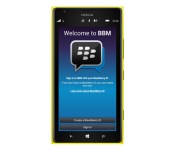
BBM coming to Windows Phones this summer

BlackBerry is slowly, but surely covering all its bases in an effort to turn BBM into a cross-platform messaging monster. The quest to return the standard-bearer to its former glory started with iOS and Android, but this summer it’ll be coming to Windows Phones as well. According to the Canadian company, it will ship with all the same functionality as its counterparts on other OSes, including stickers and voice. More importantly though, BBM Groups (which allows you to chat with up to 50 people at once) and Channels will be included as BlackBerry works to fight off challenges from the likes of WhatsApp and Hangouts. Sadly those are all the details we have for now, but hopefully Waterloo will lock down a release date sooner, rather than later.
Filed under: Software, Mobile, Microsoft, Blackberry
Via: SlashGear

Ford reportedly dropping Windows in favor of QNX for next-gen Sync software

Forget the fact that Ford CEO Alan Mulally was reportedly a contender for the Microsoft CEO job: the two companies have long had a cozy relationship, with Ford using Windows to power its in-car Sync software. That could change, though, if this story from Bloomberg is correct. The news agency is reporting that Ford plans to ditch Windows for its next-gen Sync system and base it on BlackBerry’s QNX instead. In particular, Bloomberg‘s sources claim that a move to QNX would be more cost-effective, and also lead to potential improvements in “speed and flexibility.”
Indeed, the performance could be the deciding factor here: Ford has rated the quality of its vehicles “mixed” for the last three years, according to Bloomberg, with customers complaining about tech malfunctions in customer satisfaction surveys by J.D. Power & Associates and Consumer Reports. For now, Ford, BlackBerry and Microsoft have all declined comment. If the report is true, though, Ford would find itself in very good company: luxury brands like Audi and BMW already use QNX in their in-car systems.
Filed under: Transportation, Blackberry
Via: N4BB
Source: Bloomberg
 AIVAnet