



Daily Roundup: Satya Nadella named Microsoft CEO, 10 years of Facebook and more!

You might say the day is never really done in consumer technology news. Your workday, however, hopefully draws to a close at some point. This is the Daily Roundup on Engadget, a quick peek back at the top headlines for the past 24 hours — all handpicked by the editors here at the site. Click on through the break, and enjoy.

Meet Satya Nadella
The speculation has ended. Earlier today, Microsoft named its enterprise chief Satya Nadella as the company’s third CEO. Like Ballmer, Nadella has history with Redmond, but their personalities couldn’t be more different. Click on through for more about the man tasked with reinventing Microsoft.

ASUS unveils the Chromebox
As promised, ASUS unveiled its new Chromebox, which will be available this March. At $179, this Chrome-powered machine packs Intel-integrated HD graphics and 16GB of onboard storage. Plus, owners get 100GB of free space, courtesy of Google Drive. Follow the link for details.

Iridium’s Satellite Hotspot
World travelers take note: Iridium’s latest satellite hotspot, the Iridium Go, brings worldwide internet action for around $800. Owners can pair up to five WiFi-equipped devices and access features through its official Android and iOS apps. Follow the link for more.

Facebook celebrates its 10-year birthday
Take a trip down memory lane with Facebook as it celebrates 10 years of happy times and cringe-worthy moments. Click through and enjoy a custom tailored video featuring highlights from you digital autobiography.
Filed under: Misc

ASUS Bringing ‘Smallest-Ever’ Chromebox in March

ASUS has announced the Chromebox that it promised the world last year and is finally giving it a release date and starting price. The new Chromebox from ASUS will start off at $179 and increase in cost depending on the processor version you choose. You can either go with the base model which sports a Intel Celeron 2955U, a Intel Haswell Core i3 or the Intel i7. The later of the two are capable of driving 4k video to your 4k TV or monitor. However, the i7 variant is said to not be coming to the U.S.
“The Asus Chromebox offers the simplicity, security, and speed of Chrome OS in the most compact and powerful Chrome device to date,” said Felix Lin, director of product management at Google. “Perfect for home, the classroom or the office, Chromebox is designed for the way we use computers today” …
The new ASUS Chromebox measures in at 5 x 5 x 1.65-inches. The device packs in plenty of connectivity options as well with 802.11 b/g/n Wi-Fi, Gigabit Ethernet port, HDMI, DisplayPort and USB 3.0. On top of all that, you also are getting a 16GB SSD and two-years access to 100GB of Drive.
Source: 9to5Google
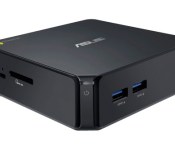
ASUS’ Chromebox arrives in March for $179

As promised late last year, ASUS unveiled its new Chromebox packing Intel’s fourth-generation Haswell processors today. The most compact Chromebox yet, the computer comes sporting either Intel’s Celeron 2955U or i3-4010 processor. Another i7 version of the box will be available outside of North America.
Under the hood of the svelte 4.88 x 4.88 x 1.65-inch device, you’ll get Intel-integrated HD graphics and 16GB of onboard storage. If you need more room to store your stuff, ASUS is also offering buyers 100GB of free cloud storage through Google Drive. Display-wise, the i3 and i7 Chromebox supports 4K Ultra High-Definition displays, and all three have HDMI and DisplayPort out ports for dual-monitor capabilities. You’ll also find four USB 3.0 ports on the device, as well as a built-in SD card reader. You can snag your own ASUS Chromebox in March starting at $179; check out more images below.

Tablet deals of the week: 01.31.14

Been considering a slate-style purchase? Well, today may be the time to make the leap. While Microsoft’s Surface Pro (no, not the deuce) gets a massive discount, and may very well be the most attractive tablet/hybrid buy of the week, we’ve nabbed a few other options too. Take a look at the other side of the break for discounts on the rest of the lot.
Just window shopping? No worries. Join us and add the gadgets you’re shopping for to your “Want” list; every time there’s a price cut in the future, you’ll get an email alert!
Microsoft Surface Pro

Price: $500
Regular Price: $900
Engadget Score: 75
Buy: Best Buy
It’s not the Surface Pro 2 that was announced last fall, but it’s still a stellar deal at $400 off of the regular price, and the device still isn’t a year old. If you’ll recall from our review, we were high on the 128GB version with its solid performance despite abysmal battery life of just under four hours. To see how this model stacks up with the current-gen models, take a gander at our comparison tool.

Kobo Arc

Price: $112
Regular Price: $250
Engadget Score: 73
Buy: Amazon
2013′s Kobo Arc mustered a better effort than the disappointing Vox, but it still wasn’t enough to compete with the 7-inch Android slate elite. However, with a 50 percent discount, this now-$112 16GB option may be worth a look for e-reading and tablet-style media consumption. Add the Arc (64GB version pictured) to the compare tool to pit it against the rest of the top-rated Android devices.

Nexus 7 (2012)

Price: $169
Regular Price: $249
Engadget Score: 88
Buy: Amazon
Once heralded as the best $200 tablet you can buy, the 32GB version of the original ASUS Nexus 7 is now priced well below the 16GB current-gen model. This 2012 version sports better battery life than the newer slate and you’ll still get a bite of KitKat, too. Take a look at how the two Nexus tablets compare right here.

Kindle Fire HD 8.9

Price: $229
Regular Price: $269
Engadget Score: 74
Buy: Amazon
If you don’t mind those pesky special offers and 16GB of storage, our price drop tool alerted us to Amazon cutting the Kindle Fire HD 8.9 by $40 earlier this week. Willing to hold out for a bigger discount? Add one to your “Want” list and you’ll get the next price drop alert when we do.

Filed under: Tablets

[RUMOUR] Is Google readying a Nexus 8 made by ASUS?
 Late last year, a lot of noise was made when a suspicious looking tablet appeared on Google‘s own website. While the tablet did somewhat resemble the 2013 Nexus 7, the bezel width suggested that the screen of that tablet was closer to 8 inches. And so began the rumour of the Nexus 8, for which we’ve really not had any evidence to believe it even exists. Until now…
According to DigiTimes, the 2013 Nexus 7 has not been performing as well as its predecessor, the original 2012 model, which has caused Google to change tack and instead move to developing an 8-inch Nexus tablet, aimed at release in mid-2014, which will presumably be called the Nexus 8.
And the rumoured manufacturer of this mysterious Nexus 8? Why none other than Nexus 7 manufacturer ASUS. It makes sense considering the Google and ASUS partnership has already had two successful outings to date. The source of the rumour also suggests that Google may be looking at Intel‘s Bay Trail-T platform to power the tablet.
That’s definitely an interesting rumour to digest: would you be willing to get an ASUS-made Nexus 8 if it were ever released? Let us know what you think.
Note: There is a poll embedded within this post, please visit the site to participate in this post’s poll.
Source: DigiTimes via CNET Australia

The Engadget Show 49: CES 2014 wrapup

Grab a wearable, switch on the ‘ole curved TV and fire up your favorite 3D printer. We came, we saw, we conquered and now we’re ready to distill it all for you in the form of some high-quality video content. We’re not going to suggest that it’ll replace the seemingly endless stream of posts we’ve churned out over the past week or so, but if you’ve got a cocktail party full of guests you need to impress tonight, it’ll help you drop some serious CES 2014 tech news knowledge on their collective heads.
We’ve pulled together some top editors to offer up an abbreviated view of tech’s biggest show of the year, charting trends in old standby categories like HDTV, mobile, tablets and cars, to emerging spaces set to define the changing face of the show for years to come. Oh, and we’ve also tossed in some fun video of the show’s gadgets, because, well, it wouldn’t be much of an Engadget Show without that sort of thing, now would it? Toss in a bit of video of your long-time host getting a bit welled up the end, and you’ve got yourself a little thing we like to call The Engadget Show 49.
‘Til we meet again, Engadgeteers.
Filed under: Announcements, Cellphones, Desktops, Cameras, Displays, Misc, Gaming, GPS, Handhelds, Home Entertainment, Household, Laptops, Meta, Peripherals, Podcasts, Portable Audio/Video, Robots, Tablets, Transportation, Wearables, Wireless, Storage, Networking, Science, Internet, Software, HD, Mobile, Alt, Apple, Samsung, Sony, Microsoft, HTC, Nokia, ASUS, Google, Amazon, Verizon, Sprint, AT&T, LG, AMD, Intel, Blackberry, T-Mobile, HP, Dell, Acer, NVIDIA, Nikon, Canon, Facebook, Nintendo

Gartner: PC shipments have dropped 6.9 percent in Q4 2014, emerging markets to blame

Those tumbling PC shipments we’ve seen all year? They add up to a 6.9 percent year-over-year drop compared to 2012′s Q4 numbers, according to Gartner. The group’s latest totals puts PC shipments at 82.6 million units for Q4 2013, with the lions share coming from HP and Lenovo – though only the latter managed to grow its business during that period. Dell came in at a distant third, moving 4 million fewer machines than HP while maintaing a 6.2 percent increases in shipments since Q4 2012. The news seems grim for all but a select free companies, but at least it won’t get any worse: Gartner says that most markets have bottomed out, and the losses mostly come from emerging Asia/Pacific markets where consumers first computing devices are typically smartphones and tablets, not traditional PCs. Despite predictions that the US market has reached its lowest point, analysts note that holiday sales were primarily dominated by tablets and mobile devices, though optimistically note that hybrid devices and lower cost notebooks could spur some growth in 2014. Eager to dive into all the nitty gritty numbers? Hit the source link below for Gartner’s full report.
Source: Gartner

Android and Windows 8.1 play nice on ASUS’ Transformer Book Duet TD300 convertible
There were lots of great products unveiled Monday at CES 2014, but ASUS announced a real game-changer with the world’s first quad-core, dual operating system tablet/notebook convertible, the Transformer Book Duet TD300.
What makes this device so interesting is that it can be either an Android tablet or laptop, or a Windows tablet or laptop, so you essentially get four devices in one.
Now you may remember a discontinued device that came out a few years ago that also ran both Android and Windows 7, the Viewsonic ViewPad 10, but this device is different. With that tablet, you had to restart the device to get to your desired OS. On the Transformer Book Duet, all you have to do is press a button and you can instantly change to the other OS. It also saves your state, so if you want to switch back, you can pick up right where you left off.
ASUS’ new device starts at $599 and packs Windows 8.1 Standard, Android 4.2.2 Jelly Bean, a 13.3-inch 1366 x 768 display and an Intel Core i3 processor, but you can get an upgraded version for $100 more with a 1080p display and an Intel Core i7 processor.

Other specs include 4GB DDR3L 1600 RAM, up to 128 GB SSD in tablet and up to 1 TB HDD in dock, 38WHr battery that has an estimated battery life around 5 hours in Windows 8.1 and 6 hours in Android 4.2.2, 802.11ac Wi-Fi, Bluetooth 4.0 + EDR, MicroSD card slot, headphone jack, DC jack and the keyboard dock includes a USB 3.0 port, two USB 2.0 ports, 10/100Mbit/s LAN, HDMI 1.4, audio combo jack and DC jack.
An update to Android 4.4 KitKat would make this device an even better deal, but hopefully it sees an update to at least Android 4.3. If ASUS’ newest monster of a device has you excited, look for it in Europe and Asia this quarter and in the U.S. in Q2.
The post Android and Windows 8.1 play nice on ASUS’ Transformer Book Duet TD300 convertible appeared first on AndroidGuys.

Intel unveils RealSense hardware and software line, including 3D camera module

The takeaway at today’s Intel press event? All signs point to the RealSense product line — a number of hardware and software products that “make interaction with technology simple, more natural and immersive,” according to Intel’s own words. The first product bearing the compound name is the RealSense 3D camera. Intel describes the product as “the world’s first integrated 3D depth and 2D camera module that helps devices ‘see’ depth much like the human eye,” suggesting that this isn’t just a substitute for Leap Motion or Kinect.
The camera does full-color 1080p and has an on-board sensor for gesture and face detection. The latter of which apparently helps it “understand emotions.” It also recognizes foregrounds and backgrounds, so you can replace that messy room and make it appear as if you’re Skypeing from the Moon. But, if you’re looking for something more practical, you can also use it to scan objects in 3D using 3D System’s Sense software. The RealSense 3D camera is set to be integrated into a number of diverse devices come the second half of this year, including tablets, Ultrabooks, laptops and all-in-ones, from top companies like Acer, ASUS, Dell, Fujitsu, HP, Lenovo and NEC. Seven such devices are being demonstrated today, and Intel itself has a demo unit.
If you’d rather talk to your computer than wave at it, there’s also a next-generation version of Dragon Assistant from Nuance that will be part of Intel’s RealSense push. Of, course, while all this sounds good on paper, it remains to be seen how much people will actually want to wink, point or shout at their laptop to get it to open Netflix or point Chrome towards Engadget.
Filed under: Cameras, ASUS, Intel, HP, Dell, Acer, Lenovo
Source: Intel
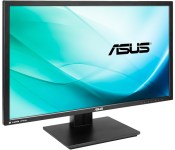
ASUS unveils 28-inch, $799 4K display targeting price-sensitive pros

ASUS’ 31.5-inch 4K monitor may be the ideal display for many content creators, but a typical asking price over $3,000 rules it out for all but the most affluent. Much to our relief, the company is bringing the cost of its technology closer to Earth with a new 28-inch display, the PB287Q. It touts the extra-sharp 3,840 x 2,160 resolution of its bigger sibling, just in a smaller and cheaper form factor. You aren’t giving up much in the way of features, either, as the 28-inch panel boasts a quick 1ms response time, DisplayPort, MHL-capable HDMI and a rotatable design. The real highlight, of course, is the discount — the PB287Q will ship in the second quarter for $799, which both puts it on par with Lenovo’s affordable 4K display and makes it easier to justify for penny-pinching workstation buyers.
Source: ASUS
 AIVAnet