


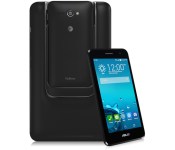
ASUS’ PadFone X mini phone-and-tablet hybrid reaches AT&T

If you liked ASUS’ PadFone X but weren’t willing to pay that much for the combination of an Android smartphone with a tablet shell, AT&T might soon have what you’re looking for. The carrier is bringing the PadFone X mini to the US on October 24th, when it will sell for $200 to GoPhone’s prepaid customers. There’s a lot of hardware here for the money, although it won’t surprise you to hear that ASUS makes sacrifices to give you two devices for the price of one. The smartphone half is a bit better than the regular PadFone mini thanks to its larger 4.5-inch screen, but you’re still looking at a dual-core Atom processor, a 5-megapixel rear camera and a 2-megapixel front shooter. You’re also docking into a 7-inch tablet which houses little more than a front camera and an extra battery, so don’t expect a night-and-day difference when you use the bigger screen. With that said, the PadFone X mini beats getting a budget smartphone by itself — give it a look if you’d rather not buy a separate tablet.
Filed under: Cellphones, Tablets, Mobile, ASUS, AT&T
Source: AT&T

Apple is now the fifth-largest PC maker in the world, if you ask IDC

Apple is historically a small player in the PC world compared to many of its peers, but it may have just entered the big leagues. IDC estimates that the company jumped to 6.3 percent market share in the third quarter of the year, making it the fifth-largest PC builder worldwide — a feat it hasn’t managed in decades. It’s still no major threat to heavy-hitters such as Lenovo (20 percent), HP (18.8 percent) and Dell (13.3 percent), but IDC believes that a combination of slight price cuts and improved demand in “mature” markets like North America have helped it grow in a computer market that’s still shrinking.
With that said, the crew in Cupertino probably isn’t breaking out the party streamers right away. Gartner contends that ASUS claimed the fifth-place spot with 7.3 percent, and that Apple only sits in the top five in its native US. So what gives? In short, it’s a difference in methodology; Gartner and IDC don’t have official shipping numbers from everyone, and there’s enough wiggle room in their estimates that it wouldn’t take much for the rankings to change. As precise as these figures may be, you’ll get a better sense of how Apple fared when it posts its fiscal results (and real shipping numbers) in a couple of weeks.


Filed under: Desktops, Laptops, Apple, ASUS, HP, Dell, Acer, Lenovo
.CPlase_panel display:none;
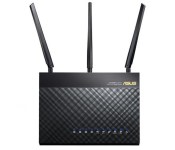
Which routers are worth buying?
 Routers are one of those devices you probably don’t think about very much. As long as it gets you online and gives you the content you need, there’s no reason to. But with bandwidth demands increasing and new wireless standards emerging, the limits of your router start to become a little more apparent and a lot more frustrating. If it’s time for a new one, there’s a lot to consider beyond how fast it is — though that’s pretty important, too. Which routers can handle the traffic you throw at them, and which will support all your devices for years to come? While we don’t review routers here at Engadget, we’ve taken a look at some sources we trust to find a few devices that might fit your needs.
Filed under: Wireless, Networking
.CPlase_panel display:none;
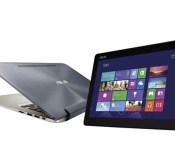
How would you change ASUS’ Transformer Book TX300?

Dana Wollman is so well known as Engadget’s in-house laptop expert that, during Q&A sessions on the Engadget Podcast, people would call her “Laptop Lady.” Points off for not learning her name, but the honorific still stands to this day, and her opinion on all things portable is one of the most revered in the business. When we placed ASUS’ Transformer Book TX300 on her desk (before running away to a safe distance), she found that there wasn’t much point to owning one. For a start, a 13-inch slate-plus-keyboard combo isn’t really better than a transforming laptop like the Yoga 13 or XPS 12. The lack of a Wacom digitizer means that pen input was a no-go and launching just before Haswell seemed like bad timing. Still, the question we’d like to put to you is simple: if you bought one, what would you change about it?
Source: Engadget Product Forums
.CPlase_panel display:none;

Why T-Mobile wants to give you a wireless router for free

If you’re a T-Mobile customer, your company just gave you a very unexpected gift at yesterday’s UnCarrier event: a wireless router. Yes, a fully functioning, magenta-branded, ASUS-built router, which can do essentially everything your current router can do — and if yours is old, this will likely do even more. The device, which would cost roughly $200 if you purchased it on Amazon without T-Mobile’s tweaks, only requires a $25 deposit, which gets returned to you once you’re done using it. The company is going all-in on its commitment to providing every subscriber and every carrier-branded smartphone with free WiFi calling, and the router — called the T-Mobile Personal CellSpot — is the icing on the cake. But, you may ask, why is this a thing that’s happening in the year 2014, especially when most of us already have access to a router (and thus, WiFi calling) nearly everywhere we go?
It’s a very good question, because the CellSpot isn’t a necessity if you want to take advantage of WiFi calling at home, work or the local Starbucks. Chances are you already have a router that can handle that, but CMO Mike Sievert believes customers will enjoy it because it’s a portable device that’s easy to set up wherever you go. “Your office, home, man cave, cabin, any place you get broadband, you can now get T-Mobile coverage,” he said. More importantly — especially for those who still use their phones as, y’know, phones – it also prioritizes your HD-quality calls over any other activity on the network; on most routers, your call might get dropped when your significant other starts binge-watching Breaking Bad, whereas the CellSpot ensures that your call gets saved at the expense of your family’s Netflix marathon.

Of course, there are enough benefits on T-Mobile’s side to justify the new program. At yesterday’s event, CTO Neville Ray mentioned that the carrier’s traffic has grown by more than 10 times from three years ago, and given the company’s recent growth (it added nearly 3 million new subscribers in August alone, which is a record for T-Mobile), it makes sense to find alternative methods of alleviating the additional burden that comes with it. Thus, when you use the CellSpot (or any WiFi calling, for that matter), everybody wins: The network is less saturated for customers who aren’t in the vicinity of a WiFi hotspot, and subscribers get themselves a brand-new router and full bars of service.
The idea of loaning out equipment to help subscribers improve their coverage isn’t new. Microsites (also known as femtocells) have been around for a while; AT&T, Verizon and Sprint have all offered the tech as the 3G MicroCell, Verizon 3G Network Extender and AiRave, respectively. These devices used your home’s landline or broadband service to offer more bars of coverage in your home or office, which came in especially handy if your abode or workspace fell smack-dab in the middle of a network dead zone. However, these could only be used as peripherals to your WiFi router, instead of replacements. T-Mobile’s new option hits two birds with one stone, providing you with a fresh ASUS 802.11ac router that also happens to boost your signal.

That said, there’s one tiny misnomer in T-Mobile’s marketing efforts: Throughout yesterday’s event and on the company’s website, the company said that the CellSpot program is “like adding millions of towers to your network every single day.” That may technically be accurate, but it’s misleading because you don’t have open access to all of those towers; T-Mobile customers won’t be able to use everyone else’s CellSpots for service as they walk down the sidewalk. CEO John Legere says that such a concept isn’t completely out of the question in the future, but it just wasn’t feasible for UnCarrier 7.
“Do those CellSpots become T-Mobile-ubiquitous sites? Not yet, but we’re going to try to solve that as the industry moves,” he said. “That’s the start of WiFi being a tied-in component to the network. At some point, I wouldn’t rule out every personal CellSpot becoming a tower, but we couldn’t get there yet.” It’s certainly food for thought for upcoming UnCarrier moves (though Legere says there are plenty of ideas in the funnels for 8.0, 9.0 and 10.0 already, and this item likely isn’t on the agenda), as long as T-Mobile can find a way to do it without jeopardizing the privacy of its CellSpot owners. If any John Doe can come along and hook up to your network, it would raise a whole new set of concerns.
Sure, handing out routers seems like a random move for even T-Mobile, but it’s a solid one. And if you’re a customer (or are thinking of making the switch), it’s hard to say no to a free wireless router. It’ll be available in stores beginning September 17th.
[Image credits: Associated Press (router, Neville Ray), T-Mobile (last image)]
Filed under: Cellphones, Wireless, Mobile, ASUS, T-Mobile
.CPlase_panel display:none;

ASUS asks: Would you prefer 6 ZenFones or 1 Apple?
 It looks like everybody in the smartphone industry is having a go at Apple‘s new iPhone announcements. ASUS‘ attempt is a pretty good one, claiming that you can get 6 ZenFones – shaped in a 6, of course – for the price of one “Apple”, presumably referring to the large individual cost of Apple’s new iPhone 6 and iPhone 6 Plus. While ASUS’ latest ZenFone, the ZenFone 6, doesn’t necessarily compete with the new iPhones on a performance level, it must be said that their devices are not bad value, and it’s not at all a bad way, at least, financially, to get your family decked out with smartphones.
For reference, the ZenFone 6 is a 5-inch device carrying a dualcore Intel Atom processor 2GHz and 13MP camera. While the iPhone’s internals look quite a lot like the ZenFone’s on paper, their outright performance could not be more different. The ZenFone 6 isn’t likely to be a candidate for a pocket supercomputer and the new iPhones should be able to stick it to even the newest Android phones. But again, 6 ZenFones or 1 Apple?
What do you think of ASUS’ attempt at commenting on the new iPhone 6 devices? Let us know your opinion in the comments below.
Source: Facebook via Phone Arena
//<![CDATA[
ord = window.ord || Math.floor(Math.random()*1E16);
document.write('‘);
//]]>
The post ASUS asks: Would you prefer 6 ZenFones or 1 Apple? appeared first on AndroidSPIN.
.CPlase_panel display:none;

ASUS’ latest low-cost Windows tablet ditches the pen

If you’ve wanted an affordable 8-inch Windows tablet from ASUS, your only recent option has been the VivoTab Note 8. While that’s no doubt a fine machine, you might not want to pay extra for pen input if you don’t need it. Thankfully, you don’t have to any more; ASUS has quietly launched the VivoTab 8, a close cousin to the Note 8 that drops the stylus and digitizer. In many ways, it’s now a MeMO Pad 8 running Microsoft’s software instead of Google’s. You’ll still find a 1.33GHz Atom processor, a 1,280 x 800 display and a 2-megapixel front camera, but a few things have switched up to accommodate Windows while keeping the price in check. The newer slate has a larger 32GB of expandable storage and ships with 2GB of RAM in some regions instead of 1GB, but it drops back to a 2-megapixel rear cam — sorry, you won’t be capturing any photographic masterpieces here. ASUS hasn’t revealed any launch plans yet. However, it’s safe to presume that the VivoTab 8 will save you at least some cash versus the Note 8’s original $330 sticker.
Via: Liliputing
Source: ASUS
.CPlase_panel display:none;

Farewell, IFA 2014

Everything that goes out of fashion, we’re told, will eventually come back, which is why we still have a pair of tight leather pants and some bell-bottom flares stashed in the back of our wardrobe. It’s a similar trend with consumer technology, and this year’s IFA has seen fit to bring back head-mounted VR (last seen in the early ’90s), netbooks (declared dead a in 2011) and digital watches. Of course, it wasn’t just these devices that got unveiled at the show, after all, there was also Samsung’s bent-screen phablet and Kobo’s waterproof e-reader. Still, if you think that you missed out on any of the devices that were announced over the last week, why not check out our gallery for a few of the highlights.
Filed under: Samsung, Sony, ASUS, Google, LG
.CPlase_panel display:none;

Galaxy Note 4 and Note Edge are Official! Samsung Gear VR will Hopefully Blow Our Minds! – ManDroid Daily

IFA 2014 has kicked off, and a lot of goodies came out today. The Galaxy Note 4 was finally made official, as well as the Galaxy Note Edge. Samsung also showed off the Gear VR, that will bring quite an experience to your home theater experience. If you want to hear most of the things that came out of IFA today, check out the Daily below, or hit the links provided as well.
Android News
Galaxy Note 4 and Note Edge
Samsung Gear VR
Who is getting the new Samsung devices?
ASUS ZenWatch
SOny SMartwatch 3 and Smartband
//<![CDATA[
ord = window.ord || Math.floor(Math.random()*1E16);
document.write('‘);
//]]>
The post Galaxy Note 4 and Note Edge are Official! Samsung Gear VR will Hopefully Blow Our Minds! – ManDroid Daily appeared first on AndroidSPIN.
.CPlase_panel display:none;

Engadget Daily: Galaxy Note Edge, hands-on with the Xperia Z3 and more!

Today, we take a look at the Galaxy Note Edge’s bent display, test drive Samsung’s Gear VR headset, go hands-on with the Xperia Z3 and more from IFA 2014! Read on for Engadget’s news highlights from the last 24 hours.
Filed under: Misc
.CPlase_panel display:none;
 AIVAnet