


New Mac Pro Confirmed to Have Removable CPU
With the first new Mac Pro units having made their way to reviewers and even some early online orders arriving in the closing days of 2013, more details on the new machines are continuing to surface.
Other World Computing (OWC) has performed a quick teardown on one of the new machines, and while documentation currently consists of only a small set of photos, the company has confirmed that the Intel Xeon E5 processor found in the Mac Pro is indeed removable, allowing for future upgrades. All four available CPUs for the new Mac Pro use the same LGA 2011 socket standardized on the Mac Pro’s motherboard.

The main processor is one of the most significant variables in the cost of the new Mac Pro, with the four available CPU options spanning $3500 in upgrade charges. Pricing relative to the stock 3.7GHz quad-core Intel Xeon E5 with 10MB of L3 cache is as follows:
– 3.5GHz 6-Core Intel Xeon E5 with 12MB of L3 cache: +$500
– 3.0GHz 8-core Intel Xeon E5 with 25MB of L3 cache: +$2000
– 2.7GHz 12-core Intel Xeon E5 with 30MB of L3 cache: +$3500
Using a removable socketed processor rather than the soldered processors found in most of Apple’s Macs means that users may be able to upgrade their machines in the future as their needs change and/or chip prices decline.

Earlier this week, OWC also shared a photo showing the new Mac Pro driving a total of six 27-inch displays, each with a horizontal resolution of at least 2500 pixels. The new Mac Pro offers six Thunderbolt 2 ports for connectivity, allowing for a number of combinations of displays and other peripherals.
     |

Nokia Pulls ‘HERE’ Maps App for iOS, Citing iOS 7 Changes That ‘Harm the User Experience’
In the wake of a rocky launch of Apple’s mapping services as part of iOS 6 last year, Nokia debuted its own iOS app bringing its “HERE” maps to the platform in the form of a free app. Based on the NAVTEQ mapping data used in many vehicle navigation devices, the HERE iOS app included a number of features including offline mode and transit and walking directions.

Earlier this month, HERE quietly disappeared from the App Store, and The Indian Express reports (via Engadget) that Nokia has now issued a statement blaming unspecified changes in iOS 7 for driving the company’s decision to remove the app.
When approached for a comment, a Nokia spokesperson sent The Indian Express an official statement. It read, “We have made the decision to remove our HERE Maps app from the Apple App Store because recent changes to iOS 7 harm the user experience. iPhone users can continue to use the mobile web version of HERE Maps under m.here.com., offering them core location needs, such as search, routing, orientation, transit information and more, all completely free of charge.”
As the report notes, the HERE iOS app was not particularly well received by users, having suffered from a number of bugs and received no updates during its year on the App Store. Consequently, it seems likely that poor adoption and an unwillingness by Nokia to invest significant effort in fixing the app’s issues played significant roles in HERE’s demise on iOS as well.
Without more information from Nokia, however, the exact set of circumstances leading to the removal of HERE remains unclear, and it is unknown exactly what changes in iOS 7 the company is referring to in its statement. Some users have criticized the look and feel of the redesigned operating system, with some usability issues also having been raised.
The dramatic design change in iOS 7 has also led many third-party developers to invest significant resources in redesigning their own apps to match the new aesthetic, and perhaps Nokia simply felt that it did not want to commit to make the necessary changes and improvements to its iOS app in order to attract and retain users.
| |

CTIA Launches ‘Know My App’ Website Showing Mobile App Data Usage [iOS Blog]
Mobile trade organization CTIA has launched Know My App, a website dedicated to informing consumers about the impact that specific apps have on data usage, reports PCWorld. The group notes that while tools have been available to measure an app’s post-installation impact on data usage, the new website is the first to measure data usage before a download.

Currently, the site allows users to search for an app by name, operating system or category, and currently includes test results for the top 50 paid and free apps from the App Store and Google Play. CTIA also pledges to add more apps to the database in the coming months, and is also inviting developers to submit their apps for testing.
The website was developed in a joint effort between product testing company Intertek and CTIA’s Application Data Usage Working Group, which includes members such as Apple, Cisco, Google and LG. The tool also comes as wireless providers such as AT&T and Verizon have imposed different policies on data usage throughout the past few years with the offering of tiered data plans for customers.
| |

Apple Renews Motion Calling for U.S. Ban on Samsung Products
During the original Apple v. Samsung trial in 2011, Apple requested an injunction to prevent Samsung from selling its Galaxy line of smartphones and tablets within the United States. Apple stated that the products in question violated three of its multitouch software patents, including the “rubber-banding” patent covering bounce back along with the tap-to-zoom and pinch-to-zoom patents. Judge Lucy Koh then formally denied Apple’s request, suggesting there was no evidence Apple would suffer irreparable harm if Samsung was able to continue selling its products.

Last month, however, the U.S. Court of Appeals for the Federal Circuit ruled that Judge Koh must reconsider her decision to not ban Samsung devices that infringed on Apple products. Now, FOSS Patents is reporting that Apple has renewed its bid for a U.S. ban on Samsung products, requesting that a separate injunction trial be held on January 30, 2014.
It’s important to focus on the asserted patents, not the accused products. Obviously, the products that are named in an April 2011 lawsuit (such as the Galaxy S II) are no longer commercially relevant. But Apple is seeking an injunction that would also cover “any other product not more than colorably different from an Infringing Product as to a feature found to infringe” (which is consistent with the Federal Circuit’s TiVo v. EchoStar opinion).
The trial concerning a possible Samsung product ban will also be separate from a second infringement lawsuit to be held on March 31, 2014. Apple and Samsung also participated in a damages retrial last month that followed the original trial in 2011. The jury in the retrial found Samsung liable for $290 million in damages, with Samsung then filing a motion to delay its payments to Apple. That motion however was later denied by Judge Koh, basing her decision on three factors centering around the pace and progress of the case as a whole.

| |

Nokia pulls Here Maps from the App Store, blames iOS 7

In the wake of Maps-gate, Nokia was one of several outfits that rushed to Apple’s aid with a navigation app of its very own. A year later, however, and that same offering has been yanked from the App Store before it could send a note to its neighbors. When we asked, Nokia responded with the below quote, saying that iOS 7 harms the user experience of HERE, but users can still access the mobile edition of the service. Which is all well and good, unless you were a big fan of the app’s ability to cache offline data.
“We have made the decision to remove our HERE Maps app from the Apple App Store because recent changes to iOS 7 harm the user experience. iPhone users can continue to use the mobile web version of HERE Maps under m.here.com, offering them location needs, such as search, routing, orientation, transit information and more, all completely free of charge.”
Filed under: Cellphones, GPS, Mobile, Apple, Nokia
Via: Nokia Power User
Source: Indian Express, iTunes (Broken link)
iOS Remains More Popular Than Android Among Holiday Shoppers in the U.S.
 The majority of Christmas day shopping from mobile devices was done by iOS users rather than Android users, according to new report from IBM. 23 percent of total online sales on Christmas in the United States were made from iOS devices, while just 4.6 percent were made from Android devices. Overall online traffic from iOS devices was at 32.6 percent, compared to 14.8 percent for Android.
As a percentage of total online sales, iOS was more than five times higher than Android, driving 23 percent vs. 4.6 percent for Android. On average, iOS users spent $93.94 per order, nearly twice that of Android users, who spent $48.10 per order. iOS also led as a component of overall traffic with 32.6 percent vs. 14.8 percent for Android.
iOS users also spent nearly twice as much on their online orders, with the average order coming in at $93.94 compared to $48.10 per order from Android devices. When comparing tablets to smartphones, consumers made more purchases via tablets (19.4 percent vs. 9.3 percent) on smartphones and paid slightly more than smartphone users.
Overall online sales were up 16.5 percent in 2013, with mobile sales surging up to nearly 29 percent of all online traffic for a year-over-year gain of 40 percent.
IBM’s data was gathered using its IBM Digital Analytics Benchmark, which analyzes data from approximately 800 retail sites in the United States. The company saw similar sales numbers during Black Friday, where iOS was responsible for 18.1 percent of sales with an average order amount of $127.92, compared to 3.5 percent and $105.20 for Android.
| |

Daily Roundup: Taiwan fines Apple, LG HomeChat, Siri photo-tagging patent and more!

You might say the day is never really done in consumer technology news. Your workday, however, hopefully draws to a close at some point. This is the Daily Roundup on Engadget, a quick peek back at the top headlines for the past 24 hours — all handpicked by the editors here at the site. Click on through the break, and enjoy.

Samsung’s latest developer kit
Samsung’s new Smart TV SDK 5.0 gives developers the ability to tap into home automation. Follow the link for more information about its January 6th release.

Apple photo-tagging patent
Apple’s latest patent hints at potential photo- and geo-tagging functionality through Siri voice commands. Click through for more details.

Taiwanese FTC fines Apple
Apple awoke to a not-so-merry surprise on Christmas day as Taiwan’s Fair Trade Commission accused the company of unlawfully mandating pricing to iPhone carriers. According to WSJ, Cupertino can appeal the ruling, but could face steep penalties. Click the link for more information.

LG announces HomeChat
LG announced that its 2014 Smart Appliance lineup will be able to be controlled through natural language commands via the Line messaging app. Click on through for details on the feature’s 2014 arrival.
Filed under: Misc
Apple may let you describe iPhone photos with your voice

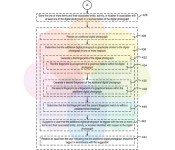
Tagging greatly simplifies photo searches, but it can be a cumbersome process — just ask anyone who has typed in keywords for dozens of vacation shots. It may be more intuitive if Apple implements the voice tagging from a newly published patent application, though. The technique would let mobile-device users describe images using natural-language voice commands, with social networks and other info filling in the gaps. Say “this is us at the beach” and the software would tag not only you and the location, but also anyone else who was scheduled to come along on the trip. It could even auto-tag photos once it recognizes people and scenes. There’s no certainty that iOS will get any of the new voice features, but don’t be surprised if you can eventually ask Siri to sort out your iPhone photo gallery.
Filed under: Cellphones, Software, Mobile, Apple
Via: AppleInsider
Source: USPTO

Siri Photo Search System Detailed in New Apple Patent
Siri may be able to search through and tag user photos in the future, according to a new Apple patent application published today by the United States Patent and Trademark Office (via AppleInsider). Entitled “Voice-based Image Tagging and Searching,” the application describes a system allowing digital images to be tagged with various identifiers like the name of a person, a location, or an activity in a photograph, which can then be searched for via voice commands given to a “voice-based digital assistant,” aka Siri.
A user could, for example, take a photograph and then speak a description of what is in the photograph. Saying a phrase like “this is me at the beach” would automatically tag a photo with the appropriate information, which could later be recalled with a simple voice-based search. Apple specifies that beyond spoken information, additional tags could be added such as a user name and location.

Moreover, because the natural-language processing is capable of inferring additional information, the tags may include additional information that the user did not explicitly say (such as the name of the person to which “me” refers), and which creates a more complete and useful tag.
Once a photograph is tagged using the disclosed tagging techniques, other photographs that are similar may be automatically tagged with the same or similar information, thus obviating the need to tag every similar photograph individually. And when a user wishes to search among his photographs, he may simply speak a request: “show me photos of me at the beach.”
According to Apple, the ever increasing number of digital photographs stored on electronic devices like the iPhone have created a need for “systematic cataloging” to facilitate improved organization and simpler image searches. Current approaches to photo tagging, Apple says, are “non-intuitive, arduous, and time-consuming,” with voice-based photo tagging representing a dramatic increase in both the speed and convenience of photo tagging.
Beyond recording information based on spoken text strings, Apple also suggests that its system could automatically tag photographs based on previously captured user images and data, recognizing faces, buildings, and landscapes. Based on the stored photographic data, users could then conduct voice searches via Siri, quickly locating all relevant images.
Apple first began improving its photo organizational systems with iOS 7, revamping the Photos app with information on when and where photos were taken. Images within the app can be organized into “Moments” using this information, which already provides a solid basis for the addition of photo searches to Siri in the future.
The patent application, which was originally filed on March 13, 2013 and published today, lists former Apple employee Jan Erik Solem and Thijs Willem Stalenhoef as inventors. As with all of Apple’s patents and patent applications, it is unclear when and if the technology will make it into a final product.
| |

Evad3rs Again Speak Out on ‘Evasi0n’ iOS 7 Jailbreak Controversy, Claim No Money Exchanged
Ahead of Christmas, the evad3rs released the evasi0n jailbreak for iOS 7, allowing Apple users with newer devices like the iPhone 5s, 5c, and Retina iPad mini to jailbreak their devices for the first time to access tweaks and apps outside of the App Store.
Shortly after the jailbreak was released to the public, controversy surfaced with Cydia administrator Jay Freeman noting that evasi0n did not include an official version of Cydia, an iOS application that allows users to install software on jailbroken devices. Freeman also revealed that the jailbreak inexplicably included a third party app store called “Taig” for Chinese users.

The Taig app store was quickly found to include pirated apps, prompting the evad3rs to explain their position via an open letter claiming no knowledge of the piracy and pledging to further investigate the issue.
Now the evad3rs have published a second open letter to the jailbreak community, announcing the removal of the Taig app store from the evasi0n jailbreak.
However, after investigation and after notification from the community, we found examples, including pirated tweaks, Apple App Store apps, and even pod2g’s PodDJ app. We dropped the ball on this. While we at first did not believe Taig purposefully violated our agreement, the depth of the transgression against the software developers and the jailbreak community cannot be overlooked and we could not move forward after that even if it were fixed.
We terminated our relationship with them. We are very disappointed that they have decided to put up a cracked version of the jailbreak on their site that installs Taig. We did not give them any permission or source code.
Following the controversy, there were rumors that the evad3rs had accepted money from Taig for the deal, which the evad3rs now deny. “We have received no money from any group, including Taig,” reads the letter. “Our donations are being given to Public Knowledge, Electronic Frontier Foundation and Foundation for a Free Information Infrastructure to help protect jailbreaking as your legal right.”
The evad3rs team also clarifies that no user data was obtained by Taig, and that exposure was limited to users who had their computer’s language set to Chinese.
The evasi0n jailbreak, which no longer includes Taig, can be downloaded directly from the evasi0n website. Evasi0n does not include an official version of Cydia, and according to the evad3rs, they are “working hard to fix the problems with the jailbreak.”
| |

