



Apple Makes Progress on Upcoming Retail Store in Tokyo’s Omotesando District [Mac Blog]
Apple is creeping closer to opening a new flagship store in Toyko’s well-known Omotesando district. Previously reported to be scheduled for a March 2014 opening, an image of the store published by Mac Otakara shows significant progress has been made on the store. Although wrapped in a black shroud, the exterior of the building is starting to take shape, with the building appearing to bear a resemblance to the Apple’s new Stanford store.

Just like the Stanford location, the Omotesando store appears to have floor-to-ceiling glass walls and a thin steel roof. Mac Otakara notes that the glass front and sides stand out from the silver-colored metal eaves. This same design is also evident in Apple’s new stores planned for Portland, Oregon and Aix-en-Provence, France.
The Omotesando location will feature 20,000 square feet of floor space spanning three floors. Two of the floors will be underground, while the top floor will be above ground. Apple has been hiring employees to staff the store for over six months, and it will be the first new store Apple has opened in Japan since 2006.
The opening comes as Apple is seeing strong iPhone sales in Japan, with estimates from Kantar Worldpanel indicating that the iPhone 5s and 5c accounted for 76% of smartphone sales in the country in October, just after their debut.
     |

Apple Agrees to FTC Terms Over In-App Purchases With $32 Million Settlement
 Apple and the U.S. Federal Trade Commission have entered into a consent decree over in-app purchases on the App Store. In a memo to Apple employees, CEO Tim Cook wrote that the company felt it had no other choice.
According to the agreement, Apple will be required to provide full refunds to parents whose children purchased unauthorized in-app items, setting a floor of $32 million on refunds.
A large part of the FTC’s concern was related to a fifteen-minute window after a password is entered on the App Store, during which other purchases can be made without a password being entered. Apple will now be required to notify users that the fifteen-minute window exists.
In early 2013, Apple settled a class action lawsuit originally filed by parents after their children ran up hundreds of dollars on in-app purchases in freemium games.
In the memo, which was obtained by Re/code, Cook wrote that it didn’t “feel right for the FTC to sue over a case that had already been settled” and it “smacked of double jeopardy”.
From: Tim Cook
Date: January 15, 2014
Subject: FTC announcementTeam,
I want to let you know that Apple has entered into a consent decree with the U.S. Federal Trade Commission. We have been negotiating with the FTC for several months over disclosures about the in-app purchase feature of the App Store, because younger customers have sometimes been able to make purchases without their parents’ consent. I know this announcement will come as a surprise to many of you since Apple has led the industry by making the App Store a safe place for customers of all ages.
From the very beginning, protecting children has been a top priority for the App Store team and everyone at Apple. The store is thoughtfully curated, and we hold app developers to Apple’s own high standards of security, privacy, usefulness and decency, among others. The parental controls in iOS are strong, intuitive and customizable, and we’ve continued to add ways for parents to protect their children. These controls go far beyond the features of other mobile device and OS makers, most of whom don’t even review the apps they sell to children.
When we introduced in-app purchases in 2009, we proactively offered parents a way to disable the function with a single switch. When in-app purchases were enabled and a password was entered to download an app, the App Store allowed purchases for 15 minutes without requiring a password. The 15-minute window had been there since the launch of the App Store in 2008 and was aimed at making the App Store easy to use, but some younger customers discovered that it also allowed them to make in-app purchases without a parent’s approval.
We heard from some customers with children that it was too easy to make in-app purchases, so we moved quickly to make improvements. We even created additional steps in the purchasing process, because these steps are so helpful to parents.
Last year, we set out to refund any in-app purchase which may have been made without a parent’s permission. We wanted to reach every customer who might have been affected, so we sent emails to 28 million App Store customers – anyone who had made an in-app purchase in a game designed for kids. When some emails bounced, we mailed the parents postcards. In all, we received 37,000 claims and we will be reimbursing each one as promised.
A federal judge agreed with our actions as a full settlement and we felt we had made things right for everyone. Then, the FTC got involved and we faced the prospect of a second lawsuit over the very same issue.
It doesn’t feel right for the FTC to sue over a case that had already been settled. To us, it smacked of double jeopardy. However, the consent decree the FTC proposed does not require us to do anything we weren’t already going to do, so we decided to accept it rather than take on a long and distracting legal fight.
The App Store is one of Apple’s most important innovations, and it’s wildly popular with our customers around the world because they know they can trust Apple. You and your coworkers have helped Apple earn that trust, which we value and respect above all else.
Apple is a company full of disruptive ideas and innovative people, who are also committed to upholding the highest moral, legal and ethical standards in everything we do. As I’ve said before, we believe technology can serve humankind’s deepest values and highest aspirations. As Apple continues to grow, there will inevitably be scrutiny and criticism along our journey. We don’t shy away from these kinds of questions, because we are confident in the integrity of our company and our coworkers.
Thank you for the hard work you do to delight our customers, and for showing them at every turn that Apple is worthy of their trust.
Tim

| |
Chrome for iOS Adds Data Compression and Translation Tools [iOS Blog]
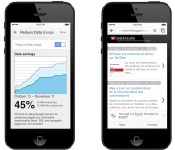
Google today announced an update to its Chrome web browser for iOS, bringing data compression functionality that can reduce data usage by up to 50%.
To start saving data and turn on an even more secure browsing experience, visit “Settings” > “Bandwidth management” > “Reduce data usage.” Then simply turn the toggle to “On.” From this menu, you’ll also be able to track how much bandwidth you save each month as you browse on Chrome.
The update will also see the addition of a translation bar that automatically offers to translate web pages into the user’s language. The translation bar will be familiar to users of the desktop version of Chrome, as a similar feature is already available on that platform.
Google says that the update will be rolling out “over the next few days”. Chrome is a free download from the App Store. [Direct Link]
| |
Larger iPhone 6, ‘iPad Pro’ and iWatch Could Tap New Display Sizes in Development
Research firm DisplaySearch has once again tapped its sources in the display supply chain to assess what panel sizes and resolutions are currently under development, using that information to speculate on the display technology that may land in Apple’s iPhone 6, new iPad and rumored iWatch. According to the firm’s latest report, the iPhone 6 and iPad may receive size and resolution boosts in line with circulating rumors, while the iWatch could sport a flexible AMOLED display.
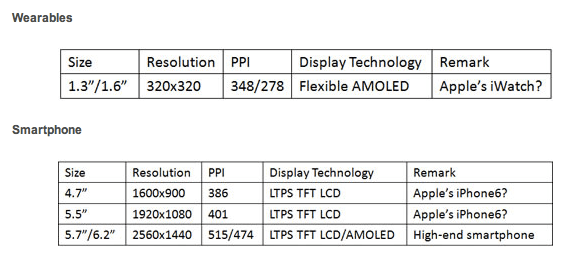
On the high end of the spectrum, DisplaySearch analyst David Hsieh predicts the iPhone 6 could ship with a 5.5-inch display that has a 1920 x 1080 resolution, yielding a density of 401 pixels per inch (ppi). The display would be a LTPS (low-temperature polysilicon) TFT LCD, which is the same technology used in a number of previous iPhone models. Another possibility is a smaller 4.7-inch LTPS screen with 1600 x 900 resolution and 386 ppi. Either configuration would bump the iPhone 6 up from the 4-inch, 1136 x 640 display found in the iPhone 5s, and a previous report has suggested that Apple could release both sizes.
On the iPad side of the equation, Apple may increase the size of the tablet and introduce a 12.0-inch “iPad Pro” model. This echoes several previous reports in recent months claiming that an oversized iPad with a 12.9-inch Retina display is entering production and may launch as soon as early 2014. There have, however, been no part leaks supporting the existence of such a device so far.
According to DisplaySearch, the 12.9-inch “iPad Pro” model could include a display with a resolution of 2732 x 2048 and 265 ppi, edging out the 12.2-inch panel Samsung introduced in its new Galaxy Tab Pro and Note Pro tablets. The Samsung models ship with a 12.2-inch display that has a 2560 x 1600 resolution and 247 ppi.
DisplaySearch also reiterates an earlier claim that the iWatch may ship in two different sizes. The firm’s forecast predicts the Cupertino company may adopt a 1.3-inch display for women and a larger 1.6-inch display for men. Both sizes would sport a 320 x 320 resolution and would use flexible AMOLED technology. Rumors suggest Apple may debut its iWatch product sometime in 2014.
| |
China Mobile iPhone pre-orders are in the millions, Tim Cook calls deal ‘a beginning’

It sure took quite a while for Apple and state-owned carrier China Mobile to finalize their deal, but it could end up being well worth Cupertino’s time. According to The Wall Street Journal, the partnership extends beyond the carrier offering iDevices in the country and “entail[s] broad cooperation” between the two companies. As you’d expect, lips from both camps are tightly sealed, but Tim Cook says he’s “incredibly optimistic” about the outcome. Whether the two are working on any big promotional or retail opportunities in an effort to catch up to Android in China remains to be seen. For now, we’ll keep our eyes peeled in case new info surfaces when China Mobile starts shipping out iPhones (millions of them, apparently) on Friday.
Filed under: Misc, Mobile, Apple
Source: The Wall Street Journal

Black Sabbath’s 1970s Albums Come to iTunes With Limited Exclusivity [Mac Blog]
A number of Black Sabbath’s 1970s albums, including Paranoid and Masters of Reality have finally made their way to iTunes with limited exclusivity, according to the New York Times. Previously, only the bands later material was available on iTunes.
On Tuesday the band and its label, Warner Brothers, announced that iTunes had started selling its first eight studio albums, along with three compilations. But iTunes’ window of exclusivity is expected to be short. According to people briefed on the deal who were not authorized to speak about it, Black Sabbath’s music should come to streaming services in about a week.

Tony Iommi, the band’s lead guitarist, said that it had “been a long time trying to explain to fans why the music wasn’t available.” While there is no official explanation for the delay, it’s widely believed a dispute between the band and Warner Music was the cause.
The eight studio albums are available on iTunes for $9.99 a piece while the three compilations range from $9.99 to $59.99. [Direct Link]
| |

Tim Cook ‘Incredibly Optimistic’ About New Partnership with China Mobile
Just a couple days before the iPhone launches on China Mobile, the world’s largest carrier, Apple CEO Tim Cook sat down with the Wall Street Journal to discuss how “incredibly optimistic” he is about Apple’s new cooperation with the carrier.
“We’ve gotten to know each other….today is a beginning, and I think there are lots more things our companies can do together in the future,” Mr. Cook said.
The immediate future, according to China Mobile Chairman Xi Guohua, includes “multi-millions” of iPhones already ordered by the carrier’s customers. Earlier today, it was reported that Apple’s iPhone 5s supplier Foxconn had shipped roughly 1.4 million iPhone 5s units in advance of the phones’ launch in China on January 17.
 As Cook tells the WSJ, Apple will now be able to sell iPhones in 3,000 more locations, with China Mobile extending Apple’s reach to many cities Apple currently doesn’t have a presence in. Cook reinforces Apple wants to make the “best products”, which means it’s unlikely Apple alters its product strategy to make products at lower prices than it currently does.
In the interview, Cook also alluded to future iPhone models and cellular iPads making its way onto China Mobile’s network, similar to other carriers around the world.
China Mobile has over 760 million subscribers and is expected to bring many new customers to Apple, significantly increasing the company’s presence in China.
| |

First Images of Completed Brisbane, Australia Flagship Apple Retail Store Emerge
With Apple’s newest flagship retail store set to open on Friday in Brisbane, Australia, the first photos of the impressive MacArthur Chambers location are beginning to emerge. These photos were sent to us by MacRumors reader Phillip and show the nearly completed store stocked with merchandise.
The store is located in the famous MacArthur Chambers building, a 10-story high-rise that was originally constructed back in 1934. Building plans indicated that Apple made some minor changes to the structure, adding windows, a stairway, and other features.



A number of other photos of the store were separately posted on the Australian website Reckoner. The new location is scheduled to open on Friday, January 17 at 10 a.m., and both workshop reservations and Genius Bar appointments are already being accepted on its website.
The store has been in the works for nearly three years and is one of twenty-one locations now open in Australia, including the stunning George Street location in Sydney.
| |

Moment begins Kickstarter campaign for clip-on smartphone camera lenses

If you’re fed up with the camera on your phone, there’s no shortage of clip-on lenses to enhance the experience: Just take a look at Sony, Olloclip and Photojojo for great examples of this. This doesn’t mean there isn’t room for a new contender, however. Moment, a startup founded by the creator of Contour, has just launched a Kickstarter project for a pair of lenses that clip on to your iPhone, iPad or Samsung Galaxy S 2, 3 or 4. The new products, which consist of your choice of wide-angle or telephoto, can be mounted onto the phones with a thin piece of metal. Each one features a four- or five-element lens, almost no geometric distortion or chromatic aberration, the same professional-quality cinema glass that Moment claims is used for HD film and slightly larger diameters designed to keep image quality the same around the edges as it is in the center. If you choose to back the project, you’ll be able to buy one lens for $50 or two for $100, though there are a couple more expensive options should you be interested in getting something a little more exclusive.
Filed under: Cellphones, Wireless, Mobile, Apple, Samsung
Via: Recode
Source: Kickstarter
Apple Details iOS User Interface That Compensates for Device Motion
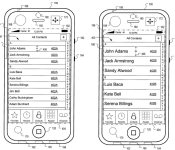
Apple has received a patent — originally filed for in 2007, when the original iPhone was only months old — that allows an iOS device to adjust its screen to make it easier for users to interact with the touchscreen when it detects movement (via AppleInsider).
For example, play and next/previous track buttons on the lock screen, or listings in the Contacts app, could get larger if the iPhone detects that the user is jogging. It could also have items like app buttons on the home screen move themselves slightly to give the illusion of stability.
Apple proposes using the gyroscope, proximity sensor, accelerometer and other sensors to detect movement and the angle of the display, with the iPhone then adjusting user interface elements to prevent touch errors. It also learns about how the user touches the display, allowing it to better correct for errors in the future.

In general, one aspect of the subject matter described in this specification can be embodied in methods that include the actions of detecting a pattern of motion of a device; and adjusting a graphical user interface of the device in response to the detected pattern of motion. Other embodiments of this aspect include corresponding systems, apparatus, devices, computer program products, and computer readable media.
In general, another aspect of the subject matter described in this specification can be embodied in methods that include the actions of detecting a motion of a device; comparing the detected motion to a predetermined signature of motion; and adjusting a graphical user interface of the device based on the comparing. Other embodiments of this aspect include corresponding systems, apparatus, devices, computer program products, and computer readable media.
Particular embodiments of the subject matter described in this specification can be implemented to realize one or more of the following advantages. Loss in accuracy of a user’s interactions with a touch-sensitive display of a device or user mistakes with respect to the selection of user interface elements on a touch-sensitive display, due to movement of the user and/or the device, is mitigated. A device user interface can be adjusted to provide better visibility or usability.
The patent was originally filed for back in 2007 and Apple has not yet implemented the design into iOS. Apple frequently files for patents on inventions that it never uses commercially, but something similar could appear in iOS in the future.
| |

