


Apple’s Healthbook App for iOS Shown in Renderings with New Details
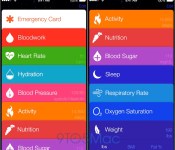
Apple’s rumored “Healthbook” app for iOS 8 may be the company’s first big push into the current health and fitness craze that is being fueled by wearable technology, and a new report from 9to5Mac offers a look at what users can expect from the app as well as a few renderings of the app said to be recreated from actual screenshots.

The renderings show a Passbook-inspired user interface with cards for different heath and fitness data points, with the app able to keep track of vitals mentioned in previous rumors such as heart rate, hydration, blood pressure, physical activity and more. Notably missing from the renders are parameters for other topic such as stress and pregnancy tracking, which had been suggested in a separate report from MobiHealthNews last month.
Each category of functionality is a card in the Healthbook. Cards are distinguished by a color, and the tabs can be arranged to fit user preferences. As can be seen in the above images, Healthbook has sections that can track data pertaining to bloodwork, heart rate, hydration, blood pressure, physical activity, nutrition, blood sugar, sleep, respiratory rate, oxygen saturation, and weight.
A big chunk of the Healtbook app will be dedicated to measurable health parameters such as blood sugar levels, oxygen saturation, bloodwork values and more. The blood sugar tracking would let diabetics enter their daily or weekly glucose levels and track changes over time, while the bloodwork tab would allow users to enter the results of routine bloodwork tests that are used to screen for overall nutrition as well as heart, kidney or liver disease. When combined, these parameters will provide the user and their doctor with a snapshot of the person’s overall health at any given time.
Another focus of the app is fitness, with the ability to track activity levels, nutrition, and weight changes over time. Data in these tabs would provide detailed analysis of calories burned, BMI, body fat percentage and more. This section, which also includes sleep tracking and hydration measurement, provides the user with an overview of their fitness and allows them to monitor any changes over time.
The mechanisms by which the app will retrieve this health and fitness data, especially the more difficult to measure vitals such as hydration and blood sugar, are not clear, although it is likely the app will utilize some combination of the iPhone’s M7 motion coprocessor, third-party devices, third-party apps and Apple’s own wearable devices such as the rumored iWatch.
Thanks to the capabilities of the iPhone 5s’s M7 motion co-processor, Healthbook could technically receive steps, miles walked, and caloric data from the iPhone itself. However, that is where the M7 stops being useful for Healthbook. Blood, hydration, and respiratory rate information would clearly need to come from other sources.
Apple has been hiring health and fitness experts to build out its iWatch team, and is rumored to be using this expertise in the development of its first wearable device. The iWatch is rumored to launch later this year, and Healthbook should debut as part of iOS 8 in a similar timeframe late this year.
     |
ACC and Campus Insiders Launch New College Sports Apple TV Channel
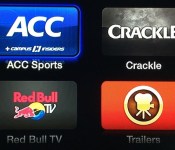
The Atlantic Coast Conference and college sports site Campus Insiders have teamed up to launch a new “ACC Sports” channel for the Apple TV today, offering video highlights, features, and other clips related to the conference’s 15 member schools. A separate Campus Insiders tab within the app includes a smaller amount of content from other college athletic conferences around the country.

The channel does not currently offer any live video content, although it is certainly possible such offerings could be added in the future.

Campus Insiders has agreements with a number of college conferences to offer live video streaming of certain competitions in a variety of sports through the firm’s website, and the launch of an ACC Sports channel for Apple TV could be a prelude to a broader effort by Campus Insiders that would be able to bring streaming of these events directly to Apple’s set-top box.
Today’s launch is the latest in a long line of new Apple TV channels introduced over the last months as Apple has worked to rapidly expand content available on the set-top box. New Apple TV 6.1 software released last week makes it easier for users to hide unwanted channels from the main Apple TV screen, helping them manage the growing number of available channels. Apple has also been rumored to be on the verge of introducing a revamped version of the Apple TV, perhaps opening it up to third-party developers to support games and other apps.
| |

Apple reportedly launching a cheaper 8GB iPhone 5c on March 18th (updated)

Apple doesn’t talk about how many iPhone 5c devices it sells, but the rumors are that it’s not doing as well as its two siblings. According to leaked documents from O2 Germany, Cupertino is looking to boost its middle child by launching an 8GB version that’ll retail for 60 euros less than the current 16GB model. What does this spell for the “bottom tier” iPhone 4S, which is currently offered to customers for free on two-year deals? We couldn’t possibly speculate, but if this trimmed-down hardware is appearing in Germany, it’s probably going to launch everywhere else in the world, too.

Update: A reader sent in a photo (below) of the 8GB 5c’s packaging, confirming that the device is in hand.

Filed under: Cellphones, Mobile, Apple
Source: Caschy’s Blog (Translated)
‘Haunted Empire’ Profiles Apple After Steve Jobs as a Company on the Decline
 Former Wall Street Journal reporter Yukari Iwatani Kane’s highly anticipated book, Haunted Empire: Apple After Steve Jobs, debuts tomorrow with the goal of examining Apple’s transition following the death of Steve Jobs.
While the book includes some interesting tidbits such as Jobs’ comments on TV at a 2010 company retreat, Haunted Empire will likely not sit well with many Apple fans given Kane’s thesis that the company is entering a period of decline without Jobs’ guidance. That may indeed be the case, but the impression Kane gives readers is that she reached her conclusion before even embarking on the project, proceeding to selectively choose anecdotes to support her predetermined view.
Haunted Empire has relatively little praise for Apple, offering a rather disjointed series of chapters jumping from one topic to the next in an effort to show how dysfunctional Apple has become without Jobs. The book begins with a prologue setting the stage for Apple’s transition with a description of the company’s celebration of Steve Jobs following his death in October 2011. The first few chapters then focus on Jobs’ earlier decline in health, including inside details on his 2008 conversation with New York Times reporter Joe Nocera regarding his health issues.
As Jobs began to move to the sidelines with several medical leaves of absence, Tim Cook’s star began to rise with his handling of Apple’s day-to-day operations, and his so-called “Cook Doctrine” shared on an earnings conference call in January 2009 offered the first good look at the executive’s philosophy. Apple was flying high at that point on strong iPhone growth, but Kane alleges that Jobs resented Apple’s success under Cook’s stewardship:
Jobs returned to Apple at the end of June [2009] just as had said he would. On his first day, he threw a series of tantrums, ripping people apart and tearing up marketing plans. When Jobs heard about the press’s sterling evaluation of Cook’s performance, he hit the roof. Cook had done an excellent job, but the leadership and skill he showed in doing so was unsettling. He was also still sore about the “Cook Doctrine.” Jobs chewed him out in a meeting with other executives.
“I’m the CEO!” Jobs yelled.


iPhone 6 May Include Temperature, Pressure and Humidity Sensors
 Electronics analyst Sun Chang Xu reports on her Weibo account that the next iPhone may add a pressure, temperature and humidity sensor.
G for Games relayed the relayed the report and points out that the “pressure” in this context is certainly atmospheric, not blood pressure:
According to Sun Chang Xu (news chief analyst at ESM-China), sources close to the matter have revealed that Apple will catch up in the “sensors department”, as the iPhone 6 will feature pressure, temperature and humidity sensors. Please note that the analyst is probably not referring to blood pressure (this feature is rumored to be implemented in Apple’s iWatch) but to atmospheric pressure.
This same analyst previously reported that Apple may use “optical sensors” to measure heart rate and oxygen levels in the rumored iWatch. The addition of these atmospheric sensors would bring it up in line with Samsung’s S4 which included similar atmospheric sensors.
The addition of more sensors to the iPhone 6 seems a natural progression with all the recent reports that Apple has been aggressively hiring individuals in the area of health sensors. iOS 8 is said to include a Healthbook app which reports on many health related sensors.
| |

Jonathan Ive: ‘We’re surrounded by anonymous, poorly made objects’

In a rare interview, Apple’s VP of Design offers at least a little insight into both his thinking and how Apple makes its products. Apparently, it all starts with Jonathan Ive imagining what a new kind of product should be and what it should do. After that, the process moves on to what it should look like. Inspiration here apparently comes from, well, everywhere, from candy manufacturers to metalworkers in Northern Japan. It’s no surprise to hear that Ive labors over the details: “months and months and months” were spent on perfecting the iMac stand. “When you realize how well you can make something, falling short, whether seen or not, feels like failure.”
“We don’t take so long, and make the way we make for fiscal reasons.”
More than any Apple product in particular, however, it’s the idea that customers might not be completely driven by prices — that’s what he’s most pleased with. “We’re surrounded by anonymous, poorly made objects. It’s tempting to think it’s because the people who use them don’t care – just like the people who make them.” Ive references that life-changing products, unimaginable before, are expensive – and that’s part of the Apple premium.”We don’t take so long, and make the way we make for fiscal reasons.”
“It’s not just about aesthetics… Our success is a victory for purity, integrity – for giving a damn.” His thoughts on Apple designs and ideas that appear elsewhere? “It’s theft. What’s copied isn’t just a design, it’s thousands and thousands of hours of struggle… It takes years of investment, years of pain.”
Looking for more details on an Apple TV or iWatch? You’ll have to find those elsewhere. (“I’m not going to talk about that. It’s a game of chess, isn’t it?”) But if you’re willing to leap past the paywall, you’ll find the rest of the reverential piece here. (Oh, and Ive mentions he’s terrible at mathematics.)
Filed under: Cellphones, Desktops, Laptops, Mobile, Apple
Source: The Sunday Times

Jony Ive Discusses Design Philosophy, Relationship with Steve Jobs, and Future of Apple in New Interview
 In a lengthy interview with The Sunday Times (via 9To5Mac), Apple’s Senior Vice President of Design Jonathan Ive discussed a number of topics including his philosophy on design and collaboration, the strong relationship he had with former Apple CEO Steve Jobs, and the future of Apple along with thoughts on new product categories.
Speaking on his approach to design, Ive stated that he starts on a project by imagining what “a new kind of product should be and what it should do,” revealing that his design team consists of 15 people from the United States, New Zealand, Japan, Australia and Britain. Ive added that the majority of work amongst his team happens in his office, which consists of computer controlled cutting machines and a large wooden bench that resembles a Genius Bar for new products and prototypes.
Ive also discussed his tried-and-true approach of perfecting a product’s design:
[Ive] spent “months and months and months” working out the exact shape of the stand of the desktop iMac computer because “it’s very hard to design something that you almost do not see because it just seems so obvious, natural, and inevitable.” When he has finished a product, even one as fresh and iconic as the white headphones that came with the first iPod, he is haunted by the idea: could I have done it better? “It’s an affliction designers are cursed with,” Ive frowns.
On the topic of his late friend and former Apple CEO Steve Jobs, Ive spoke out against the negative comments about Jobs’ tough management style, stating that the former CEO had unique characteristics which led to great work:
So much has been written about Steve, and I don’t recognize my friend in much of it. Yes, he had a surgically precise opinion. Yes, it could sting. Yes, he constantly questioned. ‘Is this good enough? Is this right?’ But he was so clever. His ideas were bold and magnificent. They could suck the air from the room. And when the ideas didn’t come, he decided to believe we would eventually make something great. And oh, the joy of getting there!
When asked about wearable technology and whether Apple will make an iWatch smart watch, Ive replied that there are “obviously rumors about about [Apple] working on one”, but stated that he would “obviously” not be talking about the subject, likening the rumors surrounding the iWatch to “a game of chess.” Recent reports have pointed to Apple currently developing such a device to be revealed later this year, which may include health-tracking features and integration with other iOS devices.
Finally, Ive answered as to whether he’d stop working at Apple if the company could no longer make innovative products, and gave his optimistic vision for the future:
“Yes. I’d stop. I’d make things for myself, for my friends at home instead. The bar needs to be high.” But, he adds: “I don’t think that will happen. We are at the beginning of a remarkable time, when a remarkable number of products will be developed. When you think about technology and what it has enabled us to do so far, and what it will enable us to do in the future, we’re not even close to any kind of limit. It’s still so, so new.”
Traditionally a quiet figure, Ive has been very instrumental in Apple’s success since assuming his role after the return of Steve Jobs in 1997, designing some of Apple’s most successful products including the iMac, MacBook Pro, MacBook Air, iPod, iPhone, and iPad.
Currently, he leads Apple’s Industrial Design Group and oversees the company’s Human Interface division, a position he took in October 2012 after then-Senior Vice President of iOS Software Scott Forstall left the company. Ive also directed the effort behind iOS 7, which was released last September and featured a completely new design in addition to various other tweaks.
| |
Weekly Roundup: Apple releases iOS 7.1, Amazon raises the price of Prime and more!

You might say the week is never really done in consumer technology news. Your workweek, however, hopefully draws to a close at some point. This is the Weekly Roundup on Engadget, a quick peek back at the top headlines for the past seven days — all handpicked by the editors here at the site. Click on through the break, and enjoy.

Apple releases iOS 7.1 with CarPlay support
Apple recently unveiled its CarPlay interface at the Geneva Auto Show, and now its complimentary iOS 7.1 update is ready for action. In addition to CarPlay functionality, 7.1 brings a lengthy list of bug fixes and and a couple of clever Siri improvements. So head on over to your settings menu and get downloading.

Amazon raising Prime subscriptions by $20 to $99 a year
After Amazon acquired Lovefilm and its database of over 70,000 movie titles, we suspected that US Prime customers were subject to a price increase. Now, the announcement is official. Brand new customers have seven days left to lock in their first year of Prime for $79, after that renewals will cost $20 more.

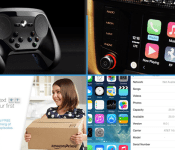
Here’s a much clearer look at Valve’s new Steam Controller
Valve released the first prototype Steam Controller toward late last year, and now it’s given us a much better idea of what the final product will look like. When compared to the older version on the right, you’ll notice the newer model lacks the touchscreen, but adds several buttons in its place.

Report: This is what iOS 8 looks like, at least right now
What you’re looking at is reportedly a leaked screenshot of Apple’s iOS 8 mobile operating system, according to the Chinese microblog site Weibo. And if you look closely, you’ll notice the image features the expected Healthbook app, as well as three interesting new additions: TextEdit, Preview and Tips.
You also might like:
Filed under: Misc
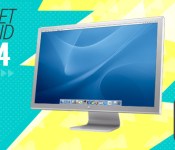
Gadget Rewind 2004: Apple Cinema HD display (30-inch)
It’s our 10th birthday, and to celebrate we’ll be revisiting some of the key devices of the last decade. So please be kind, rewind.

You managed to pick up one of the aluminum G5s or PowerBook G4s back in 2003, but that bubbly polycarbonate Cinema display was ruining the whole look. Enter Apple’s 2004 display refresh. This time the monitors were wrapped in a sexy anodized aluminum skin to harmonize your workstation’s vibe. The line included 20-, 23- and 30-inch models with varying resolutions, but the big boy of the bunch was rocking 2,560 x 1,600 and would vastly increase your screen real estate (and geek cred). Always the salesman, Steve Jobs said, “you can even run two of them side-by-side to get 8 million jaw-dropping pixels.” If you did that, you’d be down about $6,600 (the 30-incher was a wallet-scorching $3,299 at launch), but your digital workspace would look good.
There was little, if any, competition for 30-inch displays at the time. Apple claimed that its model was the “largest LCD ever designed for the personal computer.” And if you wanted to run one of these super-sized displays, you’d have to be in the Apple ecosystem. It would take a Power Mac G5 and an NVIDIA 6800 Ultra DDL graphics card to make that baby purr, but man, that screen was something you could get lost in. It took a little while for the competition to jump in, but Dell wasn’t going to be left out of the massive display party. It announced its own 30-incher called the UltraSharp 3007wfp at CES in 2006 and the media made immediate comparisons between the Dell and Apple offerings. While the 30-inch display niche was still rather bare, there were some high-resolution options if you were cool with a 23-inch form factor. Viewsonic had been offering an eye-bleeding 3,840 x 2,400 resolution model called the VP2290b since 2002, but the price for this degree of crystal clarity lay somewhere around the $7,000 mark.
Did you own a 2004 Apple Cinema HD display (30-inch)? Add it to your Engadget profile as a device you had (or still have) and join the discussion to reminisce or share photos of your device with other like-minded gadget fans.
Filed under: Apple

Steve Jobs Said that Apple Would Not Release a Television
According to a passage from Yukari Kane’s upcoming book Haunted Empire: Apple After Steve Jobs, in 2010, Steve Jobs told Apple executives that the company would not be releasing a television. Business Insider relays the exchange which occurred at Apple’s 2010 “Top 100″ retreat for Apple executive, managers and employees.

The attendees of the Top 100 retreat would hear presentations of Apple’s business and often be exposed to new Apple products. The contents of the meeting are supposed to remain secret. The last day of the meeting, Jobs offered to answer any questions, and someone asked if Apple was going to release a television next.
Yukari says “Jobs didn’t hesitate.” He said, “No.”
“TV is a terrible business. They don’t turn over and the margins suck,” said Jobs. (Unlike iPhones which are wildly profitable and replaced every two years, a TV gets replaced every 8 years, and isn’t all that profitable.)
Jobs reportedly went on to say that he did want to control the living room, but that the current Apple TV set-top-box would remain a hobby until Apple was able to get the the content it needed.
There was apparently some disagreement amongst attendees if Jobs was sincere in his comments. Back in 2003, Jobs had told reporters that he didn’t feel that Apple could add much value to mobile phones. The iPhone was announced four years later. Meanwhile, it’s been three years since this statement, and other reports, including Steve Jobs’ biography attributes comments from Jobs that he had “finally cracked” the difficulties in building an Apple television set. Meanwhile, Tim Cook also has made comments more recently that TV remains an “intense interest” for Apple, though that may refer to enhancing the Apple TV set-top-box experience than releasing a full-scale television.
| |

