‘Hearthstone: Heroes of Warcraft’ for iPad Now Available in New Zealand, Australia, and Canada [iOS Blog]
Blizzard Entertainment’s digital card trading game Hearthstone: Heroes of Warcraft for iPad soft-launched today in Australia, Canada, and New Zealand, after launching for Mac in March.
The free-to-play collectible card game is set in the Warcraft universe, allowing players to compete with Magic the Gathering-style decks in one-on-one fights via Battle.net or against the computer. The iPad version of the game will connect to Battle.net accounts, syncing with the PC/Mac version.
JUMP RIGHT IN: Fun introductory missions bring you into the world of Hearthstone’s intuitive gameplay.
BUILD YOUR DECK: With hundreds of additional cards to win and craft – your collection grows with you.
HONE YOUR SKILLS: Play in practice matches against computer-controlled heroes of the Warcraft universe. Thrall, Uther, Gul’dan – they’re all here!
COLLECTION TRAVELS WITH YOU: Your card collection is linked to your Battle.net account – enabling you to switch your play between tablet and desktop with ease.
AND FIGHT FOR GLORY: When you’re ready, step into the Arena and duel other players for the chance to win awesome prizes!
While the game is currently only available to players in New Zealand, Canada, and Australia, as a soft-launch for testing purposes, the game should launch worldwide soon. Blizzard is also planning to release an iPhone app later this year.
     |

MacHeist Apple Design Award Bundle Offers 9 Mac Apps for $20 [Mac Blog]
MacHeist’s Apple Design Award Bundle is currently available for purchase, combining nine different apps that have won Apple Design Awards in the past. The apps have a retail value of $1,776, but can be purchased for $19.99. While seven of the apps are immediately available, the final two will be unlocked when specific sales targets are reached.

The Apple Design Award Bundle includes:
– BoinxTV ($499 value)
– MacJournal ($40 value)
– Toon Boom Studio ($249 value)
– AccountEdge Pro ($399 value)
– iSale ($25 value)
– Picturesque ($15 value)
– Starry Night Pro ($150 value)
– Xojo Desktop ($300 value)
Xojo Desktop is locked until 10,000 bundles have been sold and the ninth app, which has yet to be announced, will be unlocked at an unspecified sales target. The app shadow is a video camera, hinting at a video recording or editing app.
The bundle can be purchased from the MacHeist website for $19.99, with 10 percent of sales going directly to charity.
| |

Kitchen smart scale will weigh food in calories as well as ounces

When critics become creators, the results can vary wildly, but the work always requires attention. Former TUAW (full disclosure: one of our sister sites) scribe Michael Grothaus is the latest, having developed a calorie-counting scale that’s helped him lose 67 pounds in the last year. SITU is a smart scale that calculates the nutritional value of the food you’re about to eat. Simply place an item on the balance, connect your iPad over Bluetooth and tell the companion app what the food is and Situ will tell you everything you need to know about what’s inside.

The former Apple employee has always struggled with his weight, but things reached a head after a long dining session at Cupertino’s employee-only dining hall — adding that he “didn’t want to die of a heart attack at 40.” Grothaus (pictured, before and after he began using SITU) also believes that the platform is useful for diabetics who need to control their sugar intake and athletes who need to ensure that they’re getting the right balance of nutrition. Like so many inventions nowadays, SITU is launching on Kickstarter, where a £50 ($87) pledge will earn you one of the scales, and while it’s iPad-only for now, there are plans to bring it to Android smartphones and tablets as well as Windows Phone.
Source: Kickstarter
Microsoft Announces Siri Competitor Cortana, Coming With Windows Phone 8.1
Microsoft today announced Windows Phone 8.1, which comes equipped with the company’s digital assistant, Cortana. In development for several years, Cortana is Microsoft’s answer to Siri and Google Now, the digital assistants from Apple and Google.
Cortana is named for an AI character in the popular Halo video game series and as in the game, the assistant is voiced by actress Jen Taylor. Given a distinctly female personality, she is powered by Microsoft’s search engine, Bing, and is designed to learn about users by asking questions and monitoring user activity, interacting through both text and speech.

According to an extensive piece on Cortana from The Verge, Microsoft designed the feature based on real personal assistants, giving Cortana a “Notebook” to work from. The Notebook can be described as a settings page, allowing users to designate what Cortana can track. In her Notebook, Cortana stores information like personal interests, relationships with people, frequently visited places, appointment dates, quiet hours, and more.
“It’s her view of you, but clearly you can just snatch it from her at any time and say ‘That’s not right, I don’t want you to know this’ or ‘I’m not comfortable with you reading my email,’” explains Ash. “So you have complete control over what she knows and she’s transparent about it.”
Entries in the Notebook are stored in the cloud, and you can share contact information with it, as well as your interests, home and work locations, and more. The notion of Cortana acting as a personal assistant with a notebook— as opposed to a creepy stalker — has been drilled into the team from the beginning, they say.
Cortana is a core function of Windows 8.1, replacing the existing search function. Like Siri she can schedule reminders, but Cortana’s functionality is somewhat more powerful, allowing reminders to be tied to people and locations. For example, Cortana can be asked to give a reminder to discuss a certain topic when calling a contact, with that reminder popping up when a call is placed.
The digital assistant also offers a daily summary of information, similar to what can be found in Apple’s own Notification Center. Cortana lists upcoming appointments, reminders, weather information, and more. She can, with permission, track user email to pull out information like airline reservations.
Like Siri, Cortana has a personality. She has witty responses for certain questions, such as “Who is your father?” to which she replies, “Technically speaking, that’d be Bill Gates. No big deal.” Displayed as a circle on a phone screen, she’s also able to express 16 different emotions.
While Siri has not been opened up to developers, Microsoft is releasing a third-party SDK. Cortana will integrate with services like Hulu, Twitter, Facebook, allowing people to use voice commands to launch television shows or send a tweet.
Cortana remains in the beta stages, as there are bugs with the software that still need to be worked out. Windows 8.1 will launch in late April or early May, but Cortana will only be available in the United States for the time being.
Microsoft also announced that it is making Windows licenses free for mobile phones and tablets that have screens of less than nine inches, putting it on par with Google’s Android, which is offered to device manufacturers for free.
| |
Comparing the Amazon FireTV to the competition

Stacking the new device up against the Roku 3, Apple TV, and Google Chromecast
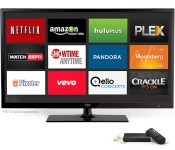
So the Amazon FireTV is out, available, and already shipping. The $99 device lands in a space currently occupied by Apple TV, Roku, and, to a degree, the Chromecast. Each of these devices features their own unique hardware and software experience, yet there’s overlap across the board. Seriously, what device doesn’t have Netflix and Hulu Plus these days?
In an age when more and more people are trying to cut the cord, these are the types of products that make it easier. Which of these is the best, you ask? Well, that depends on your needs.

Price
In terms of pricing, the clear winner today is the Google Chromecast. At only $35 it’s roughly one-third the price of the Apple TV and FireTV. On the flip-side, it’s currently limited in capabilities. While we certainly love the direction Google is headed with the device, it simply doesn’t have the library of apps and services. Yet. Check back in a year, however, and we’re likely to see a completely different experience.
Hardware
If you’re the type of user who needs the most powerful and physically capable products on the market then the Amazon FireTV emerges as the front-runner. Not that the others are necessarily slouches, but Amazon’s device is the only one with a quad-core processor and 2GB RAM. Toss in the dual-band/dual-antenna (MIMO) Wi-Fi capability, Dolby Digital Surround, and Optical audio output and you’ve got clear advantages.
It doesn’t hurt that Amazon’s solution comes after everyone else has been on the market for at least a few months. Things could get muddier over the course of 2014 as competition debuts new products with better specifications.
Software
While there’s definitely a group of buyers whose primary concern is hardware, the average consumer cares more about how it looks, works, and feels. Roku has been in the game for a few years now and seems to have nailed down the simplicity of channels. Apple faithful will have no problem navigating around the Apple TV thanks to its familiar user interface. The Chromecast is unique in that each app stands alone with but a button tap to extend the experience. Amazon, for its part, really keeps things clean and clutter free with the Kindle Fire tablets so we should expect the same for their set-top box.
If you’re looking for something to stream you favorite movies and TV shows you can’t go wrong with any of these devices. With the exception of HBO Go, the Amazon Fire TV stands toe-to-toe with the others in the space of major service providers. Over time we expect the Google Chromecast spaces to fill in as developers add in support for the media player. In the interim, however, you’ll have to do a little bit of homework if your favorite service is not one of the big ones.

In terms of sheer content, Roku has the most “channels” today. The Kindle Fire TV would come in second followed by Apple and then Google. That is, of course, if you look at it today. Again, we have high hopes for the Chromecast and the various developers.
One key area where the Amazon Fire TV stands alone is in gaming. None of the other three can boast the ability to play games, especially with a dedicated (optional $40) controller. Sure, the Chromecast is already getting games and Roku has titles, but it’s nothing like what Amazon can do. If Amazon is able to attract developers for the Fire TV like they have for the Appstore then they’ll get further out in front. With features that “kill” the Android-powered OUYA gaming console, it could be a real “game changer” in the home.
Think of how many games we play are casual or mobile and then consider that the FireTV can tap into that market. Everyone has played Angry Birds, Candy Crush Saga, and Flappy Bird type games. Not everyone wants to spend $400 for a console in the living room. Your mom would likely jump at the chance to play some of her favorite games on a TV with a controller. She might not be the type to buy a PlayStation 4 or even a Wii U, but she might be the type to jump from Netflix to a game. We’re just hoping that Amazon’s list of supported apps and games grows quickly.
Conclusion
Which one is right for you? As a site dedicated to Android and Google, it’s only natural for us to trumpet the Chromecast and its $35 sticker. I’ve never owned an Apple device myself so I have no allegiance to their ecosystem. I’ve owned a Roku for the last few years and find it to be a faithful experience. I’ve also owned various Kindle Fire and Kindle Fire HD(X) products and appreciate Amazon’s approach.
 Except for the Roku, the other products are content delivery systems for three of the biggest players in the tech space. Amazon, Apple, and Google have been battling it out in various areas for the better part of a decade and it’s only going to get more competitive. Each aims to lock the other out wherever applicable; all three are the best at what they do.
I’ve already placed an order for the Amazon FireTV because I think it fits well in a family household environment. My son will love that he can play Minecraft on yet another device and I’ll be glad to tap into my Amazon Prime account on yet another TV. I’m falling more in love with my Chromecast by the week and think that’s only going to continue. Because of its low price I am confidently able to recommend this to all of my friends and family members. It was a no-brainer at launch and it’s more compelling with each app. I don’t even think it’s on the same level as the other three products. I say buy one no matter what.
Turning my attention to the three $100 devices, I have to give the nod to Amazon. I’ve enjoyed watching them over the last few years as they keep pushing forward with great hardware and user experience. Developers love their tools and services and their Appstore grows quickly. I am confident that they are fully invested the future of the set-top box and cord cutter era. What’s more, an additional $40 will put this thing into an entirely different area. If this is what we get at launch then imagine what happens by the end of the year.
The post Comparing the Amazon FireTV to the competition appeared first on AndroidGuys.
Upcoming Reversible USB Cable Depicted in New Renderings [Mac Blog]
The upcoming USB 3.1 specification, an update to USB 3.0 that provides a throughput of up to 10 Gbit/s, also includes a new “Type C” connector, which is reversible much like Apple’s Lightning cable.
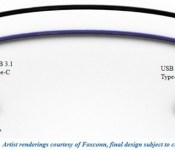
Announced in December [PDF], the reversible design was said to be smaller in size, similar to existing Micro USB plugs. While no cables are available yet, the USB Implementers Forum (via CNET) has released renderings showing what the cable might look like.
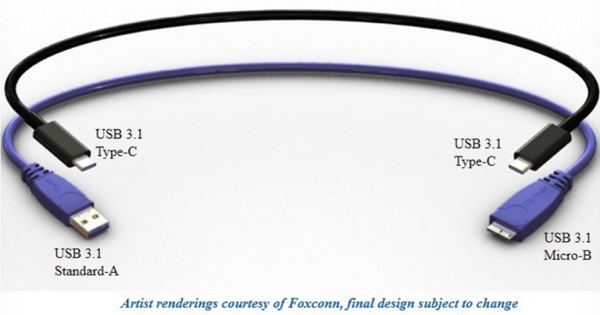
The reversible design, which looks a lot like a Lightning cable, aims to replace USB and Micro USB with one cable that can be used from either direction. The USB prong is 8.3 x 2.5mm, which is much smaller than standard USB ports but larger than Micro USB.
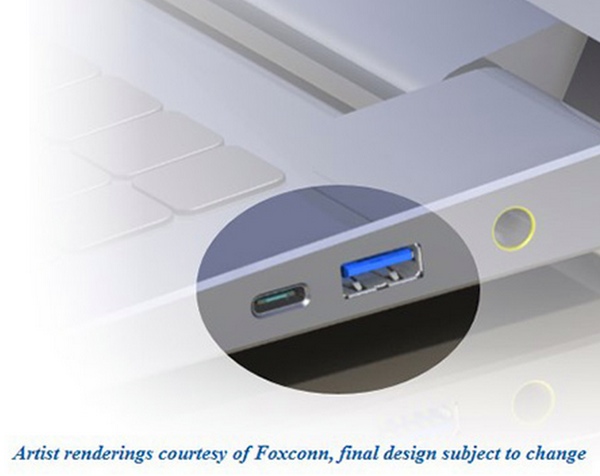
At the current point in time, the cable’s design has yet to be finalized, which means a final product could look somewhat different. The specification is expected to be finished in July of 2014.
| |
Sonnet Announces New 4U Enclosure to Rack Mount Two Mac Pros
Mounting and organizing options for heavy duty Mac Pro users continue to grow since the new machine’s launch at the end of last year, with Sonnet now announcing a new rack mount enclosure capable of holding two Mac Pros. The new enclosure is an additional option to go along with the enclosure and expansion chassis the company announced last week.

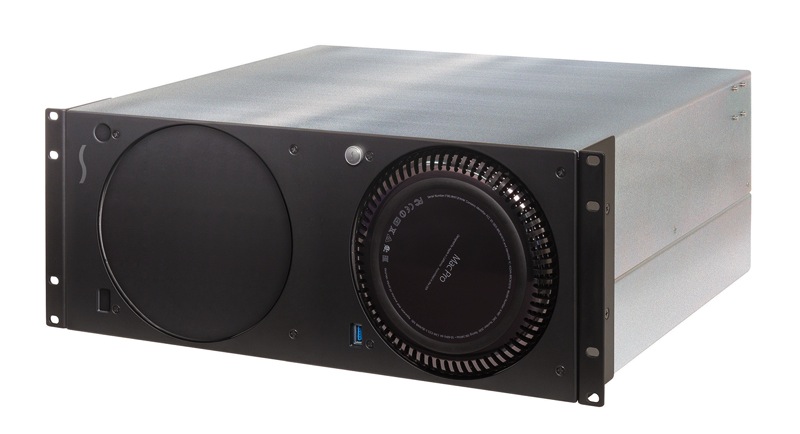
This time, the Sonnet Rack Mac Pro allows users to rack mount one or two Mac Pro machines in a 4U space. The unit includes a front panel power button with USB 3.0 port for each machine, plus a second USB 3.0 port, a Gigabit Ethernet port, and an HDMI connector on the back of the rack for each Mac Pro.
There are no rear Thunderbolt ports because, Sonnet says, there are no panel-mount Thunderbolt connectors available. There is, however, room inside the rack for Thunderbolt cables to be attached, and the company says it is “fairly easy” to directly connect Thunderbolt cables and they can be secured to the Mac Pro so they can not be accidentally unplugged.
The Rack Mac Pro also supports the mounting of Thunderbolt to Fibre Channel adapters like the Promise San Link2.
Pricing is expected to be $599 to rack mount a single Mac Pro, with an add-on to mount a second Mac Pro available for $299. Availability is likely to come in June alongside the previously announced combination enclosure and expansion chassis.
| |
Greenpeace Features Apple as ‘Green Energy Innovator’ in New Report
Environmental activist group Greenpeace, which has in the past taken Apple to task over environmental issues, has released a new report entitled “Clicking Clean: How Companies are Building the Green Internet” which classifies Apple along with Google and Facebook as “green energy innovators”. The report praises Apple for its commitment to renewable energy, awarding the company three “A” grades and a “B” grade in the group’s four rating categories.
Apple’s aggressive pursuit of its commitment to power the iCloud with 100% renewable energy has given the company the inside track among the IT sector’s leaders in building a green Internet. Apple has made good on its pledge by building the largest privately owned solar farms at its North Carolina data center, working with its utility in Nevada to power its upcoming data center there with solar and geothermal energy, and purchasing wind energy for its Oregon and California data centers. Apple’s commitment to renewable energy has helped set a new bar for the industry, illustrating in very concrete terms that a 100% renewable internet is within its reach, and providing several models of intervention for other companies that want to build a sustainable Internet.

The full report (PDF) highlights Apple’s strong performance in transparency, its commitments to renewable energy and siting of facilities in areas with access to renewable energy, and its deployment of and advocacy for renewable energy. The only area where Greenpeace gives a slight downgrade to Apple is in energy efficiency and mitigation, where the group believes that Apple could do more to share details on its energy efficient facility designs to help the industry in general become more environmentally friendly.
Greenpeace was initially quite sour on Apple’s renewable energy plans for its flagship North Carolina data center, believing the company to be relying mostly on coal-powered energy sources. Apple took issue with Greenpeace’s claims, but the publicity seemed to have encouraged Apple to become more open about its commitments to renewable energy as it publicly stated its intentions to run all of its data center on 100% renewable energy. While Greenpeace continued to overestimate Apple’s energy needs for the North Carolina facility for some time, the group appears to now be satisfied with Apple’s disclosures and is on board with the company’s energy policies.
| |

SITU Smart Food Scale Connects to iPad to Relay Nutritional Information [iOS Blog]
Newly released on Kickstarter, the SITU is a food scale with a built-in Bluetooth chip that enables it to communicate with an iPad. When a food item, such as fruits, vegetables, or even chips, is placed on the scale, it weighs the food and then relays the nutritional information to the iPad via the SITU companion app.

Designed to allow people to monitor their calorie intake and other nutritional factors while preparing fresh foods, the SITU can measure each component of a meal to calculate its exact nutritional value. It’s able to measure individual components and more complete meals, like a sandwich, a bowl of cereal or a slice of pizza.
Place your food on SITU and you’ll see exactly what’s in it–from calories to salt to sugars to vitamins and minerals. You can use SITU to quickly check the nutrition content for a single piece of food, or you can choose to go further, tracking entire meals, saving them to your dietary history, setting alerts for nutrient limits, and even exporting your data to share with your doctor, nutritionist, or personal trainer.
According to the product’s developers, the SITU is a useful tool for calorie counters, athletes, parents, health professionals, and those who want to be more health conscious, tracking nutrients like sugars and salts within food.
Additional details about the SITU and multiple videos of the product in use can be found on the Kickstarter page. Interested backers can preorder the SITU for a pledge of £50 plus £12 for shipping outside of the U.K., which equates to approximately $103. There are a limited number of scales available at that price and orders are expected to ship in November of 2014.
| |
Second Apple-Samsung Patent Trial Begins with Focus on Apple’s ‘Holy War’, Advertising Envy, and Phil Schiller
Samsung and Apple’s second patent trial started earlier this week with jury selection and opening arguments by both Apple and Samsung. Phil Schiller also took the stand as Apple’s first witness in the trial, which started in earnest on Tuesday.

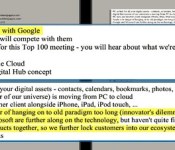
Among the volume of internal documents provided in the case, The Wall Street Journal highlights emails from Apple founder Steve Jobs that reveal his commitment to beating Android, calling the competition a “Holy War” with Google.
Jobs outlined this “battle” in an October 2010 email to 100 employees prior to the company’s annual retreat. Jobs said in the email that “Apple is in danger of hanging on to old paradigm for too long (innovator’s dilemma)” and notes that “Google and Microsoft are further along on the technology, but haven’t quite figured it out yet.” This characterization is favorable to Samsung as the company attempts to involve Google and Android in the patent infringement case.
As part of its opening statement in the case, Samsung outlined its plans to share internal Apple documents that suggest Apple was taken aback by Samsung’s edgy marketing campaign that characterized the company’s Galaxy devices as “the next big thing.” (via The Verge)
“We will show you internal Apple documents, documents that haven’t been made public before, and showed how Apple was really concerned about competition from Android, and in particular Samsung,” John Quinn of law firm Quinn Emanuel Urquhart & Sullivan, which is representing Samsung in the trial, told an eight-person jury. “This new, edgy marketing strategy … it drove Apple crazy.”
Following opening arguments by Apple and Samsung, Apple executive Phil Schiller testified in court on behalf on Apple, discussing, as he did in the first trial, the risks the company took as it successfully released both the iPhone and iPad before its competitors, reports Computerworld.
“We wondered what could come after the iPod,” Schiller said. “We wanted to try and invent that future rather than let it happen to us.”
Schiller also reminded jurors that Apple wasn’t always the leader in the mobile market and had a long learning curve to get where it is now.
“Apple really only had two products at the time: the Mac and iPod,” he said, reminding jurors of a time before Apple was the phone and tablet powerhouse it is today. “We hadn’t made a phone. We didn’t know about radios and antennas and all the things that make up a phone.”
Schiller remained on the stand for over two hours before his testimony ended for the day. Schiller is expected to return on Friday, with Samsung continuing to question the Apple executive when the trial resumes.
| |