



Chrome Apps Gaining OS X Finder Integration to Open Mac Files by Default [Mac Blog]
Google has launched a new feature for its experimental Chrome Canary browser for Mac, enabling a beta function that allows users to open local Mac files using Chrome apps in Finder. Using the feature, Chrome apps can be associated with OS X files, bringing Google one step closer to replacing desktop functionality with its browser.
For example, the Chrome Text app can be used to open any Mac text file, as seen in the screenshot below. The Text app shows up as an option right alongside native options like TextEdit.

It is now possible to get OS integration of file associations for Chrome Apps in Chrome Canary for Mac.
All you need is to enable the experimental chrome://flags/#enable-apps-file-associations flag and restart your browser.
Enabling this flag in Canary Chrome will let users choose installed Chrome apps as an option when opening an associated file, with the apps behaving as native Mac apps. As noted by Gigaom, the process functions through app manifests, which allow developers to specify which apps are compatible with different file types via file handlers.
While the feature is currently limited to Chrome Canary for testing purposes, many Canary functions eventually make it to Google’s stable Chrome browser. There is no word, however, on when the new feature might make it out of testing as there are still several bugs to work out.

Apple Playing ‘Catch Up’ With Beats Acquisition as Music Labels Push for Subscription Services
 Over the course of the last several years, streaming music services like Spotify, Rdio, Pandora, and Beats Music have been growing in popularity, usurping traditional music downloads as consumers’ listening method of choice. Despite the shift in user preference, Apple has been slow to adapt, attempting to stick to its download model even as its iTunes music sales have declined.
According to a new report from The Wall Street Journal music labels had been urging Apple to get into the subscription music business long before the company decided to enter negotiations to purchase Beats Electronics, and with it, the Beats Music streaming service.
Record executives have been “lobbying Apple for months” to design a subscription streaming service that would introduce the streaming music business model to a wider array of consumers, but Apple has been reluctant to create such a service, instead focusing on download-centric ideas such as exclusive iTunes album releases.
Back in December, Beyoncé launched an iTunes exclusive album and Apple hoped to negotiate with record labels to secure additional exclusive releases to boost iTunes music sales. Record labels didn’t believe that strategy would do enough to bolster flagging sales, and instead presented Apple with ideas like prompting users to subscribe to a music service over purchasing a music album.
Apple, on the other hand, had pitched more download-centric ideas in recent months, according to people familiar with the matter. One such suggestion was that record companies release all new albums exclusively on iTunes in album-only format for a window of time to drive album sales, before releasing the singles separately and making them available on streaming services. But labels countered that such a strategy–employed successfully by Beyoncé last year–wouldn’t work across the board.
Declining music sales have become a significant issue for Apple, to the point where the company has been forced to consider an entire overhaul of iTunes, introducing not only a streaming music service, but also an Android version of the iTunes store. Music downloads declined approximately 13.3 percent in the first quarter of 2014 compared to the first quarter of 2013.
Apple did launch iTunes Radio back in September of 2013, providing a station-based streaming music service similar to Pandora, but this was seen as a “baby step” aimed at bolstering sales of Apple devices rather than a dedicated entry into the streaming music market.
With the purchase of Beats Music, Apple is potentially signaling its readiness to adapt to the music industry’s shift towards streaming services and its readiness to bring music streaming to the mainstream. While Spotify and other streaming services are relatively small, Apple’s massive iTunes customer base gives it the potential to introduce streaming music to a huge number of users.
Toward that end, Jon Maples argues that an acquisition of Beats would give Apple an easy entry into the true subscription music streaming market without necessarily diluting iTunes.
While music purchases may be falling, it’s still a big business for Apple. So instead of creating another option in iTunes that would potentially cannibalize download sales, why not just buy a service and keep it separate? Streaming blows up: Apple wins. Streaming doesn’t pan out, well, they still have the iTunes store chugging along.
With Apple having 800 million iTunes accounts to leverage, most with credit cards on file, the company can streamline and promote the Beats experience while still leaving its iTunes download service intact. And as Maples notes, Beats’ headphone business is currently highly profitable, which means Apple’s $3.2 billion purchase of Beats (Apple’s largest acquisition ever by far) could pay for itself in a relatively short period of time and actually provide Apple with a low-cost entry into subscription music services on the side.
3D Printable 4.7-Inch and 5.5-inch iPhone 6 Mockups Now Available from Free Plans
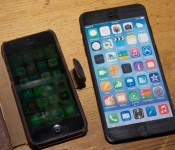
Yesterday, designer Martin Hajek started selling a $25 set of 3D files that allow you to print your own 4.7-inch iPhone 6 mockup using a 3D printer. Today, a second set of 3D plans for both the 4.7-inch and 5.5-inch version of the iPhone 6 were released by MacRumors forum user Arthur Tilly and made available for free on Thingiverse.

Using measurements available from leaked design drawings, the plans allow anyone with access to a 3D printer to print out the alleged iPhone 6 design and see how it feels in their hand. The set includes an .STL file for 3D printing and an editable OpenSCad file that can be used to modify the design and add some of the missing details like the Apple logo.
So, here’s an OpenSCad file to create one, and the STL file it makes. There are some comments in there, so you can adjust things to your personal rumour preference. And improve it, of course. It doesn’t print the expected lump on the back for the lens (that would mean the entire build would be on supports, or it would have to be printed a different way around). Neither does it have an apple logo or some other details that would be nice. Maybe I’ll improve it soon, or feel free to do so yourself…
There has been no shortage of renderings of the rumored iPhone 6 that provide an advance look at the possible shape and size of Apple’s upcoming smartphone. A new post from Taiwanese blog AppleCorner provides precise measurements of 138 x 67 x 7.0 mm obtained from one of these mockups, while a Sonny Dickson leak shows physical mockups in roughly the current three colors used on the iPhone 5s.

While there are a variety of cases and mockups all pointing in the same direction for the design of the iPhone 6, it is important to remember that most of these products are essentially all based on the same sets of leaked design drawings, and they ultimately may or may not prove correct.
4.7-Inch iPhone 6 Mockup Comparison to iPod Touch Highlights Design Similarities
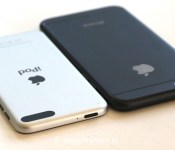
Italian site Macitynet, which previously published several photos of a fairly good quality physical mockup of the rumored 4.7-inch iPhone 6 based on design drawings from Japanese magazine MacFan, has now shared an interesting new photo set [Google Translate] comparing the mockup to a current-generation iPod touch.

The photos clearly show how similar the two devices are in design, from the curved edges on the rear shell to the style of speaker holes along the bottom edge. The iPhone 6 at 7.0 mm thick based on the design drawings is clearly thicker than the iPod touch at 6.1 mm, although the iPhone 6 would still be noticeably thinner than the iPhone 5s at 7.6 mm.

The iPhone 6 of course has larger height and width than the iPod touch, given that the body must accommodate a 4.7-inch display compared to the 4-inch display of the iPod touch.

The style is naturally also similar to the iPhone 5c, which itself took some design cues from the iPod touch, although the bright rear shell colors are the defining features of the iPhone 5c and they are unlikely to make their way into Apple’s flagship iPhone 6.
In addition to the 4.7-inch iPhone 6, Apple is rumored to be launching an even larger model with a 5.5-inch display, although that may follow several months after the smaller version. High-quality physical mockups of that device have yet to appear, although users with access to a 3D printer can print their own using files based on the design drawings published by MacFan earlier this year.
Smartphones for hire: Which personal assistant is right for you?

“Ring-ding-ding-ding-dingeringeding.”
This isn’t a standard job interview answer, but then again, “What does the fox say?” isn’t a typical question, either.
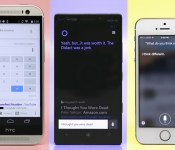
The top three smartphone platforms now feature fully functional personal assistants, and just like real-life assistants, it’s not so easy to pick one at random. Each has its own talents, weaknesses and personality quirks to consider. So, I conducted a series of “interviews” with Siri, Google Now and Cortana to get to know them better — and yes, they all know exactly what the fox says.
Siri

Apple’s Siri is a seasoned assistant with plenty of experience to back up its resumé. Now nearly 3 years old, the once-beta program has had time to squash bugs and add features. And thanks to the iOS platform, it’s integrated with social networks like Twitter and Facebook, as well as services like Yelp, Evernote, Fandango, OpenTable and WolframAlpha.
Siri has a jovial personality. No matter what you ask, just frame your question naturally — for instance, “How should I dress this weekend?” — and nine times out of 10, it’ll not only understand you, but also respond in a similar fashion. If you have follow-up questions or requests, Siri will continue the conversation with you. And if you ask something silly, expect a sassy answer.
Siri is a seasoned assistant with plenty of experience to back up its resumé.
Personality’s a nice touch, but it’s merely a party trick if your assistant lacks functionality. Fortunately, Siri’s not hurting in that area. It can dictate and send texts, emails and social network updates. It can make calls and read messages back to you. It has no problem setting (and canceling) reminders and alarms, and will display your upcoming appointments in a list. How about opening apps and changing settings? Airplane mode, WiFi, Bluetooth, you name it — Siri’s got you covered so you don’t have to dig around countless screens to find stuff.
Siri’s also good with watercooler talk. It told me when the next Giants home game was and how they’re doing this year. When I ask about a movie, the details show up in a card-like view; and I can even buy movie tickets through Fandango. Siri also can pull up music through your library or iTunes, and it’s able to pause, resume and skip songs. However, it doesn’t do a good job of pulling up concert information, opting instead for a web search.
Much like both of its competitors, it can set geofences for reminders. This means you can tell it to remind you to pay the rent as you pass by the landlord’s office, or stop and get a Mother’s Day present when you’re close to your mom’s favorite store (hint, hint). Speaking of location, it can pull up local listings, which you can then filter by distance or Yelp rating; you can also use Siri for all of your navigation needs, as long as you don’t have a strong aversion to Apple Maps. The service also remembers your home and work to help route your morning commute, but unfortunately, it doesn’t do well at determining other places you visit frequently.
Siri’s not all business though. It has a knack for finding your friends, as long as you and your entourage have the iOS app. If Steve’s late getting to your house, you can ask Siri to see where he’s at and it’ll pull up a map with his location. While you wait for him to show up, you might as well use Siri’s OpenTable integration to set up reservations for dinner.
Hire Siri if you’re looking for: Personality, dictation, social networking, music playback, sports, movies, changing settings, reading messages, finding friends.
Google Now

Of the three candidates, Google Now is the blandest. It’s the kind of assistant that takes everything a little too seriously, and on the rare occasion when it tries to be funny, it tries too hard. But it’s also very robust, knowledgeable and takes care of business when called upon — and you can call upon Google without touching the device. It works great on the home screen and in the Now screen, but you can’t activate it when you’re in an app, or even in the app tray. That’s still better than Siri and Cortana, however, which are activated by a long-press of a particular button.
It’s the kind of assistant that takes everything a little too seriously, and on the rare occasion when it tries to be funny, it tries too hard.
Sure, it comes with a few Easter eggs (me: “Make me a sandwich.” Google: “What? Get it yourself!”), but Google prefers function over friendliness. I can respect that — Siri’s and Cortana’s jokes aren’t technically all that useful anyway — but it’s disappointing that an engine like Google can’t understand questions unless they’re framed formulaically, such as “What’s the weather like today?” instead of “What should I wear this weekend?”
It’s not the most intuitive assistant, and it’s a mixed bag for basic daily tasks. Google can look through your email and remind you of upcoming flights and give you other information related to your pending trip. Of course, you can also use it to do the usual voice assistant stuff: Set reminders and alarms, visit specific websites, draft notes and make calls, as well as send texts and emails. For reminders, Google will ask you when and where you want to be pinged. And although it can set up appointments and alarms, it can’t change or cancel them. (If you ask, it doesn’t even understand your request.)
One of Google’s less job-specific strengths is its ability to name a tune. It’ll pull up information about the song you’re listening to and link you to the Google Play Store. It’s a talent Siri simply doesn’t possess, although rumors indicate that Apple’s looking into integrating Shazam. Lastly, if you’re interested in using your assistant to post on social networks, take note: You’re limited to Google+.
Hire Google if you’re looking for: Travel and flights, dictation, music discovery, hands-free voice activation and website shortcuts.
Cortana

Cortana is the only personal assistant in the trio that has a recognizable face, and the only one that has a resumé stretching 500 years into the future. Presently, the service is brand-new and technically in beta, but it’s fully functional. It’ll continue to improve over time as more people use it and Microsoft’s team adds functionality.
Like Siri, Cortana’s got the makings of a fun personality. Jen Taylor, the voice of Cortana in the Halo series, contributes to her Windows Phone namesake by providing a lot of the program’s clever quips, and you’ll hear more of her voice over time. The service doesn’t have quite as many quirky responses as Apple’s counterpart, but wit comes with experience. Currently, Cortana’s sass is limited to telling jokes, poking fun at the competition and responding to random questions about Halo and Microsoft. She’ll also keep conversations going as long as you’re making queries that are relevant to the topic at hand.
She can take care of nearly all of the essential tasks that a virtual assistant should have, many of which I’ve already discussed in earlier sections, but Cortana’s greatest strength comes with her Notebook. After all, your personal assistant would jot down information about you in his or her notebook, right?
Cortana is the only personal assistant in the trio that has a recognizable face, and the only one that has a resumé stretching 500 years into the future.
Do people even use real notebooks anymore? Well, Cortana does. She uses her Notebook to learn more about you. Sure, Siri and Google Now have shown small pieces of this feature: Both services remember your relationships and recognize where you live and work. Siri gets smarter as it gets to know you, and Google displays cards with information about your favorite sports teams, stocks, cable provider, news stories and so on. So far, however, Cortana’s implementation adds a lot more customization. Your list of reminders resides here, as well as your favorite places, music searches and preferred quiet hours.
But the most intriguing part of the Notebook is the section on your interests. This is a customized feed of information that keeps you posted on certain news stories and fills you in on things like your commute time, places to eat, upcoming flights, local weather and your favorite sports teams.
It’s also home to Windows Phone’s Do Not Disturb mode, known as Quiet Hours. A personal assistant would likely know not to bug you about things after a certain time of night, unless it’s incredibly important — but if your mother is trying to get ahold of you at midnight, it’s probably an emergency. Thus, you can set your quiet hours in the Notebook, as well as add a list of people (the Inner Circle) you don’t mind waking you up at the worst possible time in the morning.
You can rely on Cortana when you want to change settings and open apps, and it can even open up specific websites directly as long as you have a shortcut set up as a Live Tile. That’s still not quite as nice as Google, which can open sites without that caveat, but it’s a start. However, just like Google, Cortana can recognize music and offer links to buy the song you’re listening to. She can pull up whatever tunes you want, navigate through your playlist and pause songs currently playing. She’s also skilled at hooking you up with the latest weather conditions in a card-like view (which the others do just fine) and converting temperature between Fahrenheit, Celsius and even Kelvin. Conversely, I asked Siri to convert to Kelvin and it showed me how hot it was in Kelvin, Australia.
Unfortunately, the service’s beta status also means it’s not complete. Cortana doesn’t appear to have any attachments to social networking yet, though I wouldn’t be surprised to see this change down the road. She also doesn’t have hands-free activation, so you have to hold down the search button and then speak your voice commands. Finally, she also has trouble dictating punctuation, so “period” and “question mark” were transcribed as actual words instead of grammatical marks.
Hire Cortana if you’re looking for: Personality, navigation, appointments and reminders, weather, music discovery, changing settings, Do Not Disturb.
Who gets the job?
Don’t you hate it when there isn’t a clear-cut answer? Truth is, all three services do the basics quite well — appointments, reminders, dictation, making calls, sending messages and so on. But each one has its own array of talents to set it apart and its own obstacles to overcome. Between Siri’s experience, Cortana’s Notebook and Google’s hands-free functionality, you could hire any of the three and still be happy.
If you’re not looking for a specific feature or strength, however, you may need to bring them in for a follow-up interview.
Filed under: Cellphones, Software, Mobile, Apple, Microsoft, Google

Apple’s Acquisition of Beats Met with Skepticism, but Jimmy Iovine May Be Key
Since the Financial Times broke the news yesterday, numerous publications are now claiming Apple is in the final stages of acquiring Beats Electronics, a headphone company and streaming music service created by hip hop star Dr. Dre and music industry veteran Jimmy Iovine. The response to the news is mixed, with some experts offering compelling reasons for the deal and other pundits questioning Apple’s rationale in pursuing what would be its biggest acquisition to date.
Iovine has strong ties to the music industry and a long history of working with Apple, having met with Steve Jobs to discuss a subscription music service in 2003 and more recently in talks with Apple’s Tim Cook and Eddy Cue about the Beats Music service before it launched earlier this year. In a recent interview with The Wall Street Journal, Iovine credits Apple as his inspiration for the idea of the Beats brand.
“The idea of Beats…to be very frank, I got from Apple,” he said, noting the “uniqueness of their blending of technology with popular culture.”
If the acquisition proceeds, Iovine may join Apple as a “special adviser” to Tim Cook on creative matters. Iovine would bring to Apple his knowledge of the music business as evidenced in a AllThingsD interview from last year embedded below, and his insider influence that Wall Street Journal sources predict could be used to boost advertising on Apple’s existing iTunes Radio.
Apple also would acquire Beats’ successful consumer electronics business selling high-margin headphones and its newly launched music streaming service. Apple could bring the Beats hardware brand under the guidance of Jony Ive and use it to create new music product lines and add new channels to sell Apple’s products, suggests Re/code. The Beats music service is likely a longer-term investment, allowing Apple to accelerate any plans to offer a streaming music service for its iTunes customers, which number in the hundreds of millions.
Analysts, however, are meeting the news of the high-priced acquisition with both contempt and confusion, noting that such an acquisition is out of character for the Cupertino company. One of the first to weigh in on the deal was Gene Munster, who called the acquisition a “bad idea” in an investor note.
We are struggling to see the rationale behind this move. Beats would of course bring a world class brand in music to Apple, but Apple already has a world class brand and has never acquired a brand for a brand’s sake (i.e., there are no non-Apple sub-brands under the company umbrella). Separately, we are not aware of any intellectual property within Beats that would drive the acquisition justification beyond the brand.
Apple pundit John Gruber of Daring Fireball was equally skeptical of the deal, saying “I don’t get it.”
On the surface, this doesn’t make any sense to me. I can’t see Apple keeping the “Beats” brand around for headphones. If Apple wanted to sell expensive high-end headphones, they don’t need to spend $3 billion. The Beats streaming service is interesting, but can’t Apple do that on its own, as an expansion of the iTunes Music Store and iTunes Radio?
According to the original Financial Times report, Apple’s acquisition of Beats could be announced as soon as next week. Negotiations are still ongoing with some final details yet to be ironed out, allowing for the possibility that “talks could still fall apart.”

What does hip-hop’s ‘first billionaire’ have that Apple wants?

“Oh Shit, the Forbes list just changed.” The words come from Tyrese Gibson about a minute into a video posted to (and since pulled from) Facebook just a few hours ago. Gibson is talking about Dr. Dre, who stands behind him, arm draped over his shoulder. Dre himself then addresses the camera directly, boasting “The first billionaire in hip-hop, right here.” High spirits (and, be warned, very colorful language) pepper the video thanks to “all the Heinekens” that have evidently been drunk. Celebrations? If you’d just secured a $3.2 billion deal for your company, you’d probably splash out on a case of dutch courage or two, too. Sure, this is still not actual confirmation, but it’s the nearest thing to public acknowledgement of the buyout yet. Why, then, do many still feel like the deal makes no sense?
<!–
(function(d, s, id) var js, fjs = d.getElementsByTagName(s)[0]; if (d.getElementById(id)) return; js = d.createElement(s); js.id = id; js.src = “//connect.facebook.net/en_GB/all.js#xfbml=1”; fjs.parentNode.insertBefore(js, fjs); (document, ‘script’, ‘facebook-jssdk’));
–>
Apple’s iTunes store and iPod were extremely influential to how we listen to music now. In not at all overstated terms, they almost certainly paved the way for a brand like Beats to even be able to happen. Other parallels aren’t hard to find, either. Many perceive both brands as “premium,” likely as many consider them overpriced/over hyped. They both owe a good amount of their success to strong, charismatic CEOs. Both brands have become icons, badges, labels to be worn, something to be seen with (or without!). Why then, would a company that has the capacity, brand equity and experience in making audio hardware and streaming software want to pay such a huge price ($3.2 billion, reportedly) for something it can already do?
Usually, at this point, the answer would be “users.” That’s really what Facebook was buying when it snapped up WhatsApp for $19 billion. Zuckerberg likely had more developers working on poke than WhatsApp did in its whole office, but the lure of an extra 450 million daily customers was evidently worth the price tag. The question is, what can Beats offer in terms of users? Its headphone sales are undoubtedly strong, and margins are very likely favorable, but enough to merit that $3.2 billion asking price? Unlikely. Especially compared to what it would cost Apple to develop its own extended range of headphones, that would likely overlap in terms of potential customer anyway. As for Beats music? The jury is largely still out on that. It’s certainly got some innovative features, and deals with AT&T etc. will have got people using it, but we still keep coming back to the question: why beats, why now?

What would a Beats and Apple collaboration even look like, anyway? Rebranded headphones? Unlikely. Co-branded? Probably not. At best, the headphones would remain as they are, it’s Beats music (and perhaps its recent moves with Chevrolet/ Chrysler) that would be higher up the list for absorption into the Apple tree. The fact is, iTunes Radio hasn’t really made the splash that the iTunes music store did a decade or so ago. Apple’s CarPlay is also still in its infancy. Therefore, these two arms of Beats, at first glance, seem the most viable candidates for Apple’s affection. In short, it arguably boils down to Apple buying Beats for a few of its ideas, and a lot of its cool-factor. Something Apple has arguably traded for market penetration over the last decade. Could Apple really do more with Dre’s empire than HTC did (at much less capital expense)? If nothing else, it would spruce up the much-maligned in-box headphones it sells, and prove a rare toe-dip into the world of Android (via Beats music), something it would desperately need to do for true streaming ubiquity.
For all amount of logical reasons why this shouldn’t happen (not least that Apple isn’t known for buying big brands), the noise behind this story is impossible to ignore. The rumors may remain just that right now, but the Financial Times is confident in its sources, and the Wall Street Journal isn’t folding in much skepticism with its reports, either. Not to mention Bloomberg and the New York Times also putting their name to the story. This latest video might not be the outright confirmation that we’re craving, but it is the first comment on it from either of the parties involved. It could also be a hilarious wind-up, an industry whisper that got out of hand, and landed back in Dre’s lap, with him taking full (fun) advantage. After all, if the ink were still wet on a deal, it would still likely be subject to intense terms and conditions, likely involving disclosure. But one thing’s for sure, he sure looks happy about something. And we doubt it’s the Heineken.
Filed under: Cellphones, Home Entertainment, Tablets, Mobile, Apple
Via: Facebook
Source: Instagram (Tyrese), Financial Times
Apple Hires Nokia’s Lumia Photography Lead to Work on the iPhone’s Camera
Apple has hired Nokia’s Lumia photography chief Ari Partinen, reports Engadget. Partinen stated on his Twitter that he will be “starting a new chapter in Cupertino” in June, later confirming that he will join Apple.

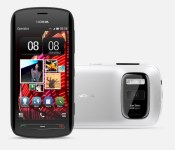
The Nokia 808 PureView with 41MP sensor
According to Partinen’s LinkedIn biography, his responsibilities at Nokia included “working with image quality characterization and tuning on camera module level”, while handling camera component production and quality control on a global scale. Partinen also lists the Nokia’s 808 PureView and Nokia N8 as devices he has worked on, which were regarded for their noteworthy photographic capabilities.
Partinen’s hire comes as Apple is reportedly looking to bolster the next-generation iPhone’s camera through optical image stabilization and other improvements. Nokia has focused heavily on the advantages of the camera’s on its devices throughout the past few years, recently launching the Nokia Lumia 1520 with a 20 MP PureView camera.

Apple just hired one of Nokia’s PureView camera experts

Today will be my last day working for the amazing #Lumia family. In June I will start a new chapter in Cupertino, California. Much love!
– Ari Partinen (@Partinen) May 9, 2014
@bharadc23 Thank you for great discussions and feedback! (And it is the company you are thinking assuming you are thinking Apple) =)
– Ari Partinen (@Partinen) May 9, 2014
Filed under: Cellphones, Mobile, Apple, Nokia
Source: Ari Partinen (Twitter)
Report Claims Apple Will Launch 4.7-Inch iPhone 6 in August, Larger Model in September
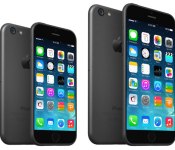
A new report from Taiwan’s Economic Daily News (via Reuters) claims that Apple will unveil and launch the 4.7-inch iPhone 6 in August, with a larger 5.5-inch or 5.6-inch model to be released in September. The report also notes that Apple will produce 80 million iPhone 6 units this year, with Apple suppliers Foxconn and Largan Precision aiding with assembly and camera module production, respectively.

An August launch of the iPhone 6 would be a different strategy for Apple, as the company has typically released prior versions of the iPhone in September or October. The news also contrasts prior reports claiming that the 4.7-inch iPhone 6 will launch in September, with the 5.5-inch version not launching until later this year or early 2015 due to issues with the device’s battery life and display technology.
In addition to a larger screen, Apple’s next-generation iPhone is expected to include a thinner profile, a faster A8 processor, and an improved camera. Jefferies analyst Peter Misek also claimed last month that Apple is negotiating with carriers to raise the price of the iPhone 6 by $100.

