



Apple to Offer Live Video Stream of WWDC Keynote on June 2
Apple today updated the front page of its website to announce that it will be offering a live video stream of next Monday’s keynote address at the company’s Worldwide Developers Conference in San Francisco. The keynote kicks off at 10:00 AM Pacific Time.

Users will need Safari on Mac/iOS or QuickTime 7 on Windows in order to watch the stream, and Apple will also be making the stream available through a channel on Apple TV.
A number of announcements are expected at the WWDC keynote, with OS X 10.10 and iOS 8 expected to be the major focus of the event. OS X 10.10 in particular will reportedly be receiving the most attention as it will be receiving a facelift somewhat similar to that seen with iOS 7 last year. iOS 8 is said to be a more modest update, although there will undoubtedly be plenty of changes and additions relevant to users and developers alike.
Hardware announcements are a bit less certain, with two highly anticipated and long-rumored products in the iWatch and a revamped Apple TV unlikely to make their appearances at the event. Apple’s rumored Retina MacBook Air may also not be ready, but the company could slip in some other announcements such as updates to the MacBook Pro or outdated Mac mini, or perhaps a low-priced iMac.

Foxconn Starting 4.7″ iPhone 6 Production in July, Pricier 5.5″ Model to Follow in August
According to a new report from Digitimes, Foxconn will again be the primary manufacturer for the iPhone 6, supplying 70 percent of the expected shipments of the 4.7-inch iPhone 6 model in 2015. Shipments could begin as soon as July for the 4.7-inch model, with the 5.5-inch following shortly afterwards.
The 4- and 4.7-inch iPhones will be the main sales force of Apple for 2014. Foxconn’s plants in Zhengzhou, China are expected to start supplying the 4.7-inch model in July and start manufacturing the 5.5-inch one in August.
Besides Foxconn, Apple also may be turning to Pegatron and Wistron to supply iPhone handsets for its next product cycle. Pegatron is believed to be a secondary supplier for the 4.7-inch iPhone 6, while Wistron may step in to supply Apple with the existing 4-inch iPhone model. Wistron is a new production partner that Apple added last year to help produce the iPhone 5c.
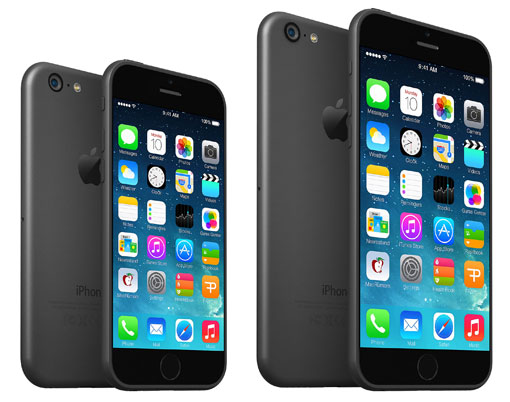
Rumors on the larger 5.5-inch iPhone 6 model have suggested that it may arrive as a premium model in lower quantities with perhaps exclusive features such as a sapphire crystal display. A new report from Nomura Securities shared by G 4 Games suggests that the larger model is likely to carry a $100 price premium over the 4.7-inch model. Apple had previously been reported to be negotiating with carriers for a $100 price increase on the iPhone 6, but it would make more sense for that increase to arrive in the form of a higher-end model such as the rumored 5.5-inch iPhone.
Digitimes has a fairly spotty track record with regard to Apple rumors, but it does occasionally offer accurate insight when sourcing information from within Apple’s supply chain. Digitimes‘ latest report is one of several recent communications that unsurprisingly suggest mass production of the 4.7-inch iPhone 6 will begin this summer in advance of a fall launch. Apple is expected to follow the 4.7-inch model with a larger 5.5-inch version that will debut in late 2014 or early 2015. Both models may ship with Apple’s A8 processor, an improved camera, and iOS 8.

Australian Apple users held to ransom by Find My iPhone hacker

Some Australian Apple device owners today woke up not to the sound of their alarm, but the jingle of a “ransom” notification instead. The Sydney Morning Herald reports that a hacker (or a group of hackers) going by the name “Oleg Pliss” systematically froze iPhone, iPad and Mac users out of their own devices, holding them hostage until payments of between $50 and $100 were received. Threads on Apple’s official support forums detail how the attacker (or attackers) used Apple’s own Find My iPhone feature to remotely lock devices and send messages requiring payment via PayPal. Fortunately, those who had set passcodes were able to regain access, because you can’t add or change a lock on a device that already has one in place, but those without the security measure weren’t so lucky.
Overcoming a lock once it is in place isn’t an easy process, meaning Apple has had to work directly with those affected to fix the issue. While the attack has been limited to Australia for the most part, Apple device owners in New Zealand and the UK have also reported similar issues. It’s believed that the device locks could be down to users recycling the same passwords captured in other internet breaches, although the real cause is not yet known. If you’re worried you could be affected, it’s considered good security practice to use a unique password, enable two-factor authentication and set passcodes on all of your devices.
Filed under: Cellphones, Tablets, Internet, Software, Apple
Via: 9to5mac

Hackers Remotely Locking Some Macs and iOS Devices in Australia for Ransom [iOS Blog]
A number of iOS and Mac users in Australia are reporting a growing issue on Apple’s support forums (via The Age) in which hackers are locking iPhones, iPads and Macs remotely through iCloud. Compromised devices are also displaying warning messages offering unlocks for money.
 A hacker’s message on a compromised iMac (via The Age)
Member veritylikestea on Apple Support Communities:
i was using my ipad a short while ago when suddenly it locked itself, and was askiwhich I’d never previously set up. I went to check my phone and there was a message on the screen (it’s still there) saying that my device(s) had been hacked by ‘Oleg Pliss’ and he/she/they demanded $100 USD/EUR to return them to me.
Member Sei_L on Apple’s forums also reports a similar message:
Same things here, both Ipads got the “hacked by Oleg Pliss” message, both have passcodes. In Western Australia also. I’ve chatted with Apple Chat and they said “this is very serious.” They’ve set up a phone call back from the correct department (whoever they are) tomorrow morning so we’ll see what happens then. We can access the ipads because they both had passcodes but when an app is used, it comes up with GameCentre password request; we didn’t put it in.
IT security expert Troy Hunt commented on the specifics of the issue, stating that the hackers are likely using compromised data exposed from recent security breaches to login to iCloud accounts. Hunt also notes that the accounts hacked were likely not using two-step verification, suggesting that a single password would have not had granted access had the feature been turned on.
Apple has yet to officially comment on the issue, although users are encouraged to turn on two-step verification for their Apple ID with directions available on a support page.

Touch ID Once Again Said to Come to iPhone 6, iPad Air 2 and iPad Mini 3 This Year
A new research note from KGI Securities analyst Ming-Chi Kuo indicates that Apple will include Touch ID across all new iOS devices in 2014, boosting shipments and bringing the fingerprint sensor to the iPhone 6, iPad Air 2 and iPad mini 3. The report reiterates previous claims made by Kuo last month, which noted that Apple’s next-generation iPads will feature Touch ID upon their releases this fall.

Apple’s Touch ID module should see shipments soar 233% in 2014. We believe every new iOS device launched this year will be equipped with Touch ID, including 4.7” and 5.5” new iPhone 6, iPad Air 2 and iPad mini 2 with Retina display. Considering shipments of new products and iPhone 5S sales last longer than in 2013, we forecast unit sales of the fingerprint sensor module to grow 233% to 120mn for 2014.
Kuo also notes that Apple will change its Touch ID module design to utilize tin over previously used chemicals to enhance durability. Apple is also expected to stick with Taiwan Semiconductor Manufacturing Company (TSMC) and its subsidary XinTec to produce the fingerprint sensors.
Last month, it was noted that TSMC provided the first batch of fingerprint sensors for the iPhone 6, iPad Air 2 and iPad Mini 3. A report in January noted that TSMC would begin production on the sensors sometime in the second quarter of this year with a new 12-inch fab processing method, however a report in February stated that TSMC would be using the same 8-inch fingerprint sensor processing method used for the iPhone 5s.
Improved shipments of Touch ID will also likely help launch supplies of all three devices, as low yield rates of the component was said to be a key factor contributing to the limited supplies of the iPhone 5s at its launch last September.

Malware Scanning Tool ‘VirusTotal Uploader’ Released for OS X [Mac Blog]
Google subsidiary VirusTotal announced (via The Next Web) and launched a version of its VirusTotal Uploader for OS X, bringing the popular malware scanning tool to Apple’s platform for the first time.

After a quick installation, the program allows users to drag and drop any file, folder, or application to preform a malware scan. VirusTotal Uploader utilizes over 50 different databases to search for any traces of malware.
Hopefully this will lead to VirusTotal receiving more Mac applications, diving deeper into an increasingly targeted OS by attackers and allowing antivirus companies and researchers making use of VirusTotal’s backend to build stronger defenses against these threats.
VirusTotal Uploader for OS X can be downloaded for free from the utility’s official website.

Apple may enter the smart home business

Forget those rumors of an Apple smartwatch for now — home automation may be where it’s at. The Financial Times hears from sources that the crew in Cupertino is going to unveil a smart home platform at its Worldwide Developer Conference kicking off next week. While there aren’t many details, proximity will reportedly play a big role; your house lights would switch on as soon as you come home with your iPhone in your pocket. Apple would also have a Made For iPhone-style program to guarantee that devices work with its system, and it would put a strong emphasis on privacy to counter fears about both its ad-driven competition and government surveillance.
The FT is quick to note that Apple is known for scrapping announcements at the last minute, so don’t be shocked if the tech giant is mum on the subject at WWDC’s June 2nd keynote. However, a smart home strategy would make sense. Apple may want a platform of its own now that Google owns Nest, and it already sells home automation tech like Philips’ Hue lighting at its retail stores. Assuming the claims are true in the first place, we’ll get the full scoop next week.
Filed under: Household, Mobile, Apple
Source: Financial Times

Apple to Launch New ‘Smart Home’ Platform at WWDC
Apple will launch a new software platform that will let the iPhone directly control lights, security systems and other household gadgets at WWDC next week, according to a report from The Financial Times.
The piece claims Apple will make a “big play” in smart home technology by working with device makers give them official approval, like the “Made for iPhone” program does for some accessories like headphones and speaker docks, and software support in iOS 8.
The scheme will be similar to Apple’s existing “Made for iPhone” label, given to compatible headphones, speakers and other accessories, but with a new brand and logo. Apple may also provide additional checks and assurances that certified products are not vulnerable to hackers.
The Cupertino-based company was likely to emphasise the privacy protections built into its smart home system, one person familiar with Apple’s plans told the FT, given heightened sensitivity about technology companies’ access to personal information amid revelations about US intelligence agencies’ online surveillance programmes.
The piece notes that plans can always change, but that Apple has launched a number of initiatives over the past year or two, including CarPlay and iBeacon, to expand the reach of the iPhone and have it interact more with the real world and other electronic devices in it.
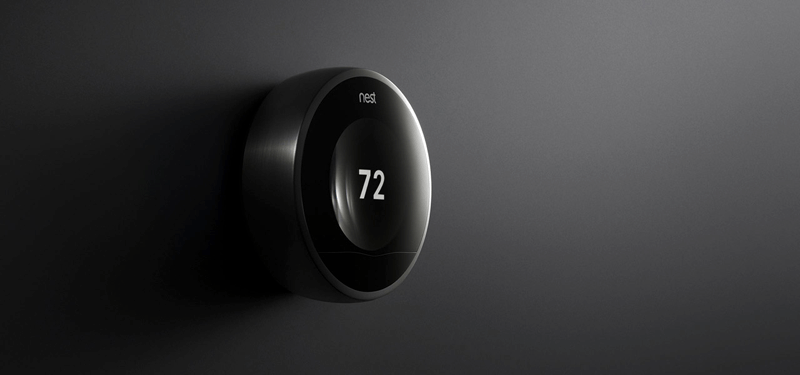
Apple’s retail stores sell a number of different components of the so-called “Internet of Things”, including the Google-owned Nest Thermostat (pictured above), Philips Hue lightbulbs and Belkin WeMo Wi-Fi enabled light switches.
Apple Testing ARM Based Mac Prototypes with Large Magic Trackpad?
French site MacBidouille revives rumors that Apple is actively developing ARM processor based Macs. According to a source that they describe as reliable, Apple has prototypes of several ARM-based machines, including an iMac, Mac mini, and 13″ Notebook with 4-8 64-bit ARM Quad-core processors.

These machines are reportedly far along in development, and come with a new keyboard that incorporates a large-format Magic Trackpad. Apple might even be ready for an announcement but is reportedly hesitant to make the move.
MacBidouille isn’t a frequent source of rumors, so its hard to gauge its source’s credibility, but rumors of ARM-based Macs have been circulating for years. It seems likely that Apple has prototyped such devices, but many have doubted the feasibility of moving forward with such a plan.
The first inklings of such a plan might have come when Apple threatened to abandon Intel’s chips if they didn’t work to slash power consumption. While AMD might have been one way to go for Apple, the first rumors of an Apple migration from Intel to ARM processors appeared earlier that year. Later, a report claimed that Apple already had an ARM (A5) powered MacBook Air in their labs back in 2011.
An analysis in 2012 suggested that Apple shifting from Intel to ARM wasn’t implausible but it faced several hurdles. The most significant one was Apple’s own ARM chips being able to keep a pace with Intel’s future roadmap.
Apple, however, has been making great strides in performance in their ARM processors. The A7 is described as desktop class even in an independent analysis. In fact, the A7 chip is currently being underutilized in Apple’s iPhone and iPad devices, leaving some of its power untapped.

Apple Debuts Two New ‘Your Verse’ iPad TV Ads Emphasizing Music and Travel
Apple has debuted two new video ads for its “Your Verse” iPad Air campaign that showcases the tablet being used in a variety of situations. The pair of ads profile Esa-Pekka Salonen, a Finnish conductor who composes music with the iPad Air, and travel blogger Chérie King, who uses various apps to map her journeys and translate foreign languages on the fly.
Salonen’s Your Verse ad displays the musician taking a simple musical concept and developing it into a full composition, using apps such as Touch Press’ The Orchestra and Notion to sound out various instruments. The composer is also seen using Pianist Pro, which is shown being used before a whole orchestra plays a musical piece.
Meanwhile, King’s one-minute spot shows the writer traveling to various places including Morocco and Vietnam while using the iPad Air in a number of ways. Apps such as WordPress, Facebook, and Twitter are shown being used to record the journey, while Triposo and iTranslate are used to find popular destinations and translate foreign languages in real time, respectively.
As with the other Your Verse ads, both videos have corresponding sections on Apple’s website which go into details about the stories of both individuals and how the iPad Air has helped.
Apple debuted its initial Your Verse iPad ad in January alongside a corresponding website that shares a number of experiences. Other stories have noted the iPad’s use in mountaineering, sports, choreography, oceanography, and more.

