


Apple Announces $3 Billion Beats Acquisition, Jimmy Iovine and Dr. Dre Joining the Company
Apple is buying Beats Electronics and the Beats Music streaming service for a total of $3 billion. The acquisition is the largest in Apple’s history and is the biggest move by CEO Tim Cook since he took the reins from Steve Jobs several years ago.
Beats co-founders Jimmy Iovine and Dr. Dre will join Apple as full time employees, with both reporting to iTunes head Eddy Cue. In an interview with The New York Times, Cook said Iovine and Dre were “really unique” and that “it’s like finding the precise grain of sand on the beach. They’re rare and very hard to find.”
Cook said that “of course” Apple could have built a subscription music service rather than buying one, just like the company could have built all the technologies that it has acquired over the years. “You don’t build everything yourself. It’s not one thing that excites us here. It’s the people. It’s the service.”
In the Times, Cook promised new features for Beats that will “blow your mind” as well as “products you haven’t thought of yet”. He promised the team would “take music to an even higher level than it is now.”
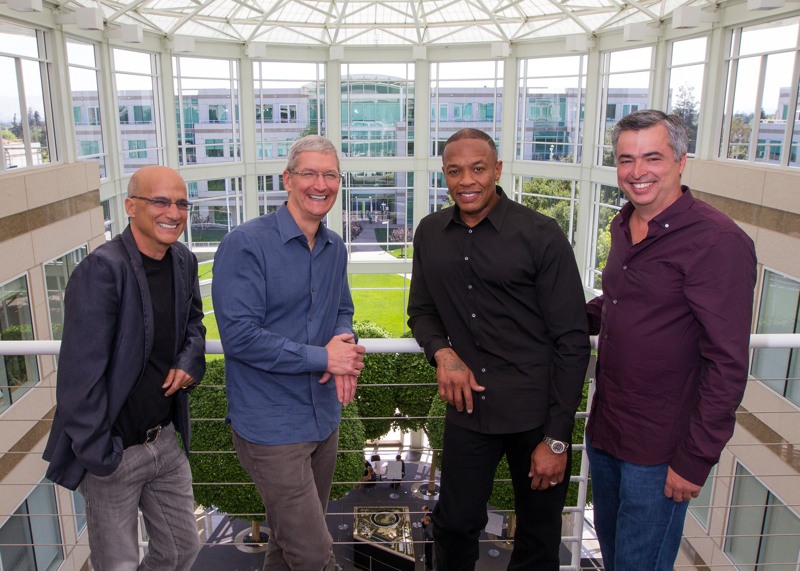 Jimmy Iovine, Tim Cook, Dr. Dre and Eddy Cue
In an interview with Re/code, Cook said that Apple felt Beats was the first subscription music service to “get it right:
We get a subscription music service that we believe is the first subscription service that really got it right. They had the insight early on to know how important human curation is. That technology by itself wasn’t enough — that it was the marriage of the two that would really be great, and produce a feeling in people that we want to produce.
[…]
But mostly, backing up — it’s because we always are future-focused. So it’s not what Apple and Beats are doing today. It’s what we believe pairing the two together can produce for the future.
Apple has seen rumors of a interest in a subscription music service for close to a decade, with Jobs saying in 2007 that customers “don’t seem to be interested” in music subscriptions. The New York Post said in 2010 that Apple was negotiating with record labels on such a service, though nothing ever came of it.
Earlier this month, Spotify reported that it has 10 million paying subscribers to its music service, showing that many customers are now interested in such a service.
The Wall Street Journal says Iovine will quit as chairman of Interscope records to work full time at Apple. Dr. Dre will continue to produce music but do “as much as it takes” for Apple. The two men’s titles will reportedly be “Jimmy and Dre”. In a letter to employees, Tim Cook confirmed that the entire Beats team will be joining Apple under Eddy Cue and noted the company’s commitment to curated content.
Both Apple and Beats believe that a great music service requires a strong editorial and curation team, and we will continue to expand what we do in those areas. The addition of Beats will make our incredible iTunes lineup even better, extending the emotional connection our customers have with music.
Eddy Cue and Jimmy Iovine will appear tonight on stage at the Code Conference.
The acquisition will include $2.6 billion in cash and another $400 million that will vest over time. Apple expects the transaction to close sometime next quarter. The Beats Music iOS app has been updated with an extended 14-day trial period and a price drop to its yearly subscription to $100 from $120.
Beats Music is a free download for the iPhone and iPad. [Direct Link]
References to New iMac Models Appear in OS X Mavericks 10.9.4 Beta [Mac Blog]
Mentions of new iMac models are buried inside the OS X Mavericks 10.9.4 beta that was seeded earlier today.
There are three new resource files for power management that mention three new iMacs with model numbers beginning with 15, according to some digging done by Pike’s Universum. The current iMac line is made up of models 14,1 and 14,2.

The most interesting part is the addition of three new resources (plist) files for power management:
Mac-81E3E92DD6088272.plist / iMac15,1 (IGPU only)
Mac-42FD25EABCABB274.plist / iMac15,n (IGPU/GFX0/Apple display with id 0xAE03)
Mac-FA842E06C61E91C5.plist / iMac15,n (IGPU/GFX0/Apple display with id 0xAE03)
Rumors have suggested that new iMac models could make an appearance at WWDC next week after shipping estimates for the machine began to slip on the Apple Online Store.

Apple acquires Beats Electronics for $3 billion

Apple is making things official: Dr. Dre’s Beats Electronics belongs to Cupertino, and it cost them $3 billion. Rumors had circulated that CEO Tim Cook was interested in nabbing up the audio accessory and music-streaming outfit, corroborated by a beer-drenched video in which Dre himself declared that he had become “the first billionaire in hip-hop.” And now, after Financial Times had already let the cat out of the bag, we have Apple’s side of the story. As expected, co-founders Jimmy Iovine and Dr. Dre (Andre Young) will join Cook and VP of Internet Software and Services Eddy Cue, but their exact job titles haven’t been revealed just yet.
Despite rumors that Apple was only interested in Beats Music in an effort to boost a decline in iTunes numbers, the deal includes both the hardware and the streaming software sectors of Dr. Dre’s business. And it’s Apple’s largest purchase ever. “Music is such an important part of all of our lives and holds a special place within our hearts at Apple,” notes Cook. “That’s why we have kept investing in music and are bringing together these extraordinary teams so we can continue to create the most innovative music products and services in the world.” That doesn’t rule out selling the headphone and speaker portion of the acquisition down the road, but it seems that for now, the folks at Apple are interested in the whole lot.
“I’ve always known in my heart that Beats belonged with Apple,” said Iovine, who’s also Beats’ CEO. “The idea when we started the company was inspired by Apple’s unmatched ability to marry culture and technology. Apple’s deep commitment to music fans, artists, songwriters and the music industry is something special.” Of course, the purchase — which includes $2.6 billion in cash and $400 million in stock — is subject to the requisite regulatory approvals, but it’s expected to close by late September.
“I’ve always known in my heart that Beats belonged with Apple.”
As you might expect, the Beats duo will be tasked with the next wave of Apple’s music products, but in an interview with The New York Times, Cook didn’t offer up any details. “They’re going to be coming up with ways of features that blow your mind,” he said in the interview, “and products you haven’t thought of yet, and seeing around the next corner to articulate the way to take music to an even higher level than it is now.” While Apple was once at the help of the digital music age, it has lost considerable momentum to services like Spotify, Rdio and Pandora despite. For now, it seems that Beats and Apple will keep their products separate until those new projects are complete, as the Cupertino-based outfit isn’t sharing any preliminary plans for any hardware that it will release or exactly how a subscription service may factor into its existing audio efforts.
To celebrate, Beats Music has already updated its iOS app, dropping the cost of an annual subscription to $100 (a $20 discount) and extending the free trial window to two weeks. What’s more, Tim Cook has confirmed to Financial Times that the streaming service will still be available to folks on Android and Windows Phone after the deal goes through.
[Photo credit: Andrew Burton/Getty Images]
Filed under: Portable Audio/Video, Software, Apple
Source: Apple, Beats Electronics

Tim Cook says Apple could have built a subscription music service, but didn’t need to

“Could Eddy’s [Cue] team have built a subscription service? Of course.” That’s what Apple CEO Tim Cook told the New York Times today following the announcement that it had acquired Beats Electronics. But the fact of the matter remains, the company didn’t. Instead it went out and purchased a pre-existing service. As the digital music industry shifted away from paying for individual tracks and albums towards an all-you-can-eat model, iTunes stuck to its guns. That’s left Cupertino in the slightly odd position of not being at the forefront of innovation in the industry. Observers have been suggesting that Apple would launch it’s own Spotify killer any day now, but Tim Cook seems to believe the company’s resources would be better used else where. “We could’ve built those 27 other things ourselves, too,” referencing the 27 other companies acquired over the last year, “you don’t build everything yourself.” At least for now Cook appears content to let Beats Music be his hat in the subscription ring, but we imagine those existing licensing agreements and streaming systems will eventually find their way into an Apple-branded offering.
Filed under: Apple
Source: New York Times

Samsung Debuts Open Modular Health-Tracking Band and Cloud Platform
Ahead of the upcoming debut of iOS 8, which is expected to include Apple’s “Healthbook” health aggregating platform, Samsung has announced its own health tracking platform that envelops both open modular hardware and a cloud storage solution.
Called SAMI (Samsung Architecture Multimodal Interactions), the company’s cloud-based sensor data platform is designed to be entirely open to developers and “complementary” with Samsung’s S Health initiative.

Alongside SAMI, Samsung showed off its Simband, a reference device that includes a multitude of wearable sensors with several different health-tracking functions. Designed to be an open reference sensor module, Simband offers the standard accelerometers to measure movement along with an ECG sensor and a sensor that measures skin temperature.
The device, which offers miniaturized electronics along with Bluetooth and WiFi, also shows off a removable “shuttle battery” that clips into the band to charge it while it’s being worn. As described, the battery allows the device to be worn 24/7, snapping in to charge it during sleep. The open device is multimodal and designed to be customized with interchangeable components, allowing hardware developers to create their own hardware able to be attached to the band.
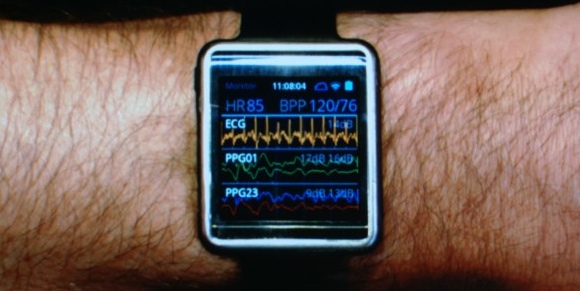
Samsung’s cloud platform SAMI is designed to collect “any kind of data” from a range of devices. On stage, the platform was likened to a bank, storing and securing data privately.
Samsung president Young Sohn compared the company’s health efforts to a car dashboard for the human body, aimed at giving consumers an overall picture of their wellbeing. Simband and SAMI are both open and available to developers, and Samsung has paired with early partners like PhysIQ and UCSF to develop new wearable hardware. Developers will be given access to the SAMI SDK later this year.
The company also announced a $50 million digital health challenge aimed at creating new sensors and new health-related technology.
Apple Seeds First OS X Mavericks 10.9.4 Beta to Developers
Apple today seeded the first build of OS X 10.9.4 to developers, approximately two weeks after releasing OS X 10.9.3 to the public. The new beta is available thorugh the Software Update mechanism in the Mac App Store should be listed soon in the Mac Dev Center.

It is unclear what improvements the 10.9.4 update will bring to Mavericks, but it is likely to include bug fixes and stability enhancements. It is also unclear when the beta might be released to the public.
The last Mavericks update, 10.9.3, added enhanced support for 4K displays and restored the ability to sync contacts and calendars between Mac and iOS devices over USB.
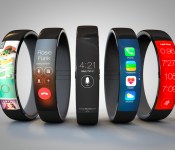
Analyst Shares Crazy List of Apple Prototypes Allegedly Floating Around Asian Supply Chain
Apple is working on a multitude of prototype projects ranging from the expected to the fantastical, according to Jefferies analyst Peter Misek, who suggests the prototypes are “floating around” in the Asian supply chain. In a research note to investors, Misek describes several prototype products, including an iTV with 4K, gesture control, and voice control, along with an ARM-based touchscreen MacBook Air, and an “OLED iPhone that unfolds into an iPad mini.”
In contrast to investors’ fears, the supply chain thinks Apple’s innovation may be accelerating. With more than the usual number of prototypes floating around, here are some highlights (with the caveat that Apple might be purposely leaking to confuse competitors): 5.5″ OLED phone with 2k >660ppi display; iTV with full gesture control, voice control, and 4K; touchscreen MacBook Air running on A8; 4″ OLED iPhone that unfolds into an iPad mini; smartwatch prototypes including curved bangle-type and curved-screen; and wearables including health care appliances and payment authentication modules.
While some of these products, such as the smartwatch prototypes sound plausible, some, such as the folding iPhone, range into the almost-unbelievable.
 Curved bangle-style iWatch concept by Todd Hamilton
Given Apple’s commitment to secrecy, it seems unlikely that many of these described prototype devices are available in the Asian supply chain. Apple maintains a highly exclusive design lab for its prototype products, which are likely produced in-house or in very small quantities by manufacturing partners, leaving the legitimacy of the “prototypes” discovered by Misek in question.
Apple has been rumored to be working on Apple television set prototypes and experimenting with ARM-based Macs, but it is unclear whether these type of products will make it out of the prototype stage.
Peter Misek has been frequently incorrect with his predictions, but occasionally, one of his reports is accurate. He was one of the first analysts to point towards early iPhone 6 prototypes in a 4.8-inch size, but he also incorrectly predicted several elements of the iPhone 5s and has long championed an Apple iTV that has not materialized. He has previously suggested Apple planned to merge iOS and OS X, which was not true, and he has predicted Apple signed deals to create an iTunes Netflix competitor, which did not happen.
In his research note, Misek also suggests that the iWatch is ready to go into full production and could thus be announced at any time, but this contrasts other reports that suggest the device will begin production in July. Misek believes the rumored 5.5-inch iPhone, which is said to be somewhat delayed in comparison to the 4.7-inch version, will launch at the earliest in November with a new in-cell display coating technology.
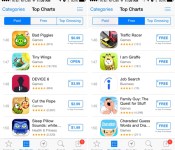
iOS App Store Top Charts Now Display 150 Results, Down From 300 [iOS Blog]
Apple has changed the number of apps displayed in the “Top Charts” section of the iOS App Store, reports TechCrunch. Rather than displaying the top 300 apps in a given section, only the top 150 apps are displayed on the Paid, Free, and Top Grossing charts.

The change was implemented several days ago and has largely gone under the radar, but it does leave half as many apps available for discovery via the Top Charts, a fairly significant change. Apple’s desktop iTunes App Store continues to display the top 200 apps.
While it is unclear why the iOS App Store is now displaying fewer apps in its Top Charts, the shift follows an earlier change to the App Store rankings designed to promote better app discovery.
According to Appsfire CEO Ouriel Ohayon, the change will not impact developers in as the bottom Top Chart listings did not have a significant impact on app downloads.
Apple’s Beats Music Deal Seen as Key to Bolstering Declining iTunes Revenue Momentum
Apple reportedly is close to inking a deal with Beats Electronics for $3 billion, an acquisition that Morgan Stanley analyst Katy Huberty believes is important if Apple wants to further monetize its 800 million iTunes user base and boost revenue in its increasingly important online services division.
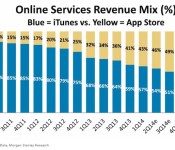
Apple’s online services segment, which includes iTunes, is often overlooked because it contributes so little to the company’s overall revenue. But as Huberty points out in a recent message to investors, online services shouldn’t be so casually tossed aside as the segment “is an underappreciated growth and margin lever for Apple.” It may be small, but online services revenue is expected to grow and margins are predicted to increase in 2014, driven primarily by rising App Store revenue.

Online services hold promise, but Apple needs to address iTunes, which is losing ground to rival music services. While App Store revenue is increasing, Huberty notes that iTunes revenue is falling as users turn to streaming services such as Pandora and Spotify to meet their music needs. This decline “raises concerns about Apple’s ability to monetize the new base of emerging market customers,” writes Huberty. According to Huberty’s calculations, each iTunes account spent an average of $3.29 in the first quarter of this year, down 24% year-over-year.
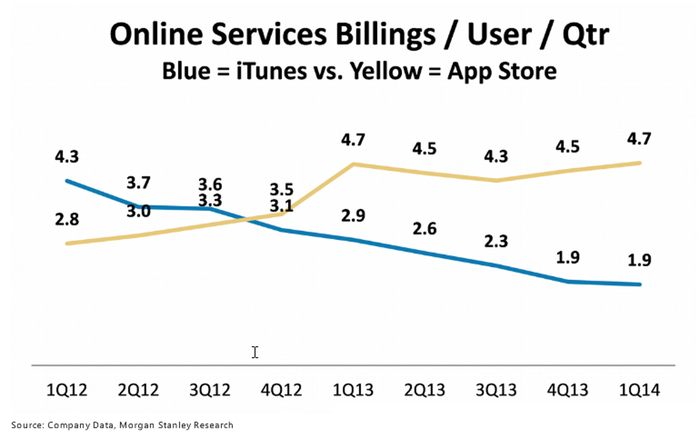
Huberty believes Apple could reverse this trend and improve monetization with the introduction of a subscription music service. One of the quickest ways to launch a subscription music service under the iTunes umbrella would be to acquire an existing service, something Apple appears to be doing with Beats Electronics and its Beats Music service.
Press reports, including the Financial Times and Wall Street Journal, suggest Apple is considering the purchase of Beats Electronics, which would give Apple an accessories business focused on headphones and a music streaming service. Apple has not commented and we have no knowledge of any pending deals. However, a subscription music service — whether organically built or acquired — is a logical extension of iTunes.
Spotify, which is generally viewed as the leader in streaming music, has 10M paying subscribers or about 25 % of its over 40M active user base (MAU). If Apple charges $10 per month, same as Spotify, every 1% penetration of Apple’s 800M user base, equates to $960M revenue annually, adding 8 pts of growth to online services and half a point to total company growth.
Apple’s acquisition of Beats would bring not only a streaming music service, but also veteran music producer Jimmy Iovine and musician Dr. Dre to Apple. The pair are considered to be the “big prizes” of the acquisition and could help Apple negotiate favorable music deals for a streaming music service.
Looking beyond Beats, Huberty argues that Apple also could bolster its online services with the introduction of a mobile payments option, an area of opportunity recently acknowledged by CEO Tim Cook. The launch of the rumored iWatch also may contribute to Apple’s online services as customers bolster App Store revenue by purchasing apps compatible with the new device.
Apple’s iWatch Said to Feature Round Design, Production May Start This Summer
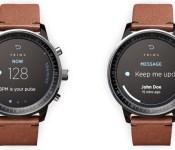
Based on Taiwanese supply chain sources, analyst Brian Blair of Rosenblatt Securities believes Apple’s iWatch will feature a round face, similar to a traditional watch (via Business Insider). The iWatch design will resemble Motorola’s Moto 360 smart watch, with the Apple version shipping with a slimmer profile.
 Traditional watch-style iWatch concept by Gábor Balogh
Apple may begin production of the iWatch in late July, with the goal of producing up to 21 million units in the second half of 2014, claims Blair in a research note to investors. AppleInsider also highlights Blair’s claim that Apple may partner with Quanta Computer to produce the smart watch device, instead of Foxconn which may be busy manufacturing the iPhone 6. Quanta’s involvement in iWatch production has been rumored since last August.
Blair’s sources also believe Apple may be producing multiple models of the iWatch, including one that features a sapphire display cover. This information echoes an earlier report from KGI Securities analyst Ming-Chi Kuo, who claimed the iWatch may ship at various price points and in a variety of materials that allow the smart watch to compete with both low- and high-end watches.
Apple’s iWatch is currently expected to arrive near the end of 2014, with a fashionable design and biometrics that provide basic health monitoring features. It likely will sync with an iOS device sharing data with iOS apps, including the new Healthbook app that is expected to debut in iOS 8. Though an iWatch announcement is not expected for WWDC, Apple will likely unveil some of the early details on iOS 8 at the developer conference next week.

