


Beats Music for iOS Gains New ‘Tune Your Taste’ Customizations, Verified Badges [iOS Blog]
 Beats Music for iOS was today updated to version 2.2.0, adding several user-requested features. It’s now possible for Beats listeners to change their Just For You recommendations through a new “Tune Your Taste” feature in Settings that allows users to select new favorite genres and artists.
Listeners are also able to track their most recently played songs from The Sentence feature, which lets users select songs based on mood and activity. Verified Badges have been added, with a red check mark signaling a profile is “certified as legit by Beats,” and there have been quite a few bug fixes.
You asked for it, and we listened! In this latest release we’ve added:
– Tune Your Taste — Want to switch up your Just For You recommendations? Change your favorite genres and artists with the Tune Your Taste feature in Settings
– Sentence History — View your most recently played songs from The Sentence
– Verified Badges — That red check mark means the profile is certified as legit by Beats
– Player Improvements — We fixed a ton of bugs to make playback more smooth and reliable…and much, much more!
Beats Music is set to be acquired by Apple in the next month or two, as soon as the $3 billion deal, first announced in May, gains regulatory approval in the U.S. and is finalized.
Apple has said that Beats will remain a standalone music service, which means the app will continue to be available on iOS, Android, and Windows devices.
Beats Music can be downloaded from the App Store for free. [Direct Link]
Supply Chain Sources Claim December Launch for 5.5-Inch iPhone 6 and iWatch [iOS Blog]
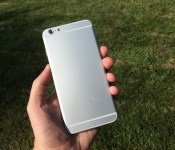
Reports from within Apple’s Asian supply chain (via GforGames) again suggest the company is planning to launch the 4.7-inch iPhone separately from the 5.5-inch model, with the latter model entering mass production in September. This staggered launch would allow Apple to debut the highly-anticipated 4.7-inch iPhone 6 early this fall and then follow with the iWatch and the larger iPhone model later this year.
The report claims a December launch for both the 5.5-inch iPhone 6 and iWatch, which would be unusual timing for Apple given the holiday shopping season. The company generally prefers to launch its consumer-focused products before Black Friday kicks off holiday shopping in late November. But if supply constraints are an issue, it is possible Apple might choose to make a limited launch of the devices before the end of the year to get them onto shoppers’ radars.

Apple is rumored to be planning its first press event in September, which will be used to unveil the 4.7-inch iPhone 6 along with the official release date of iOS 8. Apple may hold a second event in October to announce the next generation iPads, OS X Yosemite and possibly the 5.5-inch iPhone 6 and the iWatch. Though announced in October, the latest report claims larger iPhone and iWatch may not hit retail shelves until December of this year.
Besides a larger display, the iPhone 6 is expected to include a faster A8 processor, an updated Touch ID fingerprint scanner and an improved camera module with some form of image stabilization technology.

European Commission Approves Apple’s $3 Billion Acquisition of Beats [Mac Blog]
The European Commission has approved Apple’s acquisition of Beats Electronics and Beats Music (Via Engadget). The Commission concluded that merger posed no threat to competition as “the combined market share of Apple and Beats Electronics is low.”

In its decision, the Commission noted that the Apple and Beats merger would not negatively effect either the headphone or the streaming music market in the European Union.
“The Commission concluded that the combination of the two businesses did not raise competition concerns because the combined market share of Apple and Beats Electronics is low. In addition, Apple and Beats Electronics are not close competitors because the headphones they sell differ markedly in functionality and design. Moreover, even after the transaction, a large number of global competitors such as Bose, Sennheiser and Sony would remain. The Commission also examined the transaction’s likely effects on the distribution of digital music to consumers. Both Apple and Beats Music are active in this field. Apple offers a music downloading service through iTunes and Beats Music offers a music streaming service, although it is currently not available in the EEA. The Commission concluded that Apple faces several competitors in the EEA such as Spotify and Deezer, making it implausible that the acquisition of a smaller streaming service that is not active in the EEA would lead to anticompetitive effects.”
Now that the EU has given its approval, the next hurdle for the acquisition is the United States with regulators also examining the deal and determining whether there are any concerns with competition. Barring any unforeseen issues, Apple expects the $3 billion transaction to close sometime next quarter.

Europe approves Apple’s $3 billion takeover of Beats

Apple is officially a step closer to owning Beats, as the $3 billion merger has just been cleared in Europe. The EU commission ruled that the merger “did not raise concerns because the combined (headphone) market share of Apple and Beats Electronics is low.” That might sound like an odd thing to say about Apple, but the EU pointed out that after buying Beats, it would still have Bose, Sennheiser, Sony and other competitors in the sector. As a result, Apple/Beats would be far from a headphone monopoly, which was the EU’s main concern. The purchase still has to be cleared in the US, but most pundits think regulators there will toe a similar line. Apple has a new headache, though: one of those competitors, Bose, has just sued it over its noise-cancelling patents.
Filed under: Home Entertainment, Apple
Source: European Union

Retina MacBook Pro Updates Reportedly Due Tuesday, July 29
Following yesterday’s reported spotting of in-store digital signage from an Apple retail store in China showing upgraded specs for the Retina MacBook Pro, MacG.co now claims [Google Translate] the update is set to arrive tomorrow, July 29. The information comes from a reliable source who has accurately predicted MacBook Air, iMac, and iPod touch updates in recent months, although the source was off by a few days on the iPod touch update timing.
Few details on the new Retina MacBook Pros are available from the source other than that the update will include both 13-inch and 15-inch models and that only minor changes to the internal model number (J44a and J45a respectively) point to a simple speed bump.

The in-store digital signage had shown details on three 15-inch MacBook Pro models, all carrying “Haswell refresh” processors clocking in at 200 MHz faster than their counterparts currently used in the Retina MacBook Pro line. Those new Haswell chips were introduced by Intel last week, and we noted at the time that the list of three dual-core and three quad-core processors appeared almost custom tailored for a Retina MacBook Pro update.
In addition to the processor upgrades, the signage also pointed to a bump in RAM for the low-end 15-inch model, moving from 8 GB to 16 GB.
While the Retina MacBook Pro upgrade appears imminent, the minor update is in large part a stopgap measure as Apple and other manufacturers await Intel’s much-delayed Broadwell family of processors. Broadwell chips appropriate for the Retina MacBook Pro may not be ready until as late as mid-2015.

Bare Logic Boards for 4.7-Inch and 5.5-Inch iPhone 6 Compared in New Photos
Following the publication of several photos over the weekend showing what was claimed to be the bare logic board for the upcoming 4.7-inch iPhone 6, Nowherelse.fr now shares [Google Translate] a new set of photos showing the same part reportedly from the even larger 5.5-inch iPhone 6 model.
The photos include side-by-side comparisons of the part from both iPhone 6 models and the iPhone 5s, and while it does not appear to be confirmed which iPhone 6 logic board is for which device size, there are now clearly two distinct parts larger than the current iPhone 5s logic board.
 Logic board fronts left to right: newly shown iPhone 6, iPhone 5s, previous iPhone 6
(Click for larger)
The component layout of the logic boards from the two iPhone 6 models appear very similar, but the board design and screw hole layout are somewhat different, particularly on the upper portion of the board including the arm extending across the top of the device above the battery. As with the first logic board, this part allegedly includes support for near field communications (NFC).
 Logic board backs left to right: newly shown iPhone 6, iPhone 5s, previous iPhone 6
(Click for larger)
While the legitimacy of the parts can not be confirmed, they do appear very similar to existing parts and exhibit complexity that would be expensive to fake. They also contain part numbers (820-3675-04 and 820-2486-09) in the pattern followed by Apple.
The iPhone 6 is expected to debut around the September timeframe, although it is unclear whether that launch will include both versions or only the 4.7-inch model. Rumors have been split on whether the 5.5-inch model will launch simultaneously or up to several months later due to production challenges.

Microsoft Launches New Cortana vs. Siri Ad Showing Off Context-Aware Reminders
Microsoft today launched a new commercial comparing its new Cortana virtual assistant to Apple’s virtual assistant Siri, demonstrating how the former is able to perform contextually-aware tasks using a number of services.
Titled “Happy Anniversary”, the commercial shows Cortana and Windows Phone 8.1 running on the Nokia Lumia 635 as the narrator makes commands related around a wedding anniversary. First, the narrator asks Cortana to remind him to wish his wife a happy birthday he next time she calls, as the voice assistant schedules a reminder around the call. Meanwhile, Siri does not comply to the request.
The narrator then asks Cortana to remind him to get roses when he comes near any flower shop, while Siri once again does not comply. Finally, Cortana automatically gives a traffic reminder prompting the narrator to leave before traffic delays, as Siri finishes by saying “Now that is a smart phone.”
This is the first time that Microsoft has demonstrated its new Cortana voice assistant against Siri, however the company has used Siri’s voice to poke fun at the iPad in the past. Cortana was originally announced in April alongside Windows Phone 8.1, as Microsoft touted the virtual assistant’s ability to tie reminders and tasks around people and locations. Notably, a Windows Phone manager said last month that the company wants Cortana to be “pervasive” among mobile platforms, perhaps indicating that Microsoft could expand Cortana to iOS and Android.

Apple Close to Acquiring Radio Streaming Service Swell for $30 Million

Apple is close to acquiring talk radio curation service Swell for about $30 million, reports Re/code. Swell’s iOS app launched last year and allows users to listen to streaming audio from iTunes, NPR, ABC, ESPN and others through a design that emphasizes simplicity.
As a part of the acquisition, Swell will shut down its iOS app this week as its CEO Ram Ramkumar and other members of its development team will join Apple. Apple will likely look to use Swell’s technology to improve its own Podcasts app, which holds a 1.5 star rating and has been widely criticized for performance issues. Users of Podcasts also experienced an outage last month, as the app constantly crashed upon opening.

Apple’s purchase of Swell follows the acquisition of “Pandora for Books” startup BookLamp in April for a reported sum between $10 million and $15 million, as the company also acquired Beats Electronics this past May for $3 billion. It was revealed in the company’s Q3 2014 results earnings call that it had acquired 29 companies since beginning of 2013, with 5 coming from beginning of March quarter, not including Beats.
Why the Apple iPhone 6 may cause other phones to get slightly more Expensive
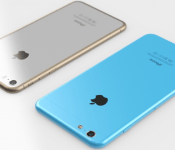
 It’s probably somewhat of an understatement to say that many of us in the Android community couldn’t care less about what happens to Apple‘s latest rumoured device, the Apple iPhone 6. Unfortunately, its existence might have an undesired side-effect on the rest of the smartphone market, and it seems to stem from the fact that Apple has allegedly placed an order of 70-80 million iPhone 6s to be made in anticipation of its launch. While that in itself isn’t the issue, it’s the effect that it’s going to have on the contracted manufacturers that is going to affect many corners of the Android world.
Media in China have allegedly said to expect a 5-10% price increase on flagship devices due to Apple’s large order. The increase in price is reportedly going to be caused by contracted manufacturers needing to make iPhone 6′s with the limited resources they have; consider Foxconn, which manufacturers parts for not only Apple, but Sony, Motorola, Nokia and many others. Is seems this would inevitably push supply of these other devices lower, resulting in a price increase. Clearly I’m no economist, but Apple’s huge order looks like it is definitely going to have some kind of effect on the smartphone market, but it’s unclear whether manufacturers are happy to bear the brunt themselves or pass the costs onto buyers.
What do you think about the possibility of a price hike due to the manufacture of the Apple iPhone 6? Let us know your thoughts in the comments.
Source: udn.com via Phone Arena
//<![CDATA[
ord = window.ord || Math.floor(Math.random()*1E16);
document.write('’);
//]]>
The post Why the Apple iPhone 6 may cause other phones to get slightly more Expensive appeared first on AndroidSPIN.

Apple Stores to Allow Customers to Purchase iPhone Through U.S. Carriers’ Early Upgrade Programs [iOS Blog]
Apple Retail Stores will soon allow customers to purchase an iPhone through U.S. carrier early upgrade programs including AT&T Next, Verizon Edge, and T-Mobile Jump, reports 9to5Mac. Apple is aiming to implement the new initiative right before the launch of the iPhone 6 this fall, as both Genius Bar workers and store employees will receive training on the program from Sunday, August 10 to Thursday, August 28.

Currently, Apple Store customers are only limited to purchasing an iPhone through a regular two-year contract at subsidized pricing or unlocked at full-price. All three early upgrade programs allow customers to upgrade their phones more frequently as the complete cost of a device is split into monthly payments which are rolled into the standard bill each month. Verizon and T-Mobile allow customers to upgrade their phones twice every year after six months of payments, while AT&T customers can upgrade once every 12 months after a year of payments.
The move also comes after Apple Stores began allowing customers to add pre-paid or month-to-month plans when purchasing full-priced, unlocked iPhones in June. Apple CEO Tim Cook noted last year that 80 percent of iPhones are sold at third-party locations while 20 percent are sold by Apple, adding that it was a figure he would like to improve. Apple has launched a number of other programs in its retail store to boost in-store sales, which included an event this past May encouraging iPhone 4 and 4s owners to update to a newer device.

