


Apple’s Secretive Internal Training Program Detailed in New Profile
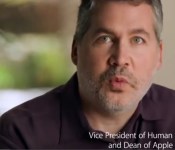
A new profile of Apple’s internal training program published by the New York Times has shed new light on how the company teaches its vision and practices to select new employees. Originally established by Steve Jobs and Apple’s Vice President of Human Resources Joel Podolny, the-so called “Apple University” is a year-round, in-house program that allows employees to enroll in a number of classes with instructors coming from universities like Yale, Harvard, Stanford, M.I.T., and more.

Apple’s internal training programs are taught at the company’s Cupertino, California campus, with rooms being described as being “well lit” and formed in a trapezoid shape with elevated seats so employees can clearly see their instructors.
Interested individuals sign up on an internal Apple website, as classes are taught to employees based on their positions at the company and work backgrounds. Some courses teach employees about vital business decisions in the history of Apple, with one employee citing a case study on how Steve Jobs chose to make the iPod and iTunes compatible with Windows after being opposed to the idea. Even classes for founders of recently acquired companies are available:
One class taught founders of recently acquired companies how to smoothly blend resources and talents into Apple. The company may also offer a course tailored specifically to employees of Beats, perhaps including its founders, Dr. Dre and Jimmy Iovine. Neither Apple nor Beats would comment.
Another course, titled “Communicating at Apple”, focuses on being able to convey products and ideas to others and is taught by the former Dean of Pixar University Randy Nelson among others. A detailed overview of the course given by an employee shares how Apple used the works of Picasso to explain its vision:
In a version of the class taught last year, Mr. Nelson showed a slide of “The Bull,” a series of 11 lithographs of a bull that Picasso created over about a month, starting in late 1945. In the early stages, the bull has a snout, shoulder shanks and hooves, but over the iterations, those details vanish. The last image is a curvy stick figure that is still unmistakably a bull.
“You go through more iterations until you can simply deliver your message in a very concise way, and that is true to the Apple brand and everything we do,” recalled one person who took the course.
Another class taught by Nelson, titled “What Makes Apple, Apple” gives lessons on how the company executes its design principles with precision and simplicity in time. To convey that idea to employees, Nelson showed a comparison of the Apple TV remote that has three buttons and the remote from a Google TV, which features 68 buttons. The instructor explained that Apple designers included just what was needed, while the Google TV remote resulted in a complicated device because its designers “got everything that they wanted.”
Finally, the article describes a course called “The Best Things”, which teaches employees to be proactive in a high-caliber work environment so they can perform their best work. An example relayed to employees by course teacher and Stanford professor Joshua Cohen pointed out New York City’s Central Park, which was transformed from a rocky swamp into an area that made residents feel comfortable with nature. The goal of the class was to teach employees how to make intricate computer technologies feel natural, which was a main philosophy of Jobs.
.CPlase_panel display:none;
Front Panel from 4.7-Inch iPhone 6 Once Again Said to be Depicted
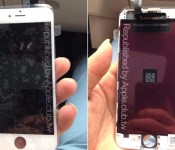
Taiwanese Apple news website AppleClub (Google Translate, via 9to5Mac) shares new photos of the supposed front panel from the 4.7-inch iPhone 6, including the device’s display and its insides.

The images are consistent with prior leaks of the iPhone 6′s front panel, showing a larger screen, a thinner bezel, rounded edges, and a cutout for the Touch ID home button. The panel depicted also features the front-facing camera and the ambient light sensor located on the left and at the top respectively, which is similar to the design of the iPhone 4.
It is not known whether the display shown is made of sapphire, which was once rumored to come with the 4.7-inch iPhone 6. However, recent rumors have suggested that the smaller iPhone 6 will not come with a sapphire display, as rigorous scratch tests may instead hint at a more durable glass screen. Sapphire panels may come to the larger 5.5-inch iPhone 6, which is reported to feature a number of other differentiating factors including a faster processor and a camera with optical image stabilization.

Apple’s next-generation iPhone will be revealed at an event on September 9, with sales likely commencing roughly a week and a half afterward. It is likely that the 4.7-inch iPhone 6 will launch first, as the 5.5-inch model is said to be experiencing production issues that may lead to a delayed release.
.CPlase_panel display:none;
Judge rejects Silicon Valley anti-poaching settlement on suspicions of conspiracy

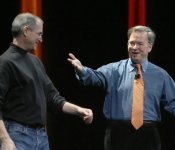
Remember the class-action lawsuit that Adobe, Apple and Google faced over no-hiring deals? Well, it turns out that the $324.5 million settlement the trio reached isn’t going to be honored by the judge. As The New York Times reports, judge Lucy H. Koh has rejected the low-ball figure because, among other reasons, it reeks of an “overarching conspiracy.” Koh notes that there’s ample evidence to support this and that late Apple CEO Steve Jobs may even have been the prime suspect in said conspiracy. According to the San Jose Mercury News, Koh says affected employees would receive a proportionally lesser amount than those who were involved with last year’s $20 million case against Lucasfilm, Intuit and Pixar. After the lawyers take their as-much-as $81 million cut, the left-over tally would apparently only leave a couple of thousand dollars per plaintiff according to NYT. Unless the Silicon Valley companies involved can come up with an amount that seems more reasonable to the judge (the initial employee-proposed amount was $3 billion), the trial will move forward come this September 10th.
Filed under: Internet, Apple, Google
Source: New York Times, San Jose Mercury News
.CPlase_panel display:none;
Apple to Introduce iWatch in September Suggests Apple Journalist John Gruber
Apple may be planning to introduce its iWatch in September, according to a comment from prominent Apple journalist John Gruber. In a post highlighting the charging functionality of the Moto 360, Gruber suggests Apple will be announcing its “wrist wearable thing next month.”
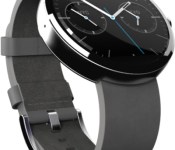
It looks like Motorola’s designers tried to draw as much attention as they could to the 360′s stupid flat-tire display shape.
The only way this could get funnier would be if it doesn’t even ship until after Apple announces their wrist wearable thing next month.
Gruber did not go on to refute his claim, and with his history of inside knowledge and sources within Apple, his comments suggest he believes the iWatch will debut in September. A September introduction would likely take place at Apple’s scheduled iPhone 6 event, set to be held on September 9.
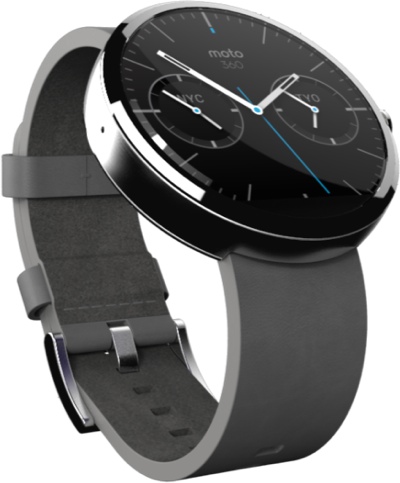 Motorola’s Moto 360 smart watch
Gruber’s September claim directly contradicts previous rumors from Re/code, a site that has a track record of accurate event date predictions. In June, Re/code‘s John Paczkowski reported that Apple was tentatively planning to reveal the iWatch at an event in October.
Few concrete details are known about Apple’s iWatch and as the device is not expected to enter production until the fall, no part leaks have surfaced. If Apple does introduce the iWatch in September, it is likely the device will not ship until late 2014 or in early 2015. Historically, Apple has revealed some product in new categories ahead of their ship date.
Apple previewed the new Mac Pro in June, for example, before beginning sales on the desktop computer in December. Steve Jobs also unveiled the original iPhone six months before launch, with the iPad shown at an Apple event more than two months ahead of its sale date.
Rumors have suggested the iWatch will contain a multitude of health and fitness sensors, measuring metrics like calorie consumption, sleep activity, blood oxygen levels, and more. It’s said to integrate deeply with iOS 8′s Health app and it may come in multiple sizes and multiple price points.
.CPlase_panel display:none;
FCC Questioning All Carriers On Unlimited Throttling Policies
 According to FCC Chairman Tom Wheeler, the United States Federal Communications Commission is now questioning all wireless carriers on their network management policies, asking how carriers choose when to throttle customers, including those with unlimited data plans.
In a report from Reuters, Wheeler said that the FCC had written to all major U.S. carriers about its concerns on throttling practices following its inquisition into Verizon’s upcoming plan to throttle unlimited data customers during peak usage times.
“My concern in this instance – and it’s not just with Verizon, by the way, we’ve written to all the carriers – is that it is moving from a technology and engineering issue to the business issues … such as choosing between different subscribers based on your economic relationship with them.”
Last week, after Verizon announced plans to slow down the data speeds of unlimited customers using heavy amounts of data, the FCC questioned the carrier about its policies, with Wheeler stating that he was “deeply troubled” by the decision.
Verizon responded, suggesting its throttling plans were both fair and legal, and likely to impact only a small subset of customers. Verizon also noted that several other carriers, like Sprint, AT&T, and T-Mobile all have unlimited data restrictions in place. According to Wheeler, pointing towards the policies of other carriers was not a sufficient response. “‘All the kids do it’ was never something that worked for me when I was growing up,” he said.
AT&T, Sprint, and T-Mobile have long had policies in place that allow the carriers to opt to restrict the data usage of customers with grandfathered unlimited plans in an effort to encourage users to switch to pay-by-usage tiered data plans.
While the FCC did not share the letters sent to AT&T, T-Mobile, and Sprint, an FCC spokesperson said the letters were similar in nature to the original letter sent to Verizon. That letter asked the carrier to answer specific questions on its rationale for treating customers differently on plan type, the need for such throttling on efficient LTE networks, and the legality of throttling.
Verizon was the first to receive the letter because of the announcement of a new policy, according to the FCC spokesperson. Verizon will begin throttling its high-usage off-contract LTE customers accessing congested network cells beginning on October 1.
.CPlase_panel display:none;

Judge Rejects $324M Settlement Proposal in Apple, Google Class-Action Anti-Poaching Lawsuit
Judge Lucy Koh today rejected the settlement deal that Apple, Google, Intel, and Adobe had reached with tech workers over a lawsuit involving anti-poaching agreements, reports CNBC.
According to court documents, Koh believes the total settlement “falls below the range of reasonableness,” compared to the $20 million settlement that Pixar, Lucasfilm, and Intuit reached with tech employees in 2013. Proportionally, based on that settlement, Apple and the other tech companies should have to pay out at least $380 million.

The Court finds the total settlement amount falls below the range of reasonableness. The Court is concerned that Class members recover less on a proportional basis from the instant settlement with the Remaining Defendants than from the Settled Defendants a year ago, despite the fact that the case has progressed consistently in the Class’s favor since then. Counsel’s sole explanation for this reduced figure is that there are weaknesses in Plaintiff’s case such that the Class faces a substantial risk of non-recovery. However, that risk existed and was even greater when Plaintiffs settled with the Settled Defendants a year ago, when class certification had been denied. […]
Using the Settled Defendants’ settlements as a yardstick, the appropriate benchmark settlement for the Remaining Defendants would be at least $380 million, more than $50 million greater than what the instant settlement provides.
Tech workers initially levied the class action anti-poaching lawsuit against the companies in 2011, accusing them of creating no-hire agreements and conspiring not to poach employees from one another in an effort to keep salaries lower.
No-solicitation agreements revealed during the lawsuit dated back to 2005, involving Apple, Google, Intel, Adobe, Intuit, Lucasfilm, and Pixar, among others. The agreements prevented company recruiters from contacting employees placed on specific no-contact lists.
The United States Department of Justice stepped in back in 2010, ordering the companies to stop entering anti-poaching agreements, but the class-action civil lawsuit brought against the companies by 64,000 employees will remain open until a suitable settlement can be reached. The suit originally asked for $3 billion in damages, a significantly higher number than the 324 million agreed upon in April.
.CPlase_panel display:none;
Buyer’s Guide: Discounts on 2013/2014 Retina MacBook Pros, Apps, and Apple Accessories [Mac Blog]
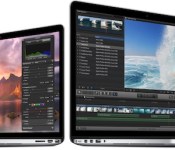
This week’s Buyer’s Guide includes some deals on the brand new 2014 Retina MacBook Pros, as vendors attempt to draw in customers with lower prices. Many retailers also continue to offer discounts on the previous-generation 2013 Retina MacBook Pros to clear out stock, and we’ve also got some deals on the 11-inch 2014 MacBook Air, several apps, and an array of Apple accessories.
There are no significant deals on iMacs or iPads this week, but prices tend to fluctuate on a week-to-week basis so make sure to check back next week for any new discounts.
Retina MacBook Pro

Several different retailers are already offering up to $119 off the 2014 Retina MacBook Pros, which were first introduced in late July. The 2.6GHz/8GB/128GB 13-inch Retina MacBook Pro is available from Amazon, Best Buy, B&H Photo and MacMall for $1,234.99, a discount of $64. The 2.6GHz/8GB/256GB 13-inch model is available from Amazon, Best Buy, B&H Photo and MacMall for $1,424.99, while the 2.8GHz/8GB/512GB 13-inch version is available for $1,709.99 from Amazon, Best Buy, B&H Photo and MacMall.
As for the 15-inch Retina MacBook Pro, the lower end 2.2GHz/16GB/256GB model is available for $1,899.99 from Amazon, Best Buy, B&H Photo and MacMall, while the 2.5GHz/16GB/512GB model is available for $2,374.99 from Amazon, Best Buy, B&H Photo and MacMall, a discount of $119.
Steep discounts on the older 2013 Retina MacBook Pros are also available for users looking for a high quality machine at an even lower price. The 2013 13-inch 2.4GHz/4GB/128GB Retina MacBook Pro is available for $1,099 from Amazon, Best Buy, B&H Photo and MacMall. The 13-inch 2.4GHz/8GB/256GB model is available for $1,299.99 from Best Buy, B&H Photo, and MacMall. The 13-inch 2.6GHz/8GB/512GB model is available for $1,599 from Best Buy, B&H Photo, and MacMall.
The 2013 2.0GHz/8GB/256GB 15-inch Retina MacBook Pro can be purchased for $1,599 from B&H Photo, the lowest price we’ve seen on that model yet. Finally, the high end 2013 15-inch 2.3Ghz/16GB/512GB Retina MacBook Pro is available for $2,249 from Amazon, Adorama, B&H Photo and MacMall.
MacBook Air

The only solid 2014 MacBook Air discount this week comes from Adorama and B&H Photo, with both sites offering the entry-level 2014 11-inch 1.4GHz/4GB/128GB MacBook Air for $799, a discount of $100.
The older 2013 MacBook Airs are still available at low prices from some vendors. The higher-end 11-inch 1.3GHz/4GB/256GB MacBook Air is available for $939 from B&H Photo, while the lower-end 11-inch 1.3Ghz/4GB/128GB MacBook air is available for $779 from B&H Photo. The 1.3GHz/4GB/256GB 13-inch MacBook Air can also be purchased for $949 from B&H Photo.
B&H and Adorama, as always, are a good choice for buyers who live outside of New York and New Jersey, as the sites only charge sales tax in those states.
Apps

Apple’s currently running a promotion on 20 different productivity apps in the iOS App Store, dropping the prices by as much as 50 percent on popular apps like Clear, Fantastical 2 for iPhone and iPad, Notability, Launch Center Pro, and Scanner Pro. Check out our post on the promotion for a full list of discounted apps, complete with App Store links.
Apple Accessories
Target is offering discounted prices on iTunes gift cards sent via email, with a $50 card available for $42.50 and a $100 card available for $90. Groupon is offering a sizable discount on Microsoft Office Home and Student 2011 for Mac, offering it for $99, $40 off the standard price.
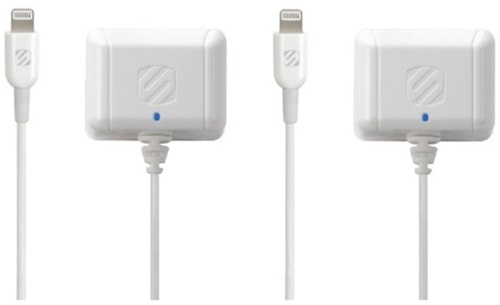
A two-pack of Scosche StrikeBASE Wall Chargers for Lightning Devices can be purchased through Woot for $19.99, and the site is also selling a two-pack of the Belkin USB Wall Charger with Rotating Prongs for $14.99.
The Jawbone Jambox Bluetooth speaker is available at the discounted price of $89 from Living Social, $60 off the original price. Groupon is offering the Incase Hard-Shell case for the 11 and 13-inch MacBook Air for just $12.99, a discount of $37.

Apple-branded Earpods are available for $15 from DailySteals, while the 5W USB Power Adapter plus Lightning cable can be purchased from DailySteals for $18.
Before making a purchase of a Mac or iOS device, make sure to consult our Buyer’s Guide to find out if it’s a good time to buy. For example, because the Retina MacBook Pro was updated in July, the Buyer’s Guide indicates that now is a good time to purchase.
MacRumors is an affiliate partner with some of these vendors.
.CPlase_panel display:none;
App Store Listings Gain Family Sharing Info Ahead of iOS 8 Launch
Apps in the iOS and Mac App Stores have begun displaying details on Family Sharing, letting users know whether or not the feature is enabled for specific apps ahead of the launch of iOS 8 and Yosemite.
A new Family Sharing listing has appeared in the Information section for each app, as noted by German site iFun.de [Google Translate]. For developers that have turned on Family Sharing, the section displays a “Yes” under the Family Sharing heading, while apps from developers that have opted not to allow Family Sharing or have yet to turn the setting on display “Not Available.”
Certain apps, like Sketchbook Mobile display a “Yes” for purchases after a set date, indicating that developers have the option to only allow Family Sharing for new purchases.

First announced during June’s Worldwide Developers Conference, Family Sharing for iOS 8 and Yosemite lets families of up to six people share content like apps, iBooks, music, movies, and more, across all of their iOS devices, provided their iTunes accounts use the same credit card. Family Sharing also lets families share photos, videos, a calendar, reminders, and more, to keep everyone in the family connected.
Though Family Sharing is not yet fully functional, Apple has made steps towards implementing the service throughout the iOS 8 and Yosemite beta testing period. Shortly after WWDC, Apple began asking developers to enable the feature in their apps. Family Sharing works on a per-app opt-in basis, with Apple letting developers decide whether the feature is available for sharing.
Early iOS 8 betas saw the addition of Family Sharing in the iCloud section of the settings app, and iOS 8 beta 2 and an Apple TV beta laid significant groundwork for Family Sharing, adding a new section for “Family Purchases” to the iOS App Store’s purchased tab and a new iCloud Family setting for the Apple TV.
Family Sharing is expected to be implemented and fully functional ahead of the public release of iOS 8, which will be available in September after the upcoming iPhone event.
.CPlase_panel display:none;

Apple Again Expanding Reno Data Center as Plans for Downtown Facility Stall
Apple is once again expanding its Reno, Nevada data center, adding several new data cluster buildings, reports Reno Gazette Journal. The upcoming expansion was documented in building permits filed recently with Washoe County.
 Apple’s Reno data center (Source: Wired)
This new round of expansion is expected to kick off the third phase of development for the center that was approved in 2012 and went live in 2013. Apple currently is in the second phase of construction, which is expected to be completed by the end of this summer.
“They just keep plugging along,” said Trevor Lloyd, senior planner for Washoe County. “Apple keeps submitting plans … and it looks like they’ll be expanding for a long time.”
Apple’s latest plans will boost the number of buildings on the site to nine, including eight data cluster buildings and an administration building, with plenty of room for further expansion on the 2,220-acre property.
As previously outlined by Wired, Apple’s initial plans call for a cluster of eight small interconnected data buildings, which the recent building permits cover the completion of. A second facility of equal size is planned for future expansion.
Apple also is building a solar panel farm that will generate up to 18–20 megawatts of power for data center operations and will supplement the plant’s current geothermal power.
While Apple improves its Reno data center operations, its proposal for a downtown facility has stalled, with Apple yet to submit building plans for a location in the Tessera District of Reno.
“I haven’t heard anything and, as far as I know, no one in the city has heard anything,” said Bill Thomas, assistant city manager for Reno. “I’m not saying we won’t hear from them but it’s been silence on their end (as of now).”
This downtown facility, which has been described as a “business and purchasing center”, is part of Apple’s original proposal and is required if the company is to receive up to $89 million in tax breaks on data center equipment over the next decade.
.CPlase_panel display:none;

Apple Makes $1.6 Million Donation to Support Chinese Earthquake Relief Efforts
 Following a major earthquake in China’s Yunnan Province earlier this week that killed over 600 people and caused widespread damage, Apple has made a donation of 10 million yuan ($1.6 million) in support of relief efforts in the region, reports CRIENGLISH.com. Apple has also updated its Chinese home page to acknowledge the disaster.
Apple CEO Tim Cook has also sent an email to company employees, shared by 9to5Mac, in which he expresses “deepest sympathies” to those affected and mentions Apple presence in the region and commitment to help.
Team,
Our deepest sympathies go out to the people of China’s Yunnan Province, which was struck by a devastating 6.5-magnitude earthquake over the weekend. Nearly 600 people died and over 2400 were injured in the worst earthquake to hit the region in 100 years. Rescuers have evacuated 230,000 people who are now displaced from their homes. The road to Longtoushan Township, the epicenter of the quake, has been blocked by landslides, making the rescue effort there even more challenging. Apple is eager to help. We are making a financial donation in support of the work of Mercy Corps and CFPA (China Foundation for Poverty Alleviation) to get supplies and relief to those affected by the earthquake and to help them through the process of healing and recovery. The tragedy in Yunnan Province is on the minds of many in the Apple community. Apple has over 6500 employees in China and Hong Kong as well as a growing developer community and deep ties to the workers in our supply chain who make Apple products. In this time of tragedy, our thoughts are with the victims and their families.
Tim
Apple made a similar but larger donation in support of relief efforts following another earthquake in China last year, and the company has committed to charity support on a number of other occasions, including facilitating donations from iTunes Store users following such disasters as Superstorm Sandy in 2012 and Super Typhoon Haiyan last year.
.CPlase_panel display:none;

