



Sapphire’s Durability Put to the Test Head-to-Head Against Gorilla Glass
Repair experts at uBreakiFix have examined the impact resistance, scratch resistance and strength of sapphire glass in a series of tests that were published today. The tests were designed to determine whether sapphire is suitable for use as a smartphone display.

The repair technicians conducted three different tests — a scratch resistance comparison using a tungsten carbide drill bit, a drop test with the sapphire display of the newly released Kyocera Brigadier, and a a four-point bend test to compare the failure stress and strain of sapphire glass with that of Gorilla Glass.
The results of uBreakiFix’s tests show that sapphire is significantly more scratch resistant and 25 percent stronger than Gorilla Glass, but it is much more susceptible to impacts due to its brittleness. The glass is so brittle that it shattered the first time it was dropped face down from a height of only three feet.
The technicians conclude that sapphire does not necessarily offer any advantage over Gorilla Glass, as the material’s superior scratch resistance and strength is offset by its low impact resistance. Phone manufacturers that include a sapphire display may choose to employ other protective measures such as a raised bezel to help protect the phone during impact with other surfaces.
Apple is partnering with GT Advanced Technologies to produce sapphire for use in future products. The exact details on how Apple will use the material is not known, but the company is rumored to be using sapphire as a display cover in future iPhone models and possibly its iWatch wearable product.
.CPlase_panel display:none;

Get strangers to deliver the bad news with ‘Somebody’ messaging app

If you’ve ever sat back, stared into the sky and wonder would happen if WhatsApp was taken over by a singing telegram service, then boy, today is your lucky day. Film director and artist Miranda July has teamed up with Prada sub-brand Miu Miu (nope, us neither) to design a social messaging app / publicity stunt with a twist. Instead of simply letting two people swap messages, Somebody (for iOS) finds a person in the nearby vicinity to your contact, asking them to walk over and deliver the message, in person, on your behalf. You can even add stage directions like crying or whispering, and the recipient can rate their delivery with a star rating in the same vein as Uber.
If we’re honest, there are a whole host of reasonable, legitimate objections to this. After all, giving away someone’s personal location to complete strangers is a bit weird, as is the idea that people would willingly volunteer to break up with someone on your behalf. The app does exist and is available to download, although it seems that other would-be somebodies haven’t been able to get SMS-verified yet. I’ve signed up to convey two messages in my nearby area, but so far no-one’s sent over an address to deliver the missive personally. Maybe people aren’t impressed by my lack of obvious whimsy and a Miu Miu outfit, but if I do get sent on a mission, I will let all of you know how it goes.
Filed under: Cellphones, Internet, Apple
Via: Huffington Post
Source: Somebody (App Store), Somebody
.CPlase_panel display:none;
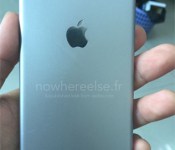
More High-Quality Photos Show 4.7-Inch iPhone 6 Rear Shell with Colored Bands
New high-quality photos of the 4.7-inch iPhone 6′s rear shell have been shared by Nowhereelse.fr (Google Translate), showing us what may be a finished back from the space grey version of the device. Notably, this newest component appears to have its rear bands colored in to fit with the rest of the device, perhaps suggesting that the different color options of the iPhone 6 will feature a similar treatment.

Besides its colored bands, the rear shell shown in the photos appears to be consistent with previous looks at the component, displaying a rounded chassis, embedded rear logo, and more. The shell also appears to adopt redesigned speaker holes and a rounded True Tone LED flash, which join the typical Lightning port, headphone jack, and rear camera.

Apple is expected to announce the iPhone 6 at an event on September 9, where it will also likely unveil its wearable device for the first time. The 4.7-inch iPhone 6 will likely launch a week or so after the event, while the bigger 5.5-inch version of the device may be held back due to production issues. In addition to a larger screen, the iPhone 6 is expected to feature a faster A8 processor, a revamped camera system, iOS 8, and near field communication (NFC) technology for mobile payments.
.CPlase_panel display:none;

Samsung Asks NYC Street-Goers to Compare Galaxy Tab S and iPad Air in New Ad
Samsung has debuted a new video on its YouTube channel comparing its new Galaxy Tab S to the iPad Air on the streets of New York City. As first spotted by iGeneration (Google Translate), the video involves a host asking street-goers to use the Galaxy Tab S, highlighting the tablet’s display, weight, and camera.
When matched up side-by-side, some users claim that the Galaxy Tab S is “definitely thinner”, while others express that the tablet’s screen “looks brighter” when compared to the iPad Air. The host claims that the Galaxy Tab S has “one million more pixels than the iPad Air”, which is presented alongside small text on the bottom noting the 4,096,000 pixels of the Galaxy Tab S compared to the iPad’s 3,145,728 pixels. The video ends with a group of users choosing the Galaxy Tab S over the iPad Air, as Samsung ends the video with the tagline of “Thinner. Brighter. Lighter.” before showing the tablet from its front.
Samsung launched its first round of Galaxy Tab S ads last month, which mocked the iPad’s screen and lack of multitasking. The Galaxy Tab S was originally announced this past June, with Samsung touting the tablet’s high resolution (2560 x 1600) Super AMOLED display, fingerprint sensor, 11-hour battery life, and multitasking capabilities.
.CPlase_panel display:none;

Another Report Suggests NFC Support for iPhone 6, Chip to Be Provided by NXP
 Apple will feature near field communication (NFC) technology in the iPhone 6 with a chip provided by Dutch company NXP Semiconductors, according to a report from the Financial Times. The chip will allow the iPhone to be scanned by payment terminals and ticket systems, while also allowing for further integration with other methods.
Throughout the past week, a number of rumors and reports from various sources have claimed that the iPhone 6 will gain NFC support. Evidence of NFC capabilities provided by NXP first surfaced earlier this week in a claimed schematic, which showed the company’s PN65 chip on the iPhone 6′s logic board.
Yesterday, technology news website WIRED and Apple blogger John Gruber also suggested that the iPhone 6 would feature NFC, with the latter stating that Apple’s NFC-based mobile payment system would use a new secure enclave coprocessor built into the company’s new A8 chip, which was also suggested by previous reports.
Last month, it was reported that Apple was in talks with major credit card companies like Visa over a mobile payment solution that would utilize the credit card data already stored in millions of iTunes accounts. Apple also was said to be interviewing senior payments industry executives to take on roles within the company, possibly indicating that the company has been hard at work on creating its own mobile payments service.
Apple is expected to debut the iPhone 6 and a wearable device at an event on September 9.
.CPlase_panel display:none;

Apple Blogger John Gruber Hints at NFC For iPhone 6
 Following a report from Wired suggesting NFC-based mobile payments will be a “hallmark” feature of the iPhone 6 and a confirmation from Re/code, Apple blogger John Gruber has now thrown in his two cents, with a cryptic post hinting Apple is indeed planning on including NFC in the iPhone 6 as part of a new mobile payment solution.
Gruber’s post references an earlier “joke” that pointed towards a wearable device debut in September, which turned out to be accurate in light of recent rumors also suggesting a September introduction for the device.
I’ve been working on a new joke — about NFC and a new secure enclave where you can store your credit cards, so you can pay for things at brick and mortar retail stores just by taking out your iPhone, but only if it’s one of the new iPhones — but no one seems to get my sense of humor.
Gruber suggests Apple’s NFC-based mobile payment solution will take advantage of a new secure enclave coprocessor built into the company’s new A8 chip, which is in line with previous reports. The secure enclave would likely store credit card details, allowing users to pay for physical goods with their iPhones and it would presumably work in conjunction with Touch ID.
Though rumors of NFC support in the iPhone have occurred for every new iPhone release over the past several years, NFC rumors have been especially prevalent ahead of the iPhone 6 launch. Back in April, KGI Securities analyst Ming-Chi Kuo suggested the iPhone 6 would include an NFC chip, as did a follow up report from BrightWire.
At the same time, multiple reports have suggested Apple is gearing up to launch a mobile payment solution designed to leverage credit card data stored in millions of iTunes accounts. Apple is said to be partnering up with major credit card companies like Visa, and the company has also been interviewing senior payments industry executives to take on new roles within the company.
While Apple has previously viewed NFC as “not the solution to any current problem,” it may be changing its opinion on the subject in light of its new mobile payment initiative. The company is expected to debut the iPhone 6, and possibly its new payment solution, at an upcoming event on September 9.
.CPlase_panel display:none;
Google Launches First Beta Build of 64-Bit Chrome for Mac [Mac Blog]
 Google today announced the launch of the first beta build of 64-bit Chrome for Mac, following the public release of 64-bit Chrome for Windows.
Earlier this month, Google added 64-bit support to Chrome Canary for OS X, the experimental build of its Chrome web browser, but with this new beta version, testers on the Beta channel will have access to 64-bit Chrome support.
According to Google, 64-bit support for Chrome will bring several speed and security improvements to the browser, in addition to decreasing the amount of memory it uses.
64-bit Chrome has become faster as a result of having access to a superior instruction set, more registers, and a more efficient function calling convention. Improved opportunities for ASLR enhance this version’s security. Another major benefit of this change comes from the fact that most programs on a modern Mac are already 64-bit apps. In cases where Chrome was the last remaining 32-bit app, there were launch-time and memory-footprint penalties as 32-bit copies of all of the system libraries needed to be loaded to support Chrome. Now that Chrome’s a 64-bit app too, we expect you’ll find that it launches more quickly and that overall system memory use decreases.
64-bit support for the Windows Chrome beta was implemented in July with a stable release coming a a month afterwards, so a stable Mac release could possibly follow a similar timeline, coming in September.
.CPlase_panel display:none;
More Claims of September 9 Debut for Apple’s Wearable Device, Likely Positioned as iPhone Accessory
 Yesterday, Re/code broke the news that Apple planned to introduce its upcoming wearable device alongside the iPhone 6, and now Bloomberg is seconding that rumor, pointing towards a simultaneous debut of two different iPhones and a wearable device at Apple’s September 9 event.
According to Re/code, Apple had originally planned to introduce its wearable device at an October event separate from its September iPhone event, but later ended up changing its plans. Bloomberg speculates that Apple’s plan to debut the wearable device alongside the iPhone may be the company’s way of limiting expectations for the device, positioning it more as an iPhone accessory rather than a standalone device.
Apple will give the new wearable a boost by pairing its debut with its flagship product, the iPhone. The company also may be trying to manage expectations for the new device, signaling that it’s more of an accessory instead of a category that stands by itself. By contrast, when the iPad was introduced in 2010, Apple held a special event just for that product.
Apple does appear to be planning a major affair for the debut of the wearable device and the two iPhones, however, holding the event at the Flint Center at De Anza College where it introduced the original Macintosh thirty years ago and the first iMac in 1998. The company is building a massive structure on the site, the purpose of which remains unclear.
Both Apple CEO Tim Cook and iTunes chief Eddy Cue have also heavily hyped Apple’s upcoming product lineup, with Cue saying it’s the “best product pipeline” in 25 years and Cook promising “really great stuff” in new product categories.
It is likely Apple is planning to unveil its wearable device, which has commonly been called the iWatch in rumors, several months before it becomes available to consumers. A distinct lack of product leaks and tangible rumors have suggested the device is not yet in production, and an introduction before a deluge of part leaks allows Apple to debut the device while it’s still largely a surprise.
Though we’ve not seen images of Apple’s wearable device, rumors have suggested it will have a heavy focus on health and fitness with an array of health-related sensors that measure metrics like steps taken, sleep quality, heart rate, and more. It’s said to come in multiple sizes and at multiple price points, and it is also said to be heavily integrated with the iPhone and iOS 8 features like the Health app.
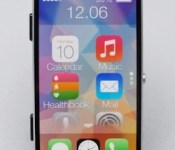
(Image: 2.5-inch iWatch concept by SET Solutions)
.CPlase_panel display:none;
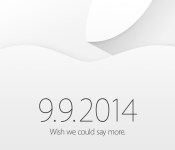
Apple Issues Media Invitations for September 9 Event: ‘Wish We Could Say More’
As noted by The Loop, Apple today issued media invitations to the previously rumored September 9 event where the company is expected to show off not only the iPhone 6 but also its first wearable device, popularly referred to as the iWatch. The invitations carry the tagline “Wish we could say more.”

The event will take place at 10:00 AM Pacific Time at the Flint Center for the Performing Arts on the campus of De Anza College in Cupertino.
.CPlase_panel display:none;

Apple Building Massive Structure at Flint Center for iPhone 6 Event
Apple today issued invitations for its upcoming iPhone 6 event on September 9, which is also said to include its much-anticipated wearable device. According to the invitations, Apple is planning to host the event at the Flint Center for the Performing Arts at De Anza College in Cupertino, the same location where Steve Jobs introduced the original Mac 30 years ago.
For the occasion, it appears that Apple has been building a massive structure on the campus, which has been kept under tight wraps with a white barricade. A MacRumors reader has sent in images of a mysterious structure at the Flint Center, which appears to span three stories and is protected by “scads” of security people. Administrators had previously declined to comment on what the structure is for, stating only “We are not at liberty to discuss that due to client wishes.”
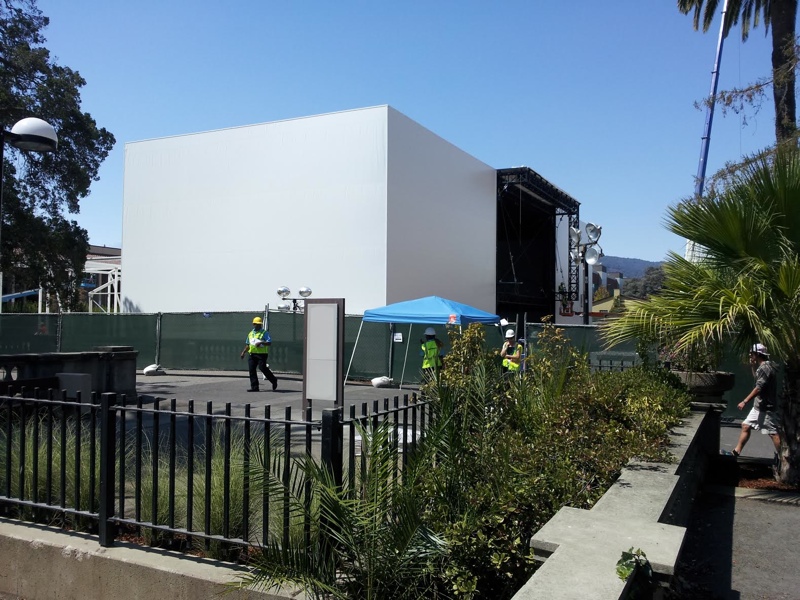 Image of mysterious structure taken on August 20
Apple has not held an event at the Flint Center in many years, so the company’s return to the site of the original Mac unveiling suggests its upcoming announcement will be a major one. The Flint Center has a much higher seating capacity than other venues where Apple has unveiled products in the past, including the Yerba Buena Center and its own Cupertino campus.
Earlier this year, Apple iTunes chief Eddy Cue said that Apple’s got the “best product pipeline” he’d seen in his 25 years at the company in the works, and Tim Cook promised “really great stuff” in new product categories.
Despite the cryptic “Wish we could say more” message on the media invitations, rumors have suggested Apple is planning to unveil both the iPhone 6 and a new wearable device at the September 9 event.
It is unknown whether Apple has plans to broadcast the event on the web and Apple TV as it has done for recent events, but MacRumors will provide live coverage both on MacRumors.com and through the MacRumorsLive Twitter account.
.CPlase_panel display:none;

