


Here’s what to expect from Apple’s October 16 event

Now that the dust from the launch of Apple’s new iPhones has started to settle, it’s time to wade into the fray one more time. It’s been just about a year since the folks from Cupertino trotted out the iPad Air, and now it’s going to show off its next-generation model — along with a handful of other updated goodies — at a big media event at its corporate headquarters on October 16. Before we descend into the depths of Apple’s auditorium and liveblog our fingers off, though, let’s just take a moment to suss out what Tim Cook and pals have in store for us.
A trimmer iPad Air

Apple’s got a whole new (fine, maybe not whole new) aesthetic going on with its newest pair of iPhones, and it looks like that design DNA has been infused into the next-generation iPad Air too. The prolific gadget leakers at Tinhte.vn got their hands on what appears to be the new iPad’s chassis and man is it ever thin — they claim it comes in at 7mm thick, which puts its waistline right between that of the iPhone 6 and 6 Plus. It’s pretty hard to miss the telltale stainless steel ring around the home button too, so you won’t have to wait too long before you can unlock your iPad and authorize iTunes purchases via Touch ID. Chances are also good that we’ll finally get a gold version of the Air to please all you chromatically picky types. Alas, some of the most important tidbits are the most difficult to suss out: The iPhone 6 Plus has earned itself some fans with its Retina HD display, but we can’t tell if Apple’s looking to bump up the resolution here too. Alas, it seems unlikely that the engineers in Apple HQ would be able to cram an even higher-resolution display into a frame that thin (to say nothing of the battery that’d power such a beast).

We’ve gotten a better look at what’s actually inside the new Air in recent days too: Photos of the iPad’s logic board obtained by Apple.club.tw suggest it’ll pack a more powerful X variant of the A8 processor nestled inside the new iPhones, not to mention 2GB of RAM just as icing on the proverbial tablet cake. And what of the iPad mini? It’s very possible that Apple’s updating its tiny tab too, but the rumor mill’s been awfully quiet on the matter. Japanese fan site Mac Otakara claims that such an unveiling is in fact in the cards, while a few other reports suggest we’re looking at a very modest upgrade — we’re not sure what we’d see beyond the inclusion of a Touch ID sensor for parity and a rounder design to bring its looks in line with the rest of Apple’s iOS gadgets.
But wait, Apple just cranked up the size of its iPhones — what about a bigger iPad? You really shouldn’t hold your breath. Apple’s said to be working on a 12.9-inch version of its tremendously popular tablet (some have started calling it the “iPad Pro”), but no one thinks it’ll land any sooner than next year.
A slew of updated Macs

We’ve already seen the Retina MacBook Pro and the MacBook Air get modest upgrades this year, so don’t expect much in the way of flashy new notebooks. There were some sporadic whispers of a new Retina-screened MacBook Air in the works, and while they probably have some weight to them, a new report from Re/code suggests they’re not going to pop up on Thursday. No, most of the Mac-centric scuttlebutt we’ve seen over the past few weeks deals with the desktop, and it seems like the long-running iMac line will get most of the attention. The most prominent rumor we’ve heard alleges that the 27-inch iMac will finally get a Retina display running at 5,120 x 2,880 for your viewing pleasure — it’d be the first time Apple’s brought such high-definition love to your desk, and with any luck it means a standalone Retina Thunderbolt display isn’t too far off either.
We’ll probably see a refreshed version of the 21.5-inch iMac too, but the particulars aren’t as thrilling: MacRumors doesn’t expect any change in screen resolution, though a shift to AMD graphics in the higher-end version might get your motor running. And what of Apple’s tiniest desktop? The Mac mini hasn’t been touched since 2012, which is ages ago in computer years — if it does show up on Thursday, expect it to come packing a speedier Haswell chip so it can keep up with more modern MacBooks.
More than just hardware

There’s no way Apple’s going to talk new Macs without invoking Yosemite, the new version of OS X that developers and guinea pigs have been playing with since late July. Apple has spent all the time keeping mum about when it’ll actually launch, but there’s a good chance we’ll be able to get our hands on it after the event on Thursday comes to a close. After all, we’re already three Golden Master builds in, and the folks in Cupertino only issued two before it officially released OS X Mavericks last year. The thing is, some of Yosemite’s neatest features (like Continuity with your phone) require iOS 8.1 to work properly too — if a few reports are to be believed, it’s set to land on iPhones starting on October 18. Apple Pay is inching closer to its public launch too, so it wouldn’t be crazy to think we’d get one last onstage run-through before the big day hits. 9to5Mac points out that a slew of companies (including McDonald’s, seriously) are training their employees on how to handle Apple payments, and a supposedly leaked memo to Walgreens employees mentions that the service will officially go live on the 18th alongside iOS 8.1.

Teenagers use voice commands most often and really want to order pizza

Teenagers use voice commands a lot and they really want to order pizza. That is just some of what Google found from its Mobile Voice Study. Google looked at 1,400 smartphone users and how they use voice commands from Google Search, Apple’s Siri, and Microsoft’s Cortana. Teenagers (ages 13-18) use voice commands every day while adults are more inclined to “feel tech savvy” because of it.
Here are some notes from the Mobile Voice Study:
- 55% of teenagers in the United States use voice commands every day
- 45% of adults feel geeky when using voice commands
- 89% of teenagers and 85% of adults believe that voice commands will be “very common” in the future
- 22% of teenagers use voice commands in the bathroom
- 45% of teenagers selected “send me pizza” when told to “pick one thing you wish you could ask your phone to do for you”
- Northeasterners are the most active group to use voice commands — 50% use it at least once per day
Teens Use Voice Search Most, Even in Bathroom, Google’s Mobile Voice Study Finds
Study of 1400 smartphone users reveals American teens embracing hands-free search — 45% wish they could use voice search to have pizza delivered
MOUNTAIN VIEW, Calif., Oct. 14, 2014 /PRNewswire/ — Google Inc. (NASDAQ: GOOG, GOOGL) today released the results of the Mobile Voice Study, a look at voice search habits among American smartphone users across different age ranges. Among teens 13-18, 55% use voice search every day, 56% of adults said it makes them “feel tech savvy,” and both age groups are talking to their phones while watching TV (38%) — and wish voice search could help them find the remote control (41%).
“Voice search is a key feature of the Google app that’s becoming ever more important as people spend more time on their mobile phones,” said Scott Huffman, Google’s Vice President for Conversational Search. “We wanted to learn more about how people of all ages use Google hands-free on their phones. We found that for teens, voice search comes as naturally as checking social media and they’re getting very creative about how (and where) they use it. The study gives us great ideas about new ways we could help people — maybe even help them find their keys and other elusive objects.”
The Mobile Voice Study asked participants to articulate their opinions about voice search (the most popular examples of which are Google, Siri and Cortana), and to explain how, where and why they use the mobile feature. Respondents prioritize voice search for activities that require safety and efficiency. For example:
- 40% use voice search to ask for directions.
- 39% use the feature to dictate a text message.
- 32% do so to make a phone call.
- 23% of adult Americans use voice search “when I’m cooking.”
- 51% of teens (and 32% of adults) use voice search “just for fun.”
- 27% use voice search to check the weather.
Teens Most Active Users of Hands-Free Search (Even in the Bathroom)
The majority of U.S. teens (55%) use hands-free search every day, and that figure rises to 75% among teens who are wedded to their smartphones (using it 11+ hours per day). While hands-free search is growing more common across all age groups, some self-consciousness remains: 45% of adult Americans admit to “feeling like a geek” when they talk to their smartphone. Despite this, all age groups agree that voice search will be “very common” in the future (89% of teens and 85% of adults agree).
76% of all Americans think voice search is great for multitasking. 59% of teens and 36% of adults use the their phone’s voice search while watching TV and 22% of teens claim to use it “when I’m in the bathroom”. Overall, two-thirds (64%) think voice search is cool and nearly as many (58%) say they feel tech savvy.
U.S. Teens: I Want My Phone to Send Me Pizza
When asked to “pick one thing you wish you could ask your phone to do for you,” 45% of American teens selected “send me a pizza.” More pragmatic adults wished they could ask their phone to “tell me where my keys are,” though “send me a pizza” was also popular among 36% of adults. A nearly equal number of teens and adults (34% and 33%, respectively) want their smartphones to one day tell them where to find their TV’s remote control. With Oct. 31 just a few weeks away, 16% of teens wish their phone could tell them what costume to wear on Halloween.
New Yorkers embrace voice search most; multi-taskers talk to phones while cooking
Google’s Mobile Voice Study also found that:
- Among Americans of all ages, Northeasterners are the nation’s most active voice searchers, with 50% using it at least once per day.
- New Yorkers are the likeliest Americans to use voice search to ask about the weather (43% do so).
- Northeasterners (28%) and Westerners (26%) are the likeliest to use voice search while cooking.
- New Yorkers (35%) also lead the nation in this regard.
The study was commissioned by Google and executed by Northstar Research, a global consulting firm. It examined the smartphone voice search habits of 1,400 Americans, 13 years of age and older (400 ages 13-17 and 1,000 adults ages 18+).
About the Google App
The Google app is available on iOS and Android devices and is the best way to access Google for helpful assistance throughout your day. With it, you can talk to Google to find local information, take actions (like send text messages or set reminders), fetch your stuff (like flight or package details) and get the right information when you need it.
Some of the Google app’s newest features include:
- Restaurant reservation in one easy step by voice
- When trip planning, ask for restaurants or bars near your hotel
- Alternate flight suggestions when your flight is cancelled or delayed
Learn more about the free Google app at http://www.google.com/search/about/trytheapp/
About Northstar
NORTHSTAR is a strategic marketing insights and consulting firm that aligns leading edge, customized research techniques and cultural context with proprietary and proven strategic marketing frameworks and models to drive insights to impact. Northstar’s suite of services relate to the most critical elements of brand, customer and marketing strategy, with sector expertise in travel and tourism, retail, automotive, CPG, food & beverage, financial services, pharma / health care, transportation and fashion / luxury. For more information, please go to http://www.northstarhub.com.
Come comment on this article: Teenagers use voice commands most often and really want to order pizza
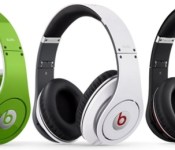
Apple Notifies Service Provider Network of Upcoming Support for Beats Products
Apple service providers will apparently soon be responsible for offering post-sales support for Beats headphones and speakers, reports Greek blog techingreek.com. The news comes from an internal memo dated today alerting official service providers to upcoming contract changes and future training documents regarding Beats products, and Apple’s own retail stores will undoubtedly offer similar levels of support.

This move to support Beats music hardware is a necessary part of Apple’s broader integration of Beats’ products and services into the Cupertino company following the recent merger of the two companies. Apple is stocking its online and retail stores with Beats products and also is expected to overhaul and rebrand the Beats streaming music service early next year.
Apple acquired Beats Electronics and the Beats streaming music service earlier this year in a deal worth roughly $3 billion. As part of this merger, Apple gained a popular line of headphones and music accessories, a streaming music service, and the combined talent and music industry connections of Jimmy Iovine and Dr. Dre.

Autodesk Launches AutoCAD and AutoCAD LT for Mac 2015 [Mac Blog]
Autodesk today announced the launch of the latest versions of its popular AutoCAD computer-aided design software packages for Mac, adding a number of new features that put the release nearly equal to its Windows counterpart for the first time.

MacRumors spoke with Autodesk product manager Micah Dickerson about the new version, with Dickerson noting an emphasis on cross-platform compatibility for mixed Windows and Mac environments and highlighting a “big four” set of features added in the 2015 version based on customer feedback:
– Dynamic Blocks: Mac users now have the ability to create and edit Dynamic Blocks with a new streamlined yet powerful tool. With Dynamic Blocks, users can build a single block that can be used repeatedly (such as for windows or doors) and simply adjusted in size or shape dynamically rather than creating a static block for each feature.
– Layer States: Addressing one of the major barriers to cross-platform usage between Windows and Mac versions of AutoCAD, Mac users can now save layer information such as color, linetype and frozen/locked/off status.
– Quick Select: This feature allows users to easily select objects based on queries, including multiple selection criteria. The feature also includes a new preview function to allow the user to see what objects match the criteria before committing.
– Data Links: Users wishing to associate Excel spreadsheets with their drawings can now do so through Data Links. Changes to the spreadsheet will automatically the corresponding table in AutoCAD, making it easy to keep track of scheduling and costs on various projects.
Dickerson points out that, based on testing so far, AutoCAD for Mac 2015 appears to be the most stable and fastest version so far, while adding a number of new features and taking care of several bugs and other issues.
AutoCAD for Mac 2015 launches today, and is available not only in the usual perpetual license program, but also Autodesk’s subscription plans designed to lower the barrier to entry for those looking to take their first steps into the company’s CAD software.
Standard pricing remains the same for 2015, with AutoCAD coming in at $4195 and the more basic AutoCAD LT priced at $1200, with cheaper upgrade options also available for current users. The subscription plan will see AutoCAD priced at $210 per month or $1680 per year, while AutoCAD LT will be priced at $45 per month or $360 per year.

Engadget Daily: #Weirded returns, a fan-made Star Wars remake and more!

Ebola, Skylanders and absurd robots: That’s the recipe for round two of #Weirded, our original, and admittedly crazy web series. Read on for the rest of our news highlights from the past 24 hours, including next-gen batteries, the weirdest gadgets from CEATEC, a fan-made Star Wars remake and more.

Email App ‘Mailbox’ for Mac Enters Open Beta, Available to All Users [Mac Blog]
Development on email management app Mailbox for Mac began earlier this year, with the app entering a limited public beta test back in August. As of today, the app has entered an open beta testing phase, making it available to all users.
Mailbox for Mac is similar in design to Mailbox for iOS, offering a simple, clean interface that aims to help users reach “inbox zero.” It includes all of the features of the iOS version, like easy controls to archive and delete emails, snooze functionality, and lists for organizational purposes.
The app also offers swipe gestures and several hotkeys to control specific email management tasks.

First introduced as an iOS app in 2013, Mailbox proved to be very popular, requiring a reservation system restricting access to a limited number of users for several weeks. Shortly after its release, Mailbox was acquired by file-sharing and storage service Dropbox, and the iOS version has seen several major updates since then.
Along with offering an open beta of the Mailbox app for Mac, Dropbox has also updated the Mailbox app for iOS to version 2.3.1, adding support for the iPhone 6 and the 6 Plus along with customizable swipes and push notification fixes.
The Mailbox for Mac beta can be downloaded for free from the Mailbox website. Mailbox for iOS can be downloaded from the App Store for free. [Direct Link]

Flight Attendants Union Challenges FAA Decision Allowing Passengers to Use Electronics in All Phases of Flight
The Association of Flight Attendants (AFA) launched a lawsuit against the U.S. Federal Aviation Administration (FAA) last Friday in protest over the FAA’s decision to allow passengers to use their iPads, iPhones, and other small portable electronic devices in nearly all phases of flight.
As outlined by the Associated Press (via TechCrunch), the lawsuit alleges that the FAA “acted improperly” and failed to follow proper protocol implementing the changes. A lawyer for the Association of Flight Attendants argued that portable electronic devices distract passengers from safety announcements and can “become dangerous projectiles.”

Dure argued that in greenlighting the expanded use of electronics, officials violated the federal Administrative Procedure Act. The act requires government agencies to give the public notice and the ability to comment when a rule is changed. That didn’t happen properly, the union argues.
FAA lawyer Jeffrey Sandberg responded to the AFA’s allegations by suggesting portable electronic devices are “no more dangerous” than the books passengers have been allowed to keep out during landing and takeoff. The government agency also suggested that the policy change did not trigger the requirements for public notice.
Officially implemented in October of 2013, the FAA’s policy change on portable electronic devices allows smaller electronics, like iPhones and iPads, to be used during all phases of flight. Prior to the rule change, all electronics were required to be stowed away until an altitude of 10,000 feet was reached.
Though devices can now be used during landing and takeoff, passengers are still required to place them into airplane mode, restricting cellular access. Usage of larger devices, like laptop computers, continues to be restricted for safety reasons.
While the FAA enacted the policy change that allows passengers to use their devices in all phases of flight, airlines have always had control over the implementation of the rule. Individual airlines, as the FAA points out, have control over when and if passengers are able to use their electronic devices in flight. A judge hearing the case expressed a similar sentiment, telling the AFA that “Airlines have always had discretion on how to handle this.”
Thus far, the FAA has cleared 31 airline operators to allow passengers to use portable electronics during landing/takeoff and combined, those operators carry 96 percent of all U.S. commercial passengers.

Apple Releases Sixth OS X Yosemite Public Beta
 Apple today released the sixth Yosemite public beta for its beta testers, following the release of the fifth Yosemite public beta on Tuesday of last week alongside the second golden master candidate of OS X Yosemite. The new public beta carries build number 14A388b, very close to the third Yosemite golden master candidate build 14A388a seeded to developers late last week.
The software update can be downloaded through the software update function of the Mac App Store.
OS X Yosemite brings a flatter, more modern look to OS X, with an emphasis on translucency and redesigned dock, windows, and more. It also includes a multitude of new features, such as improved integration with iOS 8 through Continuity, a new “Today” view in Notification Center that offers integration with third-party apps, a retooled Spotlight search with new data sources, and several new features for apps like Mail, Safari, and Messages.
Over the course of the beta testing period, each Developer Preview has added new features and refined the look and performance of OS X Yosemite, although changes have become less obvious in more recent builds as Apple begins finalizing Yosemite ahead of its public release.
Apple is expected to launch Yosemite soon after the iPad event that it is planning to hold this Thursday.

More Second-Generation iPad Air Part Leaks Point to A8X Chip, 2GB RAM, 16GB Storage Option
A fairly clear image of what is said to be the logic board for the second-generation iPad Air suggests that the device will indeed come with an A8X chip, as hinted at in earlier images shared over the weekend.
Furthermore, the new image published by Apple.club.tw [Google Translate] seems to point towards 2GB of RAM for the device. Though the image of the RAM on the logic board is low resolution and fuzzy, enhancing the contrast and the brightness reveals a bit of information about the numbers on the chip. While the first letter is entirely blurred, it is the second character that is key to determining whether the chip is 1GB or 2GB.

A 1GB Elpida chip would have an “8” in the second character slot, while a 2GB chip would have an “A” in the same spot. Because of the quality of the image, it is difficult to say for certain what the character is, but it does appear to be an “A” rather than an “8” given that it is narrower at the top and wider at the bottom.

Multiple rumors have suggested that Apple will double the memory in the second-generation iPad Air, which would give it the power to support split-screen multitasking. Last week, an image depicting a 2GB Elpida RAM module surfaced, and it appears that photo showed a set of the same chips seen in the logic board.
Apple has stuck to 1GB of RAM for several generations of devices, including the iPhone 6 and the iPhone 6 Plus, but Apple may have big plans in mind for the second-generation iPad Air 2 as it also appears to be gaining an A8X chip.
While Apple used an A6X chip in the fourth-generation iPad, the iPad Air used the same A7 chip as the iPhone 5s clocked at a higher speed. The company was widely expected to utilize the same strategy in the iPhone 6 and 6 Plus for the iPad Air 2, but a faster A8X chip may have been utilized to power features like split-screen multitasking. There have also been some rumors of a “Retina HD” resolution for an upcoming iPad, which would likely require a more powerful chip.
Along with 2GB of RAM and an A8X processor, the logic board image appears to depict a 16GB Hynix flash module (denoted by the “TDG” characters on the chip), suggesting that the second-generation iPad Air will continue to be offered with 16GB of storage at the low end. It’s possible Apple could do what it did for the iPhone 6 and 6 Plus, offering a 16GB solution along with 64 and 128GB options, doing away with the 32GB tier of storage space and sliding the 64 and 128GB tiers down $100 from their current levels.

Apple is expected to unveil the second-generation iPad Air at a media event that it is holding this Thursday on its Cupertino campus. The event may also see the debut of Retina iMacs and another preview of OS X Yosemite ahead of its public release.

Retina iPad Mini 2 Reportedly Coming Alongside iPad Air 2, New Smart Cover and Case Colors
While the second-generation iPad Air has been the subject of a number of rumors ahead of its expected unveiling this Thursday, there has been less information about the Retina iPad mini, which is currently more or less identical to its larger sibling with the exception of display size.
Apple has generally been assumed to be planning a parallel upgrade for the iPad mini this month, but an early September report from KGI Securities analyst Ming-Chi Kuo expressed some uncertainty, saying the iPad mini would receive only a minor upgrade such as Touch ID, “if any”, this year. Kuo’s report was followed by another from Taiwanese media claiming the Retina iPad mini 2 was likely to launch early in 2015 ahead of the rumored 12.9-inch “iPad Pro”.
But now a new report from Mac Otakara [Google Translate] claims the second-generation Retina iPad mini does indeed appear set for an introduction alongside the iPad Air at this Thursday’s press event.

As part of this introduction, Apple also may update its Smart Cover and Smart Case lineup with new colors and a tweaked design compatible with these new tablets.
While leaked iPad Air 2 components have been abundant, details on the upcoming Retina iPad mini 2 have been sparse, with a few reports claiming the device will receive only a modest upgrade as compared to the flagship iPad Air 2. The Retina iPad mini 2 is rumored to include only a Touch ID fingerprint sensor and the A8 processor, as compared to the iPad Air 2, which may ship with a more powerful A8X processor, 2GB of RAM, Touch ID, a new gold color option, and more.
Apple is holding its press event this Thursday, October 16 at 10:00 AM PT on its Cupertino campus. Besides a new iPad Air and Retina iPad mini 2, the company also is expected to introduce new iMacs as well as unveil the launch date for the final version of OS X Yosemite.

