



Buyer’s Guide: Deals on ‘Borderlands: The Pre-Sequel’, iPad Mini 2, Retina MacBook Pro, and More [Mac Blog]
We’ve partnered up with GameAgent again this week to offer MacRumors readers a 25 percent discount on Borderlands: The Pre-Sequel. Since it just launched in October, Pre-Sequel hasn’t seen many discounts yet, making this a fantastic deal if you’ve been waiting for a sale before buying.
With the discount, MacRumors readers can get Borderlands: The Pre-Sequel for Mac for $44.99, instead of $59.99. Clicking the following link will put the game directly in your GameAgent cart at the discounted price. The discount will be available for 24 hours.
MacRumors readers who are also GameAgent members can also get the recently released DLC Handsome Jack Pack for 20 percent off through GameAgent.com.
As for Macs and iPads, there are a limited number of deals this week, but retailers are continuing to offer older iPad Air and iPad mini 2 models at decent discounts. There have also been some recent price drops on remaining stock of the 2013 Retina MacBook Pros, and we have a selection of discounts on Apple accessories as well. As we head into Black Friday and the holiday season, expect to see some deeper discounts on Apple products.
2014 Retina iMac
The 27-inch 3.5GHz/8GB/1TB iMac with 5K Retina display is available from Amazon, Adorama, B&H Photo, and MacMall for $2,449, which is a discount of $50 off Apple’s regular price.

These sites also have the Retina iMac in stock, while Apple’s site lists shipping estimates of two to three weeks for the machine.
2014 Mac mini
The 2014 1.4GHz/4GB/500GB Mac mini is available for $449 from Amazon and B&H Photo, a $50 discount off of Apple’s price.
2014 Retina MacBook Pro
We’re seeing the lowest prices we’ve seen so far on a few models of the 2014 Retina MacBook Pro, including a couple of 13-inch models and one 15-inch model.

– 13-inch 2.6GHz/8GB/128GB (Adorama) (B&H Photo) – $1,199.99 ($100 off)
– 13-inch 2.6GHz/8GB/256GB (Best Buy) (B&H Photo) – $1,349.99 ($150 off)
– 15-inch 2.2GHz16GB RAM/256GB storage (Best Buy) (B&H Photo) – $1,799.99 ($200 off)
2013 Retina MacBook Pro
– 13-inch 2.4GHz/8GB/256GB (B&H Photo) – $1,249.99 ($249 off)
– 13-inch 2.6GHz/8GB/512GB (Best Buy) – $1,359.99 ($419 off)
– 15-inch 2.0GHz/8GB/256GB (Adorama) (B&H Photo) – $1,599 ($400 off)
– 15-inch 2.3GHz/16GB/512GB (Best Buy) – $1,999.99 ($599 off)
2013 iPad Air
– iPad Air WiFi-only Silver 64GB – $494.99 ($204 off)
– iPad Air WiFi-only Space Gray 64GB – $494.99 ($204 off)

– iPad Air Cellular Silver 64GB (AT&T) – $597.99 ($231 off)
– iPad Air Cellular Space Gray 64GB (AT&T) – $566.99 ($262 off)
– iPad Air Cellular Silver 64GB (Verizon) – $597.99 ($231 off)
– iPad Air Cellular Space Gray 64GB (Verizon) – $566.99 ($262 off)
2013 iPad mini 2
– iPad mini 2 WiFi-only Silver 64GB – $395.99 ($203 off)
– iPad mini 2 WiFi-only Space Gray 64GB – $395.99 ($203 off)
– iPad mini 2 WiFi-only Silver 128GB – $494.99 ($204 off)
– iPad mini 2 WiFi-only Space Gray 128GB – $494.99 ($204 off)

– iPad mini 2 Cellular AT&T Silver 64GB – $476.99 ($252 off)
– iPad mini 2 Cellular AT&T Space Gray 64GB – $502.99 ($226 off)
– iPad mini 2 Cellular AT&T Space Gray 128GB – $629.99 ($200 off)
– iPad mini 2 Cellular Verizon Silver 64GB – $476.99 ($252 off)
– iPad mini 2 Cellular Verizon Space Gray 64GB – $502.99 ($226 off)
– iPad mini 2 Cellular Verizon Silver 128GB – $629.99 ($200 off)
– iPad mini 2 Cellular Verizon Space Gray 128GB – $597.99 ($231 off)
Apple Accessories
The Scosche Dynamic Range Earphones with Remote are available for $18.99 from Groupon, a discount of $61. The discontinued Beats by Dre Solo HD Drenched Headphones are available for $129.99 from Groupon, a discount of $69. The Beats Mixr on-ear headphones are available for $149 at Best Buy, a discount of $100, and Best Buy also has the Beats Powerbeats clip-on earbuds for $70, a discount of $70.

The Mota Extended-Battery Case for the iPhone 6 is available for $39.99 from Groupon, a discount of $60. The LithiumCard AIR Wallet-sized Power Bank for iOS is available for $39.99 from StackSocial, a discount of $20. Moneywell for Mac is available for $24.99 from StackSocial, a discount of $25.

For the next few weeks, Target will be offering 10 percent off all of the items on a child’s wish list. Parents need to download the Target Wish List app and have kids create a wish list of products that will then be available at a 10 percent discount. Apple products are excluded, but Apple accessories such as cases are included.
Make sure to check out our deals posts each week for the latest products that are available at low prices, and keep an eye on our Black Friday roundup, which will be updated on a regular basis with all of the discounts we find on popular Apple products.
MacRumors is an affiliate partner with some of these vendors.
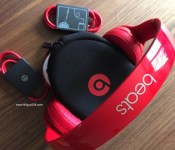
First Look at the New Beats Solo2 Wireless Headphones
Earlier this week, Beats Electronics introduced new Solo2 Wireless on-ear headphones, the first product the company has released since its acquisition by Apple became official back in August. While the headphones are not yet available for purchase on the Beats website, Mike Liang, aka HiFiGuy on YouTube has gotten an advanced first look at the new Solo2 Wireless headphones and has shared both photos and first impressions with MacRumors.

The Beats Solo2 Wireless headphones share the same design as the Solo2 headphones that Beats introduced back in May, with Beats’ signature large cups emblazoned with the Beats logo. Aside from some small print on the box, there’s no Apple branding or Apple references on the Solo2 Wireless headphones.

Reviews of the original Solo2 headphones suggested Beats had toned down the bass with the new design, offering better acoustics, and Liang says that the Solo2 Wireless headphones sound identical to the existing Solo2 headphones.
Solo2 Wireless has an exciting/energetic sound signature that’s suitable for a wide variety of music genres (even Classical). No more muffled midrange and flabby bass of the old SoloHD by Monster. Audiophiles will certainly appreciate the much improved sound signature. No one can honestly say that the new Solo2 Wireless sound bad. These are good!
According to Liang, the Solo2 Wireless headphones paired easily to his MacBook Pro, taking only seconds to setup, but unfortunately it appears that Beats has opted to use the SBC Bluetooth codec rather than aptX, which is believed to offer superior sound quality.

Beats plans to begin selling its Solo2 Wireless headphones later this month for $300, a $100 premium over the standard Solo2 headphones. The Solo2 Wireless headphones are available in black, white, and blue, with Verizon exclusively offering a red option through the end of the year. Beats has also released new “Royal Edition” color options for the standard Solo2 headphones, making them available in Stone Grey, Hunter Green, Imperial Violet, Blush Rose, and Sapphire Blue.

AT&T Stops Using ‘Perma-Cookies’ to Track Customer Web Activity
 In late October, researchers discovered that AT&T and Verizon had been engaging in some unsavory customer tracking methods, using unique identifying numbers or “perma-cookies” to track the websites that customers visited on their cellular devices to deliver target advertisements.
Following significant negative attention from the media, AT&T today told the Associated Press that it is no longer injecting the hidden web tracking codes into the data sent from its customers’ devices.
The change by AT&T essentially removes a hidden string of letters and numbers that are passed along to websites that a consumer visits. It can be used to track subscribers across the Internet, a lucrative data-mining opportunity for advertisers that could still reveal users’ identities based on their browsing habits.
AT&T’s customer tracking practices, called “Relevant Advertising,” were the result of a pilot program the company had been experimenting with, which has apparently come to an end.
While AT&T has opted to stop using the invasive tracking method, Verizon is continuing to utilize perma-cookies to track the web activity of its customers. Unlike AT&T’s experimental program, Verizon has been using Relevant Advertising techniques for approximately two years.
Verizon Wireless, the country’s largest mobile firm, said Friday it still uses this type of tracking, known as “super cookies.” Verizon spokeswoman Debra Lewis said business and government customers don’t have the code inserted. There has been no evidence that Sprint and T-Mobile have used such codes.
“As with any program, we’re constantly evaluating, and this is no different,” Lewis said, adding that consumers can ask that their codes not be used for advertising tracking. But that still passes along the codes to websites, even if subscribers say they don’t want their data being used for marketing purposes.
Verizon and AT&T customers are able to check whether their devices are sending identifying codes by visiting a website created by Kenneth White, one of the security researchers who discovered the tracking methods.
While Verizon customers can opt out of tracking on the Verizon website, that does not stop the identifying code from being inserted into the URLs of the websites that they visit.
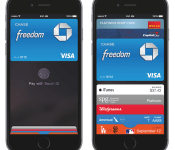
Apple Pay Doubled Mobile Wallet Transactions at Walgreens, Accounted for 50% of Tap-to-Pay Purchases at McDonald’s
Apple Pay has been available in quite a few retail stores since its release more than three weeks ago on October 20, but thus far there’s been little concrete indication of its popularity with customers. A new report from The New York Times, however, sheds some light on Apple Pay’s early success.
McDonald’s, an early Apple Pay partner that accepts the payment system in all of its 14,000 restaurants in the United States, saw Apple Pay accounting for 50 percent of all of its tap-to-pay transactions. At Walgreens, a drugstore chain of more than 8,000 stores, Apple Pay doubled the number of mobile wallet payments being made.
As shared earlier this month, Whole Foods processed 150,000 Apple Pay transactions between October 20 and November 6, which equated to an estimated one percent of all Whole Foods transactions.

Some stores, however, haven’t seen as much success with Apple Pay. According to Toys R Us, which has 870 stores in the United States, while there was an increase in mobile payments, it was minor “because customers were still learning about the new technology.”
As noted by The New York Times, the interest consumers are expressing in Apple Pay hints at a growing acceptance for mobile payment solutions. Denée Carrington, a Forrester Research analyst attributed Apple Pay’s early success to the “strength of the Apple Brand” and the ease of the experience. “I’m not saying it’s changing the landscape overnight,” she said. “But this has never happened with other mobile wallets.”
Along with bolstering mobile wallet usage in retail stores, Apple Pay has also been responsible for increasing consumer interest in the mobile payment arena in general. Google Wallet, for example, saw a surge in usage after the launch of Apple Pay, and Softcard, another mobile payment solution backed by AT&T, Verizon, and T-Mobile has also seen a growing number of users.
According to Softcard CEO Michael Abbott, “Apple Pay has been a huge tailwind” and a “rising tide that has lifted all boats.”
Mr. Abbott said that because of Apple, many companies now want to support the same technology for paying by phone: near-field communication, which enables devices to exchange information wirelessly over very short distances. This consistency would help make paying for things with a smartphone less confusing for shoppers.
Apple currently has 36 retail partners that accept Apple Pay in their stores, and new partners are signing up on a regular basis as the payments service catches on. Just this week office supply store Staples and grocery chains Winn-Dixie and BI-LO began accepting Apple Pay payments.

Apple Expanding Focus on Enterprise, Developing Dedicated Sales Force
Apple is planning an aggressive expansion into the enterprise market, hiring a sales team focused on talking with key enterprise customers, reports Reuters. The sales team may also work alongside “a dozen or so” developers focused on creating corporate-facing apps.
Apple is said to have developed partnerships with several app development startups, including ServiceMax and PlanGrid, both of which build customized industry-specific apps. ServiceMax, for example, already has customers that could be valuable to Apple, including Procter & Gamble and DuPont. Apple is also pursing other relationships with similar corporate app developers, possibly for an initiative aimed at providing custom-made apps for corporate customers.

Apps developers and other sources familiar with Apple’s plans who could not speak publicly provided additional details on how the iPhone maker is working behind the scenes.
The iPhone maker has worked closely with a group of startups, including ServiceMax and PlanGrid, that already specialize in selling apps to corporate America. The two people familiar with the plans, but who could not speak publicly about them, say Apple is already in talks with other mobile enterprise developers to bring them into a more formal partnership.
In addition to forming partnerships with app developers, Apple is also said to be sending sales teams to speak with the chief information officers of major companies, including Citigroup, which is already in talks to sign up for an enterprise package with Apple.
Earlier this year, Apple announced a major enterprise-focused partnership with IBM, with IBM selling iOS devices to its corporate customers and developing more than 100 industry-specific native apps that are built from the ground up for the iPhone and the iPad in six sectors: banking, government, insurance, retail, travel, transportation, and telecommunications. According to the most recent earnings call, IBM’s first apps will be coming before the end of the year. Apple has also developed a special AppleCare for Enterprise, which includes on-site repairs handled by IBM.
Apple’s major enterprise push may be an effort to boost flagging iPad sales by attracting a new market and introducing new use cases. iPad sales have been on the decline in recent months, and during its October earnings call, Apple announced sales were down for the third straight quarter in a row.

Apple Seeds Second Beta of OS X Yosemite 10.10.1 to Developers [Mac Blog]
Apple today seeded build 14B23 of OS X 10.10.1 to developers, one week after seeding the first OS X 10.10.1 beta, build 14B17, and nearly a month after first releasing OS X Yosemite to the public.
The new beta is available through the Software Update mechanism in the Mac App Store and through the Mac Dev Center.

While it is unclear what improvements the first update to OS X Yosemite will bring, there are several bugs in the operating system including a major Wi-Fi issue that has caused connection problems for a number of users.
Apple is asking developers to focus on Wi-Fi, Exchange accounts in Mail, and the Notification Center.

WSJ Posts Full Video of Tim Cook Discussing Apple Pay, Apple Watch, and More
In late October, Apple CEO Tim Cook took the stage at the WSJ.D conference in Laguna Beach, California, where he commented on an array of topics including the Apple Watch, Apple Pay, Apple TV, the discontinuation of the iPod classic, and more.
http://video-api.wsj.com/api-video/player/iframe.html?guid=C48FC1F0-8E23-4592-8D9A-D08CD70E438F
While we covered the content of interview at the time, The Wall Street Journal has today posted the full 30 minute video of Tim Cook’s appearance at the conference, which is well worth watching in its entirety.

Some highlights of the video include an explanation of why the iPod classic was discontinued (it’s impossible to get the parts), the impressive early success of Apple Pay, Cook’s thoughts on the Mac and iPad, and some details on the Apple Watch, including hints on the device’s battery life. “You’re going to wind up charging it daily,” said Cook.

‘Masque Attack’ Vulnerability Allows Malicious Third-Party iOS Apps to Masquerade as Legitimate Apps
Just a week after new WireLurker iOS malware surfaced, there’s yet another vulnerability in iOS that can potentially be used to install malicious third-party apps. Called Masque Attack for its ability to emulate and replace existing legitimate apps, the flaw was discovered by security research company FireEye.
Masque Attack works by luring users to install an app outside of the iOS App Store, by clicking a phishing link in a text message or email. For example, in a demo video, an SMS message with a link attached was sent with the following text “Hey, check this out, the New Flappy Bird.”
Once clicked, the link directs to a website, which prompts the user to install an app. The app in the video isn’t Flappy Bird, but a malicious version of Gmail that installs directly over the legitimate version of Gmail downloaded from the App Store, making it virtually undetectable.
Masque Attack can be used to install fake versions of apps over legitimate App Store versions using iOS enterprise provision profiles, which are used for beta testing or by companies to distribute apps to employees without the need for the official App Store.
As explained in a blog post, as long as both the existing App Store app and the malicious imposter app use the same bundle identifier (a unique identifying number), the fake version will replace the actual app in a way that’s very difficult for the user to detect. The hidden malicious app is able to upload email messages, SMS messages, phone calls, and more, which is possible because “iOS doesn’t enforce matching certificates for apps with the same bundle identifier.”
While the attack cannot replace stock Apple apps like Safari and Mail, it is able to affect apps that have been installed via the App Store, and has the potential to be much more dangerous than other vulnerabilities like WireLurker.
Masque Attacks can pose much bigger threats than WireLurker. Masque Attacks can replace authentic apps,such as banking and email apps, using attacker’s malware through the Internet. That means the attacker can steal user’s banking credentials by replacing an authentic banking app with an malware that has identical UI. Surprisingly, the malware can even access the original app’s local data, which wasn’t removed when the original app was replaced. These data may contain cached emails, or even login-tokens which the malware can use to log into the user’s account directly.
FireEye has gotten the attack to work on iOS 7.1.1, 7.1.2, 8.0, 8.1, and the 8.1.1 beta. The company notified Apple about the vulnerability on July 26, but iOS users can protect themselves by not installing apps from third-party sources other than the official App Store, avoiding clicking on “install” popups in SMS messages or third-party websites, and avoiding apps/uninstalling apps that give an “Untrusted App Developer” alert.
iOS 7 users can check to see if they’ve been the victim of an attack by going to Settings –> General –> Profiles to see what provisioning profiles are installed. iOS 8 devices do not show installed provisioning profiles, making it more difficult to detect an attack.

Imagination Announces PowerVR Series7 Graphics, Likely Headed for Apple’s 2015 iOS Devices [iOS Blog]
Imagination Technologies today announced the launch of its next-generation PowerVR Series7 graphics architecture, setting the stage for further improvements to the graphics used in Apple’s iOS device lineup.
Series7XT and Series7XE GPUs achieve up to a 60% architectural performance increase on the latest industry standard benchmarks compared to equivalent configurations of previous generation PowerVR Series6XT/6XE GPUs, maintaining and extending PowerVR’s reputation as the most efficient, highest performance, lowest power GPU.
Of most interest to Apple users is the Series7XT family, which will be the successor to the Series6XT graphics used in Apple’s latest A8-series chips. The new Series7XT family ranges from two to 16 shading clusters offering up to 512 cores of graphics processing power, giving developers the ability to include “console-quality effects” such as HDR and 4K rendering in their mobile apps.
– PowerVR GT7200: 2 shading clusters, 64 ALU cores
– PowerVR GT7400: 4 shading clusters, 128 ALU cores
– PowerVR GT7600: 6 shading clusters, 192 ALU cores
– PowerVR GT7800: 8 shading clusters, 256 ALU cores
– PowerVR GT7900: 16 shading clusters, 512 ALU cores
Apple currently uses quad-core GX6450 graphics in its A8 chip for the iPhone 6 and 6 Plus, and more powerful six-core GX6650 graphics in the A8X chip found in the iPad Air 2.
 Table adapted from AnandTech
PowerVR graphics architectures have typically taken on the order of 18 months from announcement of licensing to their appearance in products, but things moved much faster with the current Series6XT offerings. Those were announced in January at CES 2014 but made their way into Apple’s A8 chip in the iPhone 6 and 6 Plus just eight months later, suggesting the new Series7XT graphics could appear in next year’s A9 chips from Apple.
Imagination and Apple have worked closely together over the years, with Apple being a key investor in the graphics firm as it raised its stake to roughly 10 percent in mid-2009.
Apple Hires Developers Behind Defunct ‘Pin Drop’ Mapping App
Rumors have suggested that Apple is aiming to open a new research and development facility in Cambridge, England, over the coming weeks, and it appears the company has also made some hires in the area.
According to TechCrunch, Apple has hired five employees that created the Pin Drop mapping app. The hires are not part of an acquisition of the Pin Drop technology, but have included multiple former Pin Drop employees.
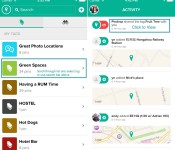
Pin Drop was a map app that allowed users to drop custom created tags and pins that could be shared with others to point out interesting landmarks and spots to visit. Pins could be kept private, shared with friends, or shared with the community. Pin Drop’s service was shut down on October 31 and the app was removed from the App Store. On Facebook, the app’s creators said they were unable to secure the necessary funding to “turn Pin Drop in to the world changing app we envisaged.”
 The now-defunct Pin Drop app
An initial Pin Drop blog post mentioned the core Pin Drop team had acquired their “dream jobs” ahead of the shutdown, and one former employee tweeted that he had been hired by Apple, though both hints of new jobs were later deleted. Currently, five former Pin Drop developers are listed as Apple employees, with the following jobs: Senior Product Designer, Software Engineer, Software Engineer, iOS Software Engineer, and Maps Data Analyst.
All of the former Pin Drop employees who now work at Apple continue to be located in London and have not moved to Apple’s Cupertino headquarters, suggesting they could eventually be housed in the company’s upcoming Cambridge office. It is unclear what their specific roles include, but at least one employee is working on Apple’s Maps team.
Apple has worked hard to improve Maps over the last two years, acquiring several mapping companies including C3 Technologies, Broadmap, Embark, Hopstop, WifiSlam, and Locationary. Some major Maps improvements are said to be in the works, like transit directions and indoor mapping, both of which could come in a future iOS 8 update.

