


CES 2015: OWC’s Transwarp Software Combines Traditional Hard Drive With SSD Cache [Mac Blog]
Other World Computing (OWC) today announced a new software solution that allows users to combine the speed of a solid state drive with the increased storage space of a traditional hard drive. The new Transwarp technology was previewed for the first time this week at CES 2015.

While SSD caching is not new, OWC’s Transwarp solutions aims to make it easy for Mac owners to combine a removable SSD and HDD into a single data volume. Unlike Apple’s Fusion Drive which also pairs an HDD with an SSD, OWC’s Transwarp setup uses the HDD to hold all the data and the SSD as a cache, storing only the most frequently and recently accessed data on the faster access volume while the traditional hard drive retains a complete copy of all data.
With Transwarp, the SSD also can be removed as needed, allowing users to travel with only the HDD installed in their computer. When the SSD is reconnected to the OS X system, OWC’s Transwarp technology takes over and again combines both drives into one.
Transwarp persists even when the power is turned off. Once the SSD is reconnected, Transwarp seamlessly picks up where it left off, making it a great option for laptop users looking for the flexibility to be light on the road, but fast at home or in the office. Converting a drive from Transwarp happens as quickly as it is created, returning both drives to regular volumes within minutes.
OWC is only previewing Transwarp at CES 2015. The company has yet to announce a formal launch date beyond “later this year” or suggested retail pricing for the drive technology.

AT&T Announces New Limited Data Rollover Feature for Mobile Share Value Customers
 Following T-Mobile’s recently announced “Data Stash” program allowing customers to roll over unused data to subsequent months, AT&T today announced it will launch a similar data program later this month. The new feature will be available at no additional charge to the 50 million users on the carrier’s Mobile Share Value plans.
“Rollover Data is an added benefit of being an AT&T Mobile Share Value customer and it’s just another way that we’re saying thanks to our more than 50 million plus Mobile Share Value subscribers,” said Glenn Lurie, President and CEO, AT&T Mobility. “We’re providing even more value and flexibility, and the best part is it’s simple, shareable and easy to track for our customers. All Mobile Share Value customers get this automatically.”
AT&T’s new Rollover Data feature does differ in one important respect from T-Mobile’s program. While T-Mobile’s rollover data expires after 12 months, AT&T customers can roll over unused data for only one month, with users tapping into the rollover data only after their normal monthly allotment has been exhausted.
As an example:
If you have four lines and have a 15GB AT&T Mobile Share Value Plan and only use 10GB in a given month, you’ll roll over 5GB and have a total of 20GB available to use within the next month. If you were to only use 10GB in the second month, you’ll again roll over 5GB and have a total of 20GB available the next month. Bottom line: if you have unused plan data this month, it automatically rolls over to be used within the next month in case you need more than your plan’s allotment.
AT&T will automatically enable the rollover feature on all Mobile Share Value plans starting January 25. Customers can track their rollover data using the MyAT&T mobile app [Direct Link] or on AT&T’s website.

Monster sues Beats Audio over allegations of fraud

Monster LLC which helped kick start the Beats line of headphones back in 2008 has now sued the Apple owned Beats by Dr. Dre brand over allegations of a “sham” transaction. The company has filed an official complaint at the Superior Court in San Mateo County, California. Apple hasn’t yet been named in the suit filed by Monster as the issue pertains to the change in ownership of Beats since it was partially acquired by HTC in 2011.
The suit claims that Beats bought back 25.5% of its stake from HTC shortly a month after it was acquired, indicating foul play. The acquisition by HTC effectively meant the end of Monster and Beats’ relationship due to the change-of-ownership clause mentioned in the original contract. This, according to Monster, cost the company millions in revenue.
Beyond this, Beats bought back its remaining shares which were owned by HTC, thus severing ties with the Taiwanese manufacturer. Beats was then acquired by Apple in a landmark $3.2 billion deal in May 2014.
Further, Monster CEO Noel Lee was allegedly tricked into selling his shares in Beats in September 2013 (8 months before Beats was acquired by Apple) after one of the board members (name not disclosed) mentioned that there would be no “liquidity event” for the next two years. These shares, according to Lee, could have been worth more than $100 million in value today were they not sold.
As is usually the case with courtroom battles, this one could take some time before seeing a resolution. Beats or HTC haven’t commented on the matter yet.
Source: WSJ
Come comment on this article: Monster sues Beats Audio over allegations of fraud

Strong iPhone 6 and 6 Plus Sales Lead to Smartphone Market Share Growth for Apple
The latest smartphone sales data released today from Kantar Worldpanel ComTech highlights good news for Apple on the strength of the iPhone 6 and 6 Plus launch, with Apple gaining share year-over-year in every country surveyed except for Japan.
The report, focusing on the September-November 2014 period, points out that Android market share dropped in most European markets and saw its first decline in the U.S. since September 2013. In the surveyed period, Apple reached 42.5 percent of UK sales, up 12.2 percentage points from the same time in 2013.

In the U.S., the Cupertino-based company’s share of smartphone sales grew 4.3 points to reach 47.4 percent of the market, an unsurprising performance given the strong early sales of the company’s latest iPhones. More data from Apple on October-December iPhone sales will be announced later this month when the company releases its quarterly earnings report.
Apple’s strong performance is being attributed in part to enthusiasm for the redesigned bodies and larger screens of the iPhone 6 and 6 Plus, with the iPhone 6 leading the smartphone pack during the time period.
“The iPhone 6 was the best selling phone in the three months through November 2014, capturing 19% of smartphone sales”, said Milanesi. Verizon and AT&T made up 57% of iOS sales while Verizon and T-Mobile were the top two carriers for Android accounting for 33.7% of all Android smartphones sold.
Despite declines in many markets, Android remains the dominant platform in Europe with 69.9 percent of the market, although that number is down 3.2 percentage points from the same period in 2013. Kantar also notes that customers switching from Android to iOS remained at a steady 18 percent from 2013 to 2014, suggesting Apple’s larger-screened phones have yet to represent significant motivation for switchers.
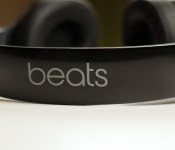
Monster sues Beats, Dr. Dre and HTC for fraud over famous headphones

Audio engineering company Monster has sued Beats, Dr. Dre and HTC over alleged “fraud and deceit” in the way that Beats acquired the rights to the popular “Beats by Dr. Dre” headphones.
In 2008 Monster entered into a relationship with Dr. Dre and Beats to design and manufacture the now famous “Beats by Dr. Dre” headphones. The headphones have been credited with single-handedly creating the $300-plus headphone market. Since 2008 the high-end headphone market has grown to over $1 billion and has led to other celebrity endorsed headphone products.
Had the partnership expired on its own terms, there would have been no transfer of Monster’s years of work on Beats By Dr. Dre.
Monster’s problem is that it was cut out of the partnership due to what it is calling a “sham” transaction with HTC. In 2011 HTC bought a 51 percent stake in Beats for $309 million. But according to the complaint Beats then quickly bought back half of HTC’s interest. It is alleged that Beats intentionally bought back the stock from HTC so that it was able to cut out Monster altogether via an ownership clause.
The result, according to the suit, is that Beats then continued to make millions of dollars from work done by Monster and its founder Noel Lee. According to Monster’s lawyers, “Had the partnership expired on its own terms, there would have been no transfer of Monster’s years of work on Beats By Dr. Dre.”
To complicate matters Apple bought Beats last year for $3 billion. Monster is claiming that Beats made misleading claims during 2013 when it said that there was no pending “liquidity event” (i.e. a major transaction). If Monster had retained its original stake in Beats then it would have received over $100 million from the Beats-Apple deal.

CES 2015: Energous Demos Wire-Free Universal Device Charging With ‘WattUp’ [iOS Blog]
Setting up a “future home environment” at the Hard Rock Hotel & Casino during this year’s Consumer Electronics Show, technology company Energous Corporation demoed its newest product WattUp, a Bluetooth and radio frequency-enabled transmitter that uses the same radio bands as a Wi-Fi router to deliver “intelligent, scalable power” to charge everything from smartphones and tablets to wireless keyboards and children’s toys.
The patent and trademark-pending charging solution differs from most wireless charging technologies due to its lack of need for a pad or other near-field peripheral to communicate between the device needing charge and the device giving the charge. The company promises “meaningful, useful power” will be used to charge a device, not only providing the equivalent charge of a traditional wall outlet, but allowing ease-of-use in letting consumers roam up to 15 feet away from the transmitter.

“As a leading company in the development of true wire-free, uncoupled power with complete mobility, Energous is proud to be demonstrating our technology in model homes of the future. This event at CES 2015 marks a significant achievement for Energous and the industry in showing how wire-free charging can be deployed in everyday living environments.” said Stephen R. Rizzone, CEO of Energous Corporation. “We believe we are the only CES exhibitor to be demonstrating true wire-free charging technology that lets users roam while their devices charge.”
Energous promises WattUp will charge “in essence any battery-powered device in your home or office,” but the device itself must require 10 watts or less to function with the transmitter. One WattUp transmitter can handle 12 receiver devices at any given time.
The company also detailed a mobile and web-based app that will be used to control the order and preference of charge by customers. Users can opt for manual control, only receiving charge to devices when they specifically call for it. Those needing a constant top-off can set prioritized schedules inside the app, causing heavily-used phones and tablets to receive charges once the user walks through the door, and less time-sensitive items like remote controls and keyboards to charge on their own during the day.
Energous says it will begin licensing WattUp to both wearable and smartphone accessory markets, hoping the future brings expansive partnerships with Wi-Fi routers and smartphones themselves.
CES 2015: LifeProof Announces Waterproof Battery Case [iOS Blog]
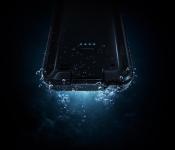
Today at CES, waterproof case maker LifeProof announced the fre Power, a waterproof battery case that provides 2,600 mAh of additional battery life.

LifeProof fre is the original four-proof case, designed for maximum protection against water, drops, dust and snow. The sleek structure includes a built-in screen protector and full access to all device features and functions. fre Power not only provides protection from the elements, but also adds an additional 2,600 mAh of battery power. The lithium ion battery doubles the iPhone 6 battery life, while smart charging technology automatically shuts the case off when the device is fully charged.
The new case is waterproof up to 6.6 feet for one hour and, when all the ports are closed, can be sealed for protection against dust and snow. It’s also drop proof up to 6.6 feet and, according to LifeProof, meets military standards for shock and impact protection.
The company also announced the LifeActiv accessory line, a new set of mounts that allows owners to use their devices in multiple environments. The line includes the $39.99 Bike + Bar mount for bikes, motorcycles and more, the $29.99 Belt Clip for backpacks and hips and the $29.99 Multipurpose Mount for walls and mirrors and the Suction Mount for cars and glass.
It’s unclear when the fre Power and LiveActiv accessories will launch, but LifeProof’s website signals they could arrive in 2015. While the company revealed pricing for the accessories, it did not reveal pricing for the new waterproof battery case.

Dear BlackBerry, Ryan Seacrest isn’t done with the QWERTY keyboard

Maybe you remember the bizarre collision of worlds at last year’s CES when Ryan Seacrest touched down in Las Vegas to introduce the Typo, a physical QWERTY keyboard case for the iPhone 5/5s. If you do, then you may also recall the controversy and legal tussling over the original Typo’s striking resemblance to BlackBerry’s Q10 keyboard. One court ordered a sales injunction and another Typo revision later, Seacrest and his partner Laurence Hallier are back at CES to debut another physical keyboard accessory, this time it’s the Typo2 for the iPad Air and iPad mini lines. The pair carved out some time during the madness of CES to speak to me about Typo’s bumpy start, the impact of customer feedback on product design and the boldfaced names that swear by their QWERTY case.
So you guys debuted the first Typo at CES 2014. I have to ask, “Why not just use your BlackBerry? Why did you make the Typo?”
Ryan Seacrest: Well, we made the Typo because we had a couple of devices sitting on the table for many, many dinners. Laurence and I are good friends, and we decided that we wanted to be a little more efficient with ourselves and our lives. And we liked the iPhone, but we couldn’t type on it well. So we wanted to create a physical keyboard where we could use our iPhones with speed and with efficiency.
Laurence Hallier: Honestly, we thought it was a hobby.
Were you guys aware prior to the launch that there was a striking resemblance and that it was potentially going to bring legal troubles?
LH: No, we did our homework to find out what was out there, what wasn’t out there. And we didn’t just do this haphazardly. So we looked at what was out there and we certainly got [outside] opinions and all that. But the lawsuit itself… we can’t comment. It’s an ongoing thing, but it doesn’t affect any of our current products that are out: the Typo2 for iPhone 5, the Typo2 for iPhone 6 and, of course, our iPad keyboard.
Do you think since that design kind of mirrored the familiar look of the physical QWERTY keyboard that people were familiar with from BlackBerry, that helped attract a target base for this… for people that crave a physical QWERTY keyboard?
LH: I mean, I think that a lot of people are fans of the physical keyboard. BlackBerry was definitely one of the companies in that space. But before that there was the Treo; Motorola made [a physical QWERTY with] the Droid 4…
RS: When I was in elementary school, the Commodore 64. I mean, we typed WITH KEYS on keyboards. Growing up, that’s how we did it. And that’s what we wanted to create to be able to attach as a case to the iPhone.
How involved are you in the design, Ryan?
RS: For me, Laurence would make all of the trips overseas to Taiwan and he’d sit with the engineers and designers. And then he’d bring back the prototypes and we would use them ourselves… you know, for 24/7 for months and months and months. And give each other feedback about how they were working, what was working, what was going well, what was not going well. And that was how we incorporated the notes.
LH: The best answer to that is to say that for 12 months, we had prototypes going back and forth, back and forth. We just couldn’t get it to a place we wanted it to be. The goal was not to have a product out to market; it was for us to be able to type at the speed that we want to type at accurately. Hence, the “Typo” name. I think Ryan was always our number one tester.
RS: For me, this is my office; this is how I work. I do everything mobile-y because I’m in so many places every single day, every single week. This was a lifesaver for me. This was a game changer for me to be able to have something that I could really type an email out that looks as if it’s coming from a computer.
As for the name, it’s catchy definitely. Typo is catchy, but it’s a bit counter-intuitive. Do you have any regrets attaching that name to it… calling it Typo?
RS: Do you know no one mentions that to me? NO ONE. No one. And I talk to a lot of people. No one says anything to me about the name. They say… when they see it sitting on a table, whether it be in a meeting or at a lunch or something, they see it sitting on the table and they say where they can get that. And you tell them typokeyboards.com. And they never say, “Why’s it called Typo?”
LH: We just wanted a very simple name people would remember.
In terms of customer feedback, the original Typo wasn’t on the market very long due to the injunction. And then the Typo 2 was announced in mid-summer and shipped in September. How much of that feedback was coming in — was it unsolicited? Were you actively polling them? And what were some of the refinements they suggested if any?
LH: On our website is info@typokeyboards.com. We read every single email we get in. So we get feedback very quickly. When you develop a product… and I would say our product is very unique in that… 84 percent of our buyers from the surveys we’ve done, say they keep it on the phone 24/7. So they give you feedback. They’re not shy. And if they have a problem, they let you know. So for us the feedback is easy. We get a lot of feedback. And listen, this is not the perfect product, nor is any product. But it’s as close as we’re ever going to get being able to type super fast on a phone.

The Typo2 for iPad Air/2.
What about products? Was there anything from the customer feedback where they requesting, “I want it specifically for the iPad Air and the mini?”
RS: Yes, for every mobile device from the beginning. We want it for everything.
LH: No doubt. And it’s difficult because the Android market is fragmented. So it’s very difficult for us. We wanted to bring a product out for Apple. We’ve now come out with iPad products. We intend to build a keyboard for the Samsung Note line. That’ll be out in a few more months.
Starting just with the latest Note or going back?
LH: No. The 4. What’s being announced at CES and what’s coming out in a few months.
We’re gonna look at the Android market… that’s probably the number one thing we get by email is, “Do you have one for the iPhone 6 Plus and do you have one for blankety blank Android?”
I’m glad you brought up the 6 Plus. Is it too unwieldy the size? Is that why you didn’t do it?
RS: It became top heavy, bottom heavy… it seesawed.
LH: The core of this business is that if the product is not a lifesaver and if it doesn’t work really well for the consumer, we’re not going to come out with it. So we prototyped the 6 Plus. We tried it. You know, it’s a big phone.
RS: It was hard to perfect it.

A close-up look at the Typo2 for iPad Air’s full QWERTY layout.
How different is the Typo2 case for the iPads here as opposed to the one for the iPhone 6, other than the layout?
LH: We looked at the products out there. We didn’t really take any inspiration from this because it’s thumb-typing. We really took inspiration from “what does the consumer wants that actually wants a keyboard for their iPad?” And there was three basic things that everyone wanted that wasn’t being served. Obviously, being as thin as possible, as small as possible. Add no bulk no weight to the iPad. Detachable was important only because people don’t like the single angle. So if you’re in Southwest, you’ve got an angle this much. If you’re in first class, you’ve got a bigger angle. So we really felt this was an integral part of solving this problem of what do you do with an iPad. We’re finding so much good feedback on this. People want to buy this [the hinge] on its own. So this hinge actually was developed by the same company that did the MacBook Air. So it’s a pretty revolutionary hinge. And we had to re-engineer it be much much smaller.
What about wearables? Is Typo just a one-off for you guys? Is there a more of a vested interest in tech? Would you be interested in pursuing something like a tracker..?
LH: I think both Ryan and I have a the philosophy that unless the product really enhances your life, it’s not to our interest. Our business is that we really want to improve people’s lives… with the keyboard, we feel we have something to add. … I just don’t think we have much to add to there. … These are not easy things to do.

The media mogul and tech entrepreneur Ryan Seacrest talks Typo2.
Last thing I’ll ask you guys. I noticed on the site there’s a quote from Arianna Huffington… you mention your target user is that prosumer, but do you find that other media personalities and celebrities are adopting the Typo 2 because they were so addicted..?
LH: Yes, but they won’t let us use their name.
RS: I was at GMA (Good Morning America) three or four mornings ago before New Year’s Eve and all Amy Robach could talk about was, “How can I get that Typo2 for my iPhone 6? This is going to change my life.” And I’ve talked to a few [journalists] who have refused to get the iPhone 6 until they can get the Typo 2 to make the jump for the phone.
LH: Arianna was one of them. She emailed me…
RS: I think the whole GMA cast another group too.
LH: We have a ton of celebrities, but they won’t let us use their name.
This interview has been condensed and edited.
[Image credit: Will Lipman Photography]
Filed under: Cellphones, Mobile, Apple, Blackberry
CES 2015: Reach79’s iPhone 6 Case Claims to Double Signal Strength and Improve Battery Life
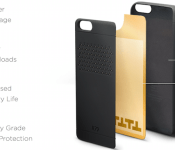
At CES 2015, Antenna79 announced a new brand of cases called Reach79 , which claims to boosts signal strength and performance up to two times for iPhone 6 and 6 Plus.

“We all want to get the most from our smartphones, and that’s exactly what Reach79 cases were designed to do,” said David Vigil, CEO, Antenna79. “Powered by patented antenna technology, Reach79 cases are the first performance-enhancing smartphone cases designed for speed. Each case is embedded with a micro-thin, gold-plated antenna that works to increase your smartphone’s signal strength so your phone can do more for you.”
Reach79 says that the stronger signal strength provided by its cases can improve battery life as the phone woudln’t have to work as hard to pick up a signal. Additionally, the company says it improves user experience with less dropped calls and faster download speeds and greater signal coverage. The cases also come with military grade drop protection.
The cases contain antenna technology that pairs with the antenna in the smartphone, granting increased signal strength for the device. Reach79 says the cases have been tested at CETECOM, a CTIA accredited facility that verified the cases can improve signal strength at an average of 1.6 times normal strength, with a peak performance of 2 times normal strength.
However, the company does warn that user experience also depends on device, carrier and location.
The Reach79 cases can be purchased starting today at the company’s website. The iPhone 6 case is priced at $59.99 while the iPhone 6 Plus version is priced at $69.99. The cases currently come in black only, but Reach79 says additional colors are on the way in the first quarter of 2015.
Kensington Unveils ‘MiniSaver Mobile Lock’ for Use With Ultra-Thin Laptops and Tablets [Mac Blog]
Kensington’s ubiquitous hold on security locks for computers and other devices has loosened somewhat as devices have grown smaller and more portable, and the space requirements for the company’s traditional lock mechanism have led Apple to even omit Kensington security slots from many of its recent products such as the MacBook Air and Retina MacBook Pro.
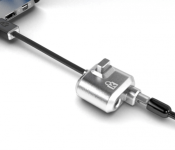
Kensington hopes, however, to reinvigorate the security lock with today’s announcement of the new MiniSaver Mobile Lock designed specifically for use on ultra-thin notebooks and tablets and touted as “the industry’s thinnest security lock system.”

As opposed to the traditional “T-Bar” mechanism used for years by Kensington, the new MiniSaver lock features a patented “Cleat” locking design, including the smallest attachment points the company has ever made, to safely and securely provide ease of mind when leaving a computer or tablet alone in a public space or at the office.
The company says it’s aware that though the technology has gotten smaller over the years, consumers’ security needs haven’t, and the MiniSaver is Kensington’s answer to that problem. While the original Kensignton slot design is intended for devices at least 12 mm thick and requires internal vertical clearance of at least 7.5 mm for the T-Bar to rotate into locking position, the MiniSaver requires only about 3 mm of vertical clearance, allowing for installation on thinner devices.
“Today’s increasingly mobile workforce is creating more demand than ever for ultra-thin devices and those devices need protection to prevent the mounting risk of theft and resulting data breaches,” said Judy Barker, Global Product Manager, Kensington. “The first-line-of-defense provided by physical security locks can stave off device theft and save businesses and their employees from the costly exposure of a data breach. With our revolutionary MiniSaver design, now protection is not only easy but sleek and convenient as well.”
Amongst other features, the lock also provides one-handed operation thanks to the simple push of a button on the security lock, includes a cut and theft-resistant carbon steel and protective plastic-lined cable, and allows greater freedom of movement and reduced blockage of nearby ports thanks to an off-body lock and pivot-and-rotate cable.
Kensington’s MiniSaver Mobile Lock is available to purchase online now with prices starting at $59.99.

