


Microsoft Office for iOS Updated With iCloud Drive Support
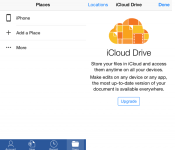
Microsoft today released an update for its suite of Office apps on Apple’s iPhone and iPad App Store for users running iOS 8. The 1.6 updates bring, along with the usual bug fixes and performance enhancements, full support for saving and syncing documents via Apple’s iCloud Drive service (via The Verge).
Microsoft says users of its most popular software like Word, Excel, and PowerPoint can now open, edit, and save their work to iCloud as a storage option in the “Places” section of each iOS app.

The additional storage method doesn’t require users to have an Office 365 subscription and comes as an alternative to Microsoft’s own cloud storage option, OneDrive. As pointed out by The Verge, light restrictions on a few file types may hinder iCloud’s usage on Microsoft’s iOS apps, however.
There’s also restrictions on filetypes, so while you can see a thumbnail preview of text in a document created with TextEdit on a Mac (stored on iCloud), you can’t access the document or edit it. Overall, it’s a fairly basic feature addition, but one that will please (and possibly frustrate) those who use iCloud on a regular basis.
Microsoft most recently added a similar feature to flesh out its iOS offerings with a partnership with Dropbox that let users open, edit, and save their documents using the popular document-saving cloud app. The Word, Excel, and PowerPoint apps launched on the iPhone in early November, bringing free document creation and basic editing to the service.
Microsoft Word [Direct Link], Microsoft Excel [Direct Link], and Microsoft PowerPoint [Direct Link] can all be downloaded from the App Store for free.
WSJ: Apple cut watch health features due to erratic sensors

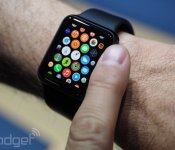
Apple apparently wanted its smartwatches to focus heavily on health-related features, but the company was forced to changed direction mid-development. According to The Wall Street Journal, the company originally envisioned a device that can monitor heart rate, blood pressure and stress levels (based on the conductivity of the skin). Unfortunately, the sensors they tested just didn’t pass muster, which isn’t entirely surprising, since we’ve reviewed plenty of wearables with patchy heart rate monitors in the past. The company’s engineers found that hairy arms, dry skin and even how tightly the watch is worn can affect the results, and they didn’t find a solution in time.
Apple Watch became known as a black hole within the company, the WSJ’s sources said, as it continued sucking in resources for four years despite all the failures during testing. Its development slowed down once the company realized that a health-focused watch that meets its standards will be very hard to build at this time. The lineup of watches due out in April are a lot different from the original one Apple envisioned and are more of an iPhone companion with a much simpler pulse monitor and pedometer.
Still, the company’s expecting to sell a ton, reportedly ordering around 6 million units from its Asian suppliers just for the first quarter. Half of those are the entry-level Apple Watch Sports, while the mid-tier stainless steel model makes up a third of that number. As for Cupertino’s original vision, well, there’s always a chance that we’ll see it come to life in the coming years. The company has a good track record of substantially improving its devices after a debut model appears — the first iPhone didn’t have 3G.
Via: 9to5mac
Source: The Wall Street Journal

Samsung overtakes Apple, jumps to number 3 in Reputation Quotient in Harris Poll

The Harris Poll has released the results of their annual poll of corporate reputation and Samsung has moved all the way up to number 3 in the rankings, surpassing Apple along the way for the first time. Samsung moved from seventh in the prior year while Apple fell from third down to ninth. Some other notable tech companies also made the top ten including Amazon at number two and Google slid in to the tenth place.
Amazon continues to be one of the strongest performers year after year on the strength of their breadth of products, customer focus and public trust, although they did get supplanted at the top by Wegmans Food Markets. Meanwhile, both Microsoft and Sony slipped out of the top ten even as Google managed to slide in to grab the final top ten spot.
On the longer list, Sprint Corporation found itself as one of the biggest gainers from 2014 to 2015, gaining 5.3 points to land in the 72nd spot on the list of the top 100. Competitor Verizon found itself in the 66th spot and the leader amongst telecom companies.
The poll asks respondents to rate companies on 20 different attributes that are grouped into six dimensions of corporate reputation:
- Social responsibility
- Emotional appeal
- Products and services
- Workplace environment
- Financial performance
- Vision and leadership
The Reputation Quotient, or RQ, is the sum of the ratings on the 20 attributes divided by the total number of attributes answered multiplied by seven. That result is then multiplied by 100 to give a final RQ score with the maximum being 100. Wegmens Food Markets top score was 84.36.
source: Harris Poll
via: SamMobile
Come comment on this article: Samsung overtakes Apple, jumps to number 3 in Reputation Quotient in Harris Poll
Apple’s Efforts at Bringing Apple Pay to China Hitting Roadblocks [iOS Blog]
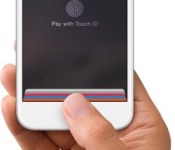
 While Apple Pay has yet to expand to any markets outside of the United States, rumors have suggested international expansions could begin in the relatively near future. One of those possible markets is China, with the first iOS 8.3 beta seeded to developers last week building in Apple Pay support for China UnionPay.
According to a new report from Caixin [via MarketWatch], however, talks have stalled as Chinese financial institutions remain wary of Apple Pay and Apple has yet to approach regulators about gaining approval for the service.
“Apple is seeking to cooperate with Chinese financial institutions” including banks for the use of Apple Pay, a People’s Bank of China (PBOC) official said.
At the same time, the American company has not yet “acknowledged regulators” and as a result “it’s unclear whether the product meets the government’s requirements” for a commercial operation.
Apple is also struggling with its relationship with UnionPay, China’s state-owned credit and debit card system operator. Sources close to the companies said that talks aimed at an agreement that would open China to Apple Pay have stalled.
On the regulatory side, the NFC chips used in the iPhone are said to not fully comply with Chinese technical standards, while regulators are also insisting Apple open a data center in mainland China to manage customer information linked to Apple Pay in that country.
On the institutional side, China UnionPay is reportedly wary of losing some of its grip on the mobile payments market, as the organization currently controls the only NFC payments system in use in China. UnionPay’s control of the market has also thwarted Alibaba’s Alipay unit, which has so far proven unwilling to pay fees demanded by UnionPay for tapping into the UnionPay payment network.
China has been a major market for Apple in recent years, with Apple CEO Tim Cook highlighting the company’s efforts to understand and address that market at a Goldman Sachs conference just last week. Those efforts have led to an explosion in revenue, moving from $1 billion to $38 billion over the last five years as Apple has expanded carrier partnerships, points of sale, and other relationships to establish a strong foothold in the rapidly growing market.
Original Apple Watch Health Features Were Dropped Due to Consistency Issues
Before Apple unveiled the Apple Watch last September, reports indicated the device would come with 10 sensors to track health and fitness data, leading some healthcare professions to find the unveiled Apple Watch’s health features disappointing. In a new report, the Wall Street Journal offers a look at the original Apple Watch health features that were dropped due to consistency problems.

Apple began developing the watch about four years ago, with a focus on health and fitness. It’s not unusual for Apple to experiment with many technologies or shift focus during product development, but the watch was especially challenging, people familiar with the matter said. Internally, the project became known as a “black hole” sucking in resources, one of these people said.
The Apple Watch originally featured censors that measured the conductivity of skin, allowing the device to detect stress levels and heart-rate monitoring similar to an electrocardiogram, also known as an EKG. Apple also experimented with ways to detect blood pressure or how much oxygen is in a user’s blood. However, a mix of consistency problems and potential oversight caused Apple to switch the focus of the device from health-related to a more general do-everything product.
The skin conductivity features didn’t perform well with people who had hairy arms or dry skin, while results varied depending on how tight an Apple Watch was worn on users’ wrists. Additionally, if Apple decided to use the health date to provide “health or behavioral advice”, the Cupertino company would have to seek approval from the U.S. Food and Drug Administration and other regulators.
While these features were dropped for the first version of the Apple Watch, sources tell WSJ that they could appear in future versions of the device, echoing a Reuters report from September.
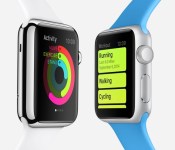
Last week, Apple CEO Tim Cook said that the company’s objective with Apple Watch is to “change the way people live their lives” and that people would be surprised by the breadth of what the device can do, which includes activity monitoring, reminding users to stand up after a certain time period and non-verbal communication with friends. Apple is currently asking developers to have their Apple Watch apps ready by mid-February, with some developers traveling to Apple’s Cupertino headquarters for help.
Cook has confirmed the Apple Watch will launch in April. The Wall Street Journal reports that Apple will make five to six million units for the first quarter, with half of those units being the entry Apple Watch Sport and one-third being the mid-tier stainless-steel Apple Watch.
Apple Helping Developers Finalize Apple Watch Apps at Cupertino Headquarters
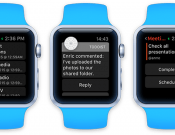
 Apple has invited third-party developers to its headquarters in Cupertino, California to allow them to test and finalize apps for the Apple Watch, according to 9to5Mac. The report claims that developers have been arriving at One Infinite Loop this month to work with Apple engineers on finishing WatchKit-based apps in categories such as sports, productivity and finance.
“The developers invited by Apple to Cupertino range from those behind titles for sports applications and productivity software. Apple has also been meeting with banks to work on WatchKit applications that assist with the Apple Watch’s Apple Pay functionality. Besides U.S.-based banks, Apple has been working on WatchKit apps with developers from Germany-based banks, which indicates Apple is likely in talks with more foreign banks to expand Apple Pay to more countries across the world.”
MacRumors reported a few weeks ago that some developers have been asked to have Apple Watch apps readied by this month, although this report claims that Apple seems to be operating on a more urgent timeline, possibly in order to ensure that some apps are finalized for an upcoming marketing initiative or media event. In the meantime, Apple has reportedly been holding workshops to train retail employees about the Apple Watch in Los Angeles, Cupertino, Austin and Atlanta.
Apple Watch Gets Another Competitor in the Android-Based LG Watch Urbane
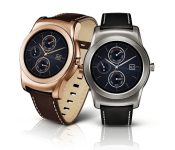
LG Electronics today announced a new device in the line of Android Wear smartwatch products, called the LG Watch Urbane. Planned for a full unveiling at Mobile World Congress next month, the watch is said to combine the traditional aspects of a luxury timepiece with the “high-tech flare” of a modern smartwatch.
The LG Watch Urbane follows in the footsteps of LG’s previous foray into the world of smartwatches with the LG G Watch R, launched last October. LG says while the G Watch R was designed with a more active lifestyle in mind, the Watch Urbane has taken a more formal, classic route that will suit both men and women. Despite the formal look, the Watch Urbane is powered by a smartwatch-style touch-based interface that is compatible with any smartphone running Android 4.3 or above.

“The LG Watch Urbane’s classic design and smart features make it the perfect smartwatch to complement our G Watch and G Watch R, which were designed as more casual and active devices,” said Juno Cho, president and CEO of LG Electronics Mobile Communications Company. “LG Watch Urbane is an important part of our strategy to develop wearable devices that are worn and viewed as everyday accessories, not electronic gadgets.”
The LG Watch Urbane includes the same 1.3-inch full circle P-OLED display as the LG G Watch R – which was the first smarwatch to include such a display – but features a narrower bezel this time around, offering it that more formal, sleeker look touted by LG. The watch comes in gold and silver options with a natural leather strap that can be replaced by any 22mm wide band, according to the company.
Not many specific details were given on the device’s smartwatch capabilities, but LG confirmed the LG Watch Urbane will be able to measure a user’s heart rate for fitness purposes thanks to a photoplethysmography (PPG) sensor built into the device. Other key factors, like pricing and whether the new Android-based smartwatch will hit around the Spring launch of the Apple Watch, was not yet disclosed by LG.
Key Specifications:
– Chipset: 1.2GHz Qualcomm® Snapdragon™ 400
– Operating System: Android Wear™
– Display: 1.3-inch P-OLED Display (320 x 320, 245ppi)
– Size: 45.5 x 52.2 x 10.9mm
– Memory: 4GB eMMC/ 512MB LPDDR2
– Battery: 410mAh
– Sensors: 9-Axis (Gyro / Accelerometer / Compass) / Barometer / PPG (Heart Rate Sensor)
– Colors: Gold / Silver
– Other: Dust and Water Resistant (IP67)
LG’s newest foray into the increasingly crowded world of smartwatches is the latest in a long line of companies announcing new iterations of older products, or new products altogether, preparing to do battle with Apple’s April launch of the Apple Watch.

Google Relaxes Project Zero Bug Disclosure Policy
 Google’s security team Project Zero recently announced some changes to its bug disclosure policy after controversially exposing Apple and Microsoft security flaws when the companies failed to meet the 90-day deadline. The new disclosure deadline has a 14-day grace period and excludes weekends and public holidays, providing tech companies with more time to properly address security vulnerabilities in their software.
“We now have a 14-day grace period. If a 90-day deadline will expire but a vendor lets us know before the deadline that a patch is scheduled for release on a specific day within 14 days following the deadline, the public disclosure will be delayed until the availability of the patch.”
Project Zero is a security team consisting of experienced programmers that look through the code of Google and several of its competitors to discover security flaws, like those uncovered in OS X Yosemite back in January. The team immediately discloses any vulnerabilities found to vendors, providing them with a 90-day deadline to release a software patch before sharing the vulnerabilities with the public.
The role of Google playing security watchdog for other companies has been the subject of much debate, with some believing that the company has a disingenuous agenda and others claiming that it is taking appropriate action. Google claims that it holds itself to the same 90-day policy it enforces on other tech companies, with bugs in the pipeline for Chrome and Android that are subject to the same deadline policy.
Popular Media Player App ‘VLC’ Slowly Returning to the App Store [iOS Blog]
A few users began reporting on Reddit yesterday the return of popular alternative media player app VLC to the iOS App Store. The app, which arrives as a 2.4.1 update including iPhone 6 and 6 Plus support, is still rolling out to all users and currently shows as unavailable in the App Store for most countries, although some users who had previously downloaded the app before its removal have been able to access the new version through their purchase histories.

VLC for iOS was pulled from the App Store around the launch of iOS 8, and the company never officially commented on the reasons behind the mysterious disappearance other than saying it was “working with Apple on a solution.” In late December, the company confirmed the app would return to the storefront in “early 2015.”
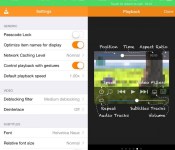
The updated app, which allows users to use and watch many non-iOS friendly media files, sees the inclusion of folder support, passcode lock, and optimization for the larger screen sizes of the iPhone 6 and 6 Plus amongst other updates. The app is rolling out to a select few countries first, and is expected to be made widely available to U.S. users soon.
VLC previously saw nearly a three-year hiatus from the App Store when it was taken down in 2010 thanks to licensing issues, finally returning in the summer of 2013.

Jonathan Ive Discusses Steve Jobs and Apple Watch in The New Yorker Interview
 Apple design chief Jonathan Ive has been interviewed in an exhaustive profile with The New Yorker, in which he discusses a number of topics ranging from Steve Jobs to the Apple Watch.
The interview provides a rare glimpse inside Apple’s design studio at Two Infinite Loop at its Cupertino headquarters, as Ive shares some of his experiences working at Apple over the past few decades.
The iconic designer recounts how Jobs visited Apple’s design studio upon returning to Apple in 1997 and quickly bonded with Ive, solidifying a longtime friendship between the two.
“During the visit, Ive said, Jobs ‘became more and more confident, and got really excited about our ability to work together.’ That day, according to Ive, they started collaborating on what became the iMac. Soon afterward, Apple launched its ‘Think Different’ campaign, and Ive took it as a reminder of the importance of “not being apologetic, not defining a way of being in response to what Dell just did.” He went on, ‘My intuition’s good, but my ability to articulate what I feel was not very good—and remains not very good, frustratingly. And that’s what’s hard, with Steve not being here now.’”
Ive also claimed that the Apple Watch was conceived soon before the passing of Jobs, who died in October 2011 following a lengthy battle with a rare form of pancreatic cancer. Apple CEO Tim Cook added that Apple was looking at multiple categories of products at the time and thinking about which ones to do.
“The Apple Watch—the first Apple device with a design history older than its founder, or its designer—was conceived ‘close to Steve’s death,’ Ive said. It’s hard to build a time line of this or any other Apple creation: the company treats the past, as well as the future, as its intellectual property. But, in 2011, there may have been a greater appetite than usual for investigations of new products. One could imagine that executives were eager to act, in anticipation of grief, market upheaval, and skeptical press.”
Ive went on to discuss how he believes that, while millions of people may be willing to use an iPhone that looks the same as others, the same mindset does not carry over to a wrist-worn device like the Apple Watch. Ive recognized a need for the Apple Watch to be highly customizable, with different sizes, watch bands and different alloys of aluminum, stainless steel and gold.
Ive’s position was that people were “O.K., or O.K. to a degree,” with carrying a phone that is identical to hundreds of millions of others, but they would not accept this in something that’s worn. The question, then, was “How do we create a huge range of products and still have a clear and singular opinion?” […] If variety was a perceived necessity, it was also an opportunity. “We could make aluminum, and stainless steel, and gold, and different alloys of gold,” Ive said.
The full-length interview goes into further detail about Ive’s design philosophies that went into creating the Apple Watch, alongside some interesting anecdotes and excerpts from other Apple executives such as Tim Cook, Bob Mansfield and Jeff Williams.

