



Apple Facing Lawsuit for Poaching Key Battery Engineering Employees From A123 Systems
Amid rumors that Apple is hiring employees for a secret car project, the company is today facing a new lawsuit for poaching employees from battery manufacturing company A123 Systems. While the specific battery expertise of many of the employees is unknown, at least one of the employees had experience with developing battery technology for electric vehicles.
According to a lawsuit shared by Law360 (via 9to5Mac) Apple recently hired five employees from A123 Systems to create a “large scale battery division,” violating noncompete agreements that employees signed with the latter company.

A123 filed suit Feb. 6 in Massachusetts Superior Court, alleging Apple hired away five employees who developed new battery technology and products and tested existing products, despite the fact that the employees were under contracts with noncompete, nonsolicit, and nondisclosure obligations.
Since June, Apple has been mounting “an aggressive campaign to poach employees of A123 and to otherwise raid A123’s business,” the complaint said.
The employees are said to have left under “suspicious circumstances,” and A123 discovered correspondence between its former employees and Apple recruiters on company computers. A123 warned Apple about the noncompete contracts and sought assurance that Apple would not develop a competing business, but Apple reportedly stopped responding to A123’s letters.
According to its website, A123 Systems creates “advanced Nanophosphate lithium iron phosphate batteries and energy storage systems,” supplied to many vehicle manufacturers. Two of the employees that Apple hired, Dapeng Wang and Indrajeet Thorat, were PhD scientists who manned separate projects at A123, which the company has had to shut down because of difficulty finding replacements.
Wang’s LinkedIn profile lists him as a “Development Engineer” at A123 Systems, working on prismatic cell design and tests, among other things. Thorat’s LinkedIn profile indicates he held the position of “Battery Research Engineer, Modeling” and A123, where he worked on batteries for hybrid vehicles.
Designed experiments to understand/optimize performance of a cell for Hybrid and Plug-in hybrid vehicles (HEV and PHEVs), Grid energy storage and frequency regulation. Developed models to predict capacity fade and resistance rise during life of a cell under specific duty cycles.
Other employees listed in the lawsuit are Mujeeb Ijaz (A123 CTO), Don Dafoe (Cell Product Engineering), and Michael Erickson (Battery Materials Scientist). Many of the employees’ profiles list them as still with A123, and none have any listed association with Apple. Dafoe’s profile lists a “Bay area startup” as his place of employment since January 2015.
It is not clear what the A123 Systems employees hired by Apple are working on at the company or whether their work is related to the company’s secret car project because Apple is constantly evolving its technology and working on a wide array of battery improvements for all of its future devices. The lawsuit suggests that A123 Systems is, however, concerned that Apple is working on something that competes with its own product lineup, which is focused on passenger and commercial electric vehicles.

Samsung Acquires Apple Pay Rival LoopPay
Samsung today announced plans to purchase LoopPay, in an effort to compete with Apple’s Apple Pay payments service. The two companies were in previously talks over a potential partnership in December for a payment system that would rival Apple Pay.
LoopPay’s technology stores payment information from a credit or debit card’s magnetic stripe, transmitting payment details to card readers in lieu of a physical card. Because it works over a magnetic field, LoopPay is compatible with 90 percent of existing card readers and does not require merchants to support NFC as Apple Pay does.

Currently, LoopPay works through an app and a standalone hardware device (a case is one of the company’s most popular LoopPay offerings), but Samsung may build the technology directly into phones in the future. With LoopPay’s technology, upcoming Samsung devices may be able to replace credit cards much in the same way Apple Pay does, with Samsung customers able to wave their phones at payment terminals instead of swiping a card.
According to Samsung, LoopPay will provide the company’s customers with a “seamless, safe, and reliable” mobile wallet solution. LoopPay already markets itself as an alternative to Apple Pay, and it’s likely Samsung will build upon the technology to create a payment service that even more closely mirrors Apple’s offering.
“This acquisition accelerates our vision to drive and lead innovation in the world of mobile commerce. Our goal has always been to build the smartest, most secure, user-friendly mobile wallet experience, and we are delighted to welcome LoopPay to take us closer to this goal,” said JK Shin, President and Head of IT and Mobile Division at Samsung Electronics.
The current version of LoopPay doesn’t have the same security features that Apple Pay offers, like tokenization, but it does have some benefits, including the ability to store IDs, loyalty, and membership cards along with payment cards.
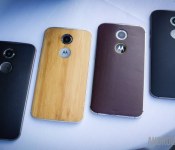
President of Motorola counters Jony Ive’s criticism of Moto Maker

In a recent interview, Apple’s Senior Vice President of Design, Jony Ive, criticized Motorola’s Moto Maker program. Now, Ive didn’t exactly use the name Moto Maker, but he did elude to the program and asked for the company name to remain private in his interview. Specifically, Ive told the New Yorker magazine:
Their value proposition was, ‘Make it whatever you want’. You can choose whatever colour you want. And I believe that’s abdicating your responsibility as a designer.
Rick Osterloh, President of Motorola, caught wind of this interview and fired back:
Our belief is that the end user should be directly involved in the process of designing products. We’re making the entire product line accessible. And frankly, we’re taking a directly opposite approach to them [Apple].
Osterloh continues, this time commenting on Apple’s pricing and availability structure:
We do see a real dichotomy in this marketplace, where you’ve got people like Apple making so much money and charging such outrageous prices. We think that’s not the future. We believe the future is in offering similar experiences and great consumer choice at accessible prices. The mobile phone industry’s greatest failure is also its greatest opportunity: to make really good, affordable devices for people who don’t want to spend a lot of money. A great smartphone, and a great mobile internet experience, shouldn’t be an expensive luxury. It should be a simple choice for everyone.
Motorola offers thousands of different color, inscription, and boot animation variations on their Moto X handsets through the Moto Maker platform. And while Apple only offers a few different color choices and two different sizes for their most recent handset, the companies may not be too far off from one another. It should be noted that while their latest handset isn’t customizable at all, the new Apple Watch is set to launch with three different watch variations, multiple different sizes and numerous watch strap options.
And when it comes to pricing, obviously there’s a big difference in the way Motorola and Apple operate. But one thing is for certain: Apple’s pricing structure is working to their advantage, since the company just posted their largest profit in history. Even so, we still wouldn’t mind if the majority of companies adopted Motorola’s business structure – offering relatively affordable, customizable handsets – while not skimping on the premium features.
What’s your take on the exchange between Osterloh and Ive?

StackSocial Offers ‘Ultra-Premium’ Bundle of 8 Mac Apps for $39.99 [Mac Blog]
StackSocial began offering eight Mac apps in its “Ultra-Premium” bundle today, which includes Cultured Code’s Things 2, an Apple Design Award winner, and Realmac Software’s Typed, which was just released in December. The bundle is priced at $44.99, but StackSocial is offering MacRumors readers a $5 discount with coupon code MRULTRA5, bringing the price down to $39.99.

The total retail value of all eight apps is $469, so the bundle at $39.99 offers a significant savings compared to buying each app individually. The apps included are:
– ScreenFlow 5 ($99.99) – screen recording tool
– Things 2 ($49) – task manager
– Sid Meier’s Civilization: Beyond Earth ($49.99) – turn-based strategy game
– ProSoft Data Rescue 4 ($99.99) – data recovery utility
– ExpanDrive 4 ($49.95) – directly access files stored in many popular cloud services
– AfterShot Pro 2 ($79.95) – photo editor
– Typed ($24.95) – text editor
– Snapselect ($24.99) – photo sorter for finding and eliminating duplicate and similar photos
Civilization: Beyond Earth was originally announced for Mac last April and debuted in the Mac App Store in November. ScreenFlow previously won an Apple Design Award several years ago.
The Ultra-Premium Bundle is available until March 5.
MacRumors is an affiliate partner of StackSocial.

PowerSkin Pop’n 3 Video Review: An Attachable Battery Pack for iPhones [iOS Blog]
There are a lot of battery cases and external battery packs available for Apple’s iPhone, but PowerSkin’s newest offering, the Pop’n 3, is a fairly unique solution that offers the versatility of an external battery pack with the convenience of a battery case.
It’s an external battery pack much like the Mophie Powerstation Plus, but it has a suction cup system that allows it to stick to the back of the iPhone, which means the iPhone can still be used as normal for the most part while charging is taking place.
We went hands-on with the PowerSkin Pop’n 3 battery pack and we thought the suction cup system was a handy feature. The suction cups themselves were a bit weak, but an added sticky pad in the middle of the battery pack assures that it sticks firmly to the iPhone.
We also liked the built-in Lightning cable that’s just the right length for charging, and the LED indicator that let us know how much charge was left. The Pop’n 3 works best with an iPhone with no case, but it’ll also stick to flat, smooth cases.
The Pop’n 3 battery pack has a 4,000 mAh battery inside, which is enough to charge the iPhone 6’s 1,810 mAh battery to full twice over, and enough to give the iPhone 6 Plus with its 2,915 mAh battery 1.5 charges. It’s only suitable for the iPhone, though — it won’t be enough to fully charge the 7,340 mAh battery of the iPad Air 2.
Like most battery packs, the Pop’n 3 charges via micro-USB. Compared to the iPhone 6 and 6 Plus, the Pop’n 3 is not quite as wide, allowing it to fit comfortably on the back of the phones. It’s 2.36 inches wide, 4.41 inches tall, .49 inches thick, and it weighs 3.81 ounces. That’s just over half the weight of the iPhone 6 Plus, so it’s quite pocketable.
Compared to several other battery packs on the market, the Pop’n 3 is a bit less impressive when it comes to capacity, but its unique portability and its price point make up for the lack of juice.
The PowerSkin Pop’n 3 comes in three colors to match each of the iPhones and can be purchased from the PowerSkin website for $49.99.

Former GM CEO on Apple Car: ‘They Have No Idea What They’re Getting Into’
 Amid rumors that Apple is developing an electric vehicle, former General Motors CEO Dan Akerson has shared his opinion on Apple’s plans, suggesting the Cupertino company avoid getting into a business with such low margins.
In an interview with Bloomberg, Akerson said that Apple may be underestimating the difficulty of operating in the car business, as it’s hard to navigate regulatory and safety requirements. “A lot of people who don’t ever operate in it don’t understand and have a tendency to underestimate,” he said
“They’d better think carefully if they want to get into the hard-core manufacturing,” he said of Apple. “We take steel, raw steel, and turn it into car. They have no idea what they’re getting into if they get into that.”
According to Akerson, Apple should stick with the iPhone, which has much higher margins than a car and none of the issues with safety. As highlighted by Bloomberg, while Apple made $18 billion in December with a gross margin of 39.9 percent, GM made just $2 billion with a gross margin of 14 percent.
Akerson doesn’t believe Apple should get into the car business, but he does admire Apple’s entrance into the car infotainment arena with CarPlay. Speaking on his time as CEO of General Motors, Akerson said that he absolutely would have partnered with Apple. “I’d have turned over the infotainment and interconnectivity of every car.”
News of Apple’s electric car plans surfaced last week after The Wall Street Journal shared details on a secret project at the company. Apple is said to have hundreds of employees working on the car in a secret research lab near its Cupertino headquarters. The car, which is electric, could potentially resemble a minivan.
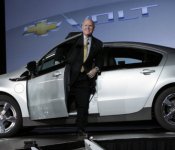
Ex-GM CEO has unsolicited advice for Apple and the auto industry

In the bid to produce the hottest take on Apple’s rumored automotive project, former CEO of General Motors Dan Akerson has submitted himself for the “telling people why Apple can’t do it” award. In an interview with Bloomberg, Akerson pointed out that the car industry is “harder than people realize”, with low margins and tough safety regulations. Of course, as many have pointed out, this hill is littered with the remains of execs who have said what things Apple can’t do or dominate, like phones (Ed Colligan, Palm; Jim Balsillie, RIM; Steve Ballmer, Microsoft) and we know how that story went.
Of course, rumors about Apple’s entry into the TV business have persisted for years despite similar concerns from entrenched executives about how realistic Apple’s proposals are, so it could go either way. Akerson — who exited the leader’s chair at GM just in time to avoid last year’s ignition switch recall scandal — also has advice for the auto industry, suggesting he “would’ve signed it over” to Apple.
“It” is everything in the car’s infotainment system, which Apple and Google are both trying to take control of, even as many auto manufacturers have been slow to open their systems to other companies. In the retired executive’s view, Apple has no idea what it’s doing in terms of “hard-core manufacturing” despite producing millions of glass-and-aluminum slabs every year. As such, we’re sure the folks in Cupertino will have him on speed dial if the “Titan” EV project becomes anything more than just vapor, and that current execs in Detroit are looking for more information on implementation of CarPlay or Android Auto.
[Image credit: Bloomberg via Getty Images]
Filed under: Transportation, Apple
Via: Autoblog
Source: Bloomberg
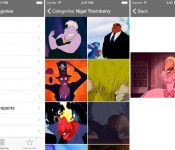
‘GIF Finder’ Pulled from App Store Over Copyright Issues With Disney Characters
GIF Finder creator Matt Cheetham today announced that his popular GIF curating app will be pulled from the App Store following a lengthy back-and-forth with Apple. Cheetham faced stonewalling from the company thanks mostly to a few copyright issues of Disney-related characters within the app.
Begun by Cheetham as a side project a few summers ago, the app used Tumblr and Imgur’s APIs to discover and curate a collection of GIFs and images and distill them into categories or as search results for users to browse. It launched in 2012 and had nearly 90,000 downloads in the years since.
 Image via iDownloadBlog
A recent update caused the app to crash on the iPad version when sharing a GIF, so Cheetham submitted an update to fix the issue. Instead of the usual okay from Apple, on January 25 he received a rejection notice for the update because the app “includes content or features that resemble various well-known, third-party marks, including Disney characters.”
Thank you for your response. However, in order to proceed with your application, we require documentation demonstrating your right to use the images included in your app and/or metadata, specifically addressing your right to copyrighted images.
Otherwise, if you believe you can make the necessary changes to your application and/or metadata so that it does not infringe the rights of a third party, we encourage you to resubmit your revised application and/or metadata.
Cheetham pointed out that he doesn’t directly own the images and proceeded to offer copyright, disclaimers, and links to the Tumblr and Imgur terms of service, but he admitted it “all has fallen on deaf ears.” He ultimately relented, pulling the crash-prone app from the storefront upon Apple’s repeated requests for documentary evidence of his ownership of the content.
At this point, I don’t have the time or knowledge on how to fight this any further. I can’t have an app in the store that I cannot support (and that crashes when attempting to use it’s main function!), so today I am removing GIF Finder from sale and calling the project dead.
There’s lots of other really great GIF Finding apps out there that are packed edge to edge with content from various API’s. I wish them all the best with their next update and only hope they can continue to slip them in under the radar as I appear to have done for the last 3 years.
Apple and Disney’s history is well-known, especially Steve Jobs’ hand in the now Disney-owned Pixar Animation Studios, but Apple’s crackdown on GIF Finder is unusual. GIF Finder has been in the App Store for three years without rousing attention and there are several other similar GIF apps in the App Store.
Apple has recently been enforcing App Store policies that it’s been lenient about in the past, rejecting a number of apps that included screenshots of violence or guns, causing developers to modify the shots or remove the imagery all together before being able to update or release their apps at all.

UK Banks Introducing Touch ID Access to iPhone Apps [iOS Blog]
Two banks based out of the United Kingdom – Royal Bank of Scotland and NatWest – yesterday announced incoming support of Touch ID in their iOS-based apps, allowing customers to gain access to their accounts without needing to input a user name and password (via BBC News).
Customers of each bank will need to activate the Touch ID feature with their existing security information within each respective app before being able to gain access to their banking statements via their finger. After three failed Touch ID login attempts, each bank said the app will revert to the traditional user name/password protected log-in request before needing to re-establish the Touch-ID features.

BBC reported that a few “security experts” voiced concern over the new fingerprint security feature given reports of specialized fake fingerprint hacks. Speaking to BBC, Ben Schlabs, of SRLabs, a German hacking think tank, said, “The security implications are the same, it is just as dangerous… I think it has been shown that it is pretty easy to spoof it and the risks aren’t fully understood.” There have, however, been no reports of such hacks being successfully used for malicious purposes.
With the recent surge of online and app-based banking solutions, both RBS and NatWest are confident the new feature will continue to offer their customers the level of security and accessibility they expect from the banks.
Stuart Haire, managing director, RBS and NatWest Direct Bank, said: “There has been a revolution in banking, as more and more of our customers are using digital technology to bank with us.
“Adding TouchID to our mobile banking app makes it even easier and more convenient for customers to manage their finances on the move and directly responds to their requests.”
Both RBS and NatWest are owned by the same parent company, Royal Bank of Scotland Group, so many of the same features and options will be similar between each app. Each bank also promised that existing processes that required additional verification of identity, like money transfers, will continue to do so even if users choose to opt-in for the Touch ID features.
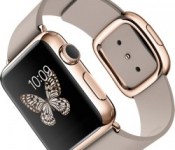
Apple Watch Revenue Will Likely Be Dominated by Expensive Gold Edition
 Earlier this week, in a report about the Apple Watch’s missing health features, The Wall Street Journal claimed that Apple has placed 5 to 6 million Apple Watch orders with overseas suppliers ahead of the wrist-worn device’s launch in April.
The report specified that half of the first-quarter orders will be allocated to the entry-level Apple Watch Sport, while one-third of shipments will be for the mid-tier Apple Watch. The remaining orders will be for the expensive Apple Watch Edition.
While the Apple Watch Edition will have the least amount of orders among the three models, with between 850,000 to 1 million units shipped, well-known Apple pundit John Gruber of Daring Fireball believes that the expensive gold model could account for the majority of Apple Watch revenue. Multiple reports claim that the Apple Watch Edition will cost over $4,000, making it one of the most expensive products the company has ever sold.
“So as a business — if the WSJ’s sources are correct, and if Apple is correctly predicting demand — Apple Watch revenue will be dominated by the gold Edition units, accounting for double or more of the revenue from all the other models combined. The Edition models would thus do to the Apple Watch lineup as a whole what the iPhone, iPad, and Macintosh do to the entire phone, tablet, and PC industries, respectively: achieve a decided majority of the profits with a decided minority of the unit sales.”
Apple Watch will start at $349 for the entry-level Sport model, while pricing information for the other two models has not been confirmed. Apple will reportedly increase production of the Apple Watch Edition to over 1 million units per month in the second quarter, indicating that demand could be strong for the company’s first new product since the iPad in 2010. Early sales predictions for the Apple Watch have been all over the map, ranging from between 8 million to over 26 million units during 2015.

