



Google Acquires Softcard Technology, Inks Deal With Carriers to Pre-Install Google Wallet on Android Devices
Following rumors of an acquisition, Google today announced that it has purchased some technology and intellectual property from NFC-based mobile payment service Softcard, formerly known as Isis Mobile Wallet. The purchase will allow Google to improve upon its existing mobile wallet technology to better compete with Apple Pay.
Owned jointly by AT&T, Verizon, and T-Mobile, Softcard was established in 2010 in an effort to allow the three carriers to enter the mobile payment market. As an NFC-based payment option that works primarily with Android-based phones, Softcard has been a major Google Wallet competitor, arguably stunting NFC mobile payment growth for both companies.

Google Wallet nearly floundered following its 2011 debut after Verizon, AT&T, and T-Mobile refused to support the app in favor of Softcard (then known as Isis). Google later found a way to circumvent the Google Wallet lockout, but its growth has suffered amid competition from Softcard and other payment technologies.
Today’s purchase consolidates the number of payment options for Android devices and it lets Google establish a deal with the three carriers to build Google Wallet into future Android phones for the first time.
So today, we’re excited to announce that we’re working with AT&T Mobility, T-Mobile USA and Verizon Wireless, as well as their mobile payments company Softcard, to help more Android users get the benefits of tap and pay. Under this relationship, the Google Wallet app, including the tap and pay functionality, will come pre-installed on Android phones (running KitKat or higher) sold by these carriers in the US later this year. We’re also acquiring some exciting technology and intellectual property from Softcard to make Google Wallet better.
The early success of Apple Pay has sparked a lot of interest in mobile payments in recent months. Along with Google’s acquisition of Softcard, Samsung has recently purchased LoopPay in an effort to develop its own payments solution.
It is not clear if Google’s purchase of Softcard technology means Softcard will be shutting its own payments service down entirely. According to Softcard, its existing customers can continue to use the Softcard service for the time being, and more information is forthcoming from the company.

OS X 10.10.3 Beta 2 Update Introduces New Emoji, Skin Tone Modifiers
Today’s second OS X 10.10.3 beta builds on the emoji groundwork laid with the first OS X 10.10.3 beta, introducing all new emoji and emoji skin tone modifiers. When selecting an emoji with a skin tone, such as one of the many people emoji, it’s now possible to select a specific skin tone from one of five options.
There are also several new people emoji that introduce greater diversity. Family emoji now include multiple same sex couples, both with children and without, all with variable skin tone options.

Along with a range of diversified people emoji, today’s update brings 32 new country flags, including flags for Canada, Australia, and India.

Along with new emoji, OS X 10.10.3 brings a renamed Character palette that focuses more heavily on emoji. Accessible through the “Edit” menu in most Mac apps, the palette was previously named “Special Characters,” but is labeled “Emoji & Symbols” in OS X 10.10.3. The emoji picker has also been redesigned, featuring a layout with a single larger vertical-scrolling page.
The same diversified emoji options will also likely be coming to iOS. The first iOS 8.3 beta included a redesigned emoji picker, but it did not introduce placeholders for new emoji or skin tone modifiers.
Apple Seeds Second iOS 8.3 Beta to Developers
Apple today seeded the second beta of iOS 8.3 to developers, two weeks after seeding the first iOS 8.3 beta. The initial iOS 8.3 beta came as a surprise because iOS 8.2 with the WatchKit SDK also remains in testing.
The beta is available through the iOS Developer Center. It includes Xcode 6.3 and a new version of Apple’s programming language, Swift. Apple has also released a new Apple TV beta for third-generation Apple TVs.

While iOS 8.2 appears to bring only minor bug fixes to the operating system along with the WatchKit SDK and support for the Apple Watch, the first beta of iOS 8.3 introduced several new features including support for wireless CarPlay connectivity, a new emoji picker, support for Google 2-step verification, and Apple Pay support for the China UnionPay network. It also removes the “beta” label from iCloud Photo Library.
iOS 8.3 will be released following iOS 8.2, which is expected in March, so it may be a few months yet before we see a public iOS 8.3 launch.
Update: According to iOS 8.3 release notes, the new beta is not compatible with LTE Voice on Verizon. Apple asks that customers using Verizon set LTE to data only. There’s also been a fix to the dialog that appears when an iPhone is connected to a CarPlay-compatible car.
New ‘iPhone 6c’ Concept Teases Future of Apple’s Budget Smartphone [iOS Blog]
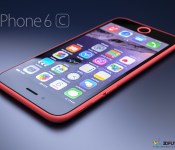
While it remains unknown if Apple will ever release a new budget smartphone to succeed the iPhone 5c, which was a plastic-backed carbon copy of the iPhone 5, a new gallery of renders from 3D Future provides an early look at what the so-called “iPhone 6c” could look like. The concept smartphone essentially combines an iPhone 5c and iPhone 6 into one, which would seem like a logical move if Apple ever releases an iPhone 6c.

The concept iPhone 6c features several design attributes adopted from the iPhone 6 and iPhone 6 Plus, including a slimmer design, rounded edges, pill-shaped volume buttons, circular speaker grilles and a slightly protruding rear-facing camera. The smartphone also appears to have a 4.7-inch display and is pictured alongside the iPhone 6 for a side-by-side comparison.

It is important to note that these mockups are not based on any leaked specifications, design attributes or other information. Apple did not release an iPhone 6c alongside the iPhone 6 and iPhone 6 Plus last September, prompting debate as to whether the company will hold off until the iPhone 6s next September or eventually phase out the mid-tier model from its lineup entirely.

Apple is expected to release its flagship iPhone 6s next September. It was reported in November that the iPhone 6s and iPhone 6s Plus could have the “biggest camera jump ever” with a dual-lens, DSLR-quality system. The smartphone is still expected to retain an 8-megapixel rear camera and is rumored to feature an improved Touch ID fingerprint scanner with reduced errors. At this point, it remains unclear if an iPhone 6c is also in the works, but these artistic renditions provide a teaser of what could be.

Apple Dropping AOL Sign-In for iTunes and App Store in March [iOS Blog]
 Apple has added a support document to its website stating that customers who use an AOL username to sign into the iTunes Store, App Store or iBooks Store will be unable to continue doing so starting March 31 (via 9to5Mac). Apple customers must convert their AOL username to an Apple ID account in order to maintain access to the storefronts following the deadline.
“Starting March 31, 2015, AOL will no longer allow customers to use their AOL Username (also known as an AOL Screen Name) to sign in to the iTunes Store, App Store, or iBooks Store. You must convert your AOL Username to an Apple ID in order to maintain access to the stores and to content you purchased previously.”
Apple will no longer provide support for AOL usernames that are not converted following March 31. The transition does not affect any iTunes purchases made with the AOL username or any other AOL services that may be associated with the account. To begin the transition process, users must sign into iTunes with an AOL username and follow the on-screen instructions.
Apple’s iTunes Team Seeking Expertise in ‘Music Journalism’ Ahead of Rumored Revamp [Mac Blog]
Earlier in the month, Apple’s London-based iTunes team posted a job listing describing an “Editorial Producer” who would have past experience reporting on pop culture, with specific background in music journalism (via Music Ally). While far from definitive, the job post could be hinting at some editorial-related expansions coming to the revamped Beats/iTunes merger set to launch later in the year.
Set to be split between editorial and producing duties, the full-time job would require the applicant to write, edit, and oversee a group of various freelance writers covering content from music to books and movies. A good portion of the job will be devoted to “special projects and promotions” as well, with a focus on collaboration between other departments to make sure all of the content is successfully produced on time.

Key Qualifications
-Excellent communication, cross-departmental collaboration, and planning skills with a strict attention to detail.
-Seasoned writer with broad pop culture background.
-Deep contacts in the freelance world with writers who can cover the spectrum of pop culture (music, movies, books, etc.).
-Experience managing and motivating a stable of freelance writers.
-Experience working cross-functionally across content, business, and production teams.
-Project management experience.
Apple has been hinting at big changes coming to iTunes, with the company acquiring media analytic service Semetric, and BBC Radio host DJ Zane Lowe joining the company ahead of the big Beats Music revamp. As Music Ally points out, the new job posting could be pointing to an even bigger expansion for the service in terms of an original journalistic effort.
As it stands, Apple’s iTunes, iBooks, and App Store point users in the direction of various top-selling or most popular music, books, movies, and apps with occasionally short “iTunes Editors’ Notes” detailing new and favorite releases amongst the services. Despite the fact the new post seems to be pointing to an attempt by the company to add original content and opinions to their download service, as with any job listing, it’s far from a confirmation that this will be a direction the company takes in the future.
Though the exact timeline for the launch of the new Apple-backed Beats Music service has remained blurry, news concerning the service has remained steadily consistent since its announcement. Most recently it was reported that the Beats Music revamp would see a fairly deep integration into OS X and iOS, with users possibly even being able to merge their Apple ID with a Beats account for a more seamless experience.
Toyota won’t have CarPlay-equipped vehicles anytime soon

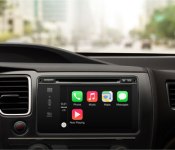
If you’re hoping to get a Toyota car with Apple’s CarPlay system built-in, you’ll have to hit the aftermarket, according to a New York Times report. Toyota said that “right now, we prefer to use our in-house proprietary platforms for those kinds of functions,” adding that it currently has no plans to use either CarPlay or Android Auto, at least in the US. Though that’s a small glitch in Cupertino’s ambitious plans, other automakers are more bullish on it. Ford, for one, said that it’ll start offering both Apple and Google’s infotainment systems on select vehicles this year, and will make both systems available on all US cars by next year.
For now, Toyota will be sticking with its vanilla Entune systems, which have some interoperability with Android and iOS via an app. Of course, Apple has many other CarPlay partners, even though Toyota is one of the biggest. GM said it’ll install the system in its next-gen Volt, and Volkswagon will offer the choice of MirrorLink, Android Auto and CarPlay by the end of this year. In fact, most carmakers are device agnostic, with large players like Ford, GM and Honda in both camps — a wise move, given that smartphone owners can be just as opinionated as car owners. To see which carmakers are in which camp, see the chart below (based on info from Apple and Google).
| Automaker | Android Auto | Apple CarPlay |
| Alfa Romeo | ✓ | ✓ |
| Audi | ✓ | ✓ |
| Bentley | ✓ | |
| BMW | ✓ | |
| Chrysler, Dodge, Jeep, RAM | ✓ | ✓ |
| Citroen | ✓ | |
| Ferrari | ✓ | |
| Fiat | ✓ | ✓ |
| Ford | ✓ | ✓ |
| Honda | ✓ | ✓ |
| GM | ✓ | ✓ |
| Hyundai | ✓ | ✓ |
| Infinity | ✓ | |
| Jaguar | ✓ | |
| Kia | ✓ | ✓ |
| Land Rover | ✓ | |
| Maserati | ✓ | |
| Mazda | ✓ | ✓ |
| Mercedes-Benz | ✓ | |
| Mitsubishi | ✓ | ✓ |
| Nissan | ✓ | ✓ |
| Opel | ✓ | ✓ |
| Peugeot | ✓ | |
| Renault | ✓ | ✓ |
| Seat | ✓ | |
| Skoda | ✓ | |
| Subaru | ✓ | ✓ |
| Suzuki | ✓ | ✓ |
| Toyota | ✓ | |
| Volkswagon | ✓ | ✓ |
| Volvo | ✓ | ✓ |
Filed under: Transportation, Apple
Via: Apple Insider
Source: New York Times

Apple Spending $2 Billion to Build Two New Data Centers in Europe
 Apple announced on Monday that it will invest €1.7 billion to build and operate two new data centers in Europe. The state-of-the-art facilities will be located in County Galway, Ireland and the Central Jutland Region of Denmark, powering Apple’s online services such as the App Store, iTunes Store, iMessage, Maps and Siri for European customers.
“We are grateful for Apple’s continued success in Europe and proud that our investment supports communities across the continent,” said Tim Cook, Apple’s CEO. “This significant new investment represents Apple’s biggest project in Europe to date. We’re thrilled to be expanding our operations, creating hundreds of local jobs and introducing some of our most advanced green building designs yet.”

Toyota Currently Has No Plans to Support CarPlay or Android Auto in U.S.
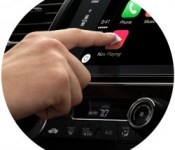
 While Toyota has long been listed as one of Apple’s CarPlay partners, the third best-selling auto brand in the U.S. currently has no plans to offer vehicles with the feature in that country, as noted in a New York Times overview of the race between Google and Apple to own the dashboard. Toyota also has no plans to offer Android Auto support in the U.S.
John Hanson, the national manager of Toyota’s advanced technology communications, said while the company talked frequently with both Google and Apple, it currently had no plans to adopt Android Auto or CarPlay in the United States.
“We may all eventually wind up there, but right now we prefer to use our in-house proprietary platforms for those kinds of functions,” Mr. Hanson said.
While Toyota is ruling out the U.S. market for CarPlay support for the time being, the company has not made any firm announcement about support in other countries. Shortly after Apple’s CarPlay announcement, Toyota’s UK division briefly posted a blog entry claiming CarPlay would be coming in 2015, but the company quickly backtracked on the claim.
Today’s report from The New York Times focuses more on Android Auto than on CarPlay, likely due in large part to Apple refusal to comment for the piece. Still, it offers a glimpse of the struggles auto manufacturers have had developing in-car systems and their reluctance to turn that experience over to Apple and Google.
With consumer preference driving the market, however, many manufacturers now see little choice but to support both CarPlay and Android Auto. Vehicles supporting both systems are expected to be hitting showrooms in the near future, with Hyundai likely one of the first out of the gate.

Apple’s Oscar Ad Shot Entirely on an iPad
Apple debuted a new iPad ad to air during tonight’s Oscar’s. Apple highlights the new ad on their website which features students at Los Angeles County High School, using the iPad to write, produce, shoot, score, and edit films. It features a voiceover from Martin Scorsese and is called “Make a film with iPad”.
Mashable reports that the ad itself was filmed entirely on an iPad Air 2. Apple created a special section in the App Store highlighting the various apps used by the students for their filmmaking.

