


Is this the Nexus S?
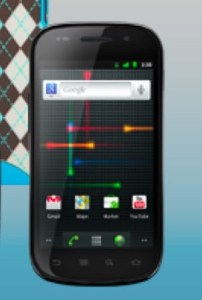 Woah, what do we have here? A new “In Store” web-based flier from Best Buy Mobile has this little nugget on its front page: a previously unseen Galaxy S, running stock Android (possibly 2.3, based on the green icons and black notifications bar) and harboring what looks to be a front facing camera. Sounds like a Nexus S to us! Paired with this morning’s little Nexus S slip-of-the-tongue from Best Buy, we’re starting to get our hopes up. Don’t let us down, Google / T-Mobile / Samsung / Best Buy / planet earth!
Sony Ericsson Xperia X12 Anzu: Android 2.3 phone incoming
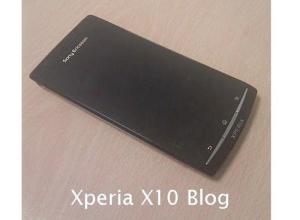 Sony Ericsson’s Android phones are no doubt great to look at. But their failure to play nice with the very latest versions of Google’s killer OS has caused problems. However, it seems things are all set to change with the arrival of the Anzu, also known as the Xperia X12.
This spanking new Android handset has been leaked on The Unofficial Xperia X10 blog, with pics showing a huge, but superslim device with a 4.3-inch panel. While the one snapped is running Android 2.1, word to the wise is that the X12 will be loaded up with Android 2.3 Gingerbread when it hits shelves early next year.
On top of that monster screen, there’s said to be HDMI out and 1080 HD video recording, putting this right up there with the Samsung Galaxy S. The X12 is expected to be announced alongside the much-hyped PSP phone in December, ahead of their New Year on sale dates.
Elsewhere the X10 Mini and Mini Pro are being lined up for a refresh, with Android 2.3 on board. The Vivaz and Vivaz Pro are also said to be getting the same treatment, with new models out in 2011.
Motorola introduces the Droid 2 Global (video)
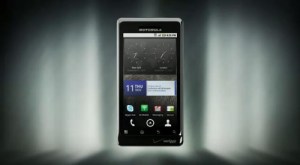 Motorola has released a brief promo spot showing off the new Droid 2 Global, which was put on sale without a formal announcement yesterday. This 1.2 Ghz global device costs $199.9, which is as much as the regular Droid 2 used to cost, so it seems pretty clear that the Droid 2 is being phased out in favor of this device.
Bootlace lets you install Froyo on your iPhone without a computer
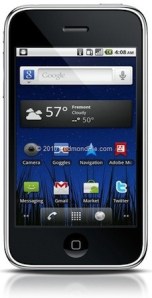 It may not solve some of the problems involved with actually running Android on an iPhone, but the recently released Bootlace 2.1 application for jailbroken iPhones does at least make the installation process easier than ever. Unfortunately, it only works with the iPhone 2G and 3G at the moment, but it will let you install Android 2.2 (a.k.a. Froyo) directly on the device without the need for a computer. Hit up the source link below for the complete installation instructions — and insert your own joke here about the iPhone running Froyo while your Android phone is still stuck at 2.1.
Dell's Stage UI headed to Streak, also unofficially works on EVO 4G (video)
 The first time the words “Stage UI” passed our lips, they were in relation to the Dell Thunder leak, but now we’re hearing that Dell’s custom Android user interface will actually appear alongside Android 2.2 when the update finally arrives on the five-inch Streak. We’ve just learned that’s going to happen this winter in Japan when the Streak launches on SoftBank at the very least, as both are advertised for early December there, but we expect we’ll see the updated OS even sooner in the US and Europe for obvious reasons. What’s more, an unofficial build of Froyo that leaked out for the Streak last month has since been found to have Stage UI on board. StreakSmart‘s got a video of a custom ROM running a series of Dell-specific widgets on the Streak, and sister site Good and Evo managed to trick the very same software to run on a rooted HTC EVO 4G. You can see examples of both on video after the break, but here’s the basic idea behind the UI — giant panes of contacts, apps and shortcuts that fill an entire screen each, but leave your app drawer accessible at a swipe. If you’re feeling daring, you can try the ROM for yourself at our more coverage link. Just be careful flashing that new baseband, eh?
LG Optimus T and Optimus S review

It wasn’t long ago that buying a smartphone meant spending at least a Benjamin and committing to an expensive 2-year contract. But things are changing, and shopping for a smartphone on a budget is getting easier than ever, thanks in great part to a recent flood of reasonably-priced Android devices that are pouring into the market. We’ve already talked about the HTC Wildfire, Huawei Ascent, ZTE Racer and Blade/San Francisco, and the Motorola Citrus — not to mention the lovely Comet (and its international cousin, the Ideos) on T-Mobile. Enter the LG Optimus T ($30 post-rebate on T-Mobile) and Optimus S ($50 post-rebate on Sprint), two Android siblings that might prove once and for all that “affordable” doesn’t mean “cheap.” Let’s dig in. Read more 
Toshiba FOLIO 100 lands in the UK
 The 10.1″ multi-touch capacitative touchscreen tablet that runs on Android 2.2 Froyo supports Adobe Flash 10.1 with integrated HDMI connectivity and a 1.3MP front-facing webcam.
Users of this tablet can download apps from Toshiba Market Place, which can be accessed directly from the device. The tablet, although an Android cannot access the Android Marketplace. The tablet weighs a light 760g.
Its 10.1″, 1024 by 600p screen supports pinch-to-zoom and swipe controls.
The Toshiba FOLIO 100 has a variety of connectivity options. USB 2.0, Wi-fi and Bluetooth are included along with an integrated SD slot with additional storage of up to 32GB.
Specially for music afficiandos, Music Place is on the FOLIO 100 – it’s a digital music service which is powered by online store 7Digital. Music Place offers an instant, on-demand access to an online music catalogue, allowing users to download purchased tracks direct to their FOLIO 100 device.
Purchase the latest tablet to hit the market for £329 at stores across the UK.
Binatone brings Android to the iHomePhone
 The Binatone iHomePhone has been announced, and its makers are claiming that it is the world’s first Android powered home phone.
Running Android 1.6, the iHomePhone is made up of a DECT digital cordless phone, with Wi-Fi b/g/n on board, a microSD card slot and a 2.8-inch, 320×240, touchscreen display.
Built-in you’ll get a YouTube app, a contacts manager, an email client, a picture viewer, an MP3 player and a personal organiser. It also functions as an internet radio and has an RSS feed reader.
Battery life is 8 hours for talk-time, 80 hours for standby, and it comes with a docking station that also has built-in stereo speakers.
There’s two things that stand out with the Binatone iHomePhone. Firstly, what a simple and obvious idea. And secondly, there’s no way the lawyers at Cupertino are going to be happy with that name – especially given that its an Android touting device.
Available in time for Christmas, the Binatone iHomePhone will cost £99.99.
Facebook Mobile event: Software updates explained
 Last night’s Facebook mobile event left a lot of journalist cold as rumours that the company were due to launch a branded handset we quelled by CEO Mark Zuckerberg. That’s not to say, however, that the event was a washout, with Facebook revealing and cementing its plans for further mobile integration over the course of the next few years.
The big announcements were threefold: ‘Single Sign-on’, ‘Location APIs’ and the ‘Deals Platform’. We’ve got a run down of what each actually means after the break:
Single Sign-on
Similar to how Android Devices sync your calendars and contacts from Gmail, this is basically a system Facebook is setting into place so that you need only sign in to facebook once for your info to appear across calendars, apps and websites.
Location APIs
Essentially: further integration for Places. Facebook’s APIs will allow app developers to capitalise on information about where you are and where you’ve been. This could be in the form of FourSquare-style offers or even games – it’s up to the developers, but the point is that it’ll now be easy to take that data and transfer it to other uses.
Deals Platform
Bsically a more advanced advertising strategy, the Deals Platform will help those eking money from Facebook ads to do so more effectively thanks to increased location, likes, friends and personality data.
Those are the major headlines, then, but what else? Zuckerberg did give Android lovers some good news, adding that the platform’s app is due for a much-needed update to stay in line with the more polished iPhone app. “Traditionally the Android app has always been a little bit behind,” he conceded. “We didn’t have a full team working on it, but now we’re back on track.” Lastly, Zuckerberg took a swipe at the iPad, declaring that it’s not portable. He said: “the iPad is not mobile… It’s a computer.”
Sharp Galapagos 003SH and 005SH bring glasses-free 3D to Japanese Android lovers
 Hey, what could the maker of the 3DS’ autostereoscopic display be doing in its spare time? Why, stealing a bit of thunder for itself, by the looks of it. Sharp has just trotted out a pair of glasses-free 3D Android handsets for Japan’s Softbank network in the form of the touchscreen slate 003SH and QWERTY-slidin’ 005SH. A 1GHz Snapdragon powers Froyo on both, with the 3D-capable displays stretching to 3.8 inches and 800 x 480 resolution. The 003SH also comes with a 9.6 megapixel camera capable of 720p video, while the 005SH settles for 8 megapixels. There are also bundled 3D content deals in place, such as the one with Capcom that will see Mega Man, Resident Evil and Ghosts ‘n Goblins titles coming preloaded on the handsets. Intrigued? The 003SH is coming in this December, to be followed by the 005SH in February next year.
 AIVAnet