


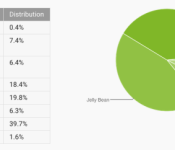
Android 5.0 Lollipop now running on 1.6% of all Android devices

Android distribution figures are published every month by Google to give us a better idea of where the platform stands in terms of marketshare. While KitKat and Jelly Bean have dominated the chart for quite a while now, we’re now seeing Lollipop marking its entry in the list officially.
The latest version of Android has been missing from the distribution chart over the past couple of months as Google only shows Android versions with more than 0.1% marketshare. The latest reading puts Android 5.0 Lollipop at 1.6%, which is a significant improvement. The Android 4.4.x marketshare is up by 0.6% with the platform now standing at 39.7%.
The good news for Google is that other Android versions are seeing a steady drop in marketshare with Jelly Bean coming down to 44.5% while a month ago it was at 46%.
This means that more users are making the shift to Android 4.4 KitKat. Even though this isn’t the latest version of Android anymore, Google will be pleased to know that customers are transitioning from older versions of Android like Ice Cream Sandwich and Jelly Bean.
The company will be more pleased if it can replicate similar success with Android 5.0 Lollipop. The fact that it has seen a significant increase over the last month or so will be reassuring for Google.
Source: Android Developers
Come comment on this article: Android 5.0 Lollipop now running on 1.6% of all Android devices

Samsung event teaser hints that ‘what’s next’ is a curvy Galaxy

Samsung’s pre-announcement clues are sometimes cryptic at best, but it’s not being especially subtle this time around. Hours after Tinhte first revealed that something was up, Samsung has posted a “what’s next” teaser for a March 1st Galaxy Unpacked event in Barcelona whose centerpiece is the shadowy profile of a curvy-looking device. While it’s not perfectly clear what this image represents, it bears an uncanny resemblance to the right-hand side of the Galaxy Note Edge, where the smartphone’s signature curved display tapers off. Seeing as how Samsung isn’t about to re-unveil a phone, our money’s on the teaser alluding to a Galaxy S6 with an Edge-like screen, whether it’s optional (as SamMobile rumored earlier) or standard issue. Whatever shows up, it’s pretty obvious that March 1st is going to be a very busy day in the Android world — we’ll be sure to attend those events and let you know what Samsung, HTC and others have to offer.
What’s next? The answer will be revealed March 1st at #Unpacked. #TheNextGalaxy pic.twitter.com/h6wve2BFWJ
– Samsung Mobile (@SamsungMobile) February 3, 2015
Filed under: Cellphones, Mobile, Samsung

Words on Tour
It just seems as if there is a never ending splurge of Candy Crush clones and an endless amount of Word Games. I just so happened to come across this game by accident. I was playing the newly updated Words with Friends when an ad popped up on my screen. “Download Words on Tour for free and Play Now,” the advertisement read. Curiosity overcame me and I downloaded it right away. As if I needed another game to distract me from my already busy schedule. However, once I started playing it, I was hooked.
Just like Candy Crush, each level of the game requires you to complete a specific task before moving on to the next. Such tasks include: collecting stamps, collecting so many different word tiles, completing a phrase, and getting a token to the bus. But the thing is, you only have so many moves you can make. While the game is free for download, what’s a game without in-app game purchases? Words on Tour makes it possible for you to buy coins and bonus tiles to help complete difficult levels. If you don’t want to purchase any tiles, one could always go on Facebook and ask friends for extra lives. Sound familiar? The game also provides tutorials if you’re not sure how to complete a certain task.
Having a difficulty looking for a word? It’s okay. One of the coolest features of this game though is the ability to rotate your phone to find words. One of the things I do not like about this game though, is that you are only given 5 tries. Otherwise you will have to wait until your heart meter is re-filled, or you could ask your friends on Facebook to give you a life. Having to ask for extra lives is an inconvenience especially when most of your friends can’t stand receiving game requests. I suppose its ok we have 5 tries or I probably would be playing the game all night and not completing my homework. Collect as many stars as you can to be able to move on to a new city (level).


While this game is certainly not perfectly built as there are a few glitches here and there such as syncing with other device issues, sometimes when I try to swipe a word, the game tends to freeze. When I restart the game, I lose a life. Other than a few of these minor inconveniences, I like this game. While most of the time we can pass with three-four letter words, sometimes it is beneficial to try and use our thinking caps to get more than just a three letter word. It will increase your chances of obtaining a bonus tile faster.
What we like:
- When working on a ‘complete the phrase’ task and somehow you run out of moves, when you repeat that level, the game does not change the phrase. In fact, by the second time around, you will know what letters you need in order to complete that task.
- The ability to rotate your phone so you can change the way your tiles move on the board or change the direction how the extra bonus tiles removes the tiles.
What we don’t like:
- Having to depend on friends on Facebook for extra lives.
- Does not sync to other devices. So even though you may be on level 69 on your phone, check out your tablet, you may be on a different level.
The post Words on Tour appeared first on AndroidGuys.
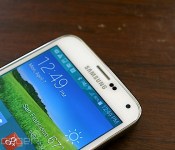
Verizon brings Lollipop to Samsung’s Galaxy S5 in the US

The rollout started in Europe already, but Samsung Galaxy S5 owners in the States are about to get a taste of Lollipop — so long as you’re on Verizon. Big Red is ready to update those handsets, and it’s the first carrier in the US to offer the latest version of Android on said device. The new version packs in Lollipop’s new features and a heavy dose of Material Design, all while still sporting Sammy’s latest TouchWiz skin. You likely won’t see a notification to install Android 5.0 immediately, as these things usually roll out in stages. However, folks with a Verizon GS5 can rest easy knowing that Lollipop will arrive shortly.
Filed under: Cellphones, Software, Mobile, Verizon
Via: Android Central
Source: Verizon

‘Doctor Who’ coding game for kids arrives on tablets

You no longer have to fire up your computer just to give your children some programming lessons from Doctor Who. The BBC’s educational coding game, The Doctor and the Dalek, is now available on iPads and Android tablets (both through Amazon and soon Google Play). You’ll get largely the same instruction-based Boolean logic puzzles as before, but with a few new levels and new abilities for your one-of-a-kind Dalek companion. The catch? While the game is still free, it’s only available in the UK for now — here’s hoping that the BBC makes it available worldwide so that more kids can help their favorite Gallifreyan.
What is fragmentation and how does it affect me?
Many of you may have read the report by OpenSignal that came out this past August. In it OpenSignal gives a frightening view on just how fragmented the Android ecosystem truly is. As of the published date of the report, there were 18,796 distinct Android devices up from 11,868 of the previous year with not all of them being on the same version of Android. That equates to a 58.38% jump in just over a year. Now you might be thinking “Okay Juan, so what? You just threw a few scary numbers at me but I just got a shiny new Samsung phone for the holidays. Why should I care how many unique Android devices there are?” While there are many ways that fragmentation can affect the user, let’s touch on the two big ways that we experience its effects in our daily lives.
Android Updates

You may have noticed that when Google releases a new version of Android you do not immediately see an update notification on your phone to upgrade to it. It usually takes a few months for users to see the update hit their devices and some users may not get to see it at all. This boils down to the open source nature that is Android. When Google releases a new version of their OS, they are only releasing the core system. Since Google does not manufacture actual devices to run Android and instead depends on other OEMs like Samsung, HTC, and Motorola to create them, they cannot really develop something that is going to meet everyone’s needs. So it is then up to the OEM’s to use the source code and modify and make adjustments so that it runs smoothly on their specific devices. Many OEM’s like to add their own twist on Android phones such as customized UI’s, different sensors, and various hardware specifications and it would be impossible for Google to be able to create something that cater to so many different configurations. This is where fragmentation begins to occur.
Let’s take Samsung’s line of Galaxy S5 phone for instance. What we see as just the Galaxy S5 is actually just one of many models that have been released around the world. This in turn means that when an update comes out Samsung has to modify the code that Google releases for not just one model but many and that is just for the Galaxy S5 alone. Now imagine all the lines of phones that Samsung has and then each one of those having different models and you begin to see why it might take a while for updates to hit your phone. Samsung would have had to prioritize and seen which devices were actually going to get the update and how fast. You might see their latest flagship, in this case the Galaxy S5, get the update within a few short months and other devices it could take up to year. If Samsung deems the devices to be too old and not worth the update, then they will keep it at the current version and only releases critical updates if they are needed. From just one OEM alone now you have a line of phone each one with a different version of Android and different capabilities and you begin to see the fragmentation take place. Samsung would not have been able to just get the source code and make something that would run on all their devices due to the nature that each model and line of devices is different and has different capabilities. So with all that said now you have an idea on why it takes so long for your devices to get an update and how fragmentation plays a part in it. Having so many different devices configurations makes it quite difficult to create something that will run on everything and so instead we are depending on the OEM to modify the code and must wait for them to deem our device worthy of an update.
Android Apps

You may have caught your friends talking about that awesome new app that just hit the Play Store only to find that your phone is not capable of running it and you are left out. This occurs just due to the nature of how Android works. We already touched on how Android is an open source project and is available all around the world. Well that not only affects how updates are handled but also the very way nature of the apps that are installed on it. You see, when a developer comes up with a great idea for an app it’s not just program and go. He has to decide where his target audience is and program from there. Since there are so many distinct android devices with each one running a different version of android and having different hardware configurations, it is impossible to create an app that is going to run 100% on all devices. The developer has to decide which version of android he is wanting to target and focus on that one group.
Using the social giant’s latest release as an example, Facebook Lite, we can see how this process works. When Facebook first came out with its app on the Play Store one of the biggest complaints was that the app would lag and was not very smooth to use. The issue was due to the fact that the Facebook App can be quite taxing on phones as it requires quite a lot of resources to run smoothly. For most recent phones that is not an issue and they will never have to really worry about the phone lagging. It does start to become an issue though when you have low level phones in emerging markets such as India where the phone is just not capable of running the app smoothly or at all. This is due to the hardware configurations of the various devices and the version of Android that they are running. So what did Facebook do? They had to create an entirely new app that was toned down to be able to run on lower level phones and did not require so much power from the phone itself. For a giant tech company like Facebook having to create a completely separate app to accommodate other markets is not a big deal but for smaller companies and single developers who cannot spare the resources or the time they have to just pick one market and go with it. So fragmentation limits the apps that are able to run on devices and in turn makes it so that just because you have an android phone it does not mean you are going to be able to run every app that is made for the OS.
Final Thoughts
You may now be second guessing having gone with the Android ecosystem of devices but that should definitely not be the case. I stated earlier that Android being open source is one of its greatest strengths and I firmly stand by that belief. Though fragmentation does have some drawbacks it is also what makes Android such a huge success. Instead of having just one company making all the decisions and shaping what Android is going to look like in its next iteration you have a consortium making these decisions all with the consumer in mind. So if you enjoy using that shiny new Samsung device just remember that if it were not for fragmentation your experience might have been completely different.
Sources: OpenSignal
The post What is fragmentation and how does it affect me? appeared first on AndroidGuys.
Android apps 2014 – A year in review

2014 was an exciting year. We saw the release of Lollipop and with it, a whole new design standard we now call Material Design. It saw the release of Android Wear and the second themer revolution with the Android Wear watch faces. Games are slowly becoming higher quality with better graphics, controls, and premises than any prior year. It was the most successful year in Android apps and games of all time. Let’s take a look at just how it good it was on paper.

1. Worldwide iOS vs Google Play Downloads
The stats:
- Google Play patrons downloaded almost 60% more apps in 2014 than iOS owners.
- Both platforms saw growth but Android saw much more growth than iOS.
The takeaway:
People are downloading a metric ton of apps on both platforms but people are downloading a metric ton more on Android than iOS.

2. Worldwide iOS vs Google Play Revenue
The stats:
- Both Google Play and iOS saw a dramatic increase in revenue in 2014.
- Unfortunately, iOS outpaced Android in overall revenue by 70% in 2014 and the revenue gap remains as wide as ever.
- The United States, South Korea, and Japan generated more revenue for both platforms than the rest of the world combined.
- Brazil, Russia, India, and China are the big up and coming countries, with Brazil leading the pack in download growth and China leading the pack in revenue growth.
- App Annie predicts strong growth in Indonesia, Mexico, Turkey, and Vietnam as their telecommunication infrastructure matures.
The takeaway:
As per the norm, the average iOS owners simply dole out more cash than the average Android user. It’s particularly interesting considering Android users outnumber iOS users by a wide margin. The reasoning for this is complicated. Some attribute it to piracy. Others attribute it to iOS getting the app while it’s hot in the headlines while Android gets it as an afterthought later. Others still believe it’s because many Android users (primarily in China) don’t have access to Google Play, paid apps, or both. The thing is that everyone is at least a little bit right.

3. Market Group Performance Based on iOS and Google Play Data
The stats:
- The USA, South Korea, and Japan group saw a 1.1x download growth and a 1.7x revenue growth.
- The emerging markets group (Brazil, China, India, and Russia) saw 1.4x download growth and 2.3x revenue growth.
- The Western Europe group (France, Germany, Italy, and United Kingdom) saw a 1.1x download growth and 1.5x revenue growth.
- The Markets to Watch group (Indonesia, Mexico, Turkey, and Vietnam) saw a 1.7x download growth and 1.6x revenue growth.
- Messaging apps continue to be an extremely relevant market in emerging markets and the markets to watch groups.
The takeaway:
The most important thing here is that every group saw at least some growth in both revenue and downloads. The largest revenue growth went to the emerging markets group while the largest download growth went to the markets to watch group. OEMs such as Motorola (Moto G), Meizu, Xiaomi, and others have been releasing cheap phones targeted at emerging markets to both bolster and take advantage of stats like these. There is no doubt that their devices also played a roll in the revenue and download growth as better phones were made more affordable in more places. Despite that, the USA, South Korea, and Japan remain the global leaders in both overall download and revenue numbers.

4. Worldwide iOS and Google Play Downloads of Top 10 Messaging Apps
The stats:
- Google Play and iOS combined for a 53% growth in messaging apps downloaded in 2014.
- Google Play outpaced iOS in growth but not by a very wide margin.
- The top 10 travel and transportation apps had 30% more downloads in 2014 than 2013.
- Uber and Lyft, despite the controversies, both had large growth in 2014.
The takeaway:
Messaging, travel, and transportation are huge industries worldwide. Servies like Lyft and Uber are revolutionizing the transportation industry while apps like Airbnb, Homeaway, and Couchsurfing tackle travel. We all knew messaging was growing fast as apps like Whatsapp bragged about 700 million users and Line hit the 400 million mark recently. Unsurprisingly, all of these apps and more saw growth showing that people are embracing the new ways of doing things.

5. Mobile Video Streaming Apps Moved Up in Popularity
The stats:
- Netflix gained popularity in Europe after localizing the app for the region.
- More services like MLB.com, NFL Game Pass, NHL Gamecenter, BoxNation, and others have begun delivering content without third party restrictions.
- App Annie predicts that more services will unbundle themselves from third parties to stream independent content.
- Google Play outpaces iOS in growth in this area, but not by very much.
The takeaway:
This is something that practically anyone could have predicted. More countries are getting faster Internet and that makes streaming video not only more attractive but more accessible. Existing companies like Hulu, Amazon Prime, and Netflix have done great work expanding their library and sports apps have found better success than years past as their own streaming apps improve. Much like Uber and Lyft in the transportation industry, we’re seeing a paradigm shift in how people engage with video content and we expect that to continue into 2015.

6. Top 10 IP Crossover Games by Worldwide iOS and Google Play Downloads, 2014
The stats:
- Games made from movies saw much more success in Google Play than in prior years.
- TV shows almost made notable impacts with The Simpsons, Family Guy, and Looney Tunes (not listed) make big splashes.
- All games in the top 10 were endless runners, puzzles, city builders, or shooters with Fast and the Furious 6 being the only racing game.
- The success of the games have also generated new interested for the original IPs, according to App Annie.
The takeaway:
Larger companies are finally taking the mobile platform more seriously. While the names of the apps are certainly promising, the bigger picture here is the publisher name. Gameloft, Disney, Electronic Arts, Rovio, Glu, and DeNA are heavy hitters in the mobile industry and a couple of those are heavy hitters in the gaming industry as a whole. Large studios making name brand games for mobile is something that mobile gamers have been yearning for. It’s true they could explore some other genres but it’s a start.

7. Relative Composition of Downlaods by Women Across iOS App Store categories in the US
The stats:
- Based on the numbers, men tend to download more video games than women.
- Based on those same numbers, women tend to download more social networking apps and photo and video apps.
The takeaway:
These statistics are a total surprise, said nobody, ever. It is worth noting that it’s not all photo, video, and social networking apps that are beloved by women. App Annie does state that visual discovery apps like Pinterest skew these statistics some and they also note that such apps are great for companies looking to build a mobile presence.

8. Top 10 Games by Worldwide iOS and Google Play Downloads, 2014 by Month
The stats:
- Super casual games took top ten spots in each month except September and October. Super casual games are games like Flappy Bird.
- Not once did super casual games exceed more than four spots in the top ten games. Only two months saw more than one super casual game adorn the top 10.
- No super casual game was able to match the viral success of Flappy Bird.
The takeaway:
There are two perspectives to look at this. From one perspective, it’s safe to say that super casual games like Flappy Bird won’t be taking over. Despite the monumental success and nearly overwhelming wave of emulations and copycats, super casual games didn’t make the huge cultural impact that many thought. From the other perspective, super casual games aren’t going anywhere. They are routinely in the top ten games on both Android and iOS so it’s safe to assume that the genre will continue to exist and be popular for years to come and it’s just a matter of waiting for the next viral hit.

9. Top 3 Music Apps by iOS and Google Play Downloads for Select Markets
The stats:
- Local music apps did far better than worldwide music apps in most regions.
- Apps like QQ Music did well in China thanks to its library of both Western and Eastern hits. Meanwhile, Palco MP3 focused entirely on Brazilian content and used that to gain the number one spot in Brazil’s music app charts.
- Worldwide presences like Spotify and Shazam still did well in some markets such as Germany, France, the United Kingdom, and the United States.
- App Annie predicts that localized music streaming services will continue to dominate many markets in 2015.
The takeaway
There are other factors at play here aside from just a love for local music. Many streaming apps don’t have licenses to operate in certain countries and, thus, don’t have a presence there at all. Those apps also don’t always have the licenses to distribute local music which makes the localized music apps the only way to get some artists. Licensing does play a huge roll in this list. The music streaming industry is a huge competition right now and it doesn’t take a rocket scientist to know that it’ll continue to be that way in 2015.

10. Top 10 Countries for Google Play
The stats:
- Brazil, Mexico, Turkey, and Indonesia all rose multiple places on the top downloads chart.
- We would like to welcome Turkey and Indonesia to the top 10 downloads chart as they make their first appearances there in 2014.
- Brazil is now only behind the United States in terms of downloads.
- The United States and South Korea, United Kingdom and Taiwan, and Australia and Hong Kong all switched places last year on the revenue leaderboard.
- We would also like to welcome Russia to the top 10 chart in Google Play revenue as it is their first year there.
- India, Mexico, Turkey, Indonesia, and Thailand were all in the top downloaded lists but failed to make the top revenue list.
The takeaway:
The biggest takeaway here is that monetization continues to be a huge problem in India. The inclusion of Turkey and Indonesia to the top 10 downloads chart is proof that emerging markets are having an effect on the Google Play Store in terms of downloads but emerging markets have contributed very little to Google Play revenue. This shows that Google needs to work more on monetization in those emerging markets. The revenue chart is more or less the same as it was in 2013 and that’s not good news.

11. Top 10 Categories for Google Play
The stats:
- Games and communication continue to dominate both lists.
- Photography saw a modest bump in the standings from 2013, but otherwise the categories are exactly the same from 2013.
- The revenue side saw more action. Entertainment, Education, and Music & Audio saw bumps in the standings.
- Sports was on the top revenue list for the first time.
- Photography, Media and Video, and Personalization were the only three app categories on the top downloaded list to not make the top revenue list.
- Sports, Media and Audio, and Education were the only three app categories on the top revenue list not to make the top downloaded list.
The takeaway:
There are no surprises here folks. Games and Communication (messaging apps) continue to rock the standings. Sports and Education saw good boosts in ranking but otherwise these lists are more or less the same as they were in 2013. Aside from some placement shuffling, this should also pretty much be the list in 2015 as well.
HTC to miss Android Lollipop 90-day deadline update for flagship devices
When Google announced Android 5.0 Lollipop everyone instantly began to wonder when their device would receive the next version of Android and more importantly how long the carrier or manufacturer would delay it while they applied their layer on the software. HTC were quick off the mark to promise that the update would be delivered to HTC devices within 90-days of Lollipop being released to the public.
However, Mo Versi of HTC has issued a statement via the HTC web site to let owners of carrier versions of the One M7 and One M8 know the update is not going to happen and indicates that HTC decided to opt for ensuring the “rollout is right” even if it means missing the target date.
For those with unlocked devices, you’ll still be getting Android Lollipop pretty soon, if you haven’t already gotten it, but unfortunately with HTC not having given a timeframe for carrier-locked devices to receive Lollipop, the future looks a bit bleak at the moment.
The post HTC to miss Android Lollipop 90-day deadline update for flagship devices appeared first on AndroidGuys.

HTC’s Lollipop update won’t reach every One phone on time

HTC hasn’t always had success upgrading One users to the latest version of Android within its promised 90-day window, and history is unfortunately repeating itself with Android 5.0 Lollipop on the way. The phone maker is now warning that “some carrier versions” of the One M8 and M7 won’t get Lollipop by the expected February 1st deadline. Reportedly, Google’s rush to fix Lollipop (which emerged, shall we say, less than polished) gave HTC little time to both finish its own update and put it through the usual provider testing routine.
You might not see the update all that soon, either. In the US, it still hasn’t reached the certification stage with the big four carriers (AT&T, Sprint, T-Mobile and Verizon). At least some UK users report seeing the new software, but there’s no handy chart to detail progress. As you might guess, the only surefire way to get Lollipop right now is to own a One M8 developer edition, Google Play Edition or unlocked model — otherwise, you might have to make-do with last year’s software for a while longer.
Filed under: Cellphones, Mobile, HTC
Via: SlashGear
Source: HTC

10 of the most popular apps this week (January 30)
Welcome back to the regular series aimed at helping Android users get more from their devices. If you’re looking for some new Android apps or games check it out: we have a handful of popular new titles to get you started. What you’ll find below are some of the hottest trending apps of the last seven days (or so). We’re certain you will find something fun to play with this weekend. Let’s get to it!

Bubble Mania Valentine’s Day
Looking for a way to get into spirit of love in the air? Then this game will do it for you! … Maybe not, but this bubble shooter game has a Valentine’s theme for those who like holiday themed games. It’s made by the popular developer TeamLava. This game requires an internet connection, and is free to play with IAP.
 Microsoft Outlook Preview

After releasing the Microsoft Word and Excel previews last week, Microsoft has released the Outlook preview after implementing features from the app they acquired, Acompli. It looks a lot like Inbox by Gmail but with Microsoft accounts attached. There are also some features that are from the desktop Outlook program, such as looking at your calendar and sending available times from it. This is all part of Microsoft’s plan to bring all of its services across multiple devices with Microsoft 10. If you are looking for more integration with Microsoft’s services, you should definitely try this out.

TV Remote Control (PRO)
This app brings more functionality to phones that can control TVs. Unfortunately, there is hardly anything in the description, so proceed with caution. The comments are also filled with “this app doesn’t work,” but that seems to be with phone models that don’t have an IR blaster. So, please note: this app likely requires an IR blaster to work.

East Legend
East Legend is from popular developer Com2uS, and brings a fantasy story to your phone. Play as a knight to find a chalice and defeat demons to save the world! You can power up, level up, and more. It currently has a 4.2 star rating, so its worth trying out.
 NuMi
NuMi

NuMi is a new weight-loss app that curates recommendations based on your lifestyle. It helps give you tons of recipe ideas for eating in, and even recommendations based on GPS for eating out. You can even connect a FitBit or Jawbone device to help track activity and such. There are also tons of features to help you stay focused and motivated on losing the weight you want. A bar code scanner, daily progress, real-time activity recommendations, and the list goes on.
 RAM Booster Ultimate Pal

This app boosts your phones performance by cleaning your RAM at points you can set for yourself. The app claims to improve your phone’s performance to be like the day you first bought it. It even has a nice design to it. Although, whether RAM cleaners help your phone or not is questionable. However if you’re looking for a new RAM cleaner, this could be own to try.
 Battery Pal (2X Saver)

If a RAM cleaner isn’t the only thing you’re looking for to optimize your phone, than perhaps you can give Battery Pal a shot. Battery Pal helps optimize your phone’s battery by finding problem apps and other things and gives you suggestions on how to make our phone last longer. The app has over 10,000 downloads, so it’s worth trying out. Use the widget below.
 Candy Blast Mania Valentines

Another holiday another Candy Crush clone. This one is based on Valentine’s Day, and has over 800 levels, so should keep you entertained for awhile. It has 4 stars and over 100,000 downloads though, so try it out.
 notifyier

If picking up your smartphone and checking it for notifications sounds like a chore, than look no further than notifyier. This app speaks out your notifications for you, and allows you to interact with them without touching your phone. You can customize the apps it works with, wave to dismiss, and more. This is reminiscent of how the Moto X works with its “What’s Up?” feature. Try it out with the widget below.
 Skyward

Monument Valley is a very popular puzzle app with beautiful animations, and it seems we have our first clone in Skyward. Skyward is made by the developer Ketchapp, and brings the Monument Valley style in a free package. It already has over 100,000 installs and 4.3 stars, and is free, so what’s there to lose?


FEATURED POSTS


The post 10 of the most popular apps this week (January 30) appeared first on AndroidGuys.
 AIVAnet