



[Deal] Grab Runtastic Pro for Free today

It’s a new year, which means it’s time to get in shape. There are a number of apps to help with your workouts, and Runtastic Running & Fitness is one of the top rated ones for sure. A lot of people think of it as a running app, but it’s a lot more than that. Runtastic will map your workouts in real-time with GPS, monitor exercise progress, and provide you with advanced statistics, as well as graphs. It tracks all your cardio workouts by duration, distance, elevation change, calories burned, more. It’s also compatible with Google Fit and Android Wear.
The Pro version of the app normally goes for $4.99, but you can grab it for FREE today. All you need to do is download the Free version of the app (link below). Once you have either logged in or signed up, go into settings by tapping on the three dot menu at the top right. Then scroll down to the More section, which is at the bottom. Then select Runtastic, followed by Enter Promotion Code. Last but not least, enter FREE-UBTP-XPTP and tap, Redeem Code.
Once you restart the app, you can go back to the Enter Promotion Code screen again to verify that Pro is activated.
source: Slickdeals
Come comment on this article: [Deal] Grab Runtastic Pro for Free today
Patent Reveals the Past (and Future?) of Google Glass
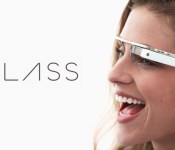
 A patent recently published on the USPTO’s website filed by Google in 2011 shows the idea that Google may have had for Google Glass. One of the diagrams, shown below, shows Google’s idea for the shape of the glasses, the positioning of the camera, and the location of the processor and projector of the glasses.
 The glasses are less of the minimalist style we’ve seen recently and more along the lines of protective goggles, which could be a useful feature: if you’ve discovered something awesome enough to video from your head, there’s a good chance you could get hurt doing it. The camera is positioned in the center of the glasses, which makes them look ungainly in the sketches (which, according to most consumers’ thoughts about the current design, doesn’t differ much from the current design.
Something else very interesting about the diagrams is the projection capabilities. The processor is found on one of the glasses’ temples, but both lenses are able to relay information due to there being a projector for each one. This design is an improvement over the current one-eye system, and could give you a chance to diversify the information being relayed to you in each eye.
Based on some of the design quirks, and design improvements, it’s reasonable to believe that this prototype illustrated throughout the patent is a hodge-podge of past and future ideas, and we may be able to expect some of these features, like dual-eyed displays, to be included in future models.
What do you think? What’s Google’s next Glass move? Check out the original patent document below and then give us your opinion!
Source: USPTO
Via: Phandroid
Come comment on this article: Patent Reveals the Past (and Future?) of Google Glass
CES takeaway: wearables

As CES 2015 is coming to a close, we thought we’d take this time to go through the week’s top stories and roundup the biggest wearable announcements we saw at the trade show. Wearables have been absolutely growing in popularity over the past year, and they’ve arguably been one of the most important parts of CES. There’s a lot to recap here, so let’s jump right in.
Starting your car with Android Wear
Android Wear got a lot cooler throughout this year’s CES, largely thanks to car companies new integrations. Hyundai and Viper both announced Android Wear integration, allowing users to start, stop, unlock and lock their cars, all using an Android-Wear powered smartwatch. While Viper has only announced their compatibility with the platform so far, Hyundai showed off the technology to us at the trade show. Take a look at the video above to see how exactly it works.
Read more:
- Hyundai Blue Link for Android Wear hands-on at CES 2015
- Hyundai announces Android Wear app that can start your car remotely
- Viper SmartStart 4.0 allows you to lock or start your car with Android Wear
The future of wearable technology

Sometimes CES isn’t all about the products being shown off, but about new technology that’s used to power them. Intel recently announced their new “Curie” module, which will one day most likely run your smartwatch or smart ring. The draw to the Curie chip is its compatibility with Bluetooth Low Energy and its small-as-a-button design, allowing wearables to shrink in size.
MediaTek also announced a chip recently, specifically tailored to the Android Wear platform. The chip is called the MT2601 and its a small powerhouse of a processor. It packs in a 1.2GHz dual-core ARM Cortex-A7 CPU accompanied by an ARM Mali-400 MP GPU. The chip can be connected to up to the usual array of external sensors and wireless modems, such as MediaTek’s own MT6630 five-in-one wireless SoC, and supports a qHD display resolution. While it’s not as powerful as the Snapdragon 400 found in other Wear devices, MedaTek is confident that the combination of high power and low cost will be able to put this chip inside your next wearable.
Read more:
- Intel hopes to power your next wearable with the tiny Curie module
- MediaTek introduces its MT2601 SoC, designed for Android Wear
A prettier Sony Smartwatch 3
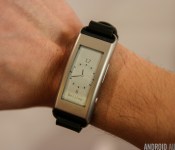
We’ve already reviewed Sony’s Smartwatch 3, but one of our main gripes with the device was the fact that it just didn’t really look premium. The company is finally trying to fix that with their new stainless steel watchband. Overall, this band is really nice. It’s a tad heavy, but it feels like a truly premium product. The way the Smartwatch 3 works with other bands is a little clunky, since you basically just pop out the watch module from the band, and attach it to a new one. It might be easier to switch bands on the fly, but it makes the watch clunkier than it has to be.
All in all, this is nothing groundbreaking, but we’re sure happy Sony is giving us more band options with their first Android Wear device.
Read more:
A hint of webOS wearables

Okay, so this isn’t a product that was announced, but it’s still definitely worth mentioning. For awhile now, we’ve heard many reports of LG resurrecting webOS in the form of a wearable, but we’ve all been wondering when it will actually surface. During Audi’s keynote at CES, The Verge spotted a unique LG-made watch, used to summon a self-driving car up to the stage. The folks over at Android Central tracked the watch down and confirmed it was, in fact, running Open webOS. The watch itself is beautifully crafted, offering a stainless steel chassis and a nice leather watch strap. Unfortunately, this watch was crafted specifically for Audi to show off their car prototype, so we don’t think a consumer-friendly model will arrive anytime soon. But we do know, however, that the rumors are true and that webOS is on it’s way to our wrists.
Read more:
- LG reportedly working on WebOS and SIM-enabled smartwatches
- Mystery LG smartwatch reportedly spotted at CES [updated]
Lenovo’s new fitness band
Lenovo was pretty busy this week, announcing two new phones (P90 and VIBE X2 Pro), and launching a selfie flash accessory along with arguably their most exciting product, the Vibe Band VB10. The VB10 is a fitness tracker/smartwatch hybrid that connects to any Bluetooth-enabled device running Android 4.4 KitKat and above. It’s lightweight, durable and is IPx7 approved, so you can get it wet without having to worry about it. It also notifies you of all phone notifications, as well as tracks your steps, sleep, distance traveled, and much more. The display is E Ink, similar to what we see on the Pebble. Thanks to this low-power technology, the battery will likely last up to 7 days on a single charge. The chassis is made of metal and the strap is rubber, offering a both premium and sporty feel to the device.
I think Pebble is a great example that E Ink just works on wearables. At least with the horrible battery life we see on Android Wear devices, E Ink is the way to go for the time being. Even though it’s not the most attractive watch out there, the VB10 is succeeding in all the right places.
Read more:
Garmin’s new sporty smartwatches

Garmin was one of the first companies to announce a product for CES this year with the unveiling of three new smartwatches. Well, these watches should be considered more fitness tracker than smartwatch. They tell the time and give you notifications on your Android device, but other than that, their main use is to track workouts, sleeping habits and much more. Garmin’s new Epix, Vivoactive and Fenix 3 smartwatches aren’t the cheapest wearables ever, but they boast some of the newest fitness tracking technology you can get on a smartwatch, and that has to be worth something.
The watches will be available sometime in Q1 2015 ranging from $250-$600.
Read more:
BBM coming to Android Wear

Last but not least, Blackberry Messenger is gaining Android Wear support. As much as you don’t want to admit it, BBM is one of the best, most fluid and feature-rich messaging platforms out there, and a ton of people use it. BBM on Android Wear works exactly how you think it would. You can reply and dismiss messages, and even send canned responses if you don’t want to respond via voice control.
This certainly isn’t groundbreaking technology, but it’s nice to see more services integrating with Android Wear.
Read more:
I think it’s safe to say that wearables played a huge role at CES this year. The advancements we’re seeing with car integration is particularly fascinating, and it just seems like something we would only see in the future. Five years ago, long before the smartwatch craze came about, if someone told me that I would be able to start, stop, lock, unlock and even track my car with my watch, I wouldn’t have believed a word of it. It’s finally happening, and I couldn’t be more excited. Now, this technology isn’t particularly innovative, especially since car companies have had the ability to do all of these actions from a smartphone, but I just can’t help but think I’m living in a future-esque world of technology.
As for smartwatches in general, we didn’t really see a whole lot. Garmin announced a few nice smartwatch/fitness tracker devices, but they’re very expensive and only directed toward a very niche market. The wearable I’m most excited for that was announced at CES was Lenovo’s VB10. I’m a firm believer that we need more wearables with E Ink displays, thanks to the awesome battery life they provide. The Pebble is a great example of how E Ink technology can succeed on a wearable. Especially with the 1-2 day battery life we’re seeing on Android Wear devices so far, this type of technology needs to be utilized more often in the wearable world.
Of course, we might end up seeing better battery life coming to wearables in the near future or at least by the end of 2015. Intel’s new Curie module has me very excited, providing support for Bluetooth Low Power while only being about the size of a small button. Smartwatches so far are pretty bulky, so anything to reduce the size of the devices is a great idea in my book.
Overall, I’m extremely excited for what’s to come in the wearable space. A ton of new technological advancements have come out of this year’s CES trade show, and I think wearable devices will progress at a very fast rate throughout this next year. What are your thoughts on wearable technology? Did you have a favorite or least favorite wearable announcement at CES 2015? Let us know your thoughts in the comment section!

AccuWeather app now supports Android Wear

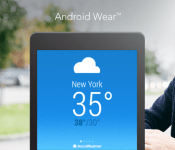
The AccuWeather app on Android has just received a new update, bringing a new dedicated app for Android Wear along with it. This allows users to open up the AccuWeather app directly from their smartwatch, instead of periodically seeing cards on their wearable.
From the Android Wear app, users can view forecast, current weather conditions, precipitation and much more at their convenience. The update reflects on both the free and Platinum versions of the app, so you don’t need to shell out any extra bucks to get the app on your wrist.
There shouldn’t be any changes between the free and paid versions of the app, so you should be able to enjoy AccuWeather on your wearable regardless of whether you paid for it or not. But owning the paid version will remove ads from the mobile version of the app, so it’s worth considering if you don’t want annoying ads clogging up your view.
Come comment on this article: AccuWeather app now supports Android Wear
AccuWeather gains support for Android Wear

Sometimes Google’s stock weather cards just don’t give out enough weather information. If you’re an Android Wear user and would like to get a bit more detailed weather information on your wrist, you may be in luck. AccuWeather, one of the best weather apps for Android, is getting an update that brings Android Wear support. This isn’t just an update that sends AccuWeather cards to your watch, though. This is full Android Wear support, meaning you can open the app on your watch and check out current conditions, your daily forecast, precipitation and even weather alerts. To launch the app, either navigate to it by touch, or use a voice command to open it.
Support for Android Wear is certainly nice to see on a popular app like this, especially because it does more than feed you simple weather cards like many other apps out there. Whether or not you have the free or premium version shouldn’t make a difference in Wear support, so everyone can take advantage of this update. The newest version should be rolling out now, so head to the Play Store link below to update!
Top 7 Lollipop API watch faces for your Android Wear smartwatch

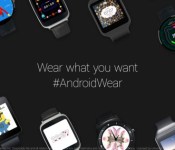
Back in early December, Google finally got around to releasing the application program interface (API) for Android Wear watches. Up to that point, app developers and user interface artists were left in the dark about how to get watch faces onto devices like the Moto 360. A few developers, like Facer for example, were winging it, and doing a pretty good job at that.
Now that it’s been almost a month since the API was released, the Play Store is beginning to show signs of life in the watch face category so I spent some time going through the watch faces for my Samsung Gear Live and made a list of my top 7 favorites. Note that these seven picks will look good on a square or rounded watch, but the final three do favor the circular design.
#1: 500px

Launched in Toronto back in 2009, co-founders Oleg Gutsol and Evgeny Tchebotarev aimed to make a location online for photographers to create a professional gallery for their work. That website became 500px (pronounced “five hundred pixels”) and since its debut, it now has 2.5 million registered users and touts 10 million active users per month.
Now this month, 500px added a new feature to their mobile app, which will create two watch face options (one digital, one analog) inside of the Google Android Wear app.
There are no settings for these watch faces and they seemingly cycle through your favorite photos list, as well as other photographs seeded by 500px themselves, every time you leave the default screen and come back to it. This could be done by either letting your watch face dim or by pulling up a card and returning to the home screen.
The information overlay on the home screen is simply the time and 500px’s logo.
The pictures are, of course, beautiful. This isn’t Instagram so these are mostly photos from professionals and aspiring photographers.
I would’ve liked to have seen more information on the home screen, like battery life or the local temperature, as well as settings for the watch face, like a photo switching frequency or a change in the color of the text. These options might come in a future update.
The 500px app is free and, if you check it out, remember that this is the main 500px app. It just happens to come with the two watch faces baked in as a side perk.
#2: Alien 3D Watch Face

I discovered the incredible feature of live wallpapers (LWP) on my very first Android phone, so I set out to the Play Store to find a worthy selection. I found Maxelus’ work and I’ve since downloaded nearly every one of his LWP offerings.
Well now you can get one of his LWP apps on your Android Wear watch! It’s called Alien 3D Watch Face and it will kick your watch up a notch.
If you try out this app, you’ll notice that a standalone app did not download to your app drawer. Where is it? It gets integrated right into your Android Wear app’s watch faces menu. To access Alien 3D’s settings, simply select the watch face and touch the gear-like Settings icon that will now be overlayed on the watch face’s image.
Once inside, you will see the option to select six different backgrounds. These backgrounds are animated and they will move relative to your watch, creating a parallax effect.
You can also change the seconds’ icon, as well as the color of various things.

Again, this watch face is new, so I expect there will be more backgrounds and seconds icons over time.
The app can be purchased from the Play Store for $1.19 USD.
#3: Galactic Core Watch Face

In a similar case to the watch face above, this watch face started its life as a regular LWP. Kittehface Software’s Galactic Core LWP has been a long time classic on the Play Store, so it makes sense that they would try and bring that success to Android Wear.
This app also does not create a standalone program in your app drawer. You will find it and its settings inside of the Android Wear app.
The name of the app indicates exactly what you’re going to get: an animated spiral galaxy as your watch face. There are also a number of settings that will let you pick different galaxies and even alter them by inputting your own color choices. There are also options to add further information to your watch face screen, like moon phases.
Similar to Alien 3D’s watch face background, there appears to be a parallax effect on Kittehface’s galaxies.

This app is pretty fleshed out despite it being relatively new. I would like to see other font choices as I was not particularly fond of the ones presently available. Other than that, maybe a bit more space between the lines of information, plus make the information slightly larger. I do have to sometimes squint to see what it says, which is obviously a consequence of an animated background.
This app will run you a fair price of $0.99 USD. Follow the link below to check it out in the Play Store.
#4: Minimal & Elegant

I will admit, this is probably my all-time favorite. It’s simple, clean and pretty customizable. Minimal & Elegant (M&E) is the work of Studio eXtreme and M&E really brings a touch of class to your watch, while not sacrificing a bit of animation in some vain attempt to make your watch not appear to be what it is: a smart watch.
This app, unlike the previous watch faces above, came out before Google released the watch face API, so it still creates a standalone settings app; however, since the Google update, M&E’s settings are now in the Android Wear app like the others, but the download still creates a standalone app. If you open it, it’ll tell you where to go to find the new access point for M&E’s settings. I imagine that this is for users of M&E before the Google update and after a time, once its pre-API users get the message, Studio eXtreme will remove that standalone app.
Back to M&E’s settings: there are options to change the colors, change some of the animation aspects, and even the ability to create a random design timer.

There is almost nothing that I would change about this app. I truly feel like it’s near perfect. When turning on, sometimes the watch face is a little sluggish updating the time, but it’s not too noticeable to me.
M&E will run you $0.99 USD and can be found by following the link below.
#5: Angles Watch Face

This entry and the following two are the ones I mentioned that will favor the circular design. They still looked great on my Samsung Gear Live, but it’s pretty obvious that they would look better on a Moto 360 or LG G Watch R.
FlyingRhinoCMG’s Jose Azua & Marcin Stepien have really designed a great looking timepiece face with Angles Watch Face. I really like the aesthetics and it runs smoothly.
The only real complaint I have about this watch face is its options are extremely limited when it comes to color selection. Almost every other developer allows you to select any hue you want using sliders and a color wheel, and I cannot really see why this would not work with this watch face.

Additionally, I’m somewhat suspicious of FlyingRhinoCMG’s motives in this regard because they have a few entries in the Play Store where they’ve designed one watch face but have different color versions for sale. I’m not going to buy the same watch face twice…
But this watch face app doesn’t have a different colored twin for sale, so no red-marks from me on that matter. I would just like to see the color wheel and sliders like other watch faces out there.
If you have a circular watch, I really think you should try it out. You can snag it from the Play Store for $0.99.
#6: Countdown

This watch face is also designed by the creators of M&E, Studio eXtreme. This app definitely loaded up with customization options and, as the app’s name suggests, is really designed to have some fun with timekeeping.
The outer ring contains analog elements, while the inner circle is digital. You’ll notice from the images, this watch offers you the ability to set a timer, but if you don’t need anything to count down, you can change this to just display the current time.
This watch face has lots of tweak available in the settings. Colors, lines of text, animation changes, etc. are all there waiting to be tinkered with. Sadly, unlike M&E, color options on this watch face are limited.

I did notice a very distinct bit of lag with the sweeping seconds’ hand. It’s a similar lag to what I experienced with M&E when it first came out, which has since been pretty well resolved via updates, so perhaps this too will be fixed over time. The lag wasn’t significant enough that made it a deal-breaker, though.
This watch face costs the same as M&E, $0.99 USD. See the link below!
#7: Roto 360

The app’s name really hints as to which watch design will look best with it. Square! Ahem, circle.
Part Mayan calendar, part thermostat, Roto 360 is really quite gorgeous. It almost makes me want to go out and buy a Moto 360 or LG G Watch R.
App developers Gaurav Singh and Krishna Prajapati are no strangers in taking design inspirations from other common instruments. They have two other watch faces that are pretty slick as well. And when you download Roto 360, you get a white and black version as you can see in the picture above.
Roto 360, sadly, does lose some of its luster on my Gear Live. But I knew what I was getting into before I bought it thanks to the app’s name.
There aren’t any settings to modify with this watch. It’s what you see is what you get with this one. I can’t think of any ideas on what someone would want to customize on this watch face, but I think a settings option will probably find its way to the app sometime in the future.
Roto 360 costs $0.99 from the Play Store. It definitely warrants a test drive on your watch.
After looking over these 7 watch faces, I can’t help but be excited to see what new offerings these developers and others will bring us over time. LWP, for example, on our smart watches is genius.
On the topic of LWP, I feel many of you might be concerned about battery life. Smart watches don’t last long as it is, so would an animated watch face kill the battery even quicker? In my experience with these seven, I did not notice any greater power consumption than normal. If there was, it was small enough to escape my observations.
You might have noticed that apps like Facer were not on this list. Facer didn’t really go through much of a change after the API was released and it is still community driven. That’s fine, I love Facer, but the aim of this article was to talk about post-API work that is beginning to appear on the Play Store.
So this weekend, if you have the time, you should definitely play around with these watch faces. Thanks for reading!
Come comment on this article: Top 7 Lollipop API watch faces for your Android Wear smartwatch
Samsung’s rumored round smartwatch will reportedly run Tizen

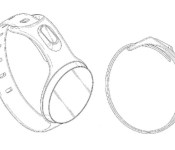
Round smartwatches are seemingly all the rage as of late. First, everyone drooled over Motorola’s Moto 360, followed by LG’s G Watch R. We even got a glimpse of an LG-made webOS smartwatch at CES this year. For quite some time, we’ve heard rumors of Samsung developing a round smartwatch, dating back almost a year ago. Now in a new report from SamMobile, a few more details are surfacing regarding the rounded wearable. According to the report, the device will be known as “SM-R720,” and is referred to by the codename “Orbis.” What’s more, the device will run Samsung’s own Tizen OS.
Up until now, the operating system running on the round watch has been a mystery. Samsung has put out both Android Wear and Tizen watches in the past, so this wearable could have gone either way. Now that the device will reportedly run Tizen, it makes sense from Samsung’s standpoint. Since rounded wearables are “in” right now, this is a great way for the company to get their own OS on as many wrists as they can.
There is one thing to note, though: the ring-operated rumors we’ve seen in the past aren’t exactly connected to the Orbis codename. We do know that there is an upcoming Tizen watch with the codename ‘Orbis’ and the model number SM-R720. It would make sense that a wearable with a name like ‘Orbis’ would be a rounded smartwatch with a ring-like design, but so far, the fact that the two rumors are connected is still just assumption.
The report also hints at a projected release for MWC this year, though it’s likely much too early to tell when we’ll actually see this watch. So, how do you feel about a Samsung-made ring-operated watch running Tizen? If rumors are true, is this something you’d be interested in?
Plot twist: That LG-made Audi smartwatch is actually running webOS
Yesterday, we were enthralled by the appearance of a LG-made Audi smartwatch that was shown during an Audi presentation, and it was suggested that the watch ran a customized version of Android Wear. As it turns out, that information was wrong and Android Central has confirmed today that the device actually runs webOS, an operating system […]
The post Plot twist: That LG-made Audi smartwatch is actually running webOS appeared first on AndroidSPIN.
Mediatek MT2601 is a processor for wearables, hopefully used to make cheaper smartwatches
Mediatek processors aren’t typically used in devices in markets like Europe and America, however in Asia and emerging markets, they are used in practically every device. A large part of this is because the chips are so much cheaper, and although they are aren’t quite a fast or optimized as some of their counterparts from companies […]
The post Mediatek MT2601 is a processor for wearables, hopefully used to make cheaper smartwatches appeared first on AndroidSPIN.

MediaTek introduces its MT2601 SoC, designed for Android Wear

MediaTek released some very competitive smartphone chips last year and now has its sights set on the growing wearables market. In Las Vegas, MediaTek has announced its MT2601 SoC designed for wearable devices based on Google’s Android Wear platform.
The MT2601 packs in a 1.2GHz dual-core ARM Cortex-A7 CPU accompanied by an ARM Mali-400 MP GPU. The chip can be connected to up to the usual array of external sensors and wireless modems, such as MediaTek’s own MT6630 five-in-one wireless SoC, and supports a qHD display resolution. The package fits in a PCBA footprint of less than 480 square millimeters and is built with 41.5 percent fewer components than some competing chips, helping to keep PCB sizes and costs small.
MediaTek’s latest chip doesn’t quite pack as much power as the quad-core Cortex-A7 powered Qualcomm Snapdragon 400, which has featured in the Samsung Gear Live, LG G Watch R and Asus ZenWatch smartwatches. However, MediaTek’s solution may be preferable in fitness and location tracking oriented devices.
The MT2601 has an incredibly small die size and is highly optimized for cost and power performance. The platform solution, comprised of MT2601 integrated with Android Wear software, will fuel the maker revolution and empower the application developer community – J.C. Hsu, MediaTek.
The SoC’s low power processor, small die size and limited feature set is well suited for the low cost, low power requirements of wearable technologies, where prolonged battery life is essential. MediaTek states that it will continue to evolve MT2601 to align with the Android Wear road map, so we may see an extended wearable SoC line-up from MediaTek in the future.
The MT2601 has already hit mass production and is ready for deployment in upcoming Android Wear products.
Las Vegas – Jan. 6, 2015 – MediaTek, a leading fabless semiconductor company for wireless communications and digital multimedia solutions, today announced its MT2601 System on Chip (SoC) for wearable devices based on Google’s Android Wear software. By enabling Android Wear on MT2601, MediaTek is offering a comprehensive platform solution for device makers to implement their own hardware and software, and introduces a multitude of possibilities in Android Wear devices for the fast-growing consumer class globally.
The MT2601 packs a robust set of features in its small size with 41.5 percent fewer components and lower current consumption when compared with other chipsets in the market. Its design advantages translate into lower bill of materials (BoM) costs, smaller printed circuit board (PCB) size and longer battery life, which in turn yield fashionable wearable devices with long usage times and affordable prices.
The MT2601 includes 1.2 GHz dual-core ARM Cortex-A7, ARM Mali-400 MP GPU, and supports qHD display resolution. The MT2601 interfaces with a whole host of external sensors and the wireless connectivity SoC MT6630 for Bluetooth – all in a PCBA footprint of less than 480 mm2. This small PCB size meets the design requirements of the widest variety of wearable devices in sports and fitness, location tracking, and various other categories. MediaTek is a strong supporter of Android Wear and will continue to evolve MT2601 to align with the Android Wear road map.
“The MT2601 has an incredibly small die size and is highly optimized for cost and power performance. The platform solution, comprised of MT2601 integrated with Android Wear software, will fuel the maker revolution and empower the application developer community worldwide to create a broad range of innovative applications and services,” said J.C. Hsu, General Manager of New Business Development at MediaTek.
The MT2601 is in mass production now and ready for inclusion in Android Wear devices.
###
About MediaTek Inc.
MediaTek is a pioneering fabless semiconductor company, and a market leader in cutting-edge Systems on Chip for wireless communications and connectivity, HDTV, DVD and Blu-ray. MediaTek created the world’s first True Octa-core™ smartphone platform with LTE and our CorePilot™ technology releasing the full power of multi-core mobile processors. Through MediaTek Labs™, the company is creating a worldwide ecosystem in support of device creation, application development and services based around MediaTek offerings. With an emphasis on enabling technology for the masses and not the chosen, everyone can be an Everyday Genius. MediaTek [TSE:2454] is headquartered in Taiwan and has offices worldwide. Please visit http://www.mediatek.com for more information.
 AIVAnet