


Google is launching Android One devices in the Philippines next

The pursuit to getting the world connected to the internet is moving along slowly but steadily for companies like Google. Keeping that momentum going, Google has just announced a couple new Android One powered devices, destined for the Philippines.
We recently took a shot or two at Android One in our Friday Debate Podcast, our general approach was that the devices did not offer enough bang for the buck vs some of the competition out there right now. As true as they may or may not be, Cherry Mobile and MyPhone will each have a new Android One device on store shelves in the coming weeks.

The Cherry One and the MyPhone Uno will be Android 5.1 Lollipop powered devices, with dual SIM and microSD card slots. Front and rear facing cameras will help users keep up with all the social trends and Google is happy to point out the battery saving and data saving features of Lollipop as benefits to users in the parts of the world, like the Philippines, that do not have power and data readily available for all.
Check out Google’s Asia Pacific focused blog post for all the details, including the fact that the Philippines is the sixth country to launch Android One devices. With more to come.
To all of our readers in the Philippines, are you excited for Android One, or do you already rock something a little bigger and better?
Report: Google in talks with developers to subsidize app data costs

Google may be on the verge of breaking into developing markets with their cheap Android One handsets, but there seems to be a problem stifling many smartphone users in those specific countries. According to data from McKinsey and the International Labour Organization, a Jana survey of 8,000 smartphone users found that data expenses were among one of the biggest reasons why users don’t download or use applications on their smartphones. Specifically, over 25% of respondents of the survey from India, Indonesia, Thailand, Egypt and the Philippines considered high data costs to be the biggest obstacle holding them back from using apps. Google’s Android One platform might offer low-cost devices to emerging markets, but that doesn’t help the high prices of data costs at all.
According to a new report from The Information, Google may be looking for ways to subsidize data costs so users can actually use their smartphones. Google engineers have reportedly been in talks with app developers in emerging markets to reduce or even completely eliminate mobile data costs using a practice called “zero rating.” Zero rating is nothing new in the mobile world. It’s basically a way for app developers, such as Facebook or WhatsApp, to strike deals between wireless carriers to subsidize data costs, which can then be promoted by both the app developers and the carriers involved.
So where does Google come in? According to “sources familiar with the matter,” Google has plans to pilot this initiative in India with notable services like Flipkart, Snapdeal, Redbus and even Ola Cabs, India’s version of Uber. These services tend to rack up much more data than users are allotted per month, so the developers are already willing to pay the high bandwidth costs to get more users connected with their services. These are obviously the first apps and services Google is targeting with their initiative – companies that already practice the subsidization of data – to bring more users online.
Acting as the middleman would allow app developers to not have to make these zero-rating arrangements with individual carriers.
The Information reports that Google could act as a middleman between the services and wireless carriers that are charging the huge data fees. Acting as the middleman would also allow app developers to not have to make these zero-rating arrangements with individual carriers. In theory, when someone uses the Ola Cabs app from their smartphone, Google will be able to recognize that data and pay the carrier for the data charges. In turn, the third-party developer would also be expected to pay some of the charge. Even though the app developer would need to pay the wireless carrier for some of the data used, it would still likely make the developers more money since more users are taking advantage of their services. One person who has been involved in Google’s discussions says:
The user should be able to say, ‘I want this service’ and then use it, without worrying about draining their data plan.
The report also states that it’s unclear whether or not Google has discussed this deal with wireless carriers yet.
This new initiative is reported to first be tested in India on Android One handsets, later expanding out to other Android handsets and other geographies.
But how would Google make money from any of this? Let’s first take a look at Google’s past efforts to bring data to low-income countries. If you can recall back to the launch of the Android One program, Google guaranteed that users on Airtel would not be charged for data used to update their mobile devices for future OS updates. Moreover, Google includes 200MB/month of free data to use on apps downloaded from the Google Play Store. Now, a bit of free data likely won’t be the sole reason for buying an Android One handset for most, but it can’t hurt. And remember, Google wants your information, and they want you to use Google services. So, app developers, mobile carriers and Google could all promote this zero-rating initiative as a benefit to users, thus making more consumers sign up for mobile phones now that they can afford to actually use the handsets. It could also help bolster Android One sales, which have apparently gotten off to a rough start.
Remember, this is all hearsay for now, so only time will tell whether or not this all proves true. What are your thoughts on this new initiative? Is this a good way to get more users on the Android platform, or is Google just wasting their time? Let us know your thoughts!
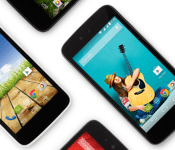
Google using “zero rating” to spur Android One growth in emerging markets

Emerging markets are receiving a ton of attention from hardware and software companies due to the growth seen down the line. The roadblock between these companies and consumers, however, is the cost of data. Consumers in emerging markets are able to purchase devices at affordable prices, but data remains expensive. To combat this issue, Google is applying the “zero rating” approach.
Zero rating, for those unfamiliar with the term, is when another company either reduces or eliminates the cost of data used by specific apps or services on a mobile device. Consumers are then free to use corresponding apps or services without having to closely monitor data usage,
Google has asked select developers in emerging markets (such as India) about the possibility of participating in zero rating, according to The Information. It has not been stated whether or not Google reached out to carriers in emerging markets as well. As for developers, it is possible that an app like WhatsApp could participate in zero rating with Google. WhatsApp is arguably the most popular app in emerging markets.
Back in November, we heard that Android One was not performing very well. The good news is that the platform is expanding and successfully garnering partners for zero rating in emerging markets would allow Android One to experience growth.
Source: The Information
Via: Business Insider
Come comment on this article: Google using “zero rating” to spur Android One growth in emerging markets
Android One and Lollipop Rants | The Friday Debate Podcast 003

Android One has come back into the news recently because an update to its Android iteration shows 5.1, the newest version of Lollipop. While this is good news for users all around, it made us think – is Android One actually fulfilling its promise of being an easier way for developing countries to get the full Android experience? The panel gets together once again after a heartbreaking (or not) Super Bowl and Josh’s trip to China in order to bring you their newest podcast
And with that, welcome to this 3nd episode of The Friday Debate Podcast! Host Joshua Vergara is joined by lead editor Andrew Grush, writer Jonathan Feist, and our app guy Joseph Hindy to talk about Android One and – later on – rant about Lollipop.
The Friday Debate Podcast – discussing topics in Android every week.
Links to Podcast
RSS Feed
iTunes
Stitcher
Direct Download
Relevant Links
Android One
Android One and Android 5.1
Follow our Hosts

Joshua Vergara
Twitter | Google+

Joseph Hindy
Twitter | Google+

Andrew Grush
Google+

Jonathan Feist
Twitter | Google+
Recorded on February 5, 2015 – Hosted and Produced by Joshua Vergara
Spice launches the ‘Nexian Journey One’ smartphone in Indonesia, Nepal and Sri Lanka
Nicknamed the Nexian Journey One, Spice has launched its Android One smartphone in Indonesia, Nepal and Sri Lanka. The device announced in association with Google runs Android 5.1 Lollipop. The Lollipop update ensures less battery drain, smarter notifications and improved security features. The Spice Android One comes with specifications that are identical to the one […]
The post Spice launches the ‘Nexian Journey One’ smartphone in Indonesia, Nepal and Sri Lanka appeared first on AndroidSPIN.

Android 5.1 (!) spotted running on Android One devices headed for Indonesia

Now here’s something you don’t see every day: a new version of Android spotted in the wild with nary a word from Google.
Google announced a few hours ago the upcoming availability of the Android One program in Indonesia. Following India, Nepal, Bangladesh, and Sri Lanka, this is the fifth country where Google is rolling out its affordable smartphone program. So far, nothing special… except Android 5.1 is mentioned multiple times on the Indonesian Android One landing page, and there’s even a subtle reference to it in the press image (above), where time is set to 5:10.
But the more solid evidence comes from images of the device hitting Indonesia obtained by the folks at Android Police. The images show, black on white, that the software running on the Android One-powered Nexian Journey is Android 5.1.

Given this and the references from the promo site, it looks very likely that Android 5.1 is real, and, probably, coming soon to more devices. Now that the cat is out of the bag, we don’t see Google delaying an official announcement for too long.
What will be new in Android 5.1? We have no details yet, but last year, Android Pit ran an exclusive story claiming Android 5.1 would land by the end of this month, bringing fixes to several glaring problems present in Android 5.0, including the return or proper silent mode and better memory management.
It’s odd that Google is shipping updated software to new devices before even announcing it, but it happened in the past, albeit with smaller revisions. Hopefully, official info is coming soon.
What do you hope to see in Android 5.1?
It’s official: Android 5.1 on Android One devices is real and you can get it now
About an hour ago we posted about a rumour that said Android 5.1 on Android One devices could be a possibility as it was spotted on the official Android One website. As it turns out, it’s completely true as two of the devices that are being released in Indonesia, the Evercoss One X and Nexian Journey, […]
The post It’s official: Android 5.1 on Android One devices is real and you can get it now appeared first on AndroidSPIN.
Website splash shows Indonesia could be getting Android 5.1 on Android One devices soon
Android 5.0 Lollipop is somewhat of an elusive beast at the moment, with only a handful of devices benefiting from it’s improvements, and fewer still have been updated past the original Android 5.0 release to Android 5.0.1 or Android 5.0.2. Which made it all the more interesting to see that on Google‘s own Android One […]
The post Website splash shows Indonesia could be getting Android 5.1 on Android One devices soon appeared first on AndroidSPIN.

Samsung’s first Tizen phone facing cold reception in India

The Samsung Z1 would fit in with literally any of the company’s budget Android devices yet is actually running Tizen.
India is proving to be a more difficult stomping ground for fledgling OS ventures than many have assumed. The country has an enormous population yet relatively few who can afford to buy the latest and greatest products from the likes of Samsung or Apple. Last year, Google attempted to get its Android One program off the ground in India yet sales have been anything but brisk so far. It looks like the latest victim to a cold reception is none other than Samsung, with its continuously delayed Tizen OS.
Samsung recently launched the Tizen-powered Z1 in India, though Reuters is reporting that it’s hardly making a dent in a country where no fewer than 283 different brands of smartphones are available. The phone costs 5700 Rupees (about $92) and even on eBay it can be had for only about a $30 premium from the few sellers offering it. This is a far cry from the likes of devices such as the Galaxy S5, Galaxy Note 4, or even Galaxy Note Edge, which all had incredibly high markups from opportunistic eBay sellers. Given the extremely low price, it might seem surprising that the device hasn’t exactly hit it off. But when looking at the specs, things become a bit clearer:
 One Indian shopper apparently likened the device to a phone from 2010, and in truth he’s not stretching the truth. The phone pictured above doesn’t have LTE, doesn’t have a large AMOLED screen (it’s PLS no less), comes with a dual-core CPU, has 1GB of RAM, a 3 megapixel rear camera, and just 4GB of internal storage. Compare this with say, the Micromax Canvas A1 (Android One) phone that has a 4.5 inch IPS screen, a Quad-Core CPU, 5 megapixel rear camera and 2 megapixel front camera, and runs KitKat.
A local analyst cited by Reuters explains why Samsung may have a dud on its hands, despite the bargain bin price: “”It’s not always about the cheapest, customers are looking for specs … There are already a plethora of devices running on Android that Indian customers can choose from.”
The problem is only worsened by the fact that as a brand-new commercial OS, Tizen has an extremely limited app selection available for download, whereas Android One phones have more than a million programs to choose from. This is perhaps not unlike the situation facing the Firefox OS platform. One has to wonder just why Samsung felt the need to cancel the launch of its original Z phone last year in Russia, for at least it had relatively nice specs on-par with a mid-range modern Android phone:
While it’s far too early to draw a broad conclusion as to the success or failure of Tizen, at least based on the first week of release, the criticism would seem to suggest it’s not quite where it needs to be yet. Although Samsung has Tizen running on other types of devices – the most prominent being its smart TVs and its Gear line of wearables – it is the phone segment where that truly matters if the Korean company ever hopes to distance itself from Google and the Android platform.

Android One phones to get Lollipop by the end of January

Android One smartphones might be off to a slow start in terms of sales, but it also appears they are also off to a slow start in terms of updates. According to one of the manufacturers, Spice Mobility, the Dream Uno will receive the Lollipop update by the end of January 2015. More than likely, the Micromax A1 and the Karbonn Sparkle V will also get the update around the same time.
Since all Android One phones sport hardware specified by Google and updates come directly from them, you would think the update would be a little quicker. According to sources within Google, the update is ready, so it’s possible that it could start rolling in December. I guess only time will tell.
source: India Today
Come comment on this article: Android One phones to get Lollipop by the end of January
 AIVAnet