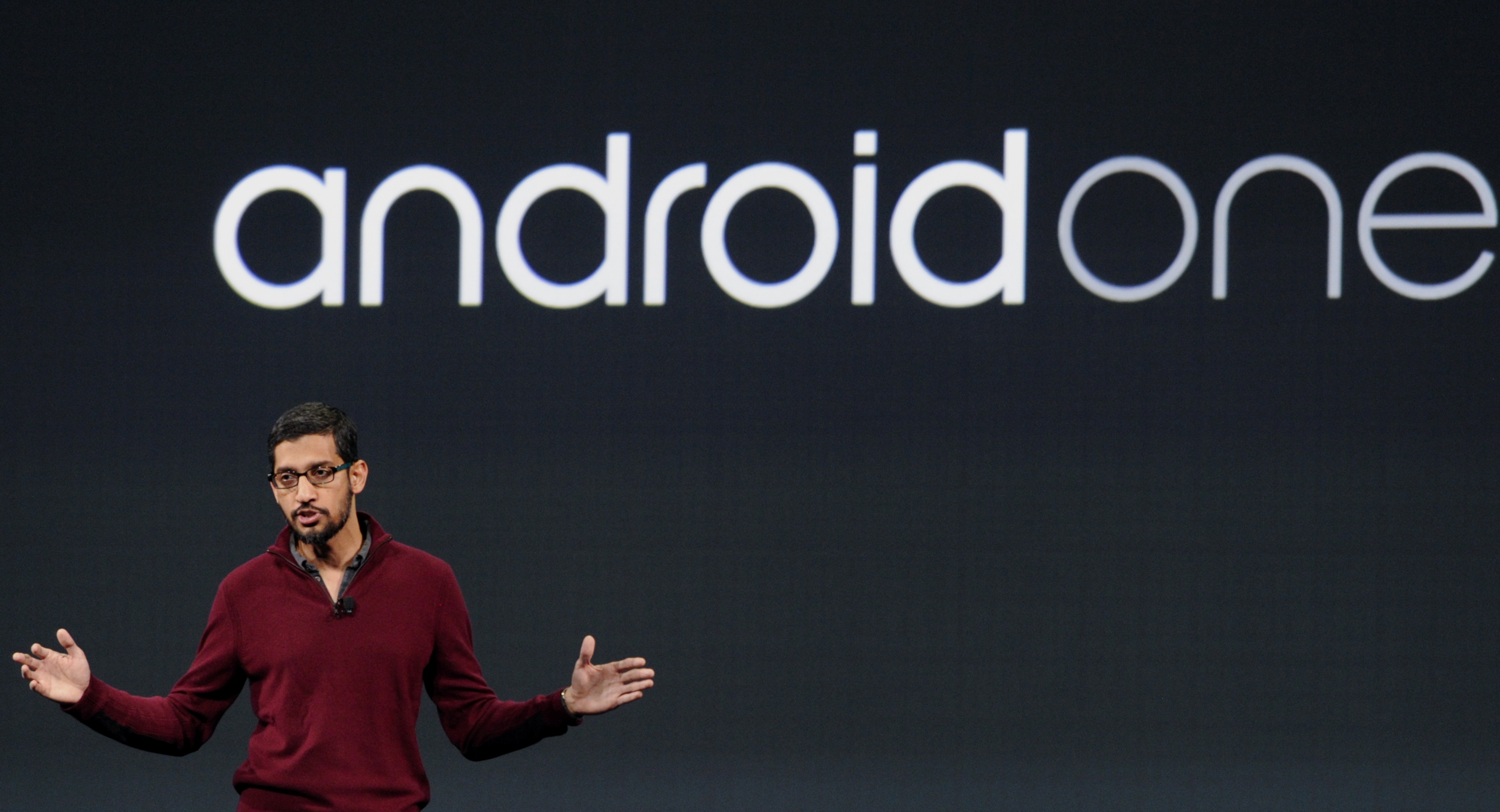
Android One finding new life in India with high-end yet still affordable phones

In his first overseas trip since becoming CEO of Google in August, Sundar Pichai affirmed India’s importance to the global Android ecosystem. On explosive growth of smartphone usage in India. Pichai stated, “In 2016, there will be more Android users in India than the US.”
Google introduced Android One back in 2014 to capitalize on this explosive growth in emerging economies such as India. The company’s goal was to develop super affordable, yet smooth-working phones which would receive timely updates straight from Google. Just like the Nexus line is a way for Google to move the high-end of the Android ecosystem towards Google’s vision, the Android One program is a way to move the faster growing affordable segment of the market in line with Google.
In light of troubling sales numbers for Android One products, Pichai also is using this to reaffirm potential buyers that Android One is here to stay, and a possible change of strategy could be in order. From September of 2014-September 2015 only 1.2 million Android One devices were sold. This only accounts for 3.5% of the fastest growing segment of the smartphone market, the $50-$100 range. As a sign of a changing strategy Pichai explained that Google is now working with their Android One partners to develop new high-end but affordable Android One smartphones.
It looks like the first partner for these new high-end Android One phones will be Lava, the makers of the Lava Pixel V1. Senior vice-president of at Lava Navin Chawla stated that the company is satisfied with the sales of their first Android One phone, and has plans to release a new high-end India-assembled Android One smartphone of the first financial quarter of next year.
It is interesting to see Google now sort of changing strategies with their Android One program. It seemed like Google was trying to capture the low cost segment, with modest but great working phones. Making high-end phones is inevitably going to raise the cost of the product. It seems that with this new strategy Google will price themselves out of the low cost market, defeating the purpose of the Android One market. The thinking may be that with their failure in the low cost segment, it is time to look towards the mid-range second phone buying crowd, but who knows maybe they will use Android one for both high-end and super cheap phones.
This new high-end Android One program reminds me of the much talked about Android Silver program that was suppose to come to America which never materialized. What do you guys think, do you like the new direction of Android One? Would you like to see a high-end Google guided program like this come to other markets like Europe and America?
Source: The Economic Times
Come comment on this article: Android One finding new life in India with high-end yet still affordable phones
Sundar Pichai expected to announce next phase of Android One next week

Google CEO Sundar Pichai is heading off to India next week to host a press conference in New Delhi, where he will deliver the keynote address about what the company has planned for India, which could include new plans for Android One.
Pichai was at the original launch of the Android One project in India last year and is expected to outline where the initiative is heading next. The company is expected to announce another wave of Android One devices at the event. Previous discussions about the program this year suggests that the company might focus on making the range even more affordable. Google may also be prepared to further loosen the hardware restrictions on manufacturers, to allow them to set themselves apart and to encourage additional competition.
Android One has not had quite the impact on the Indian smartphone market that Google perhaps thought that it would. Local low cost manufacturers and smartphones from China have pushed out most Android One products and Google’s promise of fast and frequency updates didn’t materialise to win over consumers. A push to lower prices even further will be tough for Google to pull off, but might take Android One out of the most competitive segment of the Indian market.

During his trip to India, Pichai is also expected to meet President Pranab Mukherjee and Prime Minister Narendra Modi, and will give a talk at Delhi University’s Sri Ram College of Commerce on December 17th. With millions of new people hopping online, India is set to be a key market for Google over the next few years.
CyanogenMod 13 nightlies now available for Android One devices

Android One users definitely enjoy the pure Google experience these affordable handsets bring to the table, but some of us still need a certain level of customization and extra features. This is why the CyanogenMod team has been kind enough to offer Android One device support. And if you are a fan of being at the bleeding edge of technology, today is your lucky day, as CyanogenMod 13 nightlies have just become available!
 See also: Best cheap Android phones (December 2015)
All the files are available from CyanogenMod’s repository. All you have to do is grab the files from there and install them into your phone. Of course, that is only after you unlock your bootloader and install a custom recovery. Just keep in mind all of this tinkering can harm your device and/or void your warranty, so do your research before proceeding. If something bad shall happen to your phone, it’s only your responsibility and you might be left in the dark.

 See also: 16 best CyanogenMod themes (by developer)
And dealing with nightlies happens to be a bit more delicate, as these are experimental versions of the software. Progress is updated… nightly, bringing forth the latest changes to the code. This means it’s more than likely that you will encounter bugs and issues from time to time. If you would rather not deal with that (as much), wait for the stable release.
Are any of you guys installing these CyanogenMod 13 nightlies? Just click through the button below to get the files!
Marshmallow 6.0.1 already hitting Android One devices

This device (Cherry Mobile Android G1) seems to be the first handset to get Android 6.0.1.
Now that Marshmallow (Android 6.0) has been available for several weeks, it’s not surprising to find that there is already a 6.0.1 update hitting some devices. In this particular case, said devices are select Android One handsets. According to reports, only a limited number of users have received the update so far, however. Have a look:
As I said 2 days ago. Android 6.0.1 become available for Android One program… pic.twitter.com/ap8NL4lImE
— LlabTooFeR (@LlabTooFeR) November 20, 2015
According to a Google Search, the model number listed, H220, is the Cherry Mobile Android G1 for the Philippines. Curiously the Android security patch level is dated December 1, 2015 despite today being only November 22, 2015. Assuming the roll-out isn’t a mistake, it would seem to imply that Google has already finalized the updated built into said patch despite this month having just over a week left.
There is currently no information as to what this 6.0.1 update brings with it, however the general assumption around the internet is that it’s strictly related to bug fixes and stability improvements.
PhoneArena has reported that, “HTC ROM developer @LlabTooFeR has it that, after 6.0.1, Google is planning to roll out Android 6.1 Marshmallow, though this is expected to happen starting next year.” Assuming this is true, it would raise the question as to if Google will release 6.0.1 to other devices (such as the Nexus series) of simply go directly to 6.1.
We will have more on this story as it develops, but for now let’s all keep our eyes peeled for any updates that may land in the next few weeks.
Android One will become more like Android because manufacturers want more freedom
(adsbygoogle = window.adsbygoogle || []).push();
We love the idea of Android One – a standardized platform of smartphones, hardware and software, for emerging markets. Unfortunately, it seems manufacturers don’t see it that way and Google is having to change its stance on it. Previously, Google had mandated that components had to come from a list of approved vendors, however this is now being loosened so that manufacturers can use their own vendors. And while Google has tried to keep pricing relatively standard between manufacturers, Android One manufacturers are now also allowed to control the pricing of their devices.
If this is all starting to sound a bit familiar, let’s just add one more thing into the mix. Whereas Google had previously said that Android One would be getting updates straight from Google (because they all had the same hardware, hence this was possible), the change to the arrangement with manufacturers has meant this will change to updates coming from the manufacturers themselves. In case you haven’t caught on already, all these changes mean that Android One is now effectively the same as Android – and apparently this is what manufacturers want. If Google wants to change how devices are made for emerging markets, they may end up having to do it themselves with a low-cost Nexus range.
What do you think about these changes to the Android One program? Let us know your thoughts in the comments below.
Source: Wall Street Journal via Phone Arena
The post Android One will become more like Android because manufacturers want more freedom appeared first on AndroidSPIN.
Google is relaxing Android One guidelines to try and capture the Indian market with new phone
 Android One was Google’s great idea for capturing emerging markets with cheap smartphones. On paper, it’s a fantastic idea. In reality, it hasn’t really done so well. Google is sticking with it, though, and they’re taking a slightly more hands off approach for their upcoming devices.
Google has partnered with Lava International Ltd. to create a new, cheap device to lead Android One devices in India. We’ve been hearing rumors about a sub-$50 Android One handset on the horizon, and it sounds like this could be that device. This new device will supposedly give a little more freedom to Lava, and subsequently, other Android One OEMs, in an effort to bring a little more variety to the program to give it the shot in the arm it needs to be successful.
Currently, Google mandates many specific requirements on Android One devices, which include forcing manufacturers to buy certain components from limited manufacturers, and that it makes it difficult for some OEMs to differentiate from other devices. Android devices are a dime a dozen all over the world, and they all need some kind of unique feature to really stick out from the competition. This guaranteed a certain level of quality, but it hurt profit margins and slowed down new devices. With Google taking a more hands-off approach here, we’ll likely see tons of new Android One devices trying many different things.
India is a key market for tons of manufacturers, and Google has a personal interest in getting as many people online as possible to use Google services like Gmail and YouTube. We’ve seen tons of growth in India recently, especially in the budget-friendly, large screen sector of the market. This is exactly the kind of market that Android One was created to capture, and with a refreshed take on the program Google stands to gain some ground in India with more Android devices.
source: Wall Street Journal
Come comment on this article: Google is relaxing Android One guidelines to try and capture the Indian market with new phone
Google loosens grip on Android One partners in attempt to revitalize the program

Android One never really got anywhere, but Google isn’t giving up.
Since its launch back at Google I/O 2014, the low-cost Android One initiative was never the saving grace we had all once hoped it would be. The program promised solid Android-powered hardware, timely software updates straight from Google, a simple and easy to use software experience, and even more ways to save on high data costs. As it turns out, not many people were interested in these One devices, as the lower-cost competition began heating up in these countries, often offering users better devices for the money. Now that it’s been awhile since we’ve seen any new Android One hardware, what’s next for the program?
According to The Wall Street Journal, Google is taking another crack at it. Sourcing “people familiar with the matter”, this new report claims that Google plans to relax its rules and give Android One partners more options when it comes to choosing features and price.
Google is being much more lenient than it was before
Google and India’s Lava are supposedly planning to release a new low-cost One smartphone in the next few months. This will be the first Android One product under the more lenient, revamped initiative from the company. One major complaint many Indian phone makers had with Android One was the hardware restrictions set in place by Google that would limit the phone makers to only one or two choices for most components. Google required them to purchase from specific suppliers, as well.
This, for Google, ensured the smartphones were able to run the most recent version of Android. But for manufacturers, this meant less flexibility on pricing, and it also slowed down product launches. You see, if you’re making a smartphone that costs $100, every penny counts. That’s why Google had a difficult time getting manufacturers on board with the program, and those who committed to Android One only produced one or two devices.
This new approach, though, will allow Android One partners more freedom when choosing where each component comes from. Phone makers will now be able to purchase parts from their own approved vendors. Now, according to the WSJ’s sources, there are at least five different camera sensors to choose from. Phone makers can also now use other suppliers for the phone’s main processor, such as Qualcomm.
An executive at one phone manufacturer in India said Google’s more lenient attitude towards Android One “leaves little difference between the program and just producing regular Android phones.” With this in mind, do you think this will bring more sales to the Android One program, or do you think it will still continue to struggle? Be sure to tell us your thoughts in the comments below.
Marshmallow landing on 1st gen Android One phones

The time has come for Android 6.0 Marshmallow to finally start rolling out to Nexus devices and it seems that a number of first generation Android One smartphones are also receiving the speedy update treatment.
 We have been told that Android 6.0 updates have been spotted for the Micromax Canvas A1 and Myphone Uno so far, and files for the rest of the series are probably on the way too. The update has already landed on devices in Bangladesh, India, Indonesia, and the Philippines, so keep your eyes open for an OTA update in the coming days.
If you don’t fancy waiting around for an OTA notification, you can also download the flash-able .zip file to install yourself from the links below. As always, please take the necessary precautions and make backups before flashing files yourself.
If you spot Android 6.0 Marshmallow updates rolling out for any other Android One handsets or in other countries, please let us know in the comments below.
Thanks Mushfiqus Salehin.
Android 6.0 Marshmallow update begins rolling out to Android One handsets

Google began rolling out the Android 6.0 update to Nexus devices yesterday (OTA download links here) and now it seems that the Android One handset, the Spice Dream Uno, is also receiving some marshmallow goodness in the form of an Over-The-Air update.
 Thanks to a screenshot posted on TechDroider.com, we can see that the Android 6.0 OTA update for the Spice Dream Uno handset is around 338MB in size, so it’s advisable to download the update via WiFi if you have a data cap. If your handset hasn’t received the update notification, just go to Settings, About Phone and select Software Updates. If the update still isn’t available, don’t worry, it’s a staggered roll-out, so it’s just a case of waiting. The update will no doubt begin rolling out to Android One handsets from other manufacturers sooner, rather than later.
If your handset has received the Android 6.0 update, let us know your experience with the new firmware, and if there are any noteworthy bugs.
Source: TechDroider
Come comment on this article: Android 6.0 Marshmallow update begins rolling out to Android One handsets
Android has hit 1.4 billion active devices worldwide
 At the recent Google event, which unveiled two new Nexus phones, Pixel C tablet, and new Chromecast, there was also another big announcement. Google CEO Sundar Pichai stated that Android now accounts for 1.8 billion devices worldwide. These numbers are very new and were just recorded in the last 30 days.
He went on to say how Android has doubled in the last year in India and Vietnam. Also, the Android One smartphone was launched in Turkey only a month ago, but since then has become the top-selling smartphone their.
Google Chromebooks are soon to be the largest platform in schools with 30,000 new Chromebooks being activated each day. Also, Google’s new Android for Work has been tested and utilized by 10,000 companies. Wrapping everything up, Google Play has now reached 1 billion active users within the last 30 days.
Come comment on this article: Android has hit 1.4 billion active devices worldwide
 AIVAnet