


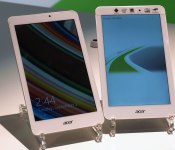
Acer’s trio of new tablets includes a $150 Windows slate

Acer’s taken more than a passing fancy to Chrome OS of late, but at this year’s IFA, the company’s showing a rekindled love for its affordable tablet range. Its first new slates since the beginning of the year come in two sizes, with the more portable 8-inch form factor also offering a choice of platform. The Iconia One Tab 8 runs Android 4.4 KitKat on a quad-core Intel Atom processor (the Z3735G, if you’re interested), with an 8-inch, 1,280 x 800 IPS display up front. Otherwise, it’s got most of the standard features you’d expect on a tablet, like a pair of cameras and microSD slot for storage expansion. Now picture essentially the same hardware configuration, but instead running Windows 8.1 with Bing, and you’ve got the Iconia Tab 8 W. Successor to the Iconia W4, the Tab 8 W also boasts up to eight hours of battery life and one free year of Office 365. Whether you prefer Google or Microsoft’s OS, both 8-inch slates will launch next month in Europe for €150, and in the US in November for $150.
For bigger appetites, Acer’s also announced the Iconia Tab 10 today — its first 10.1-inch tablet without a keyboard companion since last year’s Iconia A3. Opting for a quad-core Mediatek processor running Android 4.4 KitKat, the full HD (1,920 x 1080) IPS display is lovingly covered with Corning Gorilla Glass. The larger slate also makes room for a micro-HDMI port to compliment the WiDi standard, and will be available this month for €199 in Europe and $199 in the US.
Dan Cooper and Ben Gilbert contributed to this report.
.CPlase_panel display:none;

What you can expect at IFA 2014

IFA is one of the largest consumer electronics trade shows in the world, and it’s also one of the most unique. The annual show, held this week in Berlin, has a knack for announcing new washing machines, sewing machines and kitchen appliances alongside the latest smartphones, smartwatches and tablets. Here at Engadget, we’re primarily focused on the latter (though who doesn’t love a free fruit smoothie sample from time to time?), and there’s a lot to cover. Let’s head straight into what new gadgets and devices we can expect to see announced at this week’s event.
Smartphones
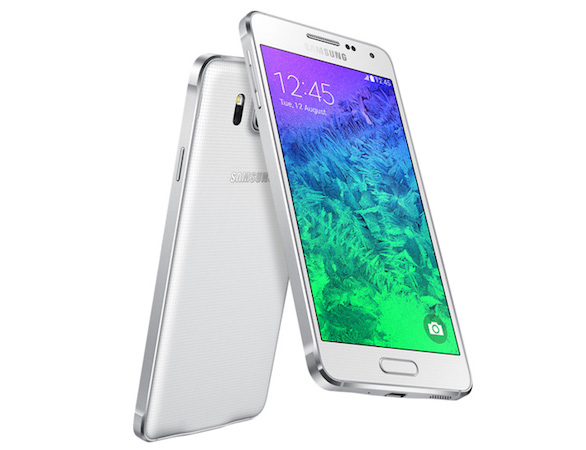
Before 2011, very few companies launched smartphones or tablets at IFA. Only a handful of phone makers bothered showing up with new devices, and in most cases they were mid-range at best. That all changed after Samsung launched the Galaxy Note at the show — and turned the practice into an annual IFA tradition. Now, as the company prepares to release its fourth large-screened flagship phone in as many years, several manufacturers have followed and now use IFA as a launching pad for the latest and greatest gadgets.
Samsung has made it no secret that it plans to follow precedent and announce the next entry in the Note series, thanks to a series of teasers leading up to this week’s unveiling. It’s done a fantastic job of preventing major leaks, however; nobody knows for sure what it looks like, because the company’s managed to keep images and specs of the Note 4 close to its chest so far. Chances are, Samsung won’t be ready to ship the device for a few more weeks, which would follow the same pattern set by the Galaxy S5 this spring.
The rumor mill is pretty dry for other Samsung phones. We’ve seen recent reports that Samsung has filed a trademark with the USPTO for something called the Galaxy Note Edge, but we can’t take this as a guarantee that the company will introduce such a product at IFA. We’re also excited to see the Galaxy Alpha, which is a sleek device with a metal frame that was officially announced a couple weeks ago.

Whereas Samsung has done a fantastic job at keeping quiet about its upcoming Note phone, Sony’s the complete opposite. Unless the company has something new up its sleeve, we’ve likely seen its entire holiday roadmap. At IFA, plan on seeing the Xperia Z3 and Z3 Compact: As you might expect, the former is the flagship, while the latter is a smaller version. If the rumors are true, the Z3 Compact will be just as close in specs to its larger brother as the Z1 Compact was. This is fantastic news, because it means that users who prefer smaller screens won’t be forced to endure midrange hardware.
Microsoft Devices — y’know, Nokia’s phone division — will also come to Berlin with at least one or two smartphones. The company hasn’t been shy about showing it off internally to employees, as we’ve heard several reports indicating that Stephen Elop has been proudly talking up the devices at recent town hall meetings. The higher-end of the two is the Lumia 830, which will be the most affordable PureView-branded device. If the leaks are accurate, we can expect the 830 to look similar to the 930 and come with a 10MP camera. There’ll also be a “selfie phone,” presumably the Lumia 730, which will focus on bringing a solid front-facing imaging experience to mid-tier buyers.

LG’s already announced most (if not all) of its product lineup, which includes the G3 Stylus. It’s a less-expensive version of the G3 that comes with a 5.5-inch qHD screen and — you guessed it — a stylus. We may also see the Gx2, a followup to a device that landed exclusively in Asia last year, and a couple of low-end L-series devices designed for emerging markets.
IFA will house several other manufacturers, so there will be plenty of other smartphones on display. Acer, ASUS, Alcatel OneTouch, HTC and Lenovo will all be there, so be on the lookout for some of their wares. Lenovo’s made the most noise from this group, thanks to its Vibe X2 teaser mocking Apple’s iPhone event invites. (And yes, that is indeed a lollipop in the teaser.)
Smartwatches

Smartwatches have been around in at least some capacity for several years — it all started with Microsoft SPOT and has continued on through Sony, Pebble and others — but people didn’t seem to notice or care until Samsung came out with a “mainstream” product known as the Galaxy Gear. The Android-based watch came out alongside the Galaxy Note 3 at last year’s IFA. It’s amazing how much can change in twelve months: Samsung is showing off its sixth watch, LG will have its second on display, Sony will have two more and ASUS will join the party with its first.
Both Samsung and LG officially announced their watches last week — curiously, within just a few minutes of each other — and the two devices are completely different from each other. The Samsung Gear S is a Tizen watch that comes with a curved display and built-in SIM slot, so you can either pair it to a phone or use it as a phone. On the other hand (wrist?), LG’s newest Android Wear watch steers closer to a truly classic look thanks to its circular display. It’s called the G Watch R, and despite the clunky name, it’s got enough chops to give the Moto 360 some tough competition.
Sony hasn’t made any announcements yet, but the leaks for its watches, the Smartwatch 3 and SmartBand Talk, are just as prominent as the company’s phones. The former is a squarish Android Wear watch, while the latter is a fitness band with E-Ink display and a mic. Finally, ASUS’ first watch will be an Android Wear device called the ZenWatch, and the company will reportedly sell it for under $200, which will be aggressively priced against its competitors.
VR and everything else

A few months ago, we broke the news that Samsung was working on its very own virtual reality headset called the Gear VR, and reported that it would likely launch at IFA. Sure enough, plenty of leaked images and renders have followed; given the number and strength of the rumors, we’d be surprised if Samsung didn’t release the product at this year’s show.
There’ll also be a few tablets, but they seem like much more of an afterthought. Sony’s leaked Xperia Z3 Tablet Compact is a horrible name, but looks like a good 8-inch tablet; Huawei’s got a Mate 7 tablet inbound; and per tradition, ASUS will have at least one or two tablets there.
Finally, expect to see some news on the chipset and Chromebook fronts. For the former, Intel is planning to introduce hardware — likely tablets and laptops — running its new Core M chipset based on Broadwell architecture. Additionally, Qualcomm teased a new HTC smartphone with a 64-bit processor inside. As for Chromebooks, at least a couple new models from Acer and Toshiba will pop up, although we wouldn’t be surprised to see a few other options showing up.
As always, these are simply a few products we expect to see at the show, and let’s face it — events like this hardly ever go exactly as planned. There’ll be new TVs and Smart Home products, and we’re sure a new washing machine or two. We’ll be liveblogging Samsung’s and Sony’s product launches, and we’ll be there to cover everything else that happens in Berlin, so keep our event page bookmarked!
[Image Credit: Getty Images (washing machines), Ausdroid (Z3 Compact), Sammobile (Gear VR)]
Filed under: Announcements, HD, Mobile, Samsung, Sony, Microsoft, HTC, Nokia, ASUS, LG, Intel, Acer
.CPlase_panel display:none;

Which cheap tablets are worth buying?

A few years ago, tablets were poised to replace laptops as the computing device of choice. That never happened, as we’ve largely stuck with laptops and phones as our daily drivers, with tablets relegated to a secondary role. If you don’t use a tablet that much, it certainly seems wise to avoid dropping a lot of cash on one. But a lower price often means compromises, and too many compromises means you won’t be using the tablet at all. To figure out how many corners you can cut when it comes to purchasing a sub-$200 tablet, we’ve gathered opinions from across the web, from our own reviews to the opinions of other trusted critics. Which cheap tablets balance performance and price to still deliver a good experience? When is it worth spending just a little bit more money? And which deals are too good to be true?
Filed under: Tablets, ASUS, Amazon, Dell, Acer
.CPlase_panel display:none;
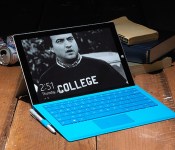
Back to School 2014: The 10 best tablets

By design, tablets are less about work and more about play — though you’ll find some notable exceptions in our roundup of top slates for the back-to-school season. Among them are Microsoft’s Surface Pro 3, which features a keyboard case that makes typing on the go bearable, and the ASUS Transformer Book, which also gives you hardware keys via a bundled dock. Of course, there are still plenty of slates made for enjoying your downtime. Click through the gallery below to see them all, and don’t forget to check out the rest of our guide!
Filed under: Apple, Sony, Microsoft, Nokia, ASUS, Google, Amazon, Acer
.CPlase_panel display:none;
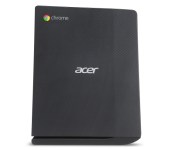
Acer announces new Chromebox CXI series of devices
Acer has certainly been making headlines lately. Just a little over a week ago they announced the new Acer Chromebook 13 CB5. The first Chromebook to bring the new NVIDIA Tegra K1 processor to a Chromebook and to consumers. Granted, the device is only up for pre-orders right now, but at least it is coming. Today Acer has announced another device in the Chrome OS line, but this time not a Chromebook. Instead, they have announced a new Chromebox line dubbed the CXI series.

“The Acer Chromebook CXI is an excellent fit for schools and any other institution or business where conserving costs and space are high priorities,” said Simon Hwang, president of Acer Stationary Computing and Display Business Group. “Due to the ease of management, the Chromebox can significantly reduce technical support and consequently lower the total cost of ownership.”
On a hardware standpoint the Chromebox CXI series packs an Intel Celeron 2957U processor, that is the Haswell version. As for RAM, you have that choice at purchase with either 2GB or 4GB. Beyond that choice, everything else remains identical with a 16GB SSD, 4X USB 3.0 ports (two of which can be powered off to just charge phones and tablets), SD card reader, WI-Fi 802.11 a/b/g/n, Gigabit Ethernet, Bluetooth 4.o, A HDMI and a DisplayPort. Yes, that last bit does mean that you can run a dual display setup.
Price wise you are looking at spending $179.99 for the 2GB RAM variant an $219.99 for the 4GB RAM variant. Feel free to start saving now as neither of these are available just yet. Acer pegs them for release ‘late next month’. So, sometime in late September.
Source: Acer
//<![CDATA[
ord = window.ord || Math.floor(Math.random()*1E16);
document.write('‘);
//]]>
The post Acer announces new Chromebox CXI series of devices appeared first on AndroidSPIN.
.CPlase_panel display:none;
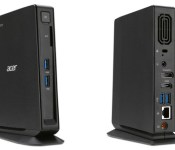
Acer’s Chromebox CXI ships next month for $180

Have a spare display sitting around that you want to turn into an (albeit limited) PC? You might consider picking up a Chromebox. The tiny low-powered machines, which run Google’s Chrome OS, are best for basic productivity apps and content consumption, but if you don’t need to do any complex processing, they might be a solid fit — especially if you’re on a very tight budget. Today, Acer announced a new model of its own, the Chromebox CXI. There’s an Intel Celeron (Haswell) processor, a 16GB SSD, plenty of connectivity and support for two displays. One version includes 2GB of RAM and ships next month for $180, while a model with 4 gigs of RAM will run you $220. Both include a keyboard, mouse and mounting kit in the box.
Filed under: Desktops, Google, Acer
Source: PRWeb
.CPlase_panel display:none;

Back to School Guide 2014: Laptops

No gadget — besides a smartphone, maybe — is as crucial to a college student as the laptop. Regardless of your major, you’ll want a solid machine with a well-crafted keyboard to see you through term papers, class presentations and more. From a sub-$400 Chromebook to sleek models from Lenovo and Samsung, our roundup has something for everyone. Click through the gallery below to see all 11 picks, and don’t forget to check out the rest of our guide for other gadget recommendations.
Filed under: Laptops, Apple, Samsung, Dell, Acer, Lenovo
.CPlase_panel display:none;

Introducing the Acer Chromebook 13

The Chromebook line was created with a mobile life style in mind. At a low cost, they do everything the average user needs out of a laptop. They are portable and easy to work with and give users almost instant access to the internet. Today, a new Chromebook has joined the family. One that has… Read more »
The post Introducing the Acer Chromebook 13 appeared first on AndroidGuys.
.CPlase_panel display:none;
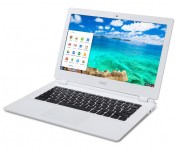
NVIDIA Tegra K1 packed inside the new Acer ChromeBook 13
The worlds first, but definitely not the last, NVIDIA Tegra K1 powered Chromebook has been announced today by Acer. In case you haven’t been following along with the Tegra K1, it is a 192 GPU core chip that is capable of bringing high-end desktop graphics to mobile friendly devices. NVIDIA announced the powerhouse back at CES in January of this year and have steadily been getting it into various products, like this Chromebook and the new NVIDIA Shield Tablet. The chip can even handle 64-bit systems.

As for the Acer ChromeBook 13, you are looking at the first Chromebook to be launched with this insane powerhouse chip. The name of the Chromebook does allude to the screen size being 13-inches, but it also offers up the expected battery life being 13 hours too. In terms of other Chromebook battery life, you have the Acer C720 at 8.5 hours, the Samsung Chromebook at 6.5 hours and the HP Chromebook advertising 6 ours. The NVIDIA Tegra K1 adoption and the battery life is probably the best aspect of this Chromebook, but the remaining specs sound pretty good too.
- 16GB internal storage that is expandable to 32GB
- 2GB of RAM that can be doubled to 4GB if so desired
- 2 USB 3.0 ports
- HMDI out
- SD card slot
- 18mm thick
The Chromebook 13 will be a Wi-Fi only model with no 3G or 4G options. That may or may not matter since many people tether or use a hotspot device anyways. Interestingly enough it will come in two different screen resolution options. A conservative 1366 x 768 that will run $279 and a 1920 x 1080 for $299. For $20 more (says Phandroid), it seems silly to not grab the HD variation. They don’t mention the weight, at least not that I could find, but with it only being 18mm thick it should be pretty light as well.
The Acer ChromeBook 13 is scheduled to go up for pre-orders later today via Amazon and Best Buy later today. We will keep checking in and be sure to let you all know when it becomes available. Until then, what do you guys think? Are we finally seeing some Chromebooks that are both affordable and powerful?
Via Nvidia blog
//<![CDATA[
ord = window.ord || Math.floor(Math.random()*1E16);
document.write('’);
//]]>
The post NVIDIA Tegra K1 packed inside the new Acer ChromeBook 13 appeared first on AndroidSPIN.
.CPlase_panel display:none;

Acer’s Chromebook 13 lasts a stunning 13 hours on a charge

Until now, if you wanted a Chromebook with a full HD display, you only had one option: the 13-inch Samsung Chromebook 2. Want epic battery life? Yep, all roads lead to Samsung there, too. Well, not anymore, anyway. Acer just announced the Chromebook 13, and it matches Samsung nearly spec for spec with an optional 1080p display and NVIDIA’s quad-core Tegra K1 chip, promising up to 13 hours of runtime (details on that after the break). This is interesting for two reasons. First off, although this is essentially the same class of product as what Samsung is selling, it costs $100 less: $299, versus $400 for the Chromebook 2. Sounds good, right? What’s more, this is the first-ever Chrome OS device with an NVIDIA processor inside.
This is potentially good news even if you’re not a self-described chip geek: Tegra K1 offers long battery life, just like Samsung’s own Exynos chip, but the graphics should be better for things like gaming and interactive websites — the sorts of rich web apps frequently used in classrooms. And if you’ve ever used a Samsung Chromebook, you know there’s room for improvement there: For all of Samsung’s plus points (a crisp display, comfortable keyboard), the Chromebook 2 is relatively sluggish. But will this be more robust than those new Core i3 models we’re seeing? That remains to be seen.
On a superficial note, the Chromebook 13 is definitely more basic-looking than the Chromebook 2. Whereas Samsung’s model comes kitted out with a fake-leather lid, the Chromebook 13 is made of plain white plastic. It’s clear that if Acer made any sacrifices to reach that lower price point, this is it. Then again, this is a perfectly serviceable, if unexciting, design, and the full-sized keyboard is naturally more spacious than what you’ll find on Acer’s older 11-inch Chromebooks.
The Chromebook 13 is up for pre-order today, starting at $279 with a 1,366 x 768 display, and $299 for the full HD model. Of note: The full HD machine is rated for 11 hours of battery life, compared with 13 for the 1,366 x 767 version. In addition to the US, it will be sold in various European countries, including the UK, Netherlands, Belgium, Denmark, Sweden, Finland, Norway, France, Germany, Russia, Italy, Spain, South Africa and Switzerland. As a heads-up, the Chromebook 13 doesn’t have a touchscreen for now, though that could change: When we asked an NVIDIA rep if a touch edition was in the works, he winked and said “That’s an interesting idea.” Consider it confirmed, folks. Almost.
Filed under: Laptops, Google, Acer, NVIDIA
.CPlase_panel display:none;
 AIVAnet