


Tim Cook Poised to Receive Around $120 Million in Apple Stock as Tenure and Performance Award
Apple CEO Tim Cook is poised to receive 560,000 shares of Apple stock on Friday, worth approximately $120.4 million based on Tuesday’s closing price of $215.04. The two-part award is tied to Cook’s continued service as CEO, and Apple’s relative performance on the stock market under his leadership.
The total includes the vesting of 280,000 restricted stock units for Cook remaining CEO over the past year, and the vesting of another 280,000 restricted stock units for Apple achieving a higher shareholder return than at least two-thirds of other companies in the S&P 500 over the past three years.
Apple’s total shareholder return was 119 percent from August 25, 2015 through Tuesday’s closing bell, outperforming more than 80 percent of firms in the S&P 500, according to Bloomberg. So, unless Apple suffers a major collapse on the stock market in the next 48 hours, Cook will receive all 560,000 shares.
Cook receives these annual awards as part of a grant he received upon succeeding the late Steve Jobs as CEO of Apple in 2011.
Cook will receive an additional 560,000 shares in each of the next three years if he remains CEO, and Apple’s total shareholder return continues to rank among the top-third of companies in the S&P 500. He is also set to receive a lump sum of 700,000 tenure-based shares on August 24, 2021, as part of his grant.
Cook also receives a $3 million salary and earned a $9.33 million cash bonus in 2017, according to Bloomberg.
Cook now has a net worth of around $700 million, according to Bloomberg, but has previously said he plans to give away most of his wealth. Just this week, an SEC filing revealed that Cook recently donated 23,215 shares of Apple stock to charity, worth nearly $5 million based on Tuesday’s closing price.
Apple became the world’s only trillion dollar publicly traded company, in terms of market capitalization, earlier this month.
Tags: Tim Cook, AAPL
Discuss this article in our forums
iOS Puzzle Game ‘Monument Valley’ Being Adapted Into Live Action/CG Film
Ustwo Games’ popular iOS and Android puzzle series “Monument Valley” is being turned into a movie, as reported this week by Deadline. Paramount Pictures and Weed Road Pictures have won the rights to the games, and Patrick Osborne has already been selected to develop and direct the first film.
Osborne won the Academy Award for Best Animated Short for his short film “Feast” in 2014, which was shown before “Big Hero 6” in theaters. He has also worked as an animator on Disney films including “Wreck-It Ralph” and “Bolt.” With Monument Valley, Paramount and Weed Road are hoping to launch a family-friendly franchise if the first film does well enough.
“Monument Valley is a one of a kind experience, at once small in its meditative, simple gameplay, as well as enormous in its sense of history,” Osborne said. “I’m privileged to be handed the reins to Ida’s mysterious kingdom, to play in her world of impossible architecture where seeing things differently is everything. I am thrilled to bring this unique world to theaters with the talented storytellers of Paramount and Weed Road.”
In the games, players guide Ida (in the original) and Ro and her child (in the sequel) through a series of mazes that present optical illusion challenges that the player must manipulate to solve. In the film, “contemporary live-action characters” will be sent into Monument Valley’s surreal world and have to figure out a way to get back home.
The original Monument Valley launched on iOS in 2014, and eventually won numerous awards including one of Apple’s Design Awards for that year. The game also went on to be a financial success thanks in part to its avoidance of a free-to-play structure, and four years later the sequel nearly doubled the first-year revenue of the original game.
The rumours are correct. There’s going to be a Monument Valley movie! In collaboration with Paramount Pictures and Patrick Osborne. We couldn’t be more excited. https://t.co/j2riIGZfru pic.twitter.com/XGPBabM3z5
— ustwo games (@ustwogames) August 22, 2018
Deadline’s report doesn’t provide a release window for the Monument Valley film. Currently, Osborne is working as director on an adaptation of the fantasy webcomic Nimona for 20th Century Fox Animation and Blue Sky Studios, which is set for a February 2020 release date. If Osborne moves onto Monument Valley after Nimono, the adaptation of Ustwo’s puzzle game should be released sometime after 2020.
Tags: Monument Valley, Ustwo, Monument Valley 2
Discuss this article in our forums
Idle Android Devices Send Data to Google Nearly 10 Times More Often Than iOS Devices do to Apple, Research Finds
Idle Android devices typically send almost ten times as much data to Google as iOS devices send to Apple’s servers, according to new research shared by trade association Digital Content Next.
In a paper titled “Google Data Collection,” Douglas C. Schmidt, a computer science professor at Vanderbilt University, arrives at some stark conclusions regarding how much Google is collecting about consumers who use the company’s products, even when they aren’t interacting with their smartphones and tablets.
Among several findings, Schmidt’s experiments found that an idle Android phone with Chrome web browser active in the background communicated location information to Google 340 times during a 24-hour period. An equivalent experiment found that on an iOS device with Safari open but not Chrome, Google could not collect any appreciable data unless a user was interacting with the device.
In addition, he found that an idle Android phone running Chrome sends back to Google nearly fifty times as many data requests per hour as an idle iPhone running Safari. Overall, an idle Android device was found to communicate with Google nearly 10 times more often than an Apple device communicates with Apple servers.
As well as data transmission frequencies, Schmidt’s research also turned up some of the ways that Google can potentially tie together anonymous data collected through passive means with the personal information of its users.
For example, on an Android device, so-called “anonymous” advertising identifiers that collect activity data on apps and third-party web page visits can get associated with a user’s real Google identity by the passing of device-level identification information to Google servers.
The same goes for the supposedly user-anonymous DoubleClick cookie ID, which tracks a user’s activity on third-party web pages. According to Schmidt’s research, Google can associate the cookie to a user’s Google account when a user accesses a Google app in the same browser that a third-party web page was accessed.
The research follows a recent investigation conducted by the Associated Press which revealed that Google continues to track location data even after a consumer has turned off the setting in many of its apps, including Google Maps.

In response to a query about location history tracking, Google said that it is clear about its location policies, yet the company continues to collect data through app features that come under “My Activity” even when its “Location History” setting is turned off. The practice has since led to a class action lawsuit against the company by a user arguing breach of privacy.
Location information stored in “My Activity” is used for ad targeting purposes, which is still Google’s primary business model. In contrast, Apple uses differential privacy to gather anonymous usage insights from devices like iPhones, iPads, and Macs, allowing it to crowdsource data from a large number of users without compromising the privacy of any individual.
Apple says the data it collects off-device is used to improve services like Siri suggestions, and to help identify problematic websites that use excessive power or too much memory in Safari, but the data is randomized before being sent from devices, so that its servers never see or receive raw data from users.
When users set up their device, Apple explicitly asks users if they wish to provide usage information on an opt-in basis. If a user declines, no data is collected by Apple unless they choose to opt in at a later time.
Apple executives have said several times that Apple customers are not the company’s product, and Apple CEO Tim Cook has maintained that privacy is a fundamental human right. The company also has a dedicated privacy website that explains its approach to privacy, outlines tools available to customers to protect their privacy, and details government data requests.
Tags: Google, Android, privacy
Discuss this article in our forums
The New York Public Library Begins Posting Entire Novels to Instagram Stories
The New York Public Library today launched a new initiative it’s calling “Insta Novels,” in which it will post classic novels and short stories as Instagram Stories. You won’t need a NYPL card or have to live nearby to gain access to Insta Novels as the feature will be available to anyone who has an Instagram account (via The Wall Street Journal).
To start off, the library is offering Lewis Carroll’s “Alice’s Adventures in Wonderland,” and plans to next highlight Charlotte Perkins Gilman’s “The Yellow Wallpaper” and Franz Kafka’s “The Metamorphosis.” The platform was built to “promote reading in general,” as well as expand the brand recognition of the NYPL and its ability to “adapt to the digital era.”
“We want people to understand that libraries aren’t just those brick-and-mortar places full of dusty books,” said Christopher Platt, the NYPL’s chief branch library officer.
Specifically, these novels and stories will be housed on the NYPL’s Instagram page as Story Highlights. The library is dividing Alice’s Adventures in Wonderland up in multiple parts, and Part 1 is available to read today. Once you open up the “Alice Part 1” story, the library has created an area on the page to rest your thumb on the screen.
The way Instagram Stories work is that when you place a finger on the story, it pauses as long as you continue to interact with it. So, in order to ensure you can read a full page without the story progressing at a fast speed, you can rest your thumb on the screen, and then lift it to turn the page. Alice Part 1 extends to page 83 and the sixth chapter of Lewis Carroll’s novel, and Part 2 will be added as a Story Highlight tomorrow.
Unlike stories posted to the central area of Instagram, which disappear after 24 hours, stories that you add to your “Highlights” on your account page are permanent. This means that those reading Insta Novels don’t have to worry about finishing the books in under a day, although there doesn’t appear to be any way to save your progress if you don’t finish the story in one sitting.
The library worked with advertising agency Mother in New York to create Insta Novels, with Mother chief creative officer Corinna Falusi stating that the experience is “unmistakably like reading a paperback novel.”
Tag: Instagram
Discuss this article in our forums
The amazing $300 Pocophone F1 is so fast, it uses water inside to keep cool
Choosing a partner in whatever you do is important, and although you may not recognize the Pocophone name, the new company has worked very closely with Xiaomi, a name known to many more people, to produce its first phone — the Pocophone F1. How close? This is an ongoing partnership, right down to the branding on the back of the device, which proudly states, “Pocophone by Xiaomi.”
That’s what you need to know about the name, so what about the F1? It has the latest, and fastest Qualcomm Snapdragon 845 processor inside with 6GB or 8GB of RAM, a 6.18-inch screen with a 2,246 x 1080 pixel resolution (and a notch), a 4,000mAh battery, a dual-lens camera with artificial intelligence, and even water-cooling.
We know what you’re thinking. This is a flagship to rival those from OnePlus, Honor, and even Samsung and LG. The on-paper tech specs are as high-end as phones get, yet the Pocophone F1’s price is just $300, converted over from its international price. That’s cheaper than the OnePlus 6, the LG G7, the Galaxy Note 9, and every other Snapdragon 845 phone out there.
A closer look
Let’s look a little deeper. The Snapdragon 845 is paired with 6GB of RAM and either 64GB or 128GB of internal memory, plus an 8GB/256GB model will also be available in certain markets. It uses water-cooling, just like the Galaxy Note 9 and several Nokia phones, to keep the phone running at an optimum temperature. The dual-lens camera has a main, 12 megapixel lens with dual-pixel autofocus, a 1.4nm pixel size, and an f/1.9 aperture. The secondary lens has 5 megapixels, while the selfie camera inside the notch on the front has 20 megapixels and clever pixel boosting technology to reduce noise and improve low-light selfie performance.
The cameras both provide a bokeh mode, along with artificial intelligence for scene recognition, portrait mode, and a beauty mode. On the back of the phone is a fingerprint sensor, and in the near future an infrared sensor above the screen will be activated in a software update to provide secure face-unlock too. The feature list continues with Quick Charge 3.0 for the 4,000mAh battery, Bluetooth 5.0, dual-SIM support, a MicroSD card holder, and Xiaomi’s MIUI user interface over Android 8.1.
Where’s the catch?
By now, you’re wondering what the catch is. How is this phone offered for so little? This is partly where Xiaomi’s partnership is so helpful, as it already has the manufacturing expertise and market power needed to create a phone like this, and supplies not only the software but the camera system, too — all ready to go, and all tested on other devices. Additionally, unlike the iPhone X, Note 9, and other expensive phones, the Pocophone F1 is not made of a premium material like glass. It’s made of polycarbonate, and is 8.8mm thick. This gives the company wiggle room inside the device for components, and reduces the cost of parts and manufacturing. Making curvy glass phones is expensive.
This isn’t to say the Pocophone is ugly. It’s not. There has been plenty of thought put into making the phone feel slim in the hand, and the 180-gram weight is perfectly acceptable today. It comes in blue, red, or black; but we love the Armoured Edition, which has a genuine Kevlar rear panel complete with exposed fiber weave. It looks great. The 8GB/256GB Armoured Edition is the most expensive F1 phone at about $430, or 30,000 Indian rupees, while the cheapest 6GB/64GB in red, black, or blue is about $300, or 21,000 Indian rupees.
Currently ready for release in India, where it’s known as the Poco F1, Pocophone intends to sell the F1 everywhere Xiaomi phones are available, which will include parts of Europe where the brand has recently made a considerable splash. It has announced Hong Kong, Indonesia, and France are next. While the U.K. and the U.S. are not officially on the list yet, there is a chance this may change in the future. Given the Pocophone’s specs and incredibly tempting price, we hope the change happens sooner rather than later.
Editors’ Recommendations
- Samsung Galaxy Note 9 vs. OnePlus 6: Does more expensive mean better?
- The hottest phones of 2018 are still to come. Here’s what’s around the corner
- Xiaomi Mi A2/Mi A2 Lite: Everything you need to know
- LG V35 ThinQ vs. OnePlus 6: Can LG’s latest flagship beat an Android favorite?
- Moto Z3 Play vs. OnePlus 6: Can Motorola’s latest beat our midrange pick?
The hottest phones of 2018 are still to come. Here’s what’s around the corner
Every year we get a fresh wave of tempting smartphones. The highlights so far in 2018 include Samsung’s Galaxy S9 Plus and Note 9, Huawei’s P20 Pro, the OnePlus 6, the Nokia 6.1, and the BlackBerry Key2, but there’s still plenty of promise on the horizon. There are several big releases expected before the end of the year, so if you’ve held off on upgrading your phone so far, here’s what to look out for. These are our most hotly anticipated smartphones.
Apple’s iPhones
The rumor mill always goes into overdrive when it comes to a new iPhone release, but the only thing we can be confident about is that new iPhone devices will be unveiled at Apple’s annual September event. There will likely be at least two new models, though we’re expecting three like last year, and they all are rumored to be based on the iPhone X design with Face ID replacing Touch ID across the board.
An updated iPhone X with a new processor and some other upgrades is likely, possibly flanked by an iPhone X Plus with a larger display, and a more budget-friendly version with a cheaper LCD replacing the OLED screen to keep costs down. The updated X and X Plus, which will likely sport new names, are sure to be two of the best phones of the year. We’ve wrapped up new iPhone rumors in one handy place if you want to read more.
Google’s Pixel 3 and 3 XL
Julian Chokkattu/Digital Trends
We are expecting two new Pixel smartphones in October, hot on the heels of the new iPhones. The Pixel 2 XL was our favorite Android smartphone last year, and we were blown away by the camera performance, particularly as it sports a single lens in the face of dual- and even triple-lens competition. Google’s mastery of software enables it to squeeze more out of devices than you might expect from a glance at the spec sheet, and we expect this to be the case with the Pixel 3 and 3 XL.
It seems both are likely to feature larger displays than their predecessors, with slimmer bezels, and possibly a notch on the XL. The pair will probably pack Qualcomm’s Snapdragon 845 processor, and rumors suggest they will support wireless charging. There’s a slim chance we’ll see a third model that’s a bit cheaper with mid-range specs. There have been a lot of leaks around the new Google phones and you can read up on all the Pixel 3 rumors in our roundup.
LG V40 ThinQ
Julian Chokkattu/Digital Trends
It has been a tumultuous period for LG, so we’re hoping the LG V40 might see a return to form after the underwhelming LG V35 ThinQ and LG G7 ThinQ. We expect the V40 to carry the same ThinQ moniker, marking out the addition of LG’s artificial intelligence platform which connects all its devices together. Last year’s V30 landed at IFA in August, but we think the V40 might come later, perhaps in October.
The V stands for video, so we’d expect something special in the camera department, possibly even a triple-lens array on the back and a dual-lens front-facing camera. We’re not sure if the V40 will go with slim bezels and OLED tech in the screen or adopt the notch design of the G7, but a Snapdragon 845 processor inside seems a certainty. You can check out our LG V40 rumor roundup for more.
Huawei Mate 20 and Mate 20 Pro
Gizmochina
If you were impressed by the P20 Pro, then the Mate 20 Pro may prove irresistible. We may even see three new smartphones from Huawei: A Mate 20 Pro, Mate 20, and Mate 20 Lite. The flagship Pro could sport a truly massive screen – rumors are suggesting a 6.9-inch OLED. For a screen that size to be manageable, Huawei will have to find a good way to minimize the bezels, and an in-display fingerprint sensor is a possibility. It’s sure to have plenty of power with Huawei’s proprietary Kirin chip inside and it will probably boast the same triple lens camera as the P20 Pro, but with a few tweaks.
The Mate 20 and Mate 20 Lite will likely be smaller and less powerful, but also less expensive. The OLED may be switched for LCD and they’ll have less impressive camera setups. An announcement in October is our best guess, and what’s more exciting is the Mate series is usually sold through retailers in the U.S. — keep an eye on our Huawei Mate 20 Pro rumor roundup for all the latest news.
Nokia 9
We’ve been really impressed with Nokia’s line-up this year under HMD Global, but there’s a chance that one more device will be unveiled before the year is out: The flagship Nokia 9. Budget and mid-range releases like the Nokia 6.1 and Nokia 7 Plus have impressed, and the current curved display flagship — the Nokia 8 Sirocco — has plenty to recommend, but the Nokia 9 should be HMD’s most ambitious release yet.
A luxurious design with a 6-inch OLED screen, cutting edge specs, and a dual-lens camera that pairs a 41-megapixel wide-angle lens with a 20-megapixel secondary lens have all been floated as possibilities. No bezels, an in-screen fingerprint sensor, stock Android 9.0 Pie, and a big battery could also be onboard, but we’re uncertain if there’s any truth to the rumors. As for an unveiling date, we think September at the earliest, but there’s a chance it’s closer to Christmas. Keep an eye on our Nokia 9 news for the latest rumors.
Sony Xperia XZ3 and XZ3 Compact
Julian Chokkattu/Digital Trends
It hasn’t been very long since the XZ2, XZ2 Premium, and XZ2 Compact hit stores, but there’s an outside chance Sony is prepping to reveal the XZ3 range at IFA later this month. We’re probably more excited about the XZ3 Compact because so few companies are turning out small phones nowadays and the XZ2 Compact is one of the best on the market. We expect an incremental update over the phones Sony released earlier this year with the same Snapdragon 845 processor, but upgrades for the battery and camera.
Don’t expect a major departure in the design department, but hopefully Sony will slim those bezels down and squeeze a bit more screen into the handset. It would also be great to see some improvements in the software, which we found to be a real weak spot in the XZ2. Sony has been refreshing its flagship every six months for a while, so an imminent release is possible. Our Sony Xperia XZ3 news will keep you informed on the latest.
Motorola One Power or P30
91 Mobiles
Since Lenovo acquired Motorola it has been churning out phones at an incredibly fast rate, but the deluge of budget and mid-range devices may not be over yet. We have heard some whispers about a Motorola One Power (quite possibly the just announced, China-only Motorola P30) that looks an awful lot like the iPhone X. There’s a 6.2-inch display with a notch at the top and a dual-lens camera at the top left on the back.
The rumored specs and pricing place it firmly in the mid-range category, but a leak out of China suggests there will be a P30 Note, and a P30 Play. There are already far too many Motorola phones on the market, so perhaps these are just for China. We may hear more at IFA, but keep an eye on the news posts linked above for all the latest rumors.
Asus ROG
If you’re sold on the idea of a specialized gaming phone then you may be interested in the forthcoming Asus ROG (Republic of Gamers) phone, which is set to drop before the end of the year. It will offer lightning-fast performance with an overclocked Snapdragon 845, 8GB of RAM, and plenty of internal storage (128GB or 512GB). We’re also expecting a 6-inch OLED with a 90Hz refresh rate, a dual lens camera, and a big, 4,000mAh battery.
Check out our Asus ROG roundup for more, but we don’t think you’ll have to long wait for this device and an imminent release looks likely. If you are after a gaming phone, then there’s also an outside chance that we’ll see a Razer Phone 2 before the year ends.
Red Hydrogen One
Christian de Looper/Digital Trends
We saved the weirdest for last and it’s the Red Hydrogen One, which is set to launch in November. You’d expect something special in the camera department, since that’s what Red does, but the highlight seems to be a 3D-effect holographic display that doesn’t require glasses. It will also have a modular design that allows you to add a “cinema-grade” camera and extended battery, but it will be very expensive and have last year’s Qualcomm Snapdragon 835 processor inside.
According to the latest news it will be landing in AT&T and Verizon stores starting on November 2. Read our Red Hydrogen One hands-on to learn more and stay up to date with our rumor roundup.
There are undoubtedly going to be more phones unveiled than the ones we’ve listed here, and we’ll be covering them all, but the ones in this list are the smartphones we’re most excited about.
Editors’ Recommendations
- LG V35 ThinQ vs. OnePlus 6: Can LG’s latest flagship beat an Android favorite?
- Bigger isn’t always better: 5 of the smallest smartphones worth buying
- Here’s our comparison of the most bezel-less designs among smartphones
- Everything we know about the upcoming LG G8 ThinQ smartphone
- LG V35 ThinQ: Here’s everything you need to know about LG’s newest flagship
DirecTV Now adds NFL Sunday Ticket access — but only in a few markets

Are you ready for more football?

One of the biggest gripes not just about streaming TV but the whole damn system in the first place is that you still can’t watch anything everywhere. And while that’s really not changing anytime soon, the fact that you can now tie an NFL Sunday Ticket account — that’s the one that lets you watch any game any week — into a DirecTV Now account is a step in the right direction.
(Never mind that NFL Sunday Ticket is a legacy DirecTV satellite thing, and DirecTV Now is obviously an offshoot of that, and so this sort of thing seemed to be inevitable and really doesn’t matter unless you have DirectTV Now in the first place. But we digress.)
There are a couple of caveats here. First is that you’ll have to at least have DirecTV Now’s $55-a-month “Live a Little” plan.
See complete DirecTV Now plans and pricing
The other is that you’ll have to reside in an eligible ZIP Code in the following locations:
- Greater Los Angeles
- Phoenix
- Boston
- Philadelphia
- San Antonio
- Hartford, Conn.
- Louisville, Ky.
There are a lot of people in those locations, for sure. But it’s not all the people in all the locations. At least not yet.
But with just a few short weeks to go until the regular season starts, it’s definitely a welcome addition.
Do it: Watch NFL Sunday Ticket on DirecTV NowMore: How to watch the NFL if you’ve cut the cord
Introducing CordCutters.com
- The hardware you need
- All about streaming services
- What channels are on which service
- FREE over-the-air TV
- How to watch sports
- Join the discussion
- Listen to the podcast
Get the latest deals
How to limit child purchases on Fortnite for Android
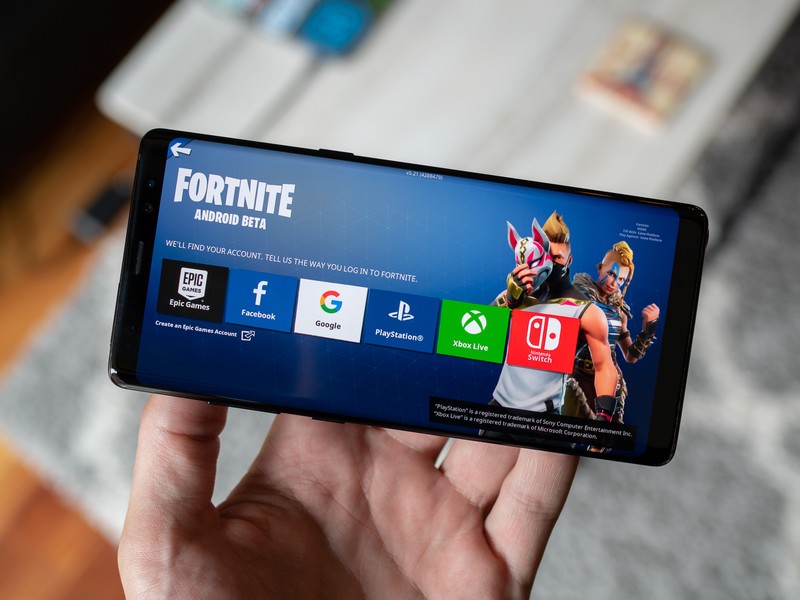
With Fortnite on Android avoiding Google Play, here’s how to limit child purchases on the platform.
Fortnite is skipping Google Play on Android and the beta is already in full-swing. If you have a child eager to play Fortnite on their Android device, its imminent full release is great news. But as a parent, you’ll be missing out on the parental controls that come with Google Play.
Children might be inclined to make unauthorized purchases in Fortnite, and on Android, it can be difficult to stop them. Here is how you can curb unwanted child purchases on Fortnite for Android:
There are no parental controls

Unlike on other systems, such as the PS4 or Nintendo Switch, there are no parental controls to be found on Fortnite for Android. This is because these systems have parental controls built in to stop unwanted spending across all games, but because Fortnite doesn’t go through the Google Play store on Android, it relies only on what Epic Games provides. Which unfortunately does not include parental spending controls.
Purchases can be made on Fortnite for Android with either a credit card or PayPal. If your child is playing Fortnite on his or her own device and does not have access to card information or PayPal information, you’re in the clear. However, if the child is playing on an adult’s device, has access to any of that information, or if you have at some point used that information to make a one-time purchase on the Epic Games account attached to the game on Android, you’ll need to be very, very careful.
Check the Epic Games account

If you have already used a card or PayPal account and attached it to the Epic Games account the child is playing on, you’ll want to remove that information. To do so, go to your account page on the Epic Games website and click on Payments on the left side of the screen. You’ll see all your saved payment methods. Click the trash can icon to the right of any and all you want to remove, then press Confirm. The payment method will be removed from your account.
You can also do this at any time in the future if you accidentally add a card or account that you want removed. Keep in mind that Epic Games tracks payment information across multiple systems, so if you’re using the same account on two platforms and paying for items on one, you’ll want to remove it so that information cannot be used on Android.
Make one-time purchases by card only

Sometimes, you may want to purchase something in-game for your child, but want to avoid having your information saved for future unsupervised transactions. If you do this, you must pay by card. On the payment selection screen on Android, after putting in your credit card information, there is a check box that says “Save card for future use.” Make sure that box is unchecked when you make the purchase. Doing this will force it to ask you for your card again the next time you make a purchase, so a child cannot use your saved card to buy things unsupervised.
PayPal accounts do not have this option and will be linked to your account if you pay through them until you manually go to the Epic Games site and remove them. It’s best not to link a PayPal account if you have a child playing Fortnite on Android.
Remove card information from Google’s saved cards or Samsung In-App Payments
Another thing to watch out for is Google Pay. If you have card information saved in Google payments, Fortnite for Android will pull it automatically to fill in card information when making a purchase in Fortnite. To keep Google from doing this, you’ll want to go to the Google Pay website. Click on Payment Methods, and click “Remove” under any cards you want gone. You’ll have to press “Remove” again when the dialogue box pops up to confirm.
For users with Samsung phones, the game will be downloaded through the Samsung Game Launcher and purchases will go through Samsung In-App Purchases. Similarly, you’ll need to go to Samsung’s payment hub and remove any saved cards from there if it’s pulling card information from their system.
Check, check, and recheck

If you’re worried at all that you may have saved card information a child could use to purchase something in Fortnite without your supervision, the best way to check is to try to purchase something yourself. Open the Shop in Fortnite and attempt to make a purchase with either card or PayPal. If it prompts you to enter information and does not autofill it for you, then your child is good to go and cannot make a purchase unless they get access to your credit card or PayPal information. If it has saved the information and automatically fills it in for you, then you’ll need to either remove your card from Epic Games or Google Pay or unlink your PayPal account.
Get a refund
If all else fails and a child makes a purchase they are not supposed to, you can request a refund if you’re using a Samsung device. Refunds for Samsung devices will go through Samsung and will require contacting its customer support. Currently, there is no way to request a refund on other devices.
Any questions?
Need any further help keeping your child from making unsupervised purchases in Fortnite for Android? Let me know in the comments!
Best Phone for Fortnite in 2018
Qualcomm’s now sending out samples of its next-gen mobile processor
The Snapdragon 845’s successor is coming soon.
Qualcomm’s Snapdragon 845 processor is at the heart of most flagship smartphones that have been released this year, and thanks to ultra-fast performance, improved image processing, and much more, is one of the best mobile chips we’ve ever seen from the company. Now, Qualcomm says OEMs have already begun sampling the 845’s successor.

In a press released that was published this morning, Qualcomm said:
The 7nm SoC can be paired with the Qualcomm® Snapdragon™ X50 5G modem, creating the first 5G-capable mobile platform for premium tier smartphones and other mobile devices. Qualcomm Technologies has begun sampling of its upcoming flagship mobile platform to multiple OEMs developing next-generation consumer devices.
Aside from the fact that the new chipset is just 7nm and is capable of 5G network speeds, nothing else is known about it quite yet.
In regards to availability, Qualcomm goes on to note that:
The upcoming platform will transform industries, encourage new business models and improve the consumer experience as operators come online with 5G services later in 2018 and through 2019.
Furthermore, Qualcomm also says that the next-gen platform will be formally announced during Q4 of this year.
It’s OK not to be hyped about 5G
Score big discounts on Logitech’s popular PC accessories today only
These prices won’t stick around for long!
As part of its daily deals, Amazon has a wide variety of Logitech PC accessories on sale, including mice, keyboards, gaming headsets and more. Many of these accessories are back down to previous all-time low prices or have hit new historic lows, so you won’t want to miss out.
Some of our favorite deals include:
- MX Master Wireless Mouse – $44.99 (Was $70)
- G300s Ambidextrious Gaming Mouse – $14.99 (Was $20)
- K480 Multi-Device Bluetooth Keyboard – $19.99 (Was $30)
- MK320 Wireless Keyboard & Mouse Combo – $18.99 (Was $25)
- K750 Wireless Solar Keyboard for Mac – $37.50 (Was $56)
- G231 Gaming Headset – $34.99 (Was $70)
- C270 HD Webcam – $15.29 (Was $22)
Be sure to check out the whole sale and grab what you want now before the sale ends tonight.
See at Amazon

