


Apple to Invest in Mangrove Forest Restoration Project in Colombia
Apple has announced it will invest in a mangrove tree restoration project for a 27,000-acre forest in Colombia, as part of a broader effort by the company to achieve carbon neutrality (via Fast Company).
Apple VP of environment, policy, and social initiatives Lisa Jackson gave details of the investment at the Global Climate Action Summit in San Francisco, but stopped short of disclosing how much cash Apple intends to earmark for the project, which is being undertaken in partnership with the non-profit Conservation International.
Image via Fast Company
“These forests are critical because they’re one of nature’s most important tools in the battle against climate change – they can absorb and store up to ten times more carbon than a terrestrial forest,” Jackson told the audience.
The project will involve tree-planting in degraded areas of the Colombian forest and tree preservation, which should help capture an estimated one million metric tons of CO2 emissions over its lifetime. Projections over the first two years indicate 17,000 metric tons in reduced emissions.
That’s the same amount of emissions generated by the cars that will update Apple Maps over the next decade, making the program carbon neutral for the company, notes Fast Company.
According to M. Sanjayan, CEO of Conservation International, mangrove trees are excellent absorbers of carbon and are able to store carbon dioxide in their leaves and branches, as well as siphon off the gas into surrounding soil and sediment through vast underwater root systems.
Mangrove trees “have the densest carbon storage of any habitat on Earth,” said Sanjayan. “If you want to actually change the thermostat of the world in your lifetime, then ending the destruction of mangroves and restoring them is one of the biggest things you can do.”
Conservation International has calculated how much “blue carbon” the trees sequester underwater, which will allow the project to quantify the trees’ ability to act as “carbon sponges”.
“By investing, [Apple] opened the door for others to also think about blue carbon as a viable way to sequester carbon and reduce emissions globally,” said Sanjayan.
Back in 2015, Apple partnered with the Conservation Fund to acquire over 36,000 acres of working forest in Maine and California, ensuring the maintenance of the forests and preserving the supply of raw materials for paper. Later that year, Apple committed to protecting one million acres of forest in China.
Underlining its environmental commitments, Apple announced in April that its global facilities, including retail stores, offices, data centers, and more, are powered with 100 percent clean energy.
Tag: Environmental Responsibility
Discuss this article in our forums
Samsung may launch a Galaxy phone with four cameras on October 11
Samsung’s next Galaxy phone may feature four rear cameras.
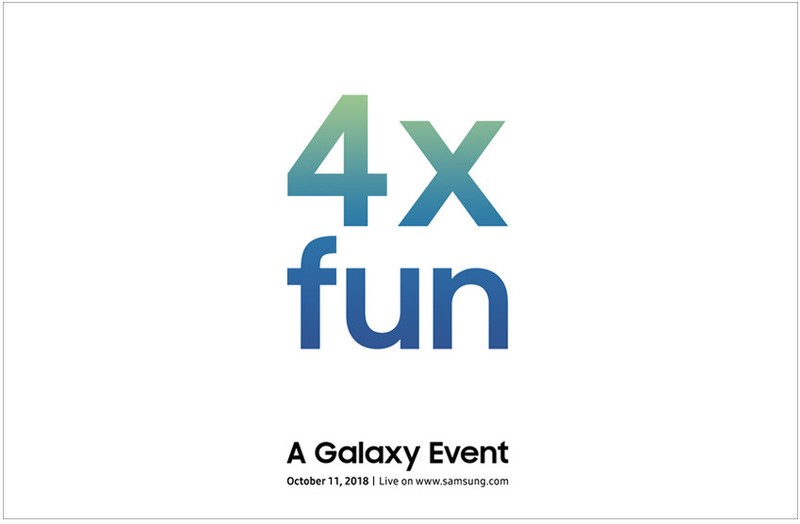
Samsung unveiled the Galaxy Note 9 earlier this month, but it looks like the company isn’t done yet. The South Korean manufacturer is set to unveil its next phone at “A Galaxy Event” on October 11, with the device set to offer “more ways to express yourself than ever before.”
With recent rumors on Twitter hinting at a Galaxy phone with four rear cameras, it’s possible we’ll see the device break cover next month.
SamsungCamera Camera Camera Camera
— Ice universe (@UniverseIce) September 2, 2018
The wording suggests we could see the next-gen Galaxy A series, but the time-frame for that is usually around January/February. Samsung has confirmed that it will launch a foldable phone this year, so the upcoming phone could be the long-awaited Galaxy X device.
With the launch just under a month away, we’ll likely hear much more about the device in the coming weeks. In the meantime, what do you think we’ll see from Samsung? Share your thoughts in the comments below.
Apple Watch Series 4 Now Available for Pre-Order
Alongside the iPhone XS and iPhone XS Max, the Apple Watch Series 4 is now available for pre-order from Apple’s online storefront and through the Apple Store app.
Apple Watch Series 4 marks the first ever design change for the Apple Watch since its debut, with the new models offering displays that are up to 30 percent larger along with a smaller, thinner case. The new models are available in 40 and 44mm size options, up from 38 and 42mm.
Several new watch faces have been designed for the Apple Watch Series 4 to take advantage of the additional screen real estate, and all models now use black ceramic and sapphire crystal backing for better cellular service.
Haptic feedback has been built into the Digital Crown, which is also equipped with electrodes to enable a new feature that lets the watch take an electrocardiogram (ECG) reading. Inside, the Apple Watch Series 4 is equipped with a faster, more efficient S4 chip and a next-generation accelerometer and gyroscope enable fall detection. Despite the new features, Series 4 models continue to offer “all-day” 18-hour battery life.

Pre-orders for the cellular Apple Watch Series 4 models are available in Australia, Canada, China, Denmark, France, Germany, Hong Kong, Italy, Japan, Singapore, Spain, Sweden, Switzerland, the UAE, UK and US.
Non-cellular Apple Watch Series 4 models are available for pre-order in Australia, Austria, Belgium, Canada, China, Denmark, Finland, France, Germany, Guernsey, Hong Kong, Ireland, Italy, Japan, Jersey, Luxembourg, Netherlands, New Zealand, Norway, Portugal, Puerto Rico, Saudi Arabia, Singapore, Spain, Sweden, Switzerland, the UAE, UK, US and US Virgin Islands.

Major U.S. carriers – Verizon, AT&T, Sprint, and T-Mobile – are accepting pre-orders for the LTE Apple Watch Series 4 models, as are other carriers around the world. Major online retailers including Best Buy and Target are also accepting pre-orders starting today.
Supplies of the Apple Watch Series 4 could potentially be limited and the device may be in high demand given that it’s a major upgrade over the Series 3, so customers interested in launch-day delivery should order as soon as possible.

Apple Watch Series 4 models are available in Silver, Space Gray, and Gold in both aluminum and stainless steel. Apple is offering multiple configurations and band options for the Series 4, with a full list of options available here.
The first Apple Watch Series 4 pre-orders are expected to arrive to customers on Friday, September 21, the official launch date for the device. Nike+ Series 4 models are available for pre-order today but won’t be shipped out to customers until October 5.
Related Roundups: Apple Watch, watchOS 4, watchOS 5Buyer’s Guide: Apple Watch (Buy Now)
Discuss this article in our forums
iPhone XS and iPhone XS Max Now Available for Pre-Order
Apple is now accepting pre-orders for the new iPhone XS and XS Max models through its online storefront and through the Apple Store app.
Available in 5.8 and 6.5-inch screen sizes, the iPhone XS and XS Max feature super sharp edge-to-edge OLED displays with support for Dolby Vision, HDR 10, and Wide Color.
Design wise, the new smartphones look like the iPhone X with stainless steel frames and glass bodies, but there’s a new gold color option, improved IP68 waterproofing, and the internals have been upgraded. The new iPhones are equipped with the A12, which is faster and more efficient than the A11.
Face ID unlocking is faster than before, and the dual-lens camera system has been upgraded with a bigger sensor for sharper, crisper photos in low light, plus there’s a new Smart HDR feature that brings out more detail in images and a new Depth Control option that allows for adjustable depth of field.

Pre-orders are available in first wave launch countries including Australia, Austria, Belgium, Canada, China, Denmark, Finland, France, Germany, Guernsey, Hong Kong, Ireland, Isle of Man, Italy, Japan, Jersey, Luxembourg, Mexico, Netherlands, New Zealand, Norway, Portugal, Puerto Rico, Saudi Arabia, Singapore, Spain, Sweden, Switzerland, Taiwan, the UAE, UK, US and US Virgin Islands.
All of the major U.S. carriers — Verizon, AT&T, Sprint, and T-Mobile — are accepting pre-orders for the new devices, as are many other carriers around the world. Major online retailers including Best Buy and Target are also accepting pre-orders starting today.

Pricing on the iPhone XS begins at $999 for 64GB of storage, with 256GB of storage priced at $1149 and 512GB of storage priced at $1349. iPhone Upgrade Program customers will be able to get the iPhone XS starting at $49.91 per month.
Pricing on the iPhone XS Max begins at $1099 for 64GB of storage, with 256GB of storage priced at $1249 and 512GB of storage priced at $1449. iPhone Upgrade Customers will be able to purchase the iPhone XS Max starting at $54.08 per month.

In the United States, customers can purchase iPhone XS and iPhone XS Max models from any of the four major carriers using Apple’s site, or choose a SIM-free version. That SIM-free models are available suggests supplies are plentiful, but it’s still always a good idea to place orders early.
Customers who successfully place an order for launch day delivery can expect to begin receiving their devices starting on Friday, September 21, the official launch date for the iPhone XS and XS Max.
Related Roundup: iPhone XS
Discuss this article in our forums
iPhone XS Max and Apple Watch Series 4 Shipping Estimates Begin Slipping
Apple began accepting pre-orders for the iPhone XS, iPhone XS Max, and Apple Watch Series 4 models at 12:01 a.m. Pacific Time, and a half hour later, shipping estimates have slipped for many iPhone XS Max and Apple Watch Series 4 models in the United States. At launch, all devices listed delivery estimates of Friday, September 21, but now estimates have largely slipped to October.
iPhone XS Max models in all colors and all capacities from Sprint, AT&T, Verizon, and T-Mobile are now listing delivery dates ranging from September 28 to October 12, but in some areas, in-store pickup on launch day remains an option.
For the SIM-free iPhone XS Max models, which must be purchased in full up front and are not eligible for the iPhone Upgrade Program, most continue to list September 21 delivery dates. Shipping estimates for the iPhone XS have not slipped and supplies of that device appear to be plentiful.
Almost all stainless steel Apple Watch Series 4 models are now listing shipping dates of October 5 to October 12 with the exception of some 40mm models, and supplies of aluminum Apple Watch Series 4 models available for launch day delivery are also beginning to wane.
Multiple Cellular + GPS models are still available, but the less expensive GPS-only models are almost all listing October shipping dates.
Shipping estimates for the Apple Watch Series 4 and iPhone XS Max are likely to continue to slip as additional orders are placed. Those who were not able to place an order early will not be able to get launch day delivery through an online shipment, but Apple retail stores are likely to have stock available for walk-in purchases.
The first pre-orders for iPhone XS, iPhone XS Max, and Apple Watch Series 4 will be delivered on Friday, September 21, the official launch date for the devices.
Related Roundups: Apple Watch, watchOS 4, watchOS 5, iPhone XSBuyer’s Guide: Apple Watch (Buy Now)
Discuss this article in our forums
Forget the OnePlus 6, here’s why you should buy the LG G7+ ThinQ in India
The LG G7+ ThinQ costs the same as the OnePlus 6 in India while delivering much more value for your money.

OnePlus gets all the attention in the premium segment in India, but if you’re looking for a device that offers the most amount of value for your money, then the LG G7+ should be at the top of your list. The phone is available in India for just ₹39,990, which is identical to what the 128GB variant of the OnePlus 6 retails for in the country.
The LG G7+ has much more going for it, in the form of a QHD display, excellent cameras, IP68 dust and water resistance, along with a MIL-STD-810G rating, and a Quad DAC that delivers the best audio experience on Android today. Here’s why you should buy the LG G7+ in India.
The QHD+ display is fantastic

LG was one of the first manufacturers to switch to the Quad HD resolution, and the G7+ offers a 6.1-inch QHD+ 19.5:9 display with a resolution of 3120 x 1440. There’s a notch up top — which LG calls a second screen — and you have the option to customize the area on either side of the cutout with various accent colors.
Although the phone doesn’t have an OLED panel (it uses an IPS display) it sports excellent sunlight visibility. The maximum brightness in auto mode is more than adequate for reading the contents on the screen even under harsh sunlight, and there’s a super bright mode that cranks the brightness up all the way to over 900 nits. Aside from sunlight legibility, the panel offers vivid colors and deep blacks.
Furthermore, the LG G7+ is one of very few devices to come with HDR10 and Dolby Vision support, and you’ll be able to see a tangible difference when streaming select titles on Netflix and Prime Video.
The LG G7+ also has better in-hand feel when compared to the OnePlus 6. At 71.9mm, the LG G7+ is narrower than the OnePlus 6 (75.4mm), making it easier to hold and use one-handed.
Great wide-angle camera backed by AI

LG’s differentiation in the camera space comes from its wide-angle camera. The G7+ comes with dual 16MP cameras at the back, with the secondary sensor pulling duty as the wide-angle lens. The ThinQ branding comes from the fact that the G7+ has a smattering of AI capabilities, including the ability to automatically select the best shooting mode based on the subject in focus. LG isn’t the only manufacturer offering such a feature, but it has done a great job ensuring it is just as good as the scene recognition feature on the Huawei P20 Pro.
There’s also Google Lens integration built into the camera app. LG even offers a dedicated hardware button to invoke Google Assistant, and double pressing the button launches Google Lens. The G7+ also has AR stickers just like the Pixel 2.
The camera itself is one of the best in this category, and LG has leveraged 4-to-1 pixel binning to produce detailed photos in low-light scenarios. The resultant 4MP images do a great job in situations where there’s little to no ambient lighting available.
Excellent for audio

If you care about wired audio, LG should be your go-to brand. With more and more manufacturers getting rid of the 3.5mm jack, it’s great to see LG double down in this area. The G7+ comes with a Quad DAC that offers the best audio experience on a phone.
The phone doesn’t have stereo speakers, but the single speaker located at the bottom is one of the loudest on any phone in the market.
It delivers incredible value

If there’s one thing Indian customers value above all, it’s aggressive pricing. The LG G7+ is powered by the Snapdragon 845 and comes with 6GB of RAM and 128GB of storage as standard, and the phone retails for ₹39,990. It’s a shame that LG isn’t in a position to promote the G7+ more aggressively in India, because the device has plenty going for it.
The OnePlus 6 offers 8GB of RAM along with 128GB of storage, but it falls behind in several key areas. Not only do you get a higher-resolution display and better cameras than the OnePlus 6, but the G7+ also comes with wireless charging. Furthermore, the G7+ is rated IP68 for dust and water resistance, and has an MIL-STD-810G rating that gives it added resilience against the elements.
There really isn’t a feature that the G7+ misses out on when talking about hardware; if anything, LG is providing one of the best packages in this category. With the G7+, LG has created one of the best phones of 2018. It doesn’t have an eye-catching design, and the software needs a lot of work, but those frustrations melt away in day-to-day usage.
What you’re left with is a rugged phone that has a fantastic screen, an excellent wide-angle camera, and great audio. You cannot ask for much more than that from a phone in this category.
See at Flipkart
LG G7 ThinQ
- LG G7 ThinQ review: Wide angle, narrow appeal
- LG G7: Review, Specs, Availability, Problems and more!
- LG G7 Specifications: Everything you need to know
- Join the LG G7 forums
Amazon
Verizon
T-Mobile
Sprint
Apple’s Online Store Down Ahead of iPhone XS, iPhone XS Max, and Apple Watch Series 4 Pre-Orders
Apple has taken its online storefront down in order to prepare for pre-orders for the iPhone XS, iPhone XS Max, and Apple Watch Series 4, with orders set to launch at 12:01 a.m. Pacific Time or 3:01 a.m. Eastern Time on Friday, September 14 in the United States.
In other countries, pre-order times will vary based on local time zone. Pre-orders will kick off at 6:01 p.m. in Sydney, for example, 3:01 p.m. in China, and 8:01 a.m. in the UK. For details on when pre-orders go live in your country, make sure to check out our post that lists all of the pre-order times.
Apple will plans to accept pre-orders through the Apple website and the Apple Store app. T-Mobile, AT&T, Sprint, and Verizon will all be accepting pre-orders for the iPhones and cellular Apple Watch Series 4 models in the U.S., as will major retailers like Target and Best Buy.

Pre-orders for iPhone XS and XS Max will be available from Apple at 12:01 a.m. PT in the following first wave launch countries: Australia, Austria, Belgium, Canada, China, Denmark, Finland, France, Germany, Guernsey, Hong Kong, Ireland, Isle of Man, Italy, Japan, Jersey, Luxembourg, Mexico, Netherlands, New Zealand, Norway, Portugal, Puerto Rico, Saudi Arabia, Singapore, Spain, Sweden, Switzerland, Taiwan, the UAE, UK, US and US Virgin Islands.
Pre-orders for the cellular Apple Watch Series 4 models will be available in Australia, Canada, China, Denmark, France, Germany, Hong Kong, Italy, Japan, Singapore, Spain, Sweden, Switzerland, the UAE, UK and US.
Subscribe to the MacRumors YouTube channel for more videos.
Non-cellular Apple Watch Series 4 models will be available for pre-order in Australia, Austria, Belgium, Canada, China, Denmark, Finland, France, Germany, Guernsey, Hong Kong, Ireland, Italy, Japan, Jersey, Luxembourg, Netherlands, New Zealand, Norway, Portugal, Puerto Rico, Saudi Arabia, Singapore, Spain, Sweden, Switzerland, the UAE, UK, US and US Virgin Islands.
Because it’s not clear whether Apple has adequate supply of iPhone XS, XS Max, and Apple Watch Series 4 models, customers hoping to get one of the new devices on launch day should order as early as possible. We haven’t heard word of shortages, but it’s still always best to order as soon as you can.
The iPhone XS and XS Max, which are priced starting at $999 and $1099, respectively, are available in 64, 256, and 512GB configurations in Silver, Gold, and Space Gray.

Apple Watch Series 4 GPS-only models start at $399, while Apple Watch Series 4 models with GPS and LTE start at $499. Apple Watch Series 4 will be available in Silver, Gold, and Space Gray aluminum and stainless steel.

The first Apple Watch Series 4, iPhone XS, and iPhone XS orders placed today are expected to be delivered on Friday, September 21, the official launch date for the devices.
Pre-orders for the iPhone XR are not set to go live until October 19, so customers who prefer Apple’s lower-cost device will need to wait until then to make a purchase.
Related Roundups: Apple Watch, watchOS 4, watchOS 5, iPhone XSBuyer’s Guide: Apple Watch (Caution)
Discuss this article in our forums
Apple’s new iPhones show off its best tech, and also its greed
Justin Sullivan/Getty Images
Apple events are always big, and few tech product releases generate the level of excitement we see over new iPhones. This year, we saw an oddly-named trio of new phones and a new smartwatch, but that’s not all Apple unveiled on the Cupertino stage, we also saw a whole new level of greed from the world’s richest company.
We can wax lyrical about the stunning iPhone Xs, the super-sized iPhone Xs Max, and the more affordable iPhone XR. Make no mistake, these are highly-desirable, thoughtfully-designed smartphones that will bring joy to many people. Whether they’re worth the high fees Apple commands is debatable. A price of $1,450 for the 512GB iPhone Xs Max seems excessive, but most people will be perfectly happy with the $750 iPhone XR.
Ultimately, a product is worth what people are prepared to pay for it, and by that measure Apple’s wares are worth every penny. The greed we’re talking about here isn’t the price of the iPhones — it’s the clever little ways that Apple finds to gouge us for extra cash. Tactics that mostly Apple is indulging, though given the industry’s propensity for copying, it may only be a matter of time until other manufacturers follow suit.
Overcharging for fast charging
Julian Chokkattu/Digital Trends
As mentioned in last year’s iPhone 8 review, the fact that Apple advertises its iPhones as capable of fast charging, but doesn’t actually provide a fast charging adapter or cable in the box is ridiculous. This year’s iPhones are the most expensive yet, but even if you buy the $1,450 iPhone Xs Max, you’ll only get a standard cable and a 5W power adapter in the box with it.
Fast charging is an industry standard. You can buy a $250 Moto G6 and you will get a cable and power adapter in the box that enable you to fast charge it.
Apple offers a 1-meter USB-C to Lightning cable for $19 and if you want to charge at full speed you’ll have to pair that with a 30W USB-C Power Adapter for the princely sum of $49. To rub salt in the wound, Apple’s cables aren’t even good quality. There are many more durable options out there for much less.
We had truly hoped that Apple would at least upgrade the cable this year, if not the power adapter. There were many rumors to that effect, but instead of doing that, Apple doubled down on its accessory-based profiteering by quietly removing the Lightning-to-3.5mm headphone adapter from the box.
The dongle debacle
Chris DeGraw/Digital Trends
How much does this tiny accessory cost at the Apple Store? That’ll be $9 please. Thank you very much.
If you’re skeptical about this being a deliberate tactic to boost profits, then check out the report from Ceros which reveals that the dongle has been Apple’s best-selling product at Best Buy for the last year — before that it was the Lightning-to-USB 2.0 cable. Those figures are from a time when Apple was including one in the box for free, so expect those sales to soar further when the new iPhones come out.
The thing is, Apple got rid of the headphone jack when it introduced the iPhone 7 back in 2016. It was never adequately explained, but other manufacturers followed suit. It has been suggested that getting rid of the headphone jack allows thinner designs and the pursuit of an edge-to-edge display, but we have to point out that plenty of phones with a higher screen-to-body ratio than the iPhone have retained the headphone jack – most notably Samsung’s Galaxy smartphones.
Another point to make that seems terribly obvious is that — if people don’t need a headphone jack any more, why are they buying so many dongles?
It may also be worth mentioning that Apple is in the business of selling wireless headphones with Beats, not to mention its own AirPods at $160 a pop. We don’t doubt that wireless headphones are the future and they do offer some advantages, if you overlook battery life, but many of us still aren’t ready to give up wired headphones.
Eye-watering markup
Julian Chokkattu/Digital Trends
Every year someone posts a breakdown of Apple’s costs to actually build the new iPhone. For last year’s iPhone X, Bloomberg reported on analysis from IHS Markit that put the total bill of materials cost of the 64GB iPhone X at $370. Now that doesn’t include manufacturing costs, marketing, software, or research and development, but with $1,000 coming in there’s still plenty of room for profit. Apple is probably still making somewhere around 40 or 50 percent profit.
If you think the iPhone markup is big, you should consider that accessories like the headphone dongle cost pennies to manufacture. Even if we generously put the cost at 50 cents, that’s a profit of $8.50 on every dongle it sells. While devices like the iPhone are packed with reasons to justify the premium Apple charges, that’s simply not true of its overpriced accessories.
Companies are going to try and maximize profits, it’s a duty they have to their shareholders, but there’s a line where the gouging becomes unpalatable. It would cost Apple a few cents to include that dongle in the box, but it ends up costing us a few dollars. On top of devices that are already among the most expensive on the market, and coming from the richest company in the world, in a market where competitors all provide fast chargers and dongles in the box, this just feels greedy.
Editors’ Recommendations
- iPhone Xs, Xs Max, and iPhone XR: 5 things we love, 5 things we hate
- How to buy the iPhone Xs, iPhone Xs Max, and iPhone Xr in the U.K.
- HTC ditches digital buttons for its midrange U12 Life
- Here’s how to buy the Apple iPhone XS, iPhone XS Max, and iPhone XR
- Apple iPhone XR vs. iPhone 8 vs. iPhone 7 vs. iPhone 6s: Which is best for you?
The big four U.S. carriers are joining forces to get rid of app passwords
The big four U.S. carriers are waging a war against passwords and specifically the need for a different password for each app you use on your phone. To that end, AT&T, Sprint, T-Mobile, and Verizon have joined forces to launch “Project Verify,” a new approach to password management that’s designed to make accessing apps easier while keeping your phone nice and secure.
Project Verify was first spotted by The Verge, and while it’s not available to customers just yet. we do have a few details about how it will work. It seems as though the idea is to use a number of authentication details uniquely available to carriers, to authenticate a user. Those unique details include things like phone number, IP address, SIM details, phone account type, and more.
Based on a marketing video from Project Verify, it seems as though the service will exist in the form of an app, allowing users to control and manage their passwords quickly and easily straight from their phone. That also puts the new service in direct competition with the likes of LastPass and 1Password.
There are some questions that Project Verify may have to answer. For starters, if the service uses your phone to authenticate, what happens if someone steals your phone? Presumably, phones are locked to fingerprints and PIN codes — but it’s not unheard of to figure out someone’s PIN code.
Another major use of Verify, when it does launch, is that it could serve as the second factor in two-factor authentication — which would likely be a little more secure than SMS or email-based factors, like the messaging of a verification code.
Carriers will also have to figure out how to convince users to trust them. Carriers consistently rank as some of the most hated companies in the country and trust has a big part in that.
Still, we will likely hear more about Project Verify in general, and the Project Verify app, in coming months. No specific timeline has been shared yet for the service’s release, though that will likely change soon. For an overview of the project, you can check out the new Project Verify website.
Editors’ Recommendations
- Android 9.0 Pie: Everything you need to know
- Network routers with roaming enabled are likely susceptible to a new attack
- How to reset your Apple ID password
- Here’s how to save time by setting up ‘visual’ voicemail on an iPhone
- What to keep your phone secure? Here’s how to use Android 9.0 Pie’s Lockdown Mode
Never remember a face? A new AR facial-recognition app could jog your memory
What do Brad Pitt, chimpanzee expert Jane Goodall, Apple co-founder Steve Wozniak, and the late neurologist Oliver Sacks, author of The Man Who Mistook His Wife for a Hat, have in common? Answer: All of them suffer, or have claimed to suffer, from prosopagnosia, a rare disease that affects around 2.5 percent of the population. Better known as face blindness, prosopagnosia is a neurological condition in which patients struggle to recognize people they have met — even when they might have known them for decades. Could augmented reality help?
A new startup called SocialRecall, created by Harvard neuroscience Ph.D. Barry Sandrew, is hoping the answer is “yes.” SocialRecall is developing an app that uses facial-recognition technology to help people in social situations be reminded of the identity of the individuals they meet.
“It breaks down the wall between people and allows them to interact without the customary formal introduction,” Sandrew told Digital Trends. “No need to ask any questions. You know them already. If you remember the old comedy sitcom Cheers, the neighborhood bar where everybody knows your name? Well, this app creates a Cheers-type atmosphere at the stuffiest of parties and gatherings.”
The app will allow event planners to create events where attendees must sign in via social media. For the duration of the event, the app then links attendees’ faces to their profile pages by using facial-recognition technology and smartphone cameras to match the two. “The camera does not take pictures; it merely sees a face, searches the database. and shows a person’s information, along with their company name,” Sandrew continued.
If a party where everyone is walking around with a phone in front of their face sounds odd (unless you’re under the age of, say, 25,), Sandrew notes that the service could hit its stride when AR glasses have taken off as a product category. “Once there are augmented reality smartglasses, the application will really become empowering to people who are shy or who are uncomfortable in social situations,” he said.
While there are certainly potential privacy issues with any app that uses facial recognition to identify people, this certainly sounds like an intriguing solution. From the sound of things, Sandrew is aware of these challenges. The app only identifies users for the duration of events and, even then, only when people have given their express permission to be identified.
Editors’ Recommendations
- There’s a new use for the failed Google Glass: Helping kids with autism
- The best augmented-reality apps for Android and iOS
- Snapchat now uses speech recognition to animate your face
- No keyboard? No problem. Masterkey will project you a virtual one to type on
- Hanwha Techwin enters the smart security market with two new indoor cameras

