


On Valentine’s Day, remember that Google doesn’t care if your significant other uses an iPhone
Personal interactions shouldn’t be limited by smartphone platforms.
Ahead of Valentine’s Day, a few of us here at Android Central were thinking about how we keep our digital lives in sync with our significant others and family members. We all have different apps and services for shared files, photos, notes, calendars and to-do lists — but one thing we kept coming back to was that using Google apps and services is a great way to keep your digital lives in sync, even when you have an Android and your significant other uses an iPhone.
When it comes to these critical parts of our daily lives, Apple’s apps and services just aren’t an option unless both of you are using iPhones. That’s rather upsetting, isn’t it?

When I look at how my girlfriend and I keep things in sync, I realize it’s all about Google. Part of that is, of course, because I write about Android and Google for a living and therefore have more exposure to it. But beyond that, when I think about it, it’s actually just the best way to keep everything together and portable between platforms.

We’re still using Hangouts between Android phones, iPhones, PCs and Macs for our daily communications. (And hey, if you don’t need the computer side of it you can even download Allo for iOS). We have a shared shopping list in Google Keep for our weekly groceries. Google Photos lets us have shared albums, and automatically identifies and shares pictures of one another. We can both use the Google Home app to configure our Google Home speakers to work with our individual accounts.
There are more general features like email and calendars that can be handled with third-party services well across devices, and of course there are other shopping list apps and chat apps — I’m not trying to claim that Google is the only way to do this. But what’s clear is that Apple decidedly is not an option. Anything that’s designed to keep two people synced up across an Android and an iPhone just can’t come from Apple itself. By design.
Being able to interact together on Google’s services is far more appealing than being alone on Apple’s.
Now obviously there are countless versions of this story. Apple doesn’t make it easy (or in many cases, possible at all) to use its services on other platforms, cutting down opportunities for staying in sync. But in this particularly love-filled time of the year, it becomes extra apparent that Apple only really cares about creating meaningful interactions between people when they both use iPhones and Apple’s services. And that’s rather upsetting. It’s a time when Google’s “Be together. Not the same.” campaign has a particularly strong meaning.
I appreciate Apple’s design. I use a MacBook Pro every single day. I even like some of Apple’s services. But I don’t get to use them, even if I wanted to, because (aside from Apple Music) they just don’t work with my Android phone. This has a knock-on effect: not only do I not get to experience Apple’s cloud services, neither does my girlfriend — because using Apple’s apps and services would mean not being able to share with me. And no matter how nice and elegant it may be over there, being able to interact together on Google’s services is far more appealing than being alone on Apple’s.
Google Pixel 2 and Pixel 2 XL
- Pixel 2 FAQ: Everything you need to know!
- Google Pixel 2 and 2 XL review: The new standard
- Google Pixel 2 specs
- Google Pixel 2 vs. Pixel 2 XL: What’s the difference?
- Join our Pixel 2 forums
Best Buy
Verizon
Google Store
Project Fi
The Morning After: Cryptocurrency’s security problem
Hey, good morning! You look fabulous.
Welcome back! Over the weekend, you may have missed the cost of Apple HomePod repairs (they’re not cheap) and more shaky security around crytocurrencies. We’ve also got the best coffee equipment you should have in your life — which is well-timed, as I’ve had two weeks off the stuff, and I’m very, very ready to reacquaint myself with a cortado or two.
Friends might not panic if your phone dies.
Google Maps may let you share your battery-life status

Want to know if someone made it home safely but didn’t know if they had enough battery life to stay in touch all the way? You might not fret quite so much about it in the future. Code spotted in a Google Maps beta for Android hints at sharing your remaining battery life alongside your location. You’d only get a generic range but this could be helpful if a friend’s phone is running low on their way home from a night out. The code also alludes to sharing your mass-transit trips with others, including the exact time you arrive at a given stop.
It’s an excessive but intriguing exploration of digital consciousness.
‘Altered Carbon’ is more than just a ‘Blade Runner’ ripoff

Altered Carbon is the very definition of a guilty pleasure. The show, adapted by Laeta Kalogridis from Richard Morgan’s novel, isn’t exactly well written. And, like most Netflix joints, it goes on for way too long. But it’s gorgeous, it’s filled with charismatic actors and its cyberpunk aesthetic feels like a ’90s anime brought to life. (That’s a good thing — to Devindra Hardawar, at least.) Altered Carbon is simply a lot of fun. And while it owes an obvious debt to Blade Runner, our senior editor was surprised that underneath the ultraviolence and gratuitous Cinemax-esque sex scenes, it’s also an intriguing exploration of where digital consciousness could take us.
You’ll want to get AppleCare if you think an accident might happen.
HomePod repairs cost nearly as much as a new speaker

If you’re getting a HomePod, be sure to place it somewhere safe… depending on what you break, it might be expensive to get a fix. Apple has updated its support pages to reveal that an out-of-warranty HomePod repair will cost $279 (£269). Throw in the shipping fee ($20 US or £13) for a mail-in repair and you’re not far off the price of a brand new smart speaker. This is one of those times where the AppleCare extended warranty ($78 (£68) if you include the incident fee) might be warranted if you’re clumsy or have particularly speaker-curious kids. The HomePod, at least, is a static gadget where most control is done without touching the thing. Placing it out of reach sounds like the wisest option.
It’s the second time a crypto exchange lost a massive amount this year — and it’s only February.
Italian cryptocurrency exchange BitGrail loses $170 million
One of the biggest problems with cryptocurrency exchanges is they’re a juicy, enticing target for high-tech criminals. Case in point: Italian exchange BitGrail, which lost $170 million worth of Nano tokens, a little-known digital coin previously called RaiBlocks. BitGrail is the second exchange that lost a massive amount of money this year — and it’s only February — following Tokyo-based Coincheck, which lost between $400 and $534 million worth of coins in a cyberattack on its internet-connected wallet back in January.
But wait, there’s more…
- Kendrick Lamar bans all cameras during his latest tour
- ‘Monsters Inc’ is the next Pixar world coming to ‘Kingdom Hearts 3’
- The best espresso machine, grinder and accessories for beginners
The Morning After is a new daily newsletter from Engadget designed to help you fight off FOMO. Who knows what you’ll miss if you don’t Subscribe.
Craving even more? Like us on Facebook or Follow us on Twitter.
Have a suggestion on how we can improve The Morning After? Send us a note.
Qualcomm’s flagship Snapdragon 845 is a graphics powerhouse
Qualcomm recently let journalists benchmark the upcoming Snapdragon 845 on its own reference smartphone, and the results look promising for the Galaxy S9 and other new devices. On the one hand, CPU improvements were merely incremental, despite a switch to new ARM Cortex designs. On the other, Qualcomm’s new Adreno 630 GPU performed impressively, especially considering the power draw, putting rivals like Samsung and Huawei on notice. “There is need for more radical change to keep up with Qualcomm,” said Anandtech.
The Adreno 630 provides a one-two-three punch for the Snapdragon 845, offering 30 percent better performance and 2.5 times faster display output, all with 30 percent estimated power reduction. While no one was able to test the power draw, the chip pretty much smoked all rivals on most benchmarks. “Qualcomm current generations of SoCs are simply unmatched and the gap is so wide that I do not expect upcoming rival solutions to be able to catch up this year,” Anandtech said.
The one phone that did best it in a couple of graphics tests from GFXBench was Apple’s iPhone X. And when it comes to an overall score, the iPhone X with its A11 Bionic processor still blow away the Snapdragon 845 by a good 15 percent on Geekbench’s tests, Tech Advisor noted. It did gain a slight edge over its the iPhone X on Antutu’s combined tests, however. On the Android side, however, Qualcomm’s new chip is over 20 percent faster than its rivals.
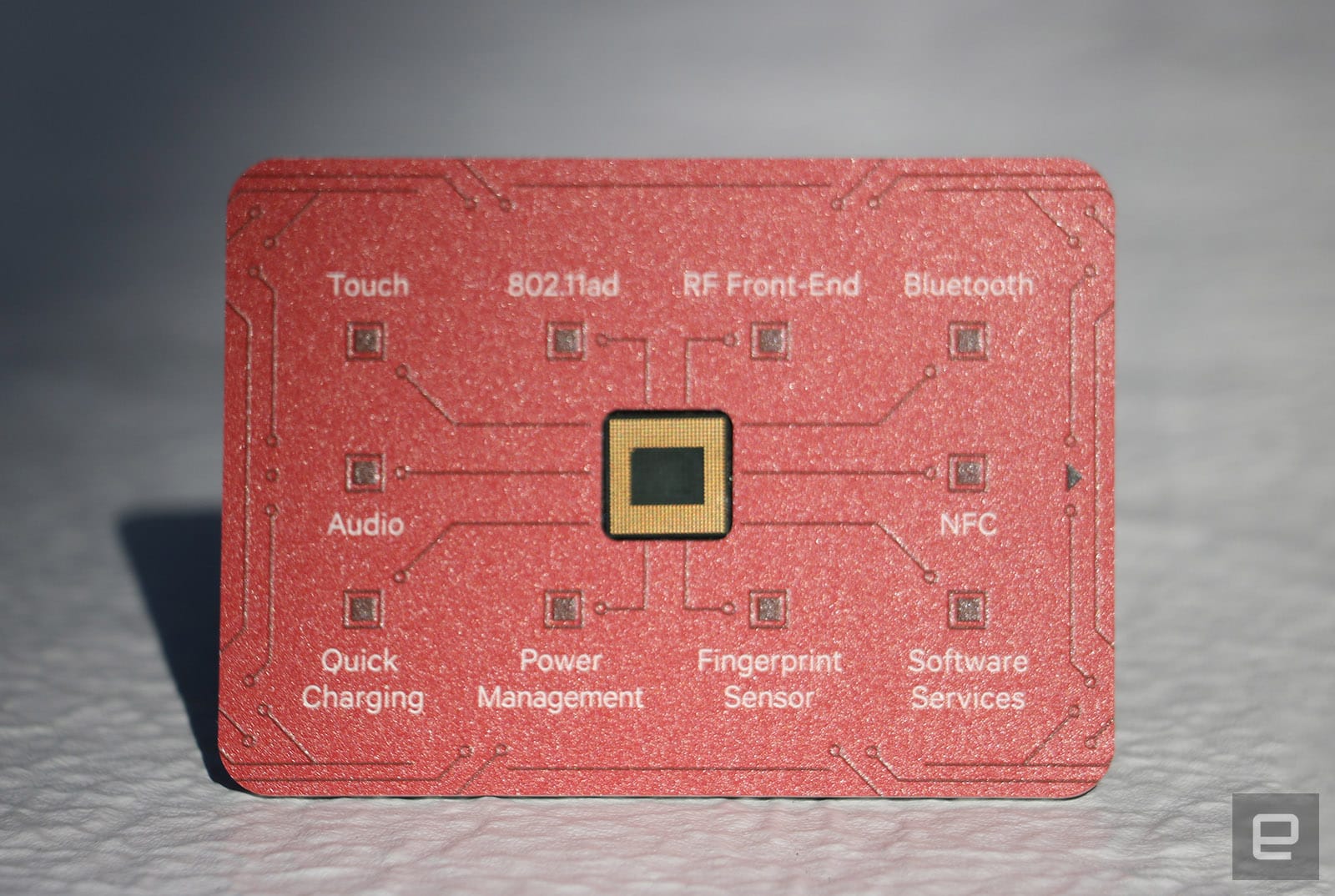
The mixed results show there’s more to performance than benchmarks. Another component of the Snapdragon 845 is the new X20 cellular modem, which can handle 1.2 Gbps speeds, a boon to users lucky enough to have Gigabit LTE. It’s also got other new components like 802.11ad WiFi, quick charging and a fingerprint sensor. The way handset makers implement all those features will be key to a smartphone’s performance and user experience.
We’ll soon know more about that part. Samsung is schedule to unveil its Galaxy S9 flagship on February 25th, and a host of models from rivals like LG, Moto, Nokia, LG and Google should arrive soon after. At that point, you’ll see the benchmarks that matter a lot more than Qualcomm’s.
Source: XDA Developers, Android Police
Apple Will Repair HomePod Power Cables For $29, But Warns They ‘Should Not Be Removed’
While a Reddit user recently demonstrated that the HomePod’s power cable can technically be disconnected from the speaker by pulling on it with a lot of force, Apple warns that it should not be removed, according to an internal document distributed to Apple Stores and Apple Authorized Service Providers.
Apple’s internal HomePod Service Readiness Guide, obtained by MacRumors, states that detaching the HomePod’s power cable could potentially cause damage to the speaker’s internal components or to the cable itself:
The HomePod includes a built-in power cable that should not be removed.
In the rare instance that the cable is detached or damaged, do not attempt to remove or plug it back into HomePod. If the cable is removed or impaired, damage could have occurred to the cable or the internal components of HomePod.
If a HomePod’s power cable is damaged due to an unintentional reason, such as a dog chewing on it, Apple notes the cable can be mailed to one of its repair centers and fixed for a flat-rate out-of-warranty fee of $29 plus tax in the United States, £25 including VAT in the UK, and $39 including GST in Australia.
Out-of-warranty essentially means that the flat-rate cable repair fee is available to any customer at any time. The affected HomePod does not need to be within Apple’s limited one-year warranty period, nor is AppleCare+ required.
The only requirement is that the HomePod passes Apple’s visual-mechanical inspection, which checks for other external or internal damage. If the HomePod does not pass, but is still eligible for repair, then the only option is a whole-speaker replacement for $279 in the United States, £268 in the UK, and $399 in Australia.
A whole-speaker replacement is also required for mostly any other kind of damage, unless a customer purchases AppleCare+ for HomePod.
AppleCare+ extends a HomePod’s hardware coverage to two years from its original purchase date, and adds up to two incidents of accidental damage coverage, each subject to a service fee of $39 in the United States, £29 in the United Kingdom, and $55 in Australia, plus the upfront cost of the plan.
If your HomePod requires service, the process can be initiated by contacting Apple Support, booking a Genius Bar appointment at an Apple Store, or visiting an Apple Authorized Service Provider.
Related Roundup: HomePodBuyer’s Guide: HomePod (Buy Now)
Discuss this article in our forums
Audiophile Review: HomePod ‘Sounds Better’ Than $999 KEF X300A Digital Hi-Fi Speakers
HomePod reviews from the tech press came thick and fast last week, and while the smart speaker’s sound quality was consistently praised, most reviews were based on subjective assessments and didn’t take into account professional-grade output measurements. Early on Monday, however, Reddit user WinterCharm posted exhaustive audio performance testing results for HomePod to the Reddit audiophile community.
Using specialized equipment and a controlled testing environment, the review features in-depth analysis of the smart speaker’s output when compared to a pair of $999 KEF X300A digital hi-fi monitors, representing a “meticulously set up audiophile grade speaker versus a tiny little HomePod that claims to do room correction on its own”.
As expected, WinterCharm criticized the HomePod for its AirPlay-only output limitation and Siri’s often-lackluster performance as a virtual assistant, but the speaker’s audio quality appraisal was a different story. Interested readers can check out all the details and technical minutiae here, but in short, WinterCharm offered the following summary after a battery of exhaustive tests.
I am speechless. The HomePod actually sounds better than the KEF X300A. If you’re new to the Audiophile world, KEF is a very well respected and much loved speaker company. I actually deleted my very first measurements and re-checked everything because they were so good, I thought I’d made an error. Apple has managed to extract peak performance from a pint sized speaker, a feat that deserves a standing ovation. The HomePod is 100% an Audiophile grade Speaker.
Do you agree with WinterCharm’s review? Let us know in the comments. And make sure to check out our HomePod roundup if you’re new to HomePod or planning to purchase one — it’s got everything you need to know about HomePod along with a running list of our HomePod how tos.
#Apple #HomePod “…deserves a standing ovation” https://t.co/KHlyQ7cPbL
— Philip Schiller (@pschiller) February 12, 2018
Related Roundup: HomePodBuyer’s Guide: HomePod (Buy Now)
Discuss this article in our forums
Google Maps may let you share your battery life status
Ever wanted to know if someone made it home safely, but didn’t know if they had enough battery life to stay in touch along the way? You might not fret quite so much about it in the future. Android Police has spotted code in a Google Maps beta for Android that hints at sharing your remaining battery life alongside your location. You’d only get a generic range (likely because charge levels can change minute-to-minute), but this could be helpful if a friend’s phone is running low on their way home from a night out.
Appropriately, the Maps code also alludes to sharing your mass transit trips with others, including the exact time you arrive at a given stop. There would also be shortcuts for favorite stations, potentially to influence Maps’ directions.
It could be a while before you see these updates in an app you can use, assuming they show up at all. Hidden code like this can persist across multiple releases and might get cut if it’s not ready or doesn’t work as expected. However, the combination suggests that Google wants to do a lot more with location sharing than it has in the past — it’d offer better insight into what you’re actually doing.
Source: Android Police
Play giant-sized ‘Pong’ by shuffling your feet
You may have seen attempts at real-world Pong before, but rarely have they been so… athletic. Moment Factory has created GRiD, a Pong variant that uses a LiDAR sensor (the same tech as in self-driving cars) to create an enormous, 40-by-60 foot playing field where the paddle only moves when you and a partner shuffle your feet together. You could get quite the workout if the teams are evenly matched, and that’s before the game adds wrinkles like surprise acceleration or an extra ball.
The aim was to bring back the social dimension of games you might remember from the glory days of arcades, when you’d play with strangers that exist as more than an online nickname. GRiD takes it a step further by placing the game in the real world.
Moment Factory describes this as the first “prototype” in a series of arcade-related projects. You probably won’t see it made widely available, at least not until there’s some refinement. All the same, this illustrates just how public gaming experiences can work without requiring VR or other technologies that take you out of the real world.
Via: Prosthetic Knowledge, Gizmodo
Source: Moment Factory, Vimeo
We benchmarked the Snapdragon 845 — here’s why none of the numbers matter
These are the numbers that run your phone.
When Qualcomm launches a new processor (ahem, “mobile platform”), we take notice. The new Snapdragon 845 will be the go-to choice in just about every high-end phone in 2018 (and even into early 2019), just like the Snapdragon 835, 821 and 820 were previously.
The nerds among us use the opportunity of a new chip release to try and quantify just how much “better” it is, in an attempt to determine what to expect in terms of performance when devices launch with the processor. And that means running benchmarks. I had the opportunity to use a Qualcomm Reference Device running a Snapdragon 845, and put it through a full slate of benchmarks over the course of a couple hours. I saw lots of big numbers, and now I can tell you why none of them matter.

Alright, so the benchmarks. You’ll see the 12 I ran here, ranging through several different types that push the CPU, GPU, and memory. The top set are on-device apps, while the last four are web browser-based. As a whole, they do a pretty good job of showing how the Snapdragon 845, running in ideal conditions on a reference device with no other software, can perform. For a couple extra data points, this reference device has a 2560×1440 resolution LCD and 6GB of RAM. Here are my benchmark results:
| AnTuTu | Total: 259180CPU: 87938GPU: 107103UX: 56409MEM: 7730 |
| Geekbench | Single core: 2481Multicore: 8452 |
| GFXBench 4.0 1080 Manhattan 3.1 | 61 fps |
| GFXBench 4.0 1080 Manhattan 3.0 | 84 fps |
| GFXBench 4.0 T-Rex | 151 fps |
| GFXBench 4.0 Car Chase | 35 fps |
| 3DMark Slingshot – Unlimited ES 3.1 | Total: 4871Graphics test 1: 32.1 fpsGraphics test 2: 18.9 fps |
| 3DMark Slingshot – Unlimited ES 3.0 | Total: 5930Graphics test 1: 42.7 fpsGraphics test 2: 26.9 fps |
| Kraken (Chrome) | 2422 (lower is better) |
| Octane (Chrome) | 16086 |
| Sunspider (Chrome) | 448.5 (lower is better) |
| Jetstream (Chrome) | 85.97 |
I’m intentionally not showing you benchmarks from other devices here for comparison. If you’re someone who pays attention to benchmarks you’ll know all of these tests, what the numbers mean and how they rank compared to other processors. I’m also not providing reference numbers because none of these numbers really matters or can be translated into being “good” or “bad” for your actual experience of using a phone with a Snapdragon 845 in it.
Qualcomm, which provided the reference device for benchmarking in the first place, even agrees with me.

The nomenclature of calling these “processors” will live on for some time, but you start to understand why Qualcomm wants to shift its branding to “Snapdragon 845 mobile platform” when you consider everything this SoC offers beyond just a CPU. The Snapdragon 845, of course, has an octa-core CPU and a powerful GPU — but it also has a secure processing unit, a super-advanced LTE modem, an image signal processor, two different audio subsystems and its own memory. This isn’t just a “processor” anymore, and that’s exactly why even Qualcomm is starting to care less and less about these benchmark numbers.
Qualcomm Snapdragon 845: Everything you need to know
Through that whole slate of benchmarks that I did, they at best covered the performance of the CPU, GPU, and on-board memory. Some only touched the CPU and GPU. Others were reliant on the applications themselves utilizing the SoC in the right way. None of them was running in a real-world environment on a phone with extra software and user-generated data. And that’s why these benchmarks no longer give a realistic view of what the Snapdragon 845 will offer consumers when they go to buy a Galaxy S9 or any other flagship in 2018.

The true evaluation of the Snapdragon 845 will come when we get our hands on retail devices.
The true evaluation of the Snapdragon 845 will come when we get our hands on retail devices that use it — presumably, the Galaxy S9 will be the first. Then we’ll see how well the manufacturer’s software has been optimized for it, how the ISP processes image data, how fast the LTE data speeds are in the real world, and perhaps most importantly how little power the Snapdragon 845 uses in the process. Qualcomm’s own research shows that consumers put lots of value on battery life, and making its chips more efficient while keeping the same or higher performance has been a massive emphasis in the last few generations because of it.
So little of the daily experience of using a modern smartphone is defined by how well that phone can perform a benchmark, and hearing one of the leading companies making these chips admit it tells you all you need to know. Seeing a reference device and getting to experience the Snapdragon 845 before anyone in public has an opportunity to is amazing, particularly for a smartphone nerd like myself. But seeing it get to work making hundreds of millions of phones in the next year do everything regular people want (and more) is far more exciting.
Based on everything I’ve learned about the Snapdragon 845 and Qualcomm’s commitment to creating great chips, it’s well-equipped to do just that.
Samsung Galaxy S9 and S9+
- Latest Galaxy S9 rumors and info!
- Samsung Galaxy S9 launch event set for Feb 25: ‘The camera. Reimagined.’
- The Galaxy A8+ gives us an early look at Galaxy S9 design cues
- Do you plan on getting the Samsung Galaxy S9?
- Join our Galaxy S9 forums
New Horizons probe captures images at record distance from Earth
Voyager 1 has held the distance record for a captured image for the past 27 years thanks to its legendary “Pale Blue Dot” photo (3.75 billion miles away from Earth), but that milestone just got smashed. NASA’s New Horizons probe took pictures of Kuiper Belt objects at a distance of over 3.79 billion miles from our cosmic home on December 5th. They weren’t technically the first images to break the record, though — an image of the “Wishing Well” star cluster from two hours earlier (below) has that honor.
The kicker? That record is likely to be broken again within a matter of months. Voyager 1’s achievement lasted as long as it did because the mission crew shut off the camera shortly after capturing the Pale Blue Dot image. That won’t be happening with New Horizons. The spacecraft is slated to swing by another Kuiper Belt object (2014 MU69) on January 1st, 2019 and record more imagery in the process. So long as the mission goes according to plan, New Horizons could hold on to its lead for a long time.

Via: The Verge
Source: NASA
MIT CSAIL’s drone is never quite sure where it is
The current generation of autonomous drone navigation and flightpath planning systems are almost too precise, demanding hundreds of measurements be taken so that the UAV knows exactly where it is in space at any given moment. And if those readings are off by even a little, then the drone is in for an impact. What’s more, all that data collection is computationally intensive — especially for smaller drones where the space and weight capacities are limited.
The new NanoMap system from MIT’s Computer Science and Artificial Intelligence Laboratory (CSAIL), however, strikes the right balance between accuracy and speed. With it, drones can navigate heavily populated areas — think forests or Amazon fulfillment centers — at up to 20 mph. Simply put, the system doesn’t sweat the details.
Unlike other common mapping systems, such as simultaneous localization and mapping (SLAM), which are data intensive and difficult to maintain at real-time, the NanoMap uses depth-sensing to measure just the drone’s immediate surroundings. This enables the drone to understand generally where it is in relation to obstacles and anticipate how it will need to change course to avoid them.
“The key difference to previous work is that the researchers created a map consisting of a set of images with their position uncertainty rather than just a set of images and their positions and orientation,” says Sebastian Scherer, a systems scientist at Carnegie Mellon University’s Robotics Institute, wrote in an MIT release. “Keeping track of the uncertainty has the advantage of allowing the use of previous images even if the robot doesn’t know exactly where it is and allows in improved planning.”
This uncertainty is surprisingly helpful. Without working the factor into its modeling, MIT’s test drone would crash roughly 25 percent of the time whenever it drifted more than 5 percent away from where it expected to be. But by incorporating that uncertainty, the MIT team was able to reduce crashes to just 2 percent of its flights.

