


OnePlus 6: Everything you need to know!
Unlock the secrets.

The OnePlus 6 is now available, and it’s a compelling option for someone looking for an unlocked phone at a reasonable price — starting at $529 to be specific. But price aside, it’s a great choice for anyone, even those considering more expensive options, thanks to a combination of hardware and software, and a community that continues to support the company and one another.
Here’s everything you need to know about the OnePlus 6!
The latest OnePlus 6 news
July 18, 2018 — OnePlus 6 Android P Developer Preview 3 adds bug fixes and tweaked UI
On July 18, OnePlus announced its third developer preview of Android P for the OnePlus 6.
This update mainly focuses on big fixes, with some of the highlights in the changelog including improved system stability, fixed issue with mobile hotspot, better camera functionality with third-party apps, and improved overall image quality with the camera. Also included is the July 2018 security patch.


Our friends at 9to5Google recently got their hands on the beta, and as they spotted, this preview includes a few UI changes — most notably the recents page/app switcher.
The cards on the recents page have a more rounded appearance and appear to be smaller than Android P on Google’s Pixel phones. There’s also a menu button near the top of each app that lets you quickly hop into split-screen mode. Other chnages include a redesigned settings page and a white paint job for the Shelf.
July 10, 2018 — The OnePlus 6 Red is now available for purchase
The day has finally come! You can now buy the striking OnePlus 6 Red exclusively from OnePlus’s website.
This limited edition model of the phone costs $579, and for that price, you’re getting the most powerful configuration with 8GB RAM and 128GB of internal storage.
OnePlus is making a limited run of this color, so once it’s gone, it’s gone.
See at OnePlus
Read our review and watch the video
First thing’s first, watch the video and read the review. There’s plenty about the phone to learn, even though much of it is familiar. But the essential question a review tries to answer is, Should you buy this thing? And the response is an unrestrained, Yes.
The OnePlus 6 is the company’s finest phone ever, with excellent design, build quality, battery life and, for the first time, cameras.
Read the review
Review the specs

Once you’re done reading the review, you should, ahem, review the specifications. The phone is powerful — like one of the most powerful on the market today — with plenty of headroom and legroom (it’s proverbially spacious is what I’m trying to say) for whatever you want to throw at it. Apps-wise, not like object-wise.
OnePlus 6 specifications
How does it compare to other phones?

Of course, the OnePlus 6 doesn’t exist in a bubble — you have to compare it to other devices if you’re going to decide whether you should buy it. Thankfully, we’ve done most of the work for you, comparing it to the best flagships on the market right now.
- OnePlus 6 vs. Google Pixel 2 XL: Which should you buy?
- OnePlus 6 vs. Samsung Galaxy S9+: Which should you buy?
What about to other OnePlus phones?

Yeah, OnePlus owners like to keep it in the family, so to speak, so it wouldn’t be surprising to see many upgrading, or thinking of upgrading, from an existing OnePlus device, like a 3, 3T, 5, or 5T. Of course, with the company releasing two phones a year these days, it won’t be long until the next upgrade cycle hits, but that also means that the existing phones age quite well, thanks to frequent software updates (the joys of not going through carriers).
If you have a OnePlus 5 or 5T, you can probably hold onto those phones for a bit longer — unless you need the camera improvements. OnePlus’s 2016 phones, on the other hand, may be getting a bit long in the tooth and could use a replacement.
- OnePlus 6 vs. OnePlus 5T: Should you upgrade?
- OnePlus 6 vs. OnePlus 5: Should you upgrade?
- OnePlus 6 vs. OnePlus 3T & 3: Should you upgrade?
Is the OnePlus 6 camera that much better than before?

This photo was taken in nearly pitch-dark conditions. OnePlus ramps up the light sensitivity to ISO6400, which would normally produce a lot of grain, but this photo is totally usable thanks to better software processing.
Yes! The OnePlus 6 has a larger 16MP sensor than previous OnePlus devices, with pixels that are 19% bigger, so low-light photography is immensely improved. It’s not going to overtake the Huawei P20 Pro or Pixel 2 for Low Light Champion Of The World, but it’s reliable in all conditions, and that’s more important than anything else.
The camera is probably the biggest improvement over previous OnePlus models.
The phone’s main sensor is aided by a fast ƒ/1.7 aperture, so true depth of field is a thing, along with drastically improved image signal processing from Qualcomm’s Snapdragon 845. Together, the phone is able to detect the correct settings more quickly, take multiple shots if necessary, enable HDR mode automatically, and reduce or eliminate grain in dark conditions.
There’s also Optical Image Stabilization (OIS), which was in the OnePlus 3 line but removed in last year’s series for unknown reasons. It’s back now, and paired with a larger sensor and faster main lens, the results speak for themselves.
On the other hand, the OnePlus 6’s secondary camera has less to do — it’s a 20MP sensor with an ƒ/1.7 lens, but its main purpose is to facilitate portrait mode which, while good, isn’t enough reason to have a second sensor in the first place.
Is the notch distracting?

The notch is what it is. You may hate it out of an aversion to all things Apple, or you may learn to live with it and forget it’s there. Most people will fall somewhere in the middle — it’s a character trait, like a freckle or a certain hairstyle.
What it does, though, is open up spme additional real estate on the 6.28-inch screen, which is great. But it also limits the number of icons that can be seen in the notification area, which is a bummer. Plus, the clock on the left side of the notification bar will never make sense. If you watch the video below, though, you can see ways to tweak the notification area to your liking. And you can also disable the notch altogether if you want to.
How’s the software?
It’s good! Running Android 8.1 Oreo, OxygenOS has turned into one of the most enjoyable, reliable versions of Android to date. OnePlus has also added a number of additions to make the whole thing run more smoothly, especially if you’re looking to maximize your screen real estate.
One of the more interesting changes to the software is a set of gestures that eliminates the bottom navigation keys, relying on swipes up from different areas of the bottom edge to go back, home, and enter multitasking. It’s different, but not bad. You’ll have to try it yourself.
As for tips and tricks, we’ve already got that list going, so if you’re looking to make the most of your OxygenOS experience, we have you covered.
- How to enable navigation gestures on the OnePlus 6
- How to disable the notch on the OnePlus 6
What’s it cost?

The OnePlus 6 starts at $529 USD for the base model and goes up to $629 for additional RAM and storage. There are three configurations and three colors, and here’s a breakdown of which one to buy.
Here’s how the pricing breaks down in various regions.
| 6/64 | $529 | €519 | £469 | $699 |
| 8/128 | $579 | €569 | £519 | $769 |
| 8/256 | $629 | €619 | £569 | $839 |
See at OnePlus
Tell me more about the colors


There are four colors: Mirror Black, Midnight Black, Silk White, and Red.
-
Mirror Black is going to be the most common, since it’s the only color offered in the cheapest tier. It’s shiny, reflective glass, so it gets fingerprint-y, but that’s OK because you’ll likely put the phone in a case (see below). It’s also a little slippery, which is to be expected. Mirror Black is offered in 6GB / 64GB configurations for $529.
-
Midnight Black is the color we’ve come to expect from OnePlus over the years, though the matte-looking finish belies a glass back, too, like the Mirror Black. Midnight Black is only available in 8GB / 128GB and 8GB / 256GB configurations for $579 and $629, respectively.
-
Silk White is one of the more limited of the four colors. It’s also covered in glass, but like the Midnight Black model it has a matte finish and is easier to grip. Its white back has rose gold accents, and it’s definitely the nicest and most unique of the three colors. It’s only available in the 8GB / 128GB configuration for $579, and once the run is sold out, OnePlus is not making any more.
-
Red is also a limited edition color and is easily the most vibrant of the four that are available. It has a similar shiny finish like Mirror Black but uses a translucent orange layer and red base layer to create one of the most powerful reds we’ve ever seen on a smartphone. Sales open on July 10 and it’ll be available with 8GB RAM + 128GB storage for $579.
What color OnePlus 6 should you buy?
I heard there’s an Avengers version — TELL ME EVERYTHING

Yes, you heard right: OnePlus has once again worked with Disney on licensing a special version of the OnePlus 6 for the Chinese and Indian markets. Last year, OnePlus offered an understated Start Wars variant of the OnePlus 5T, and now the Avengers version takes advantage of the hype behind the recent film release.
The Avengers version comes in a unique box and includes an Iron Man case and a OnePlus/Avengers co-branded medallion, which is neat. And while there’s a familiar glass back on the Avengers Edition, it has a Kevlar-style design underneath. Because Kevlar=superheroes, or something.
While the special edition isn’t coming to the U.S. officially, I’m sure that some entrepreneurial Indian and Chinese resellers will do the dirty business of importing some of them at a huge premium to this side of the world.
This is the OnePlus 6 Marvel Avengers Edition
The OnePlus 6 doesn’t work on Sprint or Verizon

The OnePlus 6 technically supports the CDMA bands for Verizon and Sprint in the U.S., but the phone lacks certification for their networks, so those users — just under half the smartphone-wielding U.S. population, is out of luck.
We’ve got your full technical explainer below.
The OnePlus 6 doesn’t work on Sprint or Verizon
Do you like cases?

As it does with all of its phones, OnePlus has unveiled a series of first-party cases for the OnePlus 6, and they’re all pretty great.
This year, there’s a fancy new protective bumper made of woven nylon, and while it adds a bit more bulk than the typical snap-on, I think it looks and feels awesome.
These are the official OnePlus 6 cases you can buy at launch
What are your thoughts on the OnePlus 6?
Let us know in the comments!
OnePlus 6
- OnePlus 6 review
- OnePlus 6 vs. OnePlus 5T: How much changes in six months?
- OnePlus 6 vs. OnePlus 5: Should you upgrade?
- These are the official OnePlus 6 cases
- The OnePlus 6 doesn’t work on Verizon or Sprint
- Join the discussion in the forums
Updated July 3, 2018: Added the OnePlus Red to the list of colors!
The EU Antitrust case against Android sucks for everyone, especially you
Google’s explanation of how Android is open isn’t passing the smell test anymore.

The European Union just told Google it has 90 days to pay €4.34 billion ($5.06 billion) for violating its antitrust rules, claiming the company has been forcing manufacturers to bundle Google Search, Chrome, and the Play Store as a bundle in phones that ship with Android. Since most people use the apps that are included on the phone, this move supposedly encourages people to use Google products without ever trying anything else. Google is appealing the ruling, claiming Android gives people more choice and creates a firm ground for developers to build for the largest possible audience. While there’s undoubtedly going to be some conversation in the coming weeks over what that appeal is going to look like, it’s clear Google’s explanations for how Android functions openly is no longer enough, and things are probably going to have to change.
And, if you ask me, that sucks.
How we got here

In the early days of Android, Google let manufacturers put basically whatever they wanted on the phone as long as some minimum system requirements were met for the Android Market. And manufacturers did, in fact, install whatever they wanted. We had phones launch in the U.S. with over 100 pre-loaded apps; phones launch with Bing as the default search engine; and so many other generally terrible and user-hostile offerings to please the companies funding the launch — mainly carriers and manufacturers. These phones were terrible, and remained terrible when they didn’t get a single software update. It was a bad time, and made recommending anything that didn’t have the Nexus branding on the side pretty difficult.
Around 2013, Google stepped up and added restrictions to its Google Mobile Services agreements. Those restrictions included what could be placed on the home screen someone sees when the phone first starts, how many apps could be pre-installed, and a bunch of other very specific details. These agreements are all private between Google and its partners, but every once in a while details are made public for these agreements. Basically, as long as the manufacturer follows those rules it gets access to Google’s Play Services and suite of apps like Chrome, Search, YouTube, Maps, and so on.
This is where things get a little iffy. Several versions of this agreement have required Google apps to be front and center on that initial home screen. Google’s Search bar needed to be there, and folders with Google’s apps needed to be there. And if you look at any new Android phone today, that initial home screen is pretty much identical across the ecosystem. Google’s placement is prominent, specific, and consistent across the Android landscape right now — as long as that phone ships with the Play Store.
What the EU sees as wrong

The claim against Google right now is that, in forcing manufacturers to put these three apps front and center, it strong-arms its partners, prevents suppresses competition, and keeps people from looking at other options. Specifically, the EU says including Google Search, Chrome, and the Google Play Store as mandatory apps in the Google Mobile Services bundle is wrong. Many analysts have likened Android today to how Windows looked before Microsoft lost its own antitrust cases in the mid-90’s. If people don’t know there are other choices, they won’t go looking for them. There are a few problems with this comparison, but the overall claim is Google has forced people to use its apps and is reaping the benefits of that enforcement.
Android is only as good as it is now because of the Google Play Store.
Google’s response makes a lot of sense. Anyone can uninstall or disable the pre-loaded apps and replace them with different apps from any developer. Many manufacturers make their own versions of Google’s apps and install them right alongside Google’s. And if manufacturers want Android itself to come with no strings attached, manufacturers don’t need to use the Play Store. Android is free code that anyone can fork or alter, as Amazon has been doing for years. But the Google Play Store and its related apps do have some big rules to follow. That distinction has never really been clear to the public, because while Google wants people to know Android is open it also wants people to know Google and Android are one and the same.
There’s a lot about this EU ruling which is troubling. First, the EU seems to only care about three of the eleven apps Google is including in its bundle. There’s no call to strip Google Maps, for example, only Search, Chrome and the Play Store. Second, this decision fundamentally misunderstands how deeply integrated into one another these systems are and seems to intentionally observe them as standalone apps. Android is only as good as it is now because of the Google Play Store and Play Services. Through this, Google enforces security across the platform and wraps up a majority of the new features you hear about when a new version is announced. Android without Google services isn’t just Android without apps, it’s an entirely different and significantly less functional experience.
The appeal being made by Google is essentially claiming the environment it created within Android allows for more choice instead of less. Developers can build for a single platform and get a consistent experience across thousands of different devices, which manufacturers can give users access to by following Google’s rules. With all of these manufacturers competing on such even software footing, the hardware-based feature fight has caused the price of hardware to go down which Google says is also good everyone. By creating a single platform for all of these manufacturers to compete against Apple, Google claims its decisions have been a net positive.
The future might suck a lot if Google loses

When Microsoft was slapped with antitrust fines, it reacted by removing Internet Explorer entirely and giving users multiple browsers to choose from. The company later backed down from this and went back to including its own browser but making it very easy to install others, but the overall decision did not make Internet Explorer more or less popular. That browser already had lots of problems and even more competition, and without pointing fingers at other popular mobile platforms it is a nontrivial detail that Google allows you to set any app as the default, such as the browser.
Chrome, inside Android, encourages a lot of choice for users.
Android is overall a little different from Windows anyway. The mobile platform tightly integrates a lot of things, and Chrome is much more than just an app. Micro versions of Chrome exist in many Android apps, because developers recognized this mini Chrome was much more stable and functional than building their own in-app browser. Chrome is the underpinning for things like Android Instant Apps, which directly encourages developers to build tools that make it easier for users to try new apps and move away from the installed default. Chrome, inside Android, encourages a lot of choice for users. Taking that away will absolutely make Android users less likely to try new things and just stick with what is installed.
Assistant is another thing that will suffer if this decision forces Google to disconnect its apps from the central nervous system of Android. Access to Google’s knowledge graph is what makes Assistant so powerful, and Search is arguably the most important part of that. Bing is never going to integrate into Google Assistant to provide results, even if those results were worth using. There’s no arguing Assistant is leaps and bounds ahead of the competition right now because of its ability to deeply yet safely integrate into the lives of its users, and removing that key component could take a very long time to functionally work around.
Google has been building toward this grand unified experience for a while now, and a lot of that work will take several steps back as a result of this decision if it is enforced. Here’s hoping the appeal yields positive results.
Corning Debuts Gorilla Glass 6 With ‘Unprecedented’ Multi-Drop Protection That Could Be Used in Future iPhones
Corning this morning unveiled its next-generation Gorilla Glass product, Gorilla Glass 6, which it says offers “unprecedented protection against multiple drops” and better protection against drops from higher heights.
According to Corning, Gorilla Glass 6 is its most durable cover glass to date, made of a new material that’s been engineered to stand up to more than one drop. The average person drops their smartphone seven times a year, making multi-drop durability a key feature Corning wanted to improve.
Devices using Gorilla Glass 6 were able to withstand 15 drops from one meter onto rough surfaces, which is up to two times better than Gorilla Glass 5, which Corning has been offering to its partners since 2016. Competitive glass compositions like soda lime and aluminosilicate, did not survive the first drop, says Corning.
“Gorilla Glass 6 is an entirely new glass composition that can be chemically strengthened to give it significantly higher levels of compression than is possible with Gorilla Glass 5. This enables Gorilla Glass 6 to be more resistant to damage,” said Dr. Jaymin Amin, vice president of technology and product development, Corning Gorilla Glass and Corning Specialty Materials. “Moreover, with breaks during drops being a probabilistic event, the added compression helps increase, on average, the likelihood of survival through multiple drop events.”
The higher durability of Corning’s new Gorilla Glass product was engineered with all-glass smartphone designs in mind, like the iPhone X, iPhone 8, and iPhone 8 Plus, offering optical clarity, touch sensitivity, scratch resistance, efficient wireless charging, and enhanced durability.
Gorilla Glass 6 is likely to make its way into future iPhones, and could even perhaps be included in the 2018 iPhone lineup, depending on when Corning provided details on the new product to Apple.
Corning has been a longtime Apple supplier, with Gorilla Glass used in devices across Apple’s product lineup. In May of 2017, Corning even became the first benefactor of Apple’s Advanced Manufacturing Fund, receiving $200 million for research and development and new glass processing equipment.
Corning says its Gorilla Glass 6 is being evaluated “by multiple customers” and the first smartphones and devices using Gorilla Glass 6 are expected to reach the market in the next several months.
Related Roundup: 2018 iPhones
Discuss this article in our forums
Deals: Twelve South Post-Prime Day Sale, $100 iTunes Gift Card for $85 Still Active
With Prime Day over, Amazon’s sale is no longer taking the deal spotlight this week, but Twelve South has branched out of the event with a post-Prime Day sale of its own. Called the “Past Your Prime Day” sale, on TwelveSouth.com you can buy all of the Twelve South products at the same discount that they were available yesterday (and Monday), with a few additional options thrown in.
To get in on the sale browse the landing page, add any of the products into your cart, and enter the promo code PastYourPrime during checkout to get 25 percent off. We’ve highlighted some of the items on sale in the list below, and be sure to place your order before tomorrow as Twelve South’s sale is one day only and ends later tonight.
- SurfacePad for iPhone SE – $14.99, down from $19.99
- RelaxedLeather for iPhone 8 Plus/7 Plus – $29.99, down from $39.99
- BookBook CaddySack – $37.49, down from $49.99
- Forté for Apple Watch – $44.99, down from $59.99
- HiRise Duet – $74.99, down from $119.99
In the wake of Prime Day, there are a few Anker deals that have stuck around on Amazon:

-
Compact Wireless Charger Charging Pad – $7.99 with code PRIME252, down from $9.99 (exp. 7/23)
-
Nebula Mars Lite Home Theater Projector – $299.99 with code MARSLITE, down from $399.99 (exp. 7/31)
-
Roav Bluetooth Receiver – $15.99 with code ROAVB288, down from $22.99 (exp. 8/14)
Additionally, PayPal’s Digital Gifts eBay storefront is still offering $100 App Store and iTunes gift cards for $85. This sale opened up Monday morning, and ones like it typically stick around only for a few days, so if you’re still looking to save on iTunes credit today could be your last chance until the next discount appears.
The iTunes credit will only be valid on purchases made on the United States App and iTunes stores, and you’ll receive the code via email within a few hours after the purchase. These gift cards can be used to pay for 12-month Apple Music subscriptions at $99.00, iTunes movie purchases and rentals, iBooks, app subscriptions like Netflix, and more.

eBay also has a new 20 percent off coupon that launched today, but this one isn’t sitewide and is focused on “Top Brands” including Apple, Dyson, Ninja, and more in categories like Cell Phones, Computers, and Electronics. Head over to eBay to browse items eligible for the sale, and enter the coupon code PRIMO to get 20 percent off orders of $50 or more (discount will be capped at a value of $50 as well).
This code lasts through Saturday, July 21 at 11:59 p.m. PT, and for more information on the latest sales, be sure to head over to our full Deals Roundup.
Related Roundup: Apple Deals
Discuss this article in our forums
Netflix Redesigns TV Apps With Side Bar Interface Housing My List, Search, and More
Netflix today revealed a new design for its “TV experiences,” or TV-based apps, that aims to make it easier to find TV shows and movies on the service.
In addition to the rows with various themes, Netflix subscribers watching on a TV will now see a sidebar on the left side of the app that expands when they scroll over to it. This UI has Search, Home, Series, Movies, My List, and New hubs, making it far simpler to jump directly to specific sections of Netflix you want to get to without having to scroll around looking for them.
Otherwise, browsing around Netflix on a TV app appears to be largely the same, with video previews that automatically play once you’ve stopped on a show or movie. Netflix’s director of product innovation Stephen Garcia said that the new update came out of “extensive research” into how its users browse for content.
While this may feel like an obvious update to some, validating that this TV experience was better for our members took extensive research, testing and technology improvements. Along those lines, we will continuously learn from our members and evolve the TV experience so that it gets even more simple, fun and easy to find the stories that make Netflix great.
In our testing of this new interface, we saw that that this simpler design helped members find something great to watch.
The company didn’t directly confirm which platforms this update will arrive on, but it typically uses “TV experiences” as an all-encompassing reference to apps on streaming boxes, game consoles, smart TVs, and anywhere else Netflix is viewed on a TV set. This should mean that fourth-generation and fifth-generation Apple TV users will see the update alongside other platforms, with a rollout that begins worldwide today.
Tag: Netflix
Discuss this article in our forums
Apple Releases Safari Technology Preview 61 With Bug Fixes and Feature Improvements
Apple today released a new update for Safari Technology Preview, the experimental browser Apple first introduced over two years ago in March of 2016. Apple designed the Safari Technology Preview to test features that may be introduced into future release versions of Safari.
Safari Technology Preview release 61 includes bug fixes and feature improvements for CSS, Dark Mode, Web API, Media, Web Assembly, and Web Inspector.
The new Safari Technology Preview update is available for both macOS High Sierra and macOS Mojave, the newest version of the Mac operating system that’s currently being beta tested by developers and public beta testers.
Safari Technology Preview 59, a prior update, introduced support for Intelligent Tracking Prevention 2.0, which prevents social widgets from tracking you without your permission and introduces other tracking prevention updates.
The Safari Technology Preview update is available through the Software Update mechanism in the Mac App Store to anyone who has downloaded the browser. Full release notes for the update are available on the Safari Technology Preview website.
Apple’s aim with Safari Technology Preview is to gather feedback from developers and users on its browser development process. Safari Technology Preview can run side-by-side with the existing Safari browser and while designed for developers, it does not require a developer account to download.
Tag: Safari Technology Preview
Discuss this article in our forums
Faster 18W USB-C Charger Expected to Be Bundled With 2018 iPhones Might Not Be Sold Separately Initially
Rumors suggest Apple will bundle a faster 18-watt USB-C power adapter with its 2018 iPhones, but it might not be sold separately for a while.
Japanese blog Mac Otakara reports that Apple’s suppliers are likely only able to manufacture enough chargers for inclusion with 2018 iPhones, suggesting that Apple may hold off on selling them as a standalone accessory until some point after the smartphones launch, although exactly when remains to be seen.
Earlier this month, photos of an alleged prototype of the new power adapter surfaced, revealing its slightly bulkier, rounder shaped plastic casing compared to the current 5W power adapter. The design in the photos is mostly consistent with CAD drawings and renders of the adapter that surfaced earlier this year.

The charger would connect to iPhones with a USB-C to Lightning cable, also expected to be included in the box. At 18W, it would be able to charge compatible iPhones at least twice as fast as the 5W adapter.
MacRumors tested the iPhone X with various third-party 18W wired chargers last year, for example, and found that the device reached a 79 percent charge after one hour. With a 5W charger, the iPhone X only reached a 39 percent charge in that time. We explained our methodology in detail in that article.
Apple sells its 5W power adapter, which has a USB-A port, for $19 as a standalone product in the United States.
Discuss this article in our forums
Apple Seeds Third Beta of tvOS 12 to Public Beta Testers
Apple today seeded the third beta of an upcoming tvOS 12 update to its public beta testing group, giving non-developers a chance to try out the new software ahead of its fall public release. Today’s third beta comes two weeks after Apple released the second tvOS 12 public beta, and it corresponds to the fourth developer beta released yesterday.
The tvOS 12 public beta can be obtained by going to the Settings app on the Apple TV and navigating to the Software Updates section under “System.” “Get Public Beta Updates” will need to be toggled on, and once it is, the Apple TV will download the beta software.
tvOS 12 introduces long-awaited support for Dolby Atmos, and when tvOS 12 launches this fall, iTunes will be home to the largest collection of Dolby Atmos-supported movies. As with the launch of 4K HDR, previously purchased content will be upgraded to include Dolby Atmos on all supported titles at no cost.
tvOS 12 features a zero sign-on option that lets cable subscribers watch live channels and on-demand programs they’re entitled to through their cable subscription simply by being logged into their home internet networks. This feature will be limited to Charter Spectrum users to begin with, but Apple plans to expand it to additional providers in the future.
Other tvOS 12 features include the ability to autofill passwords from the iPhone to sign into Apple TV apps more quickly, and support for Home Control systems like Crestron and Savant, which will be able to be used to control the Apple TV.
Apple has also made the Apple TV Remote a default option in Control Center on iOS devices with the iOS 12 beta, there are new aerial screensavers created with help from the International Space Station, and aerial screensavers now offer up location information, a feature that’s activated in this beta.
tvOS 12 will see a public launch this fall, and until that time, will be limited to developers and public beta testers as Apple works out bugs and other issues.
Related Roundups: Apple TV, tvOS 12Buyer’s Guide: Apple TV (Neutral)
Discuss this article in our forums
Apple Releases Third Public Beta of iOS 12
Apple today seeded the third public beta of iOS 12 to public beta testers, giving non-developers a chance to test the software ahead of its upcoming fall release. The third iOS 12 public beta, which comes two weeks after the second public beta, corresponds to the fourth developer beta released yesterday.
Beta testers who have signed up for Apple’s beta testing program will receive the iOS 12 beta update over-the-air after installing the proper certificate on an iOS device.
Those who want to join the beta testing program can sign up on Apple’s beta testing website, which gives users access to iOS, macOS, and tvOS betas. Before installing a beta, make sure to create a full encrypted iTunes backup or an iCloud backup and be sure to install iOS 12 on a secondary device because beta software is not always stable and can include bugs.
The new iOS 12 beta in particular introduces new issues with Screen Time, the App Store, and Siri Shortcuts, according to Apple’s release notes for the developer beta. Apps in the App Store might fail to download properly the first time, Screen Time data might not sync between devices, and Siri Shortcuts might not work properly on CarPlay and HomePod, as well as if a device is locked. The cellular status bar on the iPhone X can also be inaccurate.
iOS 12 brings Group FaceTime, local multiplayer shared AR experiences, new Animoji, and a Memoji feature that’s designed to let you create a personalized Animoji that looks just like you.
Subscribe to the MacRumors YouTube channel for more videos.
Animoji, stickers, text, and more can be used in FaceTime and the Messages app, and there’s a new Screen Time feature to help customers understand and manage the amount of time they’re spending on their iOS devices. There are options to limit app time and Screen Time also includes comprehensive parental control tools.
New Do Not Disturb features make it easier to manage notifications, as do interactive notification options and notification grouping.
Siri has been improved in iOS 12 with Siri Shortcuts for creating time-saving automations, and Siri is also smarter and able to provide info on motorsports, food, and celebrities. Later in the year, Apple will launch a Shortcuts app so you can create your own shortcuts.

Under-the-hood improvements to iOS 12 will make everyday tasks on the iPhone and iPad faster and more responsive, with the camera launching up to 70 percent faster and the keyboard showing up to 50 percent faster.
iOS 12 also includes a rebuilt Maps app with a new Apple-designed Maps engine that’s available in the San Francisco Bay Area at the current time. While limited to the San Francisco area at this time, the features will roll out to Northern California in the fall before expanding to additional locations across the United States in late 2018 and 2019.
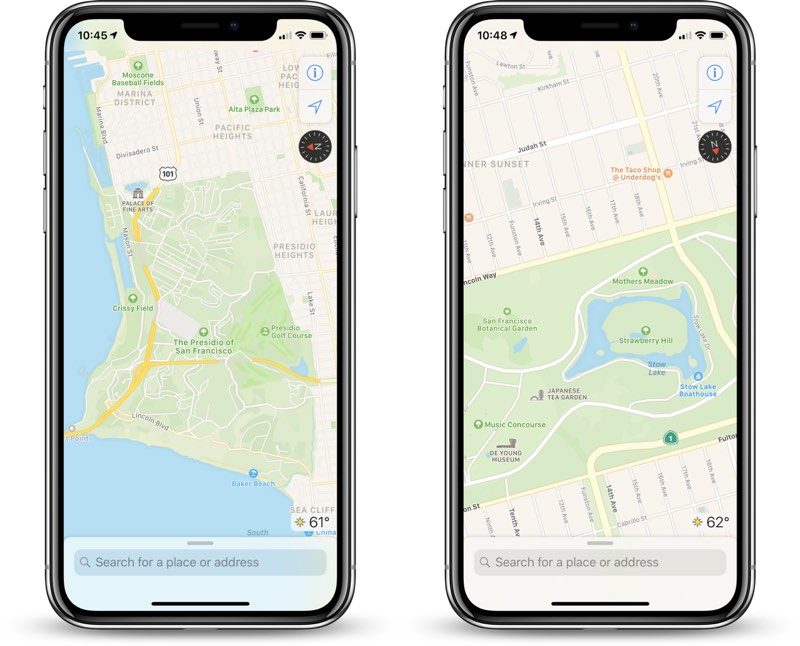
The revamped Maps app displays foliage, pools, buildings, pedestrian pathways, and other map elements more accurately, and it brings improvements to traffic, real-time road conditions, construction, and more.
iOS 12 will be available to developers and public beta testers as a beta for the next two months to allow Apple to work out bugs and other issues ahead of a fall launch alongside new iPhones.
Related Roundup: iOS 12
Discuss this article in our forums
12 new moons were discovered orbiting Jupiter, and one’s an ‘oddball’
Jupiter got 12 new moons on Tuesday, July 17. Well, not exactly. Those dozen moons have, of course, always been in Jupiter’s orbit, but it was only this week that researchers from the Carnegie Institution for Science announced their discovery. The addition of these 12 brings the total number of moons (that we know of) to a whopping 79. As you might imagine, that’s far more than any other planet in our solar system can boast.
While the research team has suspected the existence of these 12 moons for about a year, it takes several observations in order to confirm that an object is, in fact, orbiting Jupiter. As such, the team took their time in confirming the new Jovian moons.
Scientists made their latest discovery when they were actually looking for another extraterrestrial body — Planet X, the planet that is suspected to exist somewhere beyond Pluto.
“Jupiter just happened to be in the sky near the search fields where we were looking for extremely distant solar system objects, so we were serendipitously able to look for new moons around Jupiter while at the same time looking for planets at the fringes of our solar system,” team leader Scott S. Sheppard said in an announcement. Of the 12 new moons discovered, 11 are described as normal moons, while the other is an “oddball.”
What makes it weird? Apparently, it’s just 1 kilometer wide, which means it’s the smallest moon scientists have discovered to date orbiting the planet, and it takes a full year and a half to make a complete trip around Jupiter. Moreover, its orbit crosses that of other moons in retrograde (those that travel in the opposite direction of Jupiter’s rotation), which is to say that at some point, multiple moons could collide. “This is an unstable situation,” Sheppard noted. “Head-on collisions would quickly break apart and grind the objects down to dust.”
This discovery could actually give scientists clues into the formation of moons and planets as a whole. As the team noted in its announcement, “Elucidating the complex influences that shaped a moon’s orbital history can teach scientists about our Solar System’s early years.” In this case, determining that there are still several small moons surrounding Jupiter suggests that they were actually created after the planets were formed.
Editors’ Recommendations
- SpaceX says it won’t send space tourists around the moon just yet
- Prime delivery, straight from the moon? Bezos dreams of heavy industry in space
- NASA abruptly shuts down its planned 2022 moon rover mission
- International relations are tense in orbit. Is creating a ‘Space Force’ a good idea?
- Canon’s new large sensor is too big for you, but not for scientists

