


We tried Visible’s $40 unlimited data plan for two weeks to see how it fares
Steven Winkelman/Digital Trends
The mobile world is dominated by hyperbole. Each carrier makes a claim that, in some way, it offers the best coverage with the highest speeds. While coverage is important, a new service called Visible is questioning whether you need ultra-speedy internet service on your smartphone.
Visible is a new offshoot prepaid service from Verizon, and it only has one product — an unlimited plan (talk, text, and data) that caps data speeds at 5Mbps for $40 a month. That’s fast enough to surf the web, scroll through your Instagram feed with ease, and even stream movies in HD. It’s not for everyone, but Visible is betting the low price will entice people who really don’t feel like they need speedier internet service. It’s the least expensive unlimited plan on the market backed by a carrier with the most reliable LTE network in the U.S.
But the $40 price tag and 5Mbps data speeds aren’t the only propositions Visible is making. It bills itself as an app-based carrier, meaning the entire mobile experience happens within an app. You set up your account through the app, you’ll get a SIM card shipped overnight, and you pay your bills through the app. You won’t find a Visible store or even an 1-800 number: Cutting these costs allow the carrier to save money and pass at least some of the savings on to its customers.
Visible is not the first app-based carrier, mind you. Other companies like Google’s Project Fi and Mint Mobile have been offering similar services for years. Its a nascent market, but it’s likely to grow in the coming years as more smartphone manufacturers start adding eSIMs to their handsets, making it easy to switch carriers. The upcoming iPhone is expected to have a built-in eSIM, and the Google Pixel 2 already has it embedded.
Testing the service
So is Visible a viable alternative to its full-throttled competitors? We decided to put it to the test to find out. We swapped our iPhone 8 Plus with a Verizon Unlimited plan for an iPhone 8 on Visible to give the service a try for a few weeks. You should know that Visible is a bring your own device service, which means you need to purchase your smartphone unlocked beforehand. The service is currently in early access, so there may be some kinks, and there’s only an iOS app at the moment. Android support is on the roadmap.
During our two week test, we didn’t notice any slow downs, but the network is currently not open to the public either.
Since the Visible-powered iPhone was our only phone for the next two weeks, we downloaded our favorite apps, and instead of using Wi-Fi, we relied on the cellular connection. Downloading dozens of apps over a 5Mbps connection was painfully slow. What would usually take a few minutes over a Wi-Fi connection became a 13-plus minute situation on the Visible network.
That all said, most people are likely to install all their apps over Wi-FI, as more than 80 percent of mobile traffic happens over Wi-Fi.
Our experience improved drastically once we managed to download all our apps. For starters, we streamed Netflix for 25 hours over the two week period and didn’t run into a single issue in regards to internet performance. Quality-wise, videos are limited to 480p on cellular connectivity — a practice most carriers partake in; streams looked okay to us, but you may feel otherwise.
Steven Winkelman/Digital Trends
Remember — video streams will be able to go as high quality as possible when you’re on Wi-Fi.
There was no noticeable difference when using apps like Instagram or Facebook — we were able to scroll and upload to our heart’s content. As for surfing the web, the difference in load times compared to our Verizon iPhone were marginal.
In addition to slower data speeds, Visible warns users they could see slower speeds when the network is congested. During our two week test, we didn’t notice any slow downs, but the network is currently not open to the public yet so this may change in the future.
Good data connection and excellent call quality are only a part of the equation.
We also found no problems with coverage reliability. During out test, we used the phone throughout Manhattan and Brooklyn without a single dropped call or lost signal. We even managed to get great signal on Fire Island, which is no small feat. Visible relies on Verizon’s network, which has long-claimed to have the best coverage of all the major U.S. carriers.
If you’re in an area with poor Verizon coverage, then you will run into problems with Visible.
It’s all in the app
Good data connection and excellent call quality are only a part of the equation though. Since our Visible test unit was already activated when it arrived, we placed an order for a new service to check out the set up and tech support process, which is where we ran into some problems.
Steven Winkelman/Digital Trends
When we were setting up our iPhone 8, we received a SIM with an accompanying SIM key and directions on how to activate our service. We connected to a Wi-FI network, downloaded the Visible app, and opened our iPhone Settings app expecting a carrier update — none came.
We contacted tech support via the Chat tab in the Visible app and were quickly acknowledged by a support representative. The representative initially said we would need to re-order service as our new phone number had been released, so we didn’t have a cell number anymore. When asked if we could just get a new number, we were told that’s not possible because we would need to go through the entire process of signing up for the service again.
Though the setup process was arduous, we’re still thoroughly impressed with Visible’s service
We asked the representative to confirm there were no other options, and were then told the issue was actually due to an expired credit card, not a lost phone number. Our credit card had just expired, which we didn’t realize. Seems, like an easy enough fix right? It wasn’t.
We spent 45 minutes entering our credit card number repeatedly and authorizing charges, only to be told by the representative that the expired card was the only one they could see in their system. After being encouraged to continuously try the same technique over and over, we finally switched the default payment method, enabled auto payment, and closed out of the website. When we re-opened the site and authorized the payment, it finally processed-along with six other zero-dollar authorizations.
Though the setup process was arduous, and our experience with tech support wasn’t as fast and easy as we’d have liked, we’re still thoroughly impressed with Visible’s service. Again, it’s in beta and there are bound to be some hiccups. Since the kinks we experienced were momentary — and specific — and were not related to overall call quality or data speeds, we’re confident Visible can have them ironed out by the time the service is available to the public.
Limitations
There are a few differences between Visible and it’s closest competitor, Project Fi. Visible doesn’t have any type of family or group plan, nor does it have international calling included — you’ll need to rely on Wi-Fi overseas, or grab a local SIM card.
Steven Winkelman/Digital Trends
In our experience, Project Fi also has the upper hand when it comes to customer service, but Google’s mobile virtual network operator has been out for a longer period of time. Project Fi doesn’t have an unlimited data option — you pay $10 per gigabyte of data used at the end of the month, and $20 for unlimited calls and text. Unless you use 2GB of data or less a month, Visible will likely save you more money in the long run.
Currently, you need to have an access code to join the beta service (which you’ll still need to pay for). If you’d like to give Visible a try, the company provided us with an access code you can use. Just enter CFF48 in the access code field to register for the beta.
Editors’ Recommendations
- Google prepares an always-connected Chromebook to take on Microsoft
- Verizon quietly launches startup Visible, which offers unlimited data for $40
- What is WiGig?
- Google’s new tools for Datally put your mobile data on lockdown
- Xfinity Mobile will throttle streaming resolution to 480p, hot spots at 3G
Xiaomi Mi A2 hands-on review
Research Center:
Xiaomi Mi A2
There was a time when many would not have paid attention to a phone running Android One. It was reserved for those who wanted to buy their first smartphone, often in places where high-end models cost the equivalent of many months salary. Things changed recently, and Xiaomi’s Mi A1 2017 smartphone helped lead the way for Android One phones to become desirable for those who could still afford to pay more. The Mi A2 is Xiaomi’s sequel to the Mi A1, and it does everything better than before, without ramping up the price to exorbitant levels.
Can the Mi A2 provide a Google Pixel 2-like experience for a third of the price? Let’s take a closer look.
Bezel-less design
The Xiaomi Mi A2 is based on the Xiaomi Mi 6X, and it’s hard to ignore the vertically-stacked camera lenses on the back that make it resemble the iPhone X. This aside, it’s very similar to the Mi A1, with a fingerprint sensor in the top center and antenna bands wrapped around the top and bottom of the body. Things change around the front, as the Mi A2 has a 5.99-inch, 18:9 aspect ratio screen, with a 2,160 x 1,080 pixel resolution. It looks considerably more modern than the Mi A1.
Andy Boxall/Digital Trends
Xiaomi has taken care with the shape of the body. It’s very slim at a little over 7mm, with sleek curves around the edge, making it wonderfully comfortable in the hand. It’s a real pleasure to hold. It feels so good, it makes the ordinary, untextured volume and power buttons feel a little basic and cheap in comparison. The camera lens does extend out of the body quite dramatically, and unless the phone is in a case, it will connect first with whatever it’s rested on, risking scratches.
It’s very slim with sleek curves around the edge, making it wonderfully comfortable in the hand.
The Mi A2 is available in a pinkish gold color, a blue, as well as a matte black option. The gold catches the eye due to the white bezel around the screen, although we do like the stealth-style look of the black version. We haven’t seen the blue up close, but it may turn out to be our favorite when we do. The Mi A2 is a great looking phone. The metal body feels solid and well built; and it’s so pleasant to hold, we didn’t want to put it down.
Promising camera
The rear camera has a 12-megapixel main lens and a 20-megapixel secondary lens, which is also used around the front as the selfie cam. Xiaomi said the camera uses “pixel binning” technology for impressive low-light shots. By using the 20-megapixel sensor only in these situations, it turns four pixels into one to increase the amount of usable light. Then with some software magic, it converts the resulting 5-megapixel image into a final photo with 20 megapixels. The same process is repeated on the selfie camera too.
We’ve not had the chance to try this out yet, but it sounds a little like LG’s Bright Mode on the G7 ThinQ. Taking a few early images with the camera in daylight produced some beautiful, colorful, and shareable photos. In bright, slightly overcast conditions, it did struggle to balance the sky and clouds with the rest of the environment, but it’s not terrible. We spent some time taking photos of flowers and bees, with several coming out well indeed, revealing plenty of detail and color.
The selfie camera comes with Xiaomi’s updated beauty mode, which has been tuned to recognize and enhance more faces, regardless of complexion and other factors. The portrait mode on the front and back cameras works well, and we had fun playing with the built-in live tilt shift mode. In our early phase of testing, we think the camera on the Mi A2 may be a strong selling point.
Strong specifications
Xiaomi has boosted the processing power over the Mi A1 using the Snapdragon 660 inside the Mi A2 with 4GB of RAM on the 64GB version. A 6GB RAM/128GB model will also be available, but it may not be sold everywhere the standard 4GB/64GB model is released. Because the Mi A2 has Android One installed, it’s fast, smooth, and a joy to navigate. The model we tested has Android 8.1.0 installed, with the June 2018 security patch, and updates will continue to come on a regular, timely basis.
Simplicity, elegance, and usability of Android One.
Android One has no downsides, and outside of the camera app, a file manager, and an AirDrop-style sharing app, Xiaomi has left it alone. While Xiaomi’s MIUI is one of the best third-party user interfaces out there, it cannot compete with the simplicity, elegance, and usability of Android One.
We have not put the phone through any benchmarking tests, or played games yet, but we did notice the body quickly got hot after using the camera for a while. Not to the point where you couldn’t hold it, but definitely so that it could be felt in a pocket.
The phone we used is an early release unit, and it may receive software updates to optimize the system. Additionally, while the screen is fine indoors, it does struggle a little in strong sunlight — even with the brightness turned up to maximum.
Xiaomi Mi A2 Compared To
Moto E5 Plus
Honor View 10
HTC U11
Samsung Galaxy S6 Edge
YotaPhone 2
Sony Xperia Z3
HTC One Remix
Huawei Ascend Mate 2
LG G Flex
LG Lucid 2
LG Optimus 4X HD
HTC One S
Samsung Galaxy S II
Google Nexus S
T-Mobile myTouch 3G
Price and availability
The Xiaomi Mi A2 costs 280 euros, or about $330, a little more than the 250 euro Mi A1. Almost every aspect of the phone has been improved, making the slight cost increase acceptable, especially for a phone of this quality. The Xiaomi Mi A2 has been announced for the company’s official European markets — including Spain, Italy, and France — but it will also be available internationally as an import. We have tested the phone in the U.K. where it received a 4G LTE signal without a problem on the Three network. However, this may not be the case in the U.S., and non-compatible bandwidths may stop it operating on 4G LTE through the AT&T or T-Mobile GSM networks. We’ll update when we know more.
Conclusion
It’s impossible not to hold and use the Xiaomi Mi A2 without thinking, “why doesn’t everyone buy one of these?” The software is just so effortlessly good, the camera takes pictures we like, and the device is attractive and comfortable to use. All for a third of how much many flagships cost. If you don’t think you really need a high-end phone, but still want a phone that’s capable yet suitably different to others, then the Xiaomi Mi A2 is worth investigating further. We’ll bring you a full review soon.
Honor 7s review: Looks great, performs terribly
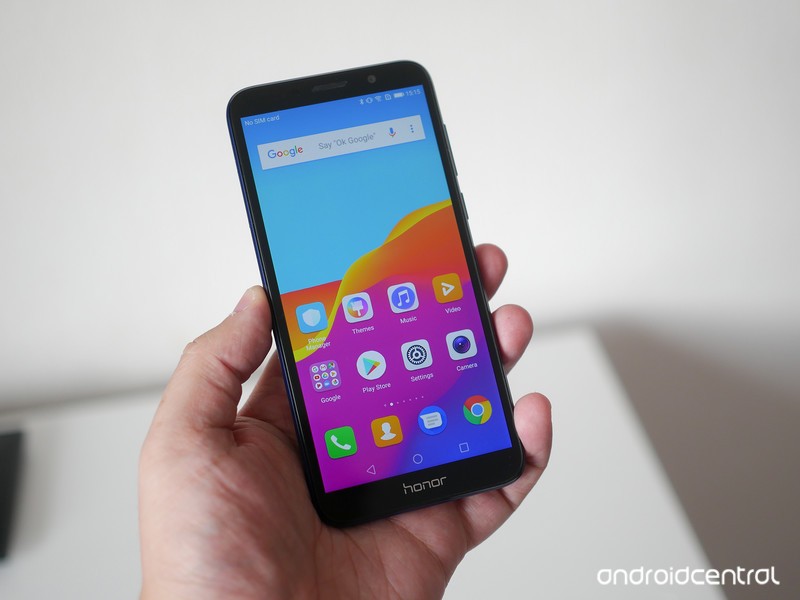
This latest budget phone from Honor looks great but has some very rough edges.
If the Honor 7s slipped you by unnoticed, it’s easily done. Launched in China under a different name, it’s a new budget phone that is available in select global markets across Africa, Asia, Europe, South and Central America. The closest it gets to a U.S. release is Mexico, likewise, it’s not currently available in Western Europe.
But Honor does some great work in providing quality phones at excellent prices, so it’s always interesting to see what’s new. The Honor 7s continues the slightly awkward naming scheme from the brand. Being an ‘s’ model shouldn’t lull you into thinking this is something it’s not.
But name aside, is it actually any good? Well…not really.
Honor 7s
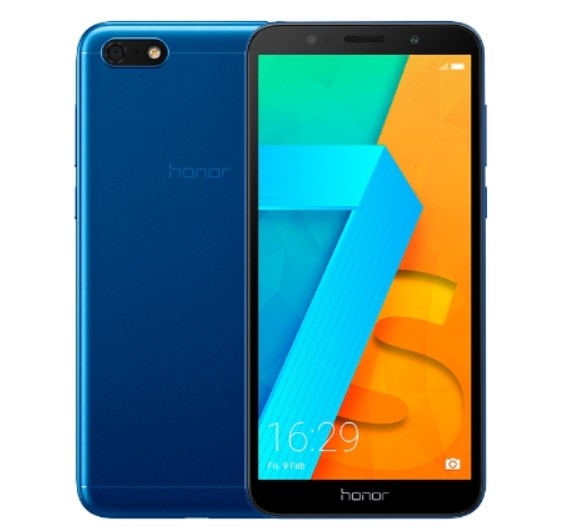
Price: €119.90 ($140)
Bottom line: The Honor 7s has a great look to it, far beyond its super-low price tag. But good looks, a nice display, and a somewhat decent camera cannot save this phone from its biggest flaw. It’s slow, slow, slow.
Pros:
- Nice display
- Good looking design
- Decent camera for the price
Cons:
- Unacceptably slow performance
See at Honor
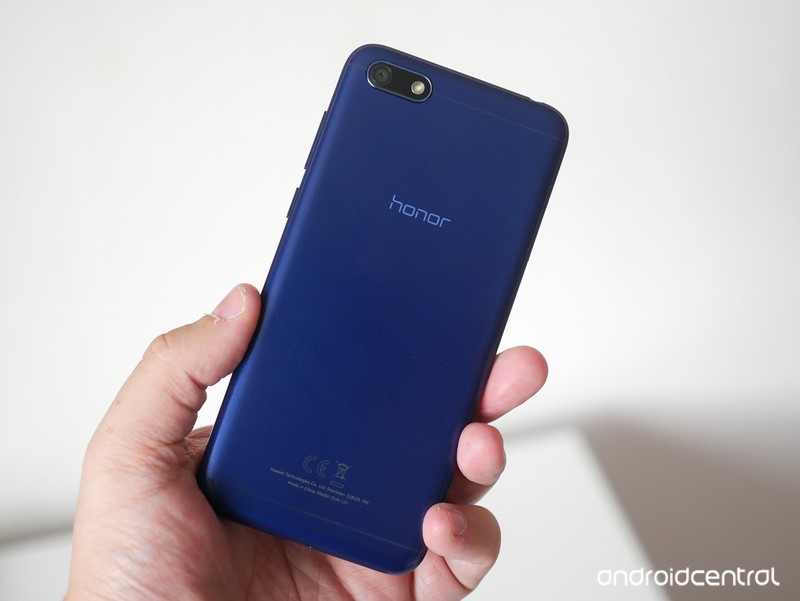
Honor 7s: Nice design, rough performance
It’s worth leading with the price because it’s largely why anyone would seriously consider buying it at all. In Europe, it’s going for €119.90 (£106 or $140) so it’s really cheap. That, in turn, leads to a number of compromises.
Design and build quality aren’t one of those, though. You still get a metal-look back and sides that are solid as a rock and around the front you’re treated to an 18:9 “Fullview” display. The resolution is ‘only’ 720p but on a 5.45-inch display, it isn’t the end of the world, especially at this price. More important is that it’s a good-looking, vibrant display. The size and weight are excellent and perfect if you’re looking for a smaller phone but still getting one of the larger 18:9 displays.
| Screen | 5.45-inch HD Fullview (1440 x 720) |
| Chipset | Quad-core Mediatek MT6739 |
| RAM | 2GB |
| Storage | 16GB |
| Rear Camera | 13MP |
| Front Camera | 5MP |
| Battery | 3020mAh |
| Price | €119.90 |
There’s actually quite a lot to be happy about. In the blue finish I have here it looks really good, and at first glance, there’s nothing really to identify this as a cheap phone. It becomes more apparent when you look closer, such as the plasticky front, lack of fingerprint sensor and ‘only’ a single 13MP rear camera.
It’s packing a sizeable 3020mAh battery which combined with this hardware is more than ample for a busy day’s use, and the 16GB of internal storage is at least expandable with a microSD card, which can also be stacked alongside a pair of nano-SIM cards.
While it looks great and certainly has a number of positive features about its hardware, there’s an equal dose of frustration. Whether it’s the MediaTek CPU, the 2GB of RAM, a combination of both or just inadequate software engineering, this phone is slow. Not just slow when you’re pushing it, slow all the time. Hopefully, it’s an optimization issue that could be fixed with an update rather than something more deep-seeded, because just navigating the phone is a chore.
You’re treated to constant stuttering and lag, and even for a phone this cheap it’s unacceptable. With the likes of Nokia and Motorola pushing out cheap phones that perform much better, not to mention the advent of Android Go, Honor simply cannot allow a phone that performs this way to hit any market.
So it needs sorting out.
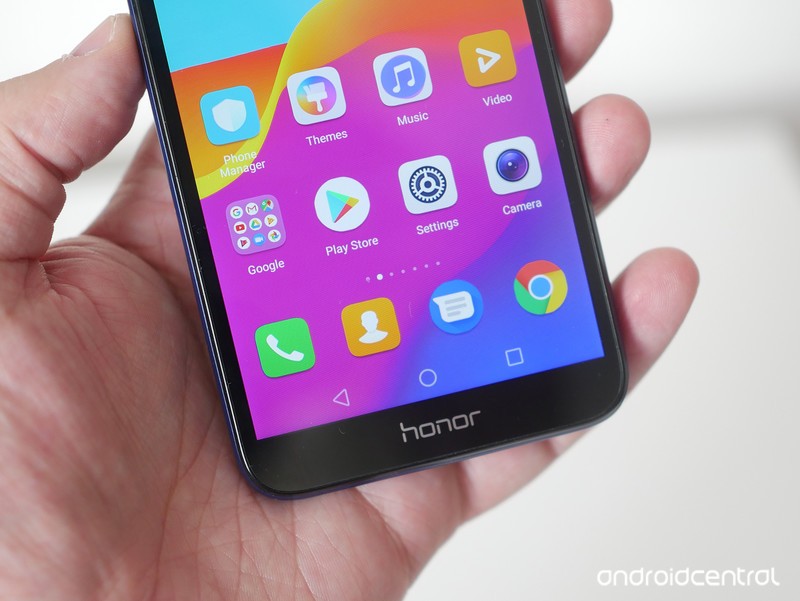
Honor 7s: Same old software, decent camera
If you’ve ever looked at a Huawei or Honor device before then the software will come as no surprise. It’s mostly the same as you’ll find on the likes of the Honor 10 or the Huawei P20 and remains consistent with some of Honor’s cheaper phones in look and feel.
Underneath EMUI you’re actually getting Android 8.1 Oreo, which is fantastic. I shouldn’t be surprised that a phone launching in mid-2018 is running the latest version, but you know. It’s especially pleasing to see on a budget phone.
There’s little to say about the software that hasn’t been said before. It’s still a blast of color to the face, though the dark notification shade is a neat touch, and as ever with EMUI there are a ton of themes and icon packs out there you can apply to give it a spruce up to your own tastes. The number one issue is what I’ve already discussed, and that’s performance. It’s just not a nice experience.
The camera pairing on the Honor 7s stacks up fairly well. Around the back, you get a 13MP single shooter, with a 5MP front camera with an LED flash. Honor is pretty good at putting the camera ahead of other areas of priority, and for a budget phone, it’s a pleasing experience all round.
Selfies look pretty good and you’ve access to the usual beautification treatments you’d find on any other Honor phone, and while the rear camera won’t necessarily take any award-winning shots, it’s a solid performer. Images can look a little dark and flat, but it’s by no means the worst you’ll find on something this cheap. Detail is pretty good, and the camera app is loaded with some of the features you’d find on Honor’s more expensive phones.

The bottom line
Availability is the key here, and the Honor 7s is probably never going to cross the path of many budget phone hunters reading this. It’s priced well though in the markets it will be sold and has plenty to like.
It looks good, with a design and construction that outstrips its price tag, the display is nice and the camera is decent for something in this segment of the market. It’s even packing a pretty big battery so you’ll likely never have to worry about running out before the end of the day.
It’s ultimately the performance that lets this phone down. Perhaps it’s because Honor opted for a MediaTek CPU and not a Kirin or Qualcomm chip, perhaps it’s just engineering gremlins. Whatever the root cause, the phone is mostly not enjoyable to use because it’s so stuttery and full of lag. I do hope it’s the latter and Honor can push out a fix, because without this spoiling the experience we’d have a really nice budget phone on our hands here.
2.5
out of 5
See at Honor
Xiaomi unveils Android One-based Mi A2 and Mi A2 Lite: Here’s everything you need to know
Xiaomi’s 2018 Android One phones offer comprehensive upgrades from last year.

Xiaomi partnered with Google over an Android One last year, the Mi A1. The phone combined Xiaomi’s hardware capabilities with the simplicity of Android One, making it one of the best budget phones of 2018.
A year on, Xiaomi is renewing its collaboration with Google to launch two Android One phones. The Mi A2 and Mi A2 Lite feature comprehensive upgrades from the Mi A1, and Xiaomi is set to make both devices available in over 40 markets around the world.
The key difference between both phones — from an aesthetic standpoint — is that the Mi A2 has a standard 18:9 display, with the Mi A2 Lite offering a 19:9 panel with a notch up top. Internally, the Mi A2 is powered by the Snapdragon 660, whereas the A2 Lite is running the now-familiar Snapdragon 625. On the software front, both devices are running Android 8.1 Oreo, and the fact that they’re a part of the Android One platform means they’ll be one of the first phones to pick up the Android P update.
Here’s what you need to know about Xiaomi’s latest Android One phones.
Xiaomi Mi A2/Mi A2 Lite: Specs
| Operating System | Android 8.1 OreoAndroid One | Android 8.1 OreoAndroid One |
| Display | 5.99-inch 18:9 FHD+(2160×1080) IPS LCD panelGorilla Glass 5 | 5.84-inch 19:9 FHD+(2220×1080) IPS LCD panel |
| SoC | Octa-core Qualcomm Snapdragon 6604×2.2GHz Kryo 260 + 4×1.8GHz Kryo 26014nm | Octa-core Qualcomm Snapdragon 625Eight Cortex A53 cores up to 2.0GHz14nm |
| GPU | Adreno 512 | Adreno 506 |
| RAM | 4GB/6GB | 3GB/4GB |
| Storage | 32GB/64GB/128GB | 32GB/64GB |
| Rear camera | 12MP (f/1.8, 1.25um) + 20MP (f/1.75, 2.0um)PDAF, LED flash, 4K video recording | 12MP (f/1.8, 1.25um) + 5MP (f/1.8, 1.0um)PDAF, LED flash1080p video recording |
| Front camera | 20MP (f/1.75, 2.0um)AI portrait modeLED Selfie lightBeautify 4.0 | 5MP f/2.2 lensAI portrait mode |
| Connectivity | LTE with VoLTEWi-Fi 802.11 ac, Bluetooth 5.0GPS, GLONASS | LTE with VoLTEWi-Fi 802.11 a/b/g/n, Bluetooth 4.23.5mm audio jackGPS, GLONASS |
| Battery | 3010mAh batteryQuick Charge 3.0 (USB-C) | 4000mAh batteryFast charging (5V/2A over Micro-USB) |
| Fingerprint | Rear fingerprint sensor | Rear fingerprint sensor |
Xiaomi Mi A2: The new performance beast

The Mi A2 features a 5.99-inch FHD+ 18:9 display backed by a layer of Gorilla Glass 5. The 2.5D curved glass allows the edges to seamlessly merge into the mid-frame, and the phone also has subtle curves at the back to make it easier to hold.
Xiaomi has been using the Snapdragon 660 platform for over a year now, and the Mi A2 is the latest to feature the chipset. The Snapdragon 660 is notable for being just as fast as flagships SoCs even from just a few generations ago, and it’s safe to say that it is one of Qualcomm’s best in this category.
There’s a 3010mAh battery under the hood, up to 6GB of RAM and 128GB of storage, Wi-Fi ac, Bluetooth 5.0, and a USB-C port. The camera is where things get interesting: the primary 12MP IMX 376 sensor is mated to a 20MP module with large 2.0um pixels. The front camera also has a similar 20MP sensor with 2.0um pixels, and as just like the Redmi Note 5 Pro, the Mi A2 has an AI-enabled portrait mode.
Xiaomi Mi A2 Lite: Notched display, incredible battery life

The Mi A2 Lite isn’t just a variant of the Mi A2 with toned-down hardware — the phone sports a cutout at the front to accommodate the camera module and the requisite sensors.
Xiaomi has said in the past that it favors the Snapdragon 625 for the chipset’s balance between efficiency and performance. The manufacturer rolled out more than a handful of phones powered by the chipset — including last year’s Mi A1 — so there’s not going to be a performance differential between the A2 Lite and what we saw last year.
Essentially, the Mi A2 Lite has the same underpinnings as its predecessor, albeit with a refreshed design for 2018. However, the one downside is that the A2 Lite has a Micro-USB port, a puzzling choice considering the Mi A1 had a USB-C charging port.
Xiaomi is moving away from the ubiquitous headphone jack in its premium models, but the jack is intact on the budget-focused devices. As such, although the Mi A2 doesn’t have a 3.5mm jack, the A2 Lite has the analog port.
Xiaomi Mi A2/Mi A2 Lite: Pricing and availability
There’s enough differences between the Mi A2 and A2 Lite that Xiaomi is targeting two diverse set of users with its latest Android One phones.
The pricing reflects that as well, with the decked-out version of the Mi A2 running up to $410. The Mi A2 Lite, meanwhile, starts off at $210. Here’s the pricing breakdown for the all variants Xiaomi will have up for sale:
- Mi A2 (4GB/32GB): €249 ($290)
- Mi A2 (4GB/64GB): €299 ($350)
- Mi A2 (6GB/128GB): €349 ($410)
- Mi A2 Lite (3GB/32GB): €179 ($210)
- Mi A2 Lite (4GB/64GB): €229 ($270)
Xiaomi mentions that it will make both devices available in over 40 markets around the world, and we should be hearing more about region-wise availability later this month. Xiaomi is huge in India, so we should see the brand launching both devices in the country shortly.
Given the cost-conscious nature of the Indian market, it’s likely we’ll see the base variant of the Mi A2 Lite debuting at under the $200 price point. Anywhere at the ₹10,999 ($160) figure should make it a great option considering the Redmi Note 5 shares a similar hardware foundation.
As for the Mi A2, the phone directly goes up against the $375 Nokia 7 Plus, so it’ll be interesting to see what price point it slots in.
Best Alternatives to Project Fi

Project Fi is unique, but if for some reason you can’t or don’t want to subscribe to it, here are some awesome alternatives.
There is nothing else like Project Fi in the U.S. Google’s alternative carrier is a unique combination of flexible, powerful and intuitive. With one SIM card, it dynamically switches between three carriers in the U.S. and provides effortless worldwide roaming while abroad. With its app, it’s easy to top up on data or share the cost of a plan amongst a group of people.
Project Fi: Everything you need to know
 Advertisement
But Project Fi isn’t perfect, or at least not perfect for everyone. Case in point: It’s a lock-in strategy for Google, since recent Nexus and Pixel devices are compatible with the service. It’s also relatively expensive, with a flat rate of $10 per gigabyte of data.
So I thought it would be nice to try to find other carriers in the U.S. that offered at least approximations of Project Fi’s service while ensuring compatibility with a wider range of phones. To do that, I made a set of criteria for the alternative providers:
- It must have an intuitive and flexible payment schedule
- It must have inexpensive talk and text in the U.S.
- It must ensure data is relatively affordable
- It must be compatible with most unlocked phones
- It should have robust roaming capabilities
- It should have data rollover or credits for unused data
- It should offer service through more than one U.S. carrier (for redundancy)
As I said at the beginning, there’s nothing else like Project Fi in the U.S., but some providers come relatively close to hitting all of the above criteria. Here’s what I found.
- Ting
- Mint Mobile
- UNREAL Mobile
- Cricket Wireless
- MetroPCS
- Honorable mention

Advertisement
Ting

To many of its long-time users, alternative carrier Ting is a darling of flexibility and customer service. The main appeal for Project Fi admirers is the flexible, modular plans, which let you pay for exactly how much talk time and texting you need, along with simple, affordable data tiers.
Prices for a single line start at $32 for 100 minutes of talk and text and 2GB of data, but it doesn’t cost much more to add features from each category. It’s also just $6 per additional line, which is pretty great.
Ting also has access to two networks, Sprint and T-Mobile, though unlike Project Fi you can’t dynamically switch between them — your phone may be compatible with both services, but you’ll need to choose whether you want GSM or CDMA service, and can switch SIM cards based on your location and coverage.
One thing I constantly hear about Ting, too, is that it offers fantastic customer service and flexibility. And while its roaming rates are not included in the base package like Project Fi, they’re relatively inexpensive.
See at Ting
Mint Mobile

Most wireless service providers require you to pay your bill month-to-month, but Mint Mobile takes a different approach by charging you upfront for three, six, or 12 months of service at a time. It’s a unique concept and one that requires a bigger check from the get-go, but could result in some big savings over time.
All Mint Mobile plans come with unlimited talk and text, and depending on the one you choose, you’ve got your choice of 2GB, 5GB, or 10GB of 4G LTE data. If you decide you need additional LTE speeds during a month, you can get an extra 1GB for $10 or 3GB for $20. Oh, and mobile hotspot is included no matter what plan you get.
Mint Mobile is powered by T-Mobile’s network, and as such, you can bring over virutally any unlocked GSM phone.
If the service sounds like something you’d be interested in, you can test-drive it for seven days with a money-back guarantee.
See at Mint Mobile
UNREAL Mobile

UNREAL Mobile is the youngest company on our list, having launched in late June. While it’s still finding its footing in the market, it’s already one of the most interesting Project Fi alternatives around.
There are three plans to choose from at UNREAL Mobile with the only differentiator being the amount of LTE data that comes with each one. The $10/month plan has 1GB, stepping up to $15/month gives you 2GB, and going all out with the $30/month option comes with 5GB.
All three plans have unlimited talk, text, and 2GB data once your LTE allotment is up, and if you don’t use all of that LTE during a single month, it rolls over to the next one. All plans also come with a free VPN service, an ad-blocker, and support for using your UNREAL number of all your devices.
There’s a small selection of phones you can buy and only CDMA devices are supported if you want to bring your own handset, making this UNREAL’s biggest downside right now. However, if you’ve got a CDMA phone and are looking to change your cell service, this is definitely worth a look.
See at UNREAL Mobile
Cricket Wireless

AT&T’s discount brand, Cricket Wireless, doesn’t tick every box for Project Fi wannabes, but it comes close on a few. For example, it offers excellent nationwide coverage, since it runs on AT&T’s network, and as a result should be compatible with almost every unlocked phone sold in the U.S. today.
It also has simple, inexpensive and flexible plans that offer unlimited U.S. talk, text, and data, plus the ability to roam in Canada and Mexico on two of the higher-tier (but at $50 and $55, still affordable) plans.
There are a few of caveats, though: Cricket limits LTE download speeds to 8Mbps, 4G speeds to 4Mbps, and the $50/month unlimited plan is capped at 3Mbps — all of which is considerably slower than what AT&T’s network is capable of. Mobile hotspot is only available on the $50 and $55 plans, and if you want additional data with a non-unlimited plan, you’ll pay is $10 per gigabyte (which matches Project Fi).
See at Cricket Wireless
MetroPCS

Finally, MetroPCS is also a fairly good provider, since it now lives on T-Mobile’s network but offers services that are considerably cheaper and more flexible. You can get unlimited talk, text and data, plus hotspot support, for $60 per month, while 2GB of data is just half that amount. MetroPCS doesn’t offer international data roaming, but call and text adds-ons for Canada and Mexico are just $5 per month.
Because MetroPCS runs on T-Mobile’s network, most unlocked phones are going to be compatible with it, which makes it an excellent option for bring-your-own-device enthusiasts.
See at MetroPCS
Honorable mention — Visible

Visible debuted this past May as a new MVNO from Verizon, and while we can’t recommend it just yet as it currently only supports iPhones, it’s worth keeping an eye on as it expands availability to Android handsets down the road.
For $40/month, Visible gives you unlimited talk, text, and LTE data (capped at 5Mbps) on Verizon’s network. Video streaming is limited to 480p, but you can use as much data as you’d like throughout the month.
That’s a good enough deal on its own, but Visible goes the extra mile by being about as customer-friendly as cell providers come. After ordering a SIM through its website, wait for it to be delivered, pop it in your phone, and then download and open the Visible app. Through here, you’ll handle all of your billing, get in touch with customer service, and more. When you want to pay your bill, Visible accepts credit/debit cards, PayPal, and even Venmo.
Visible: Everything you need to know about Verizon’s new phone service
The reality
The reality is that nothing in the U.S. is like Project Fi. Google’s carrier experiment may be a little more expensive on a per-gigabyte basis, and more restrictive from a phone choice perspective, but in many ways, and for many people, it’s the ideal network provider.
Of course, not everyone has access to a Nexus or Pixel phone, so hopefully these offerings will come in handy when you’re searching for your next alternative carrier.
Updated July 2018: Removed Consumer Cellular, added UNREAL Mobile and Mint Mobile. Added Visible as an honorable mention.
Alternative carriers (MVNOS)

- What is an alternative mobile carrier?
- What are the advantages of going with an alternative carrier?
- How to make sure your phone works on a prepaid alternative carrier
- 8 Important Considerations When Switching To An MVNO
- These are the cheapest data plans you can buy in the U.S.
- Mint SIM vs. Cricket Wireless: Which is better for you?

Capture your next adventure in 4K with the $42 Yi Discovery Action Camera
An action camera worth buying.

Yi’s 4K Discovery Action Camera is now down to $41.99 when you enter promo code YIDISCOV at checkout. This deal will save you $17 on its current price, which is already a pretty decent deal for a 4K cam.
It features a 2-inch touchscreen and only one physical button. It can take 8MP photos and features eight shooting moods including Loop and Time Lapse, Countdown Mode, Burst Mode among others. It also incorporates Wi-Fi allowing you to download videos straight to your smartphone after connecting the Yi Action App; the app has easy share options for social media sites like Facebook too. This camera is waterproof as well.
Make sure to pick up a micro SD card for this camera as well to save your footage. It can use a card of up to 128GB.
See at Amazon
How to back up the Lenovo Mirage Solo

Backups should be on, but it never hurts to double check.
It’s always a bad feeling when your fancy VR headset dies. No mass market good is perfect, and even some duds are going to make it out into the world. But the one thing worse than losing your VR headset is losing your game progress along with your VR headset.
Here’s how to backup your Lenovo Mirage Solo!
Back it up, back it up
How to backup your Lenovo Mirage Solo

Place the headset on your head.
Press the indented button on the Daydream controller to wake the controller up.
Select the Settings icon near the top of the screen.

Select All Settings.
Use the touchpad on the controller to scroll to the bottom of the Settings list.
Select System.
Select Backup.
By default, Backups are on. Your game save data, list of downloaded applications, and other settings will be backed up to your Google Drive storage. If for some reason backups are turned off, simply toggle the switch next to Backup to Google Drive.
Have you had to manually backup your Mirage Solo data? Let us know down below!
Google Daydream

- Daydream View review
- The ultimate guide to Daydream
- These phones support Daydream VR
- Every Daydream app you can download
- Catch up with Daydream in the forums!
Apple Previews New Piazza Liberty Store, Opening Thursday in Milan
Apple today premiered this week’s opening of Apple Piazza Liberty in the center of Milan, Italy. Set to open its doors on Thursday, the retail location features a dramatic glass fountain that serves as the entrance to the store and a backdrop to the large outdoor amphitheater.
The piazza, clad in Beola Grigia, a stone used throughout Milan, will be open to the public 24 hours a day and will host special events year-round amongst 14 Gleditsia Sunburst trees planted in the area.
“There’s no better expression of our vision for Apple stores serving as modern-day gathering places than Apple Piazza Liberty,” said Angela Ahrendts, Apple’s senior vice president of Retail. “In a city with such rich history of art, entertainment and creativity, it’s an honor to establish a space where anyone can be inspired to learn, create and connect with their neighbors.”
Apple Piazza Liberty will host a variety of Today at Apple sessions, taking in photography, filmmaking, music creation, coding, design and more. This September, Apple Piazza Liberty will also host a special month-long Milan Series, where 21 local artists will share their visions for the creative future of Milan, as previewed on a special Apple.com web page.
There will be live music in the location’s amphitheater on the opening night by musician LIM, a “crazy self-portraits” session with Olimpia Zagnoli on July 27, a photographic laboratory with Piotr Niepsuj on July 28, and a “draw the summer” class on July 29.

“To work within one of Italy’s historic piazzas is both a great responsibility and wonderful challenge,” said Jony Ive, Apple’s chief design officer. “We combined two fundamental elements of the Italian piazza — water and stone — adding a glass portal that creates a multi-sensory experience as visitors enter the store through a cascading fountain that seems to envelop them.”
The store will employ 230 staff, many of whom have come to Milan from Apple stores around the world, according to Apple. Apple Piazza Liberty opens Thursday, July 26, at 5pm, and registrations for Today at Apple can be made now on Apple’s website.
Tags: Italy, Apple retail
Discuss this article in our forums
WhatsApp Message Notifications to Support Media Previews in Future Update
WhatsApp received an update overnight that suggests media previews will soon be coming to the app’s iOS message notifications for the first time.
Currently in WhatsApp iOS notifications, images included in messages are replaced by a camera emoji, requiring the user to open WhatsApp to see the media. Likewise, GIF messages are represented in notifications by the space invader emoji.
However, WABetaInfo reports that WhatsApp version 2.18.80 lays the groundwork for full media previews in iOS notifications. The upcoming notification extension feature is said to support images as well as GIFs.
 Image via WABetaInfo
To view the media preview, users will need to use the Peek and Pop gestures or swipe down on the notification in Notification Center. Users should also be able to download the media directly from the notification if they have disabled WhatsApp’s media auto-download option.
Aside from the notification feature that’s still under development, the latest version of the app lets you use Siri to send messages to WhatApp groups.
WhatsApp is a free download for iPhone available from the App Store. [Direct Link]
Tag: WhatsApp
Discuss this article in our forums
Honor 9N with 19:9 display launches in India for ₹13,999 ($200)
Honor 9N brings the Honor 10’s visual flair to a more affordable price point.

Honor is one of the fastest growing brands in India, recording a growth of over 300% from last year. The brand is now looking to build on that momentum with the Honor 9N, the latest launch in the budget segment.
The Honor 9N shares a lot of elements with the Honor 10, including a 14-layer coating etched underneath the glass panel. It’s not quite as crazy as the Honor 10’s Phantom Blue, but the Honor 9N is available in interesting color options of its own — notably the Robin Egg Blue.
On the hardware side of things, the Honor 9N features a 5.84-inch FHD+ 19:9 panel, HiSilicon’s Kirin 659 chipset, 13MP + 2MP dual cameras at the back, 16MP front shooter, 4GB of RAM, 64GB of storage, and a 3000mAh battery.
Honor is also touting face unlock as a differentiator, and you’ll be able to hide the notification contents behind the feature. Like the Honor 10, there’s a cutout at the top.
The Honor 9N runs EMUI 8.0 based on Android 8.0 Oreo, and there’s a gaming mode along with India-focused customizations that include a bike mode that mutes notifications automatically, and Paytm integration.
Honor is going to sell three variants of the Honor 9N in the country: a base variant with 3GB of RAM and 32GB of storage for ₹11,999 ($175), a version with 4GB of RAM and 64GB of internal storage for ₹13,999 ($200), and a model with 4GB of RAM and 128GB of memory for ₹17,999 ($260).
If you’re interested, the Honor 9N will go up for sale from July 31.

