


Droid X2 review

Would a Droid X by any other name smell as sweet? When we reviewed that phone last year we found it to be a solid performer in a solid chassis. In short: a very good phone. Now it’s back with a new name, or a revised one at least, the Motorola Droid X2 offering the same basic design as its predecessor but packing a lot more heat on the inside — a dual-core dose of Tegra 2, to be specific. Will it tickle your olfactory sensors just like the first X?

HTC Sensation review

A hotly anticipated smartphone with a 1.2GHz dual-core processor, a “Super” 4.3-inch screen, and a manufacturer-skinned version of Android 2.3 — we must be talking about the Samsung Galaxy S II, right? Not on this occasion, squire. Today were taking a gander at HTCs Sensation, a handset thats just begun shipping in Europe under a short-term Vodafone exclusive and which should be making its way to T-Mobile in the USA early next month. By beating its stablemate the EVO 3D and Motos Droid X2 to the market, the Sensation becomes the worlds first 4.3-inch smartphone with qHD resolution, while also serving as the debut phone for HTCs Watch movie streaming service and Sense 3.0 UI customizations. That leaves us with an abundance of newness to review, so what are we waiting for?
ASUS Eee Pad Transformer Review
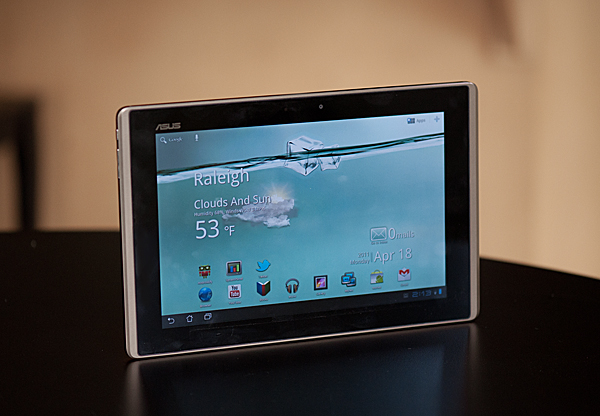
I’ve been on a bit of a tablet kick lately, so even if you have dinner with me—tablets are bound to come up (I only break out the SSD conversation for the truly patient). Last week I had the pleasure of having dinner with Tony Tamasi and Jim Black of NVIDIA, and of course—tablets came up.
I’ve been thinking about device synergy, something I brought up in our PlayBook review. The problem is as follows: if I’m on my desktop with half a dozen tabs open and perhaps a PDF as well, but I decide to switch over to a tablet—there’s no quick way that I can transition my reading environment between the devices. What I have to do is sit down on the couch, whip out my tablet, and manually navigate to each website and redownload/open the PDF. What I’d like to do is something along the lines of HP’s Touch to Share, but just on a larger scale.
Samsung Galaxy Tab 10.1 Limited Edition review

It may be a bit difficult to pay attention to the spate of Honeycomb tablets that seem to be popping up left, right and center — you know, now that Ice Cream Sandwich has been officially promised — but what’s not easy to overlook is an 8.6mm slate. Checking in at a sliver of a pinch thinner than the illustrious iPad 2, Samsung’s rethought-out, redesigned and definitely-not-renamed Galaxy Tab 10.1 is the first Android tablet to date that seriously goes toe-to-toe with Apple in both specifications and design. Granted, the consumer models aren’t slated to ship out until June 8th, but given that Google handed us one last week during its annual I/O conference, we figured we’d spend the following weekend wisely. You know, photographing, benchmarking and testing this thing to the hilt. (Of note, the unit tested here was the Limited Edition model, devoid of TouchWiz, 3G and a microSD card slot, but is otherwise identical to shipping units aside from the design on the rear.)
The Tab 10.1 — not to be confused with the older, since-relabeled Tab 10.1v — weighs just 1.31 pounds (marginally besting the iPad 2’s 1.33 pound chassis), and if looks could kill, few people would’ve made it out of Moscone West with all organs functional. But as you well know, style only gets you in the door — it’s the guts, the software, and the marriage of it all that makes or breaks the tablet experience. Hop on past the jump to find out why we think Samsung truly delivered on the promise of a Google-powered tablet, and why you should all seriously consider socking away funds as early June approaches.
Read More Samsung Galaxy Tab 10.1 Limited Edition review — Engadget.

HTC Flyer review
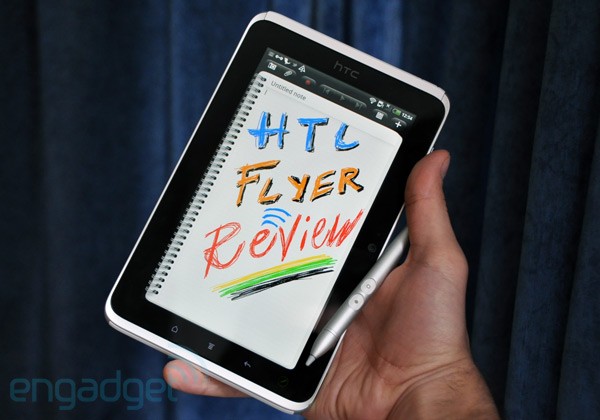
Over the past couple of years, HTC has rapidly built up an enviable reputation (and bank balance) in the smartphone space with a succession of feature-rich, smartly designed, and innovative handsets. The HD2 introduced us to the 4.3-inch form factor, the EVO 4G ushered in the era of 720p video recording, and the Legend wrapped itself inside a never-before-seen aluminum unibody enclosure.
Full Review: HTC Flyer review — Engadget.
Samsung Galaxy S2 review
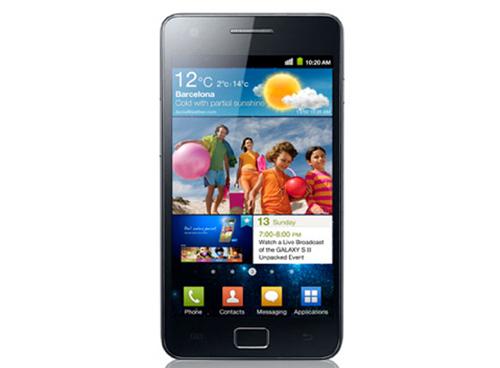
Pick up the phone and the first thing you notice is how light it is – it’s just 116g. Measuring 8.49mm, it’s incredibly slim in comparison to 9.9mm for the original Galaxy S; 9.3mm for theApple iPhone 4 and 8.7mm for the Sony Ericsson Xperia Arc.
While the Galaxy S2 will certainly fit into the tightest jeans pocket, the compromise is build quality – the body just feels cheap and uninspiring. Things don’t improve when you remove the wafer thin back to insert a sim – we’d be seriously worried about snapping it.
Controls are limited to volume on one side, power on the other, MHL port, which serves a dual purpose of charging via USB and outputting to HDMI, and a 3.5mm jack on the top, Samsung includes a range of streaming options including DLNA. Read more 
HTC Media Link DLNA streamer review
 Apple’s AirPlay might be getting all the attention lately but it’s hardly the first solution for wirelessly streaming media to the television. Far from it. In 2003, the Digital Living Network Alliance (DLNA) formed with its first set of interoperable products hitting the market in 2004. Since then, the alliance has certified thousands of products supported by more than 245 member companies, 29 of whom are listed as “promoter members” including such heavyweights as Sony, Nokia, Samsung, Toshiba, Verizon, AT&T Lab, LG, Qualcomm, Cisco, Microsoft, Panasonic, Intel, HP, and Motorola. Pretty much everyone butApple. Recently, HTC joined the DLNA ranks with the introduction of two smartphones — the Desire Z and Desire HD — and a tiny media streamer known as the HTC Media Link, HTC’s first attempt to gain a foothold in the living room. Over the last week we’ve been testing the Desire Z (a Eurofied T-Mobile G2) with the Media Link, lazily streaming video, music, and images around the house using a myriad of sources and controllers from Apple, Samsung, Microsoft, and Western Digital.
Motorola Milestone 2 review
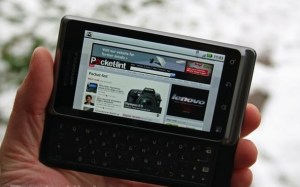 The Motorola Milestone 2 looks to build on the successes of its forebear namesake. For a time, the Milestone/Droid was pretty much the only high-end QWERTY Android device out there, until HTC threw their hat into the ring with the HTC Desire Z. Although there are lower-spec options, like the LG GW620 and Motorola’s own Dext, this is where the duel is drawn: HTC vs. Motorola, QWERTY keyboards at 20 paces.
The Milestone 2 is the half-brother of the Verizon Droid 2 which you’ll find in the US. The most significant change over the Milestone – aside from the new hardware – is the inclusion of Motoblur. Motorola told us this was in response to customer feedback, perhaps realising that pushing the Milestone 2 as a “business” device solely because it had a physical QWERTY keyboard no longer made sense. After all, aren’t business folk also social human beings?
Motorola Defy review
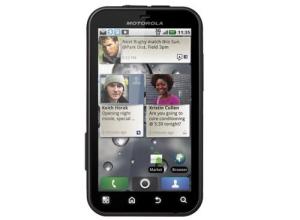 Motorola’s Android plans seem to consist of making as many different types of phones as possible, and it seems the company’s researchers have decided we’re pretty clumsy with our precious smartphones. The Motorola Defy is IP-tested to work through submersion, dust-filled environments and dropping onto concrete floors – ‘life resistance’ is how it’s been dubbed.
But beneath the rubberised exterior (including locking a battery cover to seal the innards and big rubber caps for the microUSB and 3.5mm headphone jacks) beats a Google heart – Android 2.1 to be exact.
In this Gingerbread age, that’s the not the best platform to be shipping with, as it means we miss out on using the phone as a Wi-Fi hotspot, improved touchscreen performance and being able to store apps on an SD card.
However other features (like being able to share contacts and improved camera mode) are all added in from Motorola, as well as integrated social networking enhanced widgets (where you can resize and drag them over seven home screens).
OS
Overall operation isn’t as slick as we would have liked though – the lag was palpable at times, and frequently the keyboard would struggle to keep up with our typing.
The rugged exterior does live up to its name though – despite feeling very light and a little bit cheap, the case didn’t break being dropped from shoulder height onto a pavement, the screen didn’t get scratched even with a lot of effort from a bunch of keys, and the Defy even carried on chugging when thrown in a glass of water.
Media
Another decent idea from Motorola is the connected media player – things like a free lyrics provider and YouTube music video search are a great idea and make the phone seem a little more premium. However, they don’t always work – the YouTube music video search engine had very little choice, and the TuneWiki lyrics service is more of a gimmick than useful tool.
More importantly: sound quality was only average (although perfectly passable) and the video player really wasn’t up to scratch. From not playing a number of file types to starting some movies only to have them give up after a few minutes, it wasn’t a good advert for the Defy’s media player.
The contacts menu is confusing too – with the likes of the HTC Desire or Samsung Galaxy S it’s easy to link people up to Twitter and Facebook accounts, whereas on the Defy it’s a long, convoluted and inaccurate process, often with the person you’re looking for not available for a link and the Twitter username overwriting the person’s actual contact name.
Verdict
Overall, the Motorola Defy is a confusing one. Its rugged nature is not inherent when you pick it up – people who want a phone for a workshop or building site might enjoy it, but that’s a pretty niche market. Things like the Car Dock, where you can quickly access navigation and music apps, are a nice touch, and the camera is swift and pretty decent too. But the lower-grade OS, slight lag during operation and very lightweight feel mean it’s going to be more out of necessity than desire that you pick up the Motorola Defy.
Asus Eee Note review
 There’s no doubt that ebook readers have become a hit, especially the Amazon Kindle, but most of the ebook readers are fairly limited as to what you can use them for beyond what they’ve been designed to do. Enter the Asus Eee Note, not an ebook reader, not a tablet, not a PDA either for that matter, but something of a fusion of them all. The Eee Note has a fairly large 8-inch greyscale display with a resolution of 1024 x 768 pixels and on top of the screen sits a Wacom digitiser. A digitiser is a type of touchscreen, but unlike your average touchscreen, a digitiser is pressure sensitive and requires the use of a special stylus.
The advantage of this over a capacitive or resistive touchscreen is that it’s far more accurate. Asus claims an accuracy of 0.4mm when holding the pen vertically, although it’s not quite as accurate at an angle. This brings us to the primary function of the Eee Note: it is a digital notepad. This might sound dull and somewhat out of touch with modern technology, but it can actually be rather quite handy. There are no less than 42 templates available ranging from college ruled paper, to advanced options such as pie charts and various calendars. It’s also possible to insert pictures into the notes and these can be taken by the built-in 2-megapixel camera.
 AIVAnet